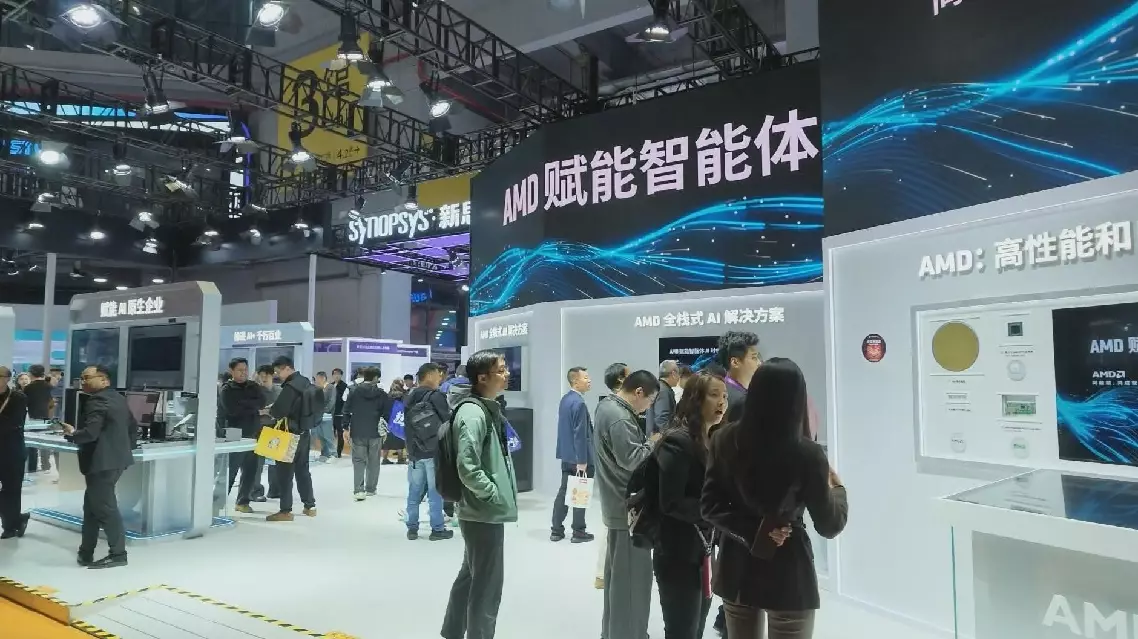
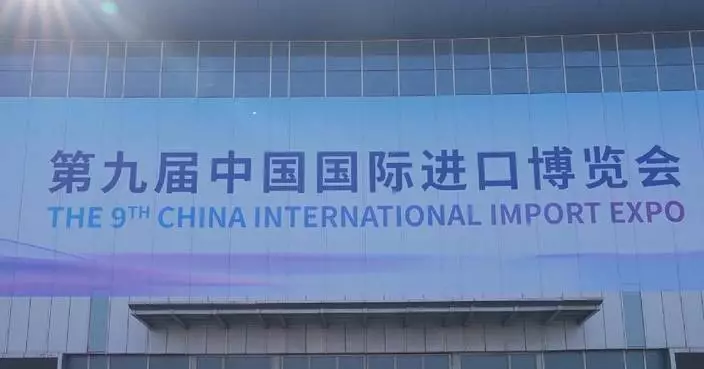
American businesses do not want to see rising trade protectionism, Sean Stein, president of the US-China Business Council, said on the sidelines of the ninth China International Import Expo (CIIE) in Shanghai as U.S. companies continue a strong presence at the event.
U.S. exhibition space grew by 1,500 square meters from last year to over 50,000 square meters at the CIIE, ranking first for the eighth consecutive year. Companies in various sectors in the United States, including agriculture, consumer goods, high-end equipment, automobiles, and healthcare, are participating with high expectations, hoping to explore new markets in China through the event.
"We've got so many American companies that are here and again; they're not just here to sell, they're here for partnerships. They're here because they want to look and say, oh, who are brands, who are companies, what are technologies, where we can find synergies. They see the innovation and the just incredible technological breakthroughs that are happening in China and like, 'hey, we want to be part of that. We want to not only watch it up close, we want to figure out how do we then work with that and use that and make it part of ourselves and work with either Chinese partners or others to be more competitive globally'," Stein, who attended the 9th Hongqiao International Economic Forum as part of the Expo, told China Central Television.
More U.S. companies from different sectors are coming to the CIIE, many of which have participated in previous editions. Asked what draws U.S. firms to the expo, Stein noted that the appeal goes beyond a massive market.
"I think for the first couple of years companies would ask themselves 'do I need to be at the CIIE' or 'maybe I should sit out for a couple of years', and now companies see that there are real advantages to coming here. If you're consumer brands, it's about just the maturing of taste within the China market. But if it's technology, it's all about sort of supply chain. It's about where do you fit into that and where are your customers and where are your clients and where are you going. If you're in other sectors, like, say, automotive. It's what's happening and what are the developments sort of in the market. So I think in some sectors, it's about the growth of China's economy, in other sectors, it's about the growth of the Chinese supply chain. So I think every company has got a different reason for being here. And it's not just the China market, it's much, much broader than that," he said.
Regarding the rise of trade protectionism, Stein underlined that U.S. companies desire more cooperation and less barriers when it comes to trading with China.
"Do we like the trade war? Absolutely not. Do we like tariffs? Absolutely not. Every year we survey American businesses and we ask them a question: How important is China to your global strategy and to your global competitiveness. What do you think is happening to how American companies see China as part of their global strategy. That number keeps going up. Cooperation continues to not just go on, but statistically, on the numbers, it's going up. And that means that our companies and Chinese companies are going to find ways to engage and to work together because that makes them all stronger," Stein said.
Chinese and U.S. leaders have agreed to build a constructive relationship of strategic stability based on respect, fairness and reciprocity this year. Stein also welcomed the new positioning of China-US relations, hoping it would foster a better business environment for companies from both countries.
"Multipolar world has come. We are now in that multipolar world, and what you need is the strategic stability to keep peace in this multipolar world. What companies need more than anything else is stability. They need predictability, they need transparency, they need consistency. And so our hope is that over time, this mutual embrace of strategic stability will create an environment that businesses are able to collaborate, to grow and to work together," he said.
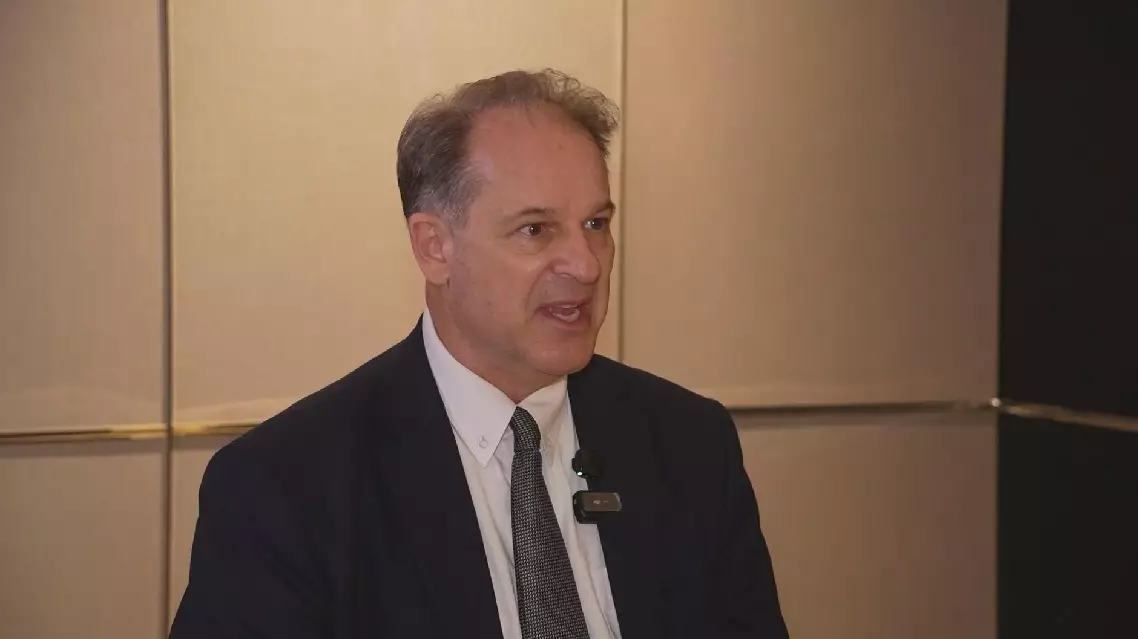
US firms do not want to see rising trade protectionism: USCBC President