COLUMBUS, Ohio--(BUSINESS WIRE)--Aug 25, 2026--
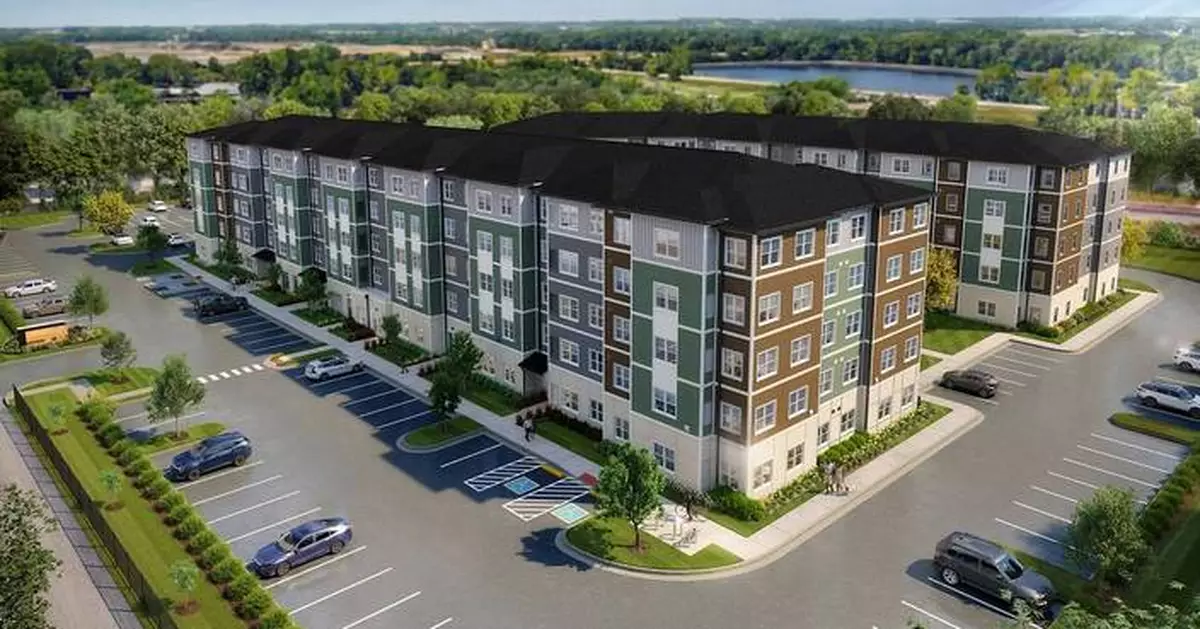
The NRP Group, a vertically integrated, best-in-class developer, builder and manager of multifamily housing, today announced the groundbreaking of Stone Ridge at High Street, a 150-unit affordable housing community located along South High Street in Columbus, Ohio. Developed in partnership with the City of Columbus and the Ohio Housing Finance Agency, the project will provide much-needed housing for working professionals and families earning up to 60% of the Area Median Income (AMI).
This press release features multimedia. View the full release here: https://www.businesswire.com/news/home/20260825126491/en/
“Stone Ridge at High Street is a direct investment in South Columbus and builds on nearly 15 years of work we’ve done in the city,” said Aaron Pechota, Executive Vice President of Development at The NRP Group. “For years, this property sat vacant, despite its proximity to downtown Columbus and some of the city’s strongest employment centers. Together with city officials and our financing partners, we are transforming a distressed site into a community that will provide stable, high-quality housing for families and working professionals while supporting the continued growth and revitalization of the South Side.”
Stone Ridge at High Street will feature two five-story buildings on a 4.5-acre site, each featuring a mix of one-, two-, three- and four-bedroom apartments designed to accommodate families of varying sizes.
Located at 45 W. Barthman Avenue, approximately one mile from downtown, the community provides ample public transit within the South High Street corridor, one of the city's primary transportation arteries. The development offers proximity to ample shopping and dining destinations in downtown Columbus, and is located near job centers and major employers in German Village and the Brewery District. The Nationwide Children's Hospital and the growing Southern Gateway district are just minutes away.
The community will be erected near the historic Hart Road Quarry, the last remaining vestige of the South Side’s once-thriving network of limestone and gravel quarries. Today, the former industrial landmark has been transformed into a birding oasis for waterfowl, reflecting the broader evolution and continued reinvestment taking place throughout the neighborhood.
“Public-private partnerships are essential to the success of the Columbus Housing Strategy, and Stone Ridge at High Street demonstrates what can be accomplished when city leaders, financial institutions and private developers work together with a shared vision to improve the lives of Columbus residents,” said Columbus Mayor Andrew J. Ginther. “As Columbus continues to grow and prosper, we are making significant investments to ensure that every neighborhood shares in that success. Projects like this are building on the strengths of neighborhoods that have historically seen too little investment while creating affordable housing opportunities for working families."
Designed with families in mind, Stone Ridge at High Street will offer a range of amenities that promote wellness, connection and safety. Residents will have access to a clubhouse and multipurpose community room with a kitchen for gatherings and events, as well as outdoor amenities including landscaped courtyards and a playground.
Development and financing partners include Huntington Bank, which provided debt and equity financing, along with support from the City of Columbus and the Ohio Housing Finance Agency.
“We are proud to support Stone Ridge at High Street and help bring high-quality, affordable housing to the Southside of Columbus, creating new opportunities for residents and contributing to the neighborhood’s continued growth,” said Andrew Hugger at Huntington Bank.
The development was financed by Deutsche Bank, which provided both construction and permanent financing for Stone Ridge at High Street.
Stone Ridge at High Street builds upon The NRP Group’s commitment to Columbus and Central Ohio. Headquartered in Cleveland, the company has delivered transformative developments in Central Ohio, including Parsons Village Senior Apartments, the Residences at Career Gateway and most recently, The Lofton. Across Ohio, The NRP Group has developed more than 5,000 rental homes since 1994.
Construction of Stone Ridge at High Street is now underway, with completion scheduled for April 2028.
About The NRP Group
The NRP Group is a vertically integrated developer, owner, builder, and manager of best-in-class multifamily housing with a mission to create exceptional rental housing communities for individuals and families, regardless of income. Since its founding in 1994, NRP has developed more than 68,000 apartment homes and currently manages over 33,000 residential units.
Through its disciplined approach to vetting opportunities, NRP has established a track record of delivering impressive returns for investors. The company’s formidable size and depth of talent provide the experience and infrastructure necessary to execute developments of varying degrees of complexity and scope in both urban-infill and suburban locations, including market-rate, affordable, mixed-income, and senior housing.
The NRP Group has been consistently named a largest developer and builder in the U.S. on the NMHC “Top 50” lists, the Top 5 on the Multi-Housing News’ “Top Multifamily Developers” list, named a Top Affordable Housing Developer by Affordable Housing Finance, and is a five-time recipient of NAHB’s Best Multifamily Development Firm of the Year award. The NRP Group has become the top multifamily developer in the U.S. that creates both affordable and market-rate housing at a national scale. Based on over 30 years of experience and expertise, NRP provides construction and property management services to outside owners and developers. For additional information, visit www.nrpgroup.com.
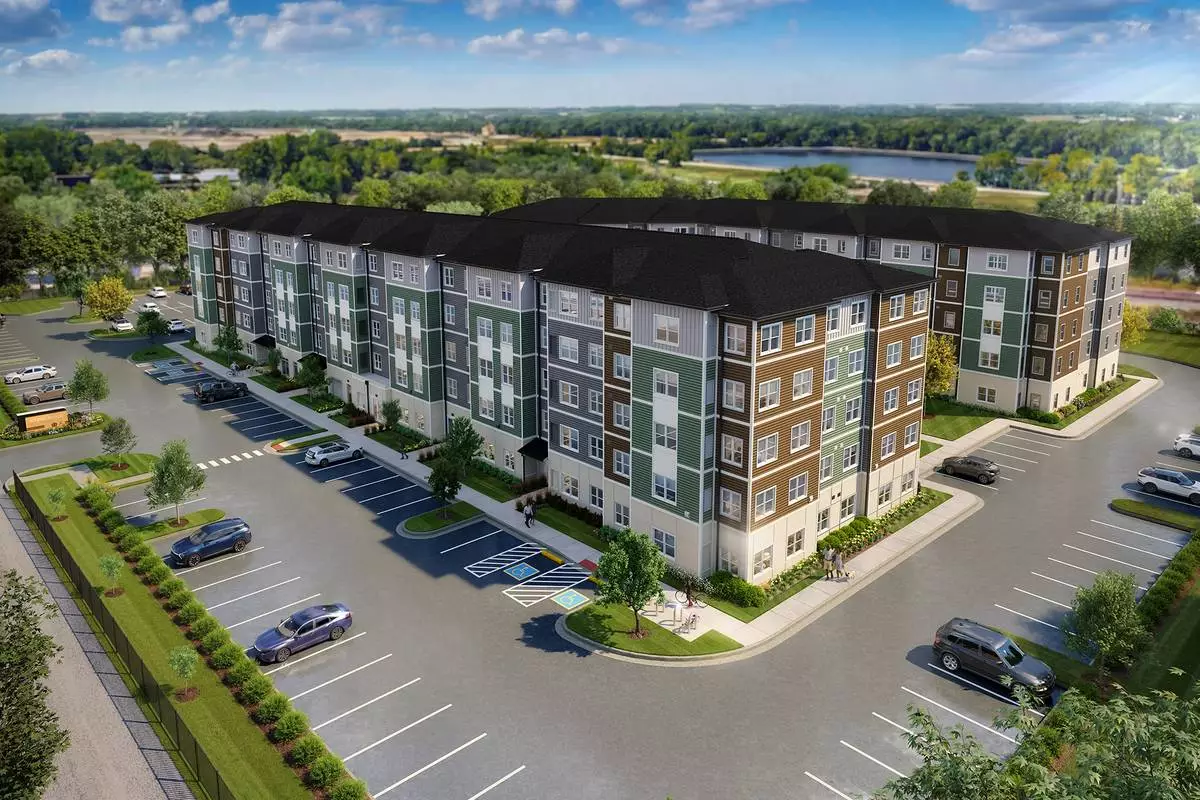
Stone Ridge at High Street (Photo Credit: The NRP Group)
TORONTO (AP) — Canada struck back at the United States on Tuesday with retaliatory tariffs on about $20 billion worth of American goods, including steel, dairy products, appliances and farm equipment, as the trade war between the once-friendly neighbors escalated sharply.
The tension threatened one of the world’s largest trading relationships. The new tariffs extended well beyond industrial goods, hitting everyday purchases such as seafood, cheese, clothing, cosmetics and toilet paper, with some facing duties as high as 50%.
“We did not choose this conflict, but when our economic integration is used as a weapon rather than the foundation for a win-win partnership, we need to stand up,” Finance Minister François-Philippe Champagne said in French, calling the situation "an unprecedented challenge imposed on Canada.”
Canada's retaliation came after the Trump administration imposed 50% tariffs over the weekend on Canadian goods following the collapse of trade negotiations. Canadian Prime Minister Mark Carney accused Washington of trying to subordinate Canada and said U.S. demands during the failed talks showed that Americans wanted to “destroy our major industries."
President Donald Trump intensified the confrontation Monday, telling Canadian leaders to “fall in line” or face consequences “far WORSE” than existing tariffs and threatening new 50% tariffs on Canadian vehicles, auto parts and steel.
Trump added another provocation Tuesday, saying the United States was giving “serious consideration” to renaming Lake Ontario “Lake America” in a feud with Ontario Premier Doug Ford. Such a change would be reminiscent of the Republican president’s unilateral action last year by executive order to rename the Gulf of Mexico to the Gulf of America.
The tariffs will take effect Sept. 8 at rates of 15%, 25% and 50%, with Canada matching the corresponding U.S. tariff rate on more than 700 products such as pulp and paper and electronics. The tariffs on many American products would double from 25% to 50%, with the largest share of the new measures affecting steel and aluminum.
Canadian officials said the goal is not to raise revenue but to protect Canadian companies and reduce U.S. imports.
U.S. steel imports, for example, have already fallen 30% since Canada imposed a 25% tariff, and the new 50% rate is expected to cut them further, Canadian officials said.
Goods facing 50% tariffs include some steel and aluminum products, furniture and clothing. Appliances, dairy products including cheese, fish and seafood, and certain steel and aluminum derivatives will face 25% tariffs. Existing Canadian countertariffs on U.S. autos will remain in place.
Canada also announced a support package for workers and businesses affected by the dispute worth $7.5 billion in Canadian dollars ($5.4 billion in U.S. dollars).
Canadian officials acknowledged the counter tariffs will raise costs for some businesses and consumers but said they expect the overall economic effects to be moderate.
They said the government has provided more than $30 billion Canadian dollars (US$21.7 billion) in tariff-related support since the beginning of 2025 — far more than it has collected in retaliatory duties — as it tries to cushion the blow from the trade fight.
Canada and the United States have deeply integrated supply chains across autos, energy, agriculture and manufacturing, making a prolonged trade fight potentially costly for businesses and workers on both sides of the border.
Businesses and consumers are caught in the middle, facing uncertainty about how much prices may increase.
Michael Howard II, owner of a furniture business in Warren, Michigan, outside Detroit, said the tariffs will hamper the “ability for us to put food on the table for our family" and affect "the ability for us to give back to our community.”
Howard and his wife started their business a decade ago. They make and sell everything from dining room tables to bookcases.
“To say that we don’t need Canada is just disingenuous,” he said. “It’s dishonest. And it’s just absolutely not truthful. We need our neighbor, but also they need us.”
Carney said Monday that Canada may need to move away from matching U.S. tariffs dollar for dollar and instead use more targeted retaliation aimed at protecting Canadian workers and businesses.
“An attitude at the negotiation table that Canada is a subsidiary of the United States” is “not something we’re going to accept,” Carney said.
Carney was even more blunt in French.
“We learned during the negotiations that the Americans want to destroy our major industries, including autos, steel and aluminum,” Carney said. “That was one of the main reasons we said no. It was a bad deal.”
On Monday, Carney said U.S. negotiators had raised the discoverability of French-language content on streaming platforms, along with French-language labeling rules, as trade irritants. He rejected the idea that those protections were negotiable, saying in French: “For the Americans, questions about the French language, Quebec culture, francophone culture and Canadian culture are irritants. Here in Quebec, here in Canada, they are rights."
In a social media post early Tuesday, Trump wrote: “I would never interfere with Canadians speaking French! In fact, I have never even thought of doing such a stupid thing. This lie was made up by a weak and ineffective Prime Minister in an attempt to gain political support, which he has totally lost, from the people of Quebec. I love French Canadians!”
Associated Press writers Seung Min Kim in Washington and Mike Householder in Warren, Michigan, contributed to this report.
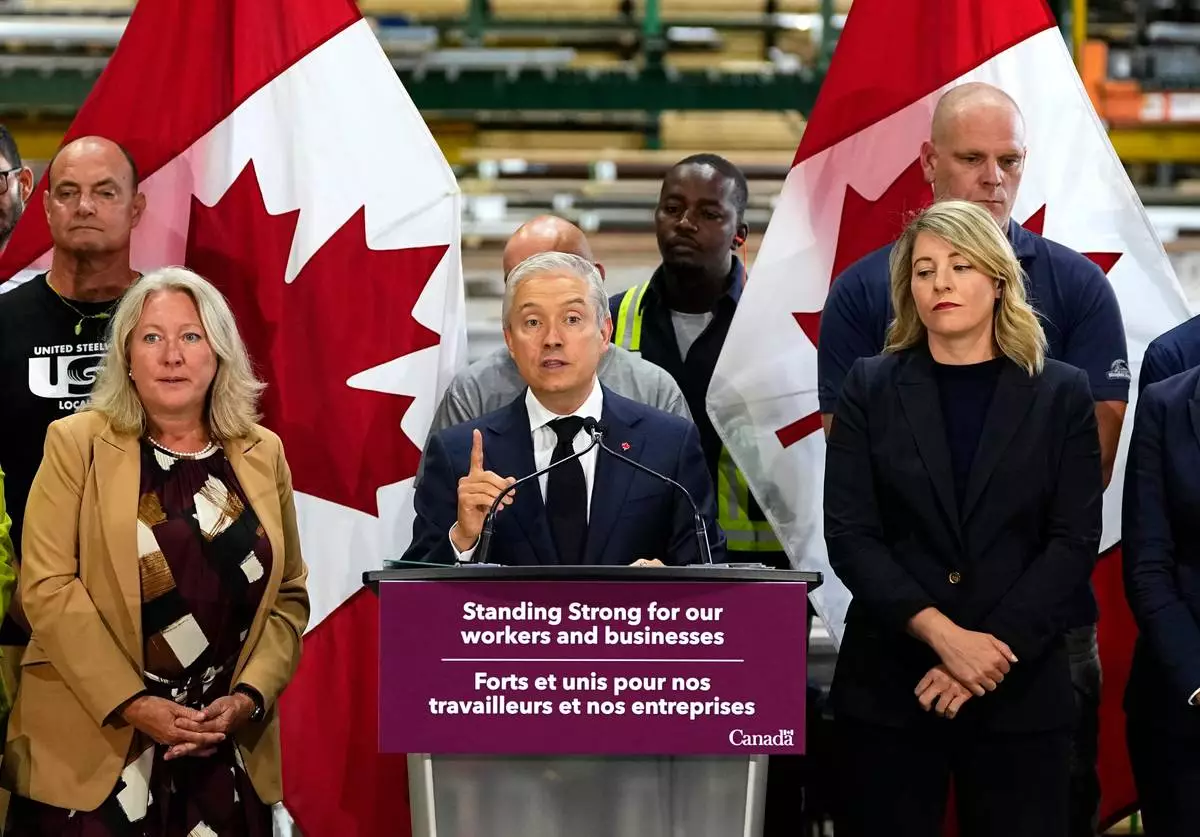
Minister of Finance and National Revenue Francois-Philippe Champagne speaks at a news conference on Canada's response to U.S. tariffs, at a roofing company in Ottawa, on Tuesday, Aug. 25, 2026. (Justin Tang/The Canadian Press via AP)
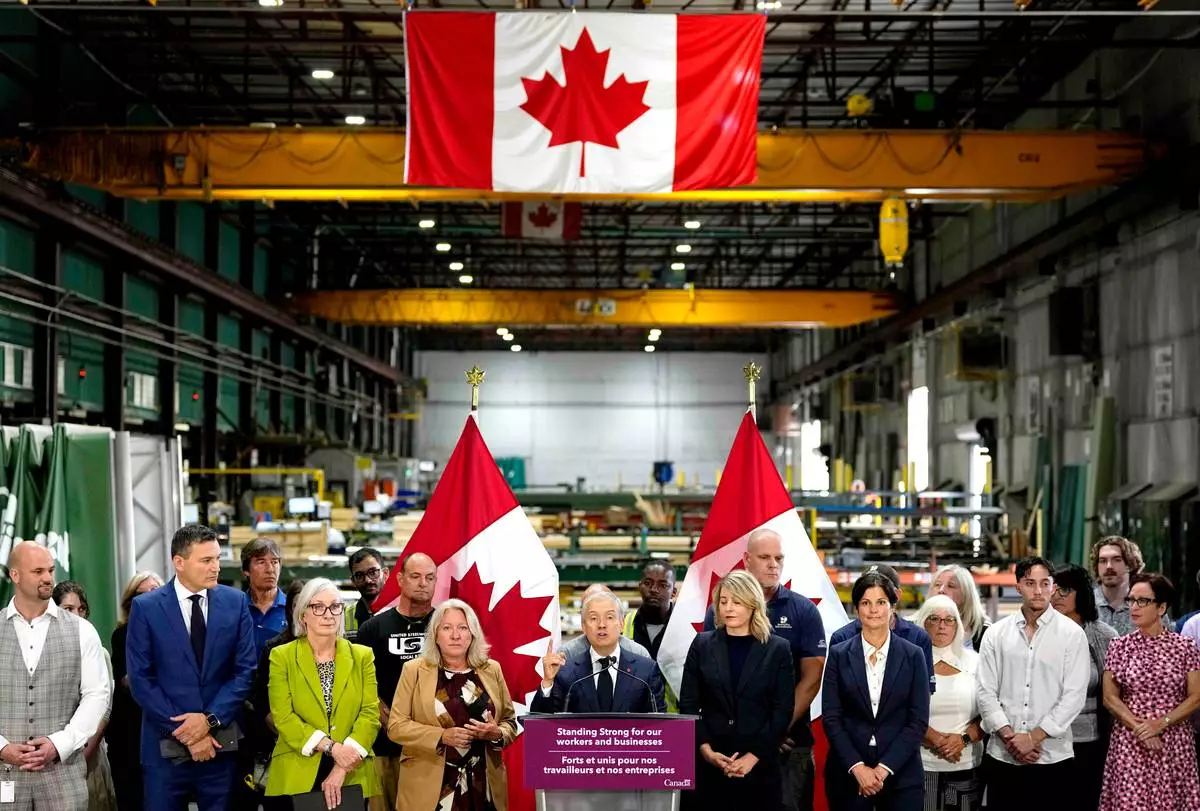
Minister of Finance and National Revenue Francois-Philippe Champagne speaks at a news conference on Canada's response to U.S. tariffs, at a roofing company in Ottawa, on Tuesday, Aug. 25, 2026. (Justin Tang/The Canadian Press via AP)

Ontario Premier Doug Ford speaks to media at a housing development in Hamilton, Ontario, Canada on Monday, Aug. 24, 2026. (Nick Iwanyshyn/The Canadian Press via AP)

Chrysler Pacificas are driven off the lot at Windsor Assembly Plant in Windsor, Ontario, Canada, on Monday, Aug. 24, 2026. (Dax Melmer/The Canadian Press via AP)

FILE - U.S. Sen. Dan Sullivan, R-Alaska, speaks in Palmer, Alaska, Aug. 17, 2026. (AP Photo/Mark Thiessen, File)

President Donald Trump speaks during a back to school event in the Rose Garden of the White House, Monday, Aug. 24, 2026, in Washington. (AP Photo/Alex Brandon)