NEW YORK (AP) — Stan Wawrinka will get one final U.S. Open appearance after all.
The 2016 U.S. Open champion was given a wild card Wednesday, a day after he posted what appeared to be a goodbye message to the tournament and the New York fans on social media.
The 41-year-old from Switzerland is no longer ranked high enough to qualify directly for the tournament, and it appeared his chances of playing were over when the U.S. Tennis Association awarded its last wild-card spot to Patrick Kypson, an American who is ranked No. 115.
But the USTA said Kypson has withdrawn with an injury and it gave his place to Wawrinka.
“I’m incredibly excited to accept the wild card for the 2026 U.S. Open and look forward to competing in front of the fans in New York once again,” Wawrinka said in a statement.
There was some criticism of the USTA on Saturday when it passed on Wawrinka, a popular three-time Grand Slam champion who is planning to retire. He had not entered the U.S. Open qualifying tournament, so that decision seemed to end his final chance to make the main draw.
But Wawrinka showed only appreciation in his post Tuesday.
"Thank you, New York Thank you, (at) US Open," Wawrinka wrote. along with emojis of the Statue of Liberty and a tennis racket. “Thank you to every single fan who supported me, pushed me, believed in me and shared all these emotions with me over the years. Forever grateful. Forever New York.”
Wawrinka became one of the most accomplished players of his era, at a time when Roger Federer, Rafael Nadal, Novak Djokovic and Andy Murray were dominating tennis. He beat Nadal in the 2014 Australian Open final and Djokovic the following year to win the French Open.
He beat Djokovic again in 2016 to win the title in New York, though he wasn't able to defend it. Wawrinka missed the 2017 U.S. Open after having two knee surgeries that year, then had a pair of foot surgeries in 2021.
Wawrinka reached No. 3 in the ATP rankings and also teamed with Federer to win the 2008 Olympic gold medal in men's doubles.
“When I first arrived in New York from a small farming village in Switzerland, everything felt too big. The city. The noise. The energy. The crowds. The lights. But year after year New York slowly became one of my favorite places in the world,” he wrote.
“This city challenged me. It pushed me. It brought something out of me that few places ever could. I experienced some of the strongest emotions of my career here. The battles, the late nights, the incredible atmosphere, the love from the crowd … memories that will stay with me forever. Winning the US Open, in the city that never sleeps, will forever be one of the greatest moments of my life.”
See AP’s full tennis coverage here

FILE - Stan Wawrinka, of Switzerland, reacts after a point against Novak Djokovic, of Serbia, during the men's singles final of the U.S. Open tennis tournament, on Sept. 11, 2016, in New York. (AP Photo/Darron Cummings, File)
SALISBURY, Md. (AP) — “Rocky Raccoon checked into his room, only to find Gideon’s Bible.”
Paul McCartney explained those famous lines in the song by The Beatles, saying these Bibles “were in every hotel in America.” He’d never seen something like that in England.
For more than a century, countless have found it in the bedside drawers of American hotel and motel rooms. It has become a symbol of America’s roadside culture and Protestant tradition. It’s mentioned in lyrics, films, Broadway shows.
“The Gideon Bible is a peculiarly and amazingly American object,” says Lori Anne Ferrell, author of “The Bible and the People.”
It began with Gideons International, an organization of evangelical business and professional men founded in 1899.
One of its members, working on a railroad expansion project, gets off the train in the town of Superior in western Montana, and checks into a hotel. He asks the owner if he can place a Bible at the front desk. She responds with a more ambitious proposal: Place a Bible in each of the hotel rooms.
The group says that it has distributed more than 2.5 billion Bibles worldwide since that day in 1908. It was the year that Ford Motor Co. began manufacturing the Model T, the first low-priced car that introduced motoring to the masses.
“All of a sudden, we have the road culture, the interstate culture, we have motels, and we have, for the first time, people leaving home,” Ferrell says. “There’s a story about America with the Gideon Bible that you can’t tell with any other Bible because it’s distributed everywhere, and it represents the movement of people across the country.”
Gideon Bibles have been distributed in prisons, military bases, hospitals, even the White House. In a 1971 ceremony, the group presented its 100 millionth Bible to President Richard Nixon.
“It’s an expression of biblicism — the idea that the Bible it’s from God to you. And it’s all you need … and that biblicism is a deep element in American culture,” says Timothy K. Beal, author of “Roadside Religion: In Search of the Sacred, the Strange, and the Substance of Faith.”
Over the years, its distribution in schools faced challenges. Its presence diminished as the number of U.S. hotels that offer religious materials in their rooms dropped.
Still, it remains the religious book that quietly seeks to provide comfort in the most secular of settings — and that, even with the advent of the TV and Wi-Fi, sits in motel nightstands across America and endures.
Associated Press religion coverage receives support through the AP’s collaboration with The Conversation US, with funding from Lilly Endowment Inc. The AP is solely responsible for this content. Part of a recurring series, “American Objects,” marking the 250th anniversary of the United States. For more American objects, click here. For more stories on the anniversary, click here.
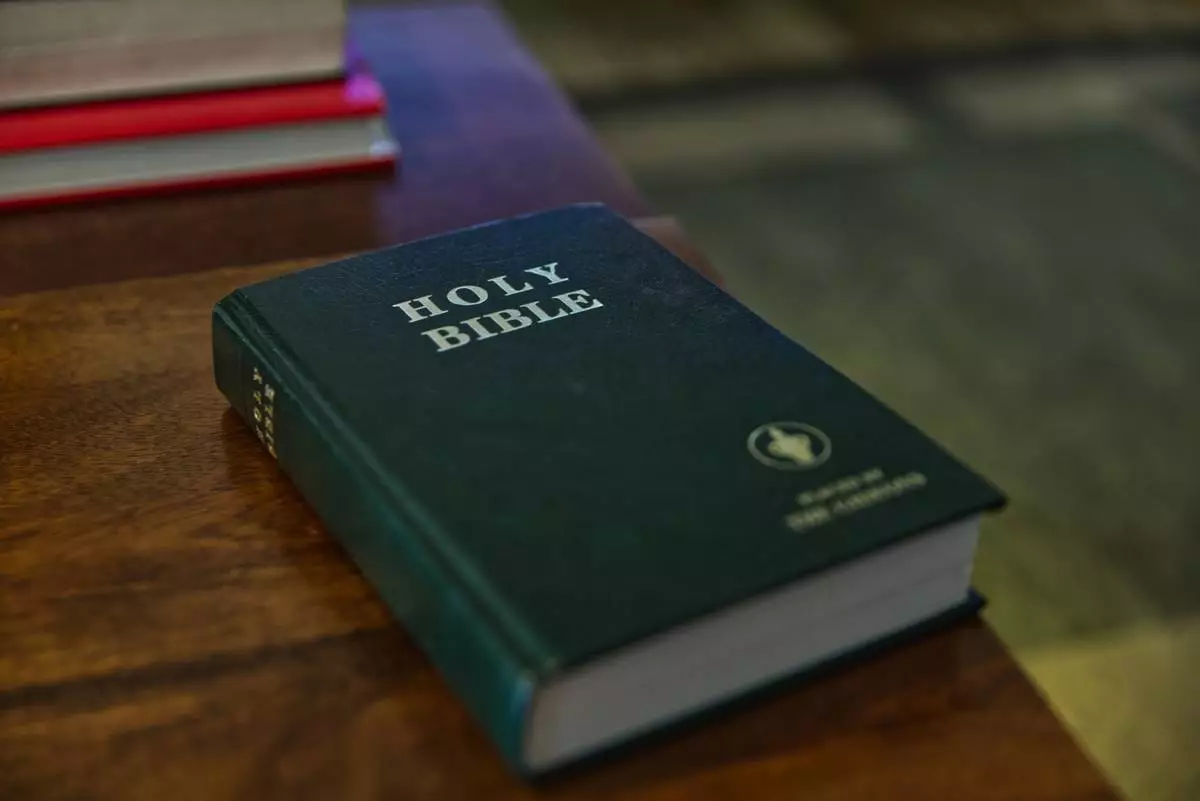
A Gideon Bible sits on a table in Phoenix, Sunday Aug. 23, 2026. (AP Photo/Dario Lopez-Mills)
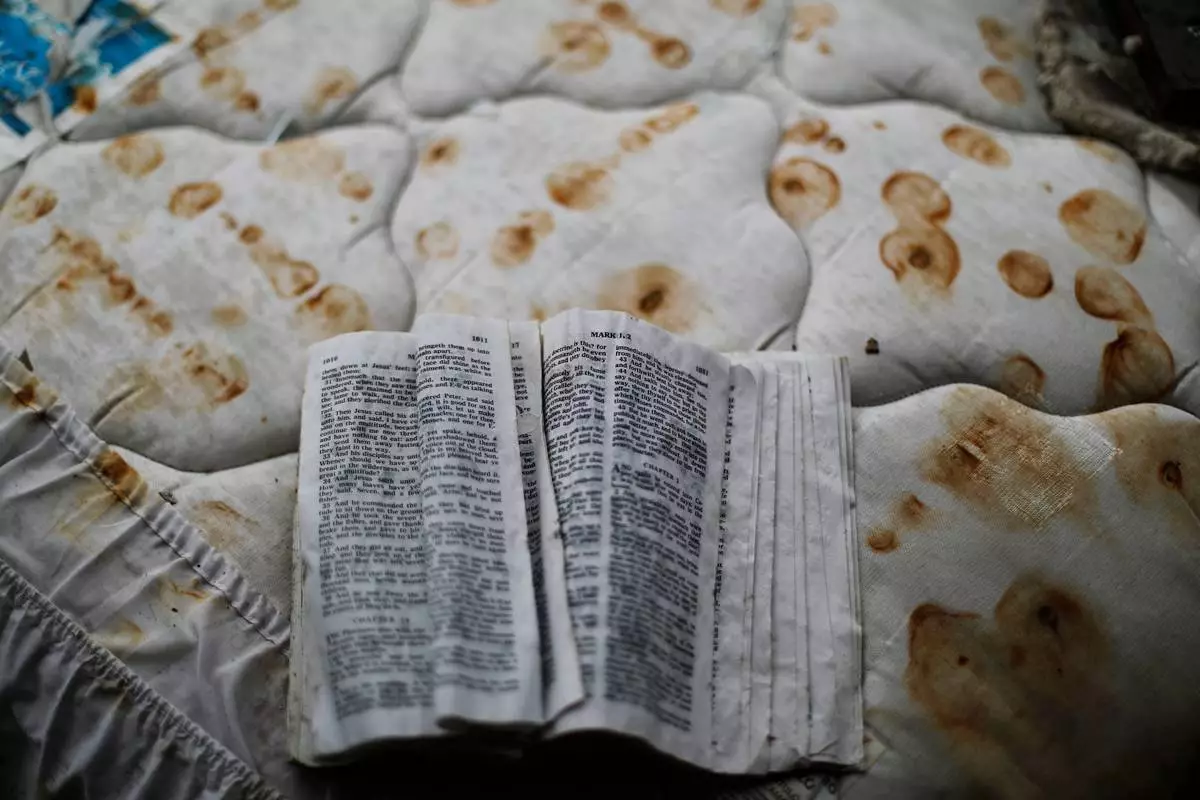
FILE - A bible sits on a stained mattress on a pile of debris outside a damaged motel from Hurricane Michael in Panama City, Fla, Jan. 23, 2019. (AP Photo/David Goldman, File)
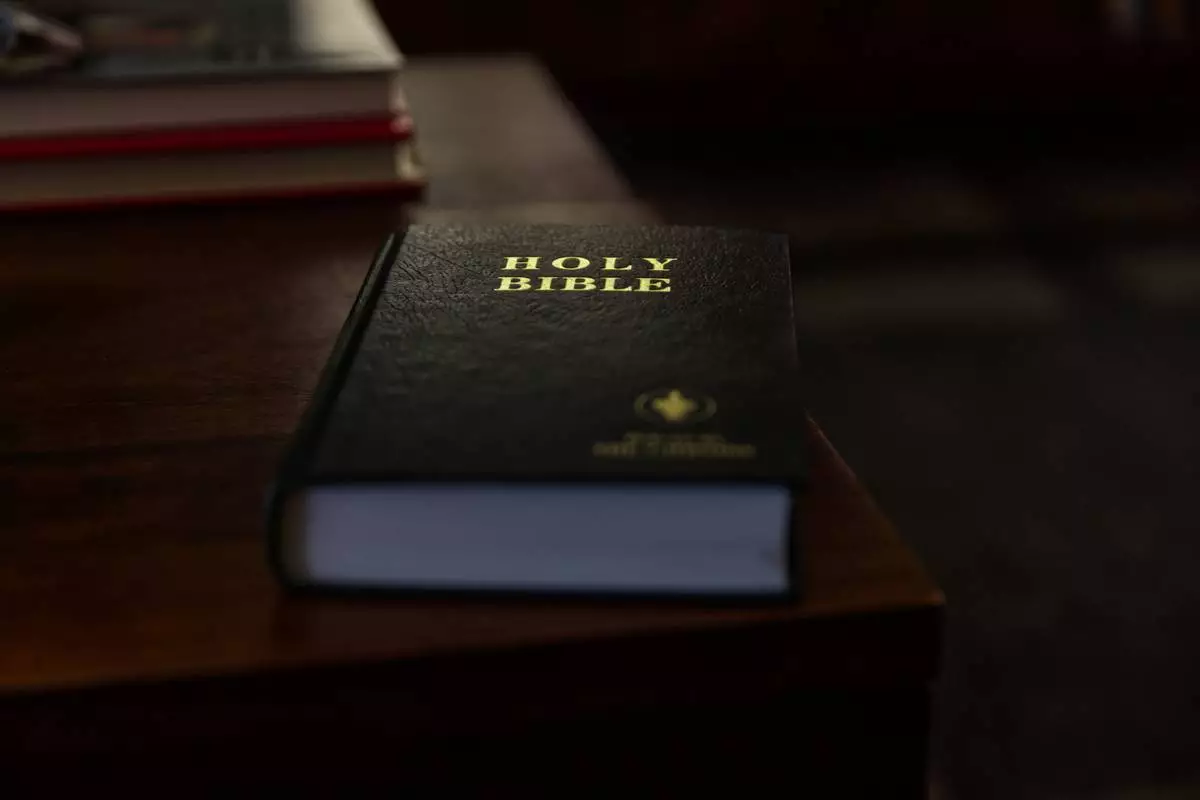
A Gideon Bible sits on a table in Phoenix, Sunday Aug. 23, 2026. (AP Photo/Dario Lopez-Mills)