ATLANTA (AP) — The success of a new PGA Tour postseason format depends largely on getting fans to understand what it means. And money is not the answer.
Golf was never meant to have a Super Bowl or a World Series, no matter how hard the tour has tried to make it feel that way over the last 20 years. What matters is a green jacket in April and a silver claret jug in July. Golf has been defined by four majors since Arnold Palmer said so in 1960.
Click to Gallery
Wyndham Clark holds the Wanamaker Trophy and the BMW trohy after winning the BMW Championship golf tournament, Sunday, Aug. 23, 2026, in St. Louis. (AP Photo/Jeff Roberson)
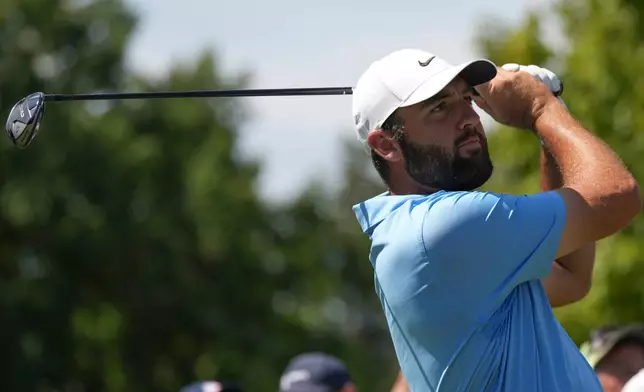
Scottie Scheffler hits from the second tee in the final round of the BMW Championship golf tournament, Sunday, Aug. 23, 2026, in St. Louis. (AP Photo/Jeff Roberson)
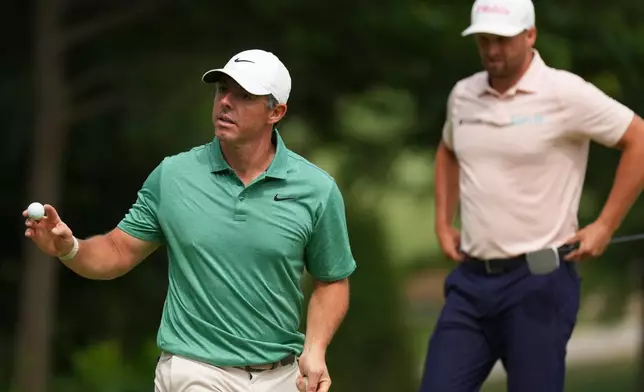
Rory McIlroy, of Northern Ireland, walks off the nineth green as Wyndham Clark is seen in the final round of the BMW Championship golf tournament, Sunday, Aug. 23, 2026, in St. Louis. (AP Photo/Jeff Roberson)
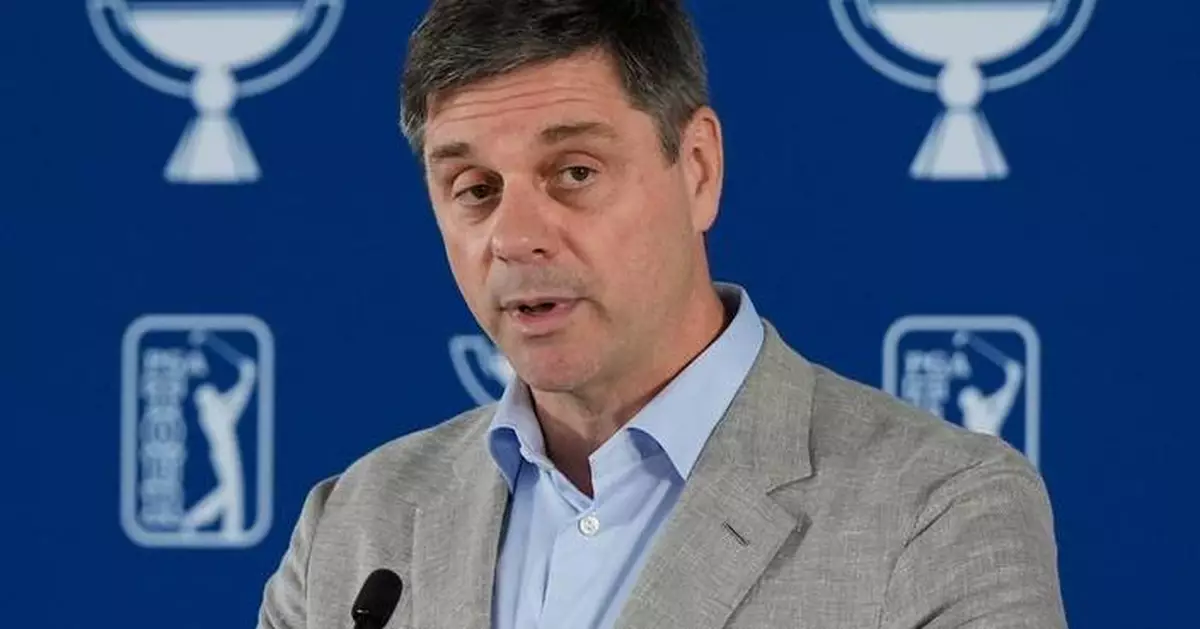
FILE - PGA Tour CEO Brian Rolapp speaks before a practice round of the Tour Championship golf tournament, Wednesday, Aug. 20, 2025, in Atlanta. (AP Photo/Mike Stewart, File)
So whether the new postseason format that CEO Brian Rolapp announced Tuesday — seven days of match play over two weeks in two cities — is an improvement over the previous iterations remains to be seen.
But he delivered the right message with one phrase when Rolapp called it “one of the most difficult tournaments to qualify for and win.”
That's all it is, and that's enough.
The season starts with as many as 20 tournaments against the strongest fields, and the leading 90 players advance to the BMW Championship. The No. 1 player at the end of the week is the season winner ("Champion golfer of the year" is already taken) and handsomely rewarded.
The top 32 advance to the two-week Tour Championship — four players in eight groups (World Cup fever!) and the top two from each group move on to the final week. Then it's single elimination with a twist — everyone has to stick around to the end so there's more than just two players on the course by Sunday.
Odds are the leader in points before the Tour Championship will have played the best golf (lately that has been Scottie Scheffler). And it's just as likely that players who captured one or more of the majors that year would not be losing any sleep if the year didn't end with a FedEx Cup title.
Rory McIlroy is the only three-time winner of the FedEx Cup, and he was never golf's best player any of the years he won. It was Jason Day early and Dustin Johnson late in 2016. It was Brooks Koepka in 2019. And it was Scheffler, whom McIlroy beat by making up a six-shot deficit at East Lake on the final day in 2022.
He was proud of all three titles for different reasons. McIlroy had lost chances to win in 2012 and 2014, so it was important just to have his name on the trophy. It felt big in 2019, too, mainly because the year before he was in the final group when Tiger Woods got swallowed up by the gallery on the 18th hole. That was a cool moment, and then McIlroy got his turn.
“You could argue that each of the FedEx Cups I’ve won I maybe wasn’t the best player of the entire year,” McIlroy said Tuesday. “But I always felt like it was a way to redeem myself or end the year on a really positive note.”
And starting in 2028?
In some respects, it's going back to previous times when there was a Tour Championship winner and a FedEx Cup champion. Those trophies were presented the same day. Now it's two weeks apart.
Dual winners famously happened in 2009 when Woods won the FedEx Cup and Phil Mickelson won the Tour Championship. That prompted Mickelson to say at the trophies presentation: “Let me see if I get this straight. I shot 65 ... and he gets a check for $10 million.”
It was funnier back then.
More awkward was in 2018 when Woods won the Tour Championship, his first victory after five years and four back surgeries. That might be one of the great trivia questions: Who won the FedEx Cup that year? Justin Rose.
And that led to the infamous change to “starting strokes,” which was a lot better than it sounded.
It rewarded the best player through the season — with increased points value in the two playoff events — and he was given a two-shot lead at 10-under par before any shots were hit. It sounded goofy, yes. But it was the same advantage as resetting points based on seeding.
The media lampooned it from Monday to Thursday. No one really talked about it the rest of the week because the leaderboard was clear without doing longhand math on a whiteboard. Then again, the player who took the fewest shots that week could finish second (Xander Schauffele).
And now it should be clear. The best player. A bonus competition for the 32 best players, whittled down over two weeks on two golf courses in match play. The hardest tournament for which to qualify, the toughest to win.
The ultimate measure of success is how it long it lasts before it gets changed.
See AP’s full golf coverage here

Wyndham Clark holds the Wanamaker Trophy and the BMW trohy after winning the BMW Championship golf tournament, Sunday, Aug. 23, 2026, in St. Louis. (AP Photo/Jeff Roberson)
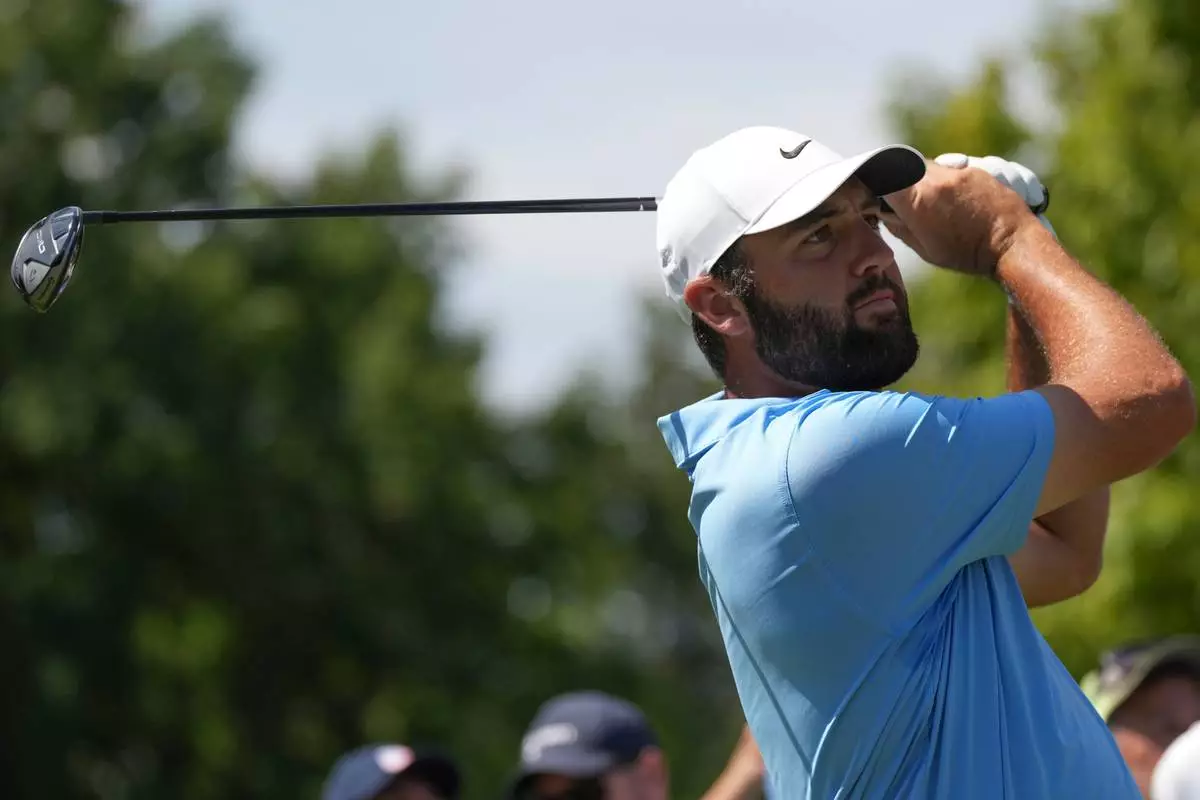
Scottie Scheffler hits from the second tee in the final round of the BMW Championship golf tournament, Sunday, Aug. 23, 2026, in St. Louis. (AP Photo/Jeff Roberson)
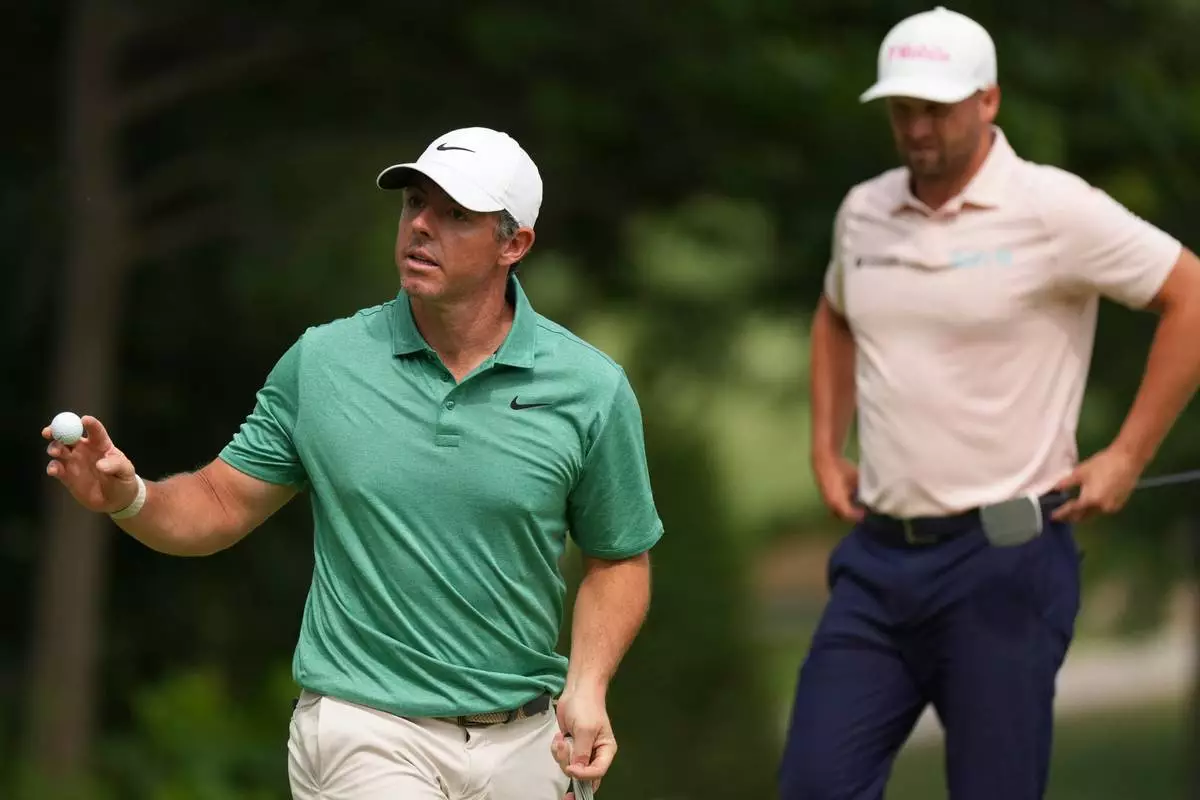
Rory McIlroy, of Northern Ireland, walks off the nineth green as Wyndham Clark is seen in the final round of the BMW Championship golf tournament, Sunday, Aug. 23, 2026, in St. Louis. (AP Photo/Jeff Roberson)
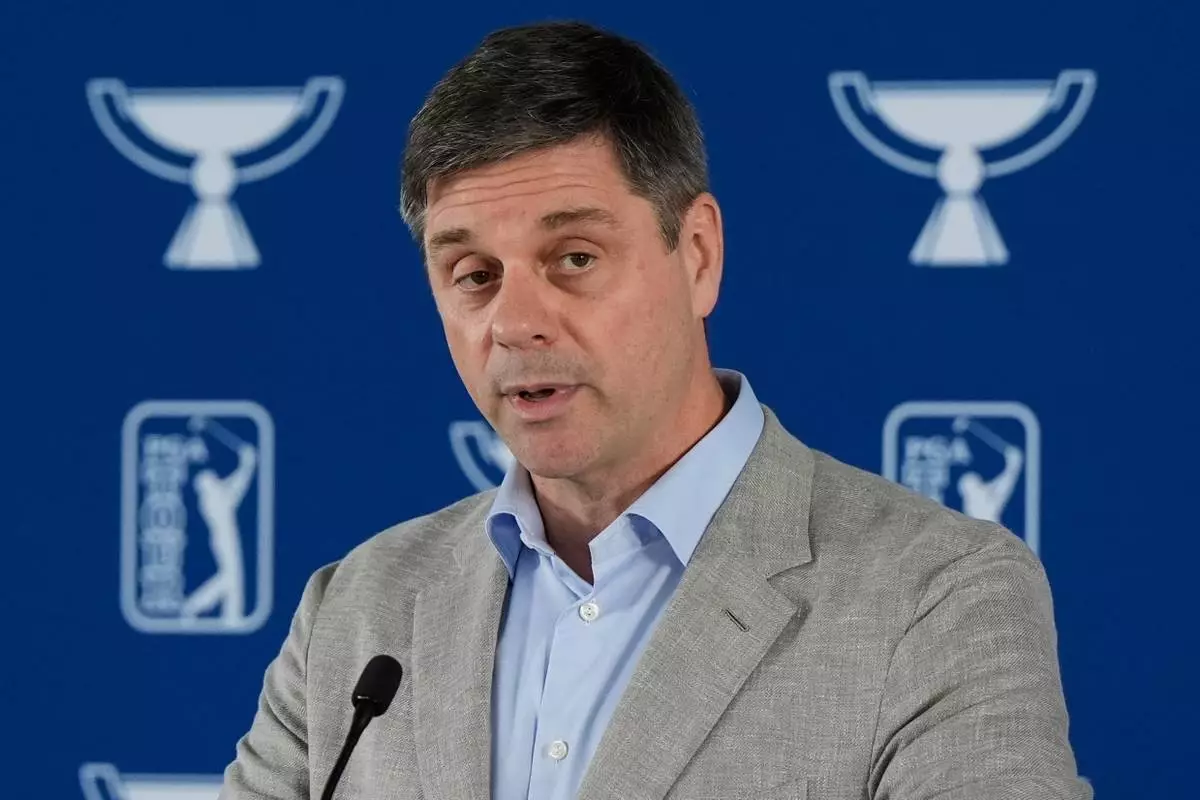
FILE - PGA Tour CEO Brian Rolapp speaks before a practice round of the Tour Championship golf tournament, Wednesday, Aug. 20, 2025, in Atlanta. (AP Photo/Mike Stewart, File)
The Supreme Court's decision giving preliminary approval for President Donald Trump's order restricting mail voting may not lead to a single election procedure changing during the November midterms, but it has already thrown into uncertainty the method that nearly one-third of the country uses to vote.
Rather than saying that Trump's order is legal, the high court said Monday it was too early for Democratic-run states to challenge it in June, when they convinced a federal judge in Boston to freeze the order for November's election. That effectively restarts the legal fight over the order in an incredibly compressed timeline, with initial ballots scheduled to be sent to North Carolina's overseas and military voters in just over a week, on Sept. 4.
A second injunction barring the U.S. Postal Service from making changes to comply with Trump's directive remains in effect. Still, the administration late Monday filed a motion asking that the second hold be removed, and has posted new regulations from the Postal Service that would go into effect Tuesday if the legal pathway is fully cleared.
That new rule requires specific formatting for envelopes containing mail ballots — which may force some jurisdictions to completely revise theirs — and makes states use an electronic system to identify to the Postal Service who is voting by mail. If states don't comply with the rule, their mail ballots won't get sent.
The prospect of such a potential sweeping overhaul in mere days boggled critics' minds. In her dissent, Justice Ketanji Brown Jackson warned that the decision “needlessly injects chaos and uncertainty into the upcoming midterm elections.”
David Becker, executive director of the Center for Election Innovation & Research, agreed, saying the majority “seemed to create complete chaos leading up to the midterm elections” and it'd be “impossible” for states to comply with the new rules at this late date.
Jesse Salinas, the registrar of Yolo County in California and president of that state's association of election officers, noted that ballots in his state start going out in 11 days and his county already printed its envelopes.
“You look at the timeline, and it's a bit chaotic,” Salinas said, noting he doesn't know precisely which envelope designs comply with the new rules.
He dismissed the idea of a last-minute revision in procedures. “The capacity to do that, I just don't see it,” Salinas said.
Tammy Patrick, chief program officer at the Elections Center, an association of 2,500 election officers, warned that it's impossible for any state to comply with the rule and that no one she talked to has tried.
“There isn't a single state that does their elections in a way that this postal rule lays out,” Patrick said in an interview. “There has been this assumption that this is not going to happen because it could not happen the way it's laid out, because no one does it this way.”
Cisco Aguilar, the Democratic Secretary of State in Nevada, where every registered voter gets a mail ballot, noted the post office had already misdelivered three dozen mail ballots from his state's June primary.
“They're going to come in within seven days and build a massive database that has 100% accuracy?” Aguilar said in disbelief. “It is impossible to implement this system in that time frame.”
Trump has long sought to make voting by mail largely impossible, though he himself has repeatedly cast his ballots by mail.
Trump falsely blamed his 2020 loss on mail voting and spun up baroque conspiracy theories that he's tried to prove while back in office. Judges blocked him from creating new voting restrictions by executive order last year, and he only issued his latest order after his bill to revamp voting procedures stalled in the Senate amidst Democratic opposition.
The Election Assistance Commission found that 29% of voters in 2024 cast their ballots through the mail. Democrats are more likely to use mail voting than Republicans, a reflection of how the process has become polarized since Trump began attacking it in 2020. Still, the president has to date been unable to make the sweeping changes he's sought because the Constitution grants control of voting rules to states, and in federal elections, to Congress — not the president.
Legal experts stressed that's why they view it as unlikely Trump's order will actually be implemented. Not only did the majority in the Supreme Court's unsigned order note that it hasn't determined whether the measure is constitutional, but every victory the administration has won so far has only been because it's argued that it's premature to talk about its constitutionality. Opponents are already weighing new lawsuits since the final rule was published Friday night.
Becker, a former Department of Justice lawyer who co-wrote a book debunking Trump's 2020 election lies, added that he expects the next round of litigation to keep the order from being implemented in November. Rick Hasen, a UCLA law professor, said after the ruling: “This doesn't necessarily mean anything in terms of November.”
Derek Muller, a Notre Dame law professor, said the Supreme Court still ensured a fraught court battle in the coming days.
“It puts courts in a terrible place, because whatever happens is super close to the election,” Muller said. “If it permits it, it creates super disruption for the states. If it suspends it, it visibly angers the administration.”
Hasen said it's inconceivable that the regulation will impact voters in November.
“Both legal and practical reasons make this practically impossible to enforce,” he said of Trump's mail voting order.
Elections are run by local officials in thousands of scattered offices, many of which don't even have a full-time employee. Patrick said that those who work in the field have been left reeling.
“Election officials just feel like punching bags at this moment because they plan one way of conducting their elections, and have contingency plans if a fire breaks out, or one location loses power,” Patrick said. “But how do you plan for something that affects one-third, one half, or all of your voters?”
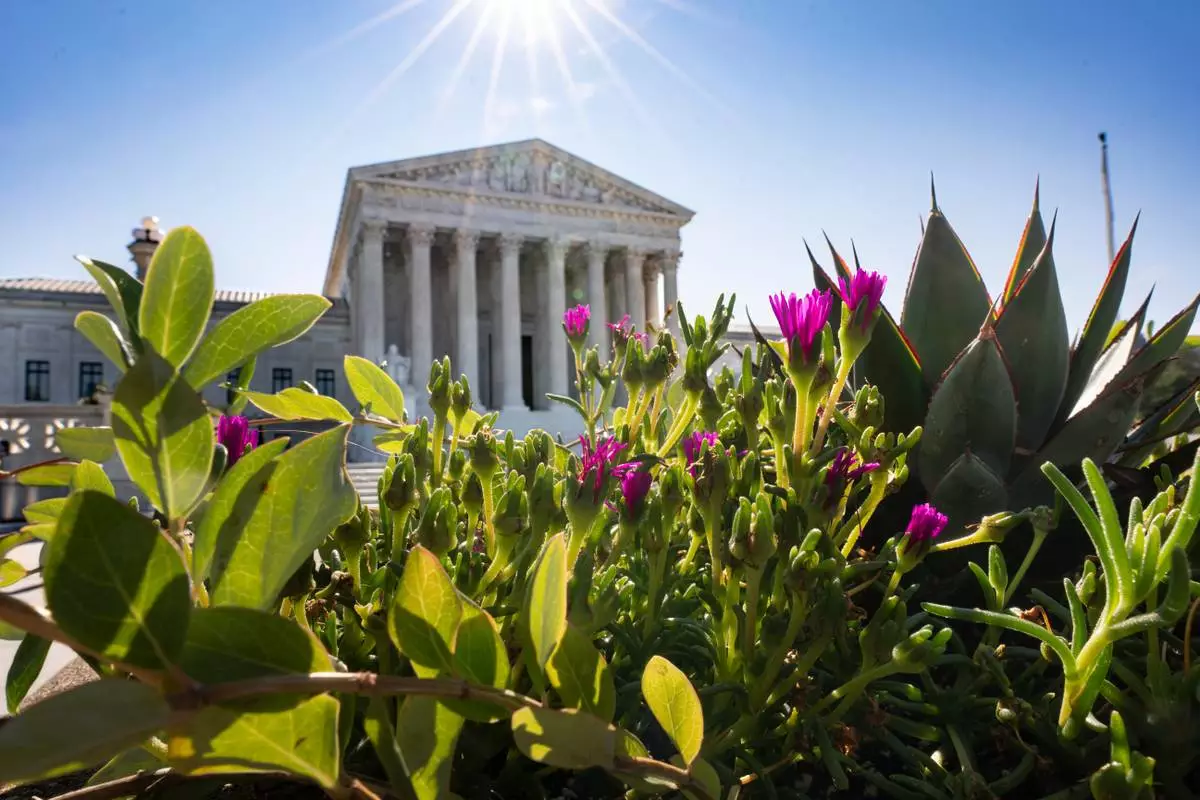
The Supreme Court is seen on the morning after the conservative majority sided with the Trump administration in a case over President Donald Trump's executive order restricting mail-in voting, on Capitol Hill in Washington, Tuesday, Aug. 25, 2026. (AP Photo/J. Scott Applewhite)
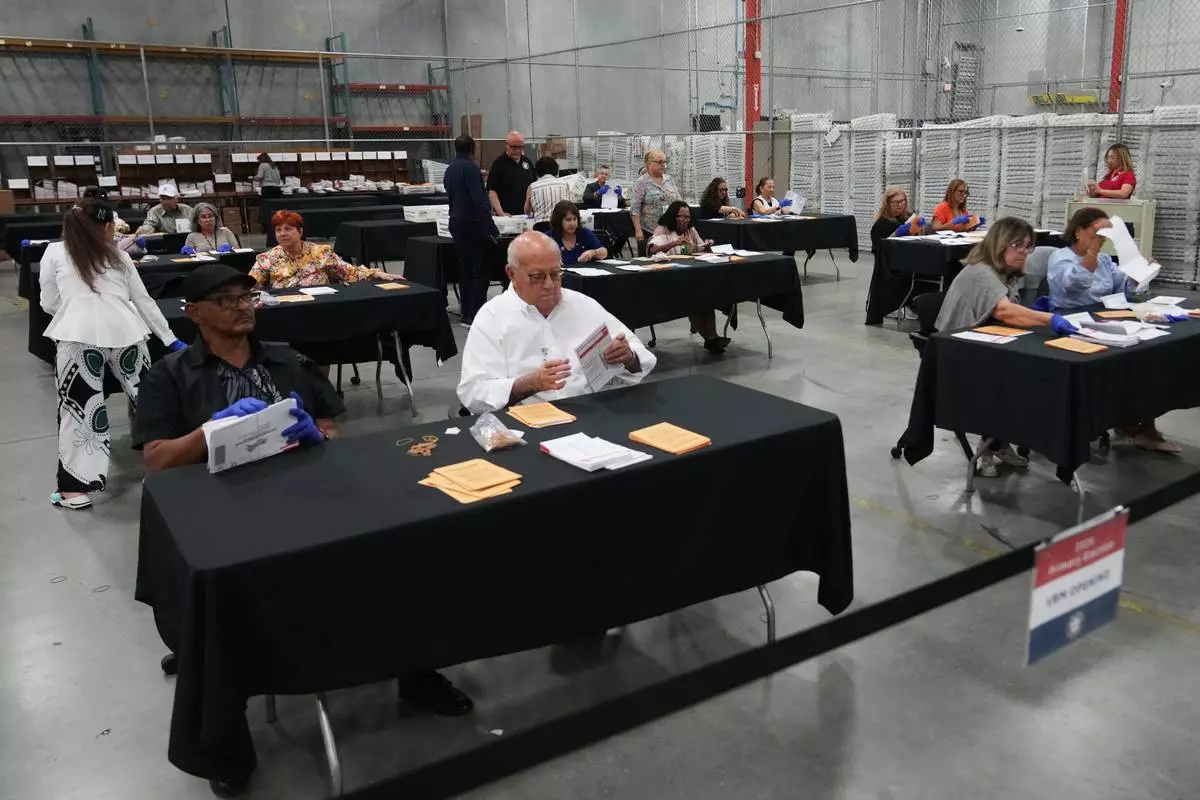
Election workers sort vote-by-mail ballots at the Miami-Dade County Supervisor of Elections Office for the Florida primary election in Doral, Fla., Tuesday, Aug. 18, 2026. (AP Photo/Lynne Sladky)
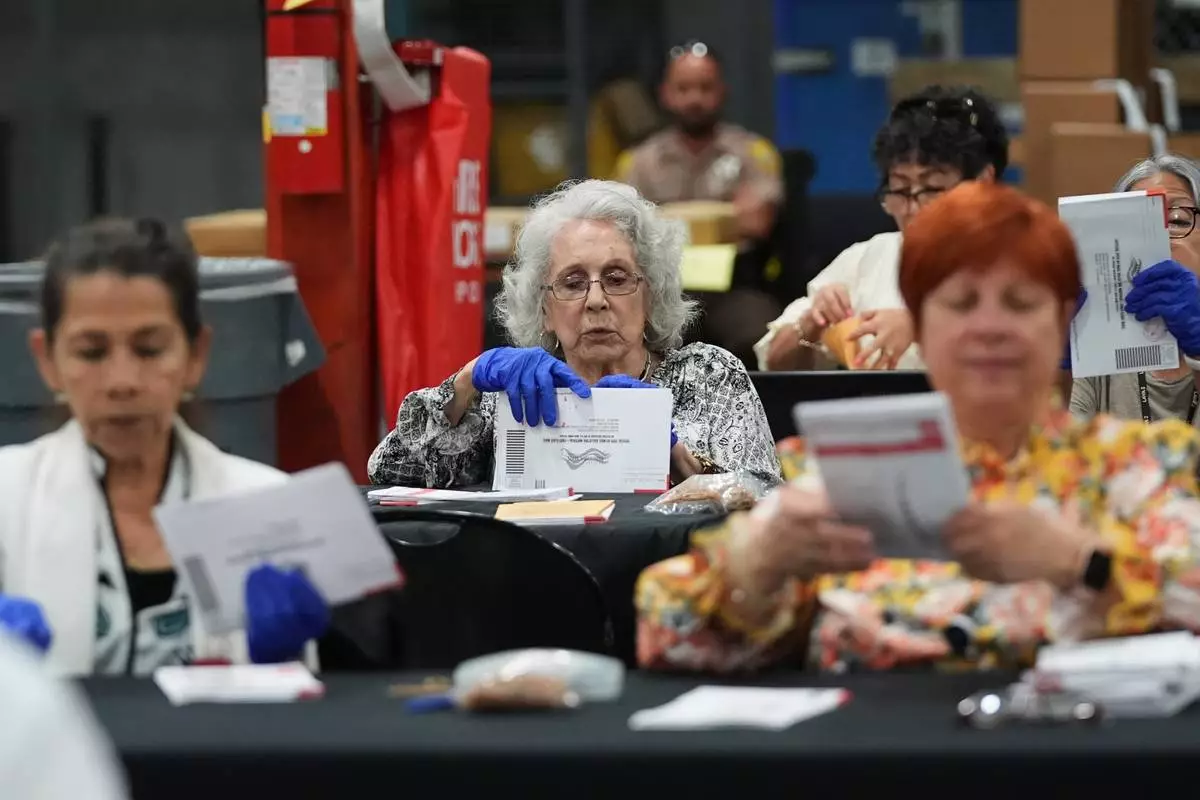
Election workers sort vote-by-mail ballots at the Miami-Dade County Supervisor of Elections Office for the Florida primary election in Doral, Fla., Tuesday, Aug. 18, 2026. (AP Photo/Lynne Sladky)
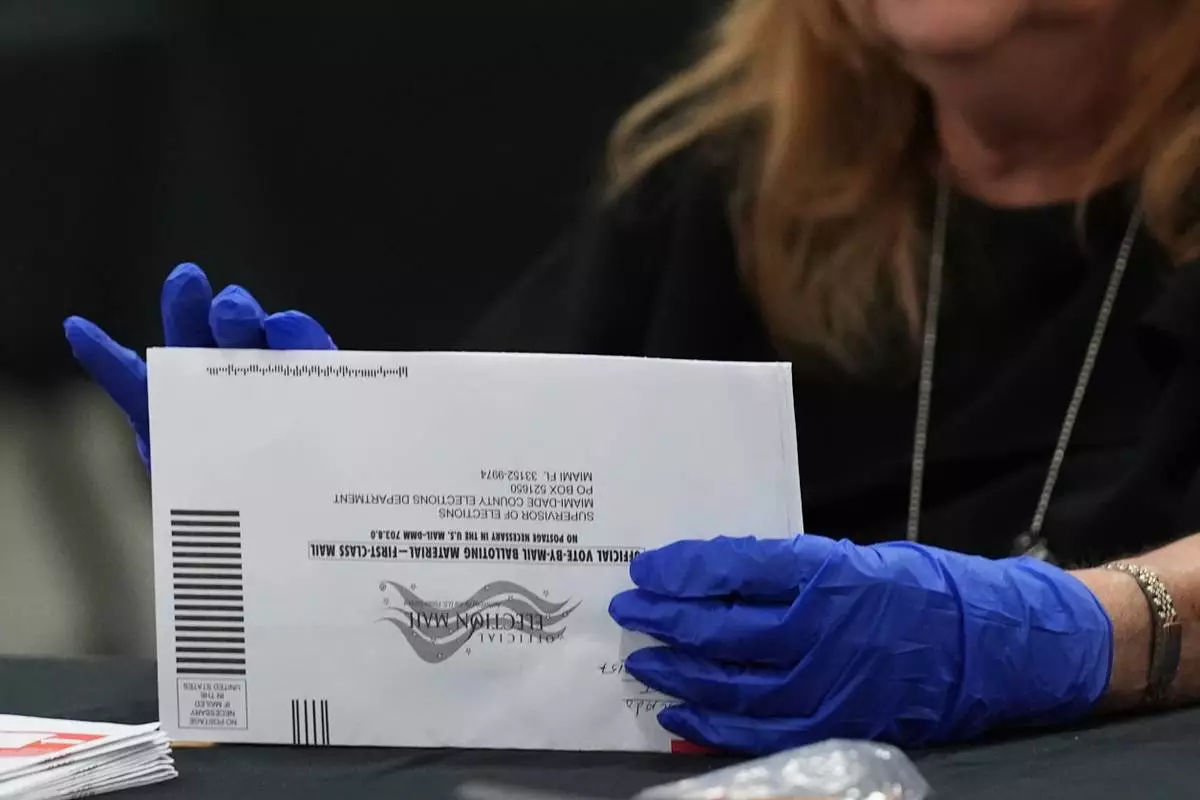
An election worker sorts vote-by-mail ballots at the Miami-Dade County Supervisor of Elections Office for the Florida primary election in Doral, Fla., Tuesday, Aug. 18, 2026. (AP Photo/Lynne Sladky)