TEL AVIV, Israel (AP) — It’s been a year since Israeli soldiers killed 22 Palestinians, including journalists and rescue workers, in a double strike on a hospital in Gaza. No one has been held accountable.
Israeli officials said the target was a suspected Hamas camera on the roof of Nasser Hospital. Among those killed were Reuters cameraman Hussam al-Masri and Mariam Dagga, a visual journalist who worked for The Associated Press and other news organizations.
Click to Gallery
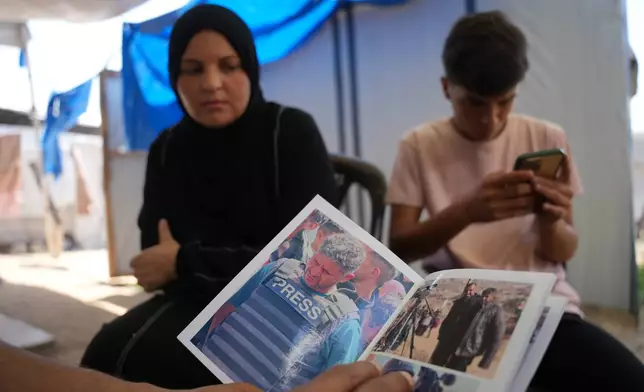
Family members of Palestinian journalist Hussam al-Masri, who worked as a freelance journalist for Reuters and was killed in an Israeli airstrike targeting the Nasser Hospital building in Khan Younis on Aug. 25, 2025, look at his photos in Khan Younis, southern Gaza Strip, Aug. 16, 2026. (AP Photo/Abdel Kareem Hana)
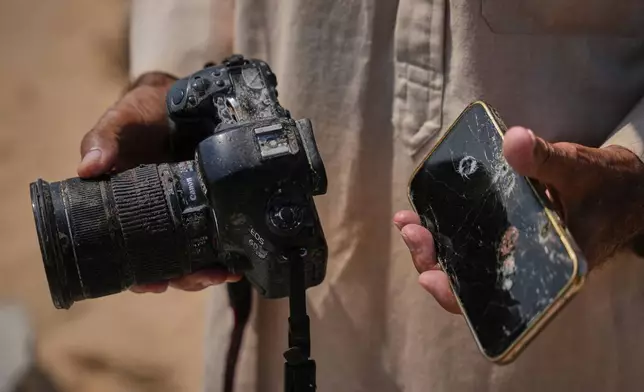
Riyad Abu Dagga, 69, displays the camera and phone belonging to his slain daughter, Mariam Dagga, a freelance journalist who worked with The Associated Press and other news outlets during the Gaza war and was killed in an Israeli airstrike on the Nasser Hospital building in Khan Younis on Aug. 25, 2025, in Khan Younis, Gaza Strip, Aug. 16, 2026. (AP Photo/Abdel Kareem Hana)
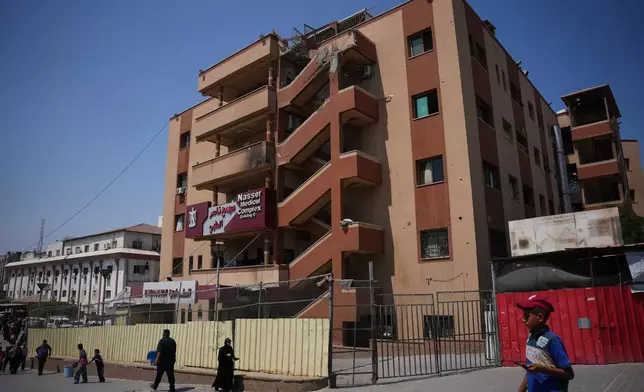
The Nasser Hospital building, which was hit by an Israeli strike on Aug. 25, 2025, killing journalists Mariam Dagga and Hussam al-Masri, among others, is seen in Khan Younis, Gaza Strip, Aug. 16, 2026. (AP Photo/Abdel Kareem Hana)
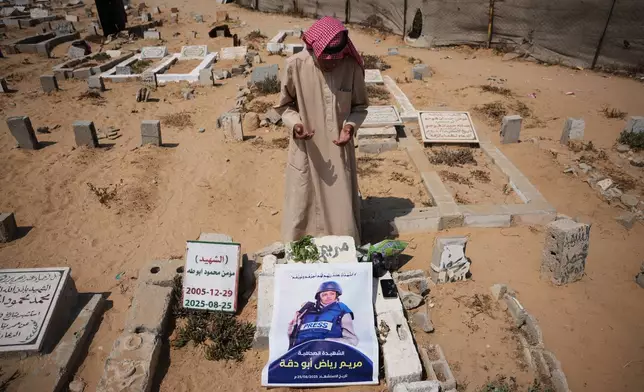
Riyad Abu Dagga, 69, visits the grave of his daughter, Mariam Dagga, a freelance journalist who worked with The Associated Press and other news outlets during the Gaza war and was killed in an Israeli airstrike on the Nasser Hospital building in Khan Younis on Aug. 25, 2025, at a cemetery in Khan Younis, Gaza Strip, Aug. 16, 2026. (AP Photo/Abdel Kareem Hana)
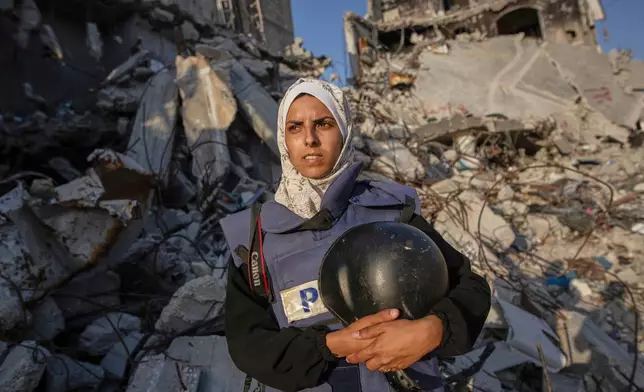
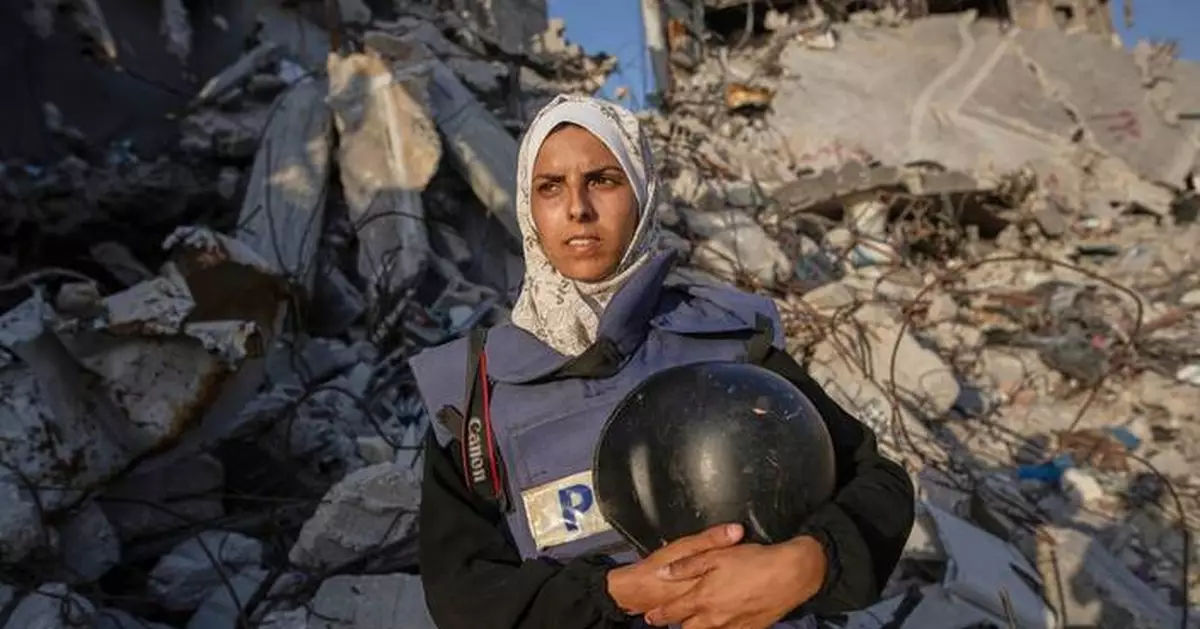
FILE - Freelance journalist Mariam Dagga, 33, who had been working with the Associated Press and other outlets during the Gaza war, poses for a portrait in Khan Younis, southern Gaza Strip, on June 14, 2024. (AP Photo/Jehad Alshrafi, File)
Despite repeated requests by AP, the army has not provided details about the investigation or a timeline for when it could be completed. Rights groups say Israel rarely holds troops accountable for killing Palestinians, pointing to long investigations that rarely lead to prosecution.
As global outrage over the Aug. 25, 2025, strike grew, the Israeli military said that in addition to taking out the camera, six of those killed were linked to Hamas, without providing evidence.
But an Israeli soldier, speaking on condition of anonymity for fear of retribution, now says the military could find no evidence linking the camera, which belonged to al-Masri, to Hamas. The soldier, who was privy to discussions surrounding the military’s response, said none of the six was the intended target of the strike.
AP sent detailed questions to the military about the allegations, as well as other questions about the strikes. The military didn't address the questions but said via text that the incident is being examined and findings will be transferred to the Military Advocate General’s Corps to reach a verdict on whether to open a criminal investigation. It didn’t provide a timeline.
AP reported at the time that one of the six Israel said was linked to Hamas was not on the hospital's list of casualties and two others were medical or emergency personnel. That, along with the soldier’s account, raises serious questions about Israel’s rationale for the strike.
Why did troops fail to identify the cameraman as al-Masri, even though journalists were known to film at the hospital? Why did they strike a second time, causing most of the deaths and raising accusations of a “double tap” attack on first responders, which would be a war crime?
“A year later, we remain devastated by their deaths and are still searching for answers from the Israeli authorities about what happened that day,” AP Executive Editor Julie Pace said.
“The information we have received to date has fallen short of the clear answers and accountability that an incident of this gravity requires.”
News agencies like Reuters and AP supplied live video footage to newsrooms around the world from the hospital, one of the few functioning in Gaza at the time. AP repeatedly informed the army that its journalists were stationed there.
The first strike killed al-Masri and another person. As other journalists, including Dagga, and rescue workers rushed up an external staircase to help the wounded and document what happened, the military struck again, killing 20 people. Based on footage and multiple eyewitnesses, none was armed. In all, Israel struck the hospital four times using high-explosive tank shells.
Israeli officials afterward said Hamas was using the camera to observe nearby troops. They alleged “suspicious behavior” around the camera, but the only example they gave was that a towel draped over the camera and the person filming appeared to be an effort at concealment.
The Reuters journalist, al-Masri, routinely covered equipment with a white cloth to protect it from the sun and dust, a common practice among videojournalists in Gaza and other hot climates.
Last week, the army announced criminal investigations into two other high-profile attacks by its troops in Gaza — the 2024 killing of 5-year-old Hind Rajab and her family, and the 2025 killing of 15 paramedics. It cleared troops in three other attacks that killed workers from international aid groups.
The soldier was connected to AP through Breaking the Silence, a group founded over two decades ago by Israeli veterans that collects testimony from soldiers and is critical of Israel's actions in the Palestinian territories.
The soldier said that after high-profile strikes that kill civilians without clear military purpose, army officials retroactively search for militant links among those killed.
Breaking the Silence said its testimonies show there is a “retroactive incrimination process” in which Palestinians who are killed are automatically counted as militants, even when unarmed.
Retroactive incrimination is used as a “near automatic justification for every bullet, shell or missile fired, and as a tool used to avoid carrying out real investigations,” Nadav Weiman, the group’s executive director, said.
AP independently confirmed some details of the soldier's account, which is consistent with the military's public response. Breaking the Silence said it had corroborated the account with its own sources.
The Israeli military has raided or laid siege to hospitals throughout the war, accusing Hamas of using them as command centers and to hide fighters, though it's provided evidence for only some of its claims.
Hamas security men have been seen in hospitals during the war, controlling access to certain areas. Earlier this year, Doctors Without Borders suspended some operations at Nasser Hospital for several months after patients and staff reported seeing armed, masked men roaming parts of the building.
The soldier, and a former military official with knowledge of the situation, said a high-ranking army official initially approved use of a precision weapon to take down the camera but an attempt by drone failed for unknown reasons. The former official spoke on condition of anonymity because they weren't authorized to talk to the media.
The division commander then approved an alternative method, said the soldier, without saying what the method was. It's unclear who made the decision to fire tank rounds, which can cause more extensive damage than drone strikes.
Oded Ailam, former head of the counterterrorism division in Israel's Mossad spy service, said that while commanders on the ground have a degree of freedom, they don’t have a “blank check.”
“If the change is significant, particularly where it may affect the risk to civilians, it must remain within the authority, rules and intent of the original order, or require renewed approval,” he said.
Israeli troops have killed 207 Palestinian reporters in Gaza since Hamas' Oct. 7, 2023, attack ignited the war, according to the New York-based Committee to Protect Journalists. Israel has barred foreign journalists from entering Gaza, giving Palestinian journalists a critical role in covering the conflict.
Sara Qudah, CPJ’s Middle East and North Africa regional director, said Israel has a responsibility to conduct a prompt and transparent investigation. “When journalists can be killed without credible accountability, it becomes harder and more dangerous for the press to document conflicts and for the public to know what is happening,” she said.
The lack of answers has been agonizing for the families.
Ezz al-Din al-Masri said he doesn’t understand why his brother, Hussam, was killed. “Unfortunately, we found that the blood of journalists in Gaza is cheap … as if the rules protecting journalists do not apply to them,” he said.
Dagga, 33, had just taken her last photos before rushing up the stairs. Whenever her father, Riyad Abu Dagga, visits her grave, he carries her phone and camera with him — she always had them with her. He visits her apartment near Nasser Hospital and cries.
“Had any of the daughters of the soldiers been killed unjustly, they would not have stayed silent,” he said of the Israelis. “They would want to know why.”
AP reporter Wafaa Shurafa in Deir al-Balah, Gaza Strip, contributed to this report.
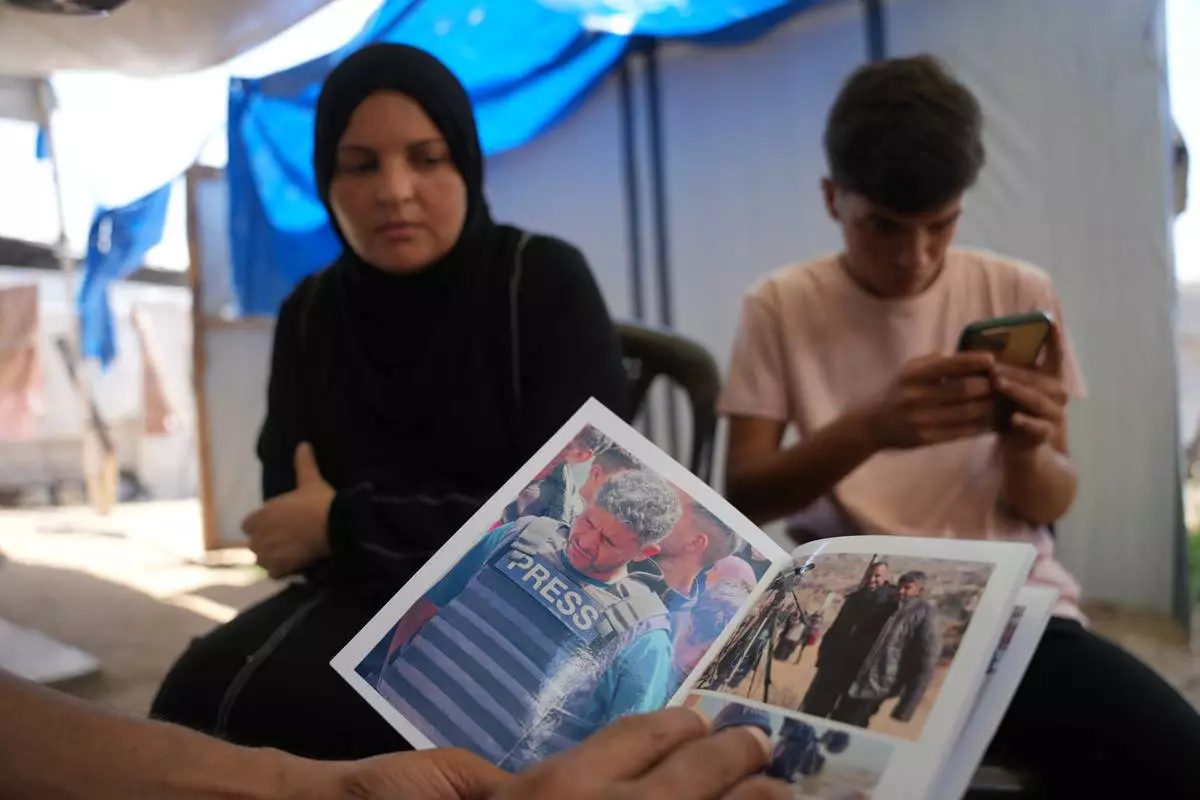
Family members of Palestinian journalist Hussam al-Masri, who worked as a freelance journalist for Reuters and was killed in an Israeli airstrike targeting the Nasser Hospital building in Khan Younis on Aug. 25, 2025, look at his photos in Khan Younis, southern Gaza Strip, Aug. 16, 2026. (AP Photo/Abdel Kareem Hana)
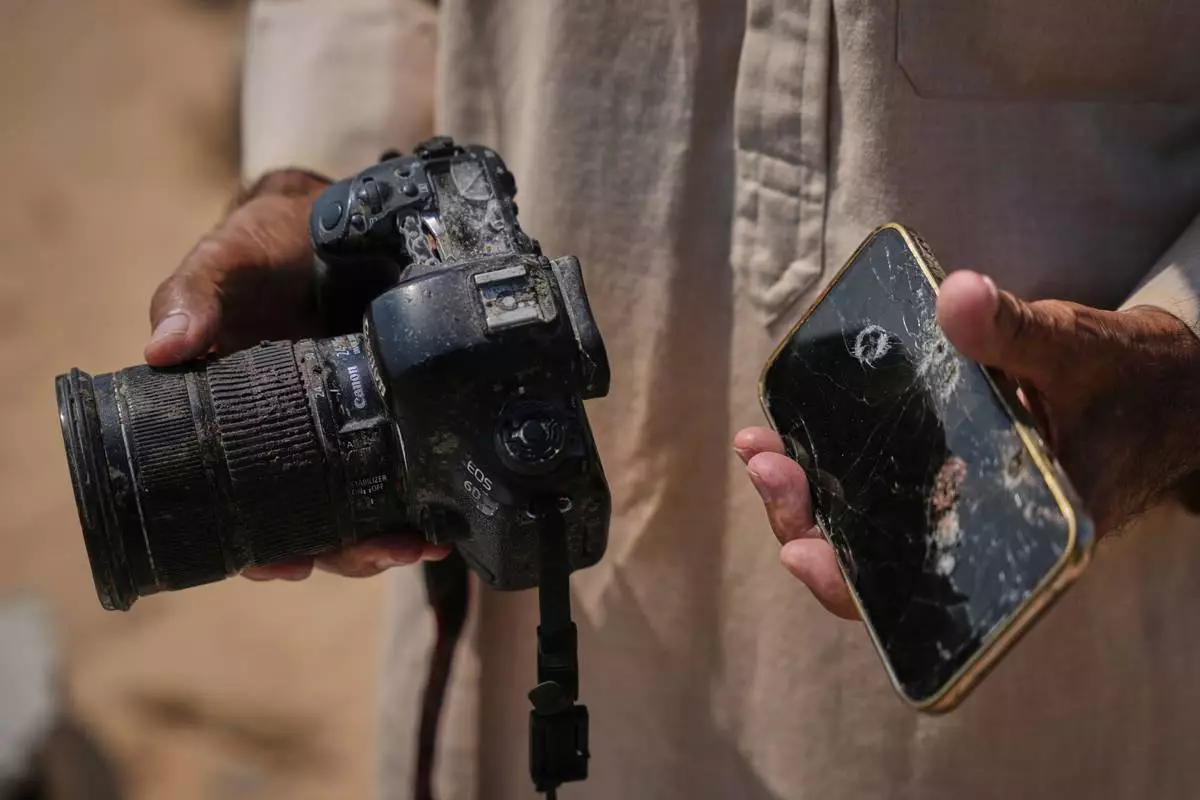
Riyad Abu Dagga, 69, displays the camera and phone belonging to his slain daughter, Mariam Dagga, a freelance journalist who worked with The Associated Press and other news outlets during the Gaza war and was killed in an Israeli airstrike on the Nasser Hospital building in Khan Younis on Aug. 25, 2025, in Khan Younis, Gaza Strip, Aug. 16, 2026. (AP Photo/Abdel Kareem Hana)
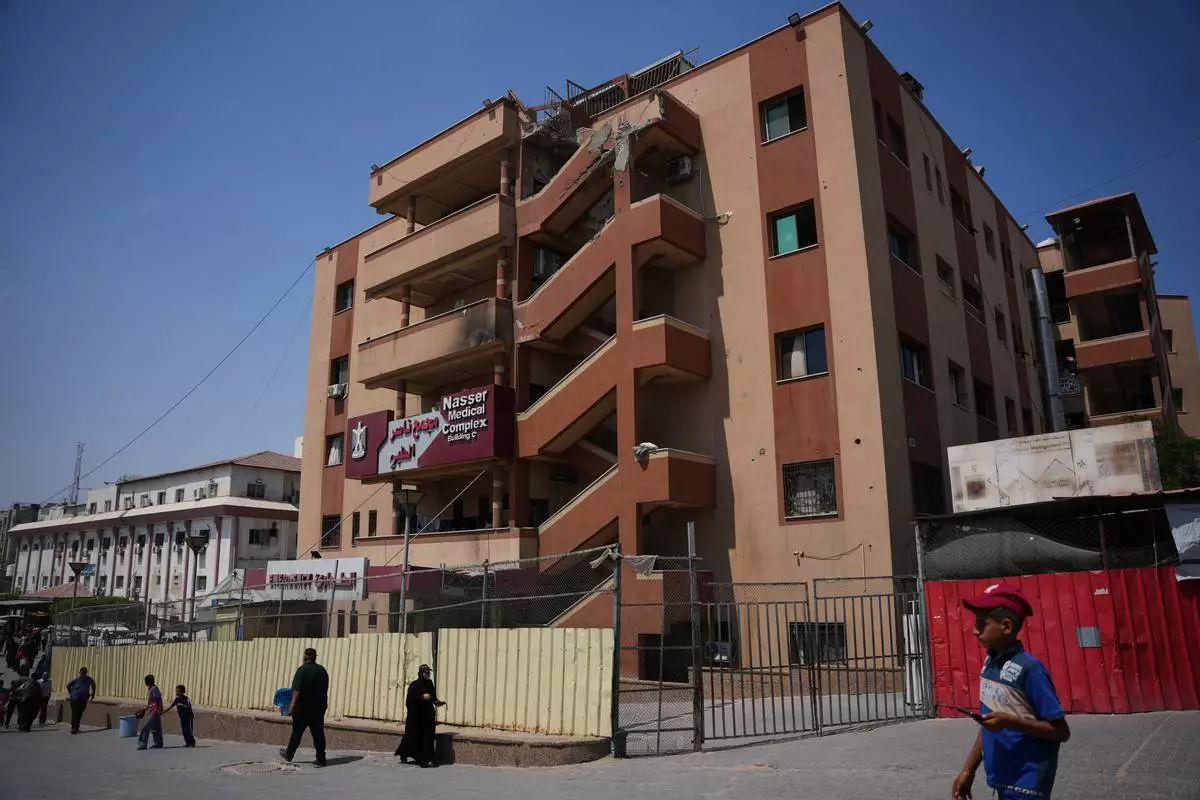
The Nasser Hospital building, which was hit by an Israeli strike on Aug. 25, 2025, killing journalists Mariam Dagga and Hussam al-Masri, among others, is seen in Khan Younis, Gaza Strip, Aug. 16, 2026. (AP Photo/Abdel Kareem Hana)
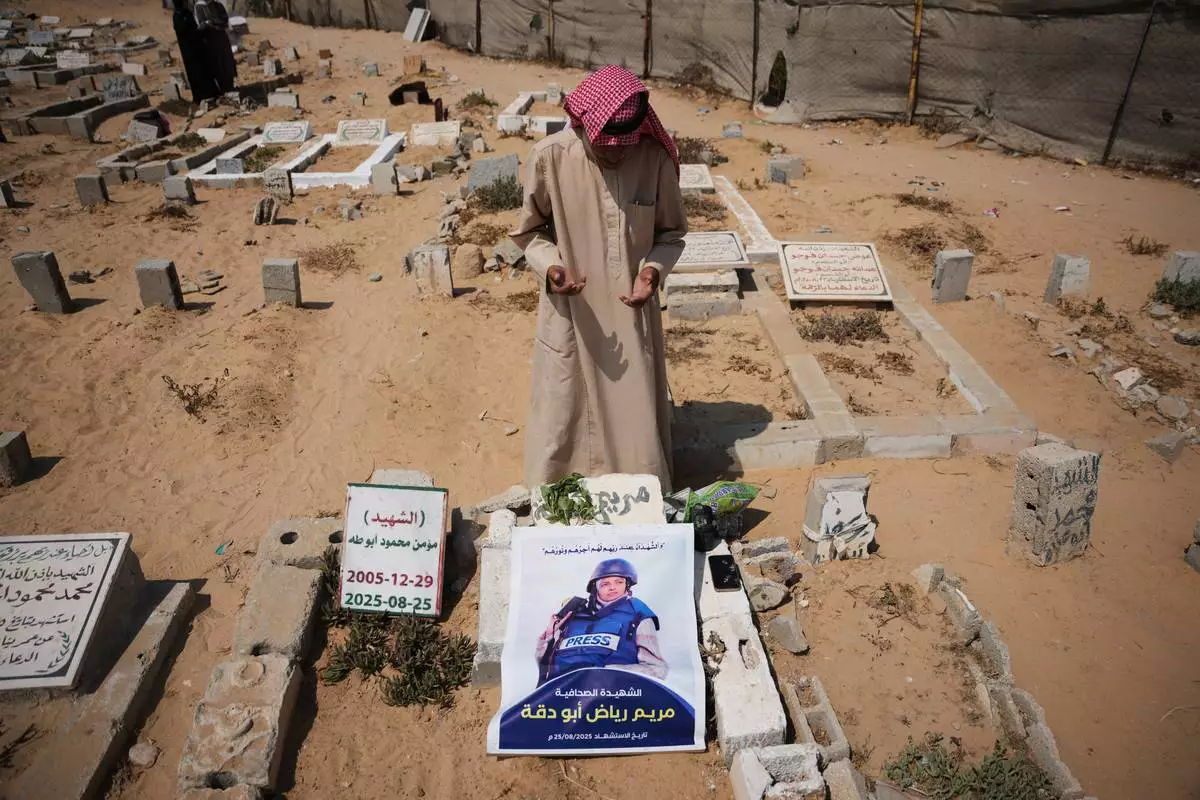
Riyad Abu Dagga, 69, visits the grave of his daughter, Mariam Dagga, a freelance journalist who worked with The Associated Press and other news outlets during the Gaza war and was killed in an Israeli airstrike on the Nasser Hospital building in Khan Younis on Aug. 25, 2025, at a cemetery in Khan Younis, Gaza Strip, Aug. 16, 2026. (AP Photo/Abdel Kareem Hana)
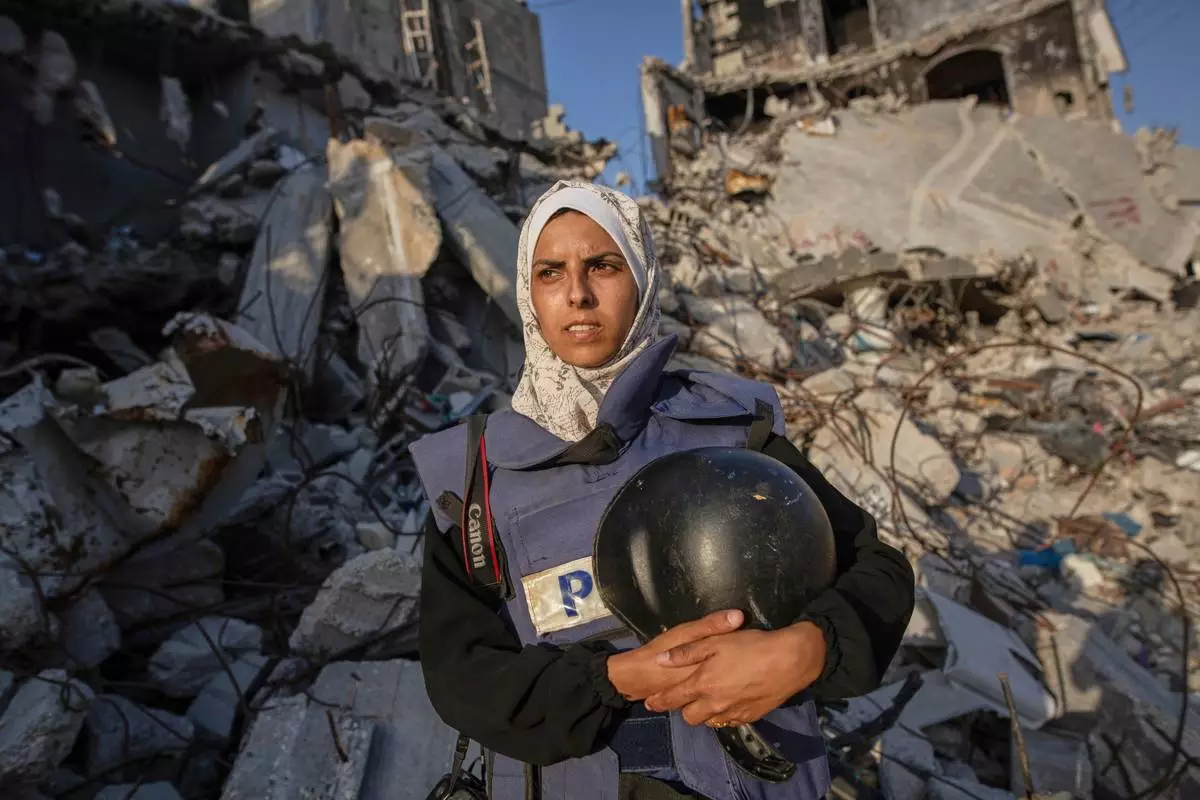
FILE - Freelance journalist Mariam Dagga, 33, who had been working with the Associated Press and other outlets during the Gaza war, poses for a portrait in Khan Younis, southern Gaza Strip, on June 14, 2024. (AP Photo/Jehad Alshrafi, File)