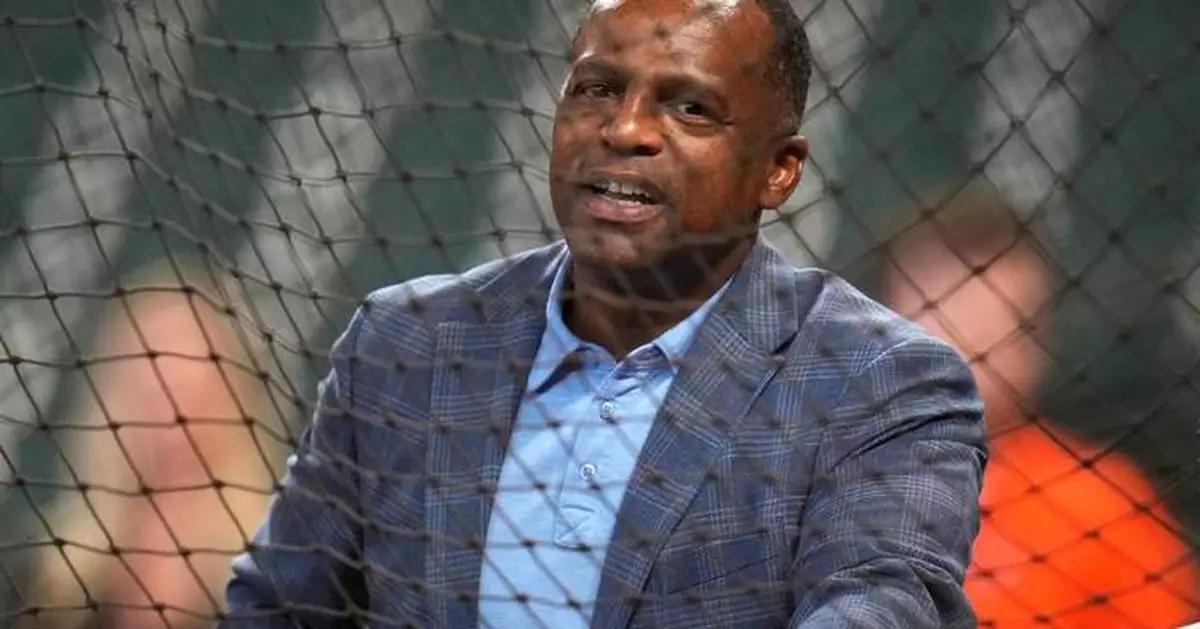
NEW YORK (AP) — A day after parting ways with general manager Dana Brown, Houston Astros owner Jim Crane addressed the move and said manager Joe Espada will remain in the role for the remainder of the season.
Before opening a three-game series against the Yankees on Tuesday, the Astros moved on from Brown, whose contract was set to expire at the end of the season. The team described the decision as mutual. Houston announced senior adviser Jeff Bagwell and assistant general managers Charles Cook, Gavin Dickey and Connor Huff will take over Brown’s responsibilities, while Crane will oversee baseball operations during the transition.
“There’s no good time for any of that, you know, when you let someone go,” Crane said outside the Houston clubhouse. “Just out of respect for Dana, we thought that was a time that would give him a little space to regroup. He’s a great talent. He’s been in the business a long time to get settled and to get back to work somewhere else.”
Brown was hired in January 2023 and succeeded James Click, who was fired six days after Houston won its second World Series title.
“We worked together very closely for three and a half years,” Espada said. “He gave me the opportunity to be manager of this team. It was tough. It was a tough conversation, but he was grateful for the opportunity and I’m grateful for our relationship and how we grind through this together, but it was emotional. It was a lot of emotions behind our conversation.”
Brown helped the Astros reach a seventh straight ALCS, which they lost in seven games to the Texas Rangers. Houston lost in a wild-card series to Detroit in 2024 and last season missed the playoffs for the first time since 2016 when it finished three games behind Seattle in the AL West and lost a tiebreaker with the Tigers for final wild-card spot.
“Not everybody’s been able to do it, that’s a good run,” Crane said. “We hope to keep that going. We had a little hiccup last year where we didn’t make the playoffs but we’re right there. I think some few adjustments we can get back to that and some good decisions. Certainly you got to keep working on it but the expectation that I have is that we’re in the playoffs every year. It’s hard to win every year, but to get there.”
The Astros began this year 20-31 but were only 5 1/2 games out of first place in a weak AL West on May 20. Houston (65-66) recovered to win 40 of its next 66 games through a 6-3 win over San Diego on Aug. 7 but entered Tuesday with nine losses in 14 games, including four to the Angels and A’s, though Crane said that performance did not influence his decision to dismiss Brown.
“That didn’t have anything to do with it,” Crane said. “We’re focused on winning the AL, winning the division and that’s our focus but that didn’t have anything to do with it.”
Espada was promoted from bench coach after the 2023 season when Dusty Baker retired. He helped the Astros recover from a 12-24 start to win their seventh AL West crown in eight seasons in 2024 and began Tuesday with a 240-214 record.
“I don’t know where that got mixed up, but that’s the same answer I gave since the first of the year,” Crane said. “We told him we’d deal with that at the end of the season and we’ve never changed that answer all year long.”
Before Crane addressed reporters for nearly 10 minutes, he met with Espada.
“Focus on winning today, that’s how I left that,” Espada said. “My responsibility is to lead this team. We have a very important stretch of games here. So I walk out of our office ready to go.”
AP MLB: https://apnews.com/hub/mlb
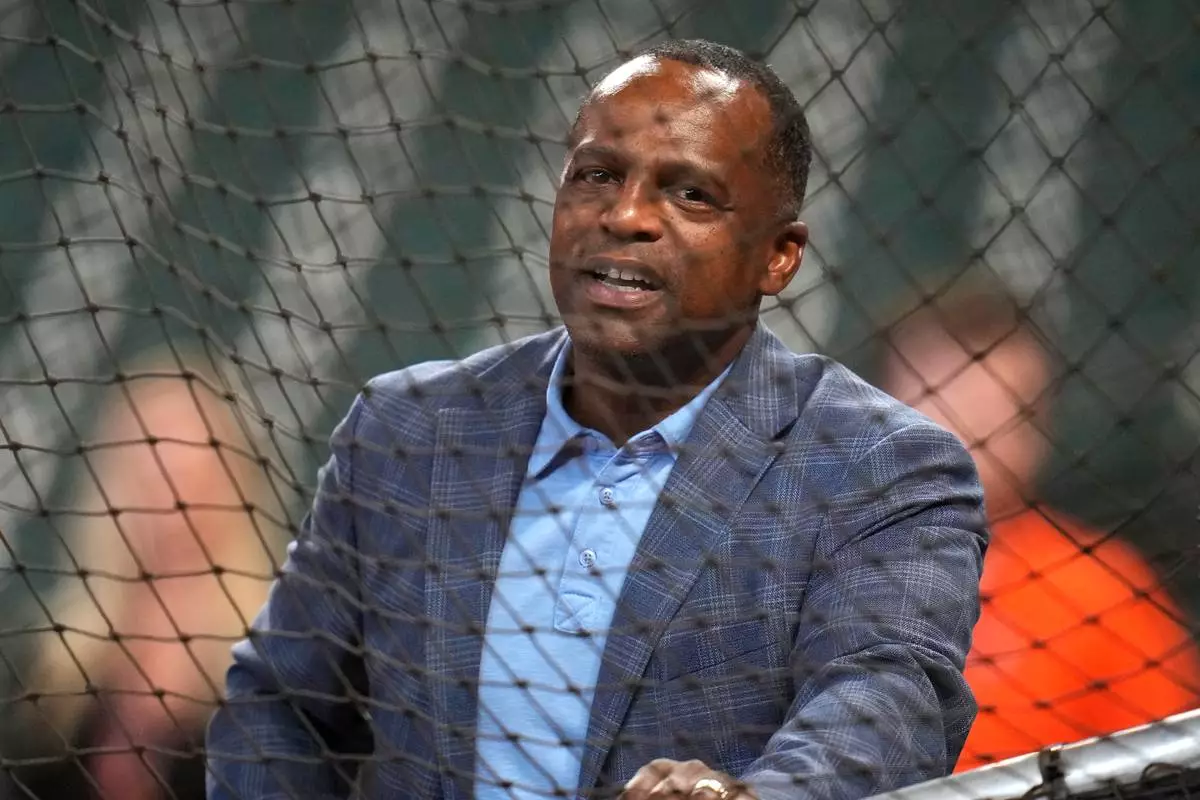
FILE - Houston Astros general manager Dana Brown during batting practice before a baseball game, Monday, July 20, 2026, in Houston. (AP Photo/Karen Warren, File)
Retailer Target pulled a children’s Halloween costume from its shelves Monday after widespread social media backlash, apologizing for selling a garment critics said evoked racist minstrel caricatures.
Critics say the costume, along with its promotional image of a Black child modeling the get-up, is reminiscent of caricatures from Jim Crow-era minstrel shows that embedded stereotypes into popular culture and helped justify discrimination, segregation and racial violence.
“As a company, we know we got this wrong, and we are deeply sorry. The costume is offensive and should never have been part of our assortment. It is no longer available for sale,” Target said in a statement.
“We know this is especially hurtful for our Black guests, team members and partners. Removing the costume is an important first step, and the company is looking closely at how this happened and what needs to change to ensure this won’t happen again.”
The costume misstep happened as Target’s sales have started rebounding from earlier company moves that alienated some customers and from a perception the quality of its stores and merchandise had declined.
It is the latest controversy for the retailer, which joined companies like Meta, Walmart, and McDonald’s in rolling back their diversity, equity, and inclusion efforts after President Donald Trump won the 2024 election.
The “Kids’ Glows Under Blacklight Circus Clown Halloween costume,” an orange-and-black circus clown costume, now deleted from the Target website, featured gloves, a top hat and a grinning mask with large teeth.
“A Jim Crow-era minstrel costume is not simply getting it wrong. It is a profoundly harmful symbol of racism that should never have been designed, approved, or sold by Target,” said the Rev. Jamal Bryant, a Georgia pastor who led a 40-day “Target Fast” boycott last year. “It shows that Target still lacks corporate diversity among decision-makers and needs concrete internal change.”
In January 2025, the Minneapolis-based corporation ended its three-year DEI program, stopping reports to external groups like the Human Rights Campaign and ended a program focused on carrying more products from Black- or minority-owned businesses, replacing it with a new “Belonging” strategy. The company previously stated that the murder of George Floyd was a catalyst for its DEI initiatives.
Activist-organizers called for a boycott of Target, which lost roughly $12.4 billion in market value by the end of February from January.
Minnesota civil rights activists, separate from Bryant, organized a national Target boycott, resulting in a 33% fall in the corporation’s stock prices and wiped out over $20 billion in market value.
Target has managed a recovery in recent months. The stock closed at $165.44 on Aug.21, a fresh 52-week high, after a strong second quarter. On Aug. 24, Target’s shares closed at $169.89.
Target’s stock is up roughly 63% this year, a sharp rebound from the depths of the boycott. The company’s turnaround strategy, launched by new CEO Michael Fiddelke after former CEO Brian Cornell stepped down, includes store refreshes, increased staffing, and more aggressive pricing. Target announced a plan in March to invest $2 billion in 2026, including $1 billion in additional operating investments, with plans to open more than 30 new stores this year as part of its path to 300 new stores by 2035, while investing in over 130 planned full-store remodels.
Bruce Winder, a retail analyst and former retail buyer, says that inventory errors, such as the recent Prada and Gucci controversies, “can happen to the best of them.”
“These things happen over time. I think the most important thing for Target, and they did it, was to quickly take accountability, quickly say sorry, acknowledge that this was a big mistake, and pull the product from the shelves,” Winder said.
Target boycott organizers in Minneapolis, including Nekima Levy Armstrong and community leaders Monique Cullars-Doty and Jaylani Hussein, remain steadfast in their divestment calls.
They have continued to press the company to reinstate its DEI programs and continue its commitments to Black communities, and they say the costume controversy is a refresher on their mission.
“It’s important for people to understand that the Target boycott never ended; that it was indefinite from the beginning, unless and until Target reversed course on its decision to roll back diversity, equity, and inclusion,” said Armstrong, an organizer of the national Target boycott.
“What we’ve seen is Target engaging in PR campaigns: recruiting high-visibility Black ministers to meet with them, partnering with (rapper and businessman) Jay-Z, all types of different shenanigans to deflect from the fact that they abandon their commitment to diversity, equity, and inclusion, and capitulation to the Trump administration.”
Hussein, another boycott organizer, said the costume incident was “not surprising.”
“It was almost predictable because of the behavior of Target, and I think this is going to build on the momentum of the boycott. More people are going to be upset,” he said.
“It’s not just an incident with a costume. There are a lot of people right now in this country across many parts who’ve changed their culture of shopping, who have found other places to put their money behind.”
Target Corporation’s stock closed at $163.47 on Aug. 25, dropping 3.78% from its previous close the day prior.

FILE - The Target logo displayed on a sign outside a store, Nov. 18, 2025, in Salem, N.H. (AP Photo/Charles Krupa, File)