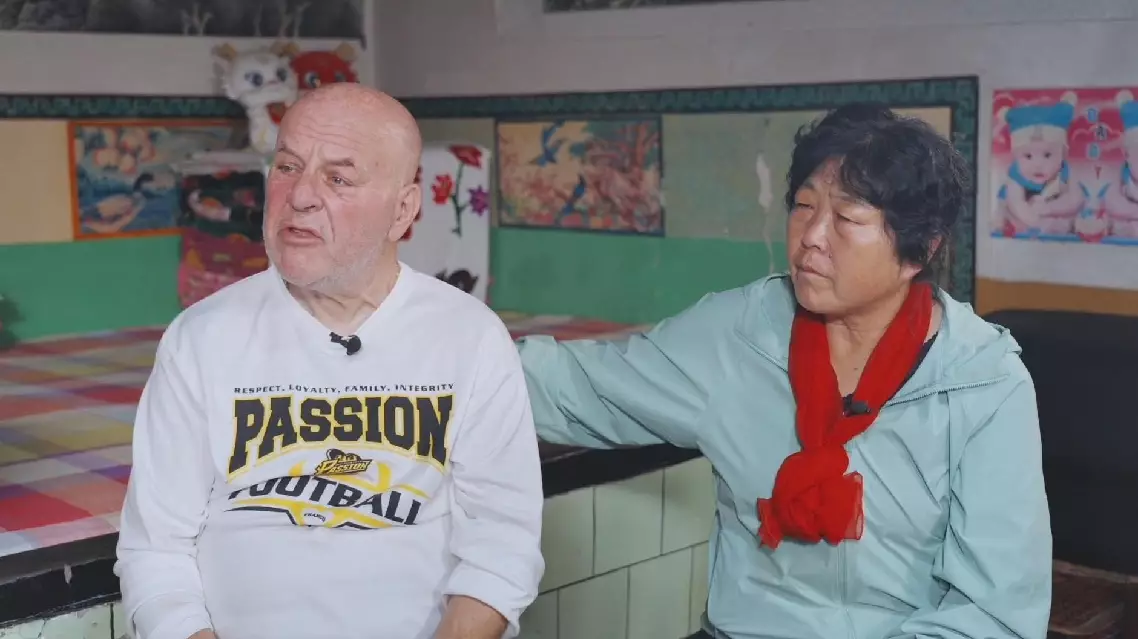
Retired American teacher Ronald Sakolsky and Chinese desert-control pioneer Yin Yuzhen expressed their shared deep love for nature, a motivation that keeps driving their desertification-control efforts for 27 years after their first encounter in China.
Sakolsky, who once contributed to China's desertification control efforts, arrived in Ordos in north China on Sunday for a visit intended to revive a friendship with the Chinese people that first took root more than two decades ago.
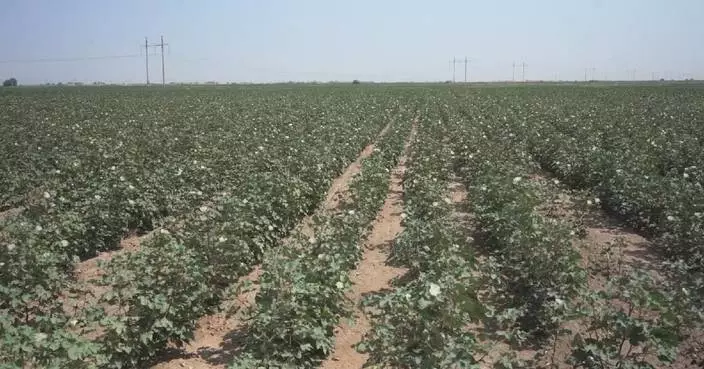
The 69-year-old will spend part of his stay planting trees alongside his friend Yin Yuzhen, a national model worker who has spent the last 40 years transforming the barren Maowusu Sandy Land into a thriving forest.
Their story began in 1999 when Sakolsky taught English at a school in central China's Henan Province under a teachers' exchange program between the two countries. After watching a television news report featuring Yin's tireless work, he was deeply moved and raised 5,000 U.S. dollars to help Yin and her husband in their afforestation efforts against desertification.
Months later, at the invitation of local officials, Sakolsky traveled to the desert to meet Yin in person.
Yin kept one dollar as a souvenir and bought 50,000 saplings with the rest.
Sakolsky said he still has very vivid memories of his bonds with Yin and being able to travel to China and see the trees thriving in the desert makes him proud.
"It brings back memories, but memories are never lost. So, I remember those days very vividly in my head. Today I got to hug the tree that we put in the ground. It's like hugging your own child. You give birth to the tree and you watch it grow. So, you are very proud when your child grows up. As a parent, you always want them to do better. My trees are doing better, for China, than I ever did," said Sakolsky.
Sakolsky said back then he couldn't even believe that the 50,000 saplings could survive, but Yin named the forest after him and were resolved to help the saplings thrive.
Referring Yin as a "hero", Sakolsky said the more he learns about her afforestation efforts, the more gratitude and respect he holds for her.
"I've learned that it's respect also. I think gratitude comes with respect. The more I get to know her, the more gratitude I have for what she has done. That's why I have said from the beginning that she is the hero," he said.
Yin said she shares the love for nature with Sakolsky, which demonstrates that they think alike and have the same passion for protecting the Earth.
"I think he is such a good and kindhearted person. He loves nature, the Earth, grass and trees, and he also loves animals. I found we have one thing in common. He has many animal photos on his phones, and me too. That proves we think alike, and we are both working to help protect nature and the Earth," said Yin.
Love for nature maintains bonds between U.S. teacher, Chinese desert-control pioneer