New property policies introduced in Shanghai and Beijing in recent weeks have injected fresh momentum into local real estate market, with second-hand home transactions emerging as a bright spot.
Data from the Ministry of Housing and Urban-Rural Development showed that nationwide second-hand home transactions registered online reached 482 million square meters in the first seven months of 2026, up 10.2 percent year on year.
The pickup comes as China's top-tier cities move to fine-tune home-purchase rules to better meet demand for both first homes and upgrades.
Shanghai rolled out a series of measures last week to further stimulate the property sector, including lowering the minimum down payment for second-home purchases in suburban areas.
Homebuyers will also be allowed to withdraw their housing provident fund to purchase completed new commercial housing, expanding the policy beyond new homes sold on a pre-sale basis. The fund can also be used to pay home-purchase deed tax and buy parking spaces or garages, and storage rooms.
To support residents seeking to upgrade their homes through property replacement, Shanghai also launched a phased home-purchase subsidy program.
"I was planning to hold off on selling my old home, but with this new policy, I think it's better to buy the new home first and sell the old one as soon as possible. Getting the subsidy is pretty good," said Ms. Su, a Shanghai resident. "The uses of the housing provident fund have expanded. It can now be withdrawn for down payments, and also for buying parking spaces and paying deed taxes, serving as a catalyst for the market," said Shen Xueni, a local property sales manager.
Market data confirms the effect.
Figures from Centaline Property showed that in the week of August 17-23, Shanghai's newly built commodity residential sales area reached 94,000 square meters. In Pudong alone, transactions hit 22,600 square meters, a 18.95 percent week-on-week increase.
Beijing further eased home-buying restrictions in early August by lowering social insurance and income tax payment requirements for non-resident families purchasing homes in central areas.
At the Tuanjiehu area in Chaoyang District, one of Beijing's most active second-hand housing submarkets, agencies are feeling the lift.
"Since the new policies were released, customer inquiries have risen by about 50 percent. Offline property viewings are also up by around 25 percent," said Song Kai, a property sales manager in Beijing.
In the first week after the policy took effect, Beijing registered 3,104 second-hand residential transactions online, up roughly 10 percent from the prior week.
For the first seven months, Beijing's second-hand commodity residential transactions totaled 107,600 units, up 6.2 percent year on year.
Beyond Shanghai and Beijing, second-hand property markets have remained broadly active nationwide.
In Chongqing's central districts, second-hand homes have posted month-on-month rises in both volume and price for several consecutive months.
Cities such as Hangzhou and Nanjing are also seeing steady release of housing demand as first-time buyers and upgrade-seeking households return to the market.
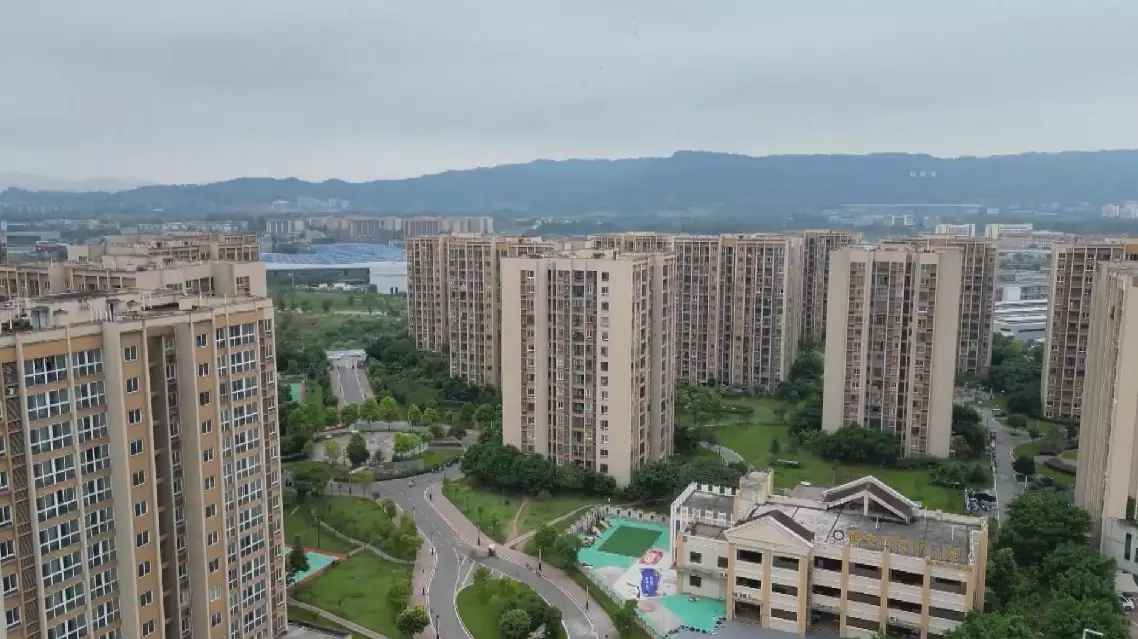
New policies boost property market growth across Shanghai, Beijing