A 22-year-old college student killed by Pennsylvania police responding to a possible burglary had just realized he was at the wrong home and was waiting for friends to come get him when he was shot, his father said Wednesday.
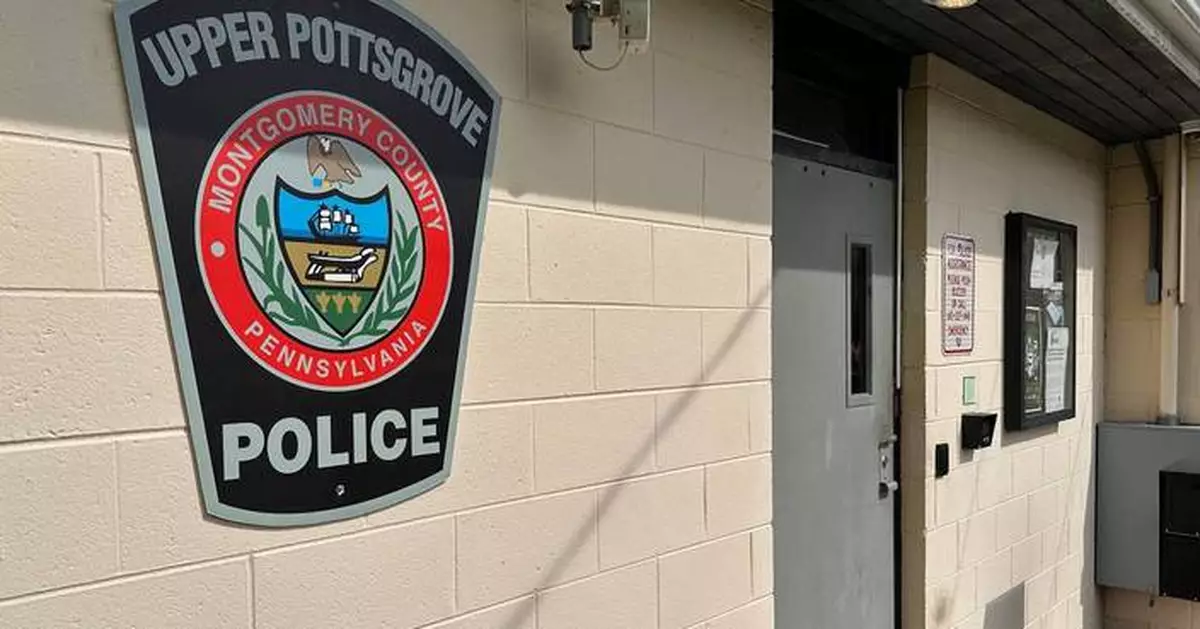
Police in Upper Pottsgrove Township, northwest of Philadelphia, responded around 12:30 a.m. Sunday to a 911 call about a possible break-in attempt, according to the Montgomery County district attorney's office. The office said in a statement that police found Glenwood Pysher IV at the rear of the home and ultimately shot and killed him.
Pysher's father, Glen Pysher, said his son and his friends had visited several bars earlier in the evening and were splitting up to spend the night in two homes when his son took a wrong turn in the woods. Based on what he has been told by his son's friends, Pysher believes his son mistakenly tried to enter what he thought was his friend's house. His son wasn't carrying any weapons, just a phone and backpack containing clothing and a few beers, he said.
“He tried to open the doorknob and obviously startled the homeowner,” he said. “From what we understand, he announced, ‘Hey! Open the door!’ because he thought he was at his friend's house.”
Pysher then sat down on the back porch and contacted his friends, who realized he was in the wrong place and set out to find him. But minutes later, they saw police and emergency vehicles and figured their friend would be arrested for public drunkenness. Instead, he was shot.
“At 12:32 a.m. my son was on a FaceTime call with his friends that were coming to get him,” he said. “We were told that my son was shot at 12:35 a.m. So what kind of encounter could have ensued? What kind of communication could that officer have given him?”
A Montgomery County Department of Public Safety dispatch record shows police were dispatched at 12:30 a.m. and arrived at 12:34 a.m. Upper Pottsgrove Township Police Chief Al Werner declined to release any information, including the names of any officers involved, until the investigation is complete. The Montgomery County Detective Bureau is investigating the shooting, the district attorney’s office said.
The shooting by police checking a report of a possible break-in is sharply distinguished from several other cases in which residents have shot people who mistakenly showed up at their homes.
Pysher was about to begin his senior year at Saint Elizabeth University in New Jersey, where he planned to play baseball. His goal was to become a high school history teacher and coach after graduation.
His father described him as a kindhearted, loving kid who could be a “knucklehead” but enjoyed helping others. Since the shooting, former teammates, coaches and others have been texting his father to share their memories of him.
“One young man in particular texted me and said, ‘I was going through a lot of really difficult things in my life. I was going the wrong way. And your son is the one who helped me put my life on track,’" the father said. “He will be sadly missed in his community.”
Pysher said police have given the family almost no information. On Wednesday, he called asking whether he could retrieve his son's favorite pair of black shoes to bury him in and was told that could be arranged.
Ramer reported from Concord, New Hampshire, and Brumback from Atlanta.
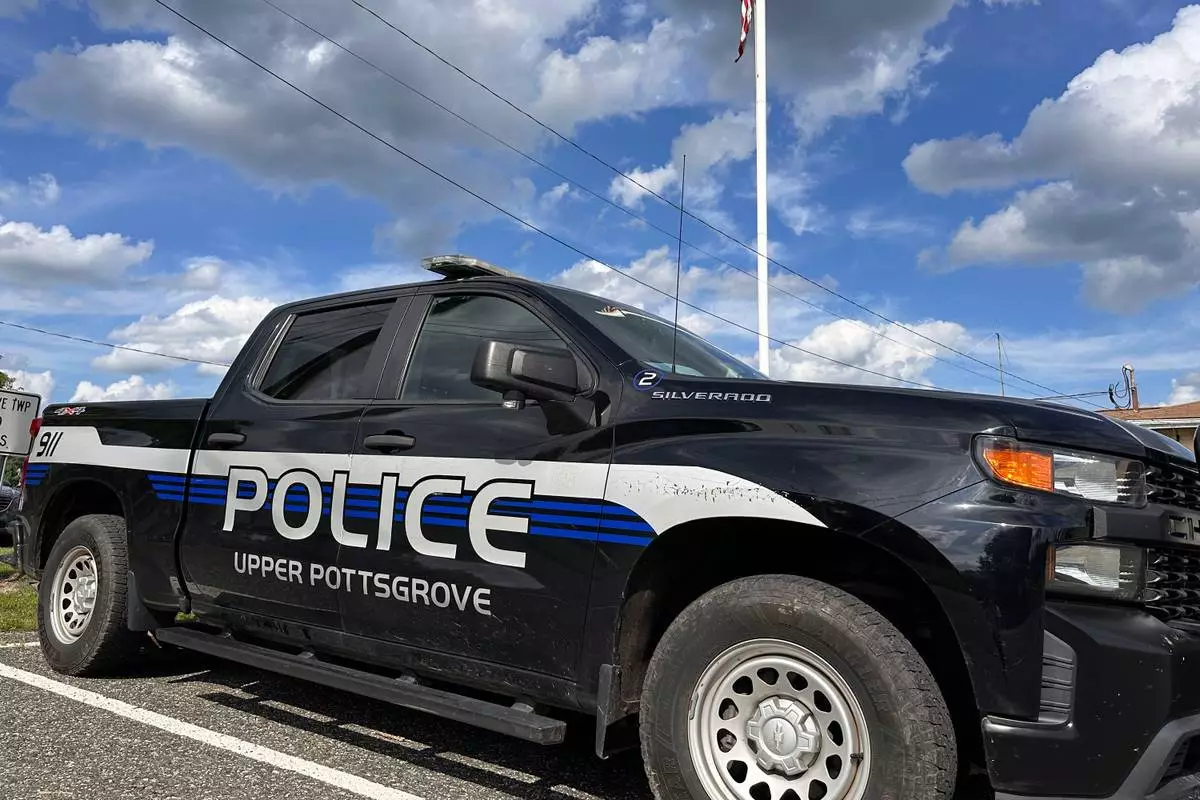
An Upper Pottsgrove Township police vehicle is seen Wednesday, Aug. 26, 2026, in Upper Pottsgrove Township, Pa. (AP Photo/Tassanee Vejpongsa)
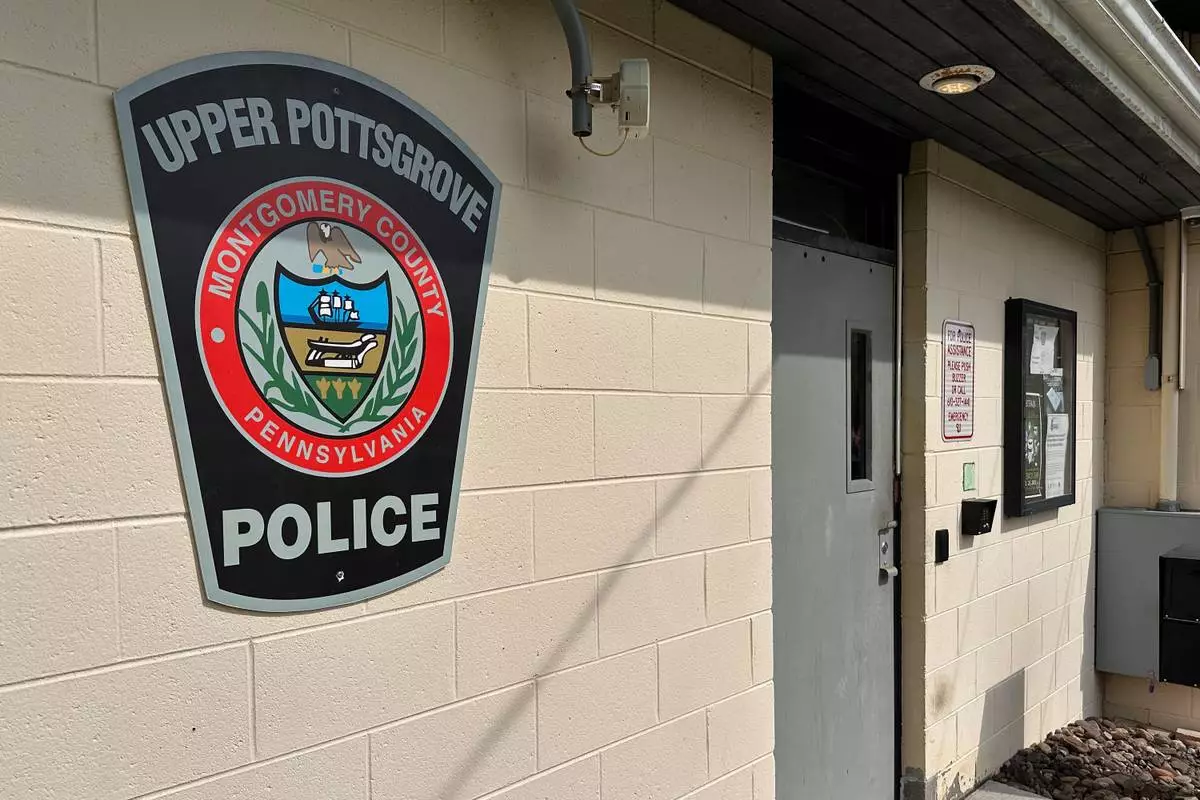
The Upper Pottsgrove Township police station is seen Wednesday, Aug. 26, 2026, in Upper Pottsgrove Township, Pa. (AP Photo/Tassanee Vejpongsa)
BROWNSVILLE, Texas (AP) — A federal judge on Wednesday refused to order Texas to extradite an Immigration and Customs Enforcement officer charged with shooting a man and lying about it during the immigration crackdown in Minneapolis.
U.S. District Judge Fernando Rodriguez Jr. wrote in an order that he couldn't prevent a county sheriff from releasing Christian Castro or order Texas Gov. Greg Abbott to sign his extradition warrant.
The Cameron County sheriff said he would release Castro at midnight.
Castro is charged in Minnesota with assault and falsely reporting a crime in the Jan. 14 shooting of 24-year-old Julio Cesar Sosa-Celis.
Castro is accused of firing a gun through the front door of a Minneapolis home, shooting Sosa-Celis in the leg. Prosecutors say Castro also falsely accused Sosa-Celis and another man of attacking an ICE officer with a broom handle and a snow shovel.
After a Minnesota judge issued a nationwide warrant for Castro's arrest in May, authorities, including Minnesota’s Bureau of Criminal Apprehension, arrested Castro in Cameron County on May 29. Minnesota authorities have sought his extradition since his arrest, but he remains in custody in Brownsville, Texas, a city bordering Mexico.
Under Texas law and barring extradition, Castro must be released after 90 days of detention, which is Thursday.
Minnesota Attorney General Keith Ellison filed a request for a temporary restraining order last week seeking to block Castro's release or to order his return to Minnesota.
Texas attorneys on Tuesday argued the judge could not rule on a decision that's still pending. Abbott has not denied the extradition. Instead he is waiting for the outcome of an internal state investigation considering whether Castro was legally a “fugitive” under the Extradition Clause, the lawyers said.
The judge wrote in Wednesday's order that the court can't yet step in.
“The Court concludes that it lacks subject matter jurisdiction because the case is not ripe for adjudication,” the order read. “Minnesota cannot premise its causes of action on the allegation that Governor Abbott may violate those authorities in the future; it must prove that a violation has already occurred.”
The judge said in his order that the extradition laws do not outline how long the Texas governor can take to make that decision.
Ellison said in a statement that his office would keep litigating the case but didn't specify what it would do next.
“I respectfully but strongly disagree with the court’s order, which nonetheless acknowledges that Christian Castro is a flight risk, that Minnesota will be harmed if he is allowed to flee to Mexico, and that Governor Abbott’s consideration of Minnesota’s extradition request is of ‘an atypically long duration’ — to say the least,” Ellison said in a statement.
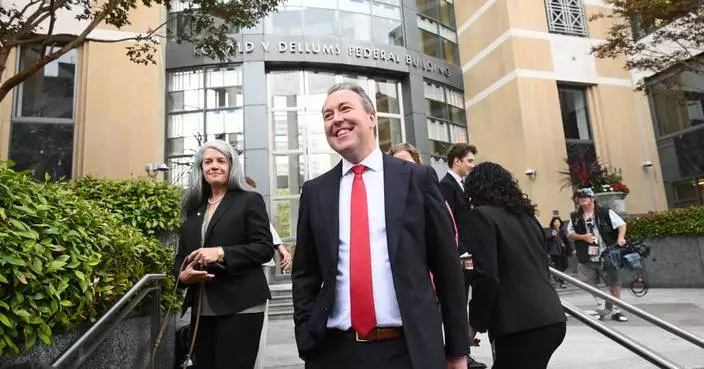
Hennepin County Attorney Mary Moriarty, whose office handles prosecutions in Minneapolis, said at a new conference that Abbott was unfairly harboring the former ICE agent.
"If Christian Castro walks out of the door of the jail tomorrow and disappears into Mexico, it will be the fault of one person: Governor Greg Abbott,” Moriarty said.
Abbott's press secretary, Andrew Mahaleris, welcomed the ruling and said it was the governor's duty to carefully consider the merits of extradition requests.
"Today’s order rebuffs Minnesota’s efforts to conscript federal courts into commandeering the authority of Governor Abbott’s office,” Mahaleris said in a statement.
Abbott said last week he would not respond to the extradition request, citing the ongoing investigation into fraud in government social service programs in Minnesota, which President Donald Trump used to justify his immigration crackdown there.
Minnesota officials say Castro could flee the country, citing calls he made from jail to a woman in Mexico, talking “about marrying her and buying a house in Mexico when he is released,” according to the lawsuit.
The judge conceded that Castro could flee the country but added that “the threat of injury by itself does not create an issue ripe for adjudication.”
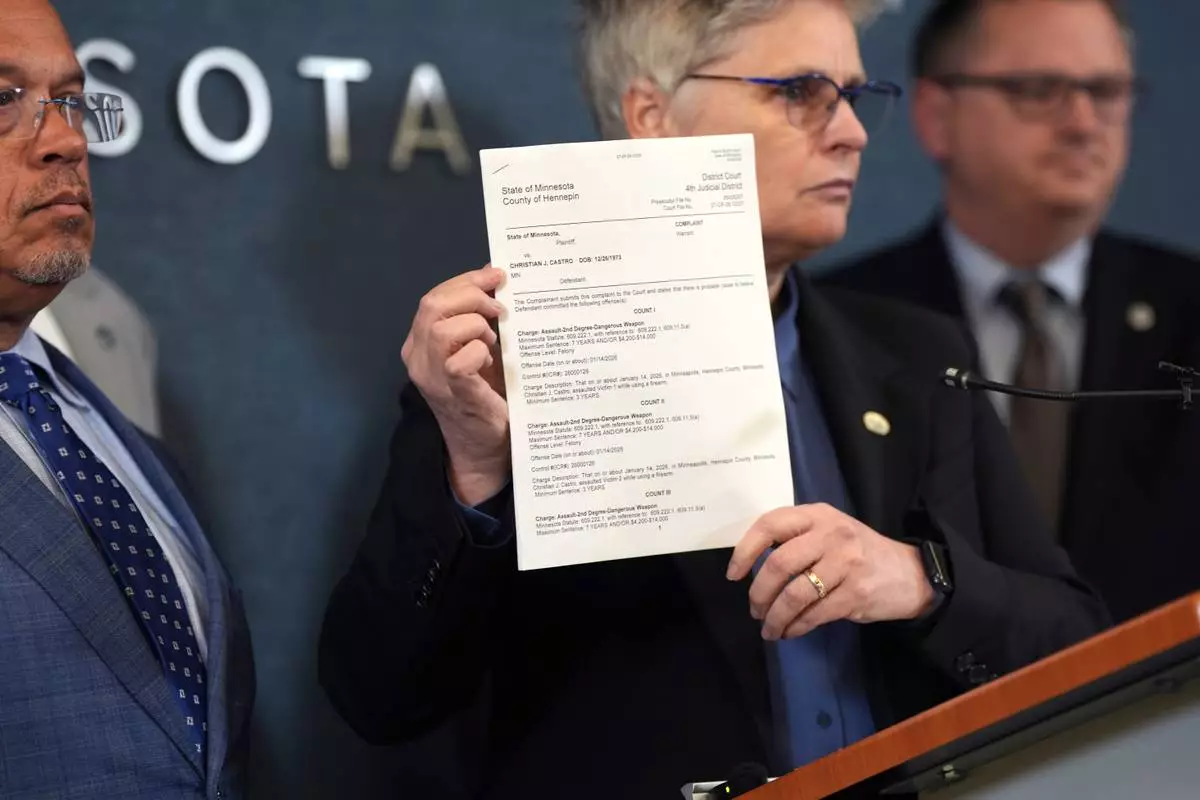
FILE - Hennepin County attorney Mary Moriarty holds up a document containing charges against ICE agent Christian Castro during a news conference at the Hennepin County Government Center in Minneapolis, on Monday, May 18, 2026. (Renée Jones Schneider/Minnesota Star Tribune via AP,File)
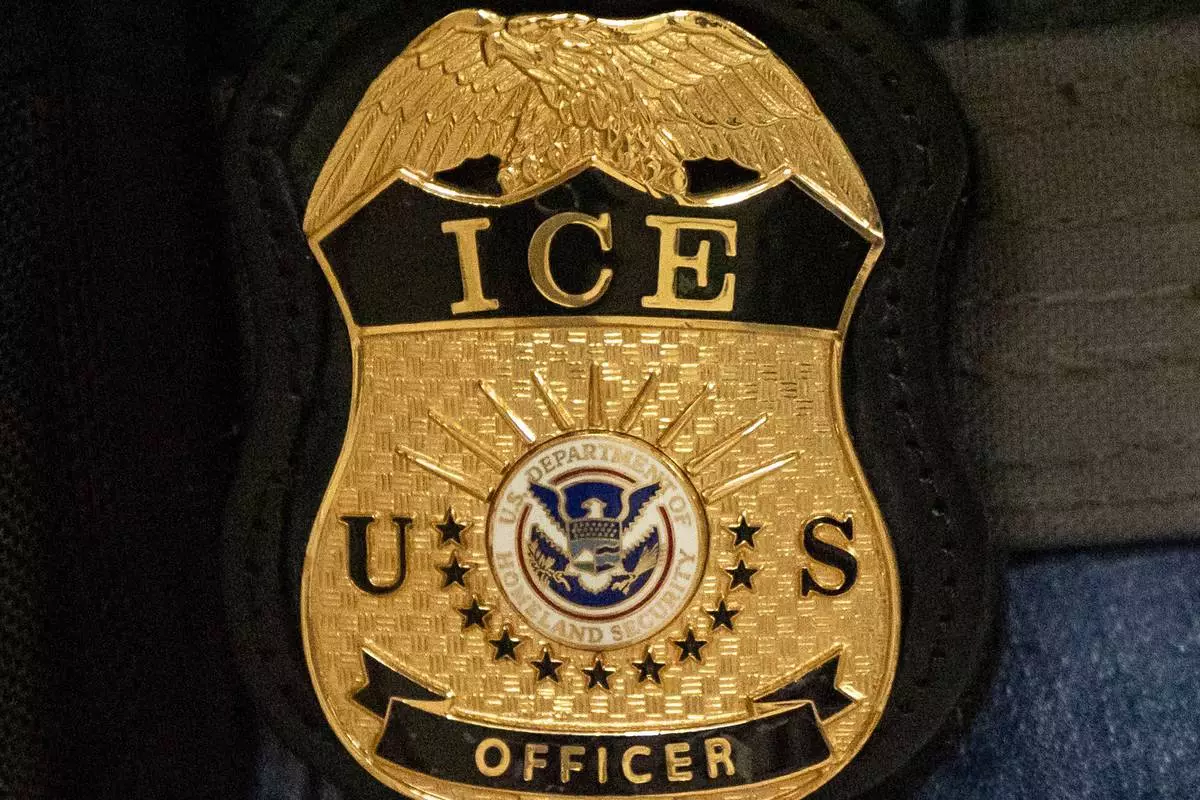
FILE - A federal agent wears an Immigration and Customs Enforcement badge in New York, June 10, 2025. (AP Photo/Yuki Iwamura, File)