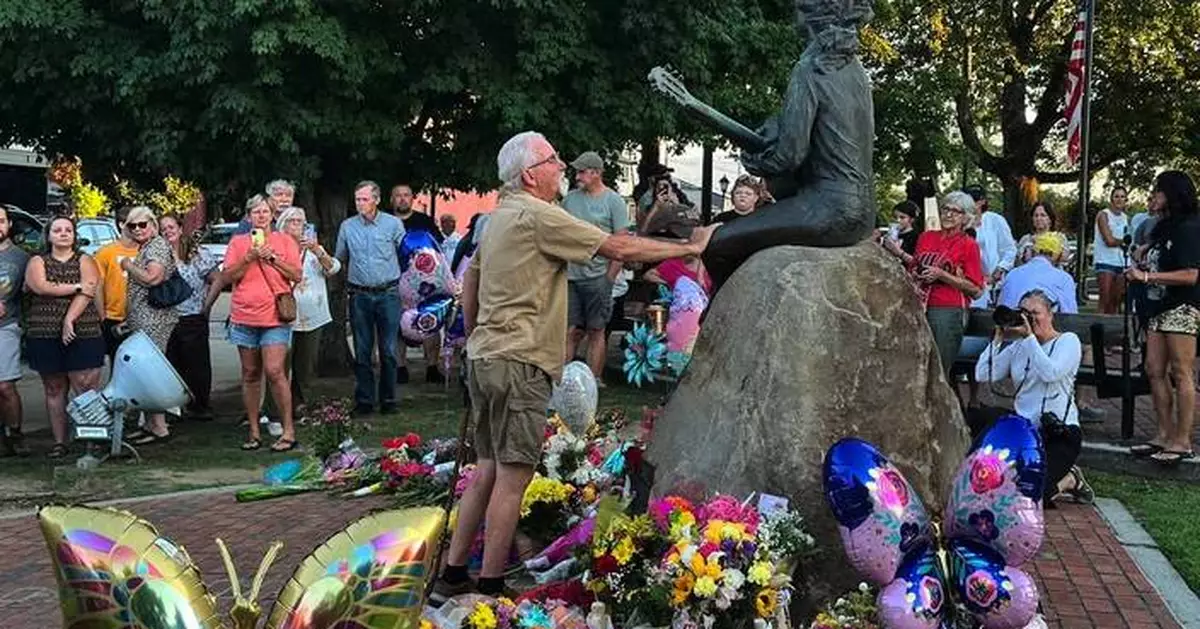
SEVIERVILLE, Tenn. (AP) — Dolly Parton didn’t just sing lovingly about her Tennessee mountain home. She spent her life elevating an often-overlooked region to showcase what long inspired her music and sparked a tourism boom that forever changed those living against the backdrop of the Great Smoky Mountains.
And it is because of that deep devotion that Parton's death has been profoundly personal to rural Sevier County. To the world, Parton was one of the world's best-known country music stars. To her neighbors, she was Tennessee's favorite daughter.
Click to Gallery
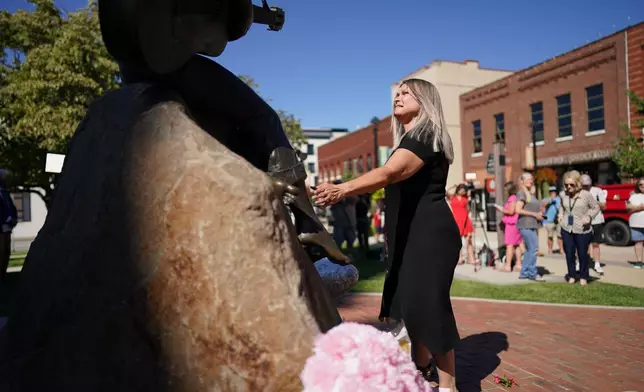
A woman stands before a statue of Dolly Parton in Sevierville, Tenn., Tuesday, Aug. 25, 2026. (AP Photo/Camden Hall)
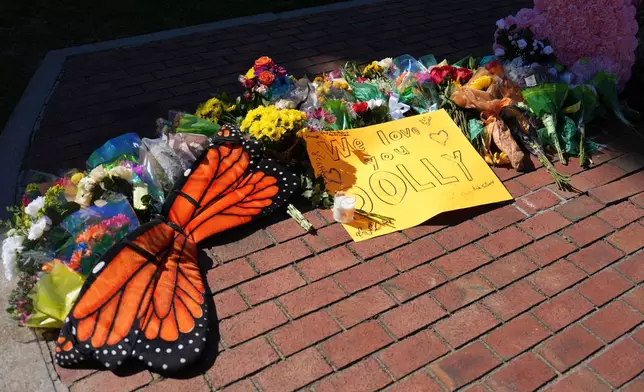
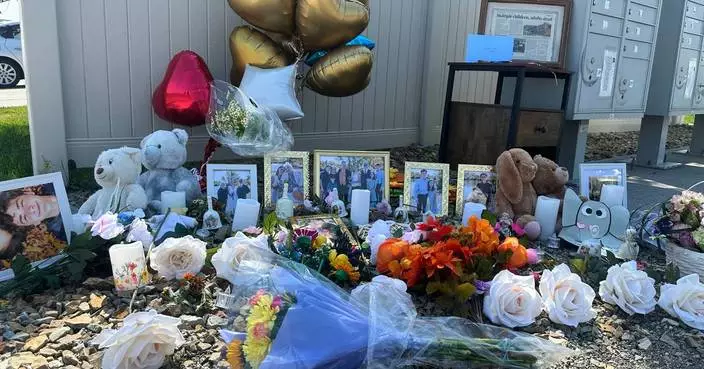
Flowers and monarch butterfly wings form part of a makeshift memorial honoring Dolly Parton in Sevierville, Tenn., Tuesday, Aug. 25, 2026. (AP Photo/Camden Hall)
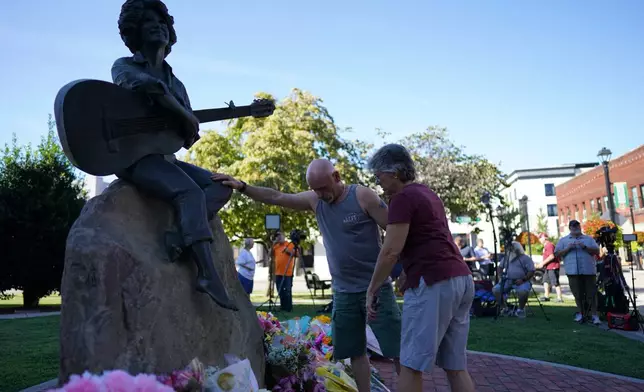
People visit a makeshift memorial honoring Dolly Parton in Sevierville, Tenn., Tuesday, Aug. 25, 2026. (AP Photo/Camden Hall)
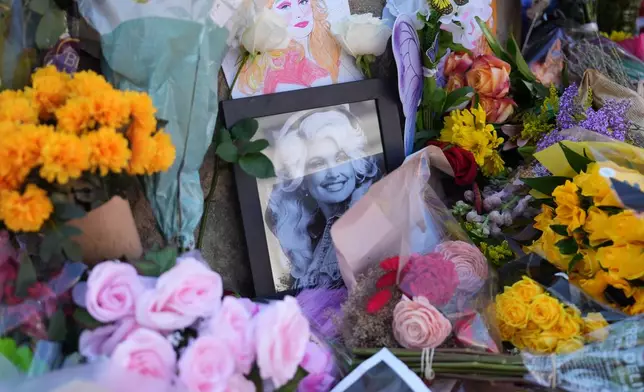
Images and flowers form a makeshift memorial honoring Dolly Parton in front of her statue in Sevierville, Tenn., Tuesday, Aug. 25, 2026. (AP Photo/Camden Hall)
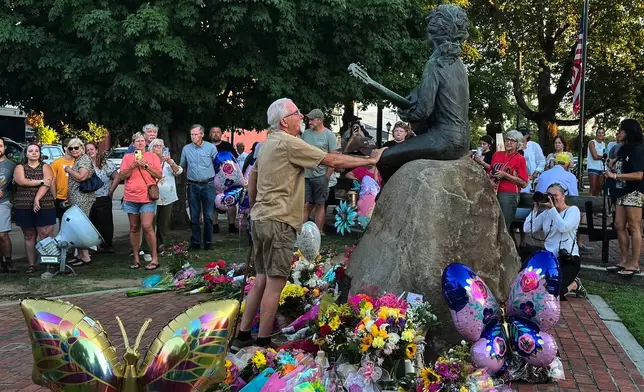
James A. Gambrell, a former chef at Dollywood, touches the Dolly Parton statue in downtown Sevierville, Tenn., on Tuesday, Aug. 25, 2026. (AP Photo/Dylan Lovan)
“It hit me hard. It hit me really hard,” said James Gambrell, a former chef at Dollywood, the signature theme park that Parton opened decades ago after seeing families like hers unable to afford to go to Disneyland.
“If it don’t affect you, then something’s wrong,” Gambrell said of Parton's death, adding that he became so close to her family that they adopted him as a kind of nephew.
Mourners flocked to a bronze statue of Dolly in the center of her hometown of Sevierville Tuesday night, exchanging stories and shedding tears. The town is set in the hills of the Smoky Mountains just minutes from Dollywood. Many brought flowers and drawings and other tributes to the late singer.
By Wednesday morning at Dollywood, the scent of cinnamon bread filled the air and long lines formed at a theater featuring biographical stories narrated by Parton. The park is closed Tuesdays, so Wednesday was the first chance for many to visit, including Carla Potts, who flew in from Seattle a few days earlier.
“She just consistently spread joy and hope and light, really” Potts said after entering the park on her first visit.
One of 12 children, Parton grew up in a two-room cabin with no electricity and no running water. In her music, she described life in East Tennessee as “peaceful as a baby’s sigh,” a place where “crickets sing in the fields nearby.” She moved to Nashville shortly after finishing high school, but she once joked to the Knoxville News Sentinel that she may be the “only person that ever left the Smoky Mountains and took them with her.”
While the Smoky Mountains had long attracted outdoor enthusiasts to the region, Parton made a strategic decision to become co-owner of the amusement park in Pigeon Forge in 1986 and name it Dollywood. The park quickly became Tennessee’s most visited tourist attraction, with Parton often opening each new season with a performance and a parade. State officials say Dollywood generates $1.8 billion each year and is the county's largest employer.
“We had Great Smoky Mountains National Park since the '30s, and Gatlinburg was a huge destination for years, but Dollywood helped the county take that next step,” said Amanda Marr, a member of the Sevierville Chamber of Commerce. “Having that business has made such an impact because it’s drawn even more people to the area.”
By the early 1990s, Parton created The Dollywood Foundation with the goal of decreasing the high school drop out rate in Sevier County, which was hovering around 30%.
David Wear, former mayor of Pigeon Forge, said he was in 8th grade when the Buddy Program launched with the promise that students and the buddies they were matched with would receive $500 to help cover college expenses for completing the program.
“If you and your buddy made it through high school, The Dollywood Foundation would give money to those high school graduates,” he said. “I personally got the experience of her charitable giving.”
According to the foundation, dropout rates eventually plummeted to 6% in Sevier County after the program was in place.
Separately, the international phenomenon that is her Imagination Library started as a local initiative to get more children to start reading. To date, kids across the United States, Canada, the United Kingdom, Ireland and Australia have received more than 330 million books since the program began.
Still, many folks get choked up the most over her response to a deadly 2016 wildfire. The fire, which began in Great Smoky Mountains National Park before invading nearby Gatlinburg, killed 14 people and caused an estimated $2 billion in losses, including to about 2,500 buildings that were damaged or destroyed.
Parton directed her foundation to distribute funds to displaced families and provided scholarships to students impacted by the fire.
“She single-handedly, through her generosity and raising of money, changed the trajectory of our recovery,” Wear said. “Her star power brought us back.”
Through her work, Parton also helped shatter stereotypes often associated with Appalachian communities, said Ted Olson, a professor of Appalachian studies at Eastern Tennessee State University.
“She understood how people viewed the region, but she defied them to hold on to those negative images after talking to her and after encouraging them to travel to the region,” Olson said. “And she did so graciously.”
Kruesi, a former Tennessee correspondent, reported from Providence, Rhode Island.
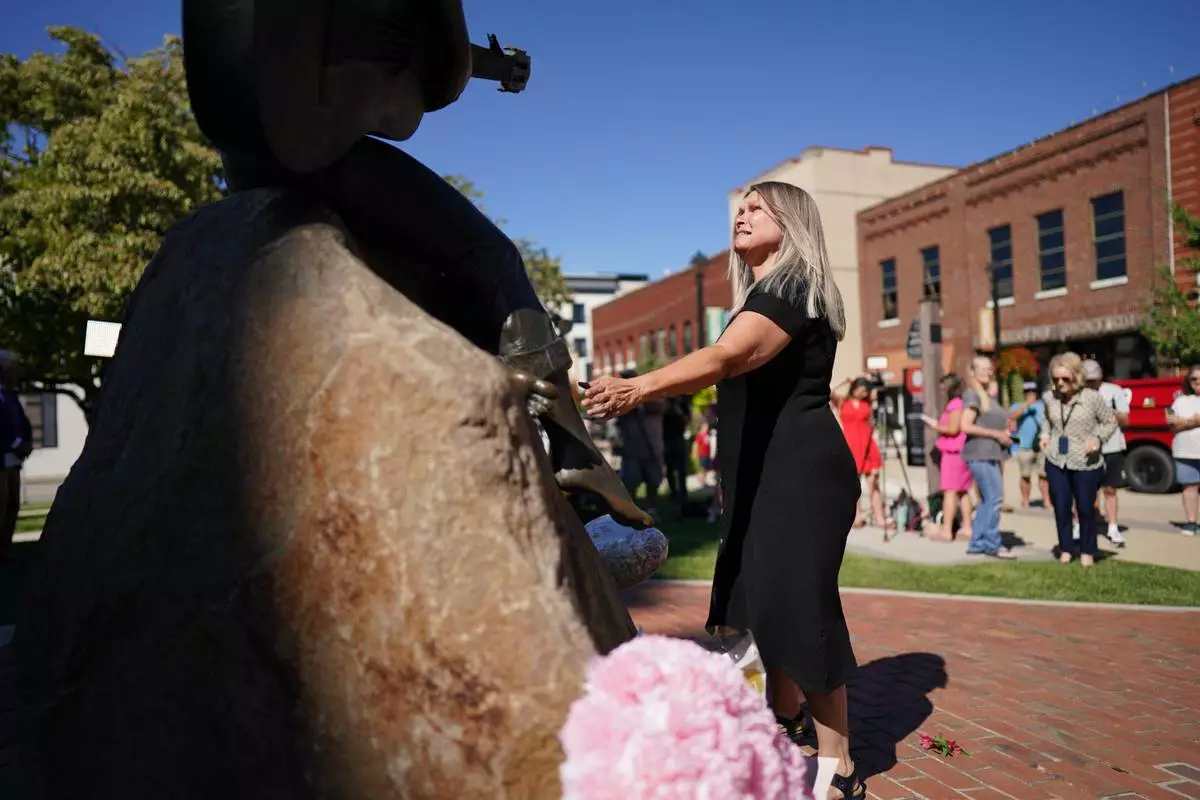
A woman stands before a statue of Dolly Parton in Sevierville, Tenn., Tuesday, Aug. 25, 2026. (AP Photo/Camden Hall)
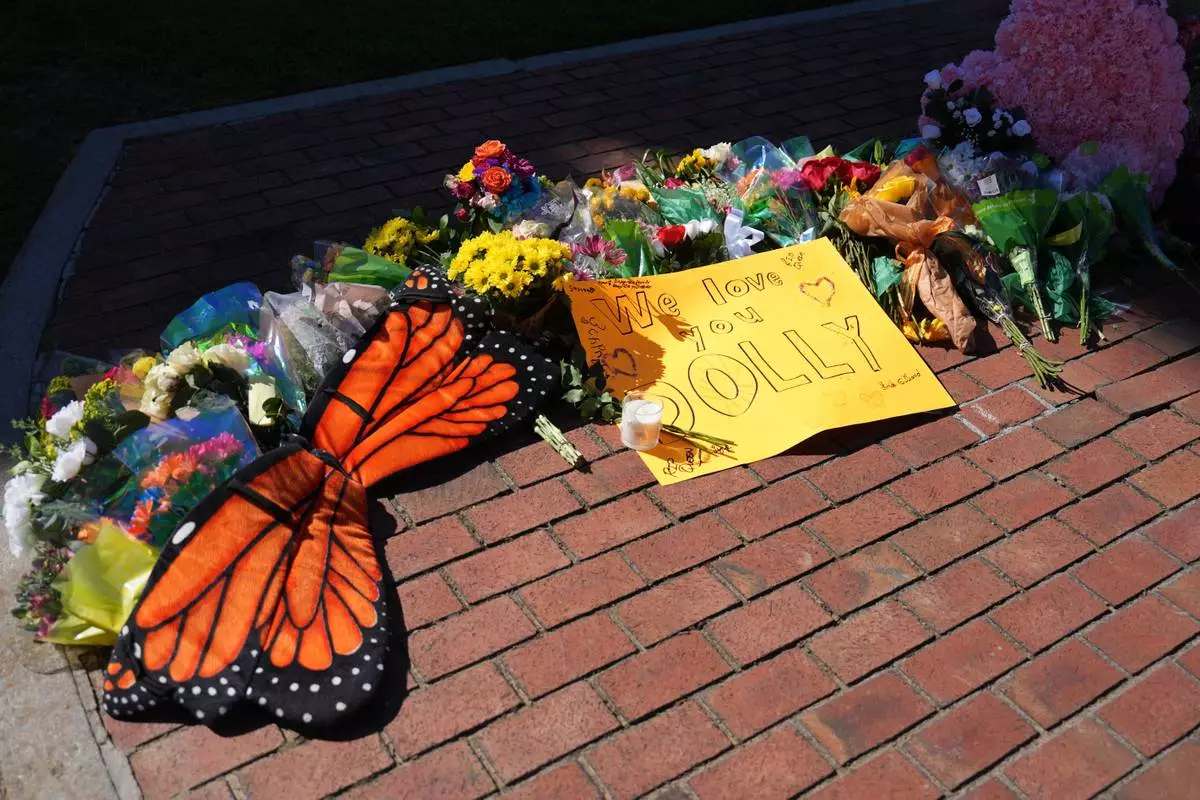
Flowers and monarch butterfly wings form part of a makeshift memorial honoring Dolly Parton in Sevierville, Tenn., Tuesday, Aug. 25, 2026. (AP Photo/Camden Hall)
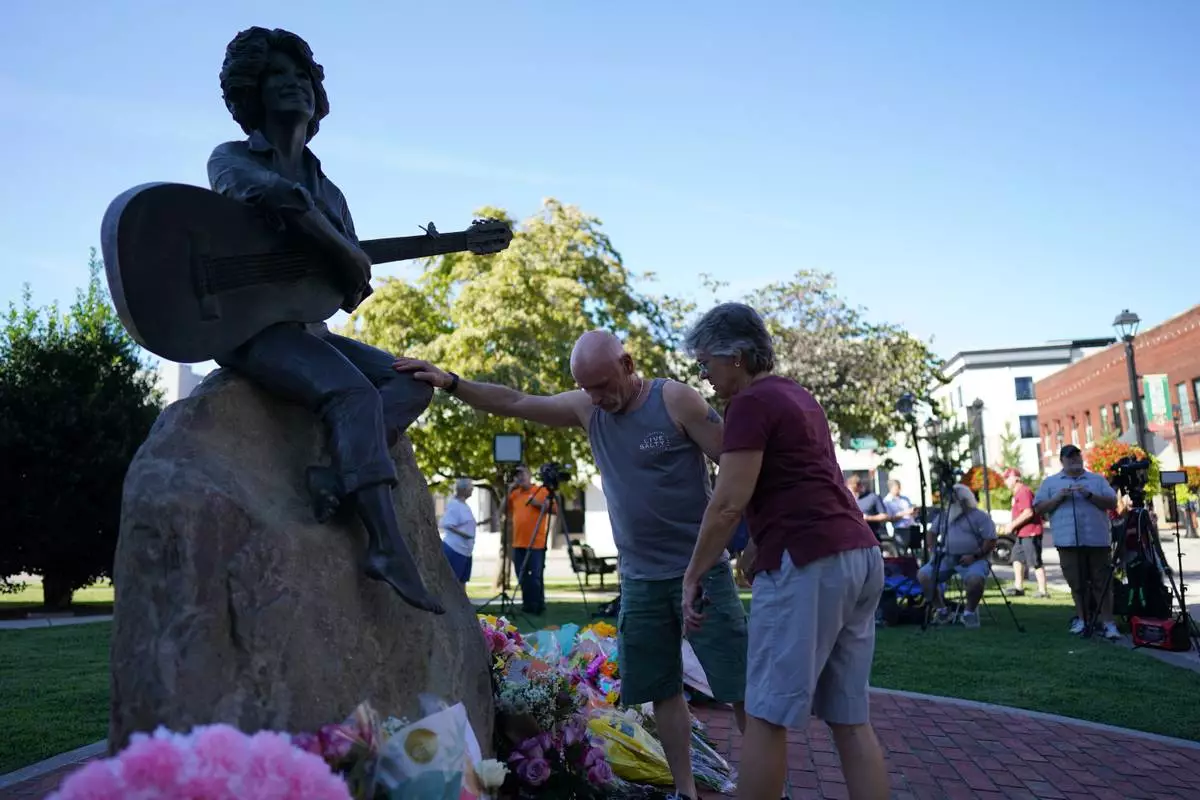
People visit a makeshift memorial honoring Dolly Parton in Sevierville, Tenn., Tuesday, Aug. 25, 2026. (AP Photo/Camden Hall)
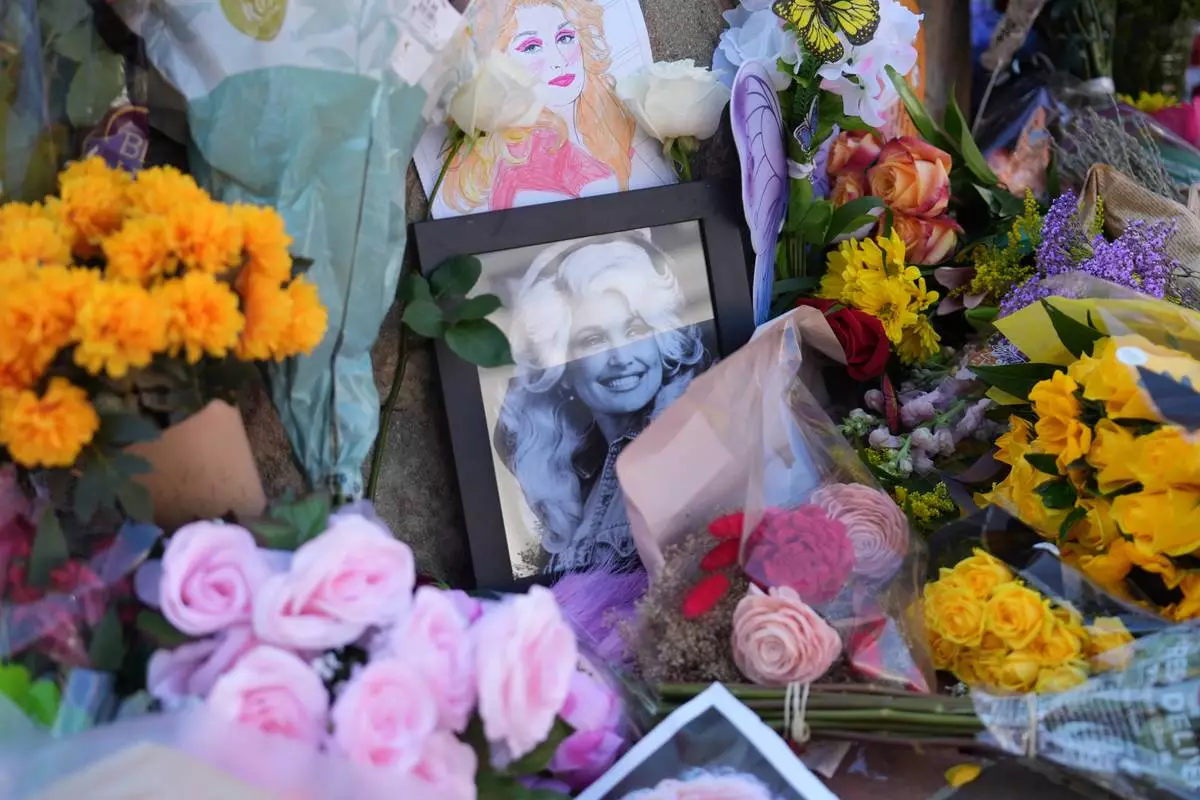
Images and flowers form a makeshift memorial honoring Dolly Parton in front of her statue in Sevierville, Tenn., Tuesday, Aug. 25, 2026. (AP Photo/Camden Hall)
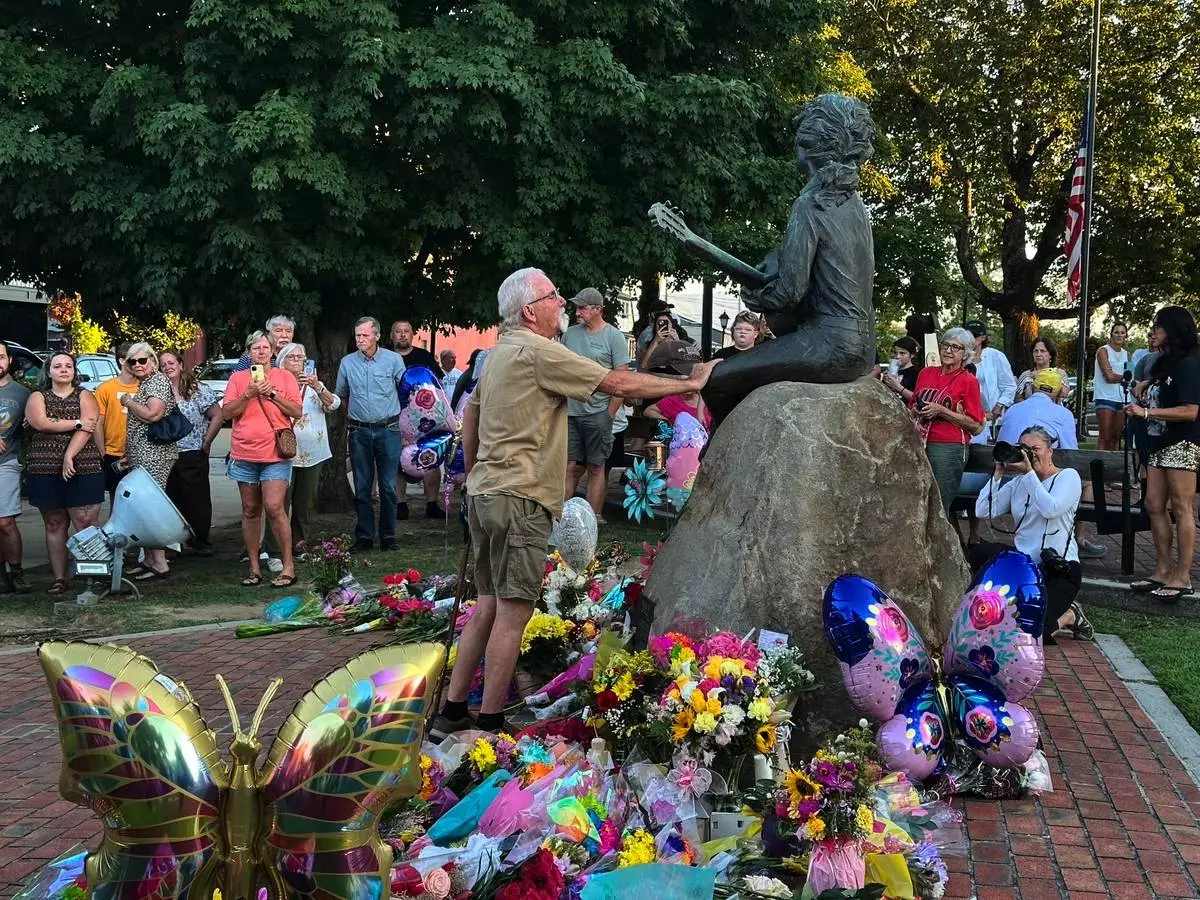
James A. Gambrell, a former chef at Dollywood, touches the Dolly Parton statue in downtown Sevierville, Tenn., on Tuesday, Aug. 25, 2026. (AP Photo/Dylan Lovan)