OAKLAND, Calif. (AP) — Kids under 18 will soon see a host of changes to their Instagram and Facebook experiences thanks to a historic $18 billion settlement Meta Platforms reached Wednesday with 48 U.S. states.
Besides the money, which will be paid out over a decade, Meta has agreed to strengthen its age estimates to keep kids under 13 off its platforms and teens in age-appropriate accounts, enact a hard limit of two hours a day for users under 18, block kids from the apps from midnight to 6 a.m., and hide “like” counts, among other changes.
While acknowledging the changes go further than Meta has ever gone when it comes to child safety, critics and children's advocates cautioned it will not solve its myriad problems overnight.
Arturo Béjar, a former Meta engineering director, said the settlement is a “significant milestone,” but parents should not see Instagram as suddenly safe for children.
“The agreement has a big problem in that it allows Meta to define harm,” Béjar said in an interview Wednesday. "It’s one thing to say, ‘Yeah, you only get like two hours of alcohol or two hours of cigarettes a day,’ but it’s still as bad for you because of what’s getting delivered.”
Béjar, the first witness to testify during the federal trial cut short by the settlement, would like to see Meta address the effect of content recommendations to teens, which he says can prove addictive. While teens might put their phone down when they hit the two-hour limit, they can be distressed about it because the way the platform is designed leaves them craving more.
Meta said people over 18 also can adopt versions of the new controls individually, such as daily time-limit reminders, but there will not be an option for them to opt into the overall settings for what teens experience on the platform.
To protect kids, first Meta has to know who they are. While the company has already been using artificial intelligence to determine if kids are lying about their age — either to sign up if they are under 13, which is not allowed, or to use adult accounts when they are 13 to 17 — it did not always work.
Under the proposed settlement, Meta agreed to strengthen its technology to check kids’ ages, using its own as well as third-party tools, with regular outside audits on how well it is working. The agreement also includes specific goals around false positive rates — that is, minors who are identified as over 18. And if a user is identified as under 13 and kicked off the platforms, Meta will check the ages of their friends, too.
“The age assurance section is reasonably good because it has measurement, has independent testing, has goals,” Béjar said. “Because I think Meta should be measured on effectiveness, not effort.”
Meta requires users to be at least 13 years old to create an account, in line with federal child privacy law.
In his testimony last week, Béjar said Meta took a “don’t ask, don’t tell” approach on kids under 13 on its platforms.
“Meta has one of the most sophisticated infrastructures in the world to detect fake accounts,” he said. But despite that, he added, there were “no goals, no metrics” to detect and check kids’ ages who were suspected to be under 13.
Critics have faulted Meta over many of its safety features that users have to manually turn on, or opt into themselves.
Of the host of safeguards listed in the settlement, many are on as a default. This includes the two-hour time limit, which can only be turned off with a parent’s permission, as well as the night mode that blocks use between midnight and 6 a.m.
Still, under the agreement other features, such as turning off video autoplay or showing posts in chronological order rather than having algorithms decide what to show kids scrolling through their feeds, will be opt-in.
Josh Golin, executive director of online safety nonprofit Fairplay, said the deal appeared to be too focused on offering tools to parents rather than restricting harmful features altogether.
“We are disappointed that the settlement does not turn off by default recommendation algorithms that connect kids to predators and send young people down dangerous rabbit holes,” Golin said.
Questions around default settings came up at the trial earlier this week when a lawyer for the states suing Meta pressed Adam Mosseri, the head of Instagram, on the low adoption rate among teens for the “take a break” feature, which prompts users to step away if they have been scrolling a while.
Very few teens used the feature when Instagram first introduced it, but since launching separate teen accounts in 2024, Meta has made it the default setting for teenage users. Still, if a teen didn't want to take a break, they could simply swipe away the notification.
Some researchers have found that many past protections Meta has rolled out are ineffective or don’t work as advertised.
“It is a little premature, unfortunately, to tell if exactly all the changes we want to see are going to happen,” said Yaël Eisenstat, director of policy and impact for the Cybersafety Research Center, which recently audited dozens of safety tools offered by both Meta and other social media companies and said most fell short.
Still, Eisenstat said, Wednesday’s settlement is monumental in showing that alternative approaches are possible.
For years, Meta “decided to go against the advice of some of their own internal employees and continue to ignore the fact that these design features were unsafe in search of profit,” said Eisenstat, who also previously worked at Meta, then Facebook, before leaving the company in 2019. The measures outlined Wednesday at the very least show that there are technically-feasible options that can make the platform safer, she said — something whistleblowers and others have already “been saying very loudly.”
Like others, Eisenstat stressed that there was a lot of work left to be done — and that it will require a combination of technical solutions, market forces and government regulation.
“There’s no singular silver bullet for fixing all of this,” she said. “I’m just glad that at least we are catching up a little bit now.”
The settlement, which also includes the District of Columbia and U.S. territories, must still be approved by a judge.
Grantham-Philips reported from Chicago.
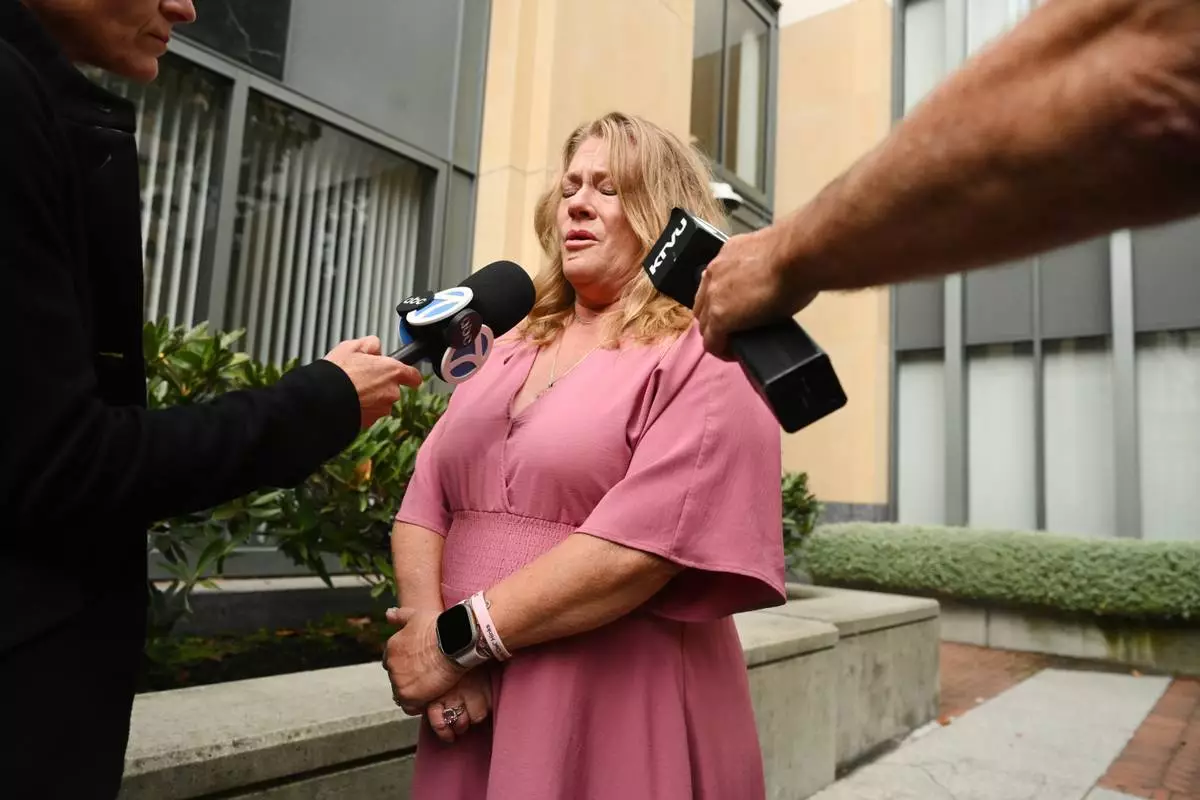
Victoria Hinks gets emotional after talking about her daughter with the media outside court after tech giant Meta reached a settlement to end a landmark trial over teen social media addiction on Wednesday, Aug. 26, 2026, in Oakland, Calif. (AP Photo/Noah Berger) CORRECTION: Corrects spelling of last name from Hicks to Hinks and removes settlement amount
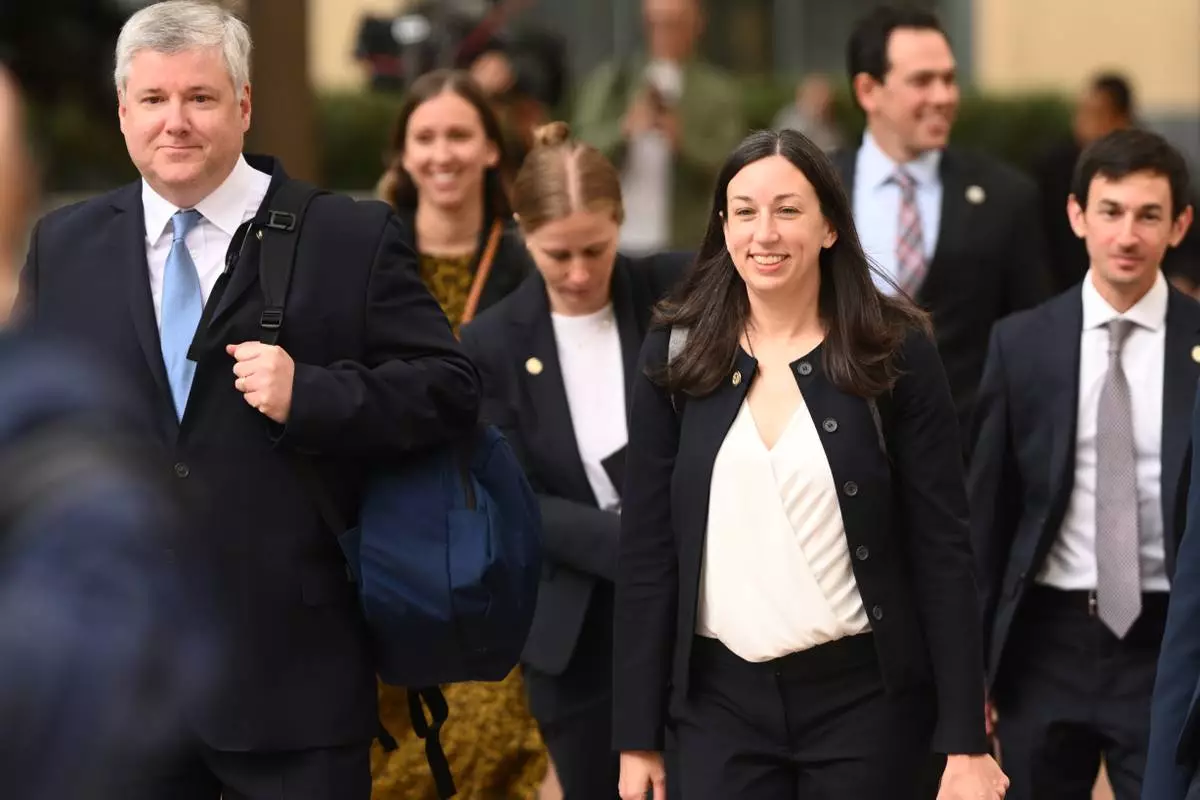
Nicklas Akers, California Senior Assistant Attorney General, left, and Deputy Attorney General Megan O'Neill exit court after tech giant Meta reached a settlement to end a landmark trial over teen social media addiction in Oakland, Calif., Wednesday, Aug. 26, 2026. (AP Photo/Noah Berger)
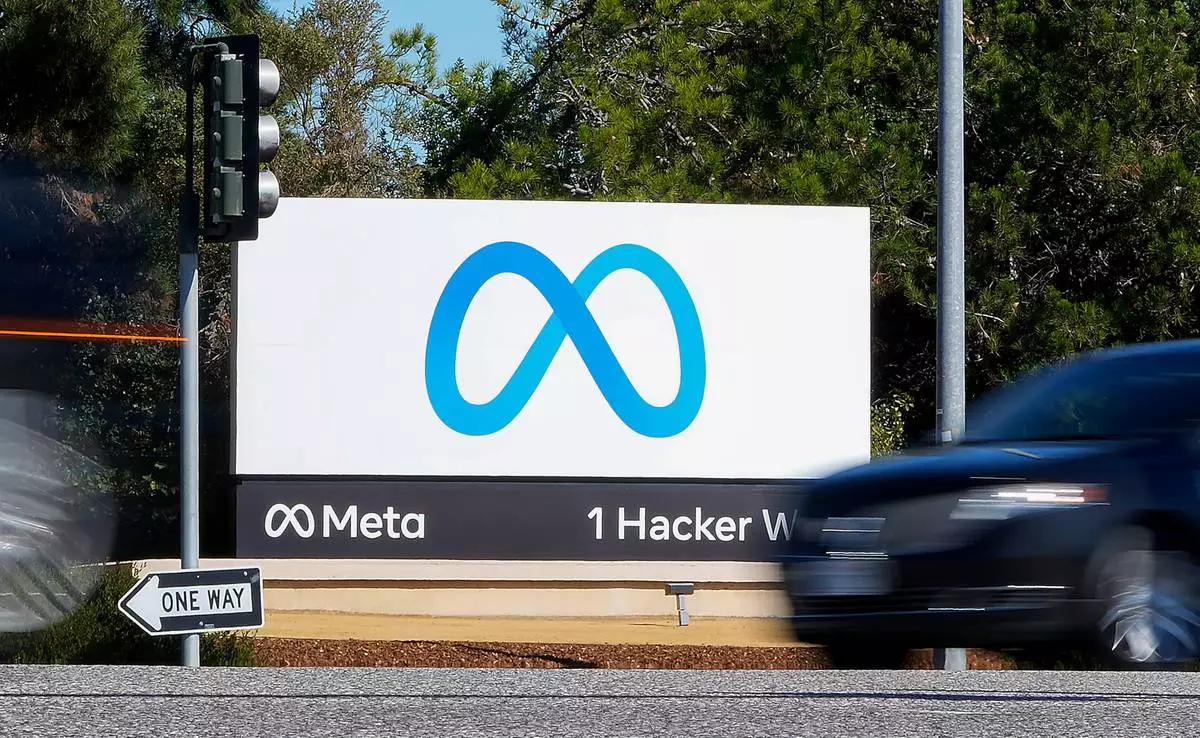
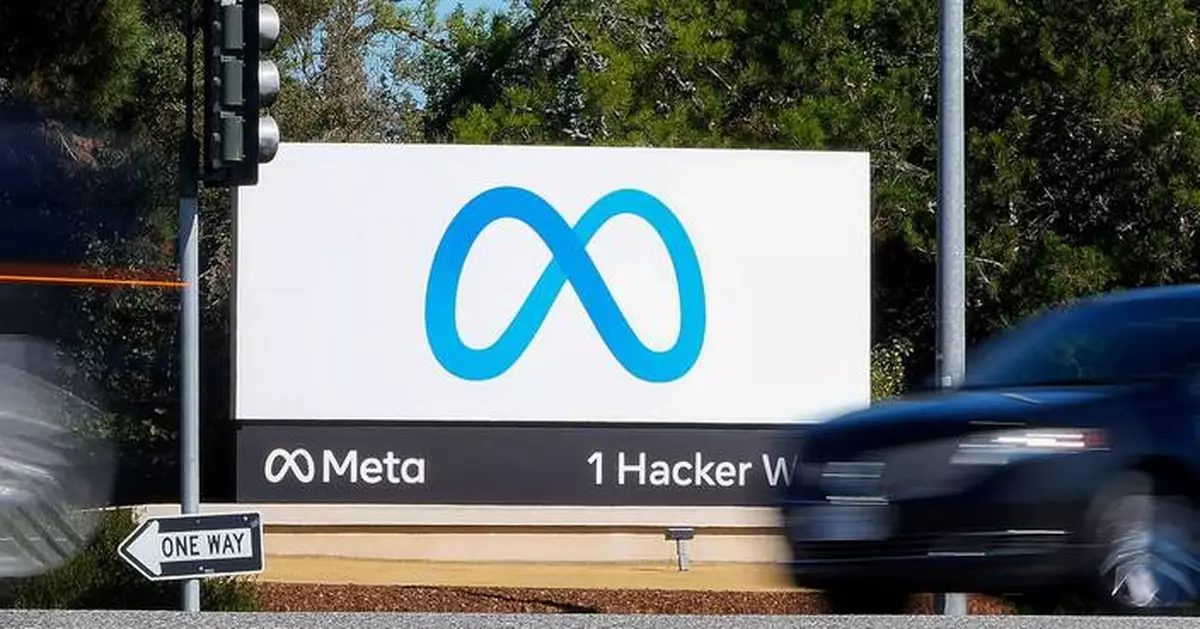
FILE - A car passes Facebook's new Meta logo on a sign at the company headquarters on Oct. 28, 2021, in Menlo Park, Calif. (AP Photo/Tony Avelar, File)
NEW YORK (AP) — Karolina Muchova and Jakub Mensik won the U.S. Open mixed doubles title on Wednesday night, beating Belinda Bencic and Flavio Cobolli 6-3, 1-6 (10-6).
The Czech duo pulled out match tiebreakers in both matches on the second night of the two-day event, helped by Mensik's powerful serve combined with some good hands near the net. He put away the final with an ace to earn $1 million for him and Muchova to share.
They were a point from losing in the semifinals, erasing two match points and running off the final four to edge Mirra Andreeva and Andrey Rublev 5-4 (6), 3-5 (11-9).
Wearing the same pink tops and maroon bottoms they settled on when Mensik texted Muchova on the eve of the tournament to coordinate their outfits, the Czechs blasted their way out of trouble whenever they faced tough times.
“I think at the end, really the matching outfit made the difference for us,” Muchova said.
They looked good. Now they look like a million bucks.
The final was the only match of the tournament that resembled a regular match, with standard sets to six games and a tiebreaker at 6-all. Through the first three rounds, sets were to four games, with a tiebreaker at 4-all.
Bencic and Cobolli rallied to end the run of spouses Elina Svitolina and Gael Monfils in the first semifinal with a 4-5 (7), 4-1 (10-5) victory.
They appeared headed toward a matchup with Andreeva and Rublev, who were smiling and pumping their fists after opening the lead in the match tiebreaker. Muchova flung her racket to the court in disgust after missing a volley that gave the Russians a 7-5 lead.
But the Wimbledon women’s runner-up never lost belief, thanks in part to her hard-serving partner, a French Open semifinalist who will turn 21 next week.
Bencic and Cobolli knocked Serena Williams and Carlos Alcaraz out of the tournament Tuesday in the quarterfinals.
Then they dropped a set for the first time in the tournament in the semis, but began to dominate midway through the second set, winning the final 11 points to force the match tiebreaker.
It was the second year of the new format in mixed doubles, with the event shortened and moved to the week before the singles main draw begins, with the U.S. Tennis Association hoping that would get top singles players to compete.
Plenty of top names did compete but much of the star power, including Williams and Alcaraz, went out early. Aryna Sabalenka and Novak Djokovic lost their opening match, as did Alex Eala and Felix Auger-Aliassime, and Jessica Pegula and Taylor Fritz.
That could explain a good number of empty seats in Ashe, particularly after both semifinals went the distance and pushed the start of the final back toward nearly 11 p.m. EDT.
None of the teams featuring doubles specialists survived to the final four, leaving an opening for some players still seeking Grand Slam glory such as Rublev, who has fallen 10 times in major quarterfinals.
Svitolina and Monfils, who have both reached the U.S. Open singles semifinals, accepted a wild card to team up for the first time. Married since 2021, they were trying to win a championship in the final appearance in a Grand Slam tournament for Monfils, who will turn 40 on Sept. 1, before he retires.
They pulled out a back-and-forth tiebreaker in the first set in which they blew a 4-0 lead, then erased two set points. They went ahead 8-7 when Bencic tried to hit a cross-court backhand but nailed Cobolli, who had strayed into the middle. Cobolli then double-faulted to lose the set.
He recovered with consecutive volley winners to break Svitolina’s serve for a 2-1 lead in the second set. The match tiebreaker was tied at 2 but swung the way of Bencic and Cobolli when Svitolina was just wide on three straight shots.
See AP’s full tennis coverage here
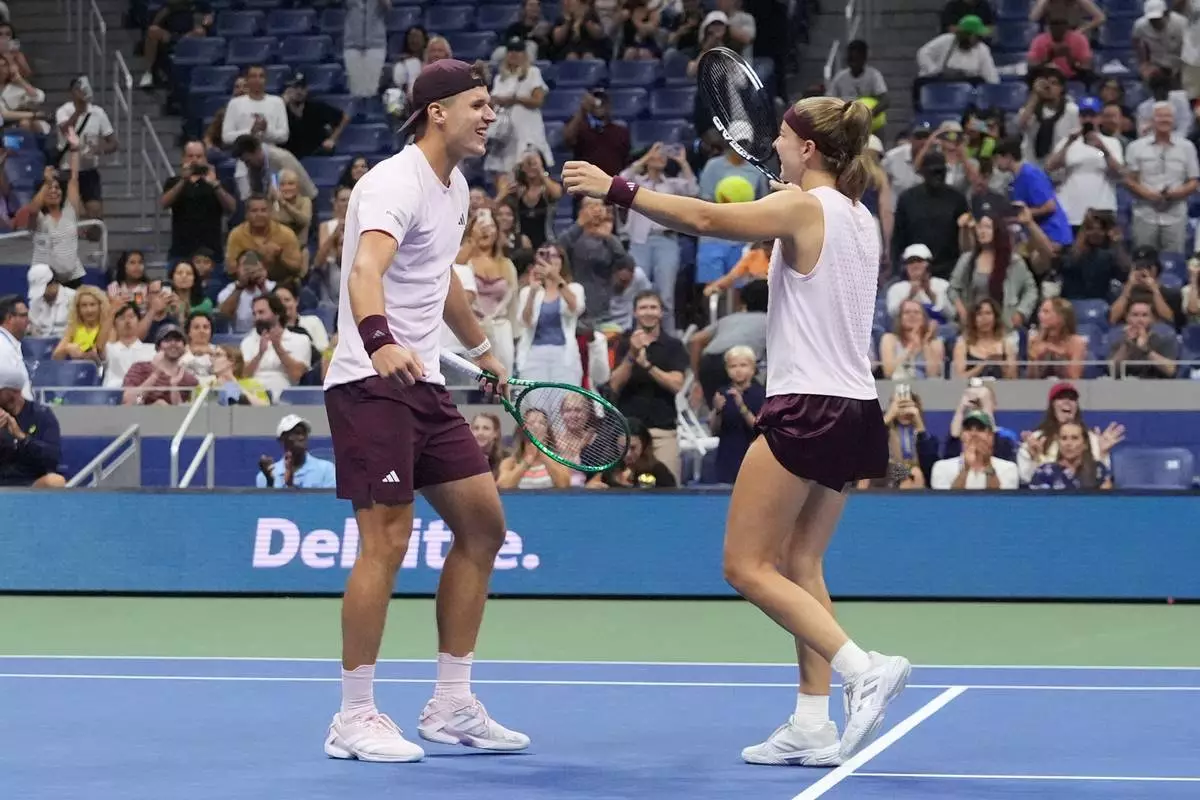
Jakub Mensik, of the Czech Republic, left celebrates with Karolina Muchova, of the Czech Republic, after they won the mixed doubles final match against Belinda Bencic, of Switzerland, and Flavio Cobolli, of Italy, at the U.S. Open tennis championships Wednesday, Aug. 26, 2026, in New York. (AP Photo/Frank Franklin II)
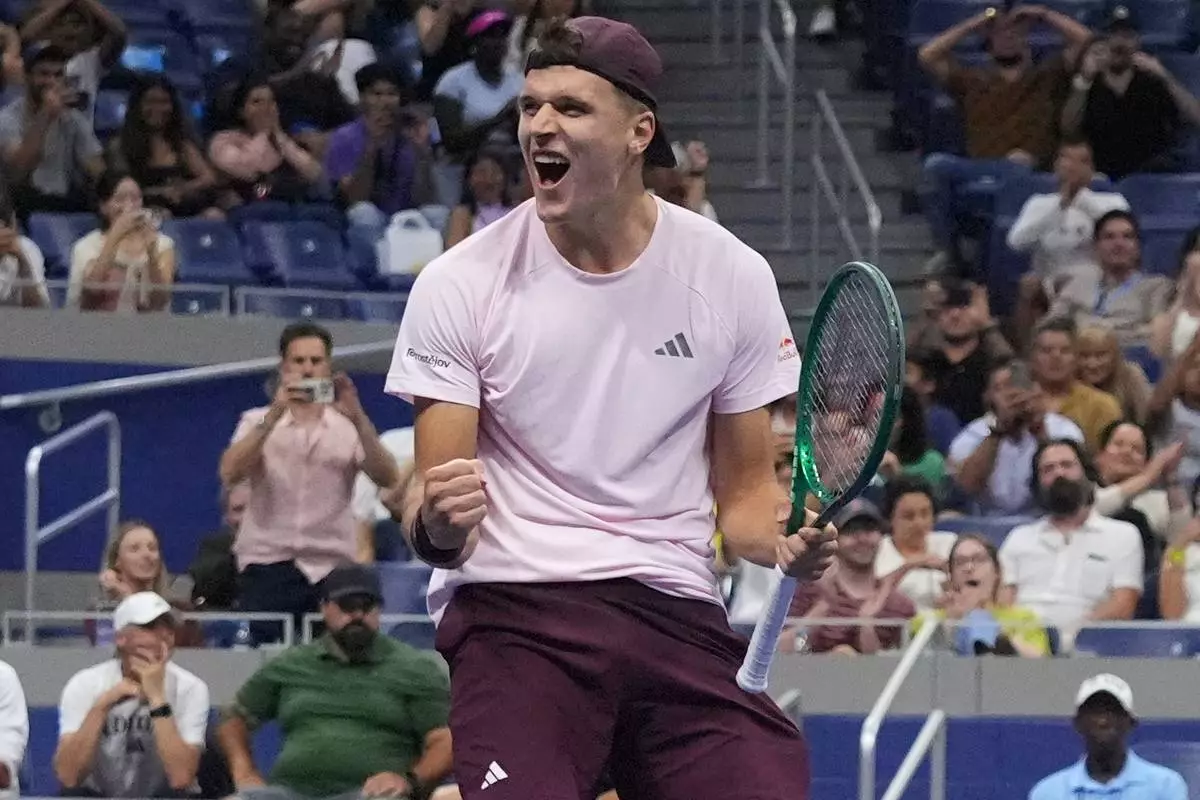
Jakub Mensik, of the Czech Republic, celebrates after he and Karolina Muchova, of the Czech Republic, defeated Belinda Bencic, of Switzerland, and Flavio Cobolli, of Italy, in the mixed doubles final match at the U.S. Open tennis championships Wednesday, Aug. 26, 2026, in New York. (AP Photo/Frank Franklin II)
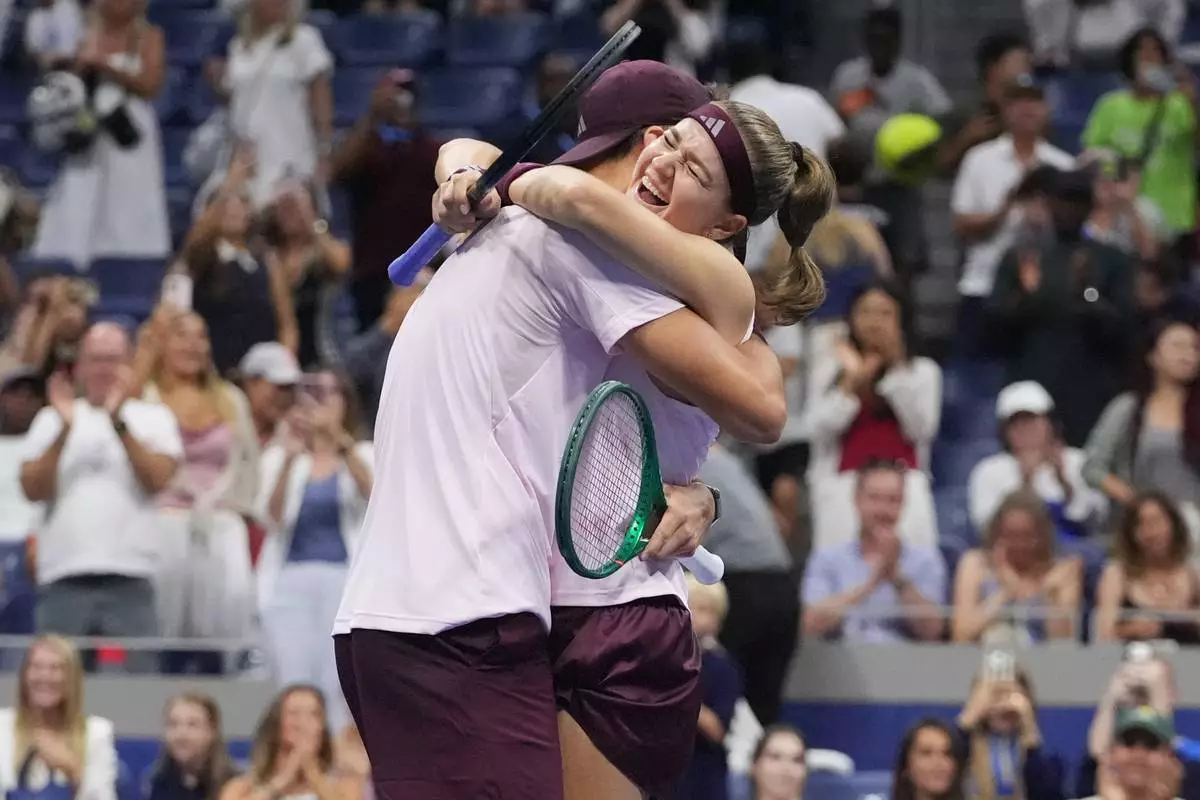
Jakub Mensik, of the Czech Republic, celebrates with Karolina Muchova, right, of the Czech Republic, after they won the mixed doubles final match against Belinda Bencic, of Switzerland, and Flavio Cobolli, of Italy, at the U.S. Open tennis championships Wednesday, Aug. 26, 2026, in New York. (AP Photo/Frank Franklin II)
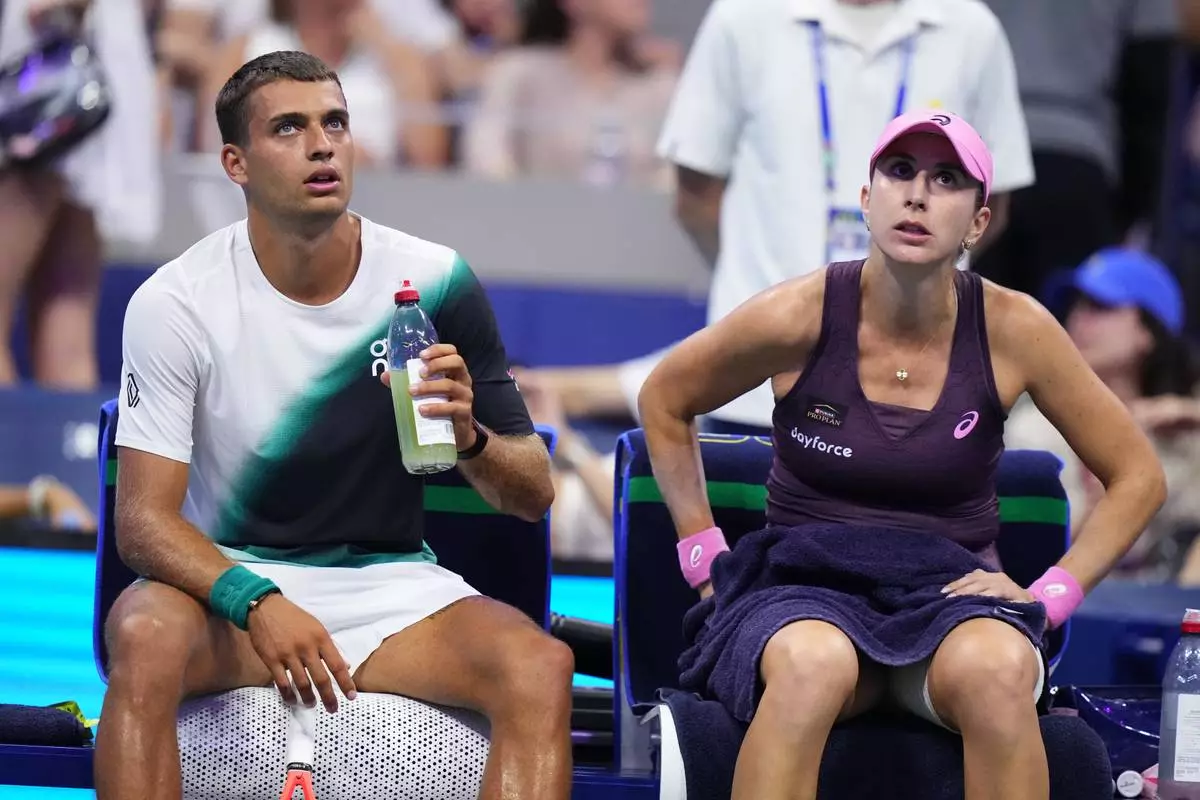
Belinda Bencic, right, of Switzerland, and Flavio Cobolli, of Italy, sit between sets while competing against Jakub Mensik, of the Czech Republic, and Karolina Muchova, of the Czech Republic, during the mixed doubles final match at the U.S. Open tennis championships Wednesday, Aug. 26, 2026, in New York. (AP Photo/Frank Franklin II)
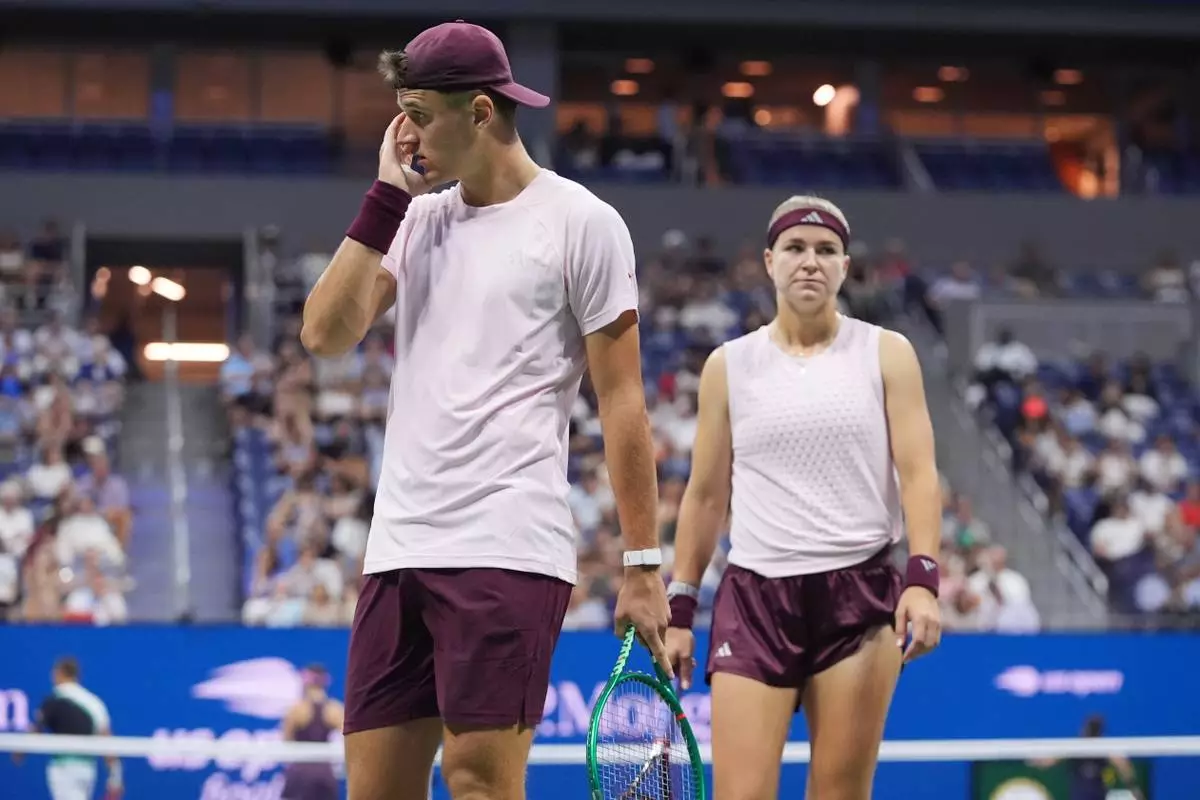
Jakub Mensik, left, of the Czech Republic, and Karolina Muchova, of the Czech Republic, react during the mixed doubles final match against Belinda Bencic, of Switzerland, and Flavio Cobolli, of Italy, at the U.S. Open tennis championships Wednesday, Aug. 26, 2026, in New York. (AP Photo/Frank Franklin II)
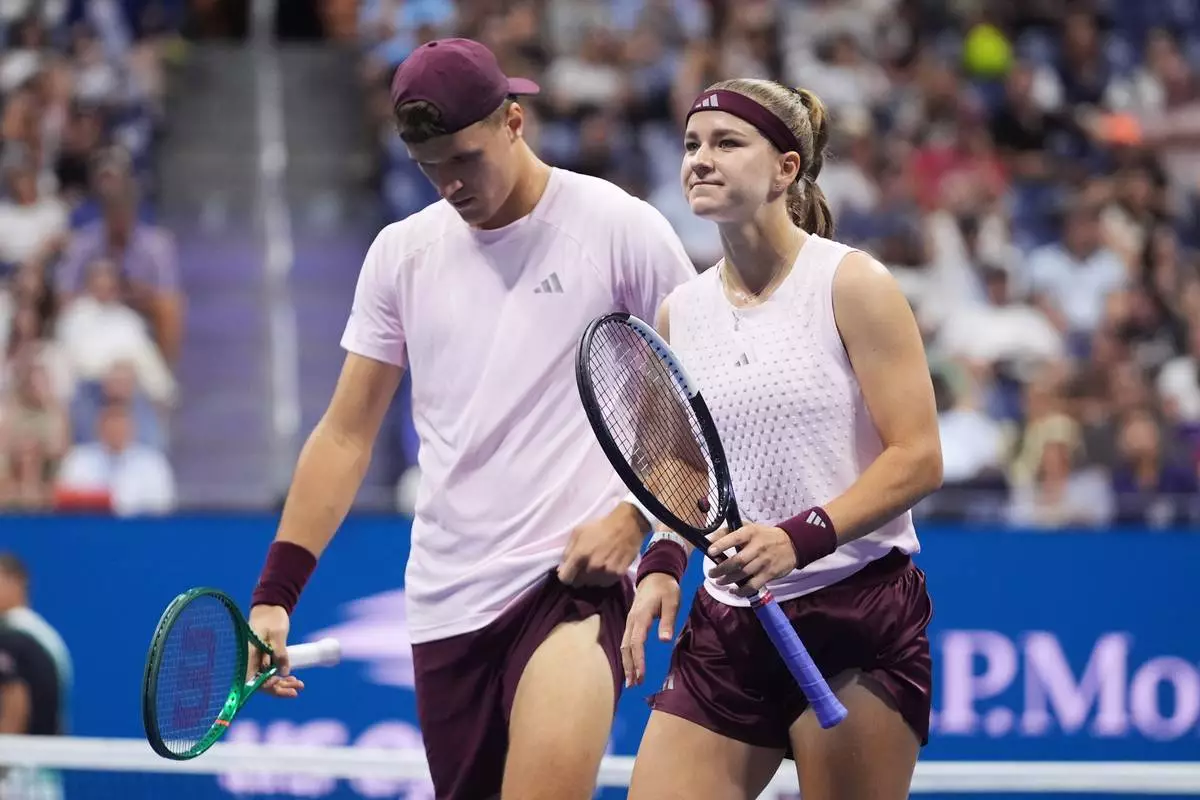
Jakub Mensik, left, of the Czech Republic, and Karolina Muchova, of the Czech Republic, react during the mixed doubles final match against Belinda Bencic, of Switzerland, and Flavio Cobolli, of Italy, at the U.S. Open tennis championships Wednesday, Aug. 26, 2026, in New York. (AP Photo/Frank Franklin II)
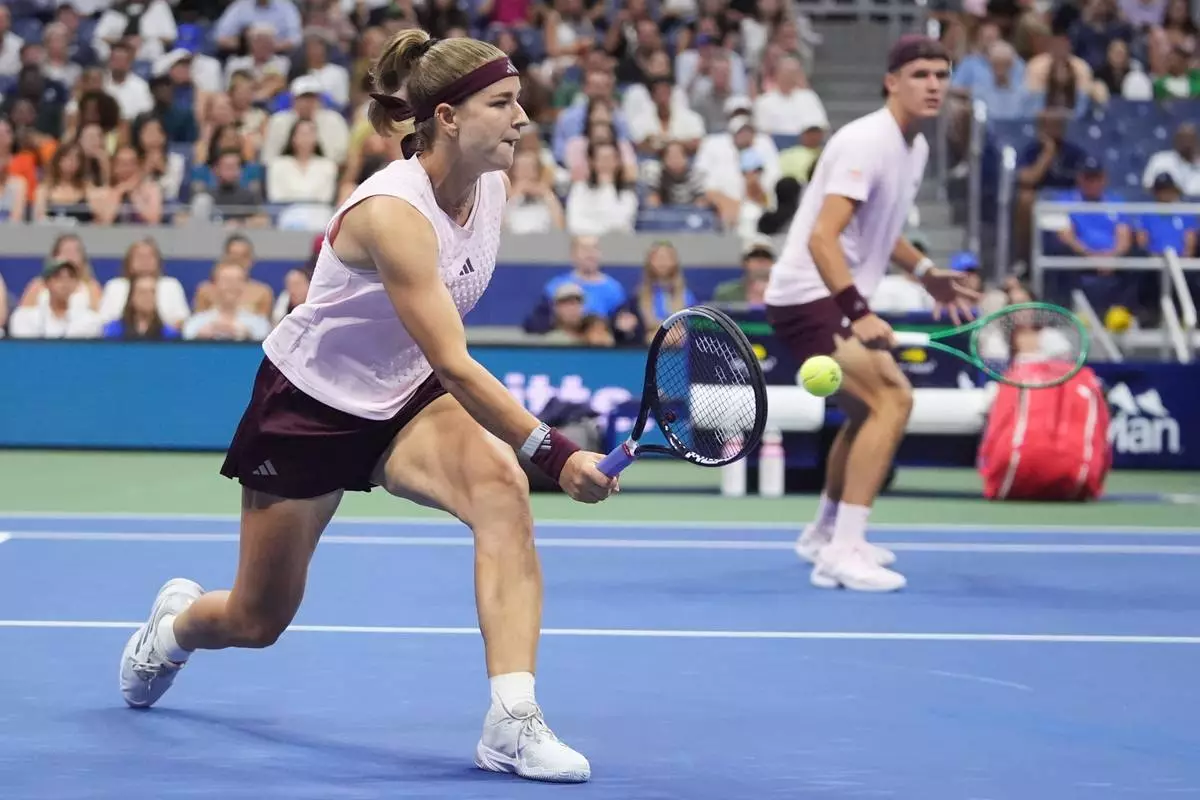
Karolina Muchova, left, of the Czech Republic, returns the ball while competing with Jakub Mensik, of the Czech Republic, against Mirra Andreeva, of Russia, and Andrey Rublev, of Russia, during a mixed doubles semifinal match at the U.S. Open tennis championships Wednesday, Aug. 26, 2026, in New York. (AP Photo/Frank Franklin II)
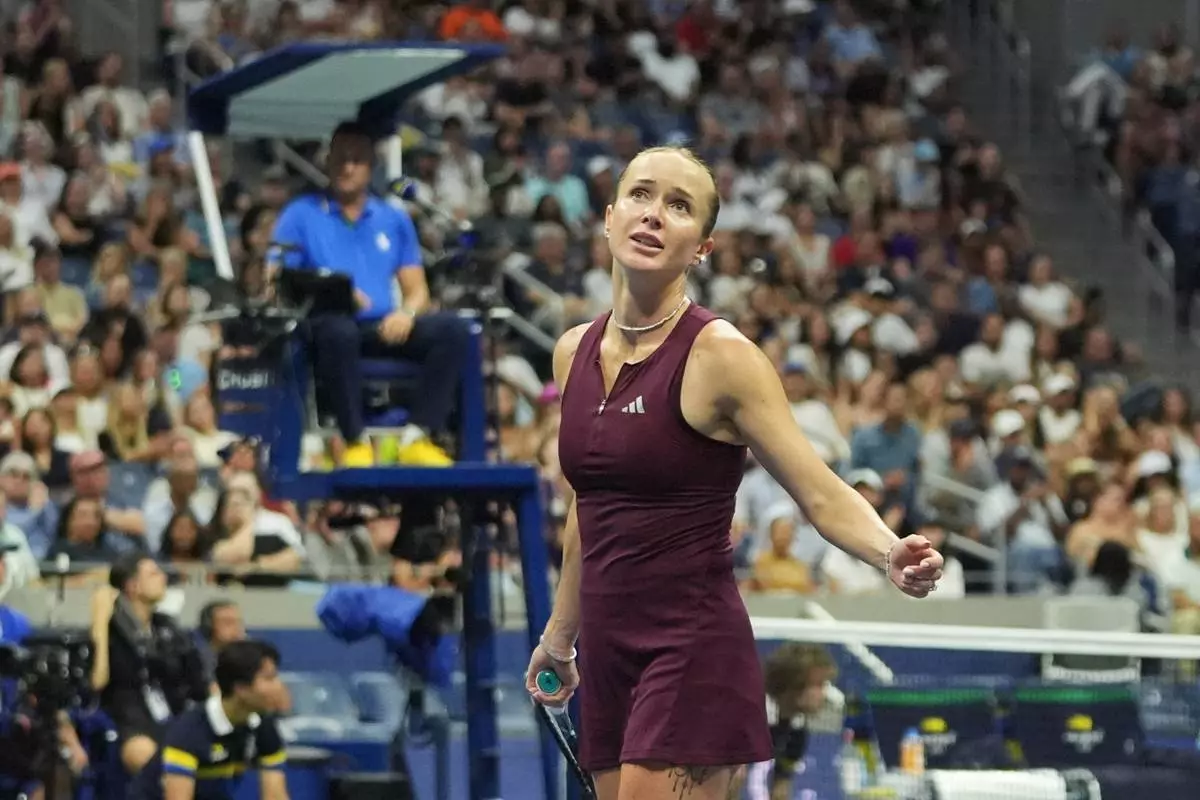
Elina Svitolina, of Ukraine, reacts after missing a shot while competing with and Gael Monfils, of France, against Belinda Bencic, of Switzerland, and Flavio Cobolli, of Italy, during a mixed doubles semifinal match at the U.S. Open tennis championships Wednesday, Aug. 26, 2026, in New York. (AP Photo/Frank Franklin II)
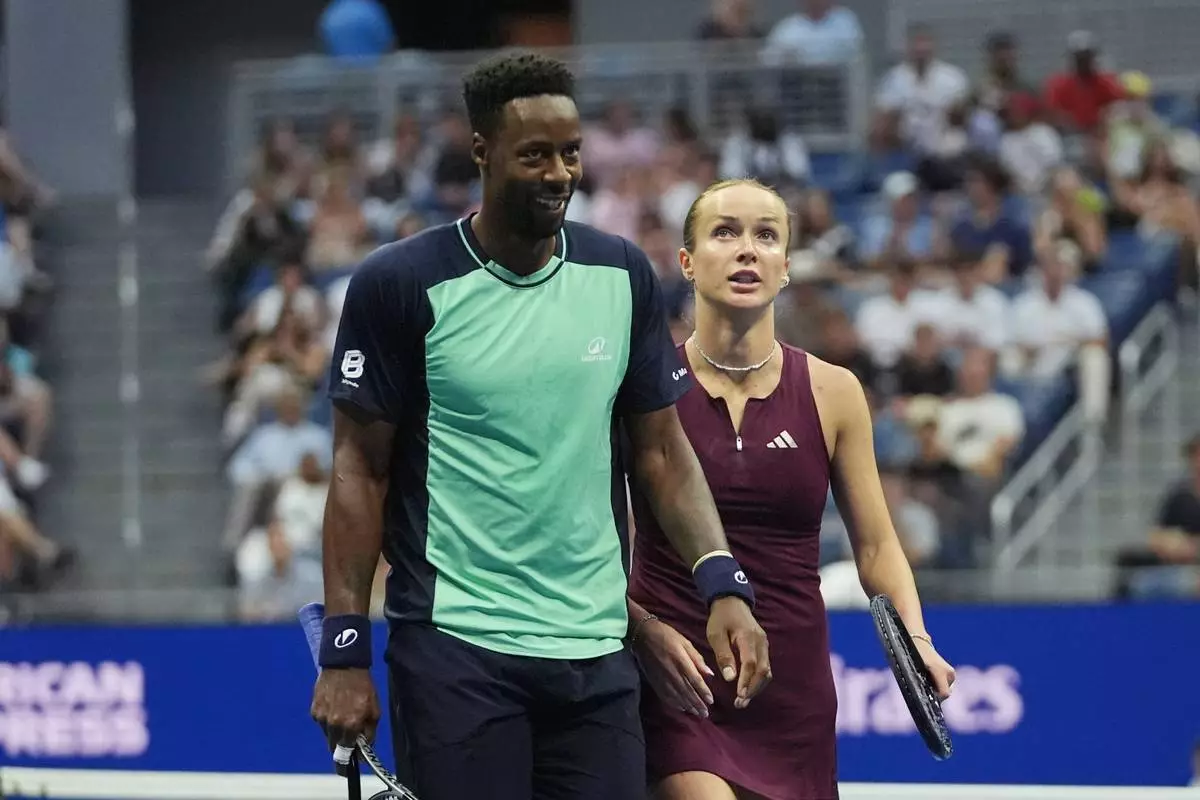
Elina Svitolina, of Ukraine, and Gael Monfils, left, of France, react while competing against Belinda Bencic, of Switzerland, and Flavio Cobolli, of Italy, during a mixed doubles semifinal match at the U.S. Open tennis championships Wednesday, Aug. 26, 2026, in New York. (AP Photo/Frank Franklin II)
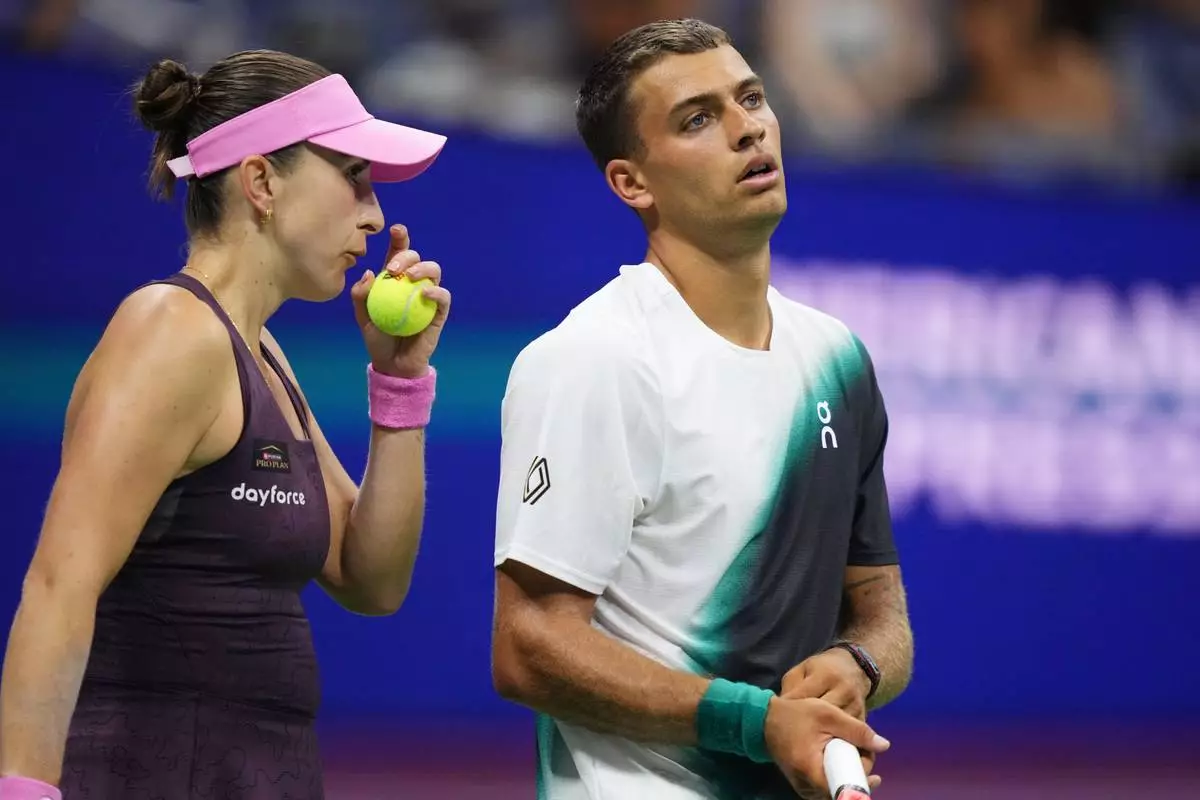
Belinda Bencic, left, of Switzerland, and Flavio Cobolli, of Italy, react while competing against Elina Svitolina, of Ukraine, and Gael Monfils, of France, during a mixed doubles semifinal match at the U.S. Open tennis championships Wednesday, Aug. 26, 2026, in New York. (AP Photo/Frank Franklin II)
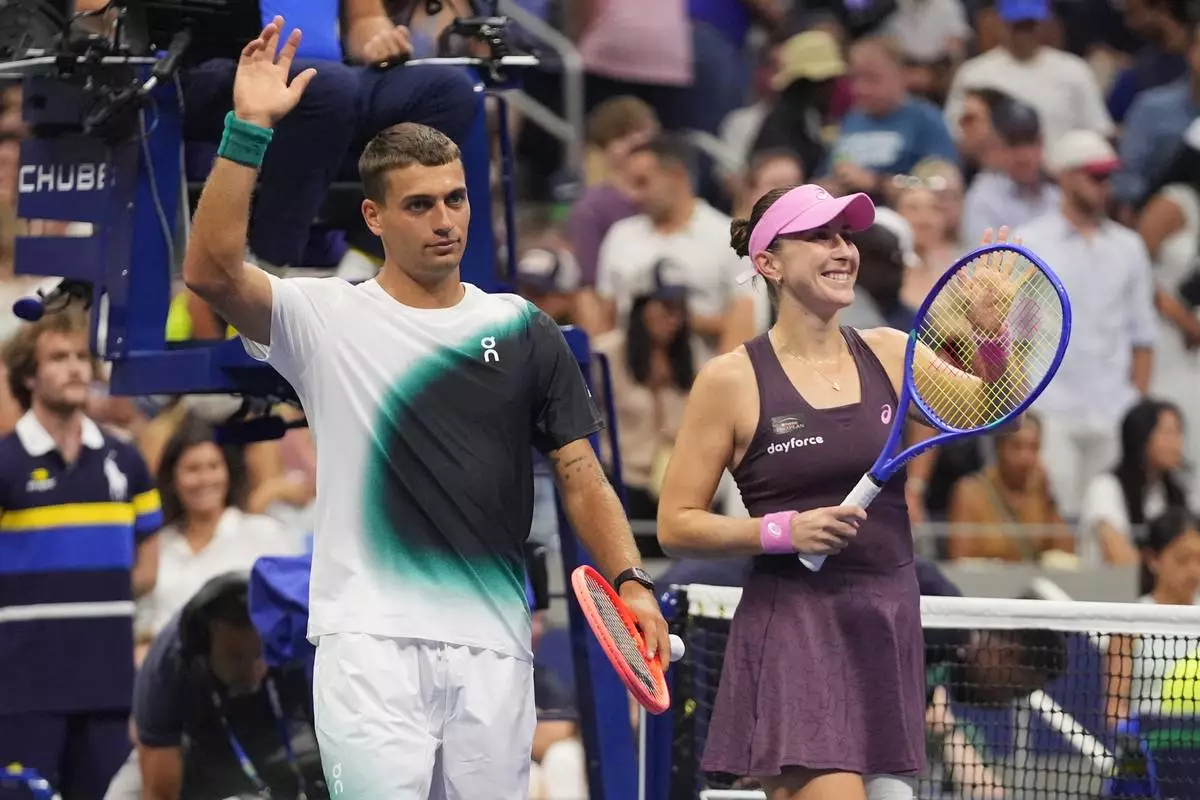
Belinda Bencic, of Switzerland, and Flavio Cobolli, of Italy, left, celebrate after defeating Elina Svitolina, of Ukraine, and Gael Monfils, of France, in a mixed doubles semifinal match at the U.S. Open tennis championships Wednesday, Aug. 26, 2026, in New York. (AP Photo/Frank Franklin II)