LOS ANGELES (AP) — In her 1994 memoir, Dolly Parton recounts in vivid detail the place where she found God.
It was an abandoned church, in rural Tennessee where she grew up, that had become known as a haven for sex, drugs and violence. Rather than see the used condoms on the floor, the out-of-tune piano left behind or the explicit drawings on the walls as a hindrance to her religious encounter, Parton spoke fondly of the setting where she went to pray as a young girl.
Click to Gallery
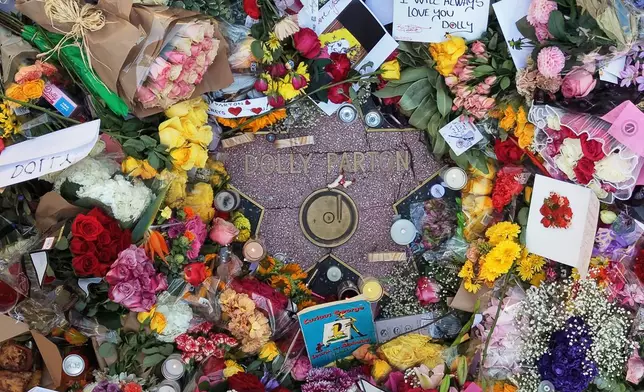
In This aerial view, flowers, notes and photos are left on Dolly Parton's star on the Hollywood Walk of Fame on Wednesday, Aug. 26, 2026, in Los Angeles. (AP Photo/Jae C. Hong)
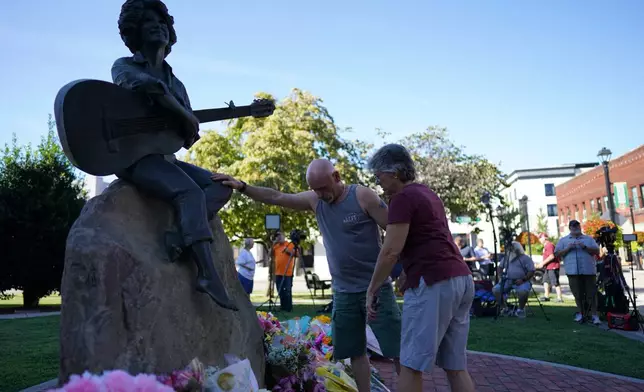
People visit a makeshift memorial honoring Dolly Parton in Sevierville, Tenn., Tuesday, Aug. 25, 2026. (AP Photo/Camden Hall)
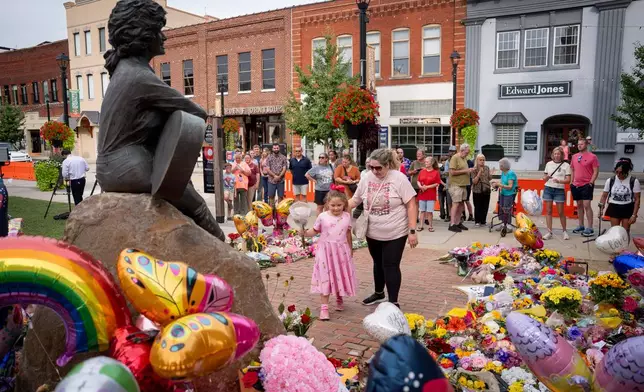
People lay flower at a memorial honoring Dolly Parton in Sevierville, Tenn., Wednesday, Aug. 26, 2026. (AP Photo/Camden Hall)
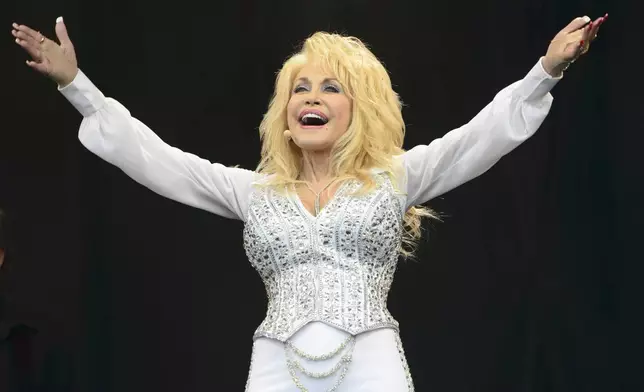
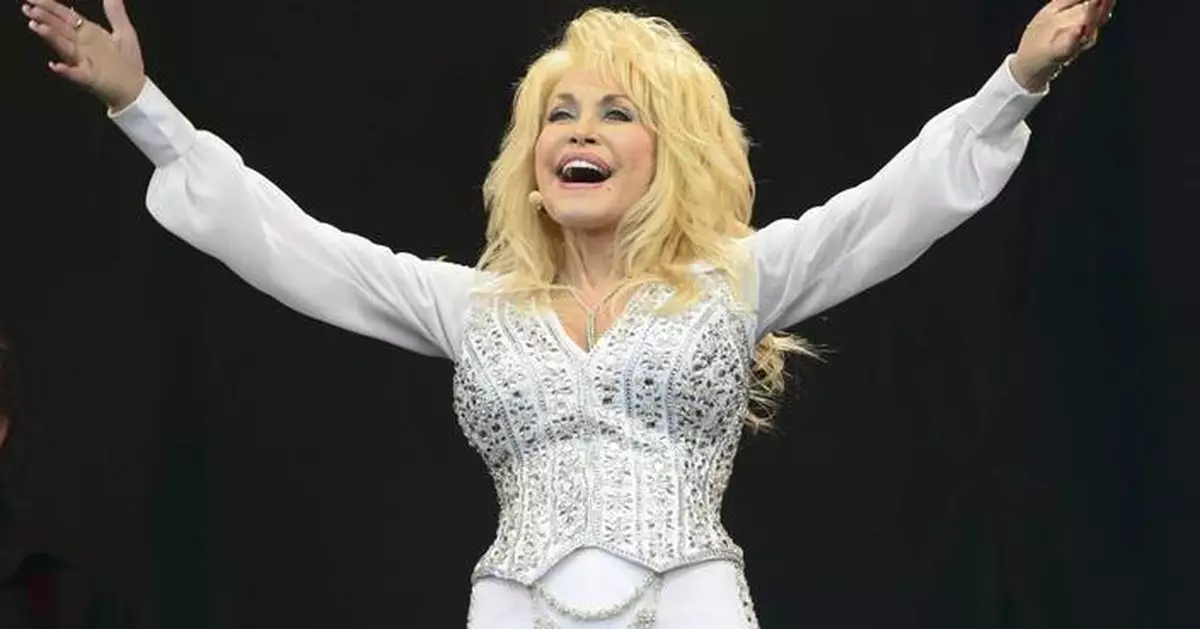
FILE - Dolly Parton performs at Glastonbury music festival, June 29, 2014. (Photo by Jonathan Short/Invision/AP, File)
“I would sing hymns to God for a while and look at dirty pictures for a while and pray for a while, and one day as I prayed in earnest, I broke through some sort of spirit wall and found God,” she wrote.
“Here in one place was God, music and sex.”
The country music icon was known for blurring the line between Sunday morning and Saturday night, a window into her theology that captivated people across political and denominational lines.
As news broke this week that the 80-year-old country music icon died of cancer, social media was flooded with quotes and interview clips of Parton proclaiming her Christian faith, something she wore on her sleeve even when her relationship to church was complicated.
But for many Christian members of the LGBTQ+ community who struggled to reconcile their sexuality and gender identity with the intolerant beliefs they were taught, Parton’s public support helped them keep their faith in some cases, and transformed their understanding of how God sees them in others.
“Her approach to solidarity was inspiring for me as a young, queer Christian girl realizing I was gay,” said Ciarra Jones, a 32-year-old workplace consultant from Oakland, California. “For queer Christians, experiencing another queer Christian — or another queer-affirming person that is Christian — is important to your journey. Dolly, for me, was one of those lights.”
Long before same-sex marriage was legalized nationwide, Parton made acceptance a recurring theme of both her music and public persona, which has contributed to long-running support from the LGBTQ+ community.
“I got a huge gay following and some really macho-looking women,” Parton told Andy Warhol for a 1984 cover story for Interview Magazine.
When Warhol told her she would make a great preacher, Parton responded: “What do you mean? I am a great preacher.”
American Christianity spans the theological spectrum on sexuality and gender identity, with some remaining firmly committed to a conservative view. As society has shifted, so have some Christians' beliefs on things like same-sex marriage, though there is a widening partisan divide on certain issues, particularly regarding transgender people.
Parton, whose grandfather was a Pentecostal preacher, said her support for LGBTQ+ people was rooted in her Christian faith. “We are all God’s children,” she told Larry King in 2016. But she also did not try to convince others of her beliefs, sometimes to the frustration of fans who thought she ought to be more vocal.
“Some are preachers, some are gay / Some are addicts, drunks and strays / But not a one is turned away / When it’s family,” Parton sings on the song, “Family,” from her 1991 album “Eagle When She Flies.”
“I don’t condemn nor condone anything,” Parton once told The Associated Press regarding the song. “I just love and accept people where they are for who they are.”
Some queer people who were raised in religiously conservative homes push back against the notion that Parton was not political enough.
“It’s very, very hard to grow up and know who you are and have that be described as deviant and to be afraid that what you are is totally wrong,” said Duncan Teater, a film student at the University of Southern California, as his voice broke.
Teater, who is gay and grew up in Kentucky, was raised as a conservative Christian and has a complicated relationship to the faith as an adult. But, he said, Parton’s support was meaningful and he appreciated how she thinks about religiosity.
“For someone with the credibility and respect that Dolly Parton had, to be confident about the worth of every human being and to say that out loud and without hesitation and in such simple and loving words was a pretty radical act and a pretty political act,” he said.
Parton’s faith, and her relationship with the gay community, spread beyond her music and interviews.
On the website for Dollywood, the East Tennessee theme park Parton opened decades ago after seeing families like hers unable to afford to go to Disneyland, there is a mission and values statement, which includes a commitment to live them out “in a manner consistent with Christian values and ethics.”
The park has a chaplain and a chapel — the Robert F. Thomas Chapel, named after the doctor who delivered Parton — that hosts weekly Sunday services.
Patrick Burrows, a 38-year-old scholar of theology and ethics, grew up going to Dollywood and has been more than 100 times.
“Any time there was a church outing in the Southern Baptist church that I grew up in or a day off from school or needing a mental health break in high school,” said Burrows, who grew up outside of Asheville, North Carolina.
The theme park was so formative for him that he wrote a chapter about it in his dissertation while studying theology at Harvard Divinity School.
“You should not see gay and lesbian couples standing next to people with ‘Jesus saved me from my sin’ shirts. And yet you see it” in what Burrows refers to as the “Dollyverse."
"Dolly created this space for people who are very different from one another to be different from another,” he said.
Burrows recalled writing dozens of pages before one line sparked an epiphany, prompting him to rewrite his entire thesis chapter: “Though I only know it in retrospect, Dolly Parton, through Dollywood, taught me how to be gay and how to be a Christian.”
Associated Press religion coverage receives support through the AP’s collaboration with The Conversation US, with funding from Lilly Endowment Inc. The AP is solely responsible for this content.
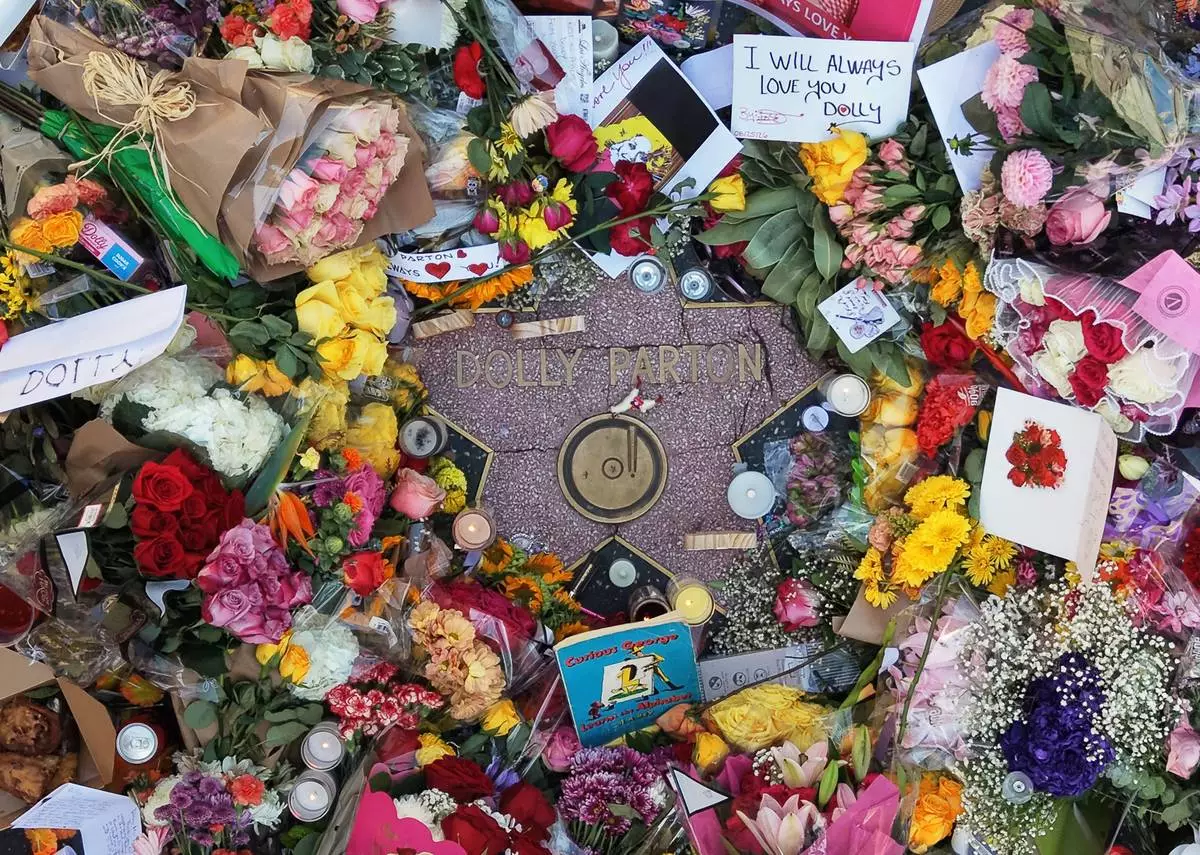
In This aerial view, flowers, notes and photos are left on Dolly Parton's star on the Hollywood Walk of Fame on Wednesday, Aug. 26, 2026, in Los Angeles. (AP Photo/Jae C. Hong)
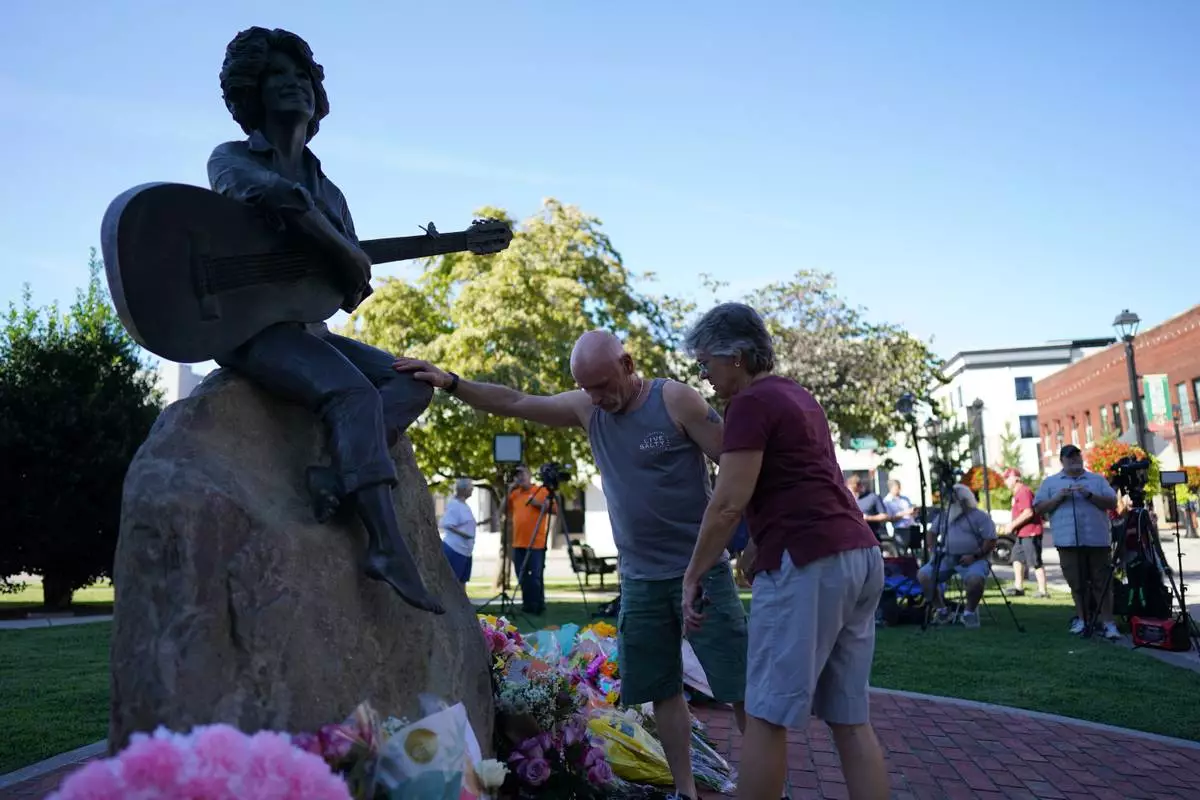
People visit a makeshift memorial honoring Dolly Parton in Sevierville, Tenn., Tuesday, Aug. 25, 2026. (AP Photo/Camden Hall)
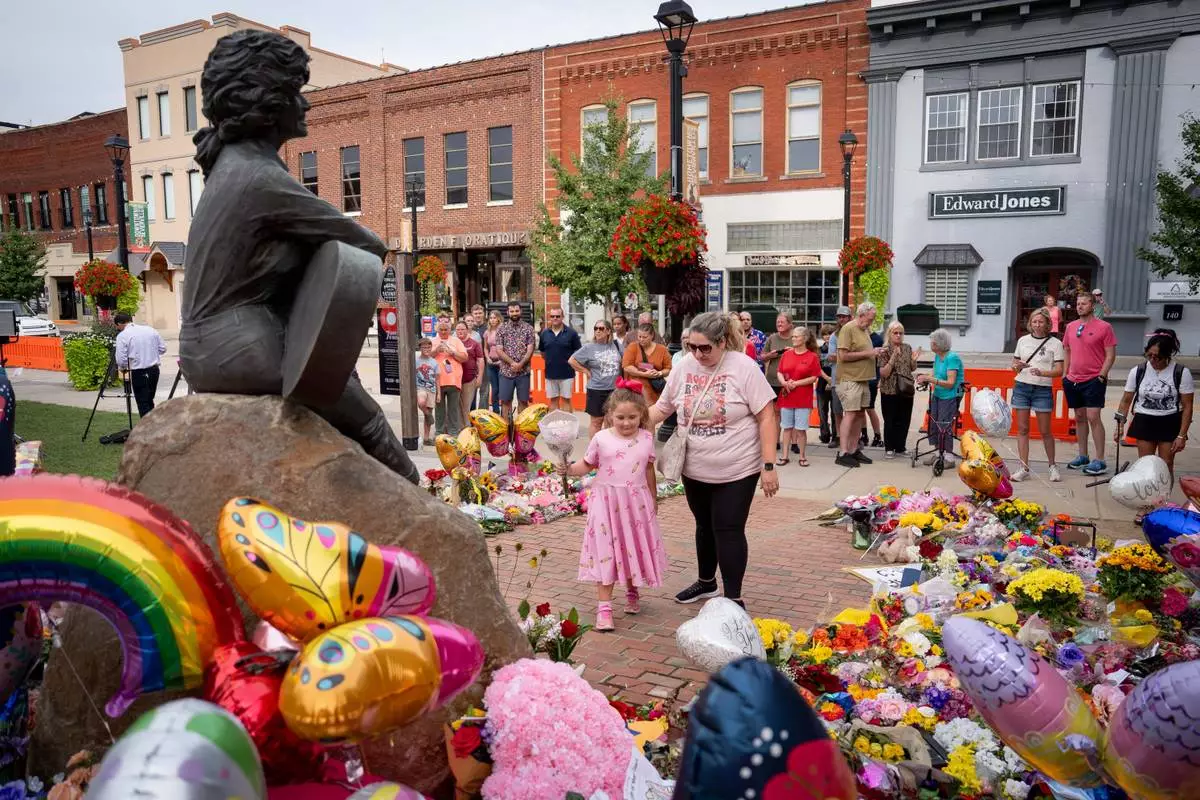
People lay flower at a memorial honoring Dolly Parton in Sevierville, Tenn., Wednesday, Aug. 26, 2026. (AP Photo/Camden Hall)
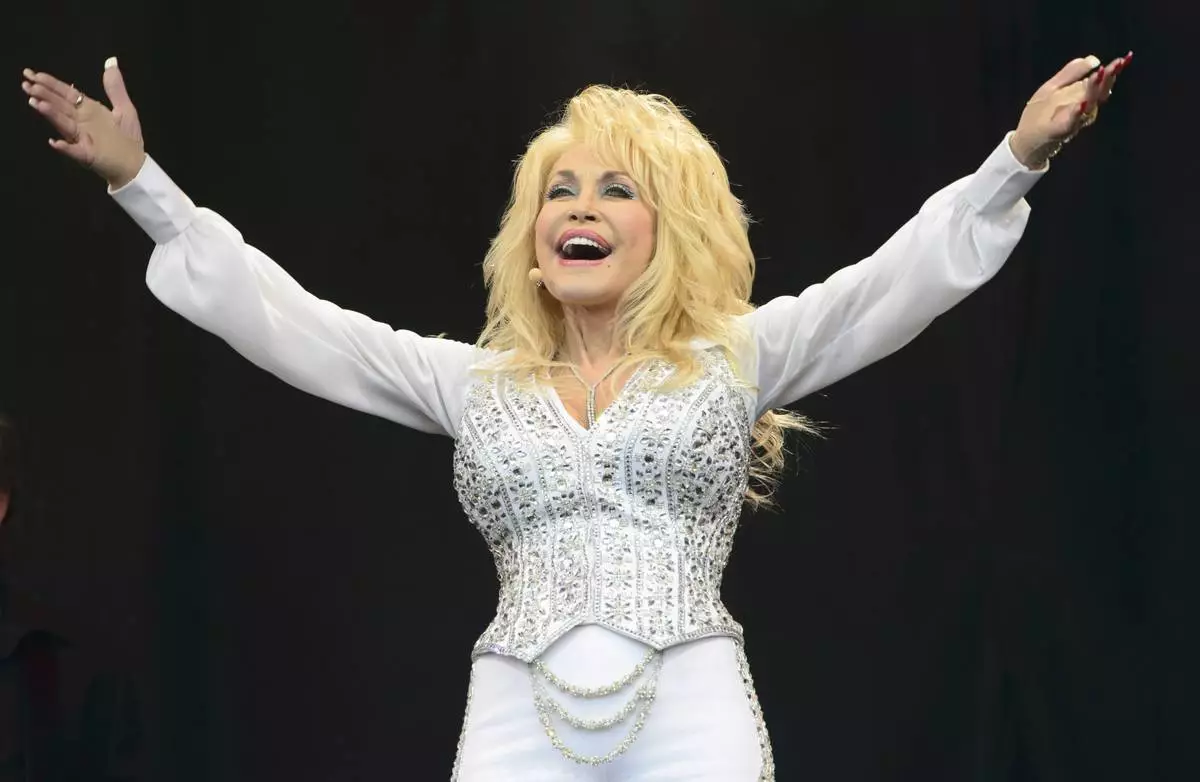
FILE - Dolly Parton performs at Glastonbury music festival, June 29, 2014. (Photo by Jonathan Short/Invision/AP, File)