TOKYO (AP) — Torrential rain struck Japan’s north-central prefectures of Ishikawa and Toyama on Thursday, triggering flooding and landslides, closing roads and stranding people in flooded homes and vehicles.
The Japan Meteorological Agency issued the Level 5 heavy rain warning for parts of the Ishikawa and Toyama prefectures, urging residents in the affected areas to take precautionary measures against possible flooding and landslides.
Click to Gallery
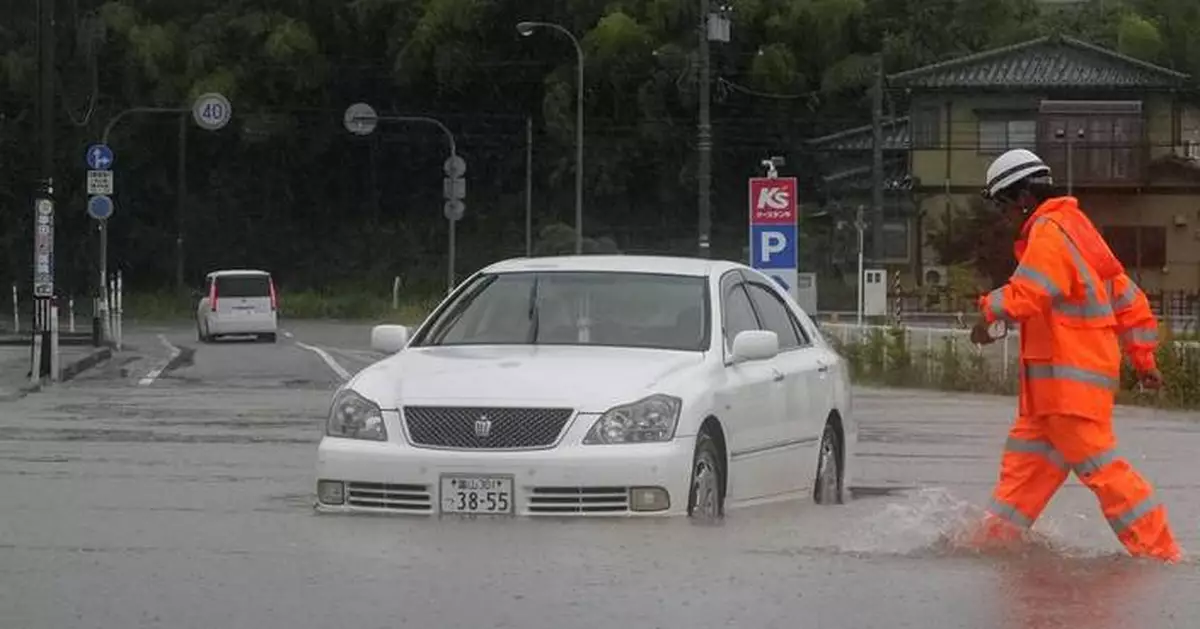
A vehicle is left in a street flooded due to a heavy rain in Himi, Toyama prefecture, Japan Thursday, Aug. 27, 2026. (Suo Takekuma/Kyodo News via AP)
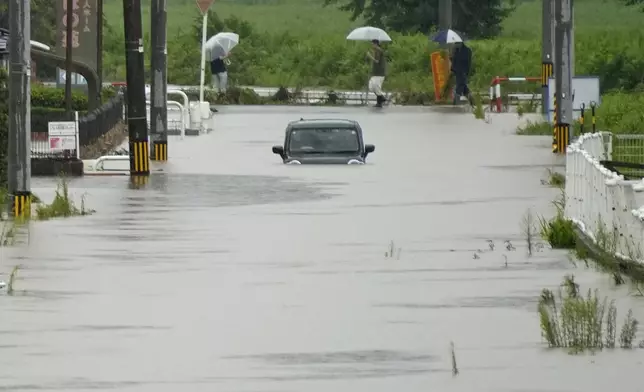
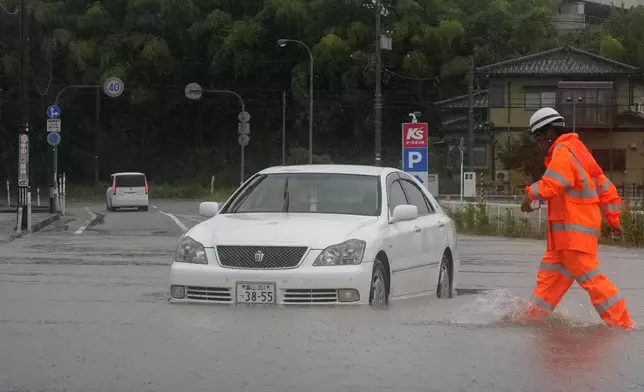
Vehicles make its way through a flooded road due to a heavy rain in Hakui, Ishikawa prefecture, Japan Thursday, Aug. 27, 2026. (Yusuke Ogata/Kyodo News via AP)
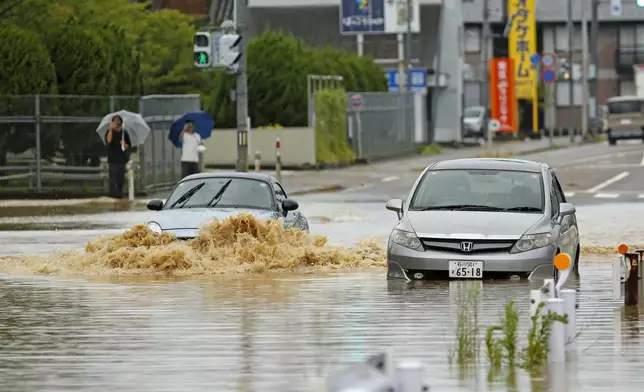
A vehicle is left in a street flooded due to a heavy rain in Hakui, Ishikawa prefecture, Japan Thursday, Aug. 27, 2026. (Yusuke Ogata/Kyodo News via AP)
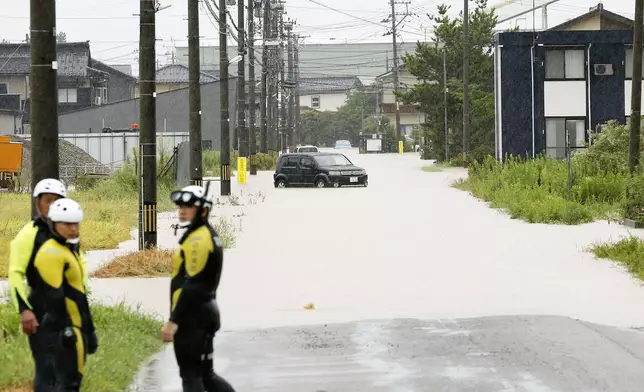
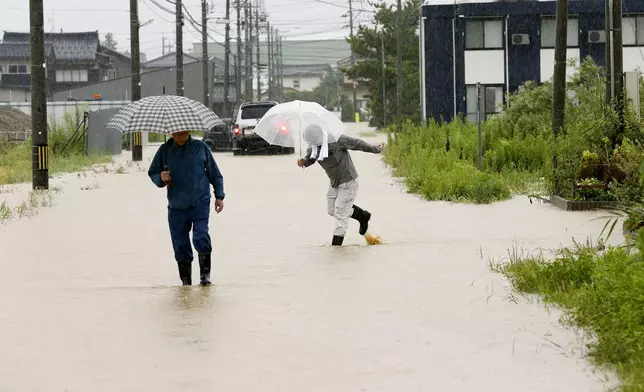
People walk through a street flooded due to a heavy rain in Hakui, Ishikawa prefecture, Japan Thursday, Aug. 27, 2026. (Yusuke Ogata/Kyodo News via AP)
A vehicle is left in a street flooded due to a heavy rain in Himi, Toyama prefecture, Japan Thursday, Aug. 27, 2026. (Suo Takekuma/Kyodo News via AP)
The rain subsided later Thursday and the agency downgraded the heavy rain warning to medium, but cautioned residents that more rain and landslides are possible through Friday morning.
The agency predicted up to 20 centimeters (7.8 inches) of rain in the Kaga and Noto areas through Friday morning. The two prefectures advised more than 380,000 people to take shelter on safer grounds.
Footage on NHK public television showed several stranded residents in Himi city in the Toyama prefecture being rescued on a rubber boat by relief workers who waded through knee-high waters. A number of vehicles that had stalled in flooded roads were abandoned.
In neighboring Ishikawa prefecture, west of Toyama, 270 homes in three municipalities were isolated due to flooding, though officials said there were no reports of injuries among the stranded residents. Heavy rain also triggered landslides and closed roads in Ishikawa.
Chief Cabinet Secretary Minoru Kihara said several rivers overflowed in the two prefectures, flooding many homes without reported injuries.
The severe weather caused power outages at more than 1,000 homes in Toyama and Ishikawa, according to the Hokuriku Electric Power Co.
Heavy rain and widespread flooding earlier this month in the Chiba prefecture, east of Tokyo, left 13 people dead.
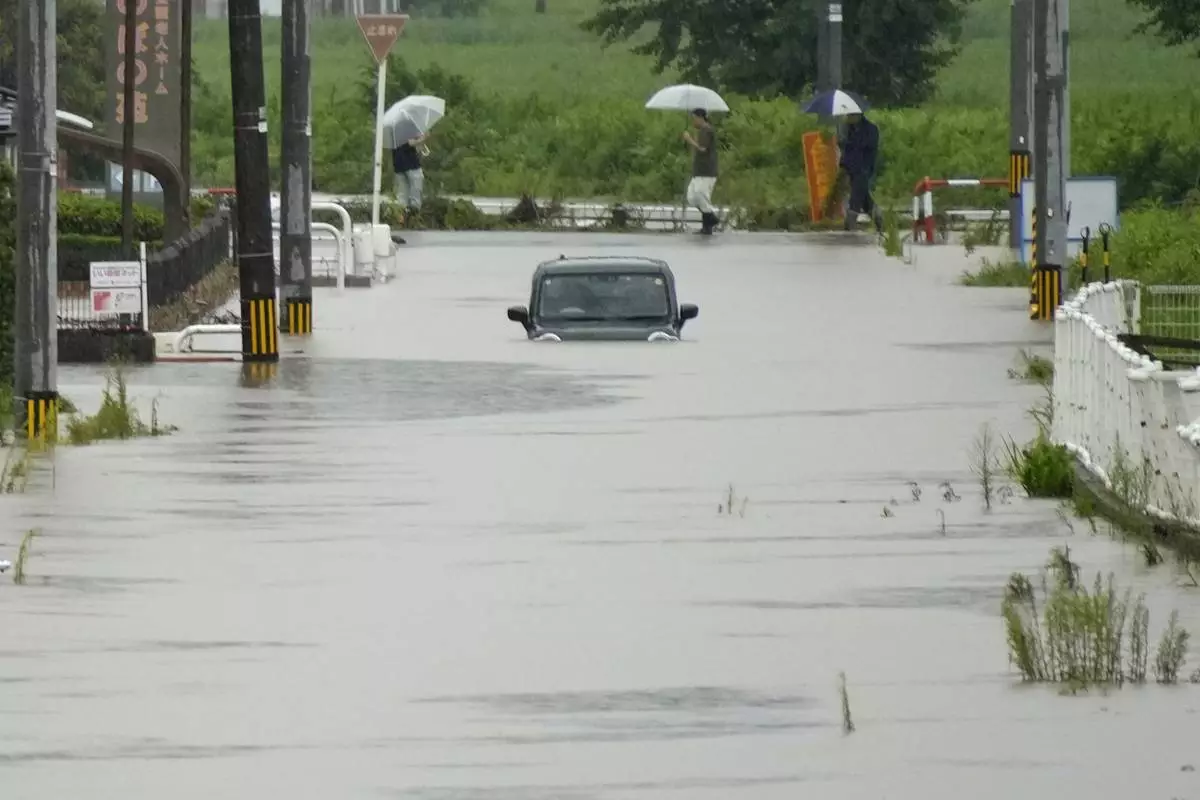
A vehicle is left in a street flooded due to a heavy rain in Himi, Toyama prefecture, Japan Thursday, Aug. 27, 2026. (Suo Takekuma/Kyodo News via AP)
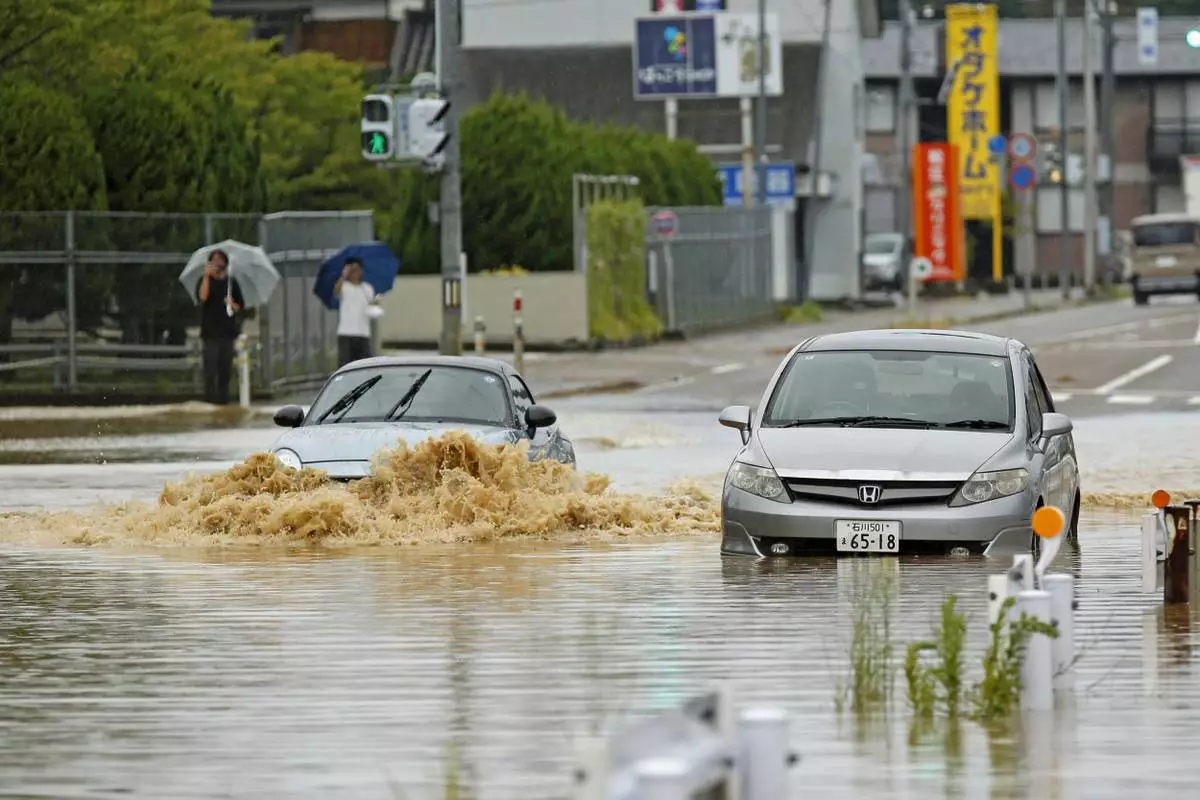
Vehicles make its way through a flooded road due to a heavy rain in Hakui, Ishikawa prefecture, Japan Thursday, Aug. 27, 2026. (Yusuke Ogata/Kyodo News via AP)
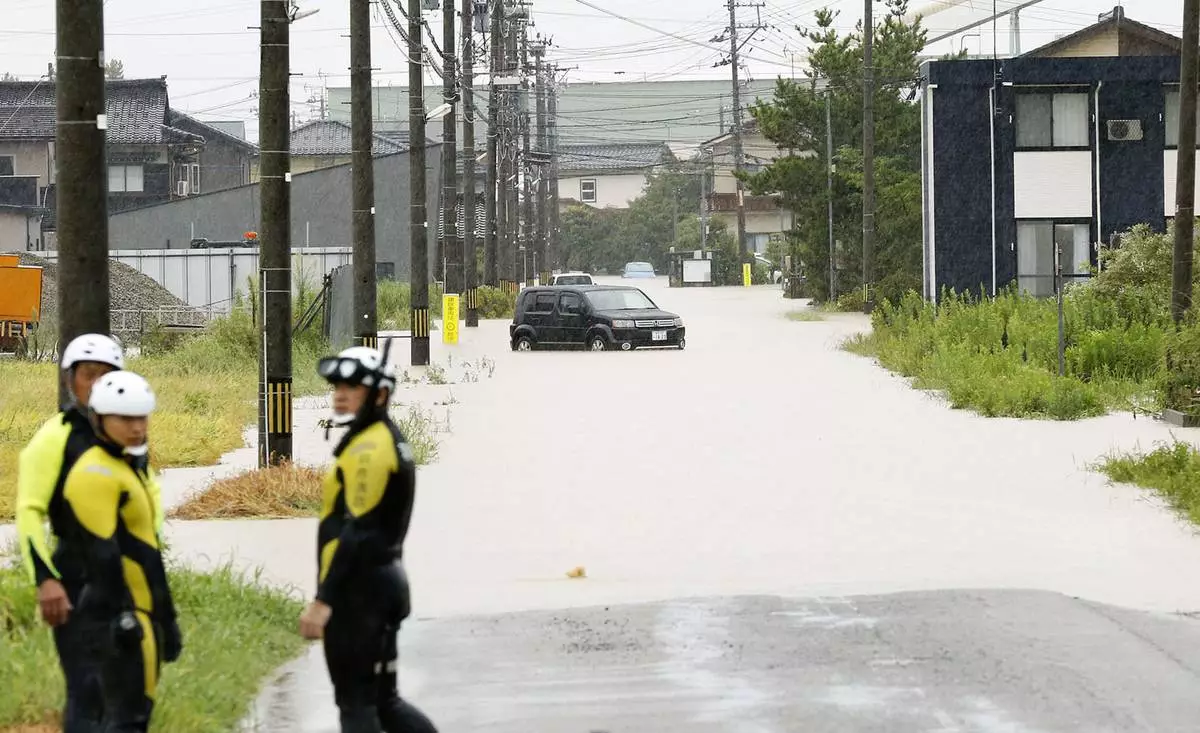
A vehicle is left in a street flooded due to a heavy rain in Hakui, Ishikawa prefecture, Japan Thursday, Aug. 27, 2026. (Yusuke Ogata/Kyodo News via AP)
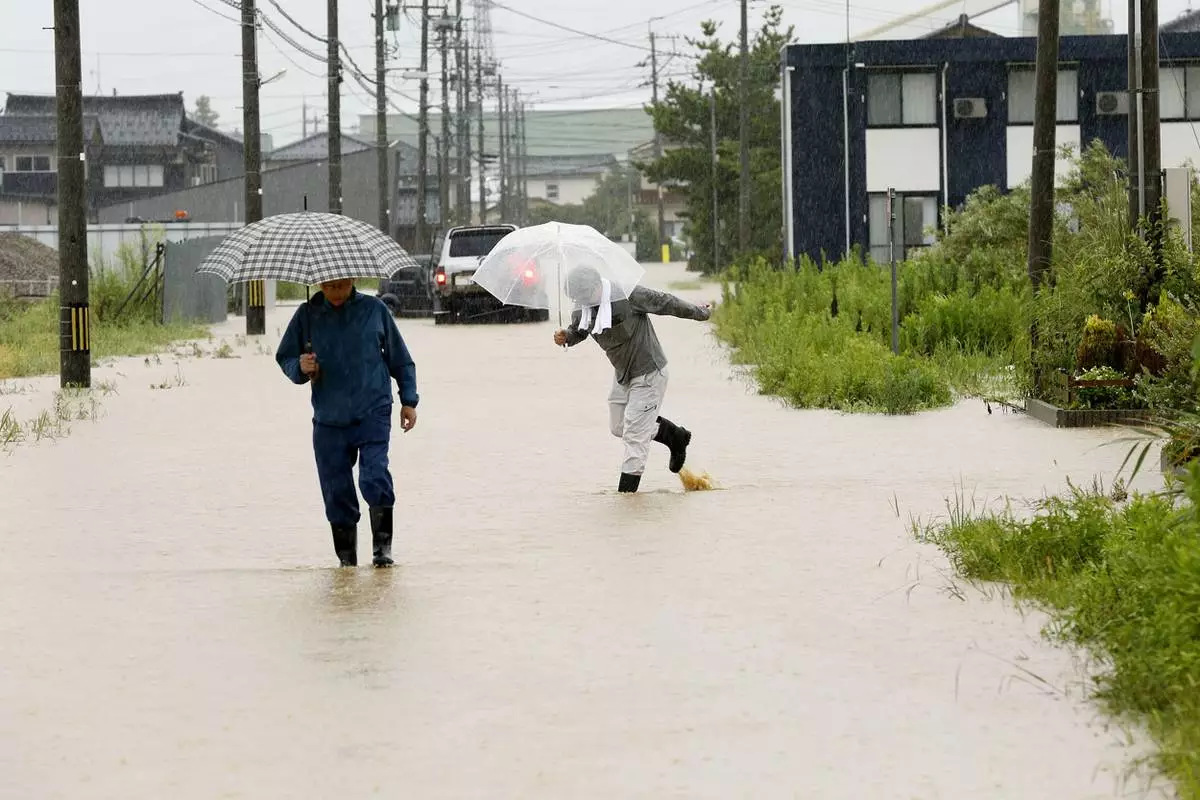
People walk through a street flooded due to a heavy rain in Hakui, Ishikawa prefecture, Japan Thursday, Aug. 27, 2026. (Yusuke Ogata/Kyodo News via AP)
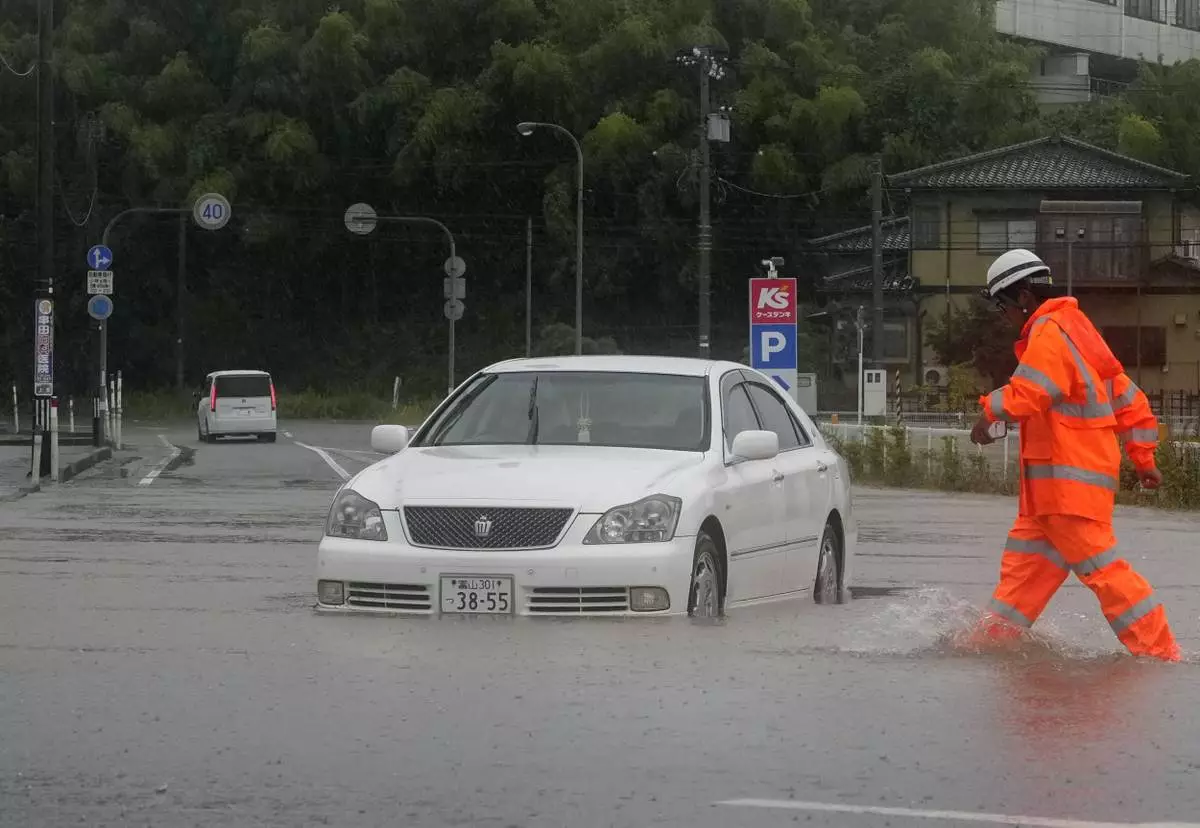
A vehicle is left in a street flooded due to a heavy rain in Himi, Toyama prefecture, Japan Thursday, Aug. 27, 2026. (Suo Takekuma/Kyodo News via AP)
MIAMI (AP) — More than 100,000 people from Ukraine and Sudan can stay in the United States without immediate risk of deportation, the Department of Homeland Security said, in what amounts to a temporary reprieve after their right to stay in the country was set to expire Monday.
Temporary Protected Status was set to end Oct. 19 for about 101,000 Ukrainians and 1,800 Sudanese. But DHS said an announcement “will be made at the appropriate time.” Until then, the department said in a written statement, Ukrainians and Sudanese in the U.S. covered by those temporary measures “retain protection.” The Department did not indicate how long they could stay or when a final announcement would be made on their status.
DHS did not respond to a question about whether they can keep their work permits, but TPS generally allows people to work while their protections remain in effect.
The decision Monday marks another incident where the Trump administration, which has previously sought to end these temporary protections from deportation and send people back to their home countries, has allowed people covered by the temporary status to stay in the country but without giving any guidance as to how long.
Yuriy Boyechko, CEO of Hope For Ukraine, a nonprofit that provides humanitarian aid in Ukraine and helps resettle newcomers in the U.S., described the government’s announcement as “last-minute patches.”
It is a “bandage that has been placed on a wound that does not solve the real issue,” he said. “It’s time for U.S. to come up with some normal path to permanent residency for all these people,” Boyechko noted. He emphasized that they cannot safely return to Ukraine.
Andrew Arthur, a national-security and immigration expert at the Center for Immigration Studies, a Washington think tank that favors lower immigration, said the government will eventually decide but faces no deadline. Until then, nothing changes, he said.
“It’s simply going to be an extension until it is a termination,” he said. “It’s beyond cavil that both Sudan and Ukraine are experiencing ongoing armed conflict, and therefore the secretary is well within his authority to continue TPS for each of them."
The Trump administration has already terminated TPS for more than 1 million people from 13 countries, including Venezuela, Haiti, Honduras, Nicaragua, Afghanistan and Syria.
But in a change in practice roughly a month ago, the administration kept protections in place for nearly 200,000 Salvadorans whose TPS was set to expire Sept. 9. In that case they also said that they were going to make a decision at the appropriate time and that in the meantime, people from El Salvador could continue to work and live in the U.S.
Activists and a bipartisan group of lawmakers have been raising the alarm over the upcoming deadline for TPS to expire for Ukrainians, arguing that conditions remain unsafe for them to return home amid the war with Russia.
Ukraine was first designated for TPS in April 2022, following Russia’s full-scale invasion two months earlier. The Biden administration subsequently extended the designation, most recently in January 2025, when DHS authorized an additional 18 months of protection through October 2026.
The TPS program for Sudan was established in 1997, and since then, successive U.S. administrations have extended it due to the armed conflict and political instability that have plagued the African nation.
The decision Monday comes two weeks before the Nov. 3 midterm elections, when Trump’s hard line immigration policies will face a test at the ballot box.
The U.S. Congress created TPS in 1990 to prevent deportations to countries suffering from natural disasters or civil strife.
It allows people already in the country to remain and work, for renewable periods if the homeland security secretary determines conditions are unsafe for their return. But it doesn't give them a pathway to permanent residency.
Supporters say that using this tool protects people from being returned to dangerous situations and that uprooting people covered by TPS after years of living in the U.S. is cruel. Critics, especially in the Trump administration, say successive administrations have extended these protections for years regardless of what has happened in the home countries.
Federal rules say TPS is automatically extended for six months if the secretary doesn’t make a determination at least 60 days before the designation expires.
Krish O’Mara Vignarajah, president and CEO of Global Refuge, noted Ukraine and Sudan meet the legal conditions for TPS to be extended.
“It is not safe for these families to go home,” Vignarajah said.
——-
Associated Press reporter Rebecca Santana contributed from Washington.

U.S. Department of Homeland Security sign, is seen during a news conference at ICE Headquarters, Friday, Oct. 9, 2026, in Washington. (AP Photo/Jacquelyn Martin)