WALTHAM, Mass.--(BUSINESS WIRE)--Aug 27, 2026--
Thermo Fisher Scientific Inc., the world leader in serving science, today introduced the Thermo Scientific™ EMPAD™ G2 detector, a new detector designed to help researchers see and understand materials in unprecedented detail.
This press release features multimedia. View the full release here: https://www.businesswire.com/news/home/20260827621513/en/
EMPAD G2 enables high-speed four-dimensional scanning transmission electron microscopy (4D STEM), an advanced form of electron microscopy that captures far more information about a material than a standard image, helping researchers better understand its structure and properties.
“The EMPAD G2 gives scientists a deeper view of materials and the information they need to explore what those materials can do,” said Glyn Davies, president, materials and structural analysis, Thermo Fisher Scientific. “By making advanced 4D STEM faster, more reliable and easier to use, we can help researchers accelerate discoveries in areas such as semiconductors, energy and advanced materials — and ultimately enable new technologies that can improve our everyday lives.”
Capturing weaker signals alongside stronger ones can help researchers measure characteristics, including a material’s structure, chemistry, strain and electric and magnetic properties in a single experiment. EMPAD G2 supports advanced applications, ranging from strain mapping and differential phase contrast (DPC) to multi-slice electron ptychography for three-dimensional characterization at the atomic scale.
As 4D STEM becomes more widely used in academic and industrial research, detector performance is increasingly important. Researchers need to capture large amounts of information quickly while accurately measuring signals that can range from extremely strong to extremely weak. EMPAD G2 is designed specifically to meet these demands and help researchers get reliable quantitative information from a single acquisition.
According to David Muller, Ph.D., Samuel B. Eckert Professor of Engineering at the School of Applied and Engineering Physics at Cornell University, this new technology represents an important milestone for scanning transmission electron microscopy. “The EMPAD G2 project gave us a unique opportunity to design a detector specifically optimized for STEM, rather than TEM or x-ray imaging,” said Muller.
EMPAD G2 is also fully integrated with the user-friendly Thermo Scientific Velox software. Researchers can collect and analyze multiple types of data, including simultaneous 4D STEM and energy-dispersive x-ray spectroscopy (EDS) within a single workflow. This integration helps simplify advanced materials analysis and supports more reliable, repeatable results.
To learn more about EMPAD G2, please visit thermofisher.com/empad.
FAQs:
What is 4D STEM, and why does it need a specialized detector?
4D STEM records a complete diffraction pattern at every point as an electron beam scans a sample, revealing structural, chemical, strain and magnetic information a standard image cannot. It generates enormous, fast-moving data, so it needs a detector that is both extremely fast and able to record faint and intense signals accurately at once. EMPAD G2 is built for exactly that.
What is dynamic range and why does it matter?
Dynamic range is a detector's ability to measure both very strong and very weak signals at the same time. In 4D STEM, the most valuable quantitative information is often contained in faint diffraction features that appear alongside an intense central beam. If a detector cannot accurately capture this full range of signals, researchers may lose important information or need to compromise between recording the brightest or weakest features.
Thermo Scientific EMPAD G2 overcomes this challenge by combining exceptionally high single-frame dynamic range, high-speed acquisition, and single-electron sensitivity, enabling more accurate and reproducible quantitative 4D STEM measurements from a single acquisition.
What makes EMPAD G2 different from other detectors?
Most detectors lose accuracy as beam current rises, forcing users to trade speed or dose for data quality. EMPAD G2 is designed to maintain high detective quantum efficiency (DQE >0.9) across its operating range while running at 10,000 frames per second, so researchers can push speed, current and quantitative accuracy at the same time.
What can researchers use EMPAD G2 for?
Applications include strain mapping in advanced semiconductor structures, ptychography for super-resolution imaging, magnetic and electric field mapping, and combined 4D STEM plus EDS workflows. In practical terms, that supports faster development of next-generation electronics, memory and energy materials.
Is EMPAD G2 available now, and how does it fit existing systems?
EMPAD G2 will be available on Aug. 31, 2026, and is fully integrated with Thermo Scientific Velox software as part of Thermo Fisher's 4D STEM platform.
About Thermo Fisher Scientific
Thermo Fisher Scientific Inc. is the world leader in serving science, with annual revenue over $45 billion. Our Mission is to enable our customers to make the world healthier, cleaner and safer. Whether our customers are accelerating life sciences research, solving complex analytical challenges, increasing productivity in their laboratories, improving patient health through diagnostics or the development and manufacture of life-changing therapies, we are here to support them. Our global team delivers an unrivaled combination of innovative technologies, purchasing convenience and pharmaceutical services through our industry-leading brands, including Thermo Scientific, Applied Biosystems, Invitrogen, Gibco, Fisher Scientific, Unity Lab Services, Patheon and PPD. For more information, please visit www.thermofisher.com.
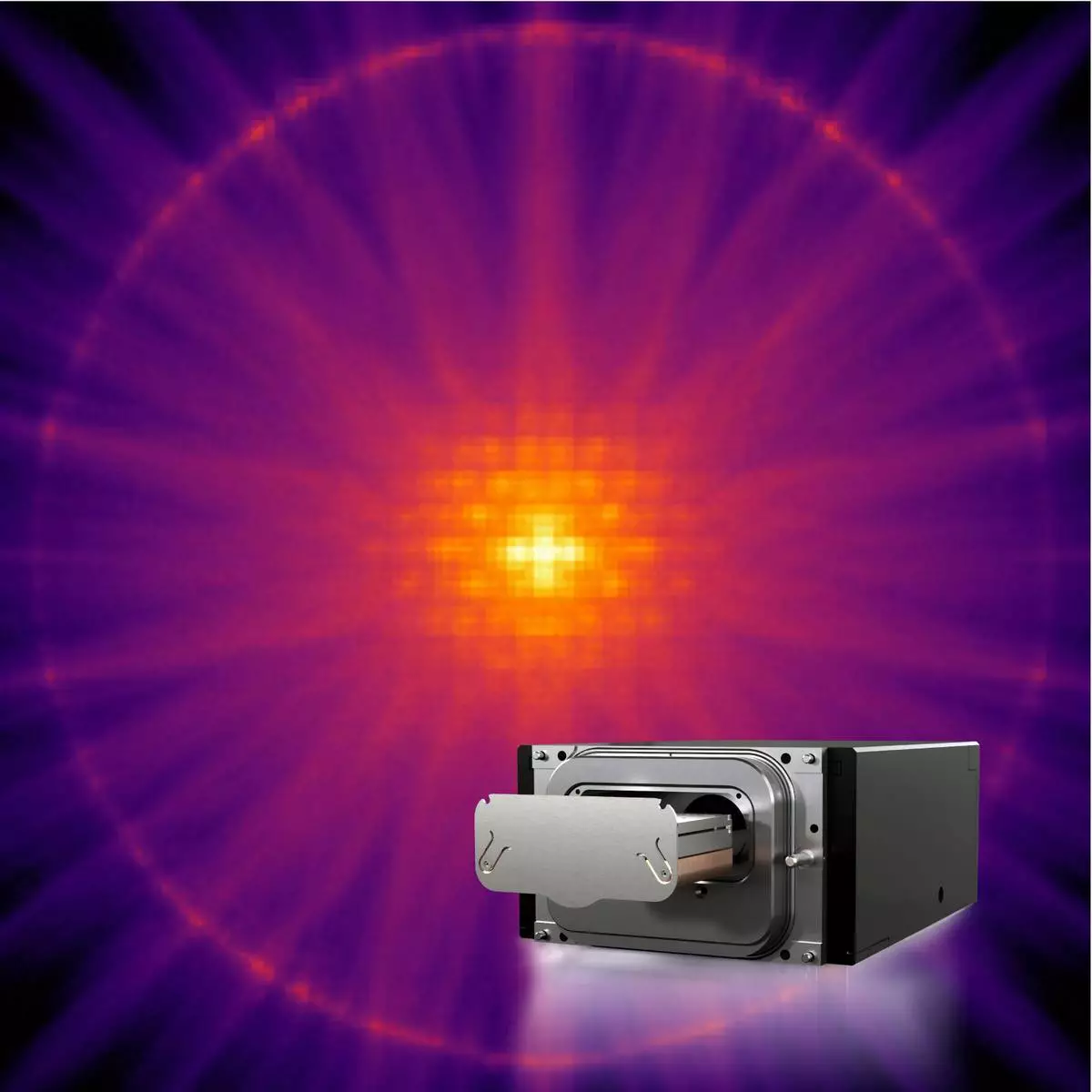
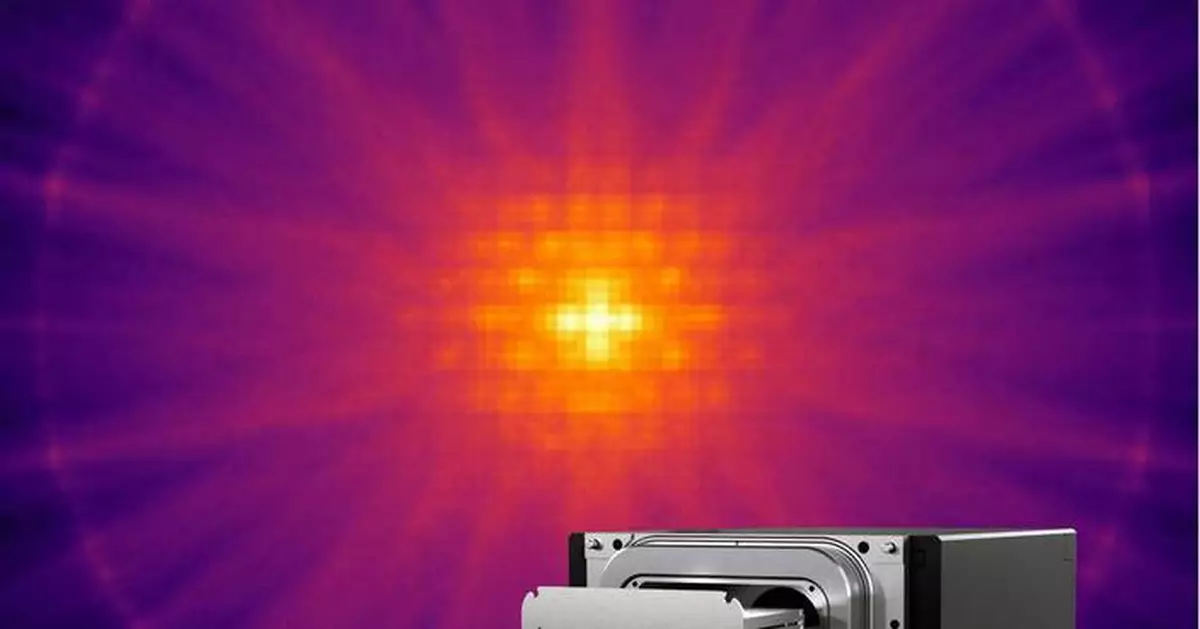
The Thermo Scientific™ EMPAD™ G2 detector is pictured with an electron diffraction pattern, illustrating the rich data captured through 4D STEM. (Photo Credit: Cornell University)
REYKJAVIK, Iceland (AP) — Iceland's voters rejected restarting negotiations to join the European Union in a referendum that pitted concerns about geopolitical stability against keeping national control of Iceland’s prized fisheries, officials said Sunday.
Opponents defeated the measure by a margin of 52.8% to 47.2%, the National Electoral Commission said. The result puts the divisive issue to rest for now — more than a decade after a euroskeptic government ended EU talks that had begun after the 2008 financial crisis.
The vote Saturday was held in the shadow of repeated threats by U.S. President Donald Trump to take control of nearby Greenland. Although Iceland is a NATO member, supporters said European solidarity would provide greater protection if Trump ever made similar threats toward the volcanic island.
Iceland’s left-leaning coalition government, elected in 2024, moved up the EU referendum it had planned for next year after Trump mistakenly named Iceland four times while speaking about his designs on Greenland.
Prime Minister Kristrún Frostadóttir said she did not see the loss as a setback for her coalition government but as a win for democracy as more than 82% of the eligible 270,000 voters cast ballots. She said she would respect the result but would not rule out a future attempt to reopen the issue.
“Things happened in the past couple of years, though, that I could not have predicted,” she said. “But this government will not go forward with it. And something big has to change in the next 24 months for this to be at the top of the agenda.”
Guðrún Hafsteinsdóttir, leader of the opposition Independence Party who opposed the measure, said the result is a blow to the government but not European relations.
“The best way to heal the wounds is for the government to listen to the conclusion and put this path aside,” she told RUV, the national broadcaster. “Because we want to remain in close contact with the European Union, Europe and as many other countries as possible, the nation is sending a clear message that we intend to steer that course ourselves.”
Voters faced a simple yes-or-no question: Should Iceland resume accession negotiations with the European Union?
The capital of Reykjavik was the only area in the island nation of 400,000 people where a majority supported the referendum.
The influential fishing industry led opposition to the referendum over fears the bloc’s common fisheries policy would open its waters to Spanish, Dutch and other trawlers.
Descendants of Vikings, Icelanders, who won their independence from Denmark in 1944, have lived off the sea for centuries, and fishing is central to their national identity. Iceland has a proud history of refusing to be pushed around by bigger and richer European nations, winning the so-called Cod Wars with Britain in the 1970s over the right to control its waters.
Opponents also rallied around the fact that Iceland already reaps benefits from being in the EU’s frictionless single market and the Schengen free-travel zone without the sovereignty compromises that come with full membership. They argued that Iceland’s voice would be muted in the large European Parliament and that it would be better off cutting its own trade deals, such as one with China.
Backers said EU membership would lower inflation and interest rates, and the euro would bring more stability than Iceland’s volatile króna currency. They said it was also in the nation’s interest to get closer to its European neighbors to tackle issues that don’t respect borders, such as climate change.
If the proposal had been approved, it would have been a preliminary step to revive the lengthy negotiating process with the EU’s executive branch, the European Commission, to discuss areas from the economy to human rights. Voters would have needed to approve any negotiated deal.
The result is sure to disappoint many in the European Union. As a wealthy, stable and democratic country with vast fishing grounds, Iceland could have joined the bloc relatively quickly. Croatia was the last country to join, in 2013.
Most of the other candidates waiting — including several countries in the Balkans, plus Moldova and conflict-torn Ukraine — must still undertake time-consuming reforms to bring their laws and standards into line with those of the EU.
Getting Iceland into Europe’s rich club, perhaps along with Montenegro and possibly Moldova, over the next two years could have helped to lay to rest the damage to the EU caused by the departure of Britain in 2020, even though London now appears willing to mend ties.
Voter Daniel Bjarkason, who opposed the measure, said Iceland should wait a decade or two before trying again to join the EU.
“For now we’re too divided and that’s not a good look,” he said. “It should be 70-30 Yes if we’re going to do it.”
Melley reported from London. Lorne Cook in Brussels contributed to this report.
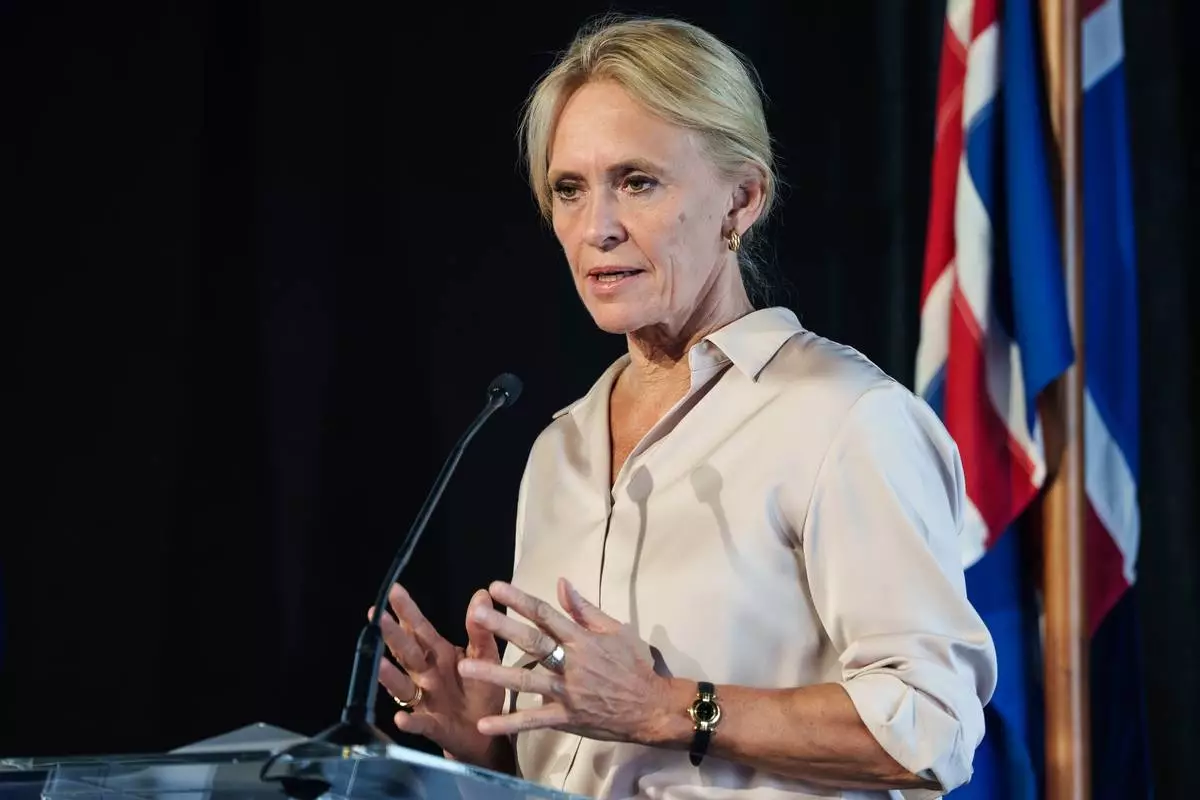
Icelandic Foreign Minister Þorgerður Katrín Gunnarsdóttir speaks during a government news conference at Harpa Concert Hall in Reykjavik, Iceland, Sunday, Aug. 30, 2026. (AP Photo/Marco Di Marco)

Icelandic Prime Minister Kristrún Frostadóttir speaks during a news conference at Harpa Concert Hall in Reykjavik, Iceland, Sunday, Aug. 30, 2026. (AP Photo/Marco Di Marco)

Supporters of the Yes campaign celebrate after Reykjavik results put their side into a narrow nationwide lead during an election-night gathering in Reykjavik, Iceland, Sunday, Aug. 30, 2026. (AP Photo/Marco Di Marco)

A supporter waves a European Union flag during an election-night gathering for the yes in Reykjavik, Iceland, Sunday, Aug. 30, 2026. (AP Photo/Marco Di Marco)

Former Icelandic Prime Minister and Centre Party leader Sigmundur Davíð Gunnlaugsson, left, Independence Party leader Guðrún Hafsteinsdóttir, center, and Progressive Party leader Lilja Dögg Alfreðsdóttir talk during a No campaign election-night gathering in Reykjavik, Iceland, Saturday, Aug. 29, 2026. (AP Photo/Marco Di Marco)

Leaders of the No campaign react as early results from rural Iceland put the No side ahead during an election-night gathering in Reykjavik, Iceland, Saturday, Aug. 29, 2026. (AP Photo/Marco Di Marco)