PLYMOUTH, Mass. (AP) — Jurors in the Lindsay Clancy murder trial in Plymouth, Massachusetts, are hearing closing arguments Wednesday, before deciding whether the former labor and delivery nurse is criminally responsible for killing her three children in 2023.
While both sides agree she killed her children, Clancy’s defense team argued she suffered from postpartum psychosis, with defense attorney Kevin Reddington stating that “ lousy medical care ” exacerbated her condition. Prosecutors at the Plymouth County District Attorney’s office argued she intentionally planned the killings and that the nation’s healthcare system is “ not on trial here.”
Postpartum psychosis is estimated to afflict 1 to 2 per 1,000 women after delivery. Experts at the Cleveland Clinic describe it as a mental health emergency affecting someone’s sense of reality. It can happen to anyone after giving birth, but the chances are higher for people with certain mental health conditions. Though most people with postpartum psychosis don’t harm their children, mothers with severe cases may try to do so, and also may try to harm themselves.
Editor’s Note: If you or someone you know needs help, the national suicide and crisis lifeline in the U.S. is available by calling or texting 988. There is also an online chat at 988lifeline.org.
Here's the latest:
Sprague alleges Clancy sent her then-husband to get some take-out food at a local restaurant to give her time to kill the children. She even checked a map to see how long it would take him to collect the food and return home.
“What she needed to know was how long specifically on that night it would take to get there,” Sprague says, “because she knew she would have a limited amount of time to do what she wanted to do. And what she had decided to do was to kill the children and then kill herself.”
When Clancy saw she would need more time than the restaurant trip would take, she asked her then-husband to also pick up medication at a local pharmacy, Sprague says.
“She’s adding to this errand and she has to make sure she’s not interrupted,” Sprague says.
Sprague says Clancy’s decision not to tell her mental health providers about thoughts she had in December 2022 of harming her children shows she understood those thoughts were wrong.
Clancy disclosed the thoughts to her then-husband and to her mother, but not to her doctors, Sprague says.
Clancy feared her children could be taken away if she told a mandated reporter, Sprague says.
“That’s a rational thought,” Sprague says. “It also shows you that she knew it was a bad thought, a wrong thought.”
“Not only is she hiding it. She is lying about it.”
Prosecutor Jennifer Sprague acknowledges that Clancy sought help for her mental health struggles, but argued that she did not always take medications as prescribed or give her providers complete and accurate information.
“She wanted to get better, but she wanted to get better on her own terms,” Sprague says. “And as a nurse, she knew that’s not the right way to approach it.”
Sprague rejects the defense’s argument that Clancy did not receive the care she needed, saying her providers were working with the information Clancy gave them.
“This doesn’t mean that she wasn’t struggling, that she wasn’t dealing with these mental health issues,” Sprague says. “She had depression.”
But, she adds: “They were doing the best they could with her level of cooperation and compliance with the plan.”
Prosecutor Jennifer Sprague says the case isn’t about the “mental health system or how it treats women.”
“That’s a distraction to get you angry and passionate about an important issue, but an issue that’s not on trial here,” she says.
The case, Sprague says, is about whether Clancy could recognize what was wrong with her actions and conform her actions to the law. In Clancy’s case, she had more support and resources than most have when navigating the American health care system.
“This wasn’t a woman suffering from a lack of care, a lack of resources,” she says. “She had an abundance of health, an abundance of care. She had all of that and more.”
Before Reddington concluded his closing argument, he held up a posterboard with some of Clancy’s desperate writings as her mental health deteriorated.
He says she was in “the depths of the despair” before the killings.
She wrote that he was having “horrible, intrusive thoughts” that prompted her to seek treatment.
At one point, her writings became like gibberish, he says.
“There’s nothing other than little chicken scratches because her mind was gone,” Reddington said.
Reddington describes Clancy attempt to research support for postpartum depression, called a suicide hotline, visited multiple providers and was voluntarily admitted to a psychiatric hospital.
“My God, what does she have to do? She was reaching out for help and she wasn’t getting it,” he says.
Reddington has told the jury that Clancy ’lived for her kids” but after she starting seeing a doctor, “it was not a wonderful life anymore.”
“You have the medical records. You heard the testimony. You know her concerns. You know her fears,” Reddington said. “Does this sound like a young lady that didn’t care and wanted to score more drugs off somebody? That’s another repulsive allegation.”
Reddington holds up a posterboard with some of Clancy’s desperate writings as her mental health deteriorated.
He says she was in “the depths of the despair” before the killings.
The defense attorney holds up a small “wish box” that Lindsay Clancy and her then-husband, Patrick, bought on their honeymoon in Hawaii, before they had children.
Over the years, the couple filled the box with slips of paper recording their hopes for the future. Some were dated 2017, 2018 and 2020.
“They reference her wishes to have healthy kids, her wishes for her kids to be successful, her wishes to have a good birth the second time around,” Reddington says.
The box offers a glimpse of the life the couple had imagined for their family years before Clancy killed their three children, he says.
Reddington is reminding jurors of what he told them at the beginning of the trial.
“In my opening statement, I told you, I said, ‘Watch the evidence, watch the manipulation,’ because that’s what this case was built upon originally and how it developed as the case progressed until it’s in front of you,” he says.
Reddington says the prosecution has tried to paint Clancy’s suicide attempt as less serious than it was.
“She made a very, very significant suicide effort,” he says. “They were arguing that it was a fake suicide. Dinky little cuts. No bleeding … You know that’s not what happened.”
Reddington is up first.
He thanks the jury for their service during the monthlong trial, through tough and gut-wrenching testimony.
“Sadly, juries carry this burden with them for years,” Reddington says.
He names all three children.
“They are the victims in this case,” Reddington says.
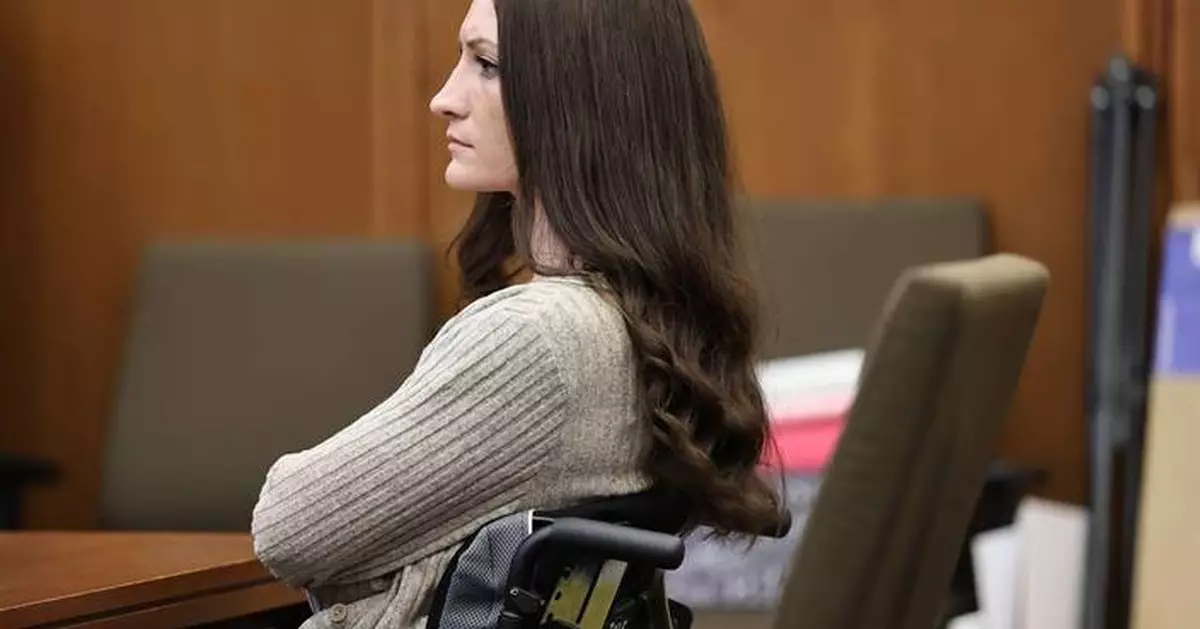
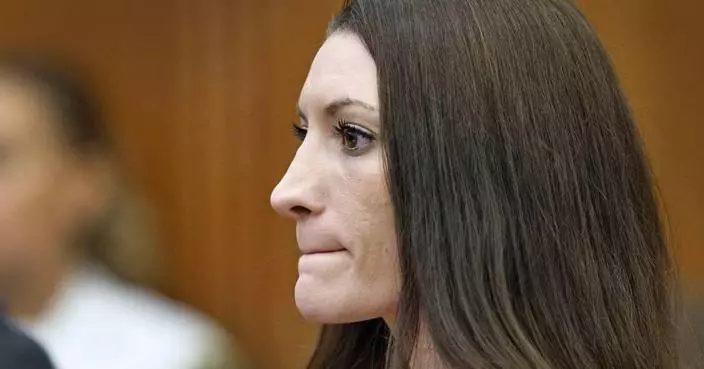
Lindsay Clancy stares straight ahead as the judge goes over the instructions.
At one point, she dabs her eyes with a tissue.
Judge William Sullivan printed out a copy of the instructions for the panel.
He reminded jurors that Clancy is innocent until proven guilty, and went over the elements of the charges.
He said a defendant is not criminally responsible for their conduct if they have a mental diseases or defect.
Sullivan tells the jury that they will consider three counts of murder in the first degree for each of the children but can consider murder in the second degree.
“If you find the defendant guilty of murder you shall decide the degree of murder,” he told the jury.
The judge says a defendant may form the required intent needed to prove a murder charge and act with premeditation even if she suffered from a mental impairment or consumed prescription.
The woman, Danielle Buckley, says she drove for five hours from Maine with a U.S. Postal Service box containing her son’s ashes to support Lindsay Clancy.
Buckley says she was told by courthouse security that she could not bring the remains inside.
Her son, Evan, died by suicide two years ago. Buckley says she experienced what she believes was undiagnosed postpartum depression after more than one of her children’s births and believes the issue deserves more attention.
“I think today, if I could have gotten him in the car and said, ‘Let’s do this for Lindsay,’ he would have said that was the right thing to do,” Buckley said of her son.
Buckley put the remains in her her car so she could enter the courtroom.
“I don’t think people really understand unless they’ve been through it,” Buckley said of postpartum mental health issues. “I don’t think that a lot of people even relate. They just want to see her be punished for what happened to her children.”
The doors of the courtroom have opened and about 90 people have shuffled inside.
The Plymouth County District Attorney’s office has several people in the front row, including District Attorney Timothy Cruz.
Clancy’s defense attorney, Kevin Reddington, is pacing back and forth and Clancy has yet to arrive.
Clancy’s parents Mike and Paula Musgrove are in the front, sitting alongside members of Reddington’s defense team. Neither Patrick Clancy nor his family are here.
The courtroom is filled.
“A month ago, five weeks ago, I didn’t know anything about this, and it’s just been quite a very, very scary eye-opener for me,” defense attorney Kevin Reddington told The Associated Press before proceedings began Thursday.
“I do hope that it has opened a discussion and people realize how serious this is. The mother’s postpartum depression, postpartum psychosis, the babies, the statistics, it’s just horrifying,” Reddington says. “And you cannot just deal with human beings in that type of distress on a telemedical Zoom call and throw pills at them.”
Asked how Clancy has been coping during the trial, Reddington said “not well,” describing her as scared and sad.
Reddington declined to offer a preview of his closing argument, saying he had nothing written down and would decide what to say when he got to the courtroom.
Many are dressed in pink and calling attention to women’s mental health issues.
“I feel that mental health is at the cornerstone of this, but so is community, family — and we need to believe women,” said Marta Quijano. “And we need to support people and help people when they ask for help. And as a physician myself, I’ve been on both sides of this coin when women are dismissed for our concerns, and it’s not fair.”
Lyn Feeney said women suffering in their mental health, especially new mothers, need support from a variety of people.
“The more children you have, the harder it gets,” she said. “So I feel like women just need support from mental health professionals, physicians, family and the justice system.”
About 75 people were waiting around 7:30 a.m. ET to get into the Plymouth County court building, including journalists and other members of the public.
Several media outlets have set up canopies on a nearby grassy area. A handful of people wearing pink in support were also in line.
For his final witness on Friday, Reddington called Dr. Phillip Resnick, a forensic psychiatrist and expert in filicide, or the killing of a child by a parent.
Resnick testified that Clancy was “clearly psychotic” on the day she killed her children and was not in control of her actions.
“It was almost like she was a puppet and someone else was pulling the strings,” said Resnick, who testified for the defense in the 2006 trial of Andrea Yates, the Texas mother who drowned her five children in 2001.
Resnick said he spent hours interviewing Clancy four months after the killings and believed she tended to minimize rather than exaggerate her symptoms. He said she suffered from severe depression, showed evidence consistent with bipolar disorder and reported hearing a voice commanding her to kill her children.
Resnick described several categories of filicide, including killings involving abuse. Others involve psychosis or what he calls “altruistic” filicide — a killing committed “out of love rather than hostility.” He said he found Clancy’s case involved both of the latter categories, but he didn’t find evidence of abuse.
About two weeks after giving birth, Bridget María Chesterton was curled up on the bathroom floor, saying things that made little sense. Later, in the emergency room, she kept repeating, “What’s going on?” She’d lost touch with reality.
The family eventually learned that Chesterton had postpartum psychosis, a severe mental health disorder thrust into the spotlight by the Clancy case.
If not for medication and strong family support, Chesterton said her own situation “could have gone sideways.”
Chesterton bristles at online comments about the Clancy case suggesting postpartum psychosis is not a real disorder. She feels driven to raise awareness by sharing her story publicly; a poem she wrote about the experience will be published in a journal in the fall. She wants to dispel misconceptions about the widely misunderstood condition — and let families know there is hope.
“It’s something that we do not talk about as a society,” said Chesterton, a 52-year-old history professor who lives outside Buffalo, New York. “I’m not embarrassed about what happened. I want people to know about it.”
Postpartum psychosis usually happens within several days of giving birth but can occur up to six weeks afterwards.
Symptoms may include hallucinations, delusions, paranoia or other behavior changes.
A woman may also have mood changes, such as mania or depression, disorganized thinking or behavior, insomnia, irritability or agitation.
Mothers with the condition need inpatient mental healthcare, which can include involuntary hospitalization. Treatments include medications or electroconvulsive therapy, a procedure done under anesthesia in which small electric currents pass through the brain, intentionally causing a brief seizure.
Experts say getting help early increases the odds of a good outcome.
Kirk Heilbrun, the forensic psychologist hired by prosecutors, told jurors that he didn’t believe Clancy’s claim that she hallucinated a voice telling her to kill her children. He said he instead believed she took their lives so they wouldn’t “suffer” after she killed herself.
“Everything I did as part of this evaluation, the evidence much more strongly, in my opinion, supported the second explanation, which was the serious suicide attempt accompanied by killing the children out of love,” Heilbrun said.
Heilbrun told jurors that Clancy had bipolar disorder and depression, conditions made worse by her insomnia and adverse reaction to medications she was prescribed. But he concluded that Clancy was “criminally responsible” for the killings.
“She retained an awareness of the illegality of killing others, including her children,” he said. “Her moral awareness of this killing was influenced by her strong desire to die and, if she was dead, not to leave her children behind.”
Clancy’s defense attorney Kevin Reddington probed her psychiatrist’s expertise, prescribing decisions and overall treatment, suggesting that the mental healthcare system mishandled the Massachusetts mother’s decline.
In questioning Dr. Jennifer Tufts, defense lawyer Kevin Reddington spotlighted her use of 25-minute video appointments with limited time for talk therapy, the computerized forms that documented her observations, and the series of pharmaceuticals she recommended as Clancy reported various side effects, symptoms and concerns about taking medications.
Reddington portrayed Clancy’s care not as common practice in U.S. mental healthcare, but rather as inadequate and indifferent treatment of a deteriorating patient. At one point, Reddington implied that the doctor was a box-checking “robot.”
“What did you do? You had a woman who was telling you she felt hopeless,” he asked as they discussed an appointment about two months before the killings.
Postpartum psychosis is estimated to afflict only 1 to 2 per 1,000 women after delivery. Experts at the Cleveland Clinic describe it as a mental health emergency affecting someone’s sense of reality.
It can happen to anyone after giving birth, but the chances are higher for people with certain mental health conditions. In a journal article on the subject in 2023, researchers at the Medical University of Lublin in Poland said about half of people with postpartum psychosis have a previous history of psychiatric problems and the most common risk factor associated with the condition is bipolar affective disorder, which causes extreme mood swings.
Though most people with postpartum psychosis don’t harm their children, mothers with severe cases may try to do so, and also may try to harm themselves.
Experts say it’s important to seek immediate help if you or your partner or family member show signs of postpartum psychosis.
Closing arguments are set for Thursday in the murder trial of Lindsay Clancy, a Massachusetts mother accused of strangling her three young children in a case that has drawn attention to postpartum mental health.
Proceedings are expected to resume around 9 a.m. ET in Plymouth Superior Court. The prosecution and defense will each have an hour to make their final case before the jury receives instructions and begins deliberating.
Clancy did not testify during the trial, which is in its fifth week. Prosecutors called more than 70 witnesses, including Clancy’s then-husband, while the defense called 10 witnesses, including some of Clancy’s friends and relatives.
Multiple psychologists and psychiatrists also testified about Clancy’s mental health, which is the central issue in the case.
Clancy’s lawyer, Kevin Reddington, had the jury hear from Clancy’s family members, who detailed her worsening mental health and attempts to fix it through psychiatric treatment and medications before the January 2023 killings. The jury also heard from a psychologist and a hospital chaplain who met with Clancy after the killings.
Clancy’s sister, Allison Ozga, testified that at the end of December, Clancy told her she had experienced suicidal thoughts every day for a month.
Clancy’s mother, Paula Musgrove, recalled standing in the kitchen with Clancy and her then-husband, Patrick Clancy, in December when she appeared nervous and said she needed to tell her something.
“She told us she had thoughts of harming the children,” Musgrove said.
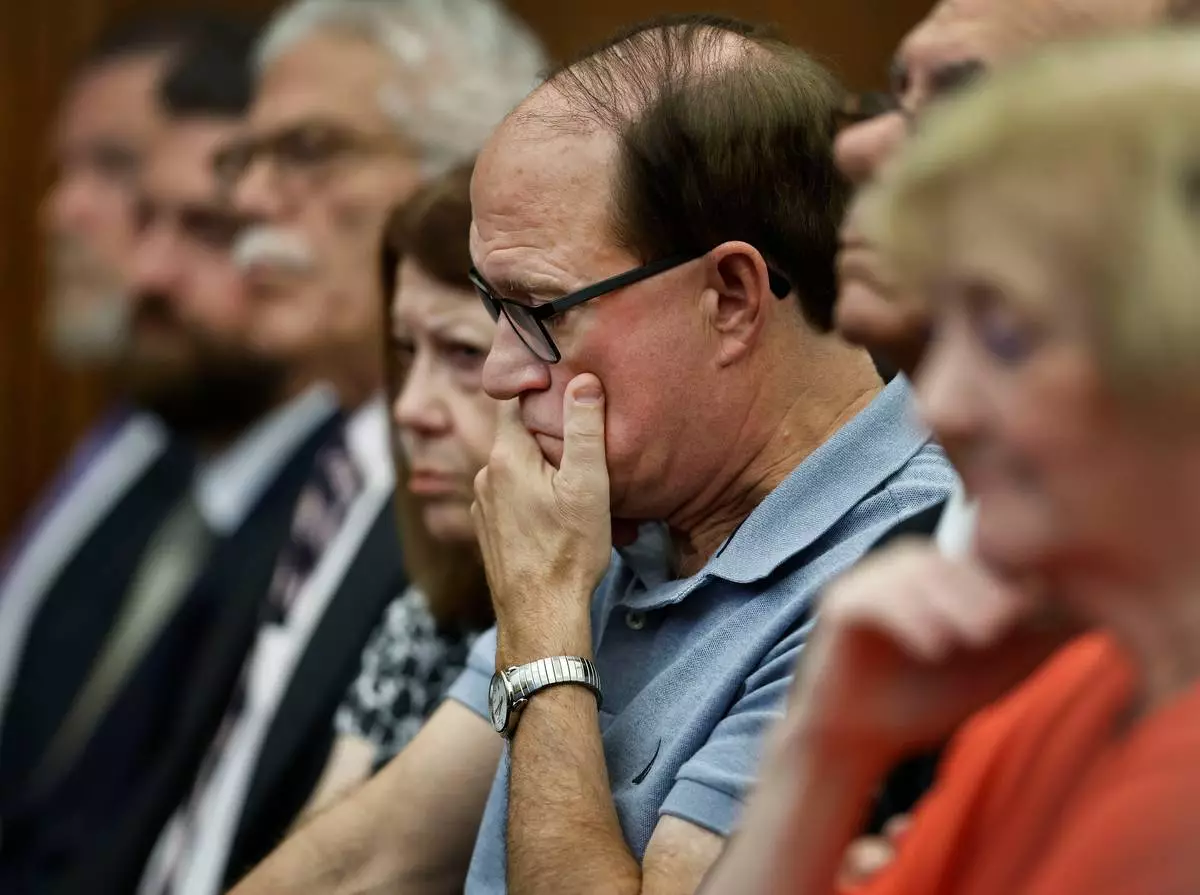
Michael Musgrove, the father of Lindsay Clancy listens to testimony in his daughters murder trial in Plymouth Superior Court, on Wednesday, Aug. 26, 2026 in Plymouth, Mass. (Greg Derr /The Patriot Ledger via AP, Pool)
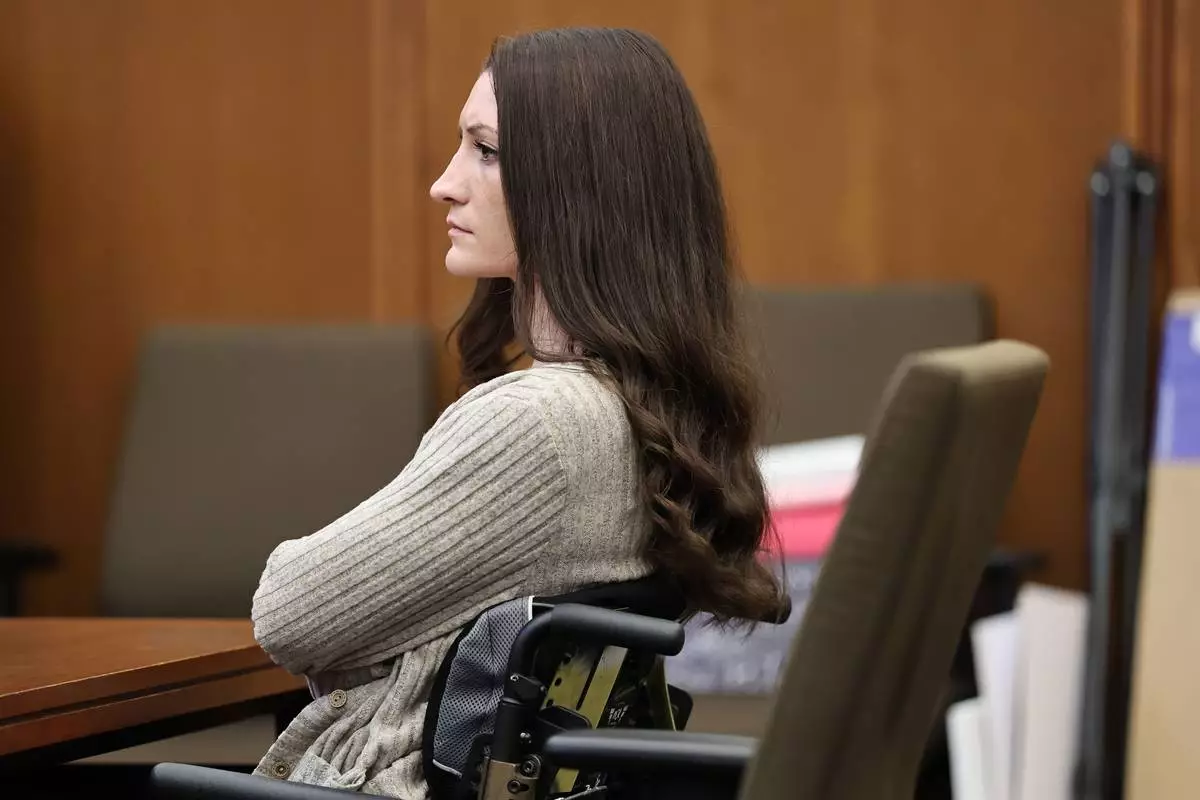
Lindsay Clancy listens to the testimony of Dr. Gregory Saathoff during her murder trial in Plymouth Superior Court on Wednesday, Aug. 26, 2026 in Plymouth, Mass. (Greg Derr/The Patriot Ledger via AP, Pool)
Pakistan and Qatar are continuing diplomatic efforts to end the war between the United States and Iran and reopen the Strait of Hormuz. But President Donald Trump told Al Jazeera he's got “no time schedule” to resolve the conflict reaching the six-month mark on Friday. Trump said he thinks the U.S. is “winning very big.”
U.S. voters will soon get their say. The Iran war has undermined Trump’s campaign pledge to steer clear of foreign conflicts and challenges Republicans clinging to narrow majorities in Congress. About two-thirds of U.S. adults say the war with Iran has not been worth fighting, according to a July poll from The Associated Press-NORC Center for Public Affairs Research.
Here’s the Latest:
A Russian sanctions package in Congress represents the most ambitious effort to support Ukraine since Trump returned to the White House. The Senate approved it after a personal plea from Ukrainian President Volodymyr Zelenskyy, who told lawmakers after Lindsey Graham’s funeral last month that his country needs the sanctions as a morale booster.
The bill Graham promoted would deprive President Vladimir Putin of oil and gas revenue fueling the war machine. But House approval is uncertain. House Speaker Mike Johnson faces resistance from some Republicans. And many Democrats supportive of Ukraine warn it would hand Trump too much tariff authority.
▶ Read more
U.S. missile stocks in Europe have been moved to the Middle East, where U.S. and Gulf allies have fired off significant numbers of interceptors, including Patriots, to thwart Iran’s drones and missiles. Some of those attacks have killed and wounded American troops.
Though a Russian ballistic missile attack against NATO countries is not imminently expected, CIA Director John Ratcliffe went to Moscow this week to warn Russia not to attack, The Wall Street Journal reported. Trump played down the significance of the rare and secretive trip, saying it was “sort of semi-routine.”
European and NATO officials say Russia could be in a position to attack countries in the alliance by 2030. Patriot stockpiles are projected to rebound by then. In the meantime, Russia’s war in Ukraine could hinder its ability to carry out any missile attack on Europe as it would be a challenge for Moscow to fight an air war on two fronts.
The shortage of advanced missile interceptors is largely driven by Trump’s war with Iran, a U.S. defense official in Europe and a NATO official told The Associated Press, raising concerns about vulnerabilities in NATO countries to a potential Russian attack.
The U.S. defense official said the most concerning shortfall involves Patriot missile interceptors, which can shoot down Russia’s high-speed ballistic missiles. The NATO official confirmed the low inventories of Patriots among American and NATO forces in Europe. Both spoke on condition of anonymity to discuss sensitive military matters.
In the event of a Russian ballistic missile assault on, for example, a military headquarters or power plant, NATO could be in a similar position to Patriot-starved Ukraine and be forced “to take punch after punch in the mouth,” the U.S. defense official said.
In Europe, the American military “definitely” does not have enough Patriots to stop any possible sustained ballistic missile attack and would have “very limited” capability to defend against a single ballistic missile strike or a stray Russian missile that goes off course, the U.S. official said.
▶ Read more
By Emma Burrows and Ben Finley
When Democrats gathered this week in a West Michigan congressional district they’re trying to flip blue, they wanted to talk about the cost of living under President Donald Trump. But it didn’t take long for the conversation to turn to a controversy dividing their party.
One attendee chided U.S. Rep. Hillary Scholten for failing to support Democratic Senate nominee Abdul El-Sayed.
“Your inflammatory rhetoric has nothing to do with creating a better economic future for the people of West Michigan, and everything to do with protecting the pipeline of our tax dollars to Israel,” the woman said.
The exchange captured a problem confronting Democrats as they head toward November. Party leaders believe concerns about the economy have given them an opening to win control of Congress, but internal divisions are making it harder to keep the focus there.
▶ Read more
Iran’s economy, already strained by high inflation, years of Western sanctions and a war that has sharply reduced oil revenue, is poised for more instability as the Trump administration tries to coerce other countries into ending all financial dealings with the Islamic Republic.
A decision by the United Arab Emirates to suspend trade relations with Iran last week kick-started the White House’s latest attempt to isolate Tehran into submission. Iran entered the war with its foreign commerce concentrated among a relatively small group of countries, leaving it with fewer places to turn now.
The success of the U.S. strategy will largely hinge on China, the main buyer of Iranian oil and its top trading partner. Russia, a fellow target of sweeping U.S.-led sanctions, has a military conflict and economic crisis of its own and probably can’t offer longtime ally Iran much hard financial support.
▶ Read more
The Canadian government is investing an additional $60 billion over the next five years to reduce its dependence on American suppliers, a shift due to Trump’s pressure to contribute more to NATO as well as strained trade relations with Washington.
Canada aims to boost domestic defense capabilities and create jobs while developing innovative technologies for military and civilian use, like drones and robotics. Clothing maker Wuxly, known for luxury parkas, is joining in, making high-tech military gear.
Prime Minister Mark Carney’s vow to strengthen Canadian economic self-sufficiency is a boon for Canadian startups and established companies, as well as firms in Europe.
▶ Read more
UEFA also filed a request in a southern Florida district for authorization of discovery “in a foreign proceeding” against FIFA itself, which has offices in the Miami suburb of Coral Gables.
Thrive and Kushner were to be the anchor investors intending to pay FIFA $4.2 billion for a 20% stake in a subsidiary that would run the soccer body’s commercial events, including the World Cup.
A 56-page UEFA document seen by The Associated Press suggests the $4.2 billion could have been a “fraudulently off-market price promoted by Infantino for his own benefit.”
Infantino dropped the sell-off plan on Aug. 1 after a furious backlash by global soccer leaders, including UEFA.
▶ Read more
UEFA is preparing a criminal complaint against FIFA President Gianni Infantino in Swiss courts for possible financial mismanagement over his failed plan to sell future World Cup profits to private investors.
UEFA said Thursday it filed documents in a Manhattan court requesting discovery of potential evidence from the New York investment fund, Thrive Capital Management, founded by Joshua Kushner, the younger brother of Trump’s son-in-law Jared Kushner.
Iran’s top negotiator and parliamentary speaker Mohammad Bagher Qalibaf is thanking China for rejecting the U.S. “economic D-Day” policies against Iran.
“We welcome China’s principled statement rejecting illegal sanctions against Iran,” Qalibaf posted on social media Wednesday.
Earlier this week, Tehran had warned that it would respond harshly to expanded U.S. sanctions, including measures against countries it sees as cooperating with Washington. Iran has repeatedly targeted Bahrain and other Gulf countries with missiles and drones since the U.S. and Israel launched the war on Feb. 28.
The United Kingdom Maritime Trade Organization said Thursday that it had received a report of an oil tanker hit in the Strait of Hormuz.
The monitoring agency, run by the British military, said that local authorities reported that the vessel was hit by an unknown projectile on Tuesday in the waters between Oman and Iran, causing it to catch fire.
The crew was reported to be safe and there have been no reports of environmental damage, the UKMTO said.
The message from Canadian Trade Minister Dominic LeBlanc suggests that by dropping objections to Canada ’s efforts to promote French language and Canadian culture, the U.S. side has created some room for compromise in the trade standoff.
LeBlanc wrote on X Thursday that the measures “will not be subject to future U.S. trade actions,” and that he looks forward to “constructive U.S. clarifications’’ that could “create the possibility of a mutually beneficial trade agreement.’’
Speaking to the Canadian Broadcasting Corporation Wednesday, U.S. Trade Representative Jamieson Greer said the U.S. has had some “questions’’ about whether the cultural programs put U.S. companies at a disadvantage, but said the U.S. “recognizes the importance and sensitivity of the French language’’ to Canada. “There is no way we would let a good deal go by for something like this,” Greer added.
Qatari Prime Minister Sheikh Mohammed bin Abdulrahman Al Thani was in Tehran on Thursday trying diplomacy to resolve the Iran war.
Qatar’s foreign ministry said in a post on X that Al Thani and Iran’s Foreign Minister Abbas Araghchi discussed “the efforts being made to reduce escalation,” as well as a proposed plan between Iran and Oman to allow ships safe passage through the Strait of Hormuz and clear the vital commercial waterway of dangerous mines.
Al Thani’s office said the prime minister emphasized the “necessity of respecting the sovereignty of neighboring countries and the freedom of navigation” on the strait.
Al Thani also met Thursday with Iran’s parliamentary speaker, Mohammad Bagher Qalibaf to review efforts to reduce escalation and resume dialogue, the Qatari government said.
The letters featured in the AP’s Thursday story about Kennedy’s 2019 trip to Samoa had been included in emails in State Department records.
The department released them to the AP and The Guardian as the result of an open records lawsuit brought with the aid of the Reporters Committee for Freedom of the Press. The letters, shared recently, were among hundreds of pages of documents released over a period of months.
Based on other emails released as part of the lawsuit, the AP and the Guardian reported in February that officials with the State Department and UNICEF privately discussed that the trip was about vaccines.
The Department of Health and Human Services said in response to questions from the AP that the Samoa visit “was unrelated to vaccines.”
“Any claim or insinuation based on these letters that Secretary Kennedy lied under oath or to Congress is not only false but outright defamatory,” the department said in a written statement.
Kennedy was not under oath during his confirmation hearing. Knowingly giving material false testimony to Congress is a crime that carries a possible prison sentence regardless of whether a person is under oath, though it is rarely prosecuted.
HHS did not make Kennedy available for an interview. The White House did not respond to a request for comment. The Samoan prime minister’s office and the former prime minister who corresponded with Kennedy did not respond to requests for comment. Neither did Children’s Health Defense, the anti-vaccine nonprofit Kennedy led.
Health Secretary Robert F. Kennedy Jr. repeatedly told lawmakers who held the key to his confirmation last year that his 2019 visit to Samoa before a deadly measles outbreak had “ nothing to do with vaccines.” New documents obtained by The Associated Press and The Guardian refute that testimony.
Kennedy, then a prominent anti-vaccine activist, preceded the visit with a letter to the Samoan prime minister requesting to study the Pacific island nation’s measles, mumps and rubella vaccines after the deaths of two children who had received them. In the letter, he used the words vaccine or vaccination eight times.
The letter raises questions about how truthful Kennedy was in testimony before Congress. During an arduous confirmation process where he needed the support of some skeptical Republican lawmakers to advance, Kennedy also pledged to maintain vaccine policies that, once in office, he moved to change.
▶ Read more, including the letters from Kennedy and Samoa’s prime minister
Karoline Leavitt says there’s “no shortage of applications” to replace her.
“I’ve given my advice to the president on what he should look for, and I’ll continue to do that until he makes a decision,” she told “Fox and Friends” on Thursday that the pick needs to be someone Trump “trusts fully.”
In what Fox hosts billed as her last official interview on the network, Leavitt teased a trip Trump is taking to Houston Thursday evening to attend a Republican National Committee fundraiser in support of Texas Attorney General Ken Paxton’s Senate campaign. Trump will visit NASA’s Johnson Space Center on Friday.
The U.S. has rescued a handful of Americans in the wake of devastating flooding in Nepal, outgoing White House press secretary Karoline Leavitt said in an interview on “Fox and Friends” on Thursday morning.
Leavitt said the U.S. has offered its help to local authorities and will prioritize Americans in its response. “We’re focused on rescuing every American that we possibly can,” she said.
Rescue teams searched Thursday for hundreds of missing people along the Nepal-China border, where the collapse of a glacier sent a catastrophic and deadly torrent of water and mud several stories high sweeping through communities.
Videos of the disaster showed people running before the floodwaters swallowed them up. At least 353 people were killed, police said, and more than 1,300 are missing. Melting glaciers have become more common because of human-caused climate change.
The Labor Department numbers released Thursday show layoffs are rare and most Americans enjoy job security, but that doesn’t point to a great job market for workers.
Scarred by the worker shortages that followed the COVID-19 pandemic, companies are reluctant to let go of staff. But they aren’t hiring much either. So times are tough for Americans seeking to break into the job market as well as people who lost their jobs and are looking for new work. Economists describe a “no hire, no fire″ job market.
So far this year, employers — companies, nonprofits and government agencies — have added an average 61,000 jobs a month. It’s better than the 9,700 they averaged last year as high interest rates and Trump’s erratic trade policies discouraged companies from hiring. But it’s well below historic hiring patterns.
An Immigration and Customs Enforcement officer charged with shooting a man and lying about it during the immigration crackdown in Minneapolis was released from a Texas jail Thursday, after a judge refused to order his return to Minnesota.
Christian Castro was released from a detention center in Brownsville, Cameron County Sheriff Manuel Trevino said in an email.
A day earlier, U.S. District Judge Fernando Rodriguez Jr. wrote in an order that said he couldn’t prevent a county sheriff from releasing Castro or order Texas Gov. Greg Abbott to sign his extradition warrant.
Castro is charged in Minnesota with assault and falsely reporting a crime in the Jan. 14 shooting of 24-year-old Julio Cesar Sosa-Celis.
Minnesota officials believe Castro could flee to Mexico.
New Federal Reserve chair Kevin Warsh has brought sharp change in how the central bank communicates by saying much less than his predecessors about the economy and inflation.
But so far, many economists and Wall Street investors haven’t been thrilled with that approach.
On Friday, Warsh has a high-stakes opportunity to address those concerns and underscore his inflation-fighting bona fides when he gives his speech in Jackson Hole, Wyoming, during the Fed’s annual economic symposium.
What many economists and Wall Street analysts are hoping for is a clear signal on how he thinks the Fed should handle the stubbornly elevated inflation that has caused pervasive gloom among many consumers. At his last press conference, he sowed confusion by ducking repeated questions on whether the Fed would hike its benchmark interest rate if inflation stays high.
▶ Read more
When Trump launched the war with Iran in late February, he initially forecast it would last four to five weeks. Six months later, there’s still no off-ramp in sight despite Trump’s repeated assertions that the war has been won or a deal to resolve it was nearly complete.
A June memorandum of understanding designed to pave the way to end the war has fallen by the wayside.
One of the prime goals now — reopening the Strait of Hormuz — was not one of Trump’s original objectives. The waterway had been a vital shipping lane through which about 20% of the world’s oil passed.
But Iran seized on it as a chokepoint for the global economy and it has been largely closed since the war started, driving up prices for fuel and fertilizer needed for farms and creating economic and political pressure in the U.S.
The U.S. has had tactical success on its goals to degrade Iran’s military capabilities. But some of the other key objectives Trump laid out at the start of the conflict remain unfulfilled.
▶ Read more
A federal judge on Wednesday refused to order Texas to extradite an Immigration and Customs Enforcement officer charged with shooting a man and lying about it during the immigration crackdown in Minneapolis.
U.S. District Judge Fernando Rodriguez Jr. wrote in an order that he couldn’t prevent a county sheriff from releasing Christian Castro or order Texas Gov. Greg Abbott to sign his extradition warrant.
The Cameron County sheriff said he would release Castro on Thursday morning.
Castro is charged in Minnesota with assault and falsely reporting a crime in the Jan. 14 shooting of 24-year-old Julio Cesar Sosa-Celis.
After a Minnesota judge issued a nationwide warrant for Castro’s arrest in May, authorities, including Minnesota’s Bureau of Criminal Apprehension, arrested Castro in Cameron County on May 29. Minnesota authorities have sought his extradition since his arrest, but he remains in custody in Brownsville, Texas, a city bordering Mexico.
Under Texas law and barring extradition, Castro must be released after 90 days of detention, which is Thursday.
▶ Read more
The Iran war has reshaped the rapidly approaching midterm elections, undermining Trump’s campaign pledge to steer clear of foreign conflicts and challenging Republicans who would rather focus on their tax cuts as they cling to narrow majorities in Congress.
While the president’s supporters are undeterred, the war’s unpopularity and economic ripple effects could tilt the scales in tightly contested U.S. House districts.
Midterm elections are always difficult for the party in power in Washington. But interviews with voters around the country show how a war that Trump expected to end with a swift victory could undermine the final years of his presidency.
About two-thirds of U.S. adults say the war with Iran has not been worth fighting, according to a July poll from The Associated Press-NORC Center for Public Affairs Research. That includes the vast majority of Democrats and independents, as well as more than one-third of Republicans.
In Congress, Republicans have shifted from initially cheerleading Trump’s moves in Iran to expressing concern about the toll of the war.
▶ Read more
Pakistan said Thursday that it was continuing diplomatic efforts to help resolve the crisis between the United States and Iran, and reopen the Strait of Hormuz.
Foreign Ministry spokesperson Tahir Andrabi said at a news briefing that Field Marshal Asim Munir’s recent visit to Tehran was aimed at reviving the June memorandum of understanding to reopen the strait.
Sheikh Mohammed bin Abdulrahman Al Thani is expected in Tehran on Thursday for talks with Iranian officials on “ways to de-escalate tensions & create the conditions conducive to dialogue,” Qatar’s Foreign Ministry said on X.
The discussions, confirmed by Tehran, will also address “freedom of navigation” in the Strait of Hormuz and the need to return to the prewar status quo, according to Majed Al Ansari, an agency spokesperson.
But U.S. President Donald Trump told Al Jazeera by phone on Wednesday that he has “no time schedule” to wrap up the conflict that will reach the six-month mark on Friday. Trump told the Qatar-based broadcaster that he believes the United States is “winning very big.”
▶ Read more

Cans and kegs of craft beer are stored at Pryes Brewing Company in Minneapolis, Wednesday, Aug. 26, 2026. (AP Photo/Ellen Schmidt)

FILE - Robert F. Kennedy Jr., President Donald Trump's choice to be Secretary of Health and Human Services, appears before the Senate Finance Committee for his confirmation hearing, at the Capitol in Washington, Jan. 29, 2025. (AP Photo/Ben Curtis, file)

FILE - A man walks away after watching a black plume of smoke rise from a warehouse in the industrial area of Sharjah City, United Arab Emirates, March 1, 2026, following reports of Iranian strikes in Dubai. (AP Photo/Altaf Qadri, File)

FILE - President Donald Trump, center, walks from Marine One to board Air Force One, Aug. 21, 2026, at Joint Base Andrews, Md., en route to South Carolina. (AP Photo/Jacquelyn Martin, File)