The Trump administration relied on flawed logic to justify scrapping vehicle emissions standards this year, making errors in how it accounted for fuel savings, the price of technology and mileage, according to a new study by a group of economists.
Correcting those errors would negate the economic benefits that the administration said would come from eliminating greenhouse gas emission standards for cars and trucks, according to the paper published Thursday in the journal Science.
The Trump administration got rid of the emissions standards earlier this year when it revoked what's known as the endangerment finding, which had long served as the legal underpinning for federal regulation of greenhouse gas emissions. The White House touted the move as a prudent deregulatory action that would produce massive savings for consumers, mostly from reduced costs for new vehicles. An Environmental Protection Agency analysis estimated that rescinding the greenhouse gas standards would save Americans $600 to $790 billion in the coming decades.
The administration is currently facing legal action over its repeal of the finding.
But the group of a dozen researchers who examined the EPA's cost-benefit analysis said that correcting the administration's errors would “overturn” its justification. The authors — who were from universities including Yale, Massachusetts Institute of Technology and the University of Pennsylvania — found that eliminating the standards will actually cost Americans hundreds of billions of dollars.
"This is deeper than just a discussion as to whether an administration should value greenhouse gas emissions reductions or not,” said Antonio Bento, one of the analysis authors, and a professor of public policy and economics at the University of Southern California. Even setting aside the environmental debate, “the economic case for the rollback of the standards still falls apart.”
The Trump administration's cost-benefit analysis supporting its rollback of the vehicle rules said savings would come from consumer choice, vehicle affordability and industry flexibility.
But the researchers say correcting several errors in the analysis — related to how consumers value savings at the gas pump, the price of technology and mileage — would actually decrease that estimated benefit by $1.5 trillion, meaning that eliminating the rules will actually cost the country $670 billion.
The authors of the study say that the EPA analysis credits car buyers with receiving only $0.23 out of every $1 of fuel savings, which they argue wrongly leaves out billions of dollars in benefits from vehicle emissions standards.
Describing other costly errors in the government analysis, the authors also say the EPA — under both the Trump and Biden administrations — made faulty assumptions about how long it takes for fuel savings to offset upfront costs of purchasing vehicles.
The study authors faulted how the EPA accounted for how efficiency improvements affect vehicle cost, as well as how gas prices influence driver behavior.
“When you rollback the standards, you’re basically forcing consumers to having higher fuel costs than they otherwise would have if they were to buy cleaner cars,” Bento said. “And so the administration is not protecting consumers. The administration is actually not protecting carmakers either. That’s a much concerning implication of this study.”
The EPA said in an email statement that it stands by its economic analysis.
“We will not attempt to push an EV mandate on the American people based on facially implausible projections. If Americans want to buy EVs, they are free to do so, but the Trump EPA is restoring that choice to the American people where it belongs,” the statement said. “The Agency used established models and updated assumptions reflecting significant changes since the 2024 vehicle rules, including changes in consumer demand for EVs, fuel-price projections, and other market conditions.”
The researchers also say the EPA did not include the economic value of key environmental benefits fostered by the emissions standards, such as reduced pollution.
An outside scholar said the researchers did a good job of demonstrating that flaws in the EPA analysis undercut the agency's arguments about savings.
“They pretty effectively proved that the rollback is really based on several fundamental flaws, and any one of these mistakes alone is enough to change the sign of the cost benefit analysis and show that this is a bad deal, not just for the environment, but a bad deal for drivers,” said Jason Schwartz, regulatory policy director at the Institute for Policy Integrity at the New York University School of Law.
Schwartz, who was not involved in the study published in Science, said the research could go even further, to point to the second-order effects of having efficiency technologies in vehicles — not just fuel savings, but also added safety in having lighter weight materials, for example.
As far as the environmental cost, “It’s also helpful to remember that behind that number are real consequences to real people, including thousands of U.S. lives that are going to be at stake over the next century because of the increased emissions from vehicles,” Schwartz said.
Alexa St. John is an Associated Press climate reporter. Follow her on X: @alexa_stjohn. Reach her at ast.john@ap.org.
Read more of AP’s climate coverage.
The Associated Press’ climate and environmental coverage receives financial support from multiple private foundations. AP is solely responsible for all content. Find AP’s standards for working with philanthropies, a list of supporters and funded coverage areas at AP.org.
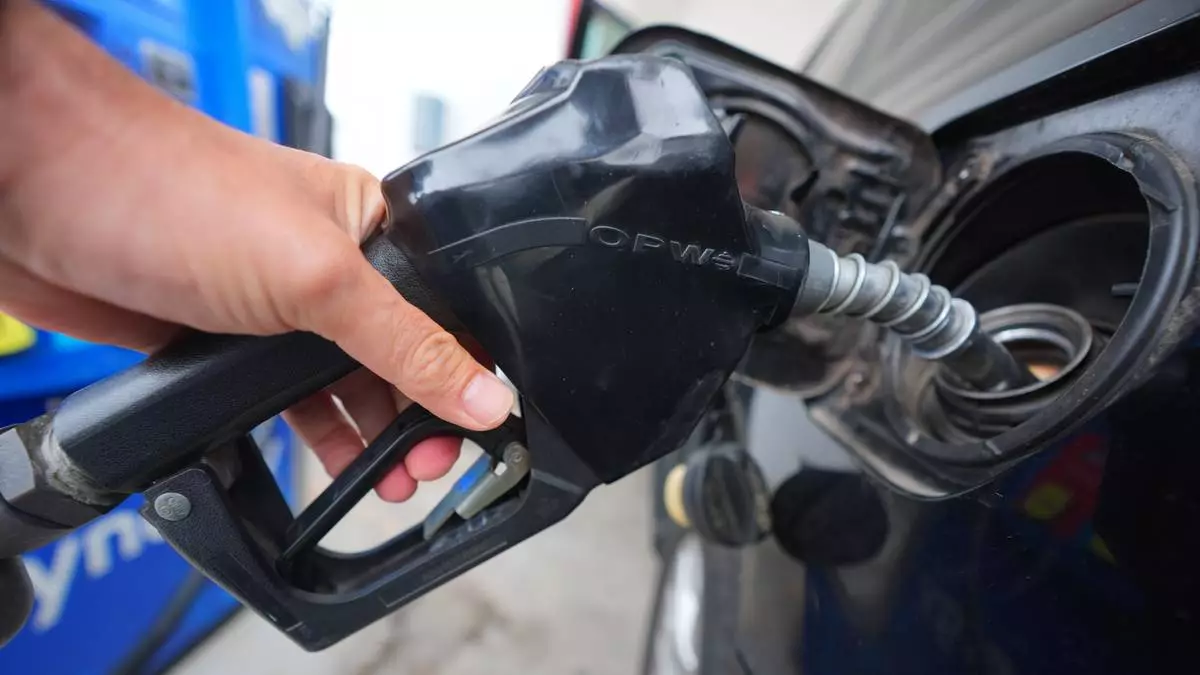
FILE - Gas is topped off after filling up a vehicle's fuel tank in the Dallas suburb of Richardson, Texas, May 6, 2026. (AP Photo/LM Otero, File)
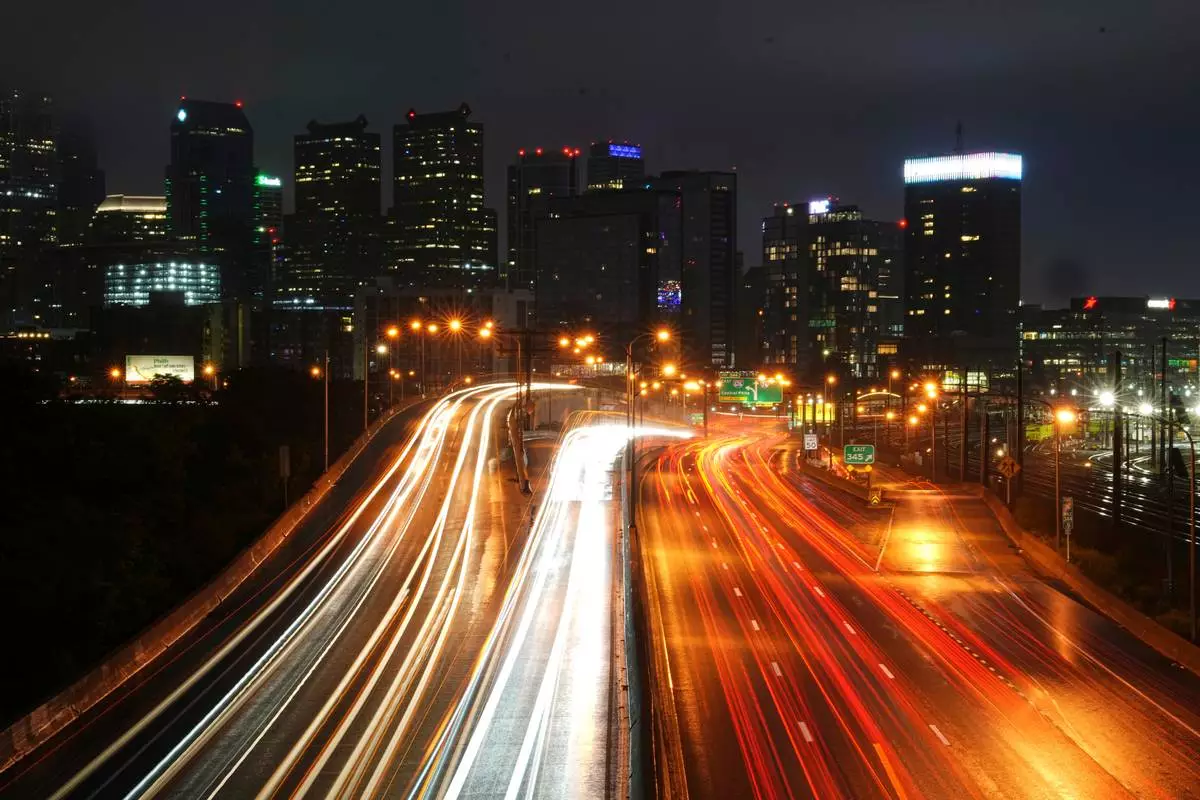
FILE - Traffic moves along Interstate 76 ahead of the Memorial Day holiday weekend in Philadelphia, May 22, 2025. (AP Photo/Matt Rourke, File)