Hong Kong Customs detects drug trafficking case involving incoming passenger at airport
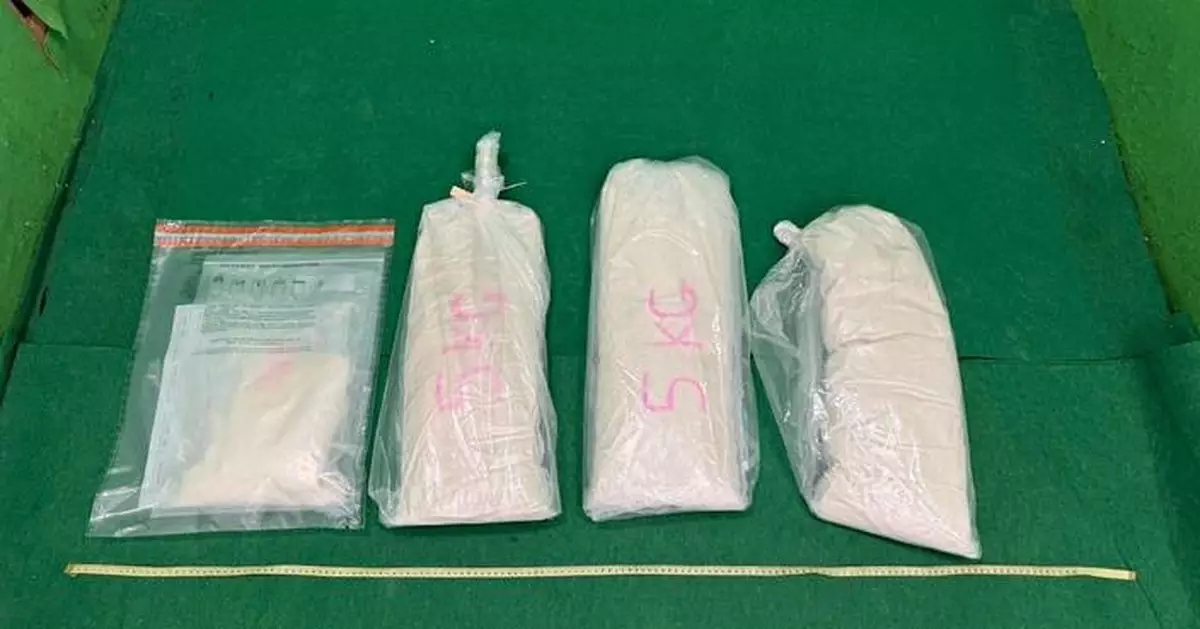
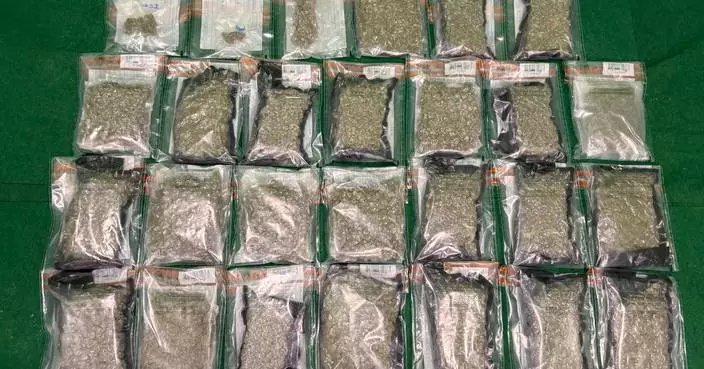
Hong Kong Customs yesterday (August 27) detected a case of drug trafficking, possession of poison included in Part 1 of the Poisons List and possession of an alternative smoking product involving an incoming air passenger at Hong Kong International Airport, and seized about 16 kilograms of suspected ketamine, a box of a suspected nicotine product containing suspected Part 1 poison and a suspected alternative smoking product, with a total estimated market value of about $6.5 million.
A 31-year-old Ukrainian man arrived in Hong Kong from London, the United Kingdom, yesterday. During customs clearance, Customs officers found the batch of suspected ketamine inside his check-in suitcase. Subsequently, one suspected alternative smoking product and one box of suspected nicotine product containing Part 1 poison were found inside his carry-on baggage. The man was subsequently arrested.
An investigation of the case is ongoing.
Customs will continue to step up enforcement against drug trafficking activities through intelligence analysis. The department also reminds members of the public to stay alert and not to participate in drug trafficking activities for monetary return. They must not accept hiring or delegation from another party to carry controlled items into and out of Hong Kong. They are also reminded not to carry unknown items for other people.
Customs will continue to apply a risk assessment approach and focus on selecting passengers from high-risk regions for clearance to combat transnational drug trafficking activities.
Under the Dangerous Drugs Ordinance, trafficking in a dangerous drug is a serious offence. The maximum penalty upon conviction is a fine of $5 million and life imprisonment.
Under the Import and Export Ordinance, any person who imports an alternative smoking product into Hong Kong commits an offence. The maximum penalty upon conviction is a fine of $2 million and imprisonment for seven years.
Under the Pharmacy and Poisons Ordinance, any person who possesses any poison included in Part 1 of the Poisons List other than in accordance with provisions commits an offence. The maximum penalty upon conviction is a fine of $100,000 and imprisonment for two years.
Members of the public may report any suspected drug trafficking activities to Customs' 24-hour hotline 182 8080 or its dedicated crime-reporting email account (crimereport@customs.gov.hk) or online form (eform.cefs.gov.hk/form/ced002).
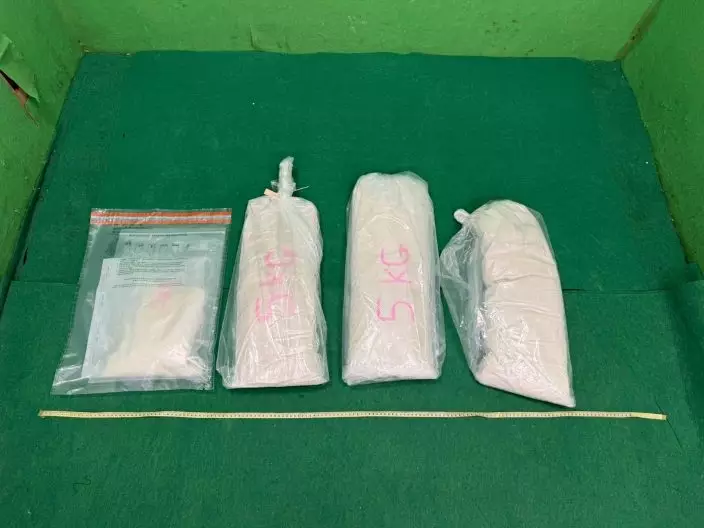
Hong Kong Customs yesterday (August 27) detected a case of drug trafficking, possession of poison included in Part 1 of the Poisons List and possession of an alternative smoking product involving an incoming air passenger at Hong Kong International Airport, and seized about 16 kilograms of suspected ketamine, a box of suspected nicotine product containing suspected Part 1 poison and a suspected alternative smoking product, with a total estimated market value of about $6.5 million. Photo shows the suspected ketamine concealed in a suitcase. Source: HKSAR Government Press Releases
Child previously reported as severe case of paediatric influenza infection passes away
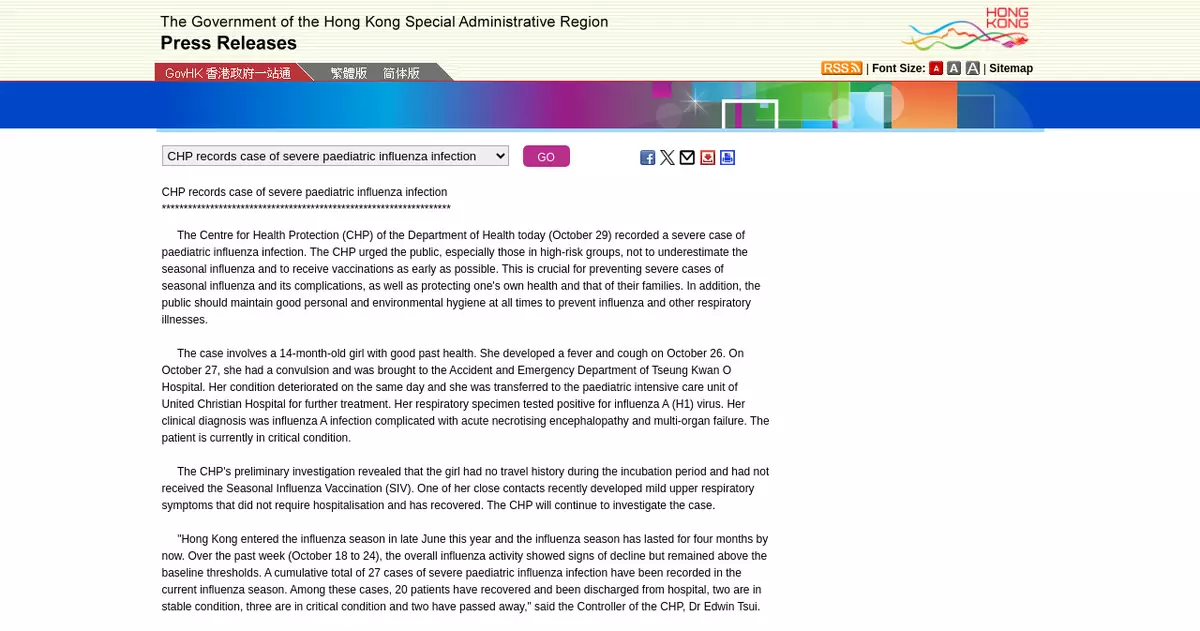
The Centre for Health Protection (CHP) of the Department of Health (DH) announced that a 14-month-old girl infected with influenza A passed away earlier today (November 13). The CHP announced the case as a severe case of influenza A infection on October 29.
This is the third fatal case of paediatric influenza infection in Hong Kong this year. Hong Kong entered the influenza season in late June this year, and the influenza season has lasted for more than four months by now. The latest surveillance data showed that the overall influenza activity has declined but remains above baseline levels. A cumulative total of 29 cases of severe paediatric influenza infection have been recorded in the current influenza season. Among these cases, 22 patients have recovered and been discharged from hospital, two are in stable condition, two are in critical condition, and three have passed away. The Controller of the CHP, Dr Edwin Tsui, reminded members of the public that Hong Kong is still in the midst of the influenza season. Although overall influenza activity has shown a downward trend over the past few weeks, it remains above baseline levels. Data from the previous year revealed that the rate of severe complications or death among unvaccinated children following influenza infection was approximately five times higher than that among vaccinated children. The CHP urged all individuals aged six months or older, except those with known contraindications, to promptly receive the seasonal influenza vaccination (SIV) if they have not yet done so.
This year's SIV Programmes have been underway for about two months. Currently, there is an adequate supply of vaccines in both the public and private healthcare sectors, providing free or subsidised SIV to eligible individuals. To facilitate members of the public in receiving SIV, eligible persons may receive SIV at about 270 public service points, including around 110 designated clinics under the DH located in various districts across the territory (including all 29 Maternal and Child Health Centres (MCHCs) for all children aged 6 months to under 2 years); 76 Family Medicine Clinics and 38 public hospitals under the Hospital Authority; and 45 District Health Centres, District Health Centre Expresses and their service points under the Primary Healthcare Commission. For the list of vaccination venues, please refer to the CHP's SIV Programmes webpage. Parents/guardians of eligible children may also book a vaccination appointment for their children at designated MCHCs via the online booking system.
Furthermore, over 1 900 private doctors currently participate in the Vaccination Subsidy Scheme (VSS), providing services at over 3 200 service points across all districts in Hong Kong. For the list of VSS doctors, please visit apps.hcv.gov.hk/public/en/SPS/Search.
Dr Tsui reminded members of the public to maintain strict personal and environmental hygiene. High-risk individuals, such as children, the elderly, and those with underlying illnesses or persons who are immunocompromised, should wear a surgical mask when using public transport or staying in crowded places. The health condition of children with influenza can deteriorate rapidly. Parents must pay close attention to their condition, and visit an accident and emergency department immediately if the child's condition deteriorates with symptoms such as shortness of breath, wheezing, blue lips, chest pain, confusion, a persistent fever or convulsions.
Source: AI-found images