Skip to Content Facebook Feature Image

Multiple factors attributed to extreme destructiveness of mudslide in Xizang: expert

China

Multiple factors attributed to extreme destructiveness of mudslide in Xizang: expert
China

China

Multiple factors attributed to extreme destructiveness of mudslide in Xizang: expert

2026-08-28 12:38 Last Updated At:13:37

The mudslide that struck the border port of Gyirong in southwest China's Xizang Autonomous Region was exceptionally destructive due to a combination of factors, including a steep elevation drop, an enormous volume of debris, and its sudden onset, according to an expert.

The mudslide originating on Nepal's side of the China-Nepal border had left three people dead and 265 others missing as of 20:00 Wednesday.

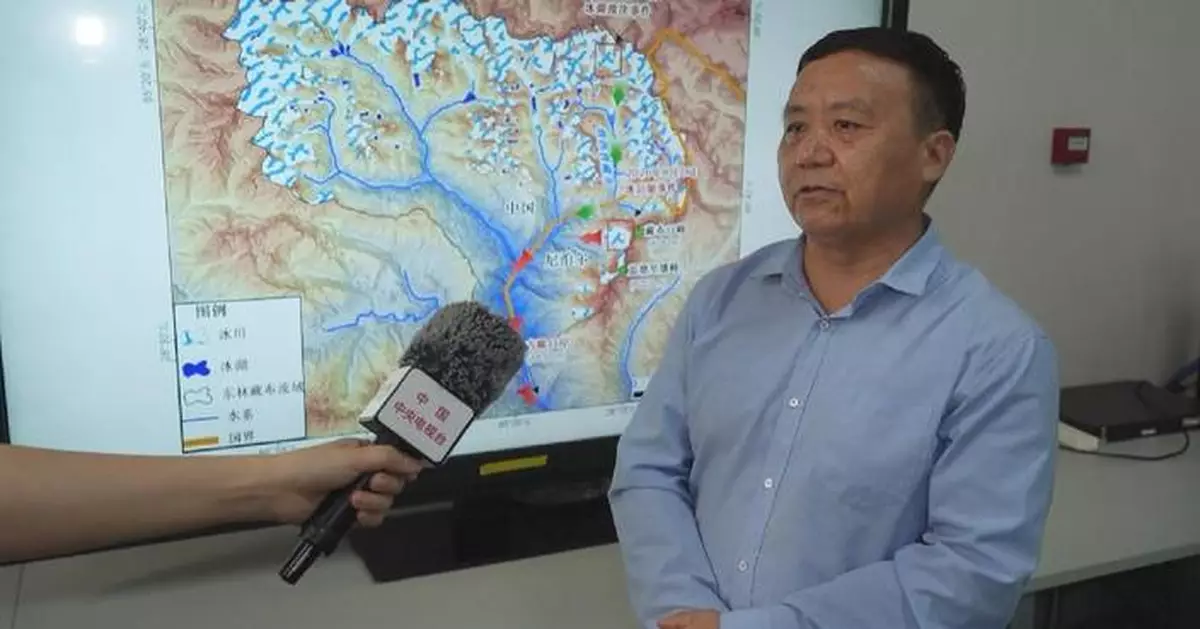
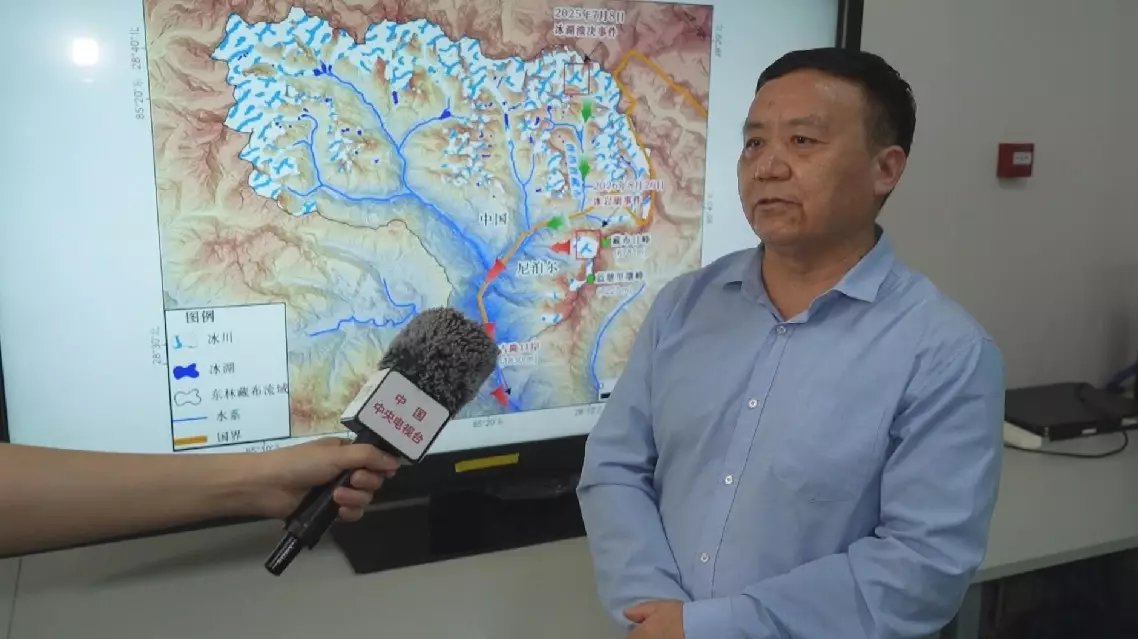
A research team from the State Key Laboratory of Geohazard Prevention and Geoenvironment Protection at Chengdu University of Technology has conducted remote sensing analysis of the mudslide.

By comparing satellite images taken on June 25 and August 26, they have mapped the full extent of the impact zone.

"Based on the available data, our preliminary analysis classifies this event as an ice-rock avalanche that subsequently evolved into a mudslide. The comparison of the two images shows that this gully has become totally different. Our preliminary estimates suggest that the affected zone extends approximately 70 kilometers in length, with widths varying from 300 to 500 meters in wider sections and contracting to between 50 and 100 meters in narrower stretches. The total area is estimated at roughly 15 to 20 square kilometers," said Xu Qiang, president of Chengdu University of Technology and principle scientist of the laboratory.

Xu further broke down why the mudslide was so destructive.

"First, the elevation drop is huge, the slope is extremely steep. The mountain source area is at 6,781 meters, and the ice avalanche source zone is probably at around 5,000 meters. The Gyirong Port area is at 1,830 meters, so the elevation drop is about 3,000 to 4,000 meters. That kind of drop, combined with the steep terrain, means that once it transformed into a mudslide, it moved at incredibly high speeds. Second, the volume of source material was massive, amounting to tens of millions of cubic meters. Third, the ice-rock avalanche happened suddenly. It came down all at once and turned into a mudslide. These three factors together made this event exceptionally destructive," said Xu.
Multiple factors attributed to extreme destructiveness of mudslide in Xizang: expert

Multiple factors attributed to extreme destructiveness of mudslide in Xizang: expert

U.S. President Donald Trump on Thursday signed an executive order directing the Department of the Interior to rename Lake Ontario "Lake America," while Canadian Prime Minister Mark Carney criticized the move, noting that the lake is called Lake Ontario "today and forever."

"We're gonna to be changing the name of Lake Ontario, effective immediately, to Lake America," Trump said in the Oval Office before signing the order.

The move came just two days after Trump said on social media that the United States is giving "serious consideration" to changing the name of Lake Ontario to "Lake America," citing that "we don't expect to be doing much business with Ontario any longer."

In response, Canadian Prime Minister Mark Carney said Thursday that the name "Lake Ontario" carries a long history and that Canadians will always use this name regardless of external changes.

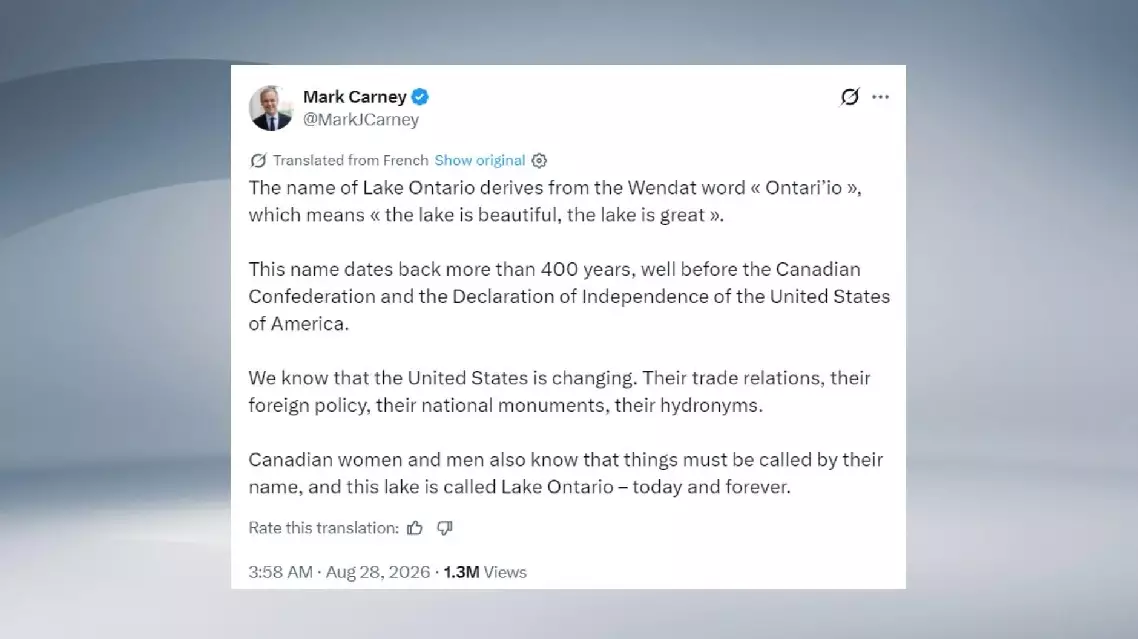
Carney wrote in a post on X that the name came from the Wendat word Ontari'io, which means "the lake is beautiful, the lake is big."

The name is more than 400 years old, "predating both the Confederation of Canada and the Declaration of Independence of the United States of America," added the prime minister.

"We know that America is changing. Their trading relationships, their foreign policies, their national monuments, their hydronyms," Carney said.

"Canadians also know that naming reality means calling it Lake Ontario -- then, now and always," he wrote.

Trump's attempt to rename the lake came as a recent breakdown in trade talks between the two countries led to new retaliatory tariffs.

The United States and Canada failed to reach a trade deal on Aug. 21, and the United States imposed a 50-percent tariff on about 20 billion U.S. dollars' worth of Canadian goods on Aug. 22.

Canada responded by announcing "dollar-for-dollar" retaliatory tariffs on imports from the United States, set to take effect on Sept. 8.

Lake Ontario, one of the five Great Lakes of North America, straddles the U.S.-Canada border, with the Canadian province of Ontario to the north and the U.S. state of New York to the south.

Canadian PM defends "Lake Ontario" name after Trump renaming order

Canadian PM defends "Lake Ontario" name after Trump renaming order

Recommended Articles