BELGRADE, Serbia (AP) — Serbia's President Aleksandar Vucic on Friday accused a war crimes U.N. court in The Hague of “uncivilized behavior” for refusing to grant an early release for the former Bosnian Serb army commander Ratko Mladic, who died Thursday at the age of 84 while serving a life sentence for his crimes.
Mladic’s family and the Serbian government had requested several times that Mladic be released, citing his age and ailing health. He died a week after the U.N. rejected his latest request for release on humanitarian grounds.
“That was uncivilized behavior, unprecedented and without excuse,” Vucic said. “We can now see that they wanted Mladic to die behind bars.”
The U.N. tribunal for war crimes committed during the wars in the former Yugoslavia in the 1990s sentenced Mladic to life in prison in 2017 in what was considered a key step toward bringing justice to the victims. He had been in custody since 2011.
The ruthless warlord was one of the most notorious figures of the conflict that left more than 100,000 people dead and over 1 million homeless. More than three decades after the wars, former Balkan foes remain divided over his role.
In an Aug. 20 ruling, the president of the U.N. court that deals with the legacies of now-closed war crimes tribunals, Uruguayan Judge Graciela Gatti Santana, cited the “comprehensive and compassionate medical care” Mladic was receiving in custody “as well as the exceptional visitation regime allowing meaningful family contact” as reasons for turning down the request.
Bosnian Serbs held vigils and lit candles Thursday evening for Mladic, whom they consider a hero despite his conviction.
“He could not have been a better man. Everything else is just a bunch of lies. He would not touch anyone, child, no one. It's all lies,” said Stojanka Visnjevac, a resident of Kalinovik, Mladic's small hometown.
But the families of the victims of crimes Mladic orchestrated said his death means at least some justice for their loved ones.
Fazila Efendic, who lost several members of her family in the 1995 massacre of more than 8,000 Bosnian Muslims in Srebrenica, which is Europe's first acknowledged genocide since World War II, said it is important that Mladic died in prison.
“We, the victims, are satisfied, when we know that he was convicted to life in prison,” she said. "For us, it is important that he is convicted and that he served his sentence until he died.”
A U.N. “safe haven” for Muslims in Srebrenica ended up being overrun by Serbs who forced men and boys to strip, killed them and bulldozed their bodies into mass graves. Serbs under Mladic’s control also laid siege to the Bosnian capital, Sarajevo, and other cities and villages, established concentration camps for detained non-Serb civilians and enemy soldiers, and systematically killed prisoners.
Vucic said that Belgrade has no information on when Mladic’s body could be released.
Vucic said Mladic’s family will decide where he would be buried. “If the family expresses a wish that he be buried in the territory of Serbia, we will help so it can be done in a dignified way,” Vucic told reporters. He did not confirm earlier reports that Mladic would receive a state funeral. The reports sparked outrage throughout the region.
The U.N. court on Thursday opened an inquiry into Mladic's death, and on Friday, the judge conducting the inquiry visited the detention center where he was held.
The court, formally known as the International Residual Mechanism for Criminal Tribunals, said in an emailed response to questions from The Associated Press that it would not give any information on the cause of death before the inquiry is completed.
It added that “the relevant Dutch authorities have officially informed the Mechanism that they are not opening a criminal investigation into Mr. Mladic’s death and that they will not be performing an autopsy.”
AP writers Dusan Stojanovic in Belgrade and Mike Corder in The Hague contributed to this report.
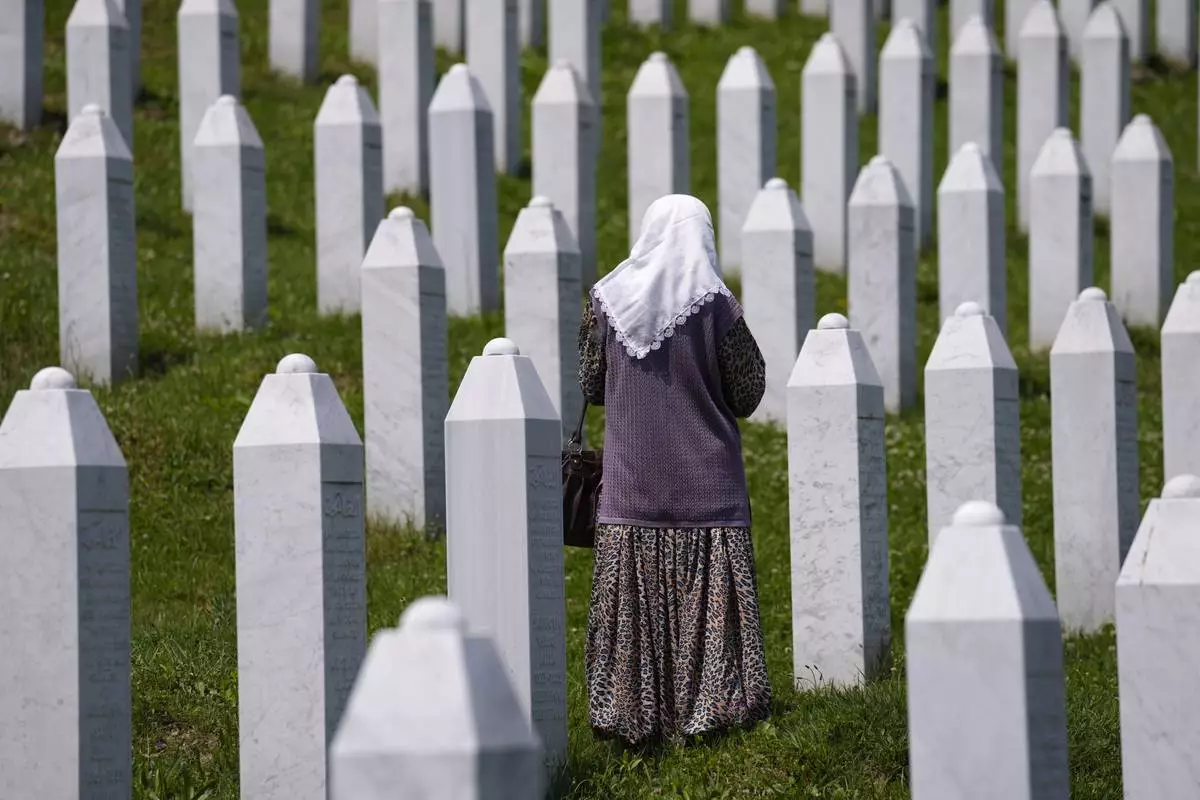
FILE - A woman walks stands among the graves of victims of the Srebrenica massacre, at the memorial cemetery in Potocari, near Srebrenica, eastern Bosnia, Tuesday, June 8, 2021, as the United Nations court in The Hague, Netherlands, delivers its verdict in the appeal by former Bosnian Serb military chief Ratko Mladic against his convictions for genocide and other crimes and his life sentence for masterminding atrocities throughout the Bosnian war. (AP Photo/Darko Bandic, File)
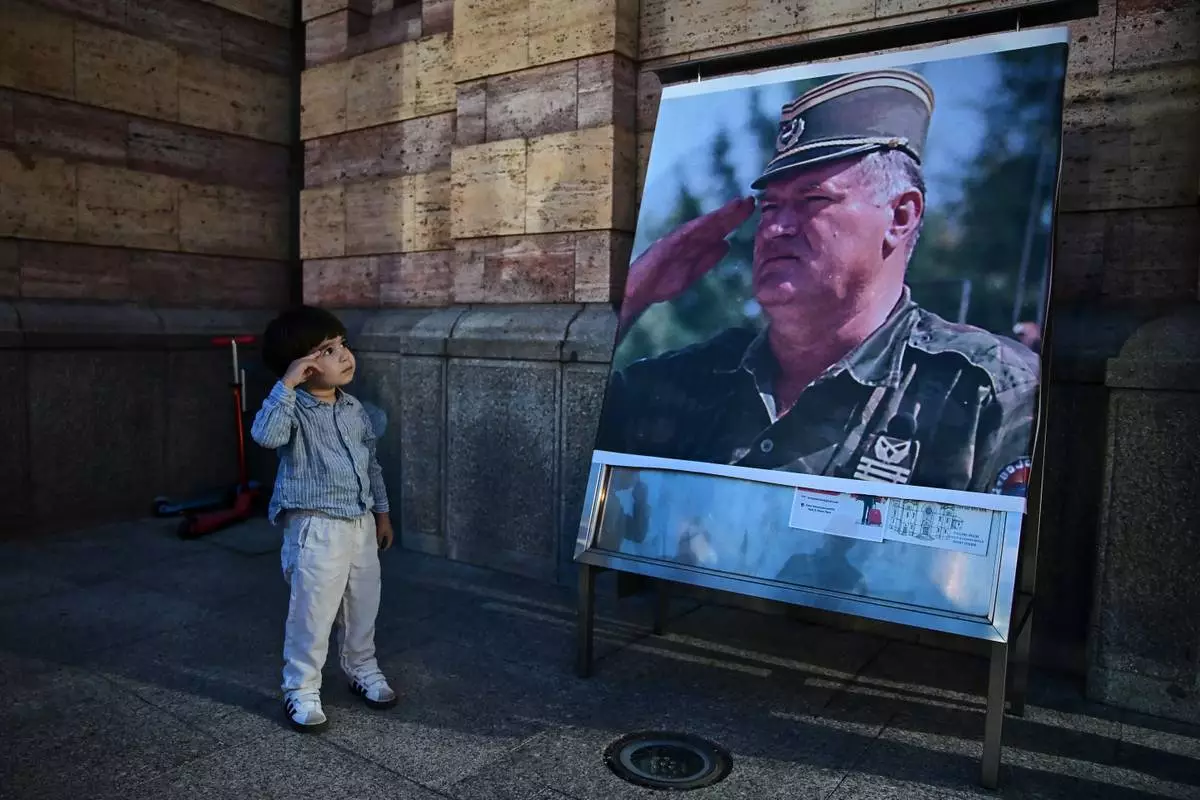
A boy salutes in front of poster of former Bosnian Serb wartime general Ratko Mladic, outside a church in Banja Luka, Bosnia-Herzegovina, Thursday, Aug. 27, 2026. (AP Photo/Radivoje Pavicic)
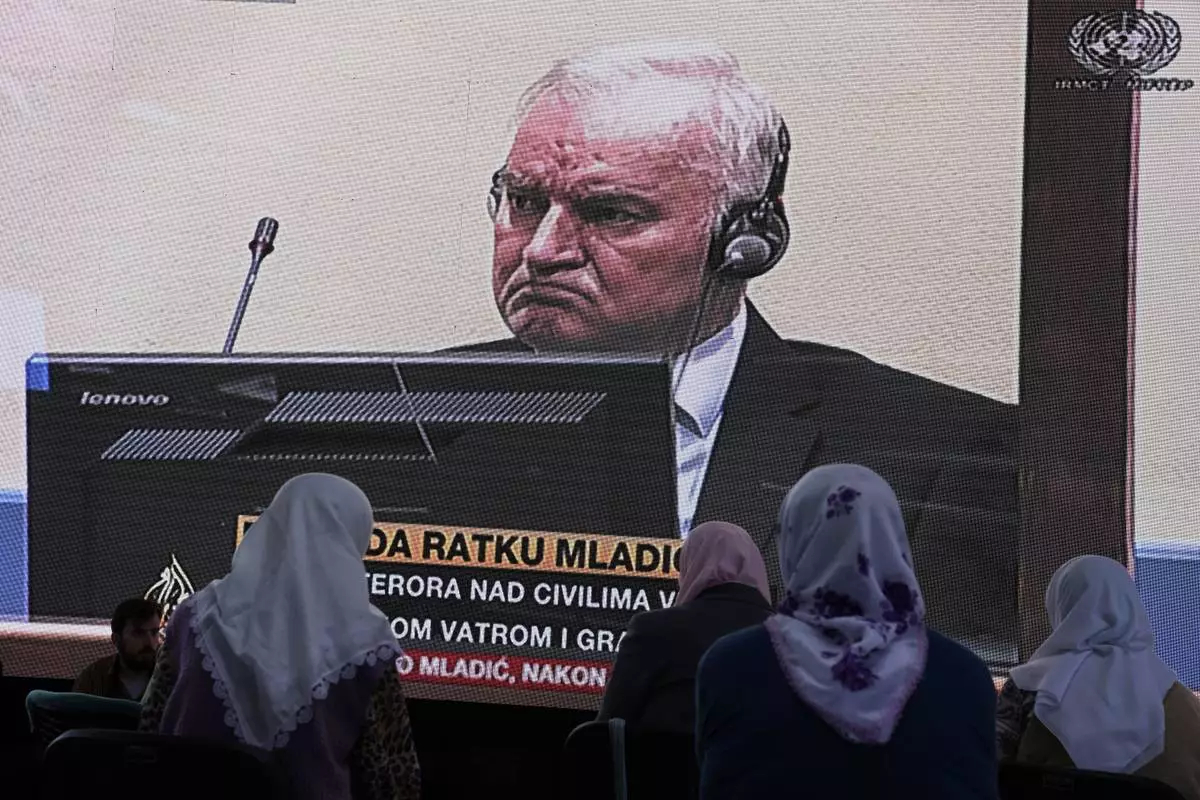
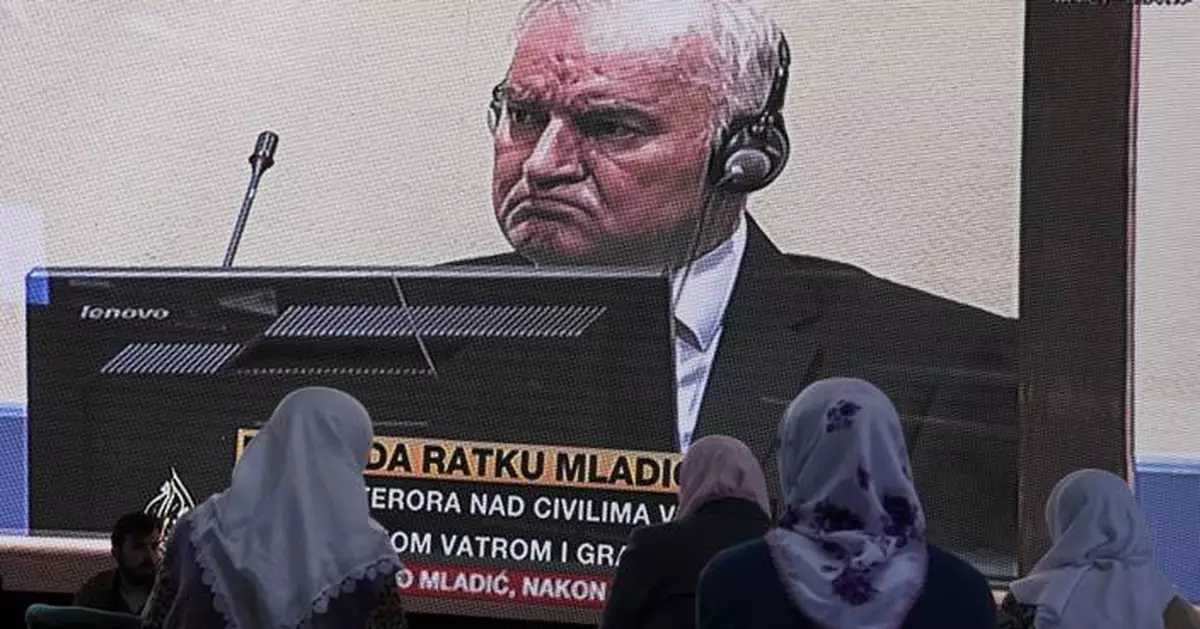
FILE - Women from Srebrenica watch a live broadcast from the Yugoslav War Crimes Tribunal in The Hague to learn the verdict for Bosnian Serb military chief Ratko Mladic, on the screen, at the memorial cemetery in Potocari near Srebrenica, eastern Bosnia, Tuesday, June 8, 2021.(AP Photo/Darko Bandic, File)