NUWAKOT, Nepal (AP) — Aid began to reach some survivors in Nepal on Friday following the catastrophic flash floods that swept through the mountainous border region between Nepal and China, as the full scope of the devastation continued to emerge and survivors sought shelter at makeshift army relief centers.
Children who have been separated from their families are being given shelter as attempts are made to reunite them with families.
Click to Gallery
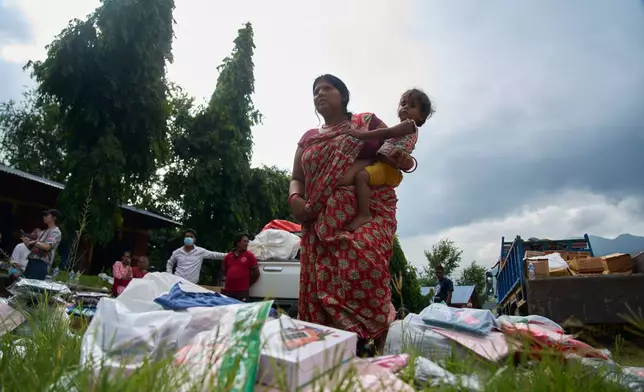
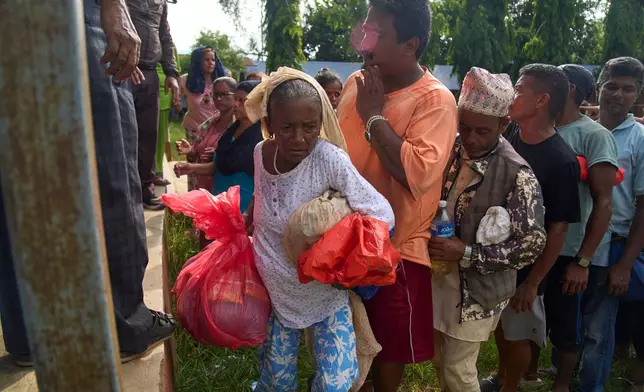
A flash flood survivor arrives to receive relief supplies in the Devighat area of Nuwakot district in Nepal, Friday, Aug. 28, 2026. (AP Photo/Niranjan Shrestha)
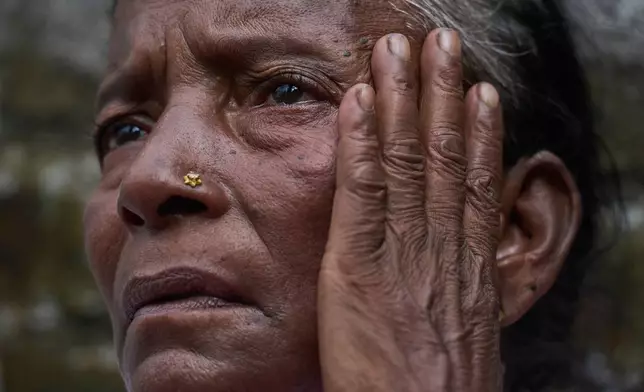
Kanchi Nepali, a flash flood survivor, waits to receive relief supplies in the Devighat area of Nuwakot district in Nepal, Friday, Aug. 28, 2026. (AP Photo/Niranjan Shrestha)
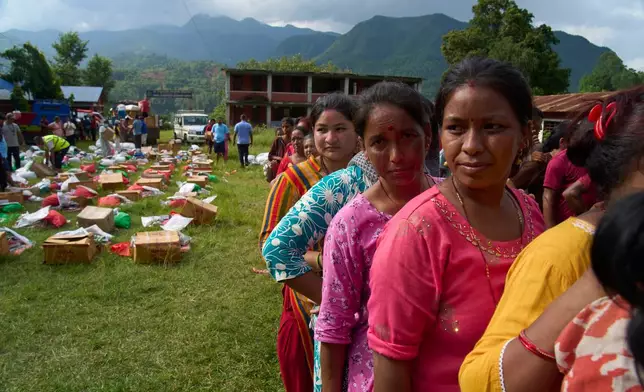
Survivors stand in a queue to receive relief supplies in the Devighat area of Nuwakot district in Nepal, Friday, Aug. 28, 2026. (AP Photo/Niranjan Shrestha)
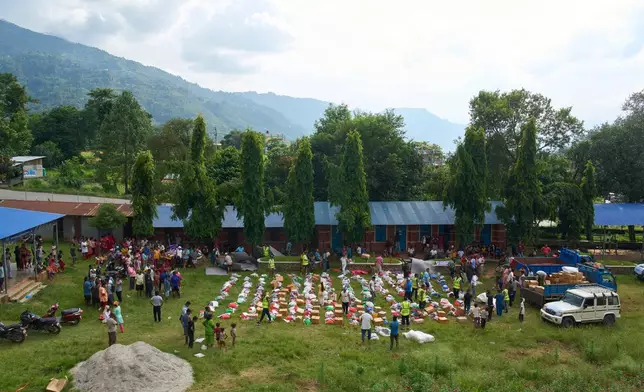
Volunteers prepare to distribute relief supplies to survivors in the Devighat area of Nuwakot district in Nepal, Friday, Aug. 28, 2026. (AP Photo/Niranjan Shrestha)
Kanchi Nepali, a survivor of flash floods, receives relief supplies in the Devighat area of Nuwakot district in Nepal, Friday, Aug. 28, 2026. (AP Photo/Niranjan Shrestha)
Family members wait outside an army camp where people rescued from flash floods are brought in Nepal's Nuwakot district, Friday, Aug. 28, 2026. (AP Photo/Rajesh Kumar Singh)
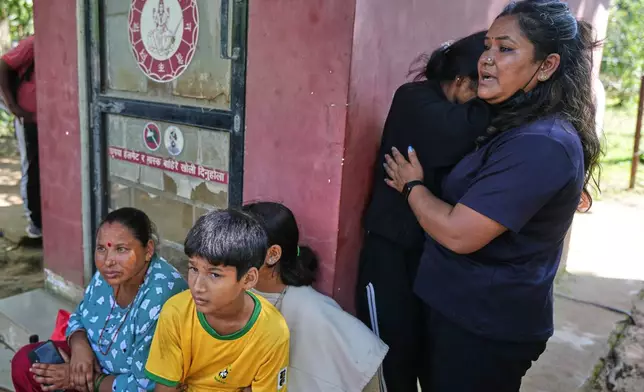
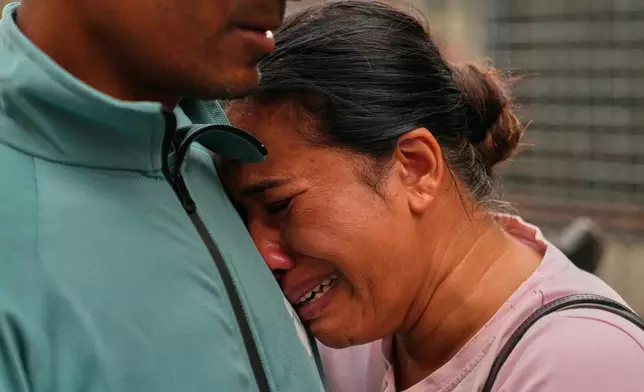
A relative consoles Sabina Dangal outside a government hospital as she waits for news of her brother, who is missing after flash floods, in Kathmandu, Nepal, Friday, Aug. 28, 2026. (AP Photo/Dar Yasin)
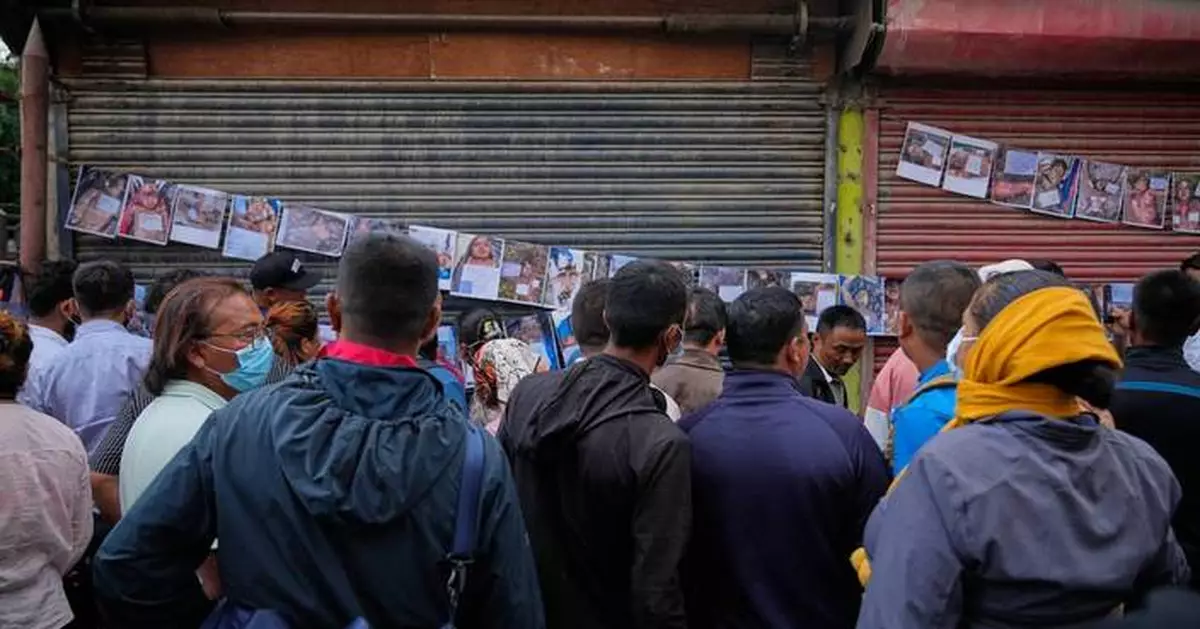
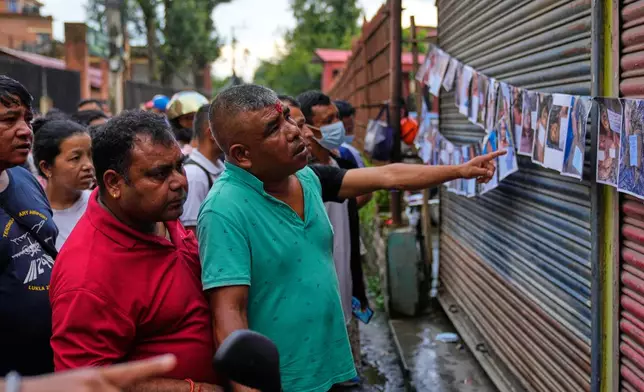
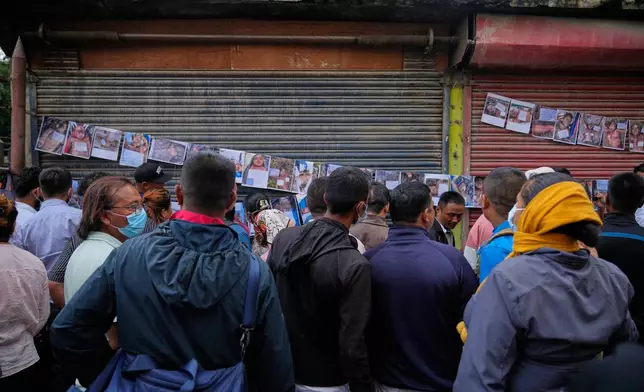
People look at photographs of people killed in flash floods displayed outside a government hospital to help relatives identify the victims in Kathmandu, Nepal, Friday, Aug. 28, 2026. (AP Photo/Dar Yasin)
EDS NOTE: GRAPHIC CONTENT - People look at photographs of people killed in flash floods displayed outside a government hospital to help relatives identify the victims in Kathmandu, Nepal, Friday, Aug. 28, 2026
The U.N.'s agency for children said at least 17,000 children are in urgent need of humanitarian assistance, while 18 schools have been destroyed and another 20 damaged.
The International Red Cross estimates that at least 93,000 people have been affected and are in “great need.”
Rescuers worked through mud and debris on Friday in areas devastated by a catastrophic flash flood along the mountainous border between Nepal and China.
In Nuwakot, one of the flood areas closest to Kathmandu, entire villages were swept away in a matter of minutes. What remains is covered in sediment and thick mud. Broken pieces of a golden temple were seen jutting out from the sand, while the carcass of a dead buffalo lay on the ground.
With their homes destroyed, survivors have gathered at roadside tea shops.
The Associated Press visited a school in Nuwakot that is being used as a temporary aid distribution center, where nongovernmental organizations distributed solar panels, clothes and basic hygienic goods.
“What I’ve been given today is worth more than a million,” said Kanchi Nepali. “I have no food, no shelter, no utensils to cook with. Only my body survived.”
Nepal’s National Disaster Risk Reduction and Management Authority said on Friday that the number of missing people has doubled to just under 2,000.
The authority said 14,829 security personnel have been mobilized for search and rescue operations, which includes using drones to search for survivors in areas dangerous to access.
Those rescued from the area are taken to Maithali Barrack, a military training center in Nuwakot that has been turned into relief camp and shelter. Helicopters come and go with people and supplies. Community members surround the barbed wire perimeter of the center, waiting to see if their loved ones will arrive in the next helicopter.
An army medic, who was not authorized to speak to the media, told The Associated Press that those who have received medical care have included local community members, foreign tourists and Chinese workers rescued from the flood zone. In cases that are considered to be too severe — such as when a pregnant woman at the center began experiencing labor pains — those individuals are airlifted to a nearby hospital.
Children who were separated from their families are also at the shelter as center workers attempt to help reunite them. UNICEF said at least 17,000 children are in urgent need of humanitarian assistance while 18 schools have been destroyed and another 20 damaged.
But the center has also become a place of grief. Bodies recovered from the flood zone are being placed behind orange and green tarp, where they stay until they’re identified.
Chanda Lal Chitrakar, 62, told the AP that on the morning of the flood he paid little attention to the government flood warning messages being sent to his phone. He’d lived through last year’s floods, sitting at his riverside tea shop with friends as they watched the water rise.
When he received the warning messages ahead of the latest floods, he simply closed the doors and windows. After about 45 minutes, he said, he saw an enormous cascade of water rushing from the hills, reaching so high he couldn’t see the top of the tallest tree near his home.
With only the clothes he was wearing and his cellphone, he ran to a high hill behind the police station.
“When I reached the top, only then did I feel like I could breathe,” he said.
The Associated Press’ climate and environmental coverage receives financial support from multiple private foundations. AP is solely responsible for all content. Find AP’s standards for working with philanthropies, a list of supporters and funded coverage areas at AP.org.
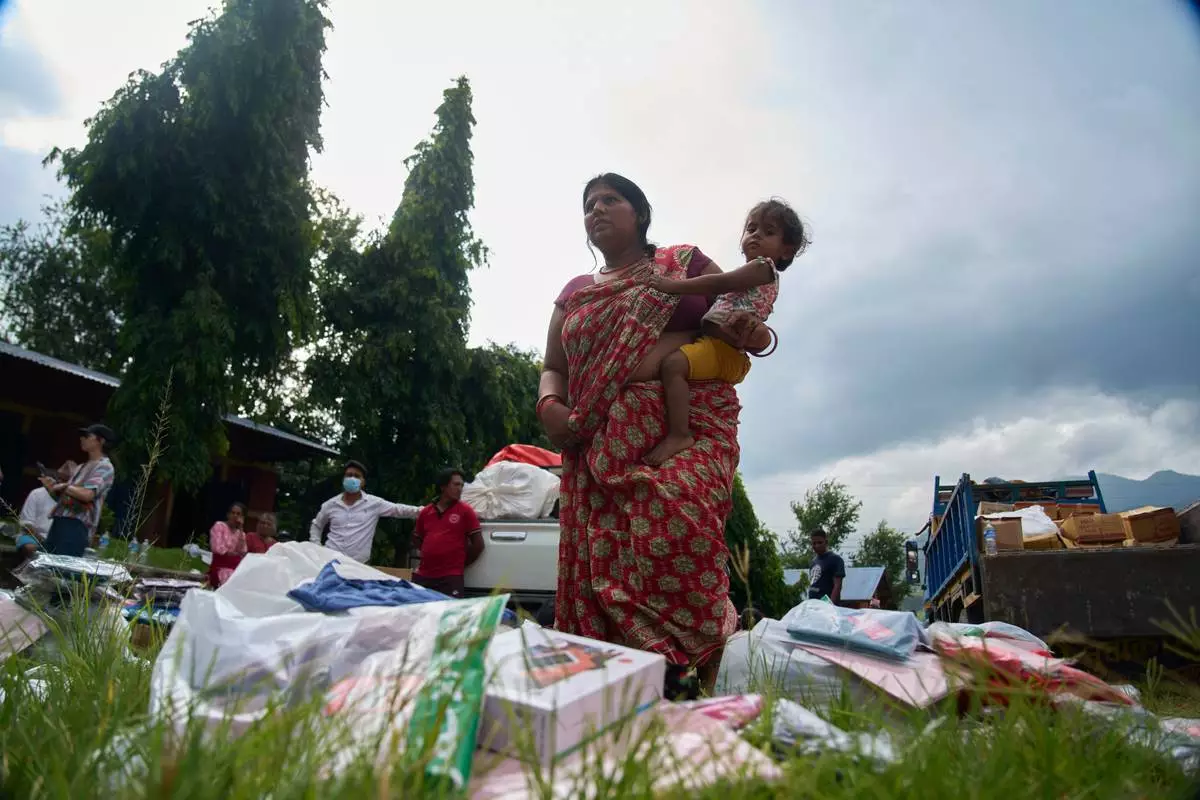
A flash flood survivor arrives to receive relief supplies in the Devighat area of Nuwakot district in Nepal, Friday, Aug. 28, 2026. (AP Photo/Niranjan Shrestha)
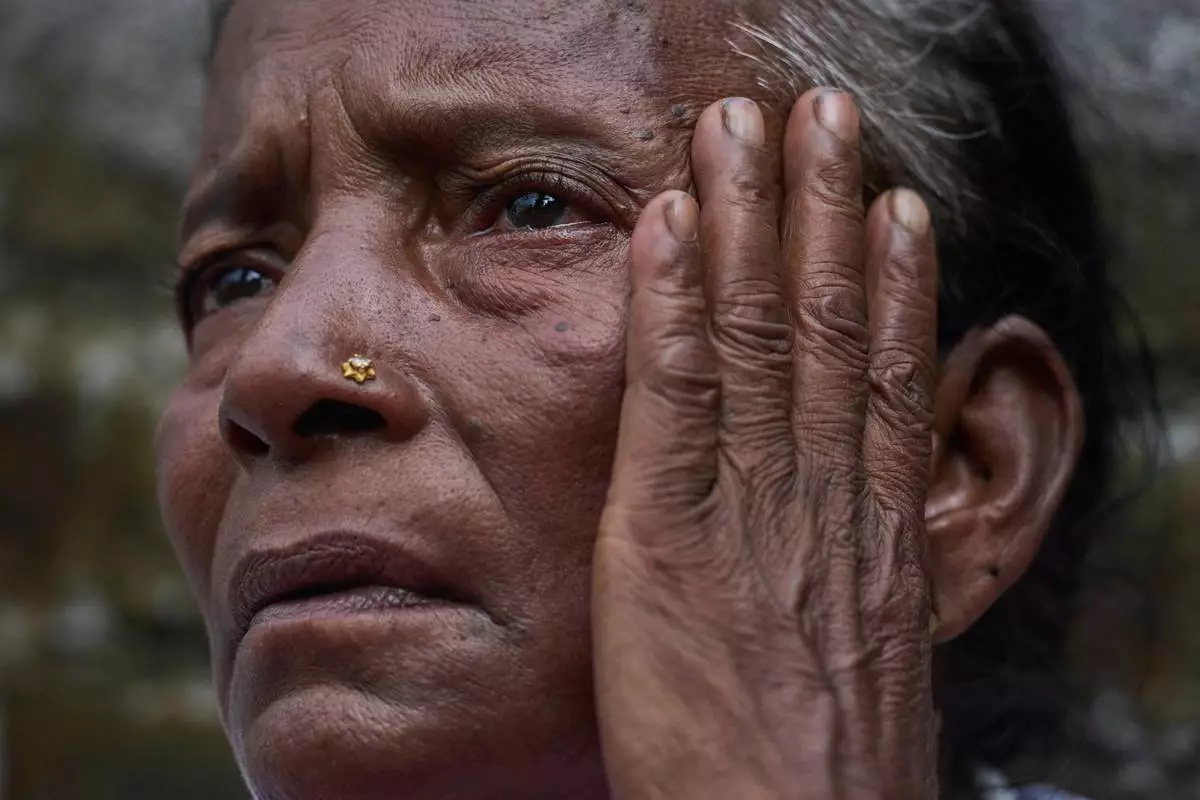
Kanchi Nepali, a flash flood survivor, waits to receive relief supplies in the Devighat area of Nuwakot district in Nepal, Friday, Aug. 28, 2026. (AP Photo/Niranjan Shrestha)
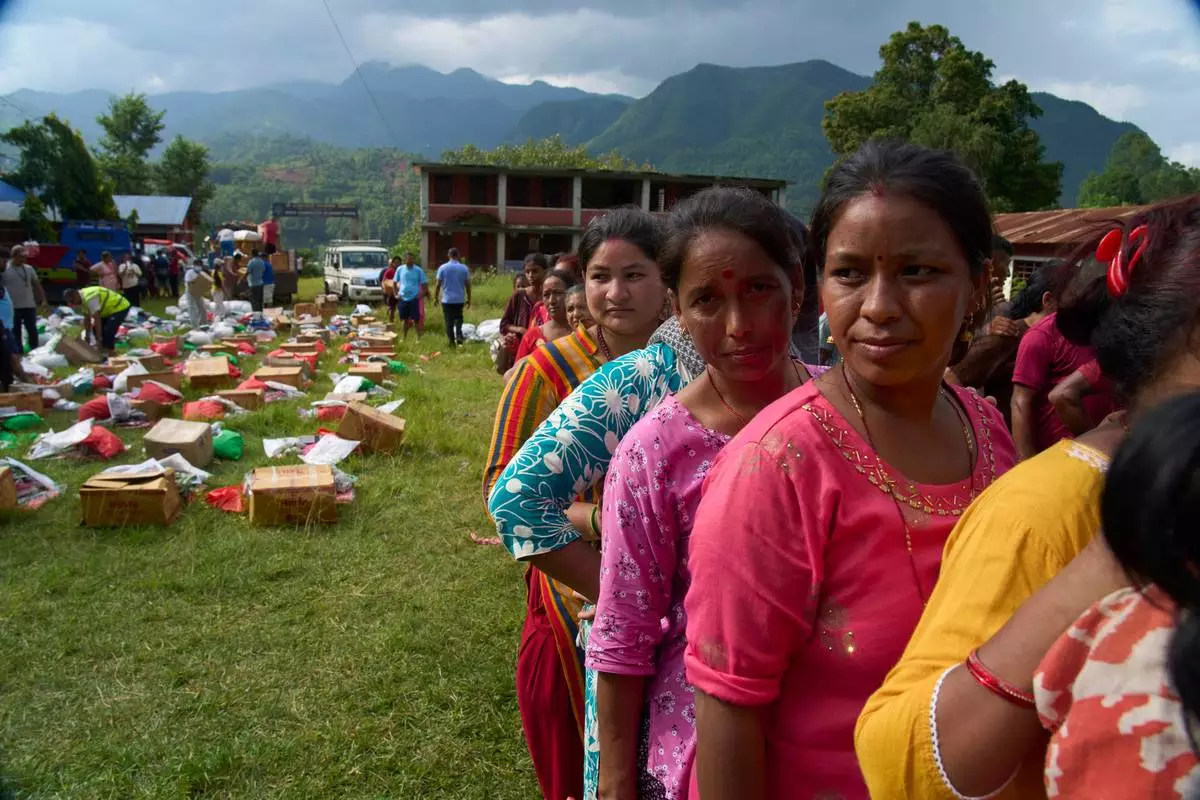
Survivors stand in a queue to receive relief supplies in the Devighat area of Nuwakot district in Nepal, Friday, Aug. 28, 2026. (AP Photo/Niranjan Shrestha)
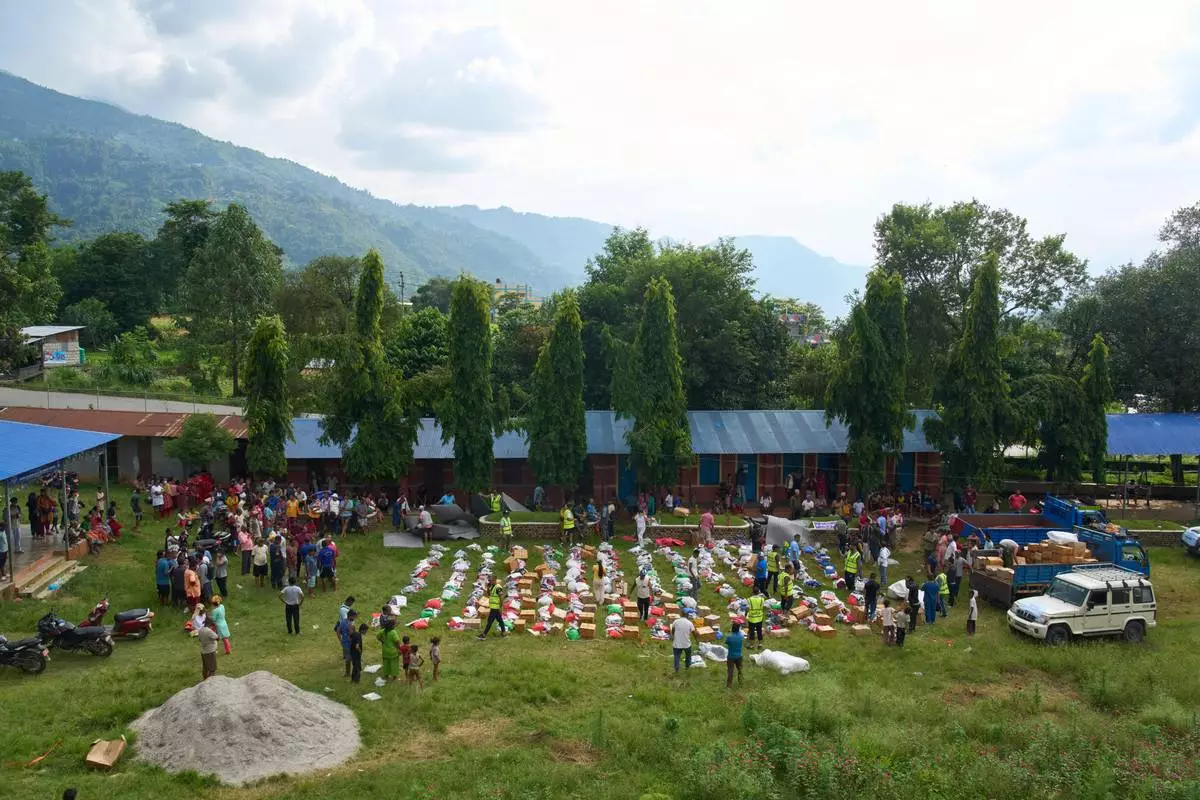
Volunteers prepare to distribute relief supplies to survivors in the Devighat area of Nuwakot district in Nepal, Friday, Aug. 28, 2026. (AP Photo/Niranjan Shrestha)
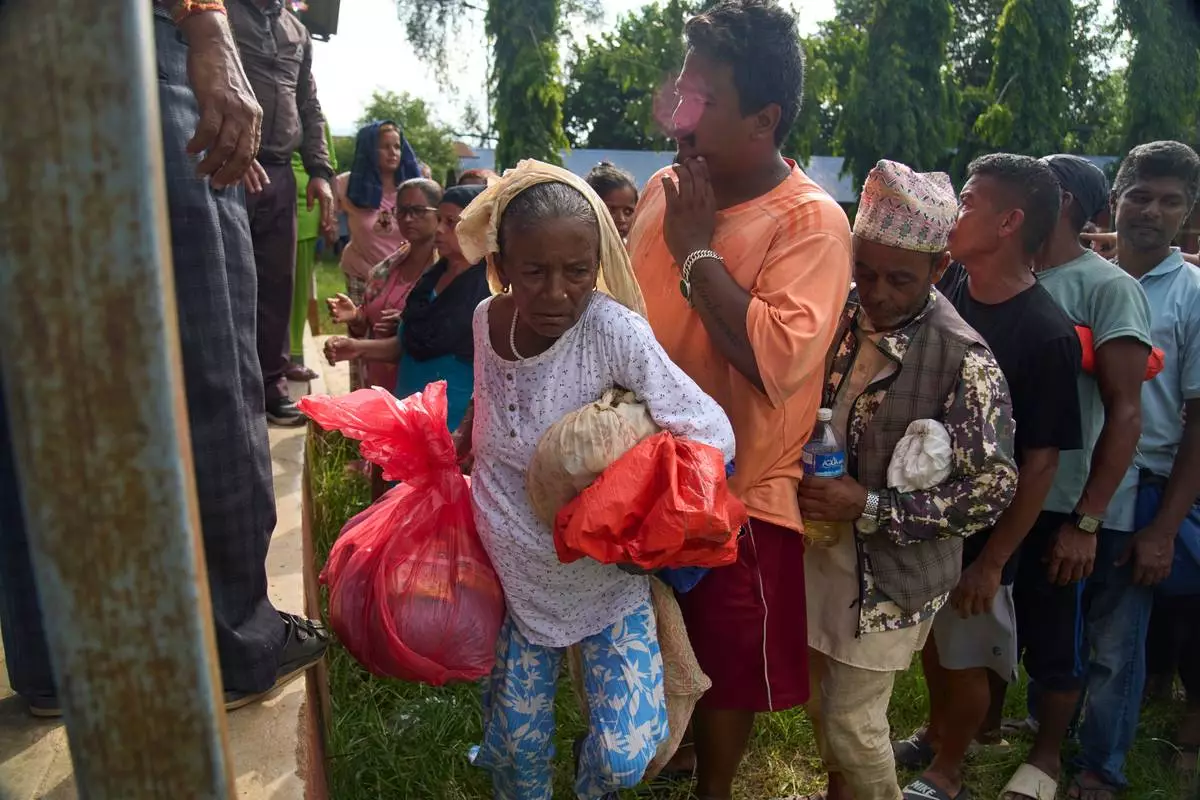
Kanchi Nepali, a survivor of flash floods, receives relief supplies in the Devighat area of Nuwakot district in Nepal, Friday, Aug. 28, 2026. (AP Photo/Niranjan Shrestha)
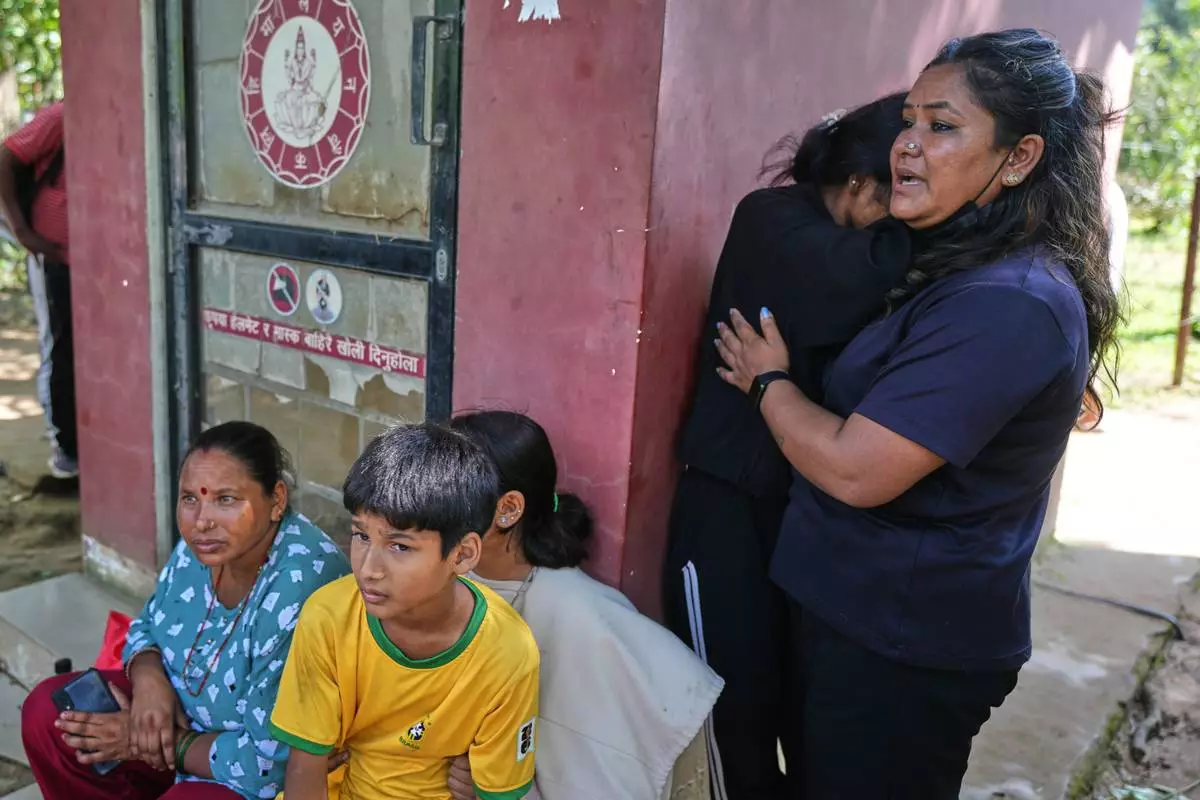
Family members wait outside an army camp where people rescued from flash floods are brought in Nepal's Nuwakot district, Friday, Aug. 28, 2026. (AP Photo/Rajesh Kumar Singh)
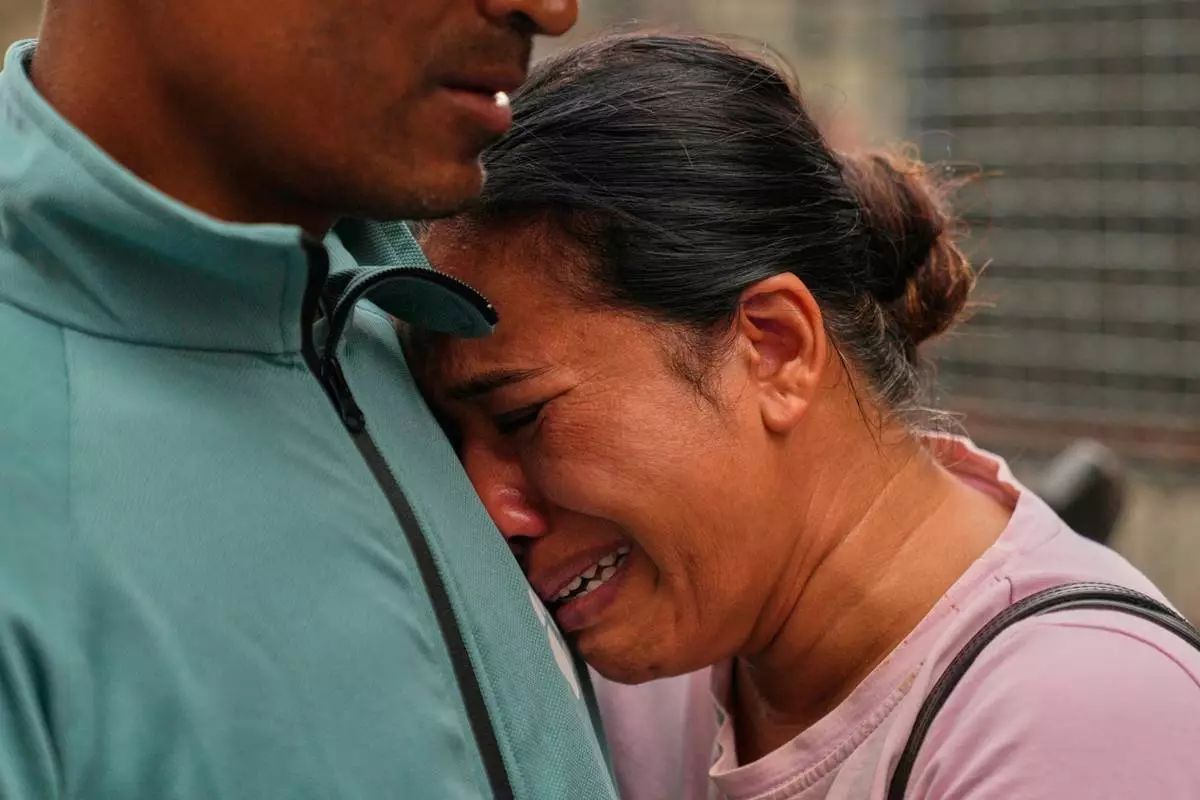
A relative consoles Sabina Dangal outside a government hospital as she waits for news of her brother, who is missing after flash floods, in Kathmandu, Nepal, Friday, Aug. 28, 2026. (AP Photo/Dar Yasin)
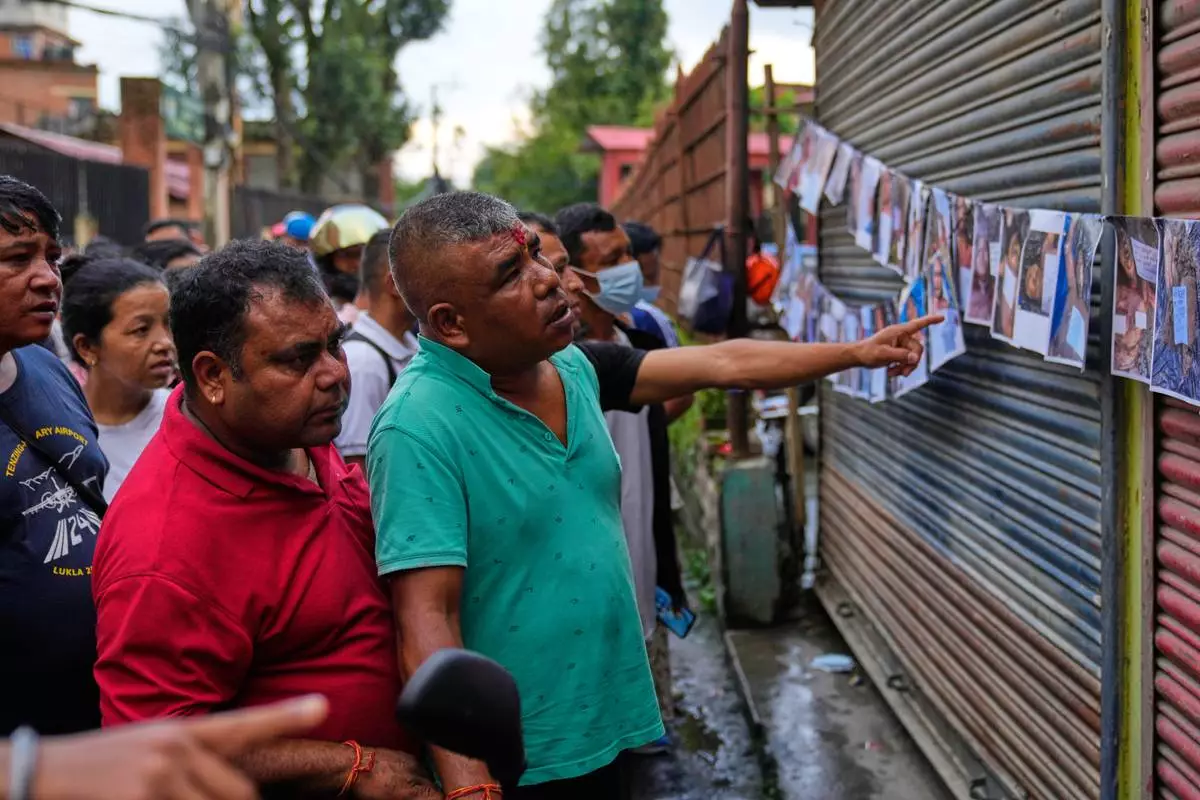
People look at photographs of people killed in flash floods displayed outside a government hospital to help relatives identify the victims in Kathmandu, Nepal, Friday, Aug. 28, 2026. (AP Photo/Dar Yasin)
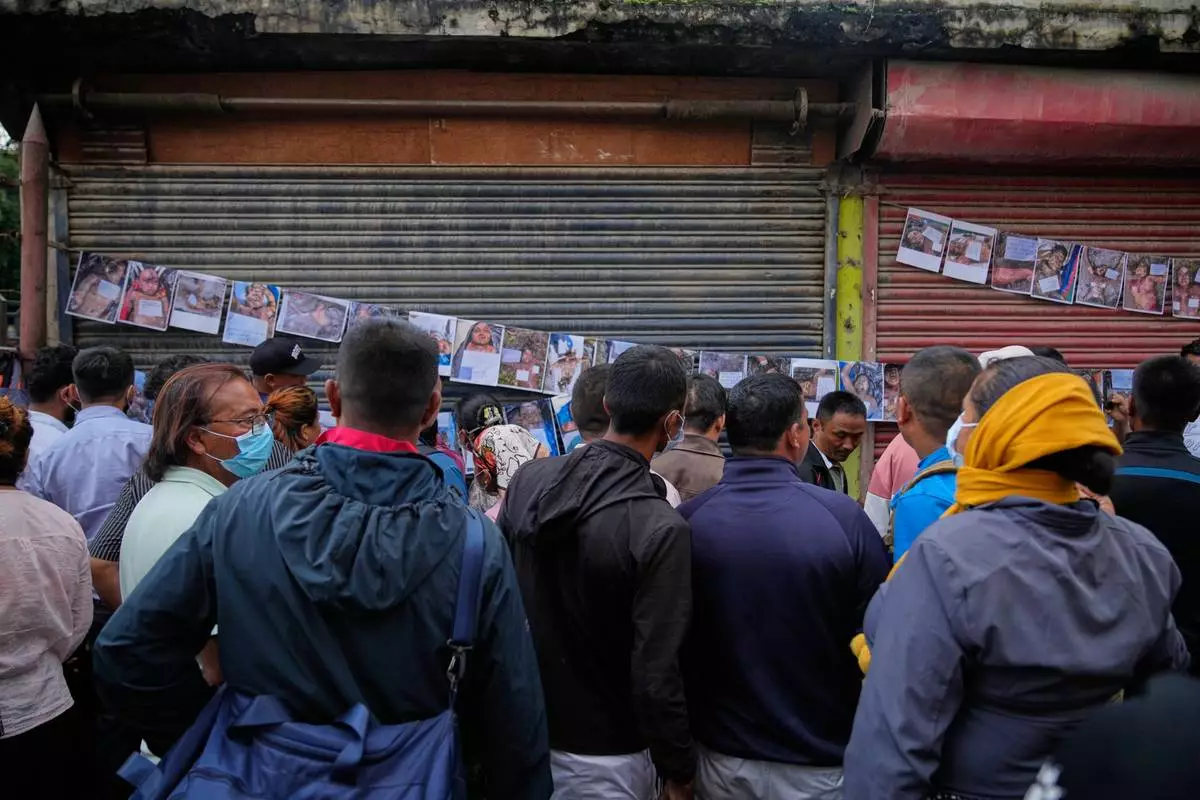
EDS NOTE: GRAPHIC CONTENT - People look at photographs of people killed in flash floods displayed outside a government hospital to help relatives identify the victims in Kathmandu, Nepal, Friday, Aug. 28, 2026
WASHINGTON (AP) — Voting rights, the work of the civil rights movement and racial justice took center stage on the National Mall Friday, with protesters gathering ahead of midterm elections and following a wave of changes to voting laws and redistricting that some have condemned as detrimental to Black Americans.
Hundreds of people gathered near the steps of the Lincoln Memorial for the 2026 “Defend the Vote” March on Washington, organized by the Rev. Al Sharpton and Martin Luther King III, echoing the Rev. Martin Luther King Jr.'s 1963 march. The event follows the U.S. Supreme Court’s landmark April decision in Louisiana v. Callais that reinterpreted key provisions of the Voting Rights Act of 1965, allowing Southern states to redraw their congressional maps in a way that erodes equal representation in Black communities.
“We’ve been doing these marches for years, but this is probably the most important because this is the first year we are marching that the voting rights bill has been nullified by the Supreme Court,” Sharpton, founder of the National Action Network, said in an interview with The Associated Press.
Friday's event harkened back to King Jr.’s historic March on Washington for Jobs and Freedom in 1963, when more than 200,000 people gathered at the foot of the Lincoln Memorial. That march, an inflection point in the Civil Rights Movement, came at a fraught moment, when economic headwinds, civil unrest, political division and the Vietnam War bitterly divided Americans.
Sen. Bernie Sanders, I-Vt., one of dozens of speakers at the event, said that now is a “very dangerous moment in American history” and that the “dream of a more just and equitable society has never been under greater threat than it is right now.”
He placed blame on Republican President Donald Trump and the Supreme Court's conservative majority, listing attempts to purge voter rolls, obtain sensitive voter data, restrict mail-in and early voting, and redraw Congressional districts as part of threats to voting rights.
“Today, we have a president along with the Supreme Court members he appointed carrying out the most significant assault on voting rights since segregation, targeting virtually every aspect of the electoral system,” Sanders said.
Martin Luther King III told the AP the Civil Rights movement's work “is further eroding” in the wake of the April ruling.
He said his father would be disappointed with the state of the country, but current civil rights advocates should be undaunted.
“Had he lived, we’d be on a totally different trajectory,” the younger King said. “These would not be issues; they would have been resolved. I don’t think he would be surprised because he understands our history and understands those who are trying to retain power. But the challenge is challenging our communities to engage even more.”
King's Drum Major Institute, a progressive think tank and community action group, co-hosted the march with Sharpton's group.
Ray Turner, a 65-year-old Maryland retiree, sat Friday on the steps in front of the Lincoln Memorial. He came independently, carrying a sign that read “(Puny) Hands off our elections.”
“The lies about the 2020 election being stolen continue to be sounded, even though they’ve been disproved,” Turner said, adding, “Now they’re trying to use this to prevent people who are legal citizens, legal voters, from voting.”
Sharpton said the Trump administration’s immigration policy for Haitians and white South Africans, as well as cuts to social programs, are unifying concerns for this year's march attendees. But redistricting efforts by Republican-led states set to reduce the number of Black lawmakers in Congress loom large.
“This march is about people who refuse to be counted out. When the courts and the legislature broke apart District 6, they did not just redraw lines,” Rep. Cleo Fields, D-La., said in a texted statement. “They told hundreds of thousands of Black families from Baton Rouge up through the Delta that their voice could be taken away at any moment.”
Fields' district was central in the Supreme Court decision that hollowed out the Voting Rights Act of 1965. The court ruled that his district, created just one term ago to permit a second majority-Black district in a state where Blacks make up 33% of the population, was unconstitutional because it relied too heavily on race.
The court has held that maps can be redrawn for partisan reasons.
Louisiana's legislature rushed to redraw the district after the decision, reshaping it to cluster around predominantly white communities in the Baton Rouge area and southern Louisiana.
Fields has opted not to seek reelection to Congress and instead is pursuing a seat in the state Senate.
Rep. Shomari Figures, an Alabama Democrat whose majority-Black district was targeted by the state’s Republican-led redistricting effort, said the original voting rights fight required local movements, national figures, lots of coordination and strategy. He sees this year's march as a continuation of that legacy.
“My district includes Montgomery, which was the birthplace of it all. It started with a bus boycott in 1955 and that, ultimately, morphed into a broader struggle for civil rights and led to a more broad Civil Rights Movement,” Figures told the AP.
Ahead of Friday, organizations participating in the march filed new claims in their federal lawsuit against President Donald Trump's executive order restricting mail-in voting. The Supreme Court cleared a path Monday for possible implementation of the order, though it remains unclear how much can be put in place before the midterms.
Late Thursday, a federal judge in Boston who is hearing some of the lawsuits against that executive order put a temporary halt on the administration from moving forward with it. Time is running short to make any significant changes to voting in the midterms, with the first mail ballots scheduled to be sent out next week.
Associated Press writers Gary Fields in Washington and Kimberly Chandler in Montgomery, Alabama, contributed.
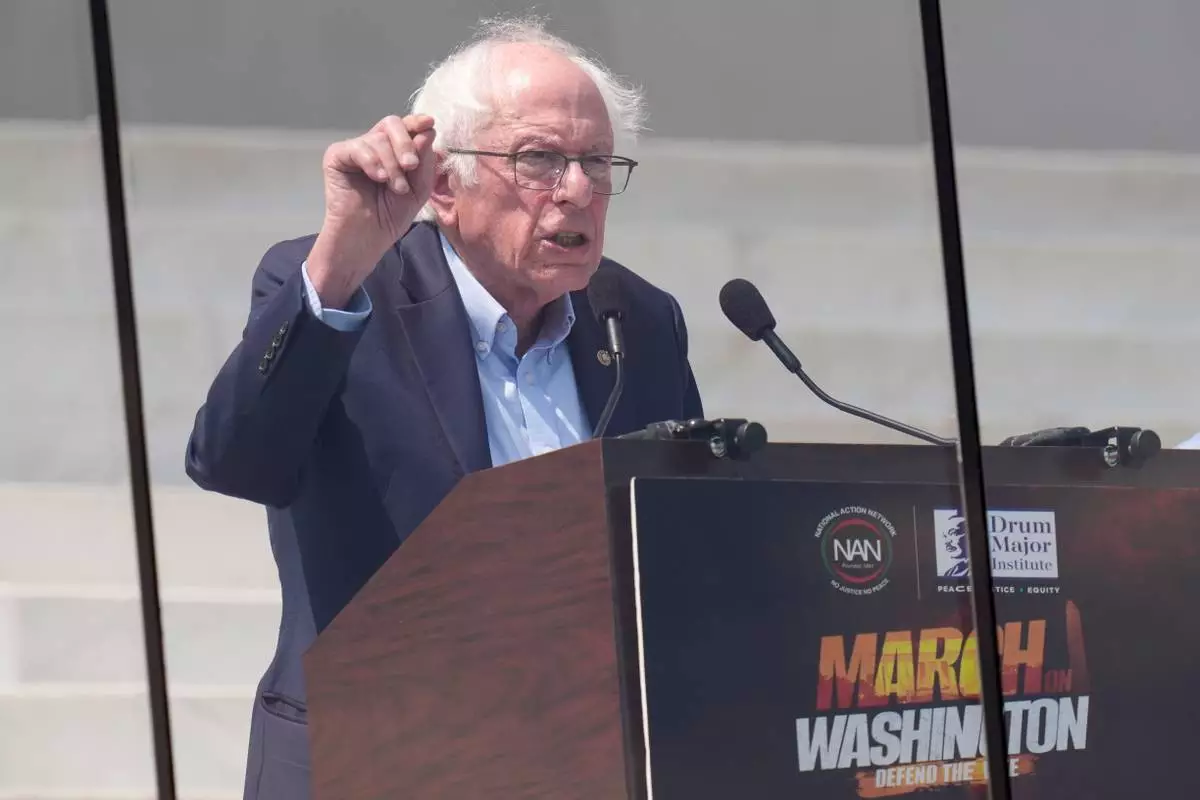
Sen. Bernie Sanders speaks during the March on Washington rally at the Lincoln Memorial on the National Mall, Friday, Aug. 28, 2026 in Washington. (AP Photo/Manuel Balce Ceneta)
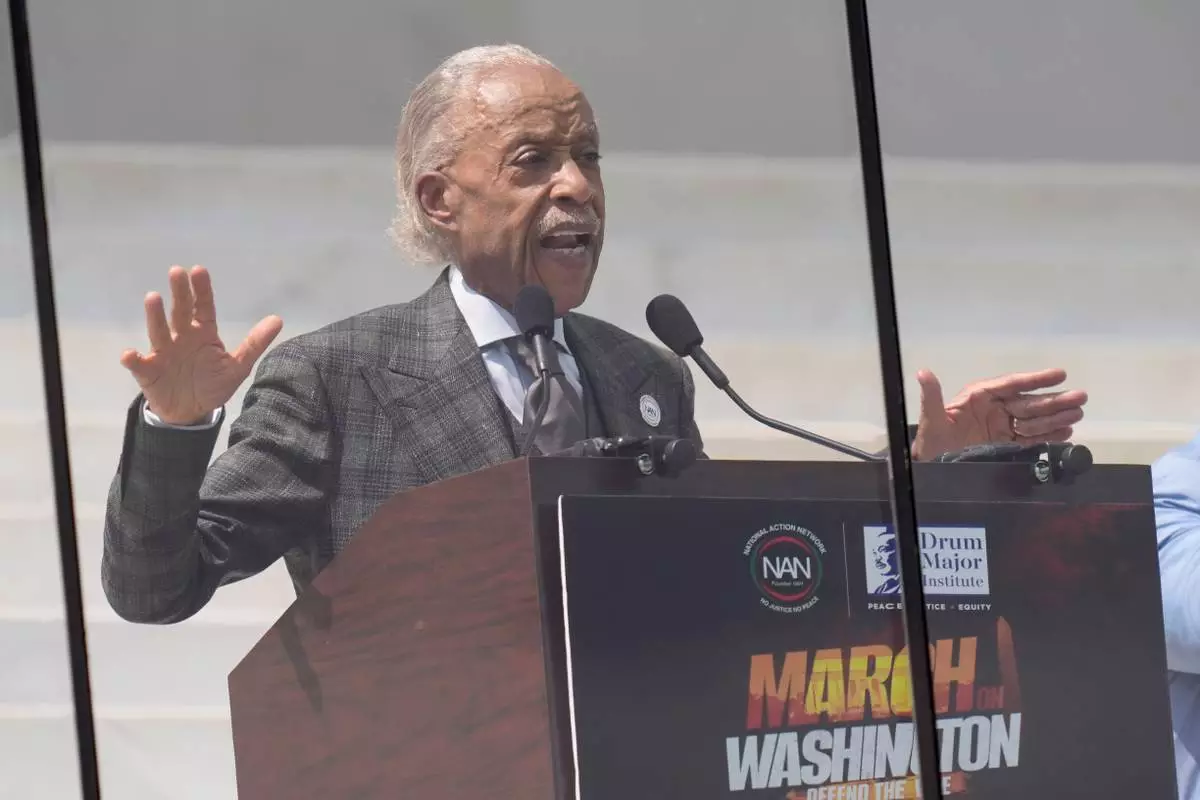
Rev. Al Sharpton speaks during the March on Washington rally at the Lincoln Memorial on the National Mall, Friday, Aug. 28, 2026 in Washington. (AP Photo/Manuel Balce Ceneta)
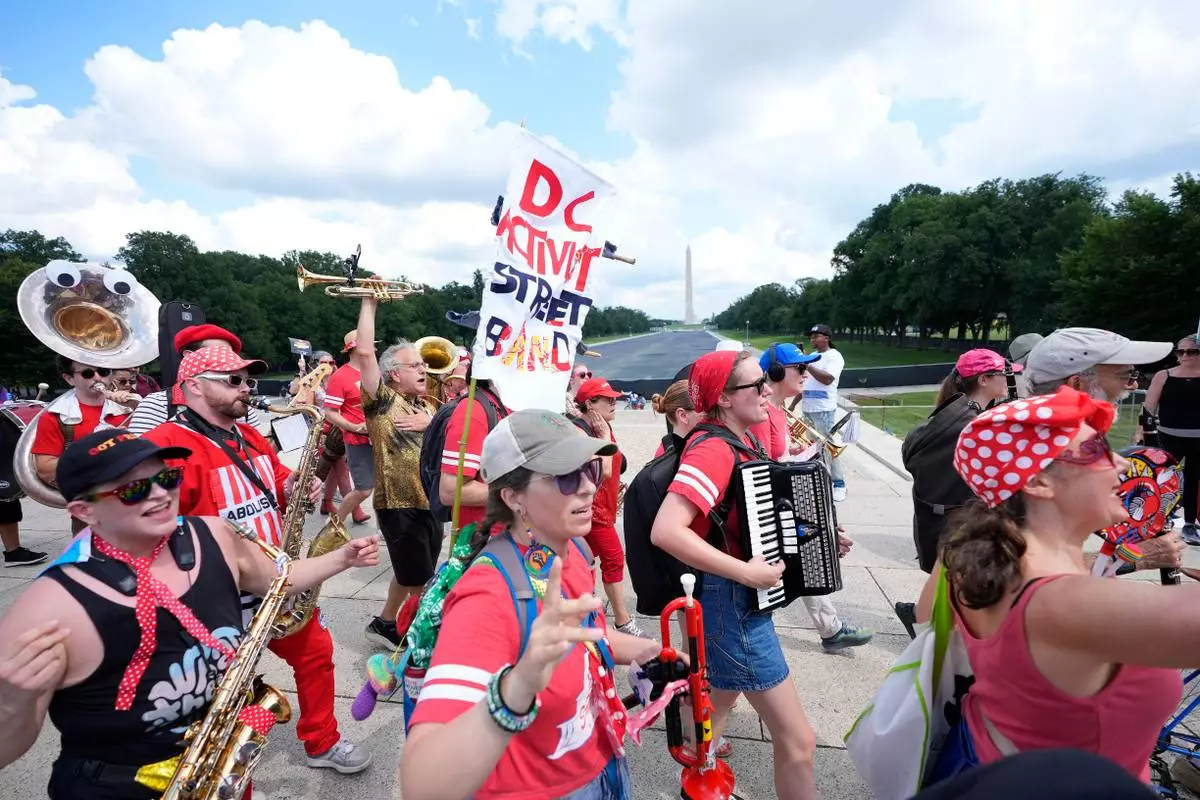
A group of local activist from Washington DC, demonstrating during the March on Washington rally at the Lincoln Memorial on the National Mall, Friday, Aug. 28, 2026 in Washington. (AP Photo/Manuel Balce Ceneta)
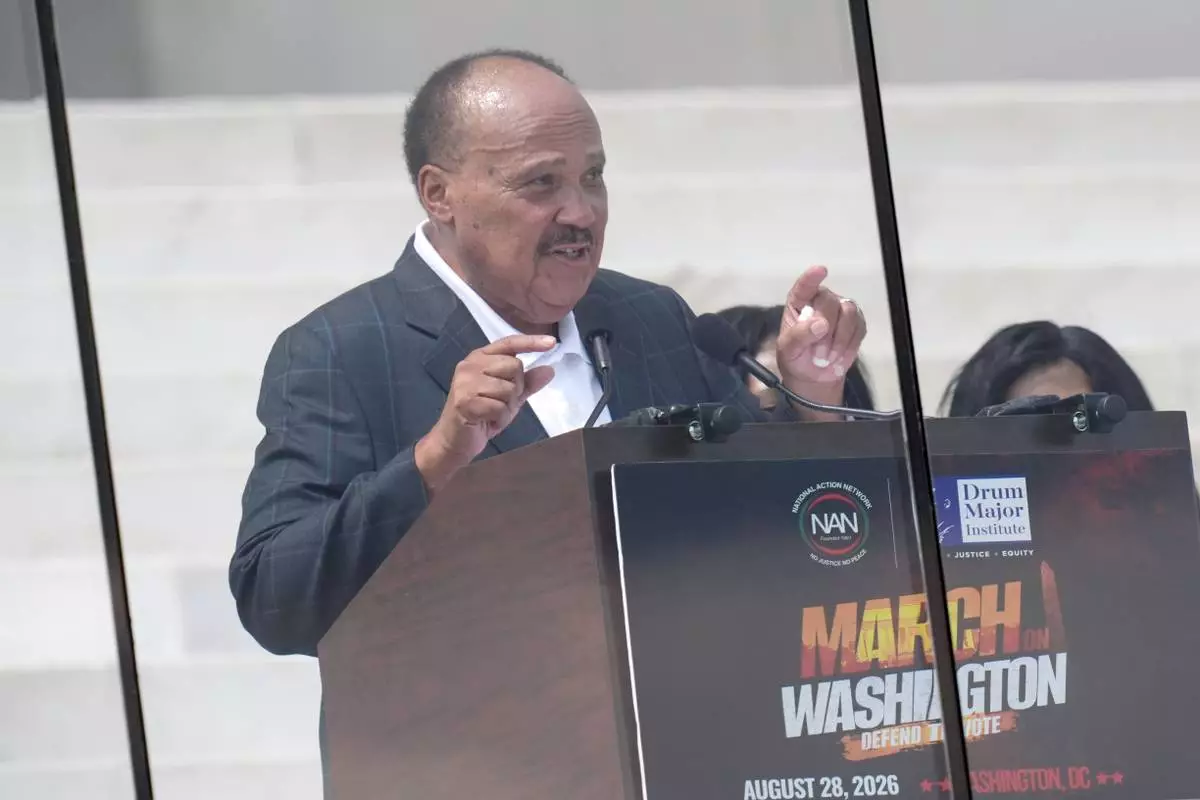
Martin Luther King III, speaks during the March on Washington rally at the Lincoln Memorial on the National Mall, Friday, Aug. 28, 2026 in Washington. (AP Photo/Manuel Balce Ceneta)
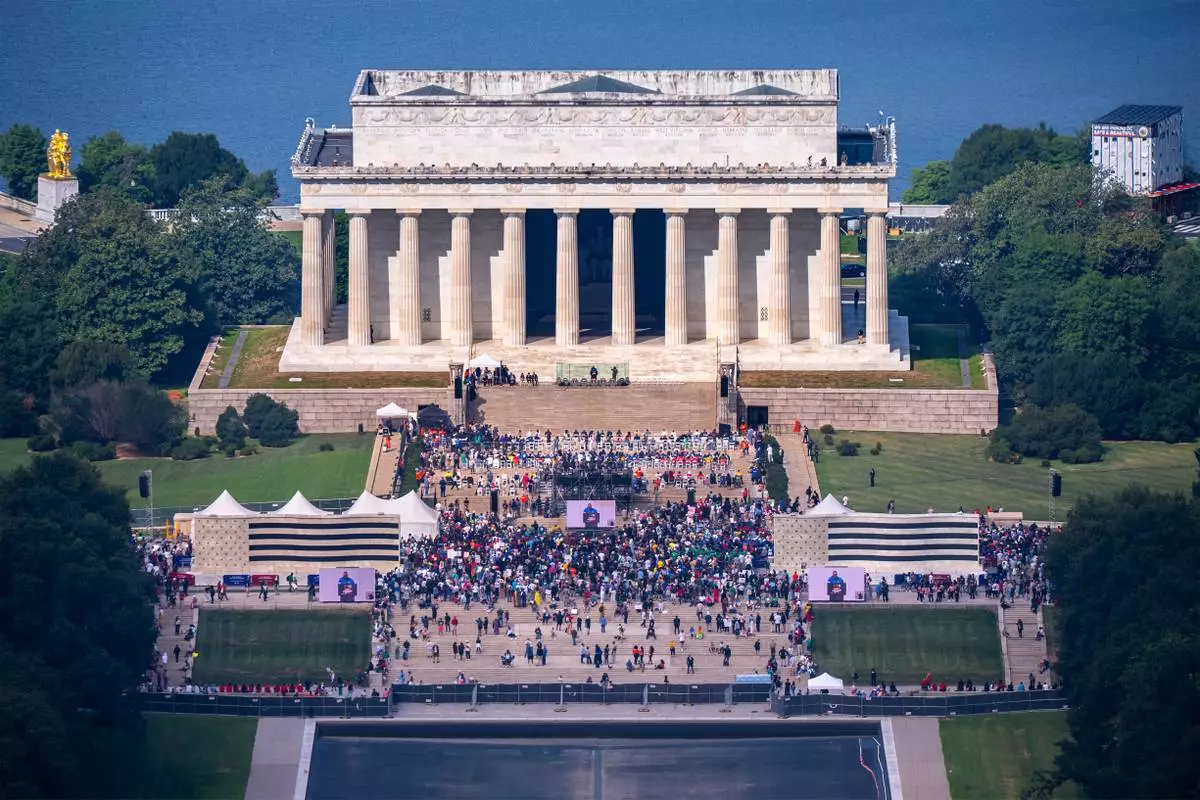
Activists rally at the Lincoln Memorial during the March on Washington, Friday, Aug. 28, 2026, in Washington.
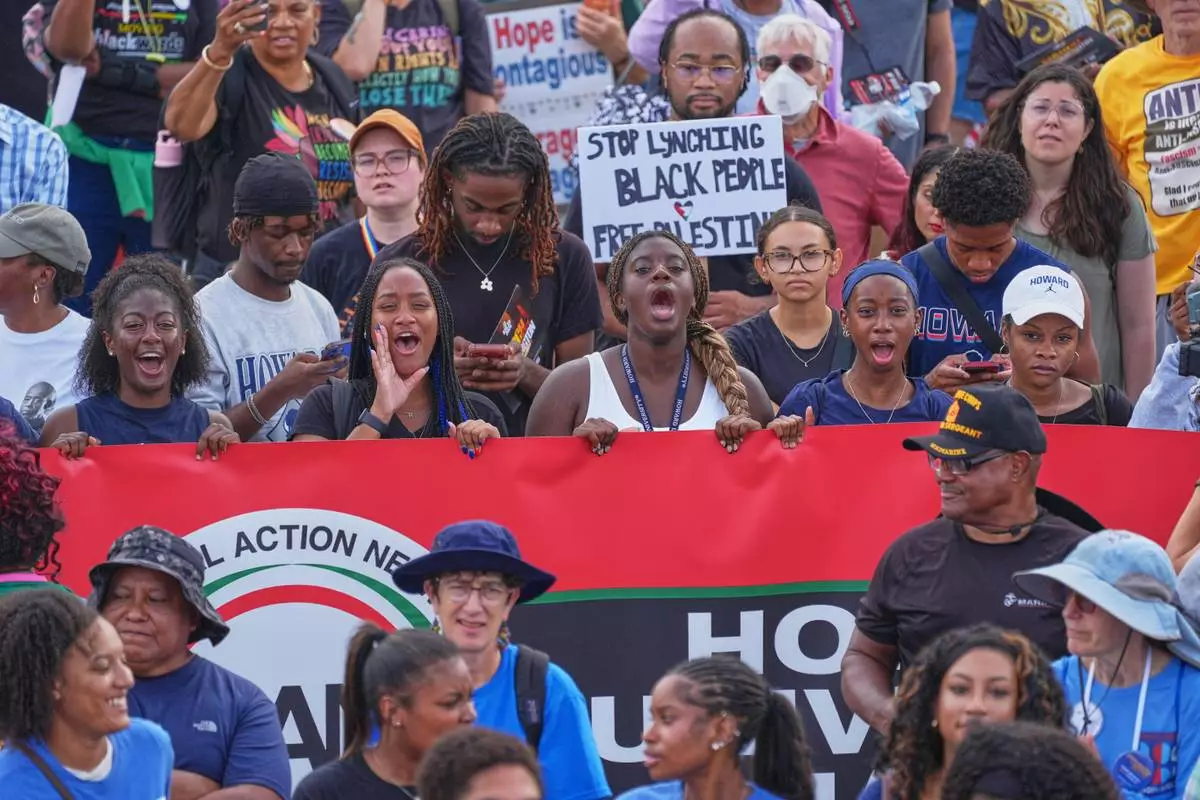
Demonstrators shout to speakers during the March on Washington, near the Lincoln Memorial, Friday, Aug. 28, 2026, in Washington. (AP Photo/Mariam Zuhaib)
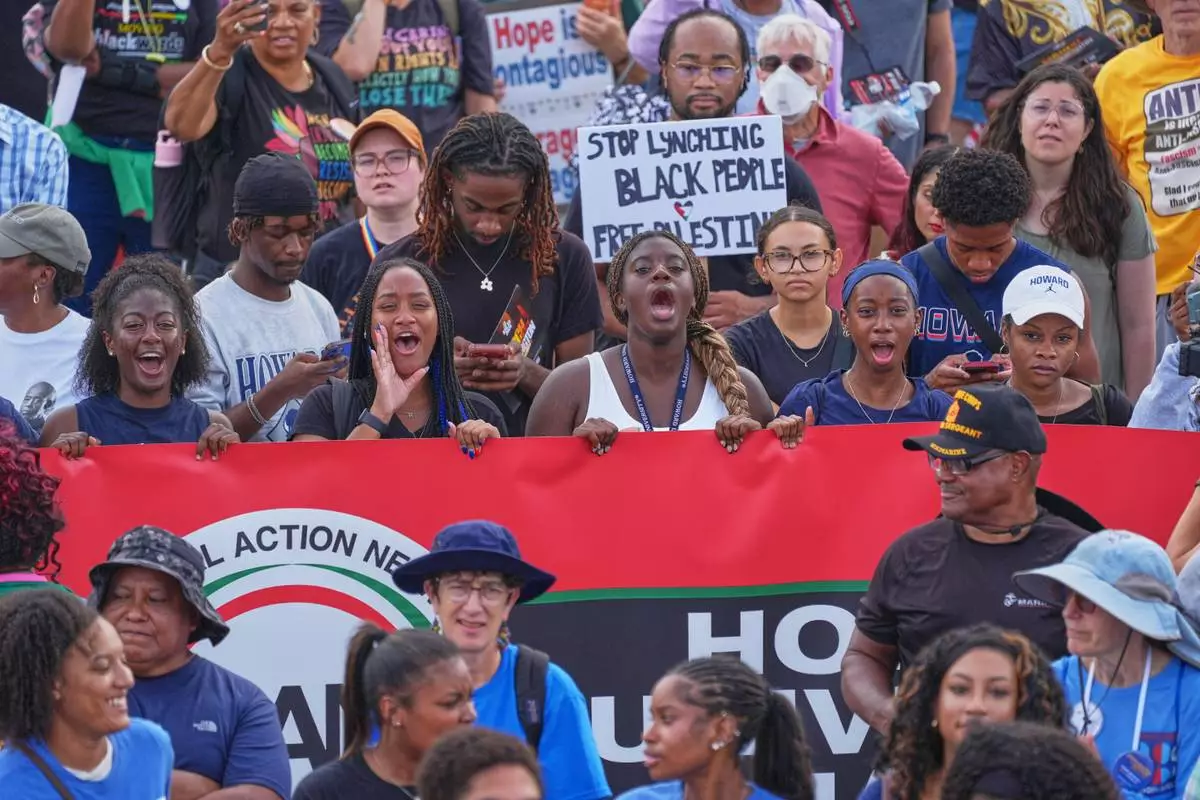
Demonstrators shout to speakers during the March on Washington, near the Lincoln Memorial, Friday, Aug. 28, 2026, in Washington. (AP Photo/Mariam Zuhaib)
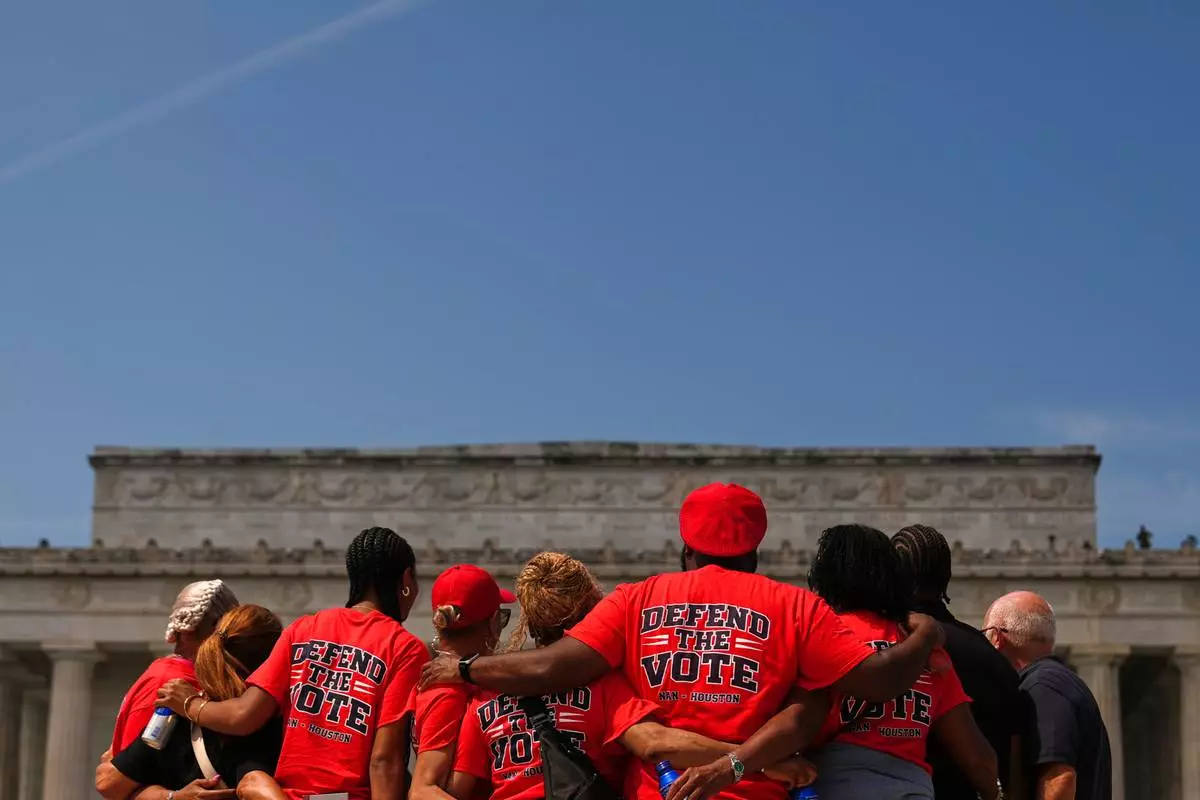
Demonstrators pose for a photo near the Lincoln Memorial during the March on Washington, Friday, Aug. 28, 2026, in Washington. (AP Photo/Julia Demaree Nikhinson)
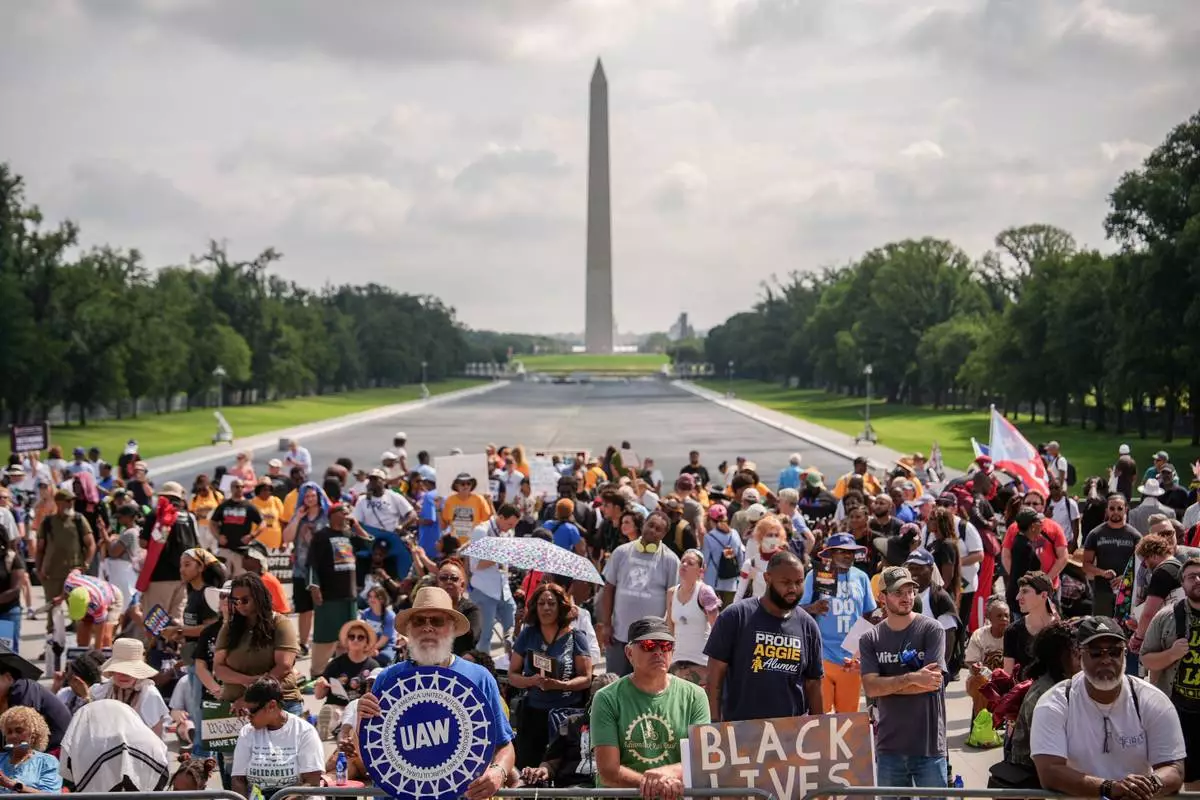
Demonstrators listen to speakers during the March on Washington, Friday, Aug. 28, 2026, near the Lincoln Memorial in Washington. (AP Photo/Julia Demaree Nikhinson)
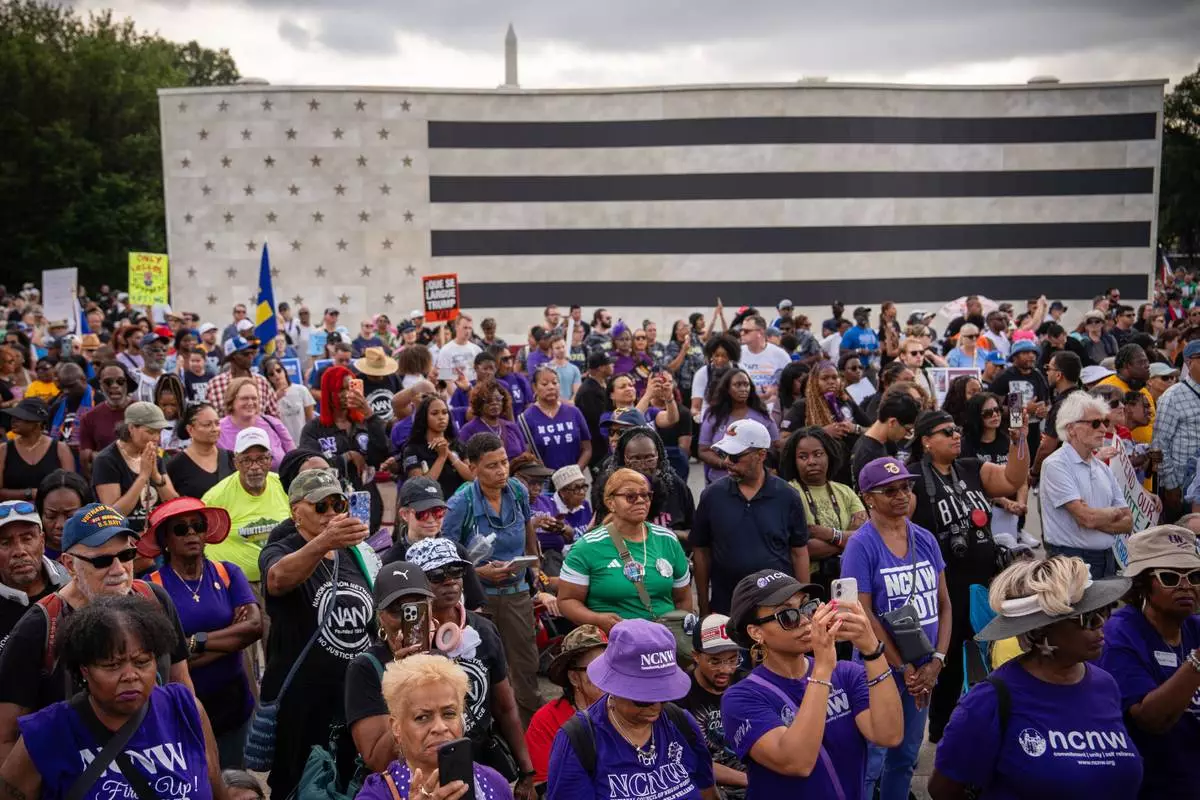
Demonstrators listen to speakers during the March on Washington, Friday, Aug. 28, 2026, near the Lincoln Memorial in Washington. (AP Photo/Julia Demaree Nikhinson)
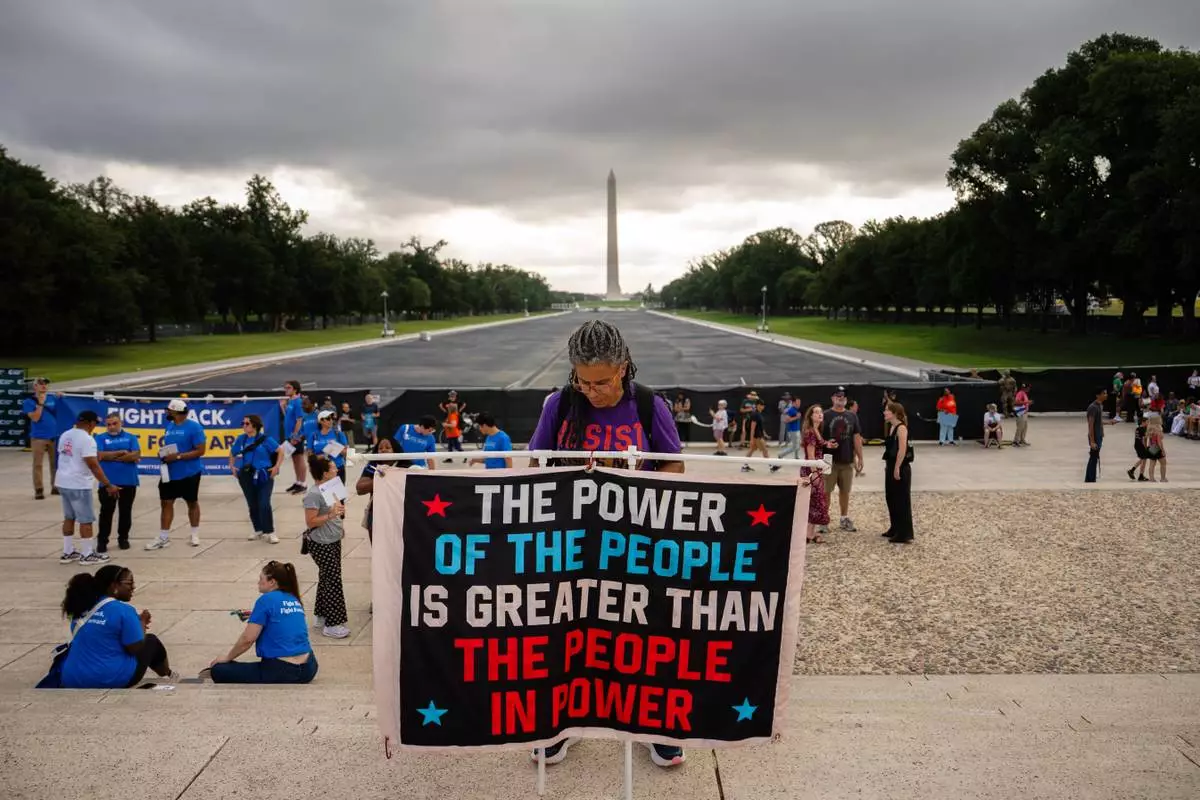
A demonstrator holds a sign in front of the Lincoln Memorial Reflecting Pool during the March on Washington, Friday, Aug. 28, 2026, in Washington. (AP Photo/Julia Demaree Nikhinson)
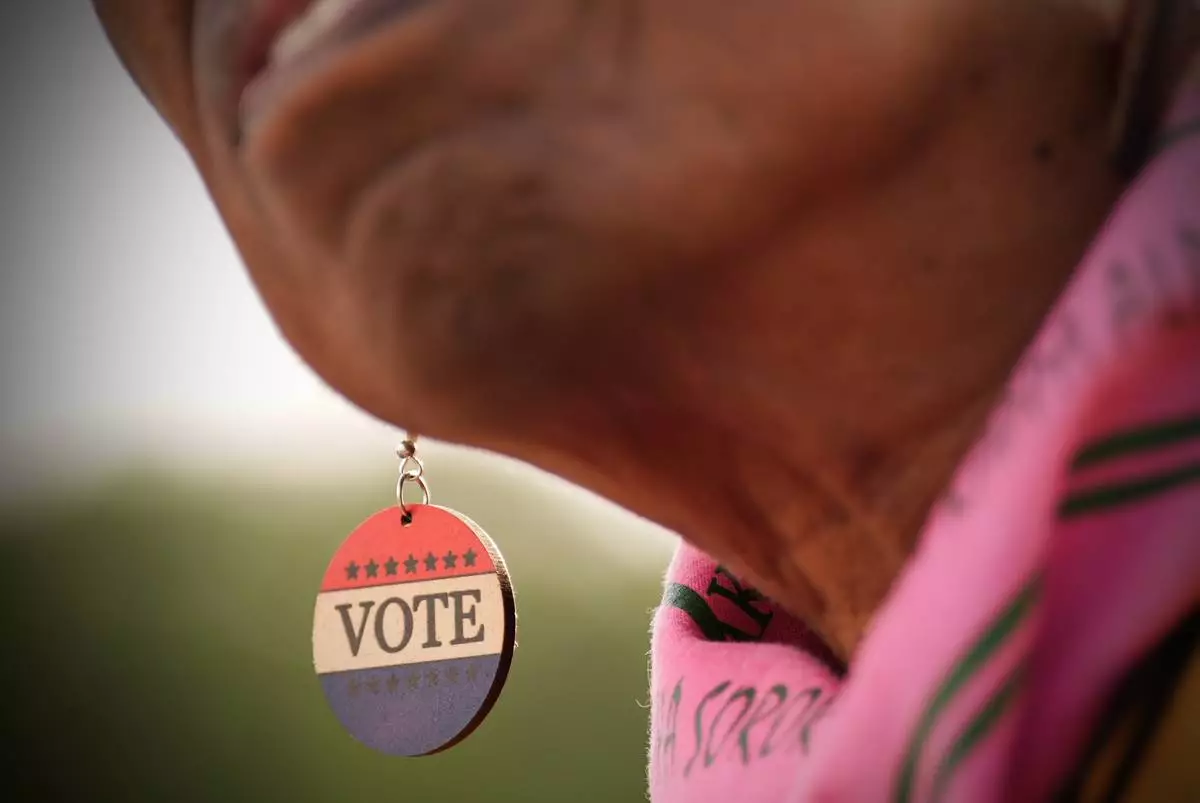
A demonstrator wears "Vote" earrings near the Lincoln Memorial before the March on Washington, Friday, Aug. 28, 2026, in Washington. (AP Photo/Julia Demaree Nikhinson)
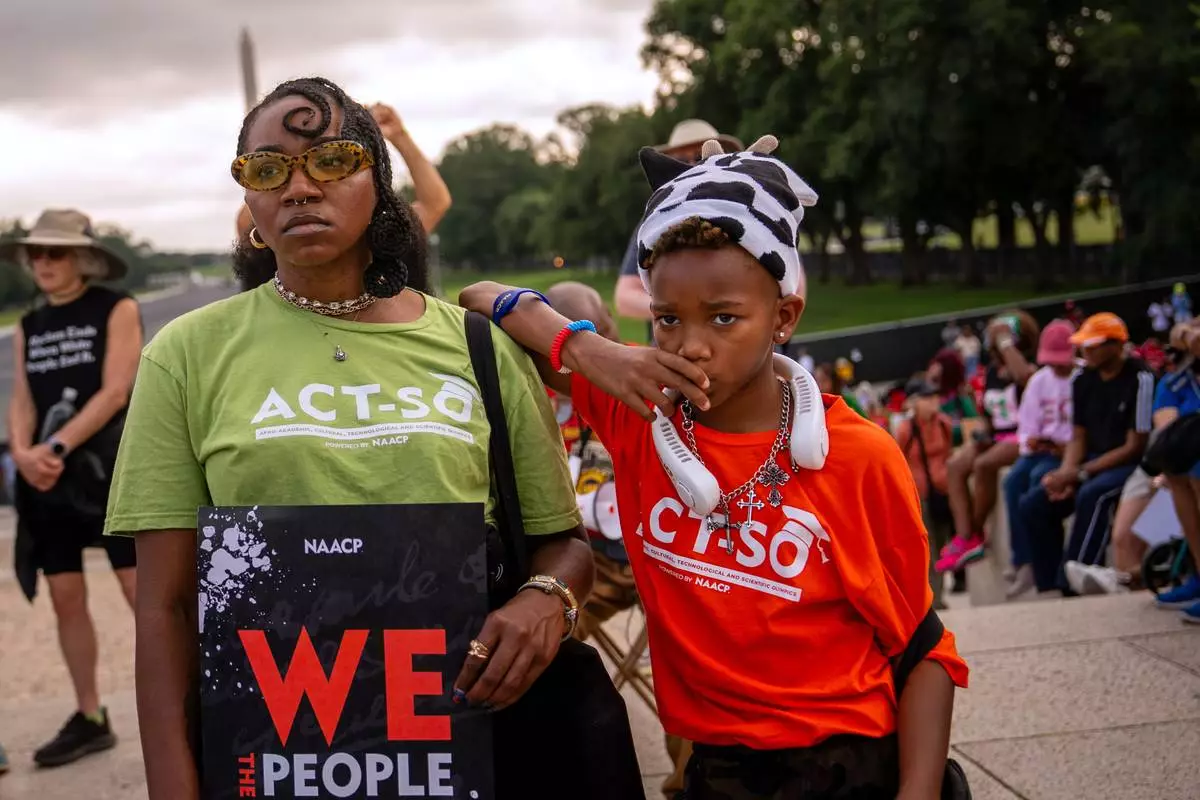
Demonstrators listen to speakers during the March on Washington, Friday, Aug. 28, 2026, near the Lincoln Memorial in Washington. (AP Photo/Julia Demaree Nikhinson)
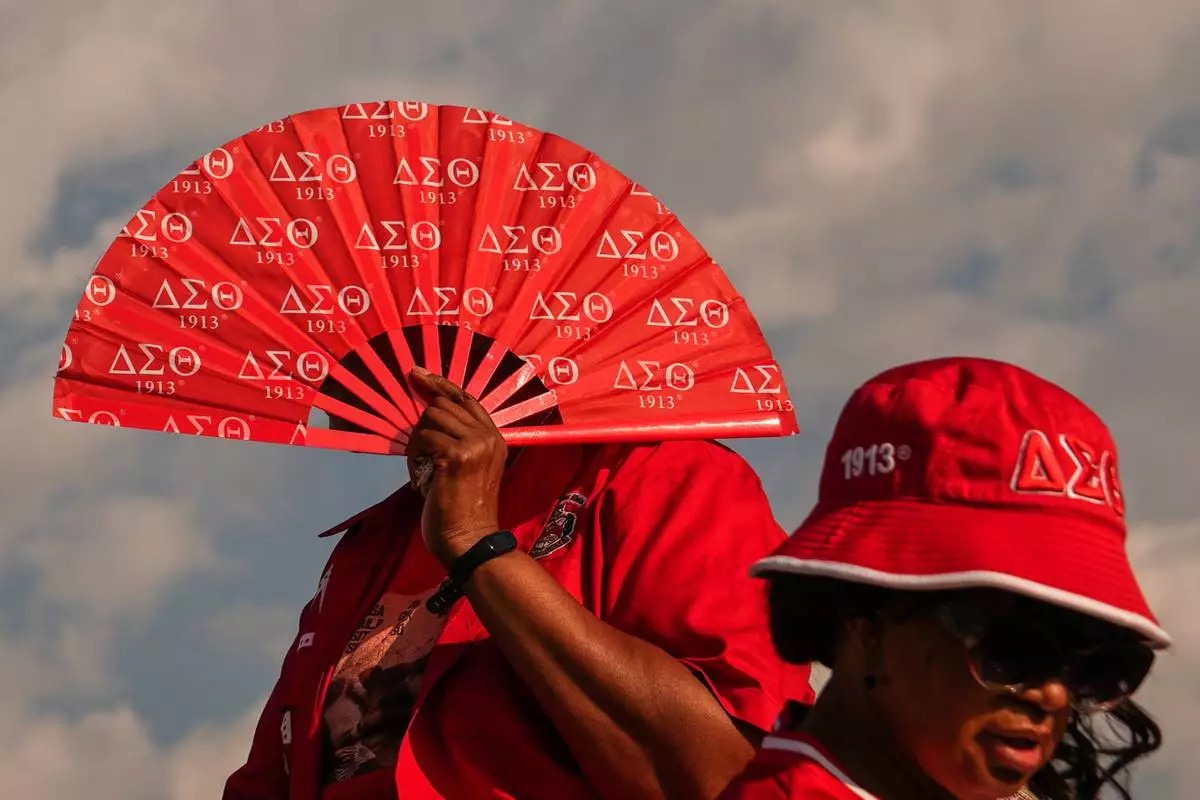
A demonstrator shields herself from the sun with a fan before the March on Washington, Friday, Aug. 28, 2026, near the Lincoln Memorial in Washington. (AP Photo/Julia Demaree Nikhinson)
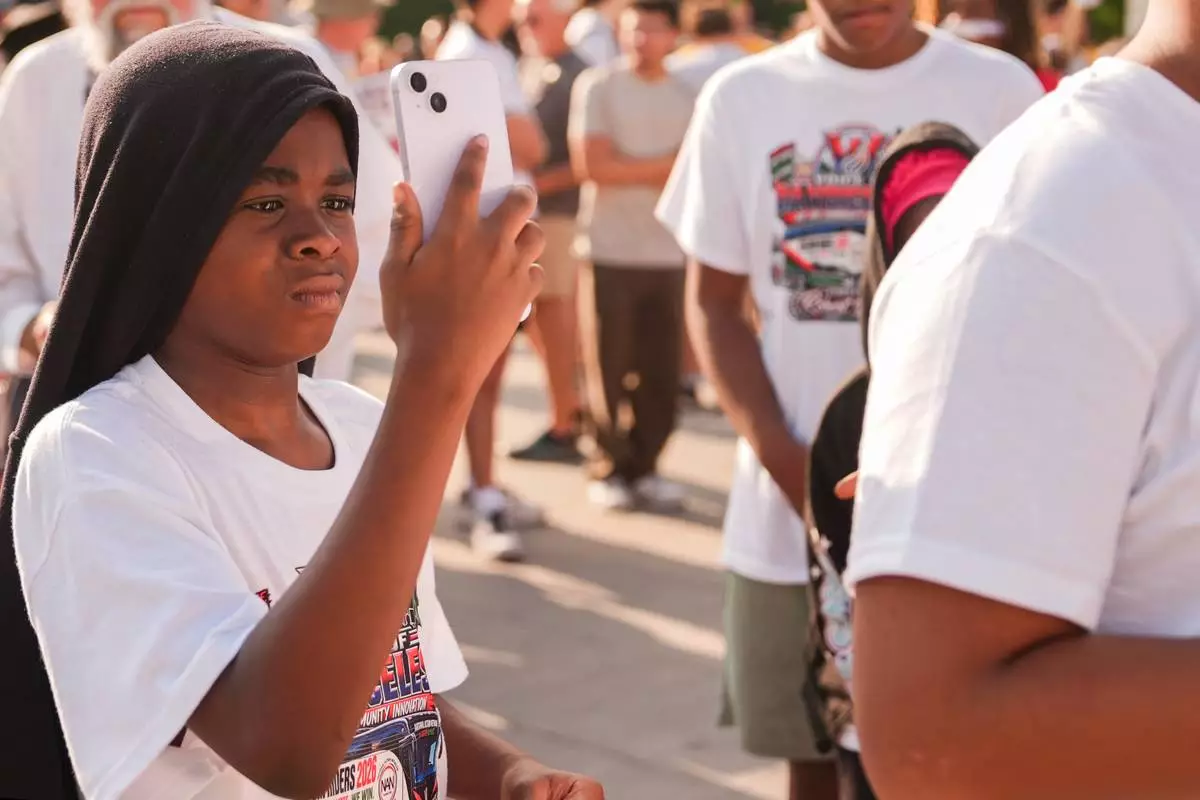
A young demonstrator takes photos near the Lincoln Memorial before the March on Washington, Friday, Aug. 28, 2026, in Washington. (AP Photo/Julia Demaree Nikhinson)
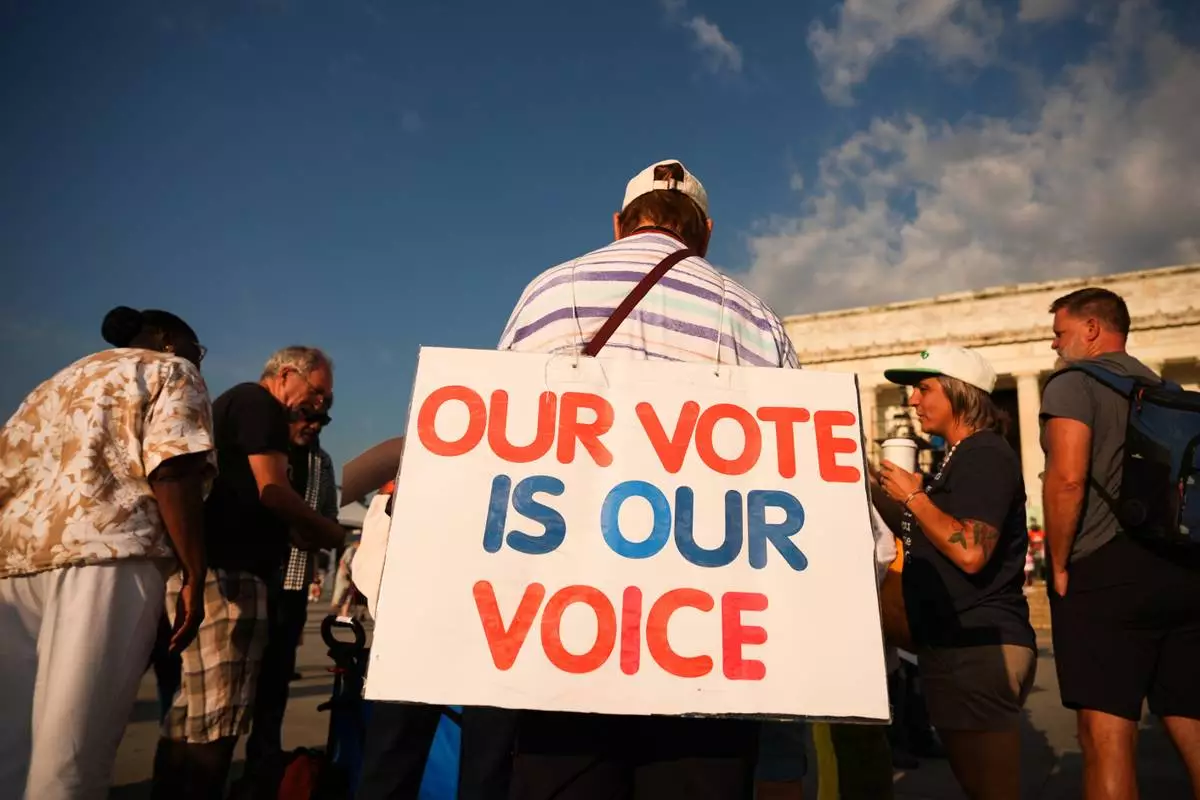
Demonstrators gather near the Lincoln Memorial before the March on Washington, Friday, Aug. 28, 2026, in Washington. (AP Photo/Julia Demaree Nikhinson)
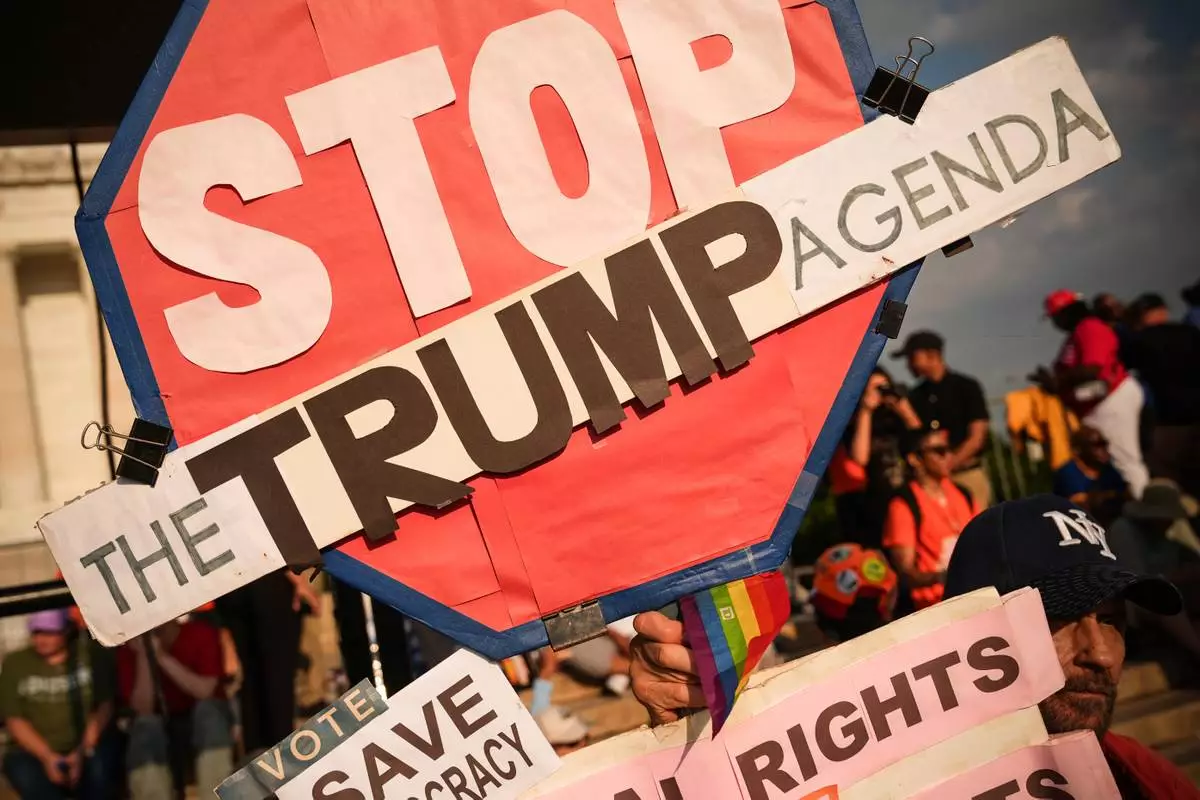
A demonstrator holds a sign near the Lincoln Memorial before the March on Washington, Friday, Aug. 28, 2026, in Washington. (AP Photo/Julia Demaree Nikhinson)
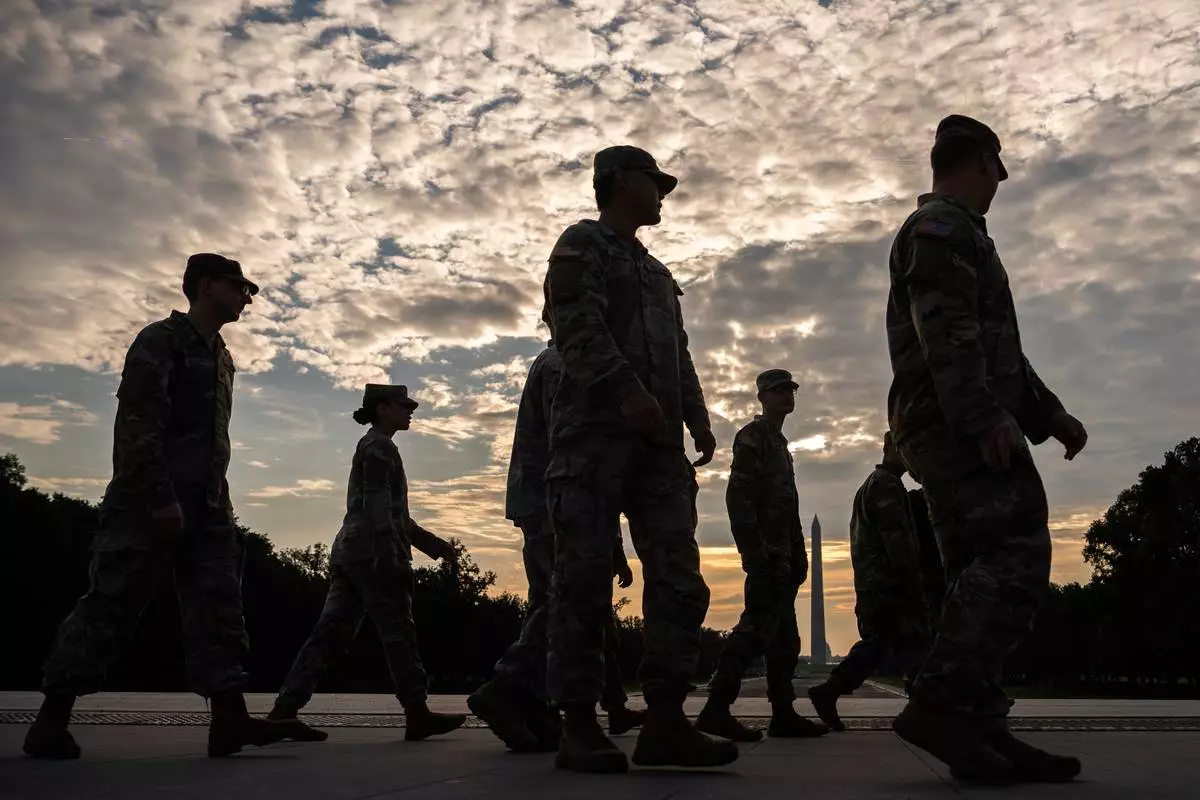
Members of the National Guard walk past the Lincoln Memorial Reflecting Pool before the March on Washington, Friday, Aug. 28, 2026, in Washington. (AP Photo/Julia Demaree Nikhinson)
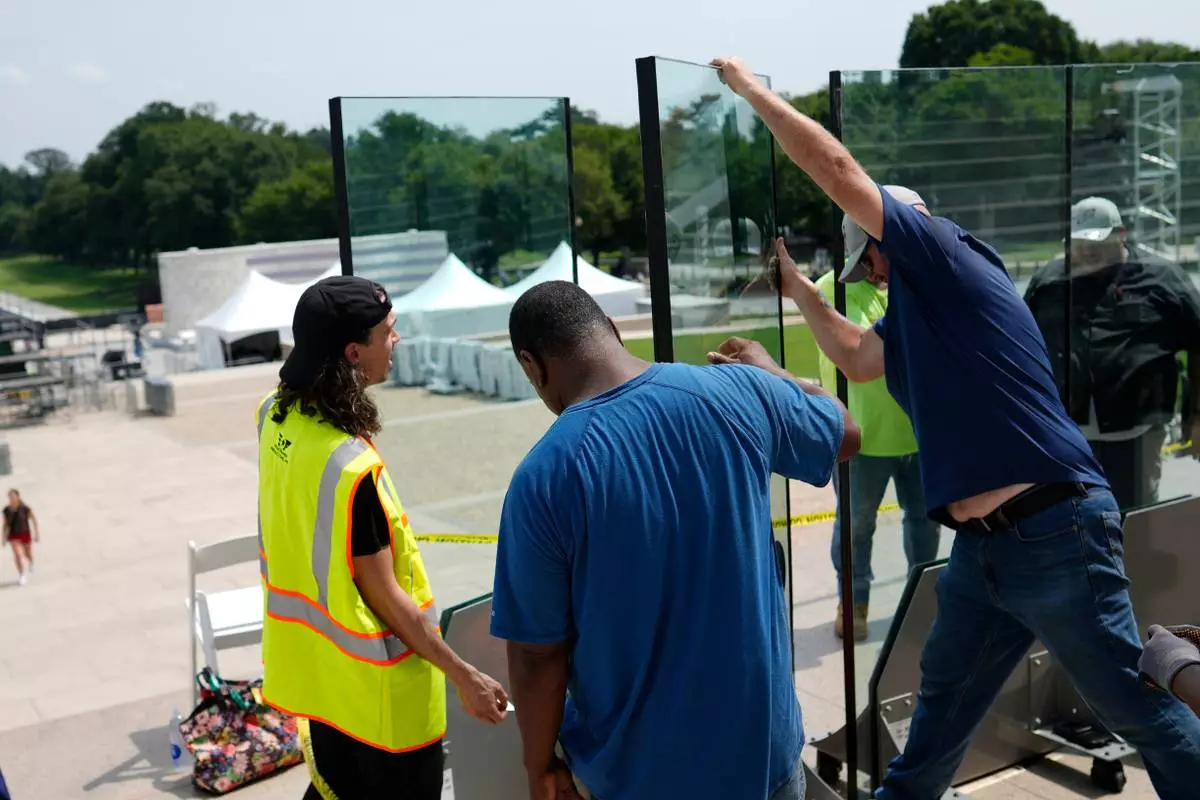
Workers installing bulletproof glass around the podium at the Lincoln Memorial in Washington in preparation are made ahead of tomorrow's anniversary of the March on Washington, Thursday, Aug. 27, 2026. (Photo/Pablo Martinez Monsivais)
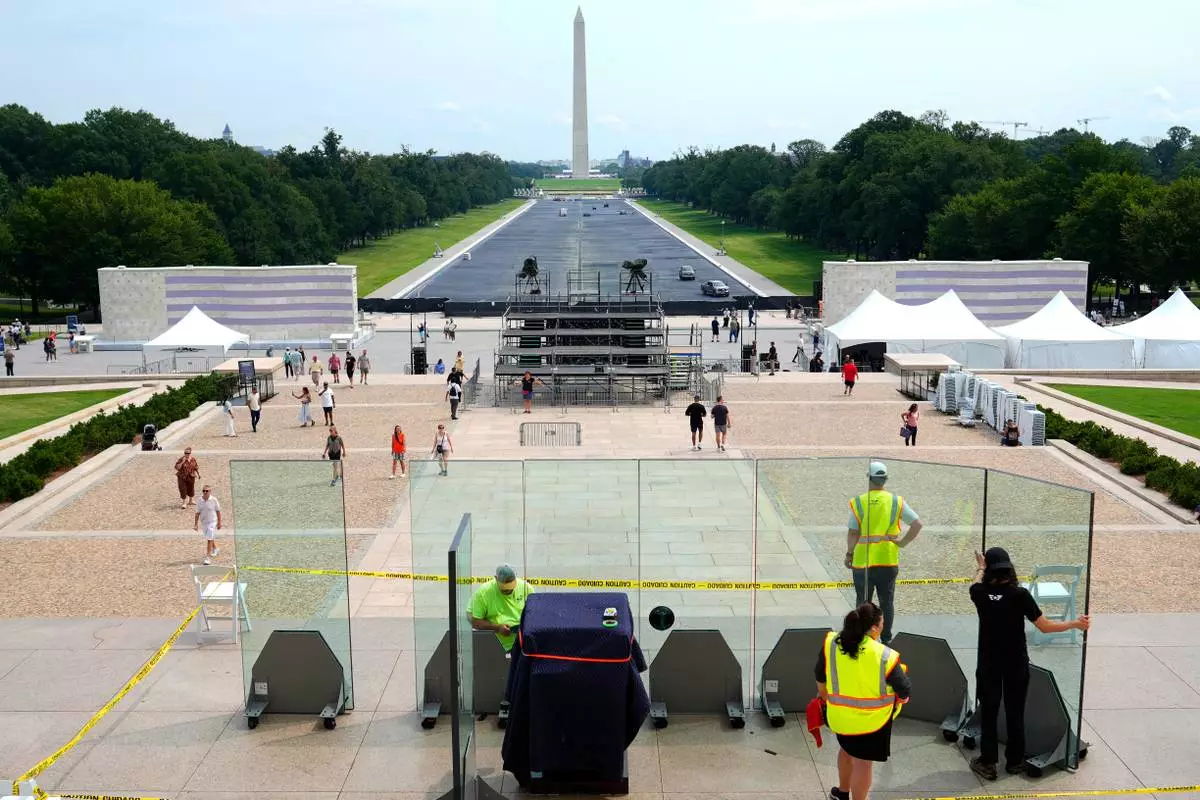
Workers installing bulletproof glass around the podium at the Lincoln Memorial in Washington in preparation are made ahead of tomorrow's anniversary of the March on Washington, Thursday, Aug. 27, 2026. (Photo/Pablo Martinez Monsivais)