PHNOM PENH, Cambodia (AP) — Cambodia, notorious for being a major center for international online scams, claimed Friday it no longer hosts any of the compounds where the lucrative cybercrime was carried out, although some remain skeptical.
The government’s Ad-Hoc Commission for Combating Online Scams, CCOS, claimed success for its crackdown at a Thursday meeting with about 50 representatives of foreign diplomatic missions and international organizations led by Senior Minister Chhay Sinarith, who heads the anti-scam agency, it said in a statement issued Friday.
“This follows the complete eradication of large-scale online scam operations, strict legal actions against perpetrators, networks and involved officials, alongside the systematic establishment of a cybersecurity legal framework,” it said.
Chhay Sinarith's claims were met with both skepticism and guarded optimism from independent groups that have tracked the scam compounds, which are infamous not only for bilking billions of dollars from people all over the world, but also for carrying out human trafficking.
Thousands of foreign nationals, who are employed to run “romance” and cryptocurrency scams to swindle victims, are often recruited with false job offers and then forced to work in conditions of near-slavery.
Such scams caused estimated combined losses of $88.3 billion to $114.1 billion in 2025, said a report in July by the United Nations Office on Drugs and Crime.
“The strong confidence placed in the (Cambodian) government’s assertion that all scamming operations in Cambodia have been eradicated is severely misplaced,” Mark Taylor, an independent international anti-trafficking consultant and former head of an anti-trafficking program in Cambodia, told The Associated Press.
“There are credible indicators that significant scamming operations continue and that recruitment of foreign workers into Cambodia for scamming work continues."
Blue Dragon Children’s Foundation, a Vietnam-based anti-human trafficking organization, took more of a wait-and-see attitude.
“There is no doubt that some of Cambodia’s criminal compounds used for online scamming have closed,” said Michael Brosowski, the group’s founder and strategic director, citing a drastic decrease in calls from people who have been trafficked, although the calls have not stopped.
“We hope that the Cambodian government will keep its commitment to close down these compounds and give greater protection to victims of this crime."
Chhay Sinarith said that from July 2025 to Aug. 20, 2026, law enforcement forces investigated 793 suspected scam locations and raided 624 sites, while detaining nearly 30,000 suspects representing 39 nationalities.
Cambodian authorities rescued and deported 58,266 foreign nationals, he said, and 3,477 criminal suspects from 29 nationalities were arrested and placed in pretrial detention.
The crackdown was highlighted by the takedown of two alleged kingpins of the illicit trade, Chen Zhi and Li Xiong, influential Chinese businessmen who had also become Cambodian citizens and were extradited earlier this year after their arrests.
Cambodian lawmakers unanimously adopted a new law in March targeting online scam operations with sentences of up to life in prison, following a government pledge to shut down the centers by the end of April.
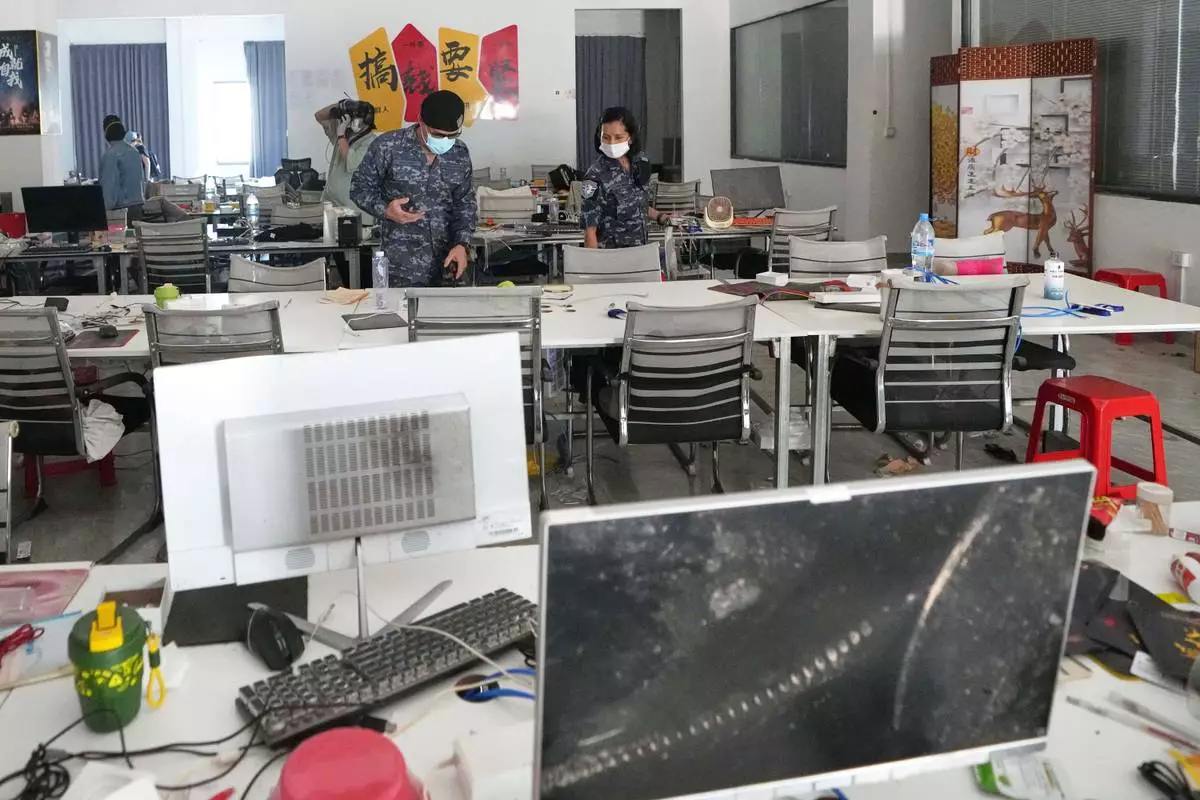
FILE - Thai soldiers inspect a work station at the scam compound in O'Smach, Cambodia, April 7, 2026. (AP Photo/Sakchai Lalit, File)
WASHINGTON (AP) — Thousands of protesters are rallying Friday on the National Mall in support of voting rights and racial justice ahead of the midterm elections, following a wave of changes to voting laws and redistricting that civil rights groups have condemned as detrimental to Black Americans.
The 2026 “Defend the Vote” March on Washington, organized by the Rev. Al Sharpton and Martin Luther King III, echoes the Rev. Martin Luther King Jr.'s 1963 march. The event follows the U.S. Supreme Court’s landmark April decision in Louisiana v. Callais that reinterpreted key provisions of the Voting Rights Act of 1965, allowing Southern states to redraw their congressional maps in a way that erodes equal representation in Black communities.
“We’ve been doing these marches for years, but this is probably the most important because this is the first year we are marching that the voting rights bill has been nullified by the Supreme Court,” Sharpton, founder of the National Action Network, said in an interview with The Associated Press.
This year’s march, which Sharpton's group is co-hosting with King's Drum Major Institute, a progressive think tank and community action group, features dozens of speakers, including Sen. Bernie Sanders, I-Vt., Virginia Gov. Abigail Spanberger and Rep. Alexandria Ocasio-Cortez, D-N.Y.
Friday’s event harkens back to King Jr.’s historic March on Washington for Jobs and Freedom in 1963, when more than 200,000 people gathered at the foot of the Lincoln Memorial. That march, an inflection point in the Civil Rights Movement, came at a fraught moment, when economic headwinds, civil unrest, political division and the Vietnam War bitterly divided Americans.
King III told the AP that the work of the Civil Rights movement “is further eroding” in the wake of the high court's April ruling.
He said his father would be disappointed with the state of the country, but current civil rights advocates should be undaunted.
“Had he lived, we’d be on a totally different trajectory,” the younger King said. “These would not be issues; they would have been resolved. I don’t think he would be surprised because he understands our history and understands those who are trying to retain power. But the challenge is challenging our communities to engage even more.”
Ray Turner, a 65-year-old retiree from Maryland, sat Friday on the steps in front of the Lincoln Memorial. He came independently, carrying a sign that read “(Puny) Hands off our elections.”
Turner said he was “disturbed” by the Trump administration’s actions toward voting rights.
“The lies about the 2020 election being stolen continue to be sounded, even though they’ve been disproved,” Turner said, adding, “Now they’re trying to use this to prevent people who are legal citizens, legal voters, from voting.”
Bill Gruen, a 75-year-old former U.S. history teacher, attended the march in an Uncle Sam costume he created 50 years ago for class debates. Gruen said that while the rally was about voting rights, it was important to focus on what the Trump administration was doing, too.
“We got to focus on voting rights, and Trump’s desire to save America for himself as opposed to itself,” Gruen said.
Sharpton said the Trump administration’s immigration policy for Haitians and white South Africans, as well as cuts to social programs like Medicaid and the Affordable Care Act’s health subsidies, are unifying policies for this year's diverse march attendees. But the redistricting efforts by Republican-led states set to reduce the number of Black lawmakers in Congress loom large.
“This march is about people who refuse to be counted out. When the courts and the legislature broke apart District 6, they did not just redraw lines,” Rep. Cleo Fields, D-La., said in a texted statement. “They told hundreds of thousands of Black families from Baton Rouge up through the Delta that their voice could be taken away at any moment.”
Fields was the central character in the Supreme Court decision that hollowed out the Voting Rights Act of 1965. The court ruled that his district, created just one term ago to permit a second majority-Black district in a state where Blacks make up 33% of the population, was unconstitutional because it relied too heavily on race.
The court has held that maps can be redrawn for partisan reasons.
Louisiana's legislature rushed to redraw the district after the decision, reshaping Fields’ district to cluster it around predominantly white communities in the Baton Rouge area and southern Louisiana.
Fields has opted not to seek reelection to Congress and instead is pursuing a seat in the state Senate.
Rep. Shomari Figures, an Alabama Democrat whose majority-Black district was targeted by the state’s Republican-led redistricting effort, said the original voting rights fight required local movements, national figures, lots of coordination and strategy. He sees this year's march as a continuation of that legacy.
“My district includes Montgomery, which was the birthplace of it all. It started with a bus boycott in 1955 and that, ultimately, morphed into a broader struggle for civil rights and led to a more broad Civil Rights Movement,” Figures told the AP.
“It led to a Civil Rights Act, led to the Fair Housing Act, led obviously to the Voting Rights Act, and the voting rights movement,” Figures added.
Ahead of Friday, organizations participating in the march filed new claims in their federal lawsuit against President Donald Trump's executive order restricting mail-in voting. The Supreme Court cleared a path Monday for possible implementation of the order, though it remains unclear how much can be put in place before the midterms.
In an interview with AP, House Minority Leader Hakeem Jeffries said Democrats could still win a majority in the U.S. House despite GOP-led redistricting efforts in Southern states.
“We’re going to win all across the country, up and down the ballot,” Jeffries said. “We only have to flip about five or six seats, and that’s really what we’re going to do. It is a call to action.”
Associated Press writers Gary Fields in Washington and Kimberly Chandler in Montgomery, Alabama, contributed.
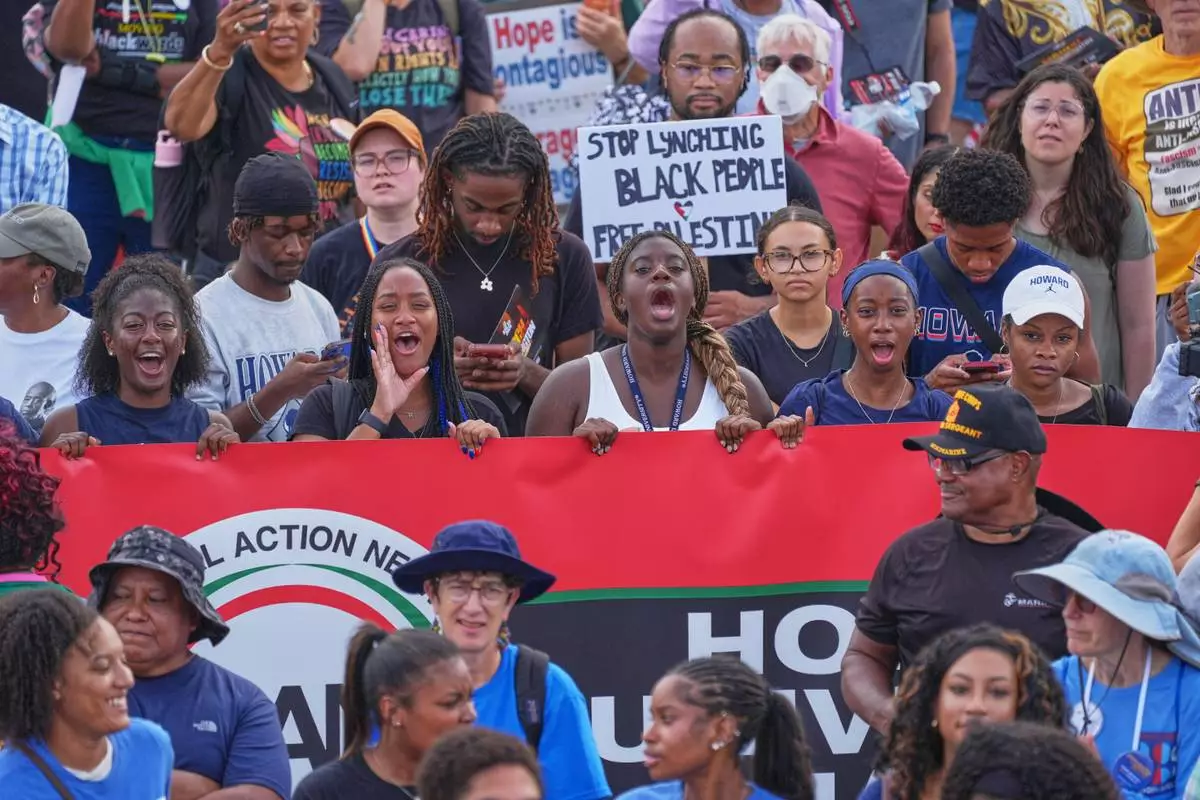
Demonstrators shout to speakers during the March on Washington, near the Lincoln Memorial, Friday, Aug. 28, 2026, in Washington. (AP Photo/Mariam Zuhaib)
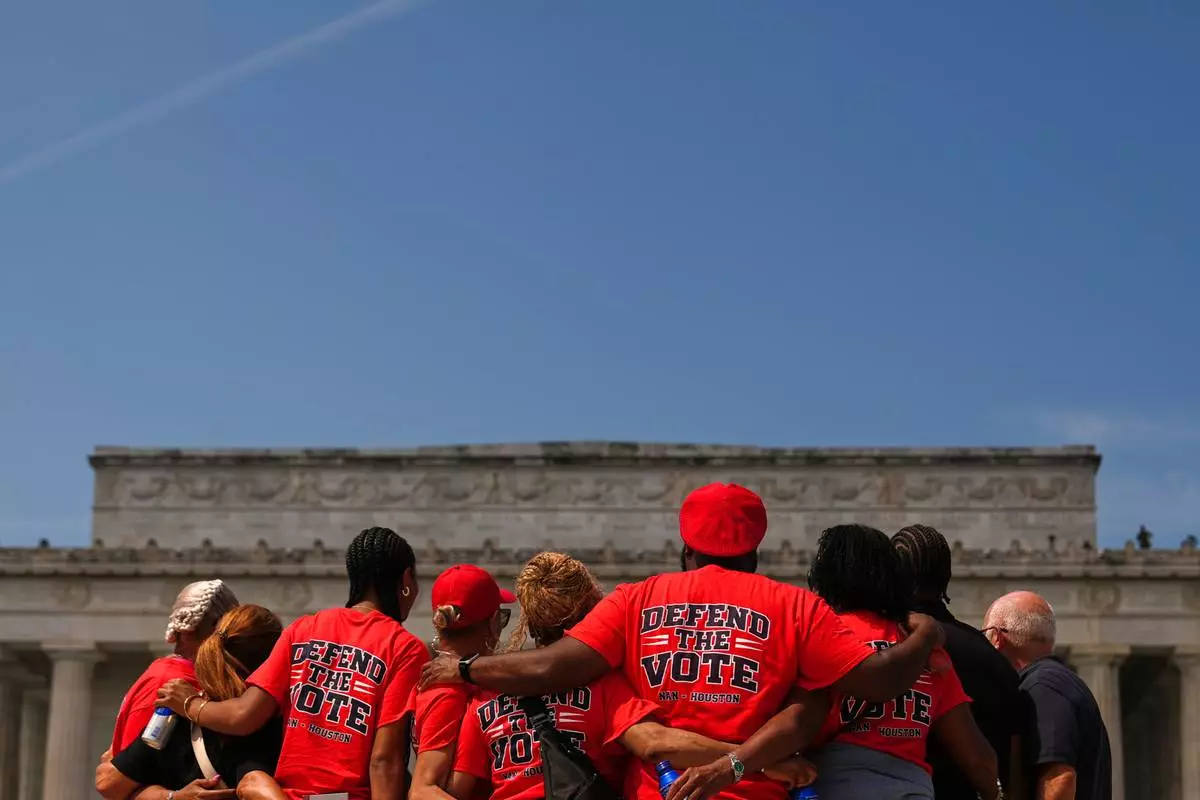
Demonstrators pose for a photo near the Lincoln Memorial during the March on Washington, Friday, Aug. 28, 2026, in Washington. (AP Photo/Julia Demaree Nikhinson)
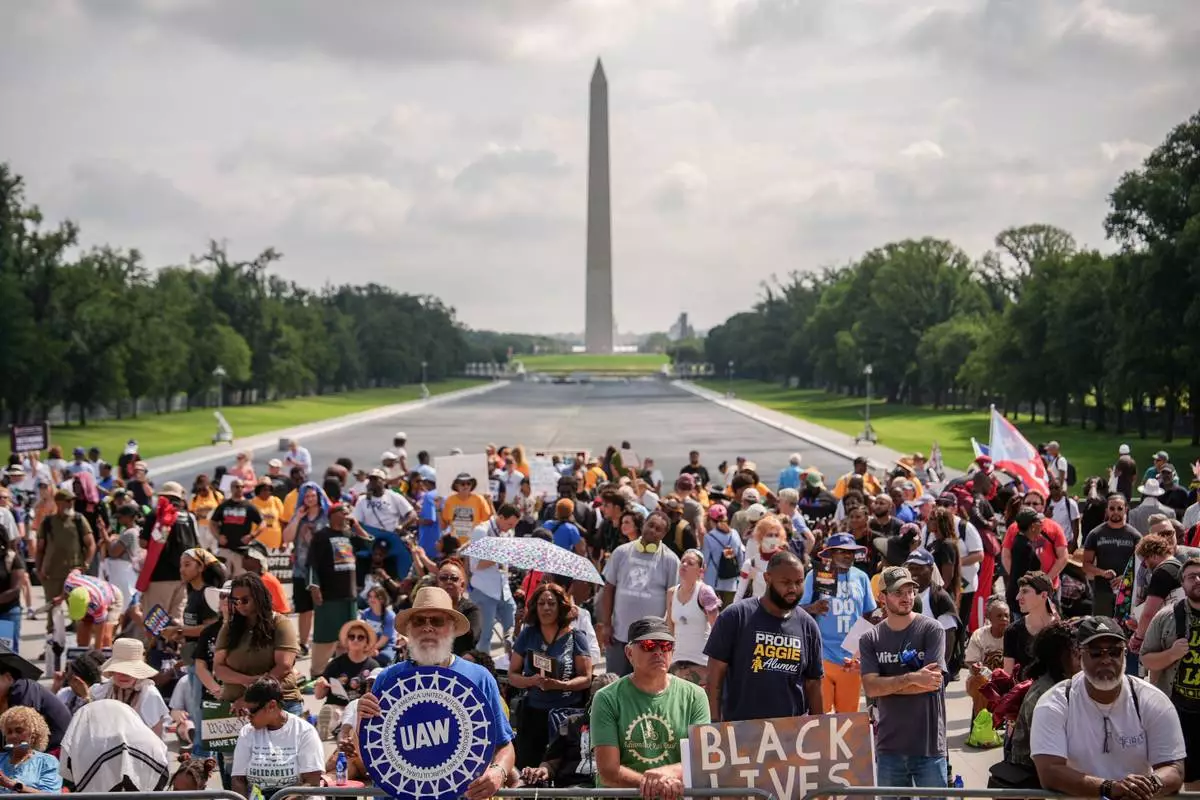
Demonstrators listen to speakers during the March on Washington, Friday, Aug. 28, 2026, near the Lincoln Memorial in Washington. (AP Photo/Julia Demaree Nikhinson)
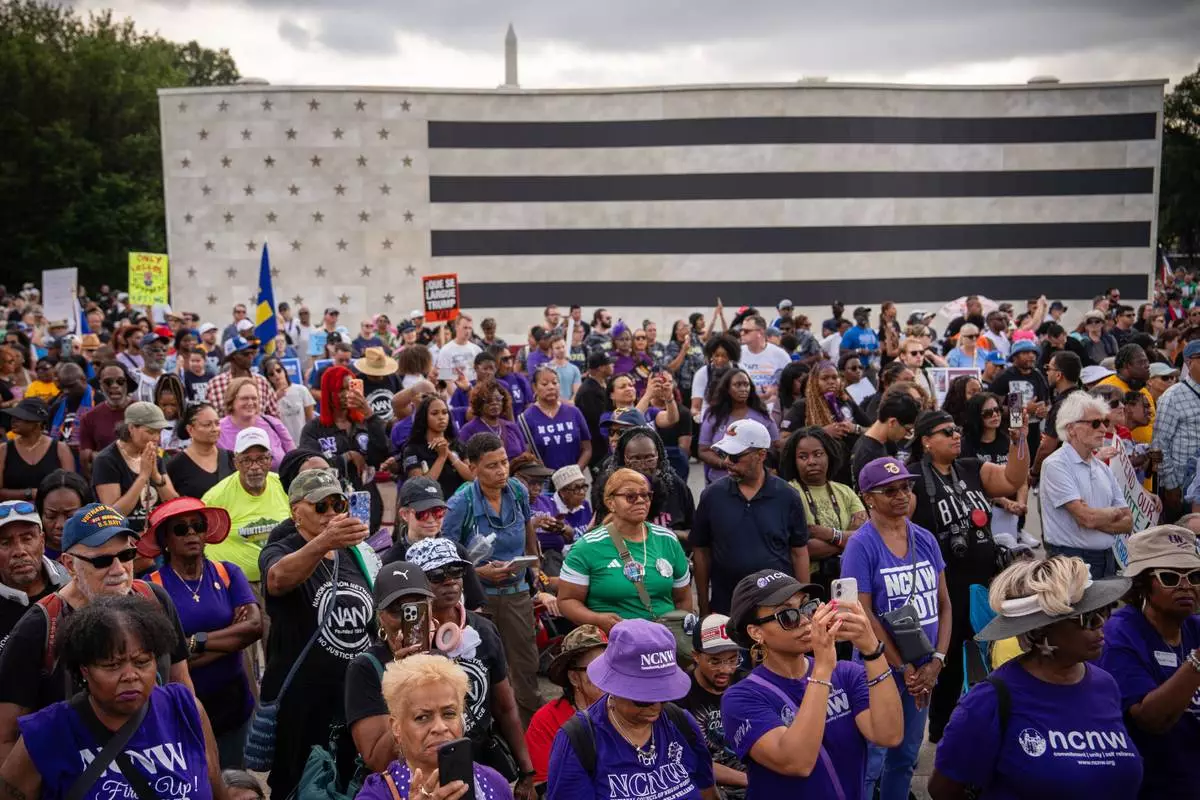
Demonstrators listen to speakers during the March on Washington, Friday, Aug. 28, 2026, near the Lincoln Memorial in Washington. (AP Photo/Julia Demaree Nikhinson)
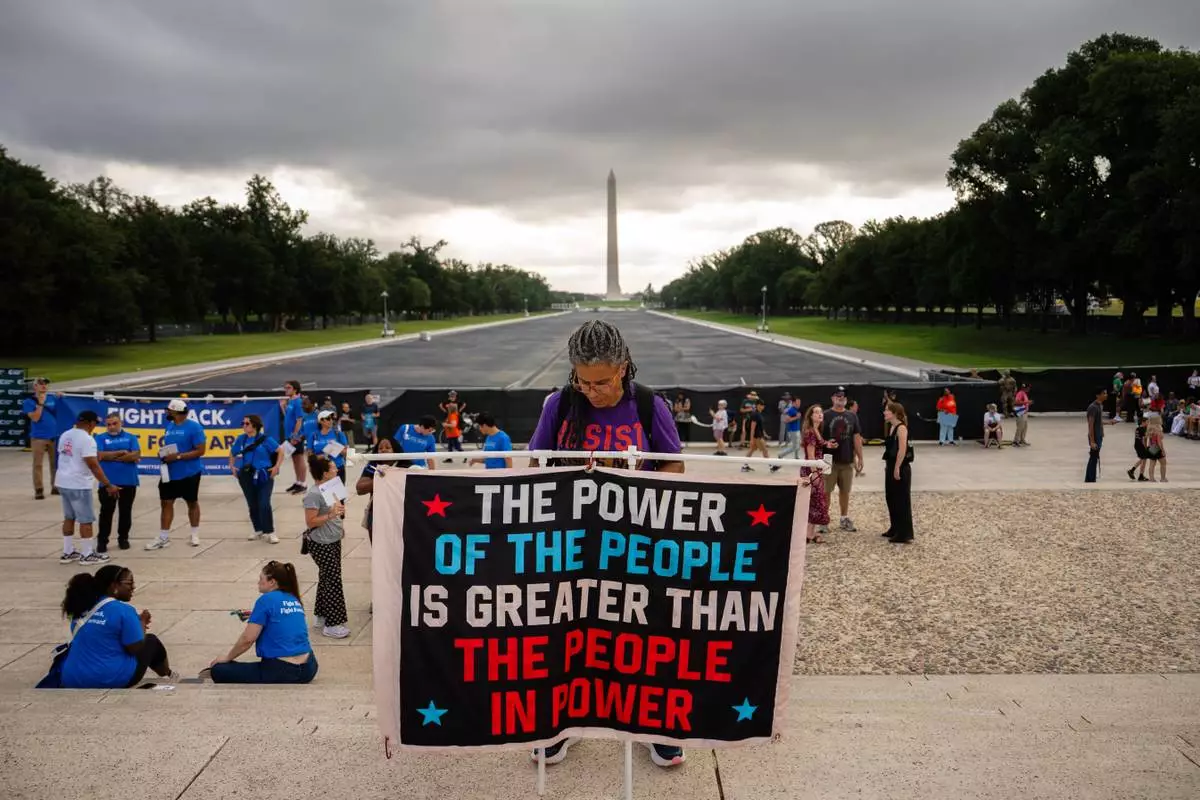
A demonstrator holds a sign in front of the Lincoln Memorial Reflecting Pool during the March on Washington, Friday, Aug. 28, 2026, in Washington. (AP Photo/Julia Demaree Nikhinson)
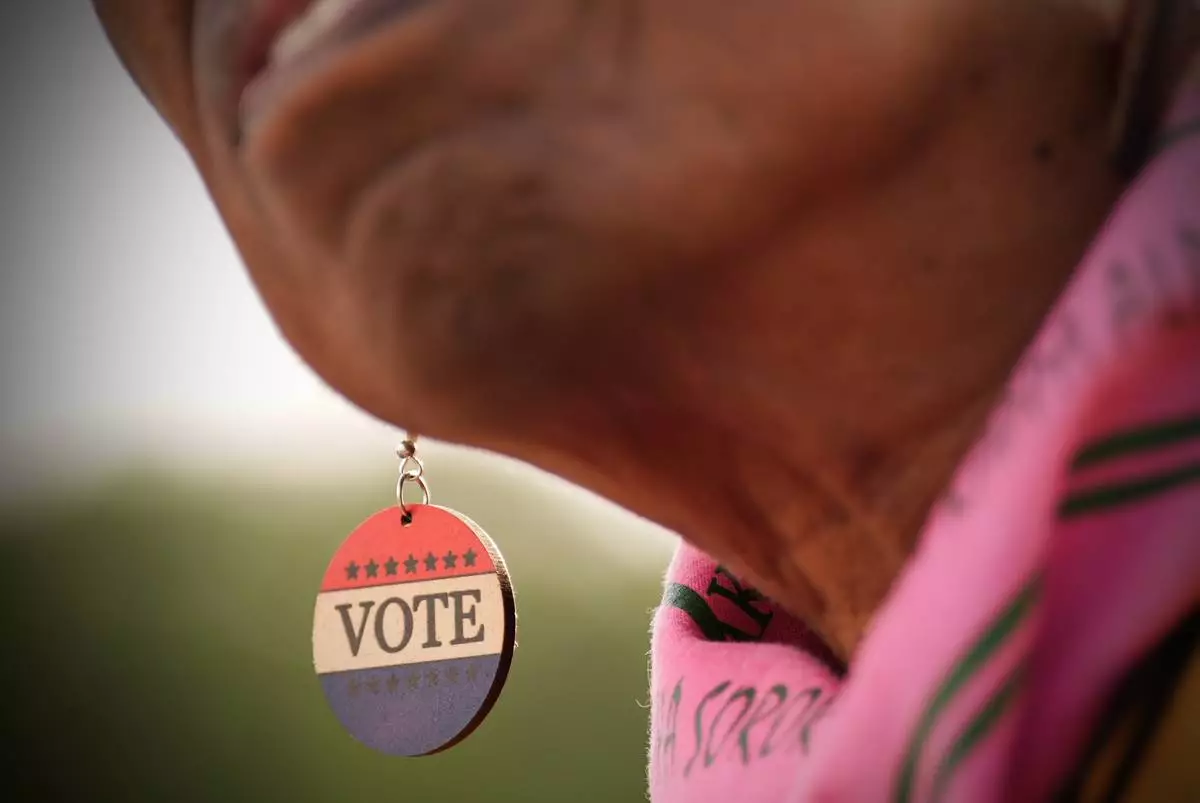
A demonstrator wears "Vote" earrings near the Lincoln Memorial before the March on Washington, Friday, Aug. 28, 2026, in Washington. (AP Photo/Julia Demaree Nikhinson)
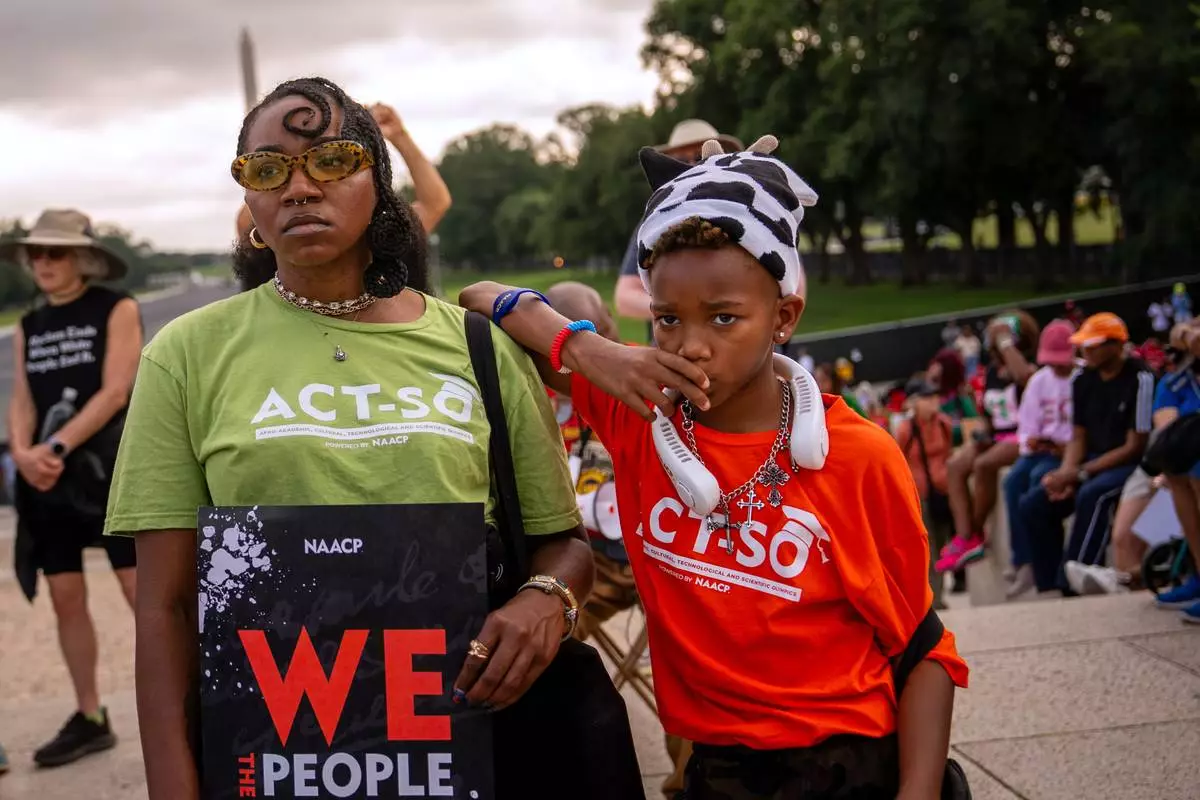
Demonstrators listen to speakers during the March on Washington, Friday, Aug. 28, 2026, near the Lincoln Memorial in Washington. (AP Photo/Julia Demaree Nikhinson)
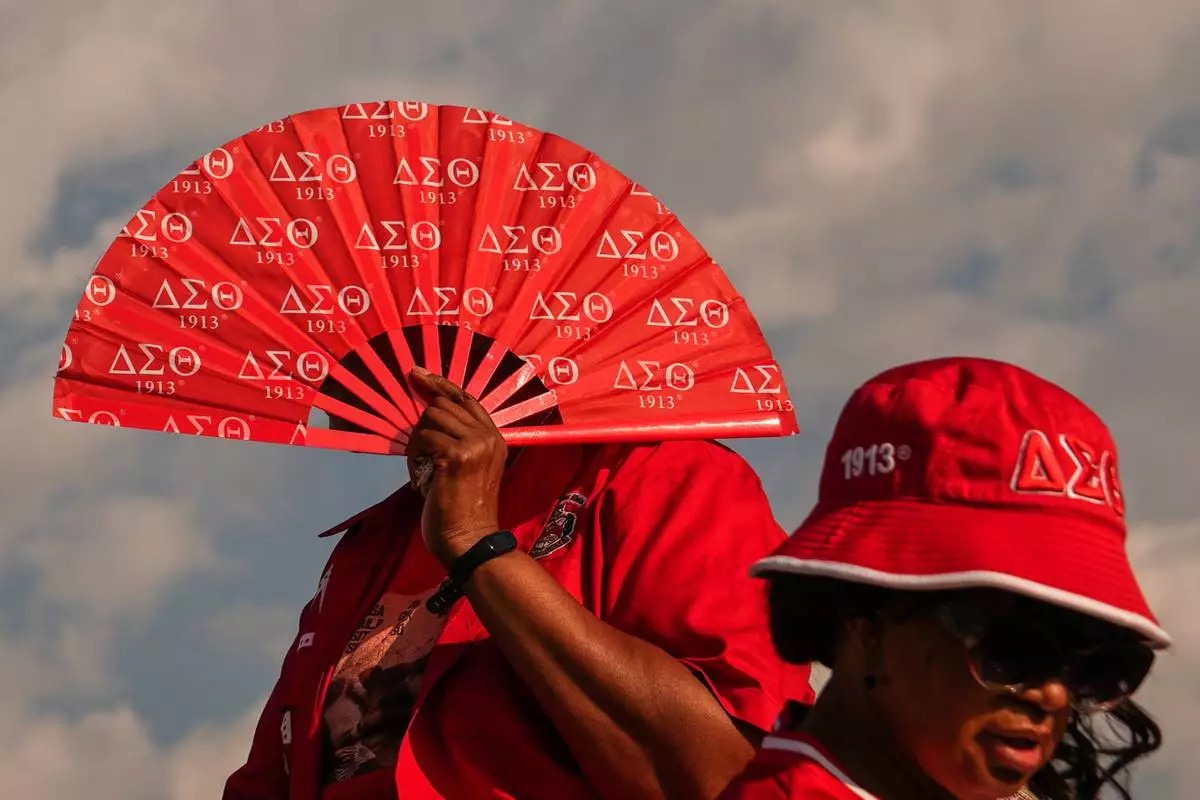
A demonstrator shields herself from the sun with a fan before the March on Washington, Friday, Aug. 28, 2026, near the Lincoln Memorial in Washington. (AP Photo/Julia Demaree Nikhinson)

A young demonstrator takes photos near the Lincoln Memorial before the March on Washington, Friday, Aug. 28, 2026, in Washington. (AP Photo/Julia Demaree Nikhinson)
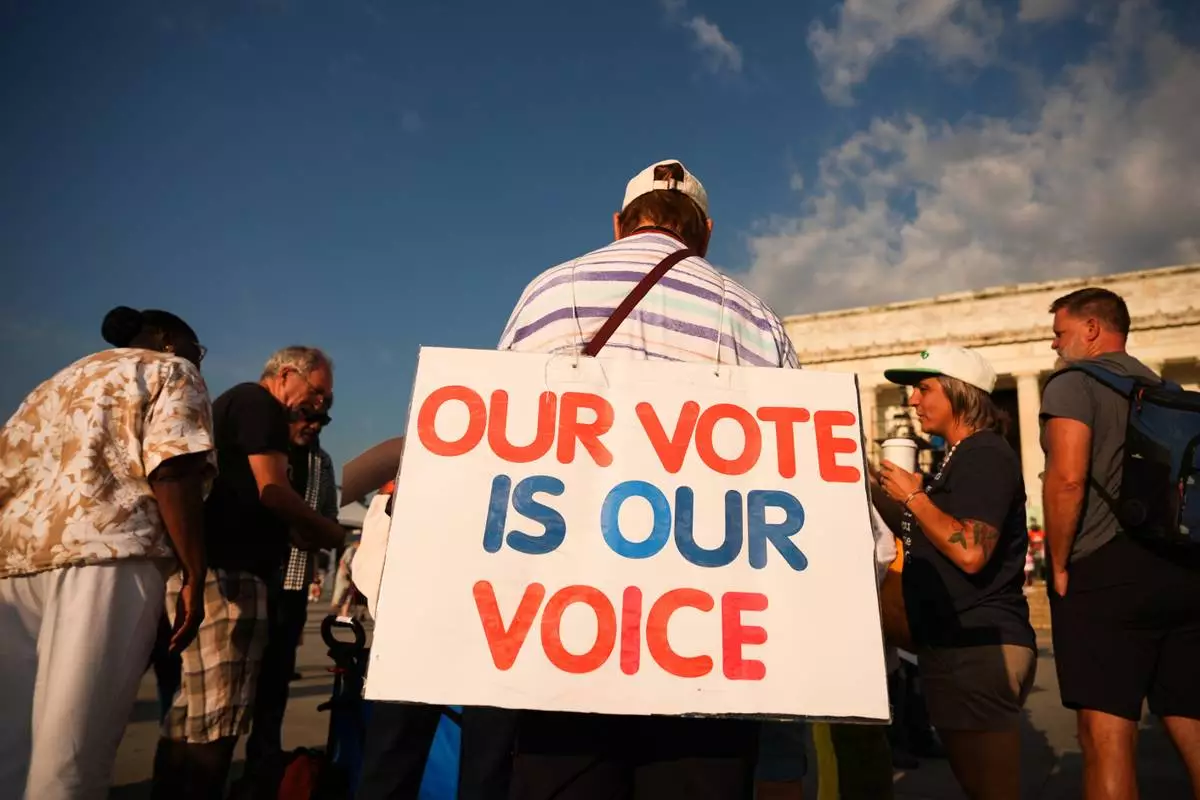
Demonstrators gather near the Lincoln Memorial before the March on Washington, Friday, Aug. 28, 2026, in Washington. (AP Photo/Julia Demaree Nikhinson)
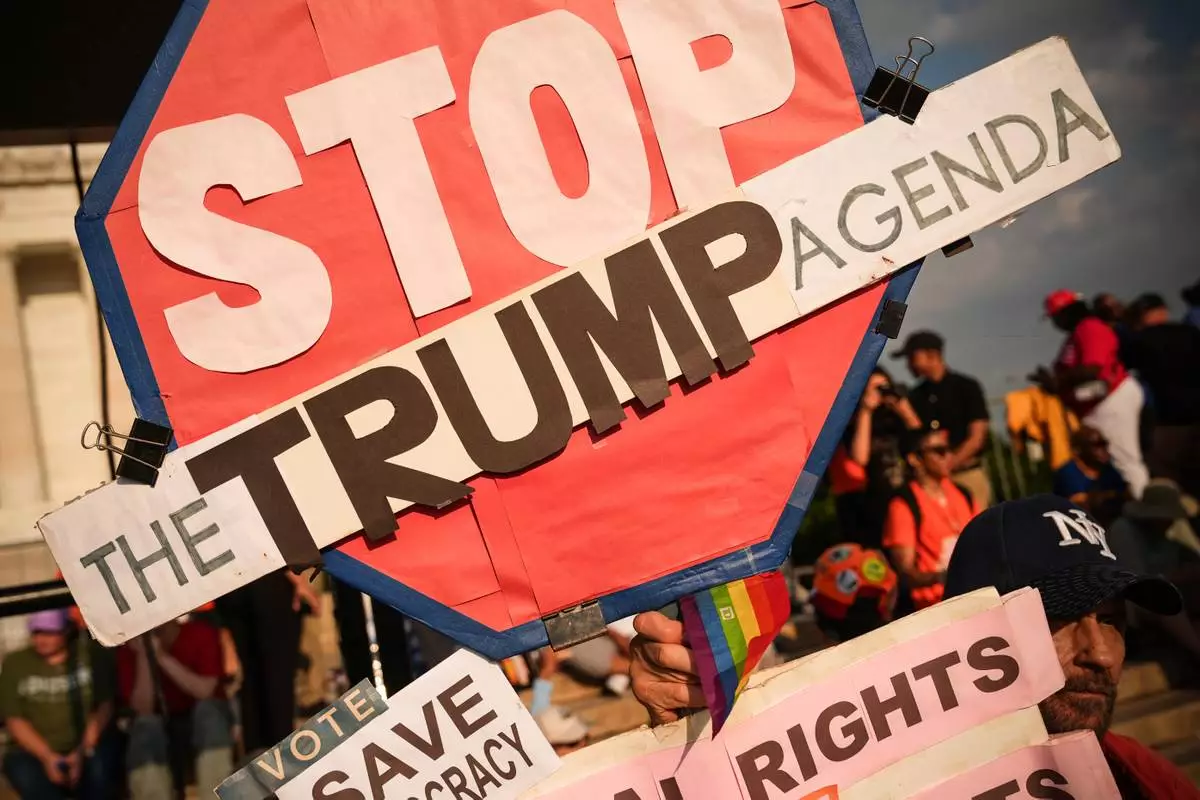
A demonstrator holds a sign near the Lincoln Memorial before the March on Washington, Friday, Aug. 28, 2026, in Washington. (AP Photo/Julia Demaree Nikhinson)
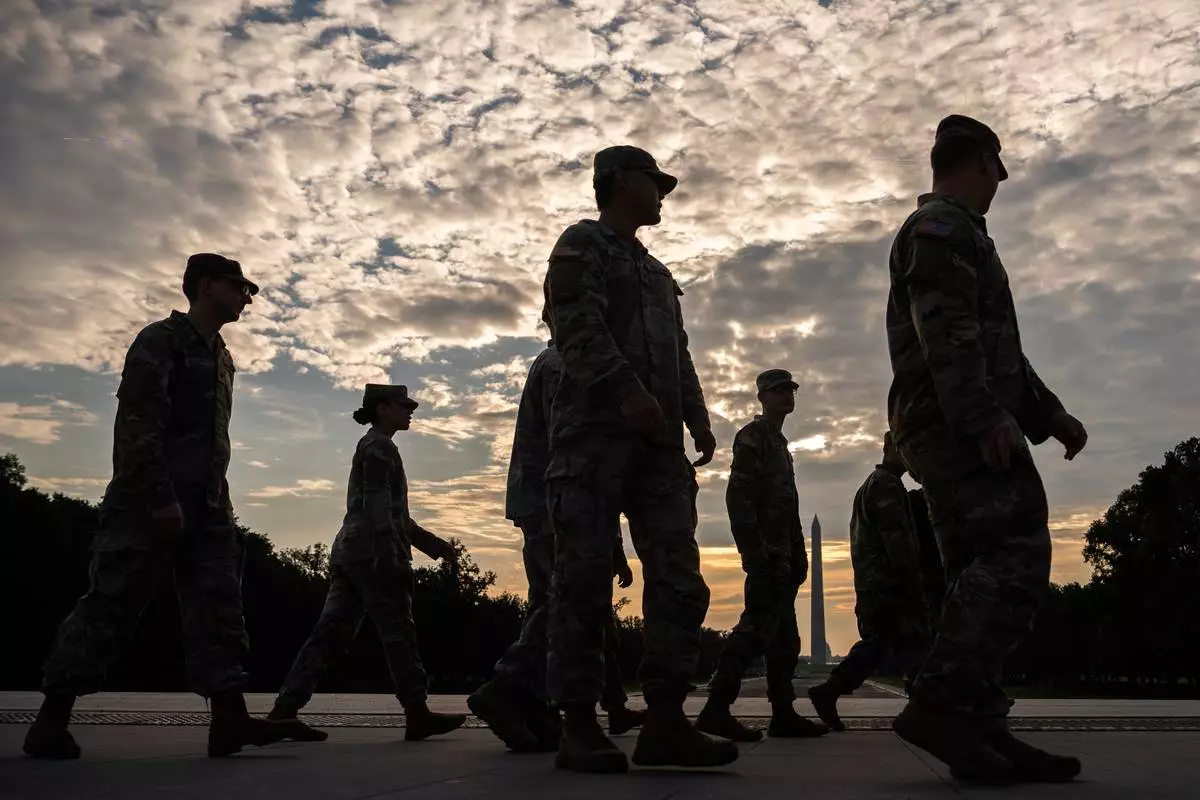
Members of the National Guard walk past the Lincoln Memorial Reflecting Pool before the March on Washington, Friday, Aug. 28, 2026, in Washington. (AP Photo/Julia Demaree Nikhinson)
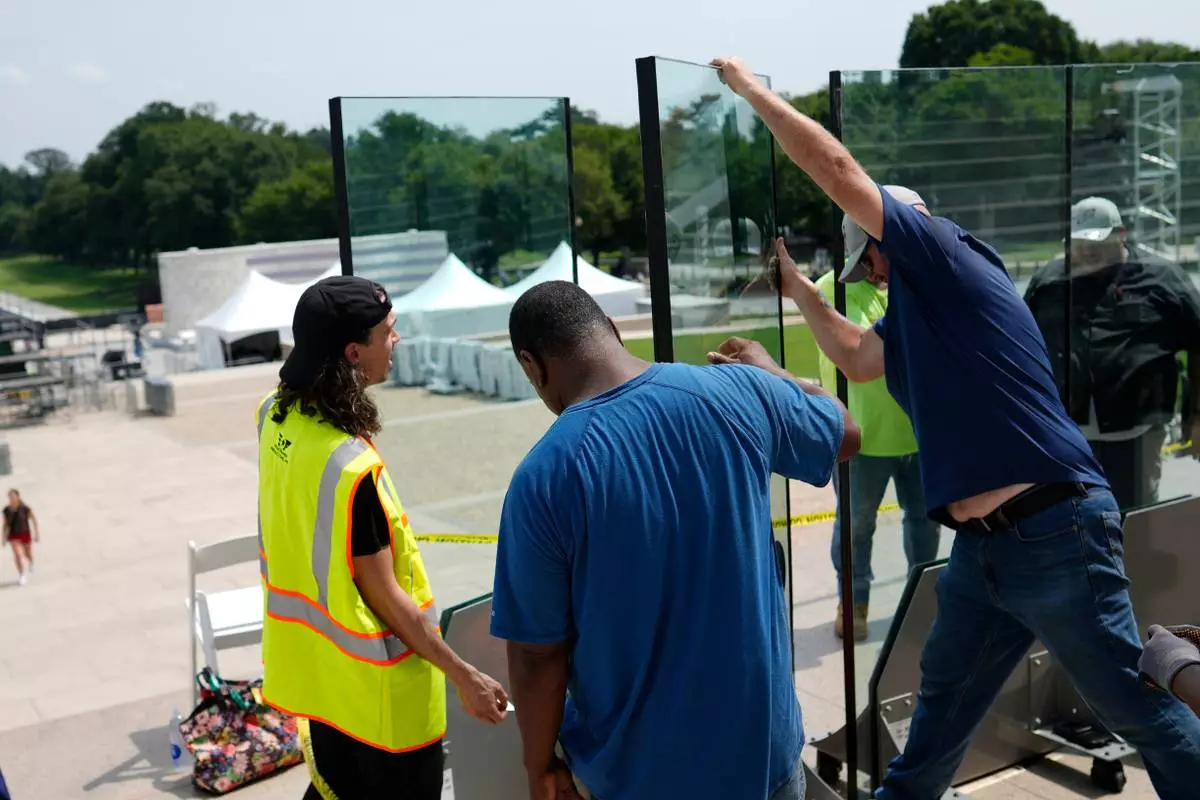
Workers installing bulletproof glass around the podium at the Lincoln Memorial in Washington in preparation are made ahead of tomorrow's anniversary of the March on Washington, Thursday, Aug. 27, 2026. (Photo/Pablo Martinez Monsivais)
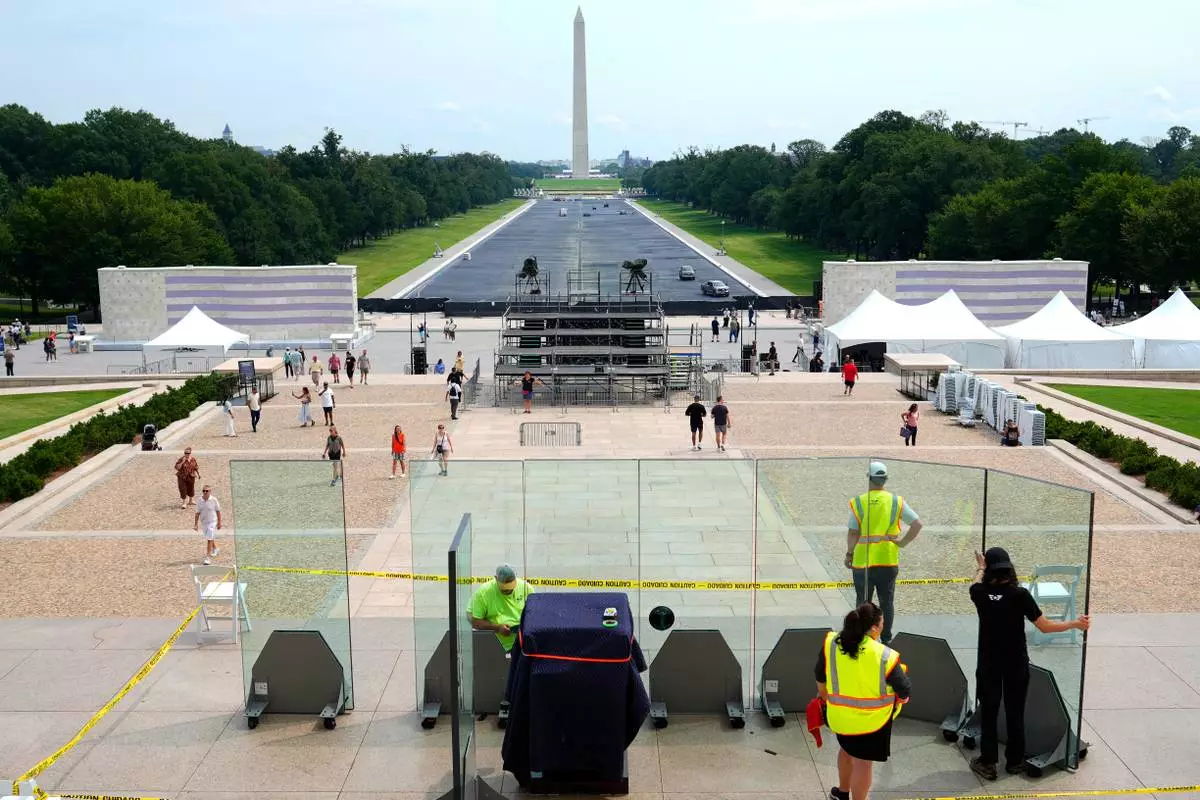
Workers installing bulletproof glass around the podium at the Lincoln Memorial in Washington in preparation are made ahead of tomorrow's anniversary of the March on Washington, Thursday, Aug. 27, 2026. (Photo/Pablo Martinez Monsivais)