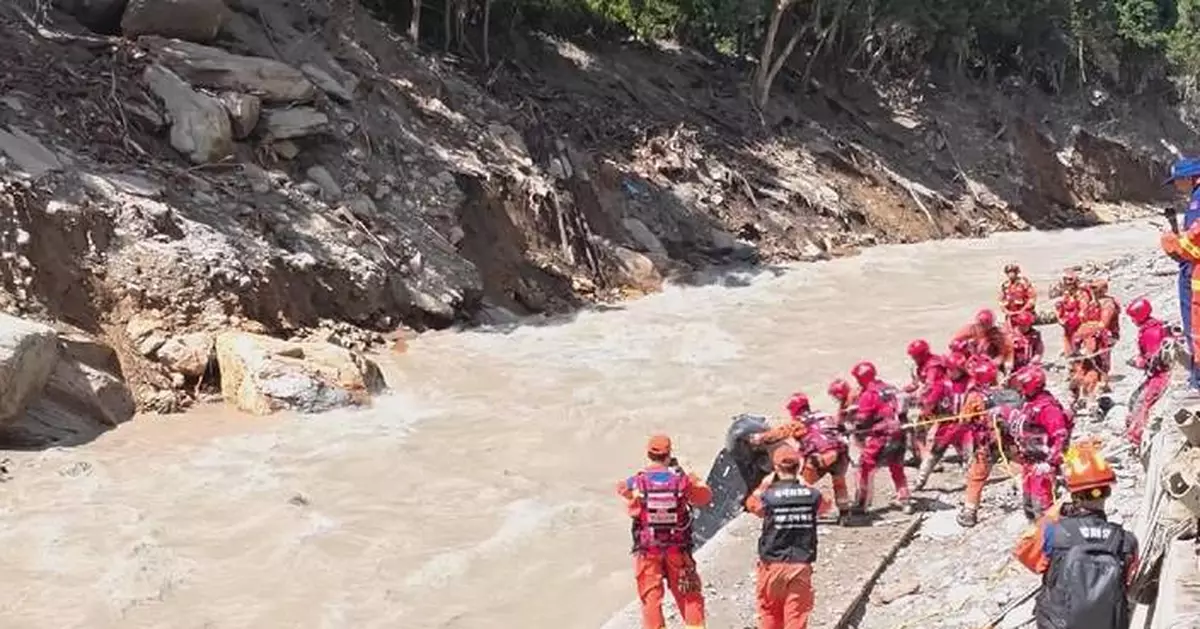
Treacherous terrain and imminent ice-related risks have hindered rescue operations in the fatal mudslide that hit the Gyirong Port along the China-Nepal border in southwest China's Xizang Autonomous Region, according to a leading geological expert.
The mudslide, which occurred on the Nepalese side, struck Gyirong Port in Gyirong County of Xizang on Wednesday morning. As of early Saturday morning, the disaster has claimed seven lives, with 554 people still missing and two local villagers successfully rescued, the regional emergency management department reported.
Chen Hongqi, a senior engineer at the geological disaster technical guidance center of the Ministry of Natural Resources, emphasized that the mission is extremely challenging because rescue teams must balance the need for operational efficiency with minimizing further casualties and mitigating hazards to downstream areas.
Chen outlined several compounding dangers hindering the effort.
"The risks stem from two main aspects. First, the terrain in this area is extremely narrow, making it very difficult for heavy equipment to deploy and advance rapidly. Constrained by the surrounding environment, our operational space is severely limited. Furthermore, the risk of secondary disasters is exceptionally high. It must be emphasized that, in addition to the barrier lake we just mentioned, there is actually a funnel-shaped water body beneath the source area of the ice avalanche. Currently, we estimate that the water body spans an area of over 120,000 square meters, but its exact depth remains unknown," said Chen.
"Another critical risk is that near the steep cliff of the ice avalanche, specifically on the right side when facing the avalanche, there is actually an ice mass embedded in the surrounding rock. This ice mass is riddled with crevasses. As we know, ice and rock are fundamentally different. Ice forms on top but has no deep foundation, making its behavior extremely difficult to assess," he said.
Given these compounding risk factors, Chen stressed that highly detailed geological investigations and safety assessments must be conducted before any further rescue decisions are made.
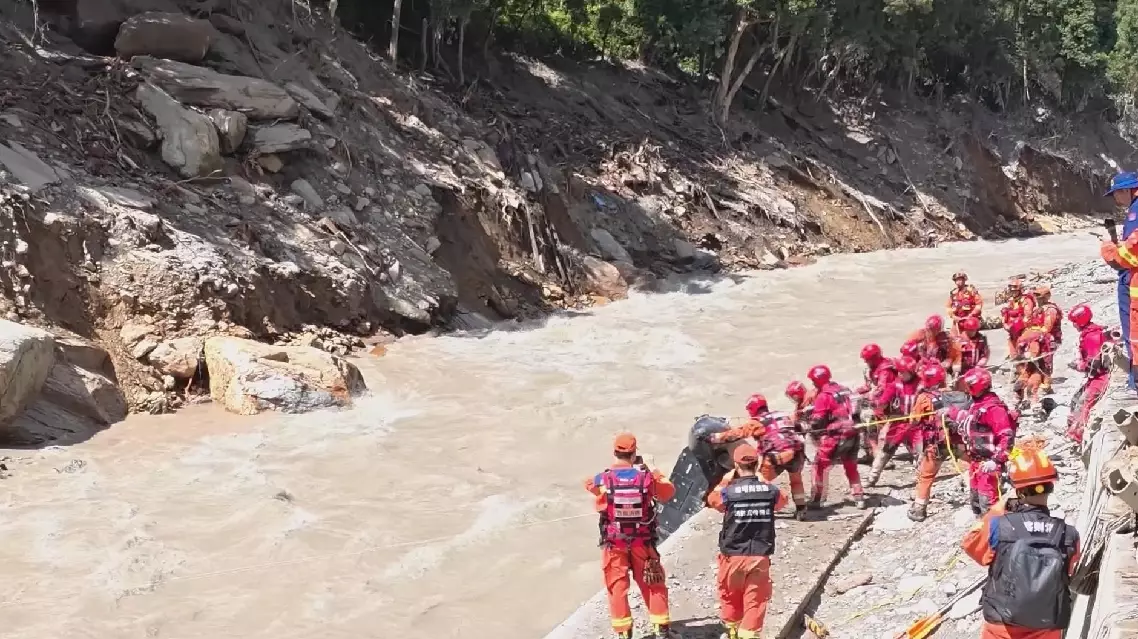
Treacherous terrain, ice risks hinder mudslide rescue at Xizang border port: expert
Electric heavy truck makers in China are improving their supporting service system to better meet the increasing demands of international customers amid a fast export growth driven by volatile international oil prices and the global need for pursing green transformation.
Customs data showed that China exported over 2,500 electric tractors in the first seven months this year, increasing by more than 870 percent year over year.
Inside the workshop of a heavy truck manufacturer in Changsha, capital of central China's Hunan Province, engineers were making adjustments to electric trucks' body length and wheelbase to meet the specific needs of their South African customers.
"In South Africa, some of these trucks need to pull trailers. For this reason, we need to make adaptations according to the requirements in different situations," said Liang Chen, director of the overseas product research institute of the heavy truck enterprise.
In June this year, the enterprise exported 883 electric heavy electric trucks in one batch. The head of the company's overseas marketing said the negotiations lasted for nearly two years as the international customer was very concerned about supporting services.
"The customer kept asking how we could guarantee vehicle operation and after sales services, and what we could do if the trucks break down or fail to start? This was a recurring question from our customers. So we developed targeted solutions to address these concerns. We have built a strong local service team to guarantee vehicle operation. We have prepared adequate stocks of spare parts for electric vehicles in the host country. We also provide backup vehicles, so our customers can use our electric heavy trucks without worries," said Yue Zhaoting, deputy general manager of overseas marketing of the heavy truck enterprise.
The firm also provides solutions for charging electric heavy trucks in remote areas such as mines where stable power supply is rare.
"Because we have mature photovoltaic module and micro grid technologies, we are able to form a closed loop solution, including generating energy by photovoltaic panels, battery energy storage, and battery swap stations to power electric trucks. These fundamentally address the difficulties of customers with limited access or no access to power supply," said Yue.
The enterprise has set up more than 1,700 overseas service centers and employed over 7,000 professional service personnel abroad.
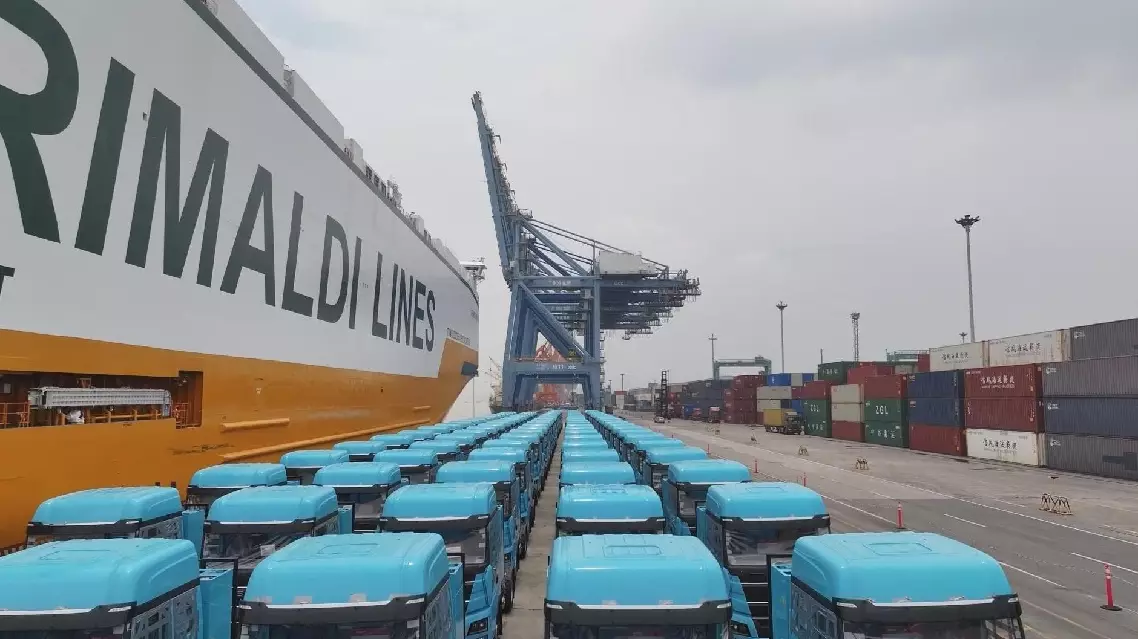
Chinese electric heavy truck manufacturer improves supporting services to drive export growth