The HICOOL 2026 Global Entrepreneurship Competition selected 200 winning projects after attracting a record 10,209 entries and 13,472 entrepreneurs.
The competition, which concluded after 170 contests across multiple stages, awarded 12 first prizes, 36 second prizes, 68 third prizes and 84 excellence awards.
The winning projects span artificial intelligence, biomedicine, new energy, quantum information and high-end equipment.
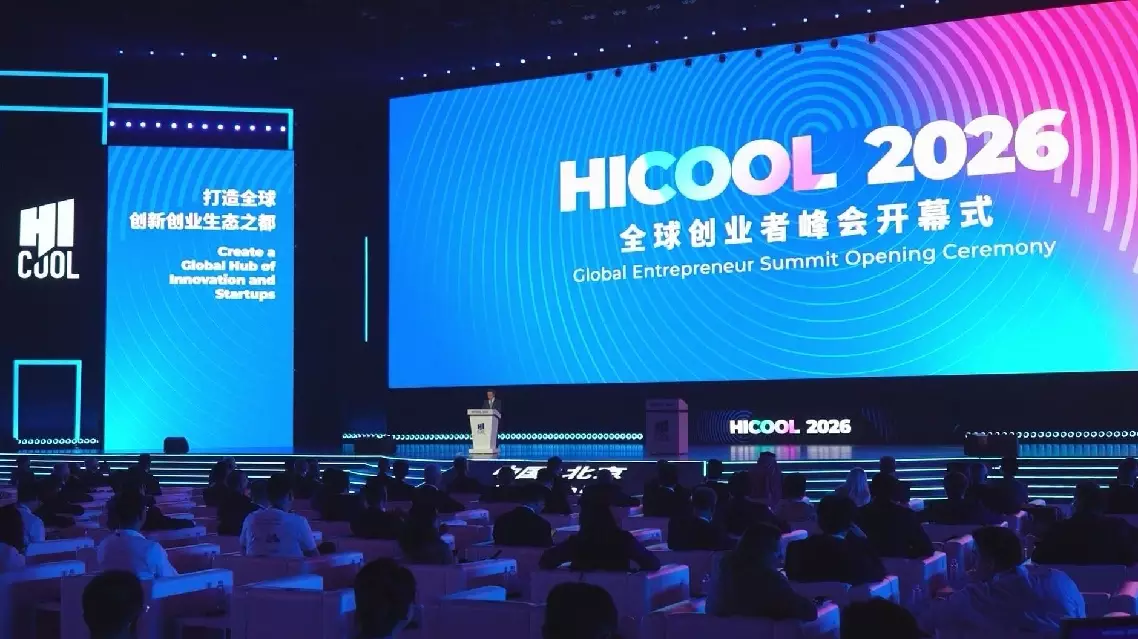
The winners are showcased at the 2026 Global Entrepreneurs Summit in Beijing, which runs from Aug 26 to 29.
The summit combines technology exhibitions and industry meetings with presentations by winning projects, aiming to help startups connect research and early-stage products with commercial applications.
Over its seven editions, the HICOOL competition has helped incubate five listed companies and 219 small and medium-sized enterprises officially designated by China as "specialized and sophisticated" for their niche expertise, innovation capacity and advanced technologies.
The summit's five exhibition areas feature artificial intelligence applications, brain-computer interfaces and synthetic-biology products, offering participating companies a venue to demonstrate emerging technologies and seek potential partners.
The summit also unveiled several international cooperation initiatives, including the Global Entrepreneur Service Alliance and the International Science Program for Panoramic Digital Life.
The program seeks to develop a digital model of living systems across different biological scales.
"Panoramic Digital Life will create a complete, dynamic digital model of life, from molecules and cells to the human body. That could transform the life sciences," said Cheng Heping, an academician of the Chinese Academy of Sciences.
Beyond showcasing new technologies, the summit also highlighted Beijing's efforts to connect entrepreneurs with research institutions, industry partners, funding and professional services.
"Beijing is taking an integrated approach to education, technology and talent development, bringing together government, industry, universities, research institutions, finance, service providers and end users to help turn innovation into real-world applications. We are also building a youth-friendly support system so talented people can find opportunities to develop in Beijing without unnecessary worries," said Liu Guangyi, deputy director of the Beijing Municipal Talent Work Bureau.
Beijing startup competition draws record project entries