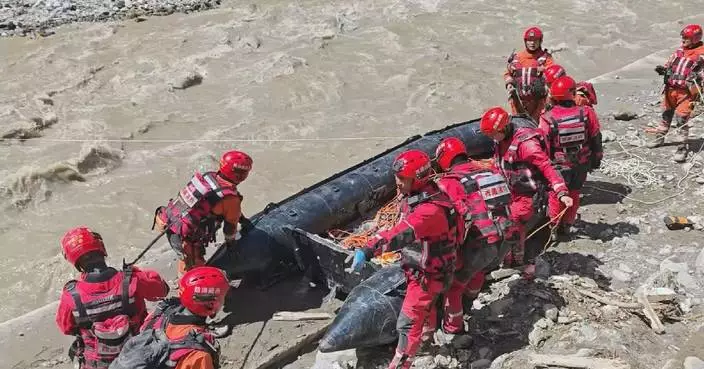
A newly released animation by China Media Group has illustrated how a glacier collapse on the Nepalese side triggered the massive mudslide that struck the Gyirong Port along the China-Nepal border in southwest China's Xizang Autonomous Region on Wednesday morning.
The event presents a classic disaster cascading effect. At an elevation of 5,140 meters, a glacier spanning 620,000 square meters located in the upper reaches of the Cuojian River broke off. The collapsing ice rapidly swept up loose rock and debris along its path, flowing into the Guobaxiaqu River, a boundary river between China and Nepal, before joining the Donglin Zangbo River.
Gathering mass and momentum as it moved downstream, it evolves into a powerful debris flow that ultimately devastated the Gyirong Port and downstream areas.
Plunging nearly 3,300 meters in elevation over a 20-kilometer run, the mudslide traveled toward the border port at an average velocity of 50 meters per second. From glacier collapse to the moment it struck the port, only seven minutes elapsed, leaving local residents virtually no time to seek safety.
Upon slamming into the Donglin Zangbo River, the high-speed debris flowed in two directions. One branch surged upstream for nearly three kilometers, while the other swept downstream into Nepal, affecting a swath of tens of kilometers.
A barrier lake has formed in the disaster zone.
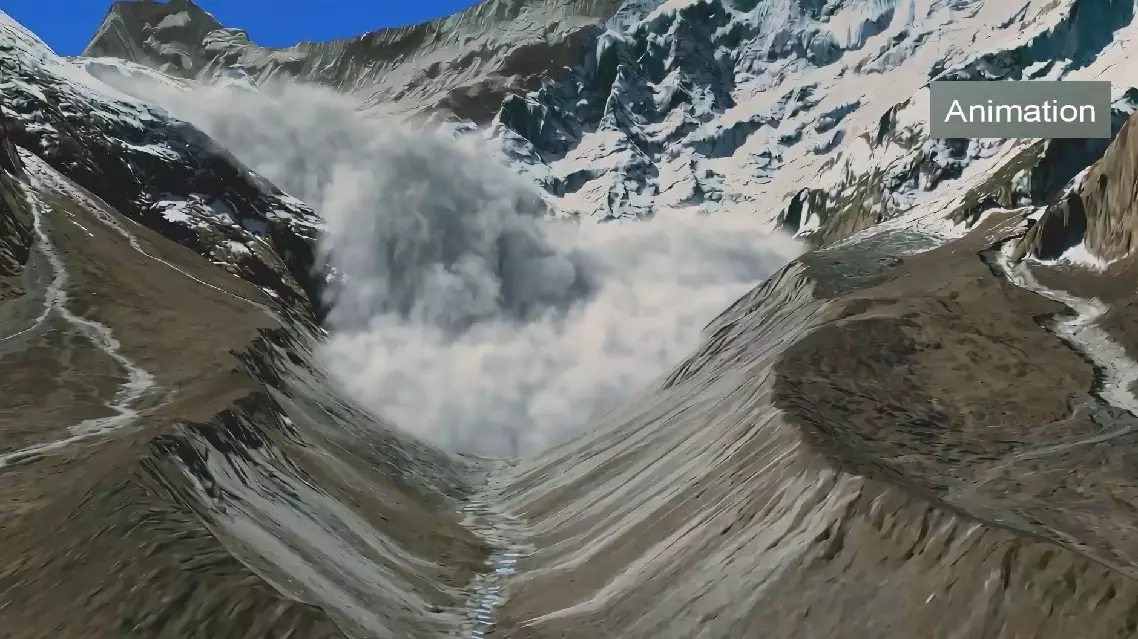
Animation shows how glacier collapse in Nepal triggered mudslide at China's Xizang border port
U.S. Federal Reserve Chairman Kevin Warsh said Friday that the Fed's predominant focus right now should be on prices, as inflation remains above its 2-percent target.
Speaking at the annual Jackson Hole Economic Policy Symposium, Warsh said, "On the price stability side of our mandate, the numbers are more concerning."
Warsh's remarks came as broad inflation measures have fallen from their 2022 peaks, though Warsh characterized the progress over the past two years as modest. He pointed specifically to the Personal Consumption Expenditures (PCE) price index, noting that "the numbers are more concerning."
While summer inflation readings were better than expected, Warsh stressed that they do not indicate a meaningful improvement in underlying trends.
The Federal Reserve's preferred inflation gauge came in slightly above expectations, with the annual inflation rate holding steady at 3.7 percent, data released by the Commerce Department showed on Wednesday.
The PCE price index increased by a seasonally adjusted 0.2 percent for the month, slightly exceeding expectations, while core PCE inflation, which excludes volatile food and energy prices, matched forecasts with a 0.2 percent monthly increase and a 3.3 percent year-over-year rise.
In contrast to the lingering inflation challenges, Warsh painted a robust picture of the broader U.S. economy.
Looking ahead, Warsh emphasized that the central bank will remain "keenly focused on market internals" and performance across various sectors. He pledged to continue tracking changes in the growth rates of corporate earnings and capital spending, as well as their follow-on effects on asset prices, business confidence, consumer income, and spending.
Following the speech, major U.S. stock market indexes remained little changed, while Treasury yields moved substantially higher as bond investors digested the hawkish undertones regarding inflation and economic strength.
Warsh says Fed should focus on prices as U.S. inflation remains above target