Skip to Content Facebook Feature Image

America In Focus: key inflation gauge remains high; Fed's Warsh signals rate hikes may be needed

Business

America In Focus: key inflation gauge remains high; Fed's Warsh signals rate hikes may be needed
Business

Business

America In Focus: key inflation gauge remains high; Fed's Warsh signals rate hikes may be needed

2026-08-29 22:10 Last Updated At:22:20

The economy, inflation and how those forces could impact the lives of Americans were front and center over the past week. Trips to the grocery store and gas station are more painful than they were last year, and rising costs are impacting the decisions of both households and businesses.

Here’s a snapshot of prominent economic data and news that occurred over the past week and what it potentially means for you.

An inflation measure closely watched by the Federal Reserve stayed elevated last month in the latest sign that many Americans are still struggling with higher costs.

The Commerce Department’s Wednesday report showed that prices rose 3.7% in July compared with a year earlier, the same as June. Inflation has worsened since the U.S. and Israel attacked Iran in late February, when it stood at 2.9%. It’s noticeably above the Fed’s target of 2%.

Wednesday’s figures are from the personal consumption expenditures price index, a separate gauge from the more widely followed consumer price index, which was reported earlier this month. The PCE index is running hotter than the CPI, partly because it puts much less weight on rental costs, which have been cooling steadily in recent months.

Federal Reserve Chair Kevin Warsh said Friday that inflation is still too high and suggested the central bank may have to raise interest rates in the coming months to bring it down, a clearer signal than he had sent previously about his economic outlook.

In his first high-profile speech at the Fed’s annual conference at Jackson Hole, Wyoming, Warsh acknowledged that recent U.S. data show inflation has cooled a bit, but “they do not tell me that underlying trends have meaningfully improved.”

“We must be confident that underlying inflation is moving to our objective, clearly and at sufficient speed,” Warsh said. “Otherwise, we have work to do.”

The Fed next meets September 15-16, and Warsh’s remarks don’t necessarily signal the central bank will raise rates then. But his speech indicated that rates may not be high enough to bring inflation down to the Fed’s 2% target.

Americans’ confidence in the economy declined again this month as the ongoing conflict in Iran continued to push U.S. gasoline prices above $4 per gallon.

The Conference Board said Tuesday that its consumer confidence index dipped to 89.4 in August from 90.2 in July. That was the lowest level in seven months but was essentially within the same lukewarm range it has been in since the beginning of the year. In late 2024 and early 2025, readings were consistently above 100.

Respondents’ views of their present situation improved, but their short-term outlook soured.

Americans remain frustrated with the economy after five years of elevated inflation, potentially posing a risk to President Donald Trump and Republicans in the midterm elections, which are less than 70 days away.

The U.S. economy grew at a sluggish 1.5% pace from April through June. But consumer spending stayed strong.

Growth in gross domestic product — the nation’s output of a goods and services — decelerated from a 2.1% pace from January through March, the Commerce Department reported Wednesday. The second-quarter growth number was unchanged from the department’s first estimate.

The reason for the lackluster growth was imports. They are subtracted from growth because GDP is only supposed to count domestic production. Imports rose at a 12.5% annual pace from April through June, partly due to a surge in shipments of computer chips and other products that support artificial intelligence investment, and sliced 1.64 percentage points off second-quarter growth.

Mortgage rates ticked higher this week, nudging the average long-term U.S. home loan rate closer to its recent high for the year.

The benchmark 30-year fixed rate mortgage rate edged up to 6.66% from 6.65% last week, mortgage buyer Freddie Mac said Thursday. One year ago, the average rate was 6.56%.

Higher mortgage rates can add hundreds of dollars a month in costs for borrowers, limiting homebuyers’ purchasing power. As rates rise, that can lead prospective home shoppers to delay buying a home, one reason U.S. home sales remain in a rut this year.

The average rate is now back to where it was four weeks ago and is just shy of 6.69%, the high for the year it reached earlier this month.

Borrowing costs on 15-year fixed-rate mortgages, often sought by borrowers refinancing a home loan, also rose this week. That average rate increased to 5.98% from 5.95% last week. A year ago, it was at 5.69%.

The number of people filing for U.S. unemployment benefits fell last week, remaining at historic lows as layoffs are rare and most Americans enjoy job security.

Jobless claims slipped to 203,000 last week from a revised 207,000 the week before, the Labor Department reported Thursday. The four-week average of claims, which smooths out week-to-week ups and downs, ticked up slightly to 205,500.

Claims for jobless benefits are a proxy for layoffs, and economists watch them because they can provide early clues of where the job market is headed. For the past year, claims have mostly been at a historically low range of around 200,000 to 230,000 a week.

The U.S. stock market is held relatively steady Friday, and expectations built in the bond market for the Federal Reserve to hike interest rates soon to get the nation’s high inflation under control.

The S&P 500, Dow Jones Industrial Average and the Nasdaq composite all rose.

The bond market had more of a reaction following Kevin Warsh’s first time speaking as chairman of the Fed at an annual economic symposium in Jackson Hole, Wyoming. The mountain setting has been the backdrop for major Fed policy announcements in the past, and the pressure was on Warsh.
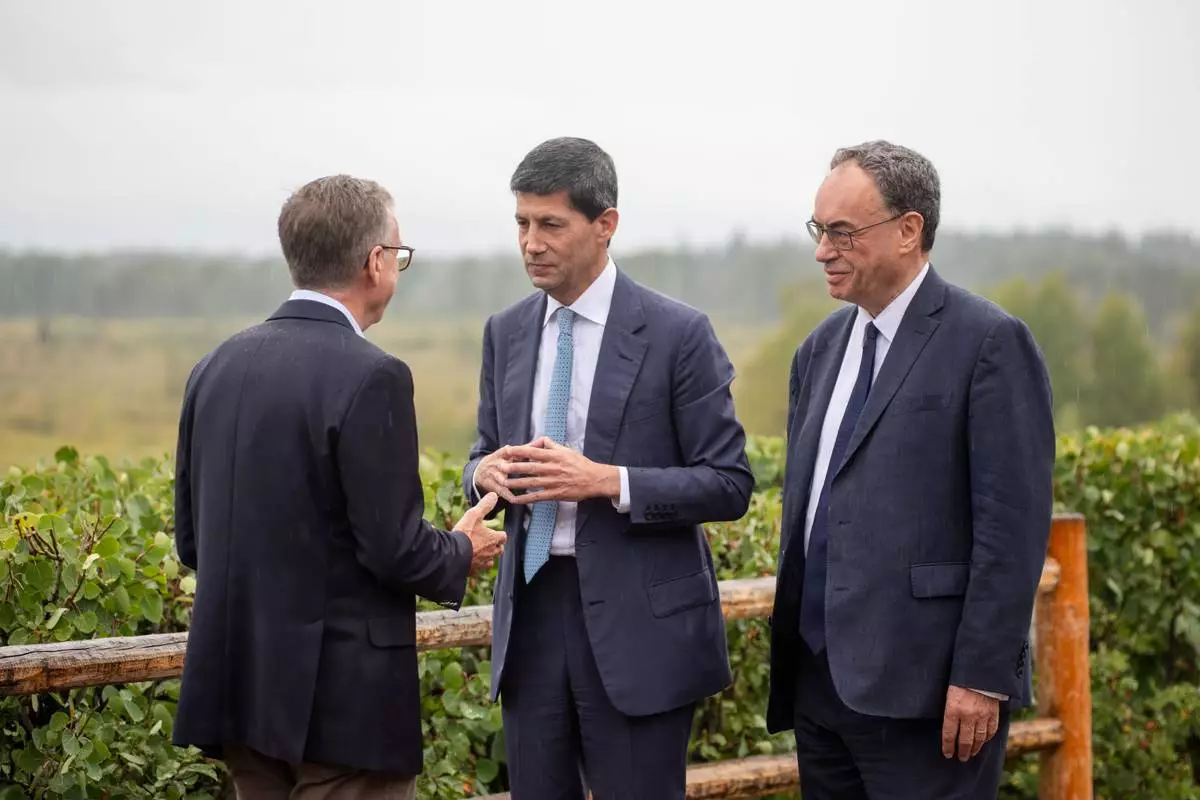
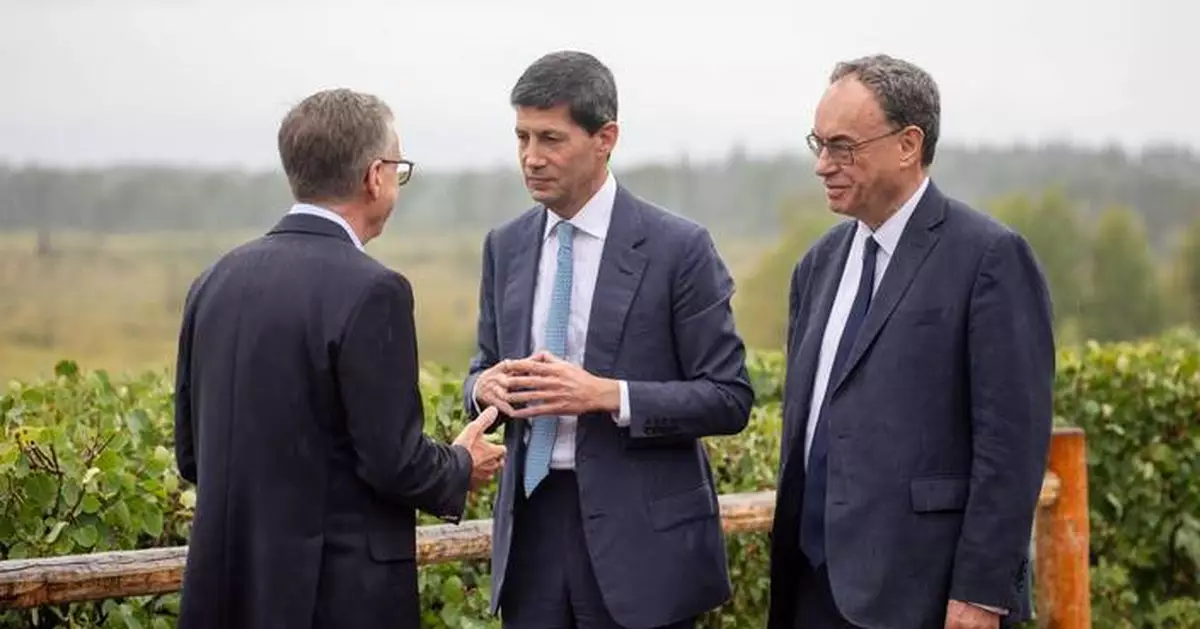
Fed Chair Kevin Warsh, center, talks to Bank of England Governor Andrew Bailey, right, and Bank of Canada Governor Tiff Macklem at the annual Jackson Hole Economic Policy Symposium on Friday, Aug. 28, 2026, in Moran, Wyo. (AP Photo/Amber Baesler)

Fed Chair Kevin Warsh, center, talks to Bank of England Governor Andrew Bailey, right, and Bank of Canada Governor Tiff Macklem at the annual Jackson Hole Economic Policy Symposium on Friday, Aug. 28, 2026, in Moran, Wyo. (AP Photo/Amber Baesler)
BELGRADE, Serbia (AP) — Serbia's President Aleksandar Vucic on Friday accused a war crimes U.N. court in The Hague of “uncivilized behavior” for refusing to grant an early release for the former Bosnian Serb army commander Ratko Mladic, who died Thursday at the age of 84 while serving a life sentence for his crimes.

Mladic’s family and the Serbian government had requested several times that Mladic be released, citing his age and ailing health. He died a week after the U.N. rejected his latest request for release on humanitarian grounds.

“That was uncivilized behavior, unprecedented and without excuse,” Vucic said. “We can now see that they wanted Mladic to die behind bars.”

The U.N. tribunal for war crimes committed during the wars in the former Yugoslavia in the 1990s sentenced Mladic to life in prison in 2017 in what was considered a key step toward bringing justice to the victims. He had been in custody since 2011.

The ruthless warlord was one of the most notorious figures of the conflict that left more than 100,000 people dead and over 1 million homeless. More than three decades after the wars, former Balkan foes remain divided over his role.

In an Aug. 20 ruling, the president of the U.N. court that deals with the legacies of now-closed war crimes tribunals, Uruguayan Judge Graciela Gatti Santana, cited the “comprehensive and compassionate medical care” Mladic was receiving in custody “as well as the exceptional visitation regime allowing meaningful family contact” as reasons for turning down the request.

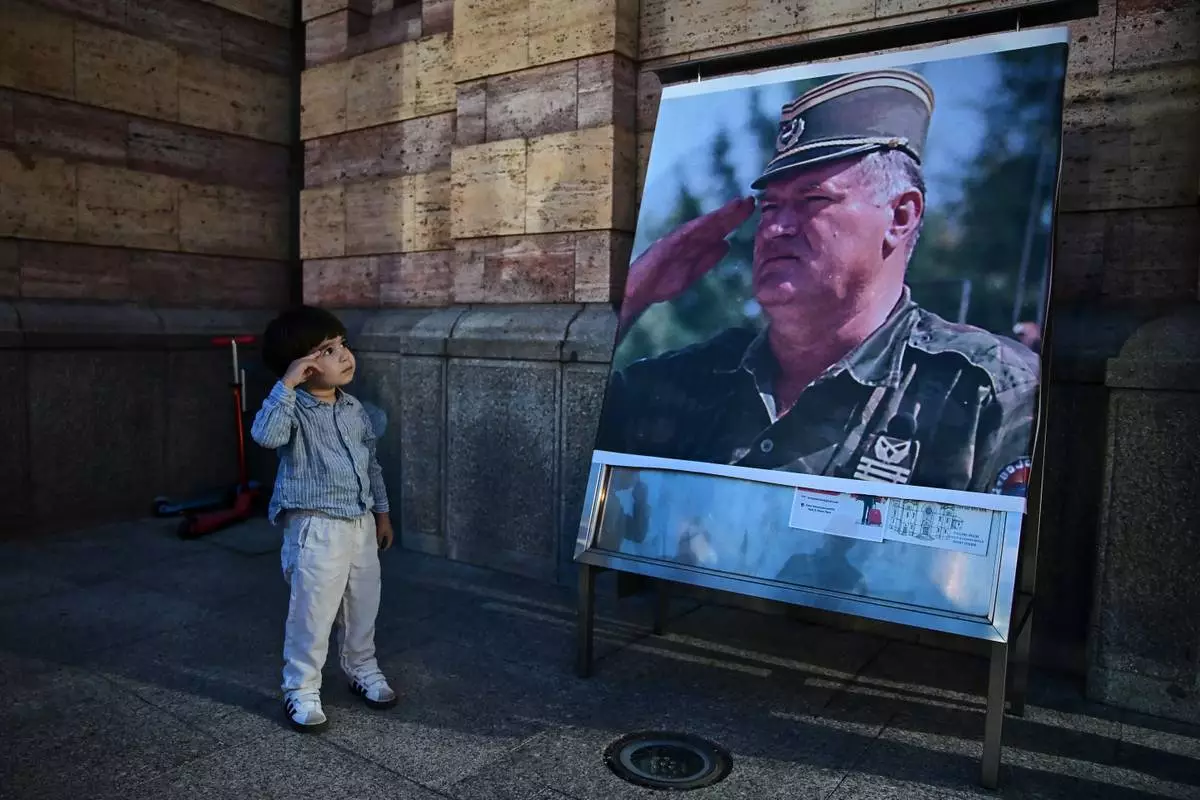
Bosnian Serbs held vigils and lit candles Thursday evening for Mladic, whom they consider a hero despite his conviction.

“He could not have been a better man. Everything else is just a bunch of lies. He would not touch anyone, child, no one. It's all lies,” said Stojanka Visnjevac, a resident of Kalinovik, Mladic's small hometown.

But the families of the victims of crimes Mladic orchestrated said his death means at least some justice for their loved ones.

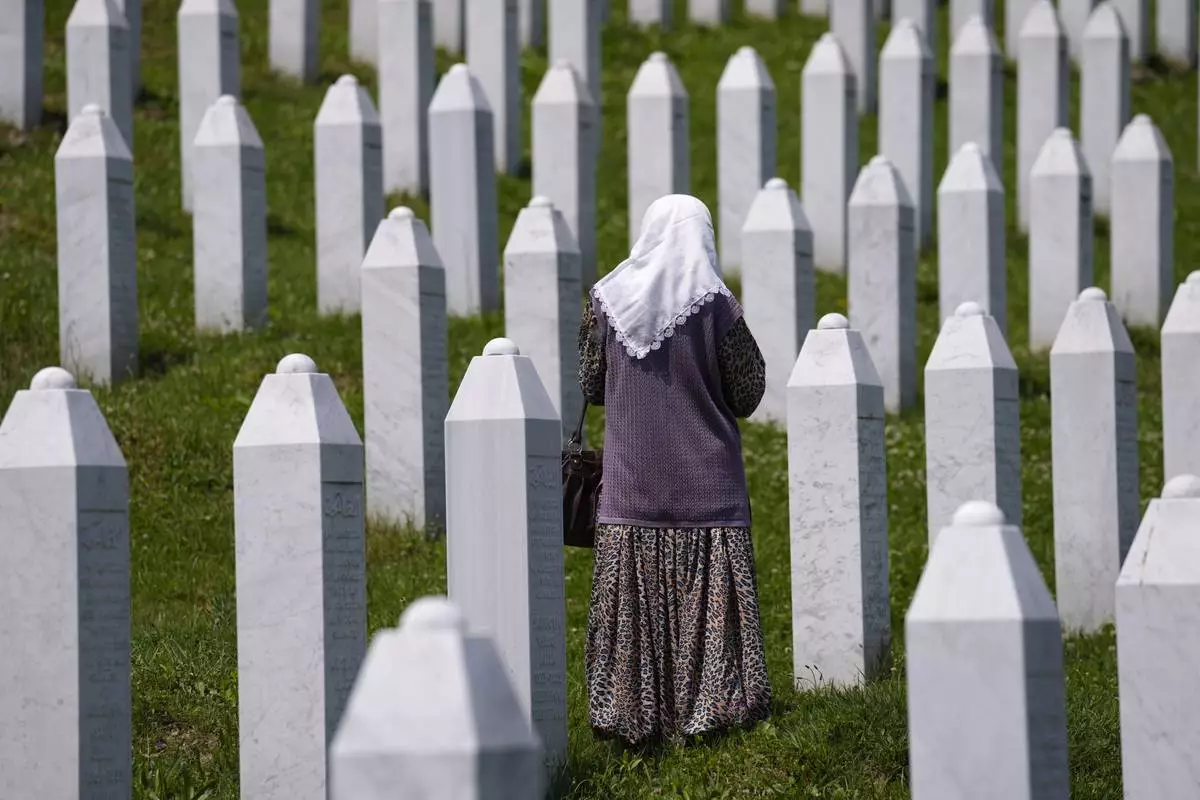
Fazila Efendic, who lost several members of her family in the 1995 massacre of more than 8,000 Bosnian Muslims in Srebrenica, which is Europe's first acknowledged genocide since World War II, said it is important that Mladic died in prison.

“We, the victims, are satisfied, when we know that he was convicted to life in prison,” she said. "For us, it is important that he is convicted and that he served his sentence until he died.”

A U.N. “safe haven” for Muslims in Srebrenica ended up being overrun by Serbs who forced men and boys to strip, killed them and bulldozed their bodies into mass graves. Serbs under Mladic’s control also laid siege to the Bosnian capital, Sarajevo, and other cities and villages, established concentration camps for detained non-Serb civilians and enemy soldiers, and systematically killed prisoners.

Vucic said that Belgrade has no information on when Mladic’s body could be released.

Vucic said Mladic’s family will decide where he would be buried. “If the family expresses a wish that he be buried in the territory of Serbia, we will help so it can be done in a dignified way,” Vucic told reporters. He did not confirm earlier reports that Mladic would receive a state funeral. The reports sparked outrage throughout the region.

The U.N. court on Thursday opened an inquiry into Mladic's death, and on Friday, the judge conducting the inquiry visited the detention center where he was held.

The court, formally known as the International Residual Mechanism for Criminal Tribunals, said in an emailed response to questions from The Associated Press that it would not give any information on the cause of death before the inquiry is completed.

It added that “the relevant Dutch authorities have officially informed the Mechanism that they are not opening a criminal investigation into Mr. Mladic’s death and that they will not be performing an autopsy.”

AP writers Dusan Stojanovic in Belgrade and Mike Corder in The Hague contributed to this report.

FILE - A woman walks stands among the graves of victims of the Srebrenica massacre, at the memorial cemetery in Potocari, near Srebrenica, eastern Bosnia, Tuesday, June 8, 2021, as the United Nations court in The Hague, Netherlands, delivers its verdict in the appeal by former Bosnian Serb military chief Ratko Mladic against his convictions for genocide and other crimes and his life sentence for masterminding atrocities throughout the Bosnian war. (AP Photo/Darko Bandic, File)

FILE - A woman walks stands among the graves of victims of the Srebrenica massacre, at the memorial cemetery in Potocari, near Srebrenica, eastern Bosnia, Tuesday, June 8, 2021, as the United Nations court in The Hague, Netherlands, delivers its verdict in the appeal by former Bosnian Serb military chief Ratko Mladic against his convictions for genocide and other crimes and his life sentence for masterminding atrocities throughout the Bosnian war. (AP Photo/Darko Bandic, File)

A boy salutes in front of poster of former Bosnian Serb wartime general Ratko Mladic, outside a church in Banja Luka, Bosnia-Herzegovina, Thursday, Aug. 27, 2026. (AP Photo/Radivoje Pavicic)

A boy salutes in front of poster of former Bosnian Serb wartime general Ratko Mladic, outside a church in Banja Luka, Bosnia-Herzegovina, Thursday, Aug. 27, 2026. (AP Photo/Radivoje Pavicic)

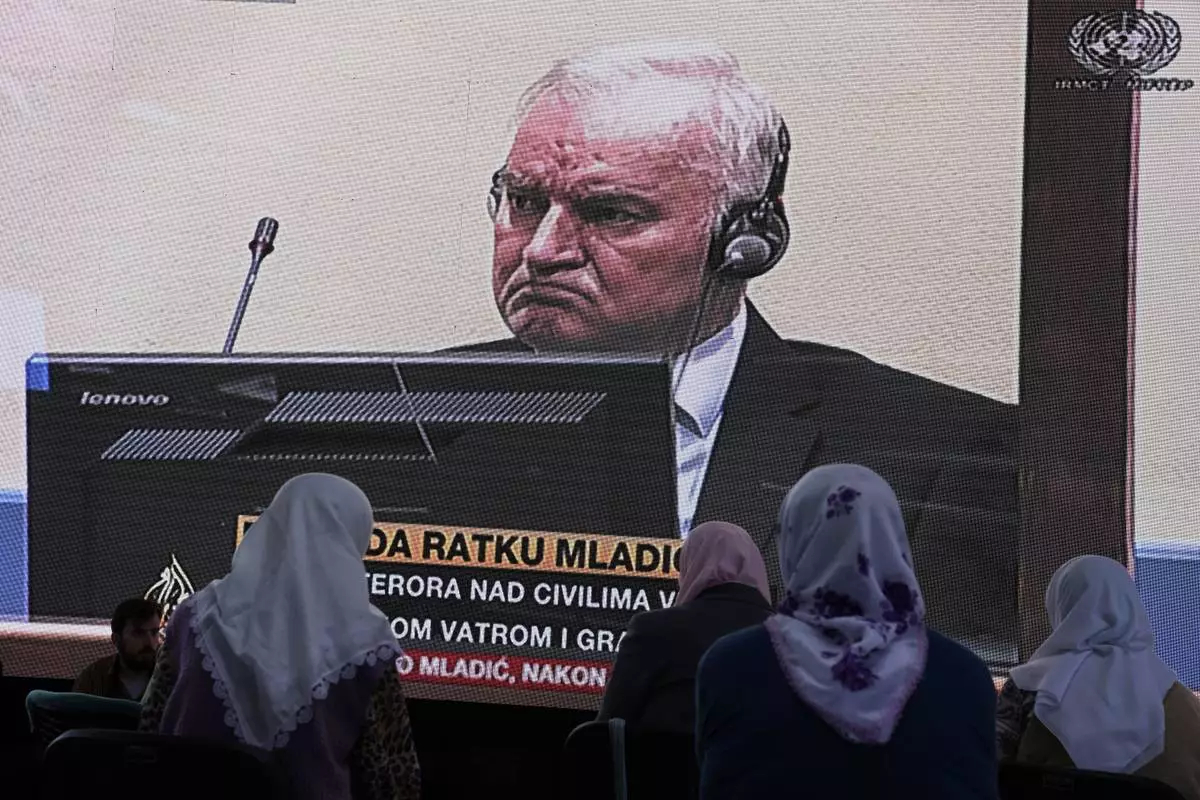
FILE - Women from Srebrenica watch a live broadcast from the Yugoslav War Crimes Tribunal in The Hague to learn the verdict for Bosnian Serb military chief Ratko Mladic, on the screen, at the memorial cemetery in Potocari near Srebrenica, eastern Bosnia, Tuesday, June 8, 2021.(AP Photo/Darko Bandic, File)

FILE - Women from Srebrenica watch a live broadcast from the Yugoslav War Crimes Tribunal in The Hague to learn the verdict for Bosnian Serb military chief Ratko Mladic, on the screen, at the memorial cemetery in Potocari near Srebrenica, eastern Bosnia, Tuesday, June 8, 2021.(AP Photo/Darko Bandic, File)

Recommended Articles