An ice-rock avalanche originating from a high-mountain glacier in Nepal has been identified as the cause of a devastating mudslide that struck Gyirong Port in southwest China's Xizang Autonomous Region, local authorities said Sunday.
Su Pengcheng, a researcher from Institute of Mountain Hazards and Environment under the Chengdu branch of the Chinese Academy of Sciences, explained the chain of events that unfolded during Wednesday's mudslide while speaking at a press conference held near the disaster site of Gyirong County in Xigaze City.
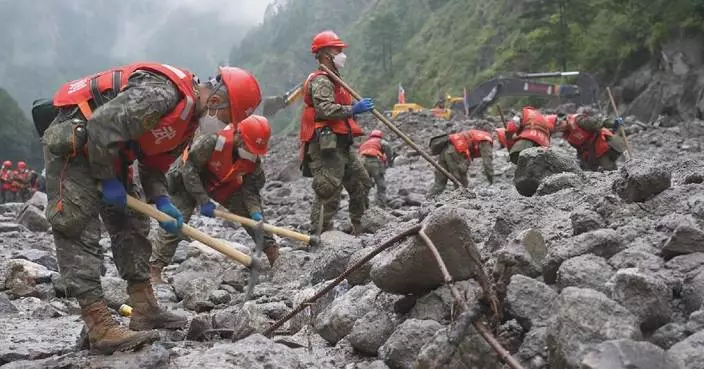
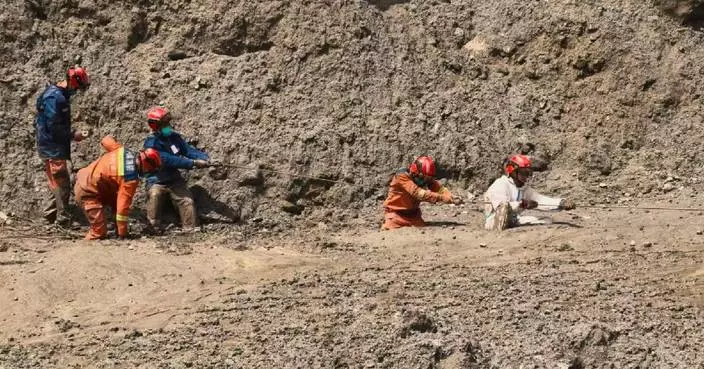
Participants at the press conference observed a moment of silence for the victims, while rescue work to try and locate over 500 missing people is continuing.
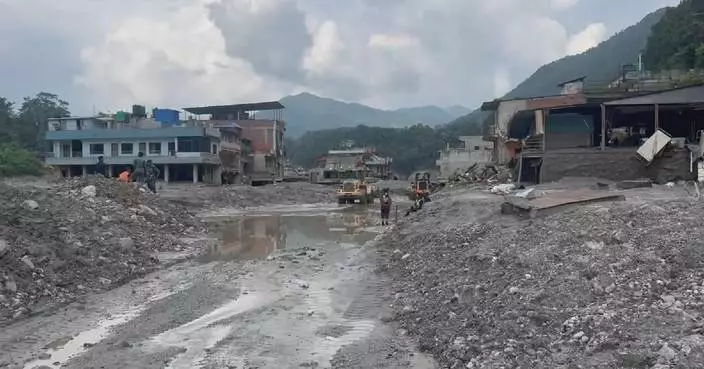
Su stressed that the disaster largely stems from the long-term impact of climate change which has created instability in the region as warmer weather causes glacial activity to speed up. "Based on remote sensing monitoring data and on-site field surveys in recent days, a comprehensive analysis suggests that the source of this disaster is located on the Nepalese side of the border river basin between China and Nepal. At approximately 10:52 Beijing Time on Aug. 26, a glacier on [the southern slope] of Langtang Lirung in Nepal fractured at an altitude of about 5,200 meters, triggering an ice-rock avalanche. The avalanche rapidly descended from a high elevation, scouring the mountain slopes and generating a massive mudslide. It then surged approximately 22 kilometers at high speed along the Purepu Tsangpo River and the Donglin Zangbo River, before reaching China's Gyirong Port at an altitude of around 1,800 meters. The impact razed approximately 0.7 square kilometers of the area, including 27 buildings and their auxiliary facilities, to the ground. Road access, telecommunications, and power supply to Gyirong Port were all severely damaged and disrupted," he said.
"This disaster was caused by glacier instability under the long-term effects of climate warming. The event was characterized by its sudden onset, enormous peak flood discharge, high flow velocity, strong destructive power, and wide-reaching impact. These features represent a new and notable characteristic of cryospheric hazards across the Qinghai-Xizang Plateau and its surrounding regions," said Su.
He also noted that the ice-rock avalanche took less than seven minutes from its onset to reach the Gyirong Port, leaving little time for people to escape its path.
"According to disaster source tracing, the ice-rock avalanche occurred in a narrow, elongated gully with a significant vertical elevation drop, which endowed the avalanche with tremendous potential energy. During its rapid movement, friction and collisions generated substantial heat, producing large amounts of meltwater. The mixture of ice, rock, and meltwater scoured loose materials such as moraine deposits within the gully and rapidly evolved downstream. At 10:59 Beijing Time, the impact reached China's Gyirong Port, where it caused congestion and backwater effects at the port area, before continuing into downstream areas of Nepal," said Su.
While all-out rescue and relief operations are ongoing, Su said efforts are being strengthened to monitor the risks of secondary disasters occurring as this essential emergency work is being carried out.
The deadly mudslide had claimed 16 lives and left 546 others missing at Gyirong Port as of 18:00 Saturday, Xizang regional government said on Sunday morning.
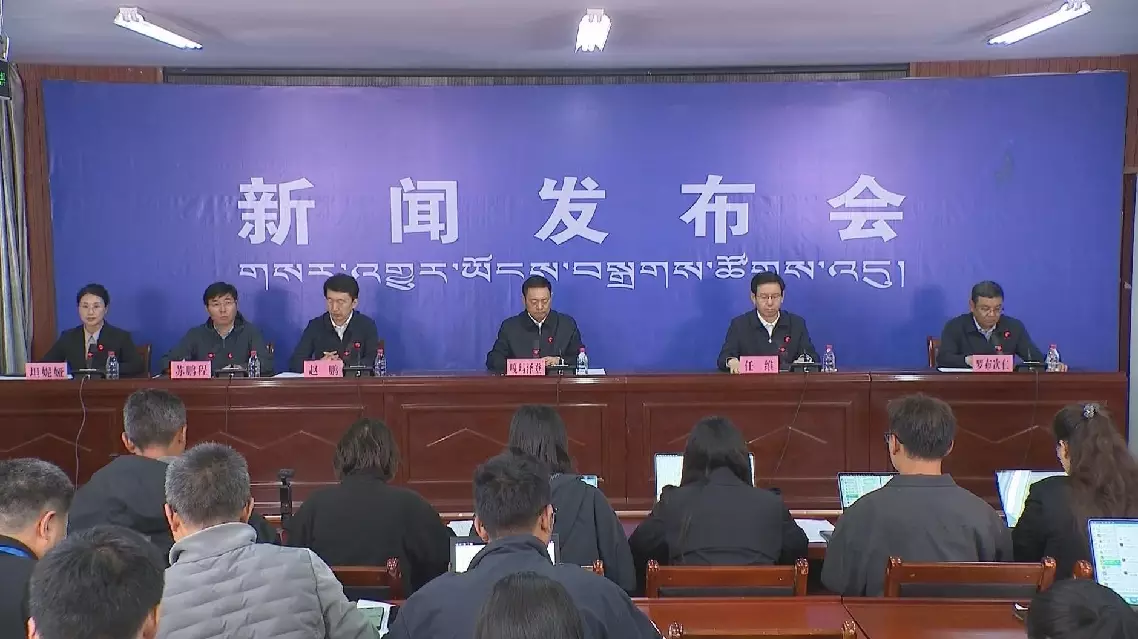
Ice-rock avalanche in Nepal triggers deadly mudslide in China's Xizang: expert