MIAMI (AP) — Tropical Storm Karina strengthened into a hurricane in the Pacific Ocean on Sunday and could become a major storm this week, forecasters said. The cyclone's center was at far out sea and was not threatening land.
Karina had maximum sustained winds of 80 miles per hour (130 kilometers per hour), the Miami-based National Hurricane Center said, making it a Category 1 hurricane. A major hurricane is Category 3 or greater.
The storm was located about 820 miles (1,325 kilometers) southwest of the southern tip of Mexico’s Baja California Peninsula and was moving and was moving northwest at 15 miles per hour (24 kilometers per hour) a forecast path farther out into the Pacific.
While Karina was expected to stay well away from land, swells from the storm were likely to cause dangerous surf and rip current conditions along parts of southwest Mexico and the Baja California Peninsula, the hurricane center said.
Elsewhere in the Pacific, Tropical Storm Lowell was 1,150 miles (1,850 kilometers) southeast of Hawaii, and it too posed no threat to land.
The National Oceanic and Atmospheric Administration has forecast a below-average Atlantic hurricane season due to El Nino.
It predicted eight to 14 named storms, with three to six of them reaching hurricane strength and one to three intensifying to major hurricanes.
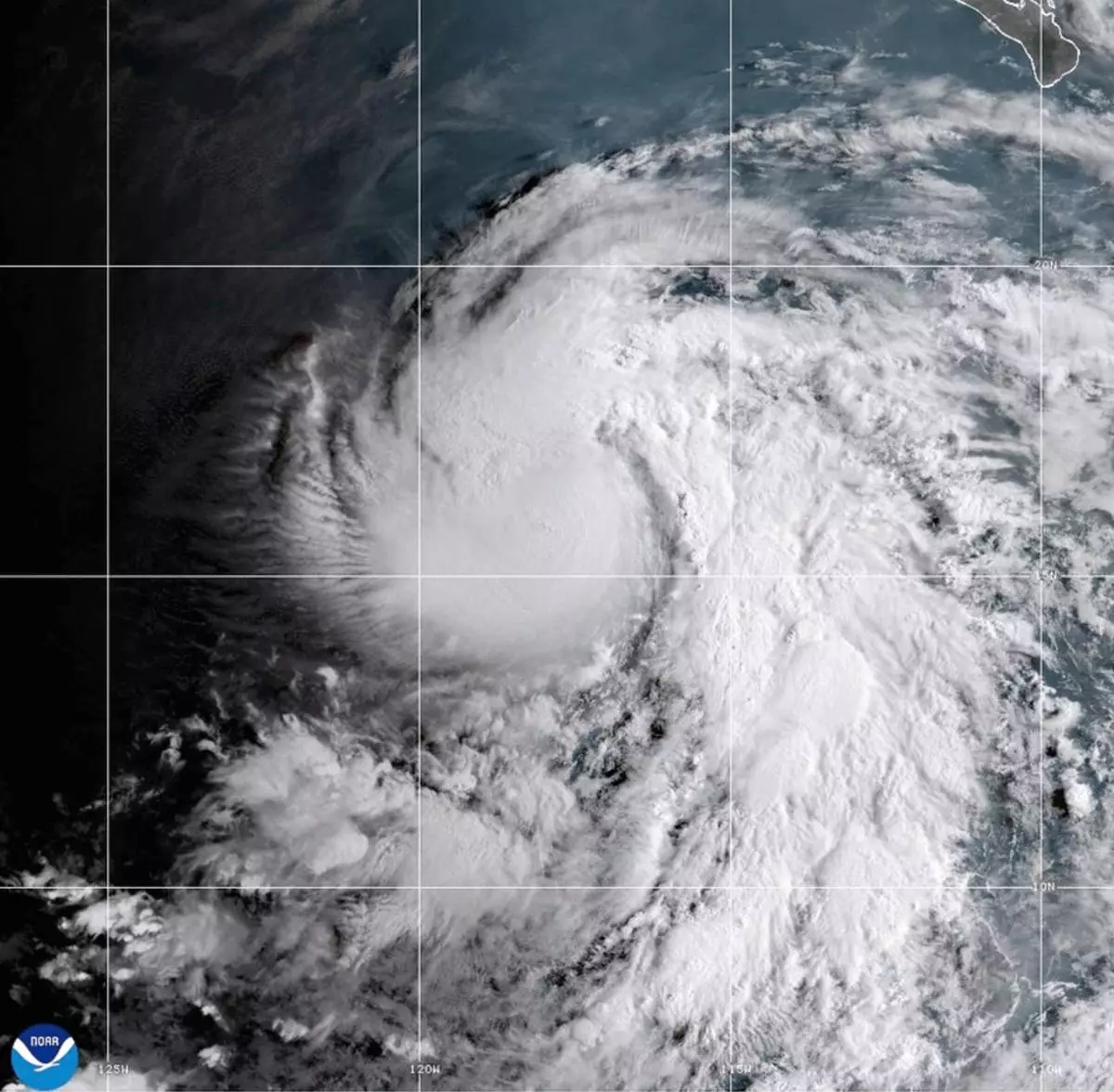
This satellite image released by NOAA shows Hurricane Karina strengthening off the southern tip of Baja California on Saturday, Aug. 29, 2026. (NOAA via AP)
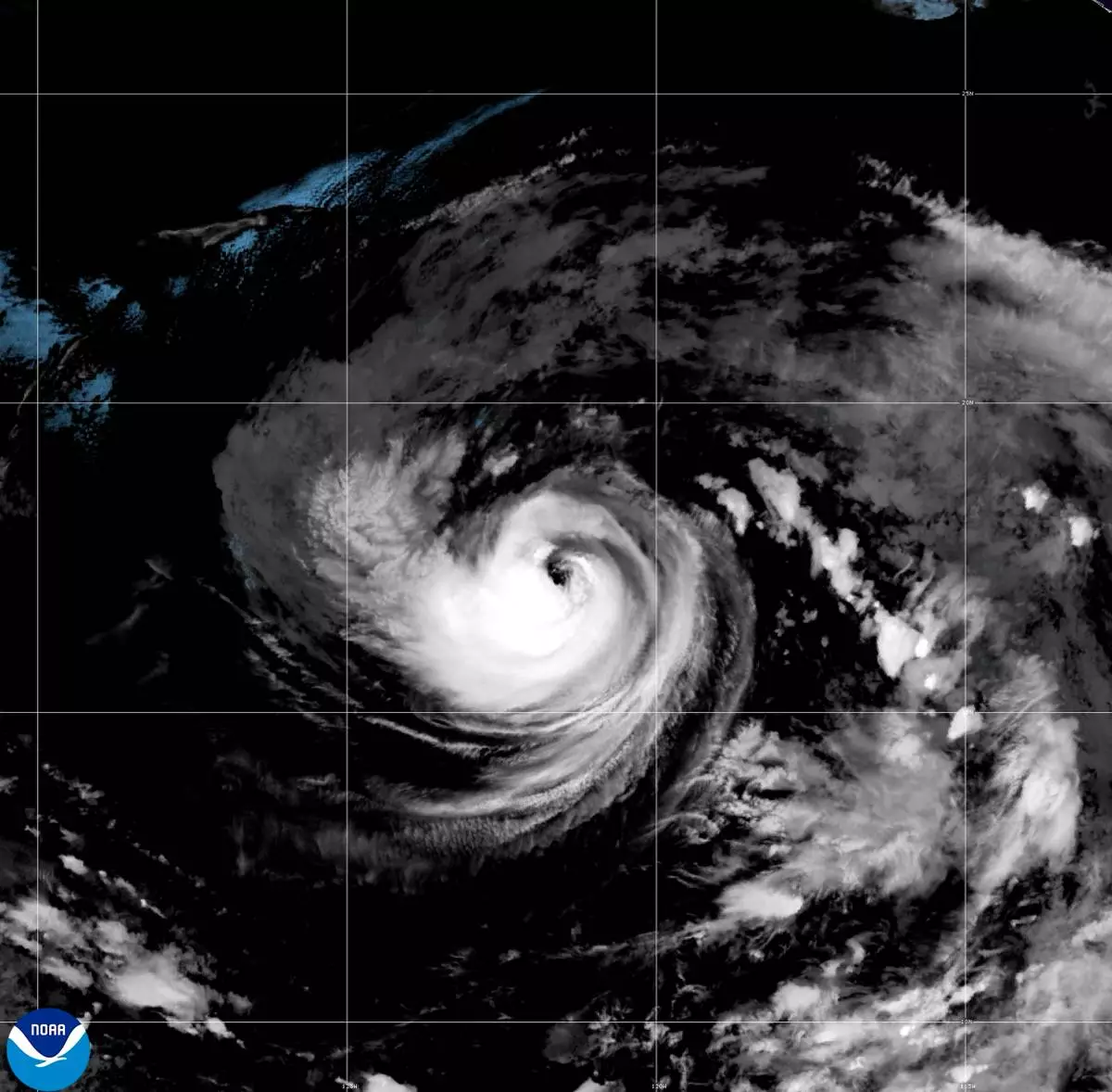
This satellite image released by NOAA shows Hurricane Karina strengthening off the southern tip of Baja California on Sunday, Aug. 30, 2026. (NOAA via AP)
WASHINGTON (AP) — The United States will stop providing $4 billion in aid each year to Israel in 2027 but will sell arms to its closest ally in the Middle East, President Donald Trump said on Tuesday.
The Republican president told Fox News Channel during a phone call on Election Day for the midterms that Israeli Prime Minister Benjamin Netanyahu had approached him about the idea and that they have been talking about it for a couple of years.
Trump said Israel doesn’t need the aid and it’s a lot of money for the U.S. to spend. But Trump also said that U.S. aid to Israel has become a Democratic talking point for candidates such as Michigan U.S. Senate candidate Abdul El-Sayed, a vocal critic of Israel.
Even far-right conservatives, who have supported Trump in the past, have taken issue with U.S. support for Israel, with prominent commentators like Tucker Carlson openly questioning the value of the relationship.
“You can consider it barter. You can consider military aid or cash,” Trump said. “Look, we give them $4 billion of things and money, and they don’t need it. And I was approached by Bibi Netanyahu, and we’ve been talking about it for a couple of years because it’s a lot of money.”
There was no immediate comment from Netanyahu’s office. But at least some of his political opponents were cautious.
Yair Golan, a leader in Israel’s opposition bloc, said an end to U.S. military aid would deal a “severe blow to Israel’s security” at a time when the country is fighting wars on multiple fronts. “The burden of funding defense needs at such a critical juncture will fall entirely upon the Israeli public,” Golan, a former deputy military chief, said in a statement.
The United States has sent tens of billions of dollars in military aid to Israel over the last few years.
In 2016, President Barack Obama, a Democrat, signed an unprecedented security agreement with Israel to give its military $38 billion over 10 years, amounting to $3.8 billion a year. Under the agreement, Israel’s ability to spend part of the funds on Israeli military products was to be phased out and eventually all of the money would be spent on American military industries.
Netanyahu has talked about the need to wean Israel off the aid in the past and has said that the American aid would end at some point.
He told The Economist in January that he wanted to “taper off” U.S. military aid in the next 10 years and that such a change was “in the works.”
But the optics of the aid had also become an issue, according to Trump, who singled out El-Sayed for using it as a talking point.
“The left uses the $4 billion payment — that everybody knows about, it’s no secret — as a signal of unfairness,” Trump said Tuesday on Fox. “And we can’t allow that to happen. I don’t like that, because it’s too easy. It’s almost too easy a target. And Bibi and I have been talking, and we’ve agreed. He was very understanding of it.”
Phasing out direct military and economic aid to Israel has long been a subject of debate in both countries and has gained traction in the last several years.
There are several issues that complicate it, though, not least of which are obligations the U.S. has to Israel under the terms of the Camp David peace accords with Egypt, which require the United States to support Israel and Egypt with security assistance.
In addition, much of the assistance the U.S. provides Israel comes in the form of foreign military financing, or FMF, that gives Israel the money but requires it to spend the money on American-produced weaponry, meaning the funds are plowed back into the U.S. economy.
Unless Israel plans to spend the same amount on purchasing American materiel, U.S. defense contractors may see an impact.
An academic study published last year showed the U.S. under the administrations of President Joe Biden, a Democrat, and Trump provided at least $21.7 billion in military assistance to Israel after the start of the Gaza war in 2023. The study was published on the second anniversary of the Oct. 7, 2023, Hamas attacks in Israel that provoked the conflict.
Another study, also published last year by the Costs of War project at Brown University’s Watson School of International and Public Affairs, said the U.S. had spent roughly $10 billion more on security aid and operations in the broader Middle East in the previous two years.
While the reports relied on open source material for most of their findings, they offered some of the most comprehensive accountings of U.S. military aid to close ally Israel and estimated costs of direct American military involvement in the Middle East.
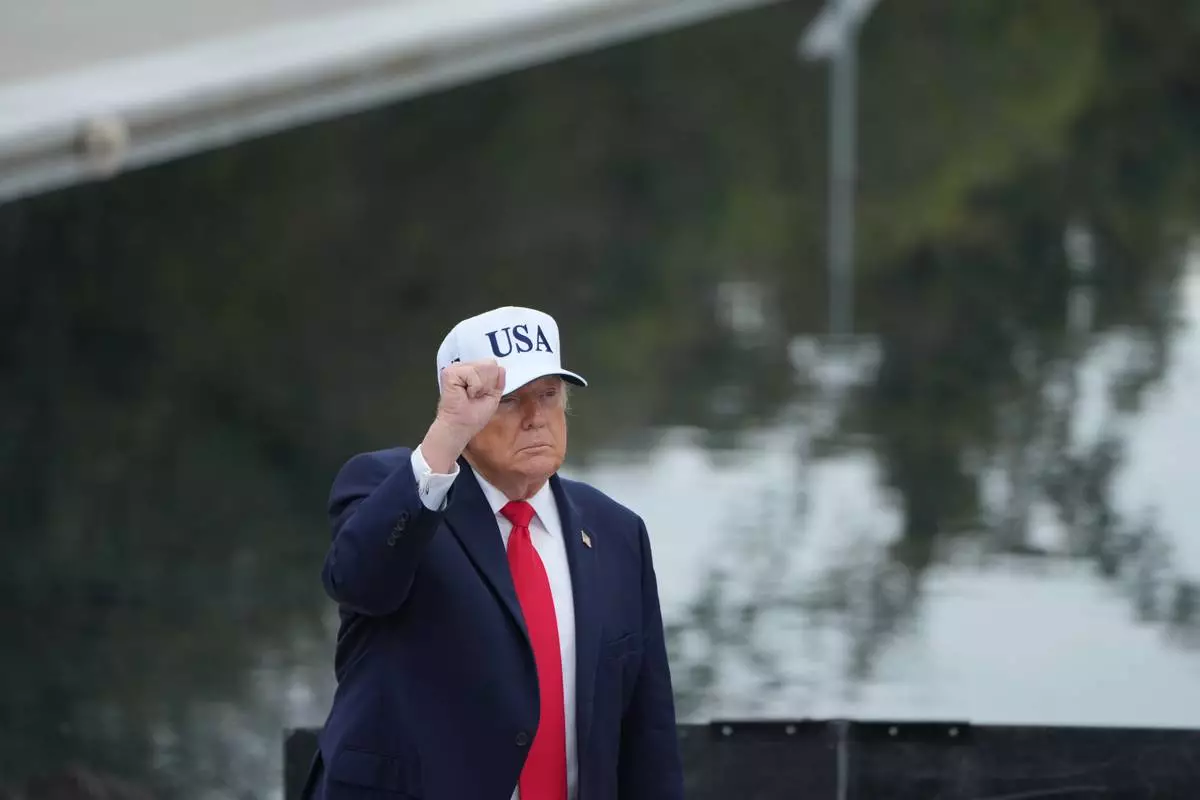
President Donald Trump after speaking in front of the Lincoln Memorial Reflecting Pool, Monday, Nov. 2, 2026, in Washington. (AP Photo/Mark Schiefelbein)