Surviving a 500°C Return to Earth: DJI Osmo Action 6 Also Becomes First Consumer Camera to Capture POV Footage of a Rocket Launch and Recovery
SHENZHEN, China, Aug. 31, 2026 /PRNewswire/ -- DJI, the global leader in civilian drones and creative camera technology, today announced the historic launch into space and reentry to Earth of the DJI Osmo Action 6 cameras. DJI's full ecosystem of imaging devices, including the upcoming Osmo 360 II, was used to establish an on-site filming network spanning from the sky to the ground.
During the successful launch and recovery of the reusable Zhuque-3 rocket by LandSpace, a privately owned commercial aerospace company, twelve DJI Osmo Action 6 cameras were mounted on the first-stage rocket body. This milestone marks the first time that a consumer-grade action camera has been used as a recording device for a space rocket's launch and recovery – without any special modifications. Not only did the Osmo Action 6 withstand extreme 500°C operating conditions to leave and return to Earth, but it also brought back extraordinarily valuable first-person footage – from ignition and liftoff, through the journey across the atmosphere, to landing and recovery.
Osmo Action 6 Launched Into Space Without Modifications
The Osmo Action 6 cameras were fixed at different critical positions on the first-stage rocket body, using a first-person perspective to document the entire launch and recovery process. The footage delivered a completely different view from previous one-way, space-perspective recordings. For the commercial spaceflight industry, where reusability is a key way to reduce costs, the high-fidelity native footage will help aerospace engineers review the recovery process, assess the rocket's first-stage body condition, and replicate successes.
Osmo Action 6 Survives Extreme Conditions in Space
Capturing this footage presented extraordinary challenges. During both ascent and return, aerodynamic heating raises the rocket body's surface temperature to roughly 400°C–500°C, while the engine and flight generate continuous high-frequency, high-intensity vibration. Even more challenging, passing through the atmosphere involves the "blackout zone" that causes a complete loss of external communication. Facing these extreme conditions, the DJI Osmo Action 6 demonstrated astonishing ruggedness for a mass-produced consumer camera. Not only did it "survive" thanks to its integrated high-strength structure, but its onboard direct-recording capability also overcame the communication limitations of the "blackout zone," ensuring all high-definition data returned to the ground completely intact.
Osmo Action 6 Captures Steady, Clean Footage
The Osmo Action 6's new-generation, ultra-powerful stabilization algorithm made it possible to "shoot steady," filtering out the image shake caused by the rocket body's high-frequency vibration without over-cropping the frame. Even during the launch's high g-loads and large maneuvers during first-stage attitude adjustments, the Osmo Action 6 delivered smooth and coherent footage while faithfully reproducing the details and attitude changes of the rocket's flight. It was also able to "shoot clear" in the extremely complex lighting conditions of space – a testament to its strength. Equipped with a 1/1.1-inch custom square large-format sensor, supporting recording of up to 4K/120fps and 13.5 stops of high dynamic range, the camera was able to adapt to the complex lighting environment in space – from intense high-altitude sunlight, low-altitude backlighting, and sand and dust. The resulting footage preserved the rich highlight and shadow details, while clearly capturing key high-speed moments such as the engine's ignition, grid-fin attitude adjustment, and landing cushioning.
DJI Cameras - including upcoming Osmo 360 II - Films the Launch Closely On-site
Beyond the rocket-mounted first-person perspective, DJI's full ecosystem of imaging devices were used to create an on-site filming network stretching from the sky to the ground. This included the DJI Mavic 4 Pro for aerial photography, DJI Matrice 4TD for thermal imaging, Osmo 360 II for panoramic 360° imaging and Osmo Pocket 4P for cinematic-quality footage. Together, these DJI products provided high-altitude situational tracking and thermal-imaging monitoring as well as behind-the-scenes footage on the ground. With multiple, blind-spot-free perspectives, they documented this moment in aerospace history.
For more information about each of the DJI products please visit: www.dji.com
About DJI
Since 2006, DJI has led the world with civilian drone innovations that have empowered individuals to take flight for the first time, visionaries to turn their imagination into reality, and professionals to transform their work entirely. Today, DJI serves to build a better world by continuously promoting human advancement. With a solution-oriented mindset and genuine curiosity, DJI has expanded its ambitions into areas such as renewable energy, agriculture, public safety, surveying and mapping, and infrastructure inspection. In every application, DJI products deliver experiences that add value to lives around the world in more profound ways than ever before.
For more information, visit our:
Website: www.dji.com
Online Store: store.dji.com
Facebook: www.facebook.com/DJI
Instagram: www.instagram.com/DJIGlobal
X: www.x.com/DJIGlobal
LinkedIn: www.linkedin.com/company/dji
Subscribe to our YouTube Channel: www.youtube.com/DJI
** This press release is distributed by PR Newswire through automated distribution system, for which the client assumes full responsibility. **
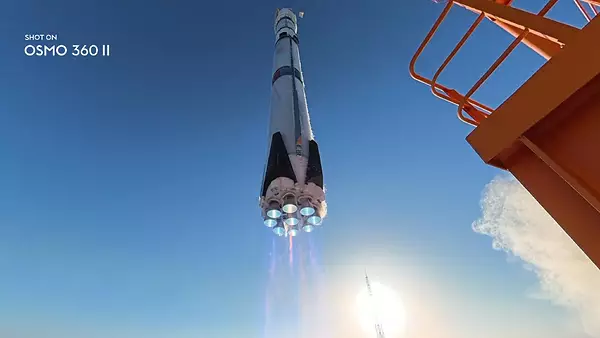
Upcoming Osmo 360 II Captured 8K/60fps Panoramic Shots of LandSpace's Rocket Launch Onsite Alongside DJI's Ecosystem of Handheld Cameras and Civilian Drones
SHENZHEN, China, Aug. 31, 2026 /PRNewswire/ -- Tencent Cloud, the cloud business of global technology company Tencent, and Elastic announced an expanded strategic collaboration in Shenzhen. The companies will deepen their technical and product collaboration across AI search, enterprise data, and agentic applications, helping enterprises establish dedicated context infrastructure for the AI era.
The two companies also jointly launched Tencent Cloud Elasticsearch Service (ES) Enterprise Edition, which introduces Elastic's enterprise-grade search and AI capabilities to the platform.
Elasticsearch is one of the world's most widely used open-source search engines. Elastic's Search AI Platform, the foundation for its search, observability, and security solutions, is used by thousands of companies, including more than 50% of the Fortune 500. It supports tasks such as product search in e-commerce, in-app search, and the troubleshooting and analysis of system logs. Tencent Cloud has been offering cloud services based on Elasticsearch since 2016.
AI is fundamentally changing the role of enterprise search, serving as the essential bridge that retrieves real-time context from internal data to ground large language models (LLMs). These models do not inherently understand an enterprise's internal information. To answer business questions, they need to retrieve relevant content from enterprise data in real time. Agents also need to continuously locate information and tools as they carry out tasks. Search is becoming a way to provide AI systems with grounded enterprise data.
Patrick Dixon, Senior Director of Channels & Alliances for APJ and Vice President for China at Elastic, said that as large language model capabilities advance, context is becoming increasingly important to enterprise AI applications. For agents, the ability to locate accurate and reliable enterprise data when it is needed directly affects the quality of subsequent responses, decisions, and execution.
Tencent Cloud Elasticsearch Service (ES) Enterprise Edition strengthens AI search, model integration, and agent connectivity. Enterprises can combine keyword and semantic search, enable large language models and agents to call search results directly, and keep large volumes of historical data searchable to provide AI with more complete business context.
Alongside Elastic's native capabilities, Tencent Cloud has continued to enhance ES with in-house engineering. In selected AI search scenarios, performance has improved by up to 5x, hybrid search latency has fallen by 60%, and memory consumption has been reduced by more than 50%.
Enterprises can add AI search capabilities without changing their existing data architecture and can use the service together with Tencent Hunyuan large language models and the Tencent Cloud TCRay inference platform. Customers running open-source editions or self-managed clusters can also access technical migration and upgrade services.
Enterprises are already leveraging these advanced search capabilities to optimize their AI and security workflows. Tencent ima uses ES as the underlying retrieval layer for its knowledge base, supporting both keyword and semantic search. After Tencent Cloud optimized the system for many users searching the knowledge base concurrently, memory consumption fell by 71% and retrieval performance improved by 58%.
At NIO, Tencent Cloud Elasticsearch Service (ES) serves as part of a security data intelligence foundation. It identifies the information most relevant to a current event from large volumes of security data, which AI then analyzes further. The system processes hundreds of billions of records in a single quarter. In one real-world attack, an attack chain that previously took analysts most of a day to investigate manually can now be retrieved and reconstructed in just two minutes.
Cheng Bin, General Manager of Data Platform Products at Tencent Cloud Data Analytics, said, "AI search is evolving from a standalone retrieval capability into infrastructure that connects enterprise data, models, and agentic applications. Tencent Cloud will combine Elastic's enterprise-grade capabilities with its own experience in operating large-scale systems and its AI ecosystem, helping more enterprises establish context infrastructure for the AI era."
Han Xiao, Vice President of AI at Elastic, said that as large language models turn toward longer-horizon tasks in 2026, search has more room to contribute. "Search in 2026 is, in essence, about test-time compute." He added, "When search quality falls short, teams should first consider whether additional inference compute can address the problem before adding data or switching to a larger model."
Tencent Cloud was among the early cloud providers in China to form a Platinum-level partnership with Elastic. Over the past seven years, Tencent Cloud has consistently ranked among the leading contributors to the Elastic open-source community. Tencent Cloud Elasticsearch Service (ES) now runs 20,000 clusters and 100,000 nodes, reliably supporting search traffic peaks for large-scale live events, including the China Media Group (CMG) Spring Festival Gala and the Paris Olympic Games.
About Tencent Cloud
Tencent Cloud is one of the world's fastest-growing cloud service providers, committed to delivering innovative solutions that address everyday life and business challenges, and empowering the digital transformation of smart industries. Tencent Cloud has always upheld its mission to meet the needs of diverse industries, leveraging cloud computing, big data analytics, AI, IoT and cybersecurity, together with its extensive global infrastructure, to provide businesses with stable, secure, and industry-leading cloud products and services across a wide range of sectors, including education, finance, healthcare, gaming, media and entertainment, property, retail, travel, and transportation.
** This press release is distributed by PR Newswire through automated distribution system, for which the client assumes full responsibility. **

Tencent Cloud and Elastic Strengthen Strategic Collaboration to Build Context Infrastructure for the AI Era