DUBAI, United Arab Emirates (AP) — The United Arab Emirates’ air force intercepted an Iranian drone over its territorial waters Monday, the Defense Ministry said, an attack that comes after the U.S. and Iran exchanged fire on the weekend, the first significant military action in a month.
In a short statement, the Defense Ministry said it “dealt with” an Iranian drone that was detected over its waters approaching from Iran.
There were no immediate claims of responsibility from Tehran nor any reports of damage. The UAE Defense Ministry later issued a second statement denying the Al Menhad Air Base in Dubai had been targeted by Iranian missiles, as had been reported by Iranian media outlets.
The incident came after U.S. forces on Sunday struck Iranian rocket launchers on an Iranian island, breaking a lull in fighting in the war that has lasted more than six months.
Iran responded by launching missiles at U.S. sites in Jordan, which were intercepted.
Early Monday, Iran's Foreign Ministry said that Iran would “not hesitate to exercise the inherent right of legitimate defense and will respond decisively to any military aggression.”
Before heading to attend the Shanghai Cooperation Organization's summit in Kyrgyzstan with Foreign Minister Abbas Araghchi, Iranian President Masoud Pezeshkian, who has favored a negotiated end to the conflict, stressed that Iran was not seeking war.
“But,” he said, “we will respond decisively to aggressors.”
The summit brings together a group billed as a counterweight to U.S. global influence, and includes Chinese President Xi Jinping, Russian President Vladimir Putin and Indian Prime Minister Narendra Modi. Pezeshkian was scheduled to meet with Putin on the sidelines on Tuesday.
Meantime, U.S. Treasury Secretary Scott Bessent was set to host meetings of the Group of 20 finance ministers in North Carolina on Monday and Tuesday, which come as Washington pressures other countries to help the U.S. economically isolate Iran to try and exact concessions out of its leaders to end the war.
The U.S. had been focusing on economic pressure in recent weeks but on Sunday, U.S. Central Command said it had struck Iranian launchers after observing forces with Iran’s Revolutionary Guard Corps preparing to launch rockets with sea mines into the Strait of Hormuz. The U.S. military said last week it had completed clearing sea mines from the waterway’s international shipping routes.
Semiofficial news outlets in Iran reported sounds of explosions near Larak island on the strait and the Revolutionary Guard said there had been casualties.
U.S. military officials disputed Iran’s claim that the latest American strikes were an act of aggression, calling them a “limited, precise action” against what they said were minelaying forces.
Iranian state television later showed what it said were ballistic missiles being fired at American bases in Jordan, and Jordan’s military said had intercepted eight that had entered its airspace.
A return to open conflict would be dangerous for the region, where Iran has targeted U.S. military bases and infrastructure in Gulf countries since the war began on Feb. 28.
The last time the U.S. military confirmed targeting Iran was on July 29, when it announced a “heavy wave of strikes” on dozens of Revolutionary Guard targets including coastal surveillance and defense sites.
U.S. President Donald Trump said on Aug. 1 he would order the military to hold off on new strikes at the urging of Gulf allies Qatar, Saudi Arabia and the United Arab Emirates.
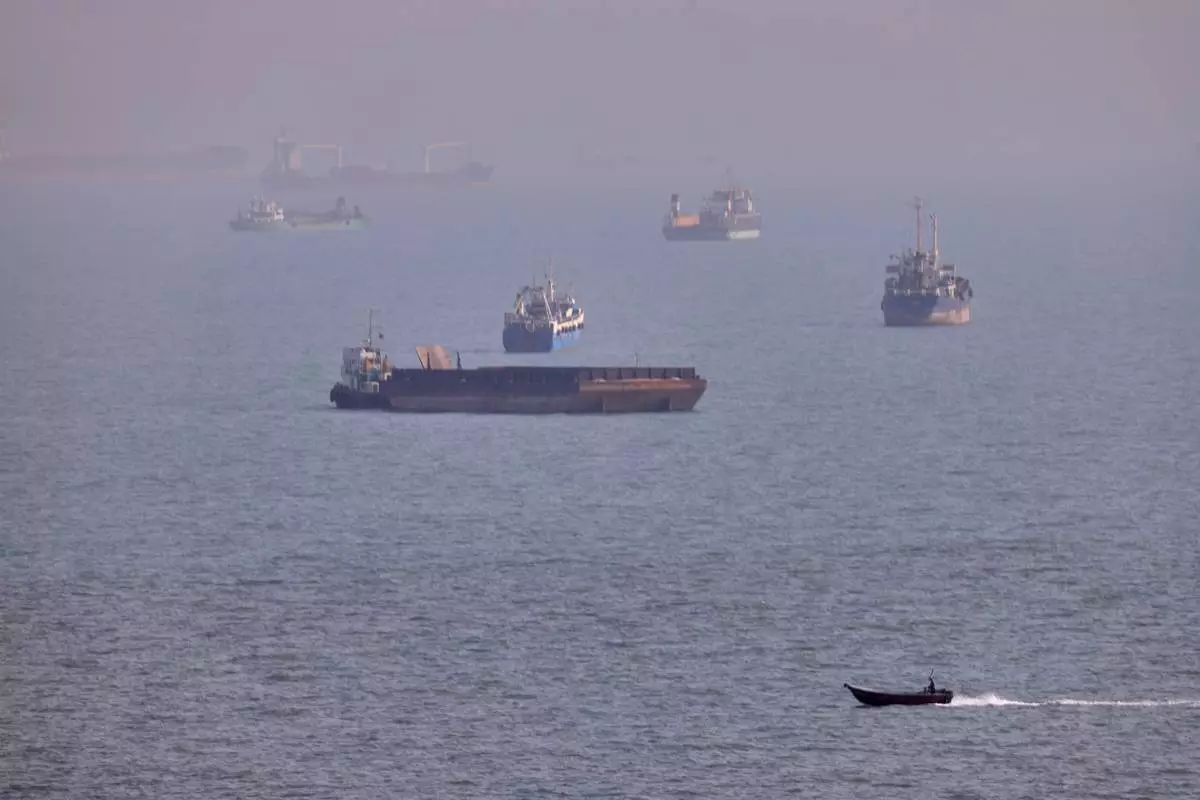
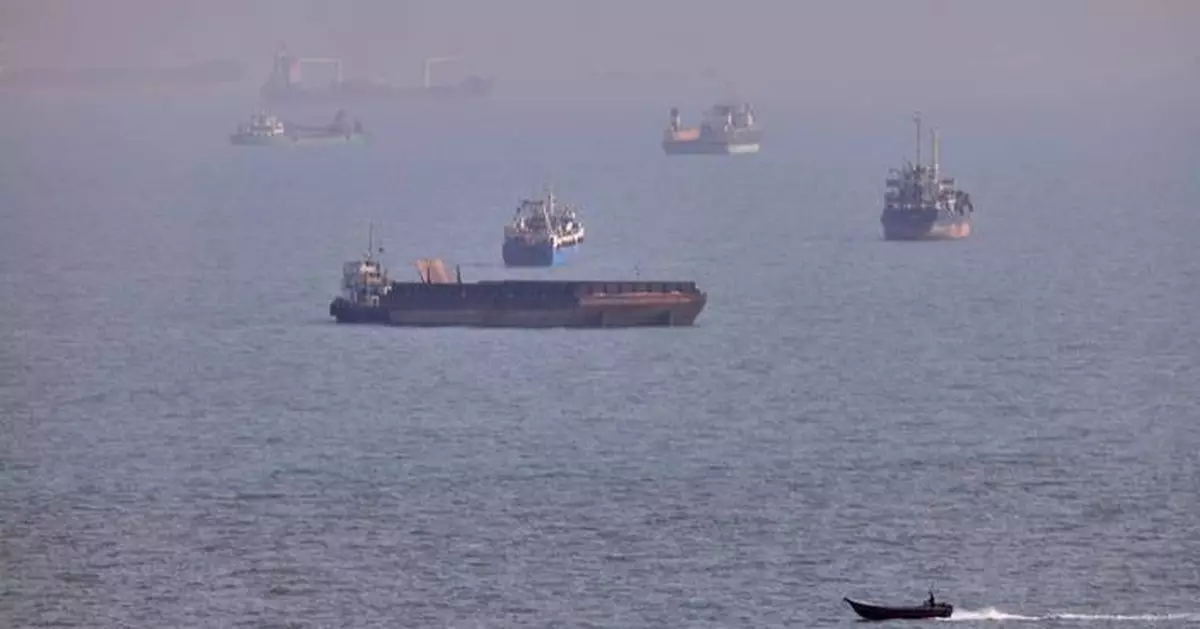
FILE - A small boat sails past cargo ships and other commercial vessels anchored in the Strait of Hormuz off Bandar Abbas, Iran, Wednesday, Aug. 5, 2026. (Amirhosein Khorgooi/ISNA via AP, File)
KATHMANDU, Nepal (AP) — Rescuers were trying to find trapped workers in at least a dozen hydroelectric plant sites Monday after catastrophic flooding in Nepal and Tibet killed at least 900 people and left more than 4,700 missing.
Multiple foreign teams were assisting local rescuers to find workers in multiple tunnels at Nepal's power plants on the rivers that flooded last Wednesday.
Mohan Kumar Dangi, president of the Independent Power Producers Association of Nepal, or IPPAN, said the floods damaged at least 12 hydropower projects across Rasuwa and Nuwakot districts and about 900 people were missing from the project sites.
Officials have previously offered varying estimates of the number trapped.
“We are working in search and rescue of the stranded people from hills, settlements and river areas,” said Brig. Gen. Raja Ram Basnet, Nepal’s army spokesman.
Nepal’s disaster agency said Monday that 903 deaths had been counted in that country, with 4,247 people, including 592 foreigners, missing. As of Sunday, Chinese authorities reported 16 deaths and 546 missing, and Chinese state media said 261 of the missing were foreigners, including over a hundred Nepalis.
Workers shoveling mud from a flood-ravaged power station in Dhading, Nepal, told The Associated Press that the station is a key node for providing power to over 20,000 people in the region. The workers cleaning the power station said they hope that it is not rebuilt near the river.
Rescue efforts are focused on people trapped in the gigantic tunnels built for controlling the waterflow to produce hydropower.
“The tunnels are built to access hydropower infrastructure and to divert water — an essential step to generate energy. These tunnels are big enough to drive trucks through,” said Jakob Steiner, a geoscientist at the University of Graz in Austria who is currently based in Dhaka, Bangladesh. “There is enough place for people to take refuge safely inside and from what we understand they have managed to get oxygen to some of those stuck inside and are trying to rescue them now. It’s a race for time though as people need food and water."
In the Upper Trishuli-1 Hydropower Project, in the hard-hit Rasuwa district, at least 576 were missing, Dangi said, adding that around 300 of them were believed to be trapped inside the project’s tunnel. Rescuers have been trying to find survivors for days, working through the rain.
On the Chinese side, rescue and recovery efforts included rebuilding the road leading to Gyirong Port at the border between China and Nepal.
Trucks carried giant rocks as workers worked on repaving a portion of the road, state broadcaster CCTV showed Monday, next to rapidly rushing waters, which have been made more powerful by rains in the past couple of days. The road is now under some 2 to 3 meters (6.6 -9.8 feet) of water, hampering rescuers' ability to reach the border. The repaving effort was just a little over a kilometer (.62 miles) from the border, CCTV said.
Although some rescue teams have managed to reach the border, that represented only a portion of the force.
Chinese state media coverage has focused largely on the official response, highlighting the deployment of firefighters, the People's Liberation Army as well as the instructions from top leaders. Little is known about victims on the Chinese side.
Two days after the disaster, Maraval Nagappan traveled to Nepal to search for his son, who was among the missing. He visited rescue centers and morgues and went as far as 40 kilometers (25 miles) from where his son was believed to have been, but found no sign of him.
His son, Sathya Narayan had been leading a group of 49 Indian devotees who were returning from Mount Kailash — a sacred site in southwestern Tibet. The group has been missing since floodwaters swept through a Chinese immigration complex where they were waiting to cross into Nepal.
Nagappan, who owns the Chennai-based travel company that organized their pilgrimage, and said the group had been expected to complete immigration formalities and leave for Nepal within about two hours. Instead of making the crossing, they were caught in the flood, Nagappan said.
The pilgrimage had begun Aug. 14. “I haven’t heard from my son since then. I don’t know whether he is alive or dead,” he told AP, but he said he hadn't given up on hearing from his son.
Surveillance footage showed water surging through the immigration complex at the border as people scrambled to escape. Nagappan said some of those seen fleeing were members of his son’s group and were identified by the clothes they were wearing.
Wednesday’s flash floods started after a glacial collapse high in the Himalayan region. Scientists who studied satellite images said bedrock underneath a glacier high in the Himalayan region had collapsed, taking part of the glacier with it. The rockfall was so extreme that it registered as a magnitude 5.2 seismic event.
The rocks and melted water then swelled the rivers in the valleys below, causing a torrent of water that swept buildings, bridges and earth downstream in Tibet and Nepal.
Wu reported from Bangkok. AP writers Aijaz Hussain, Sheikh Saaliq in New Delhi, Victoria Milko in Dhading, Nepal, and Sibi Arasu in Bengaluru, India, contributed to this report.
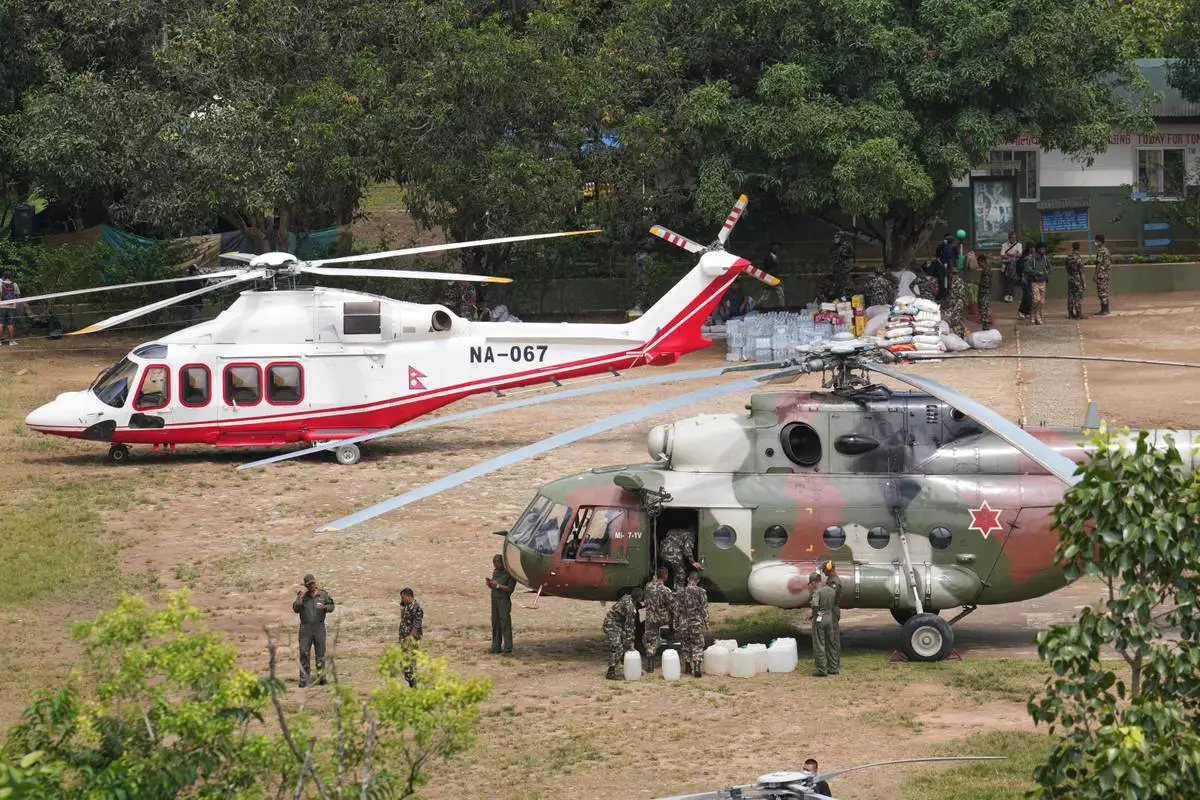
Private and military helicopters are deployed to rescue people stranded in areas cut off by flash flooding in Nepal's Nuwakot district, Monday, Aug. 31, 2026. (AP Photo/Rajesh Kumar Singh)
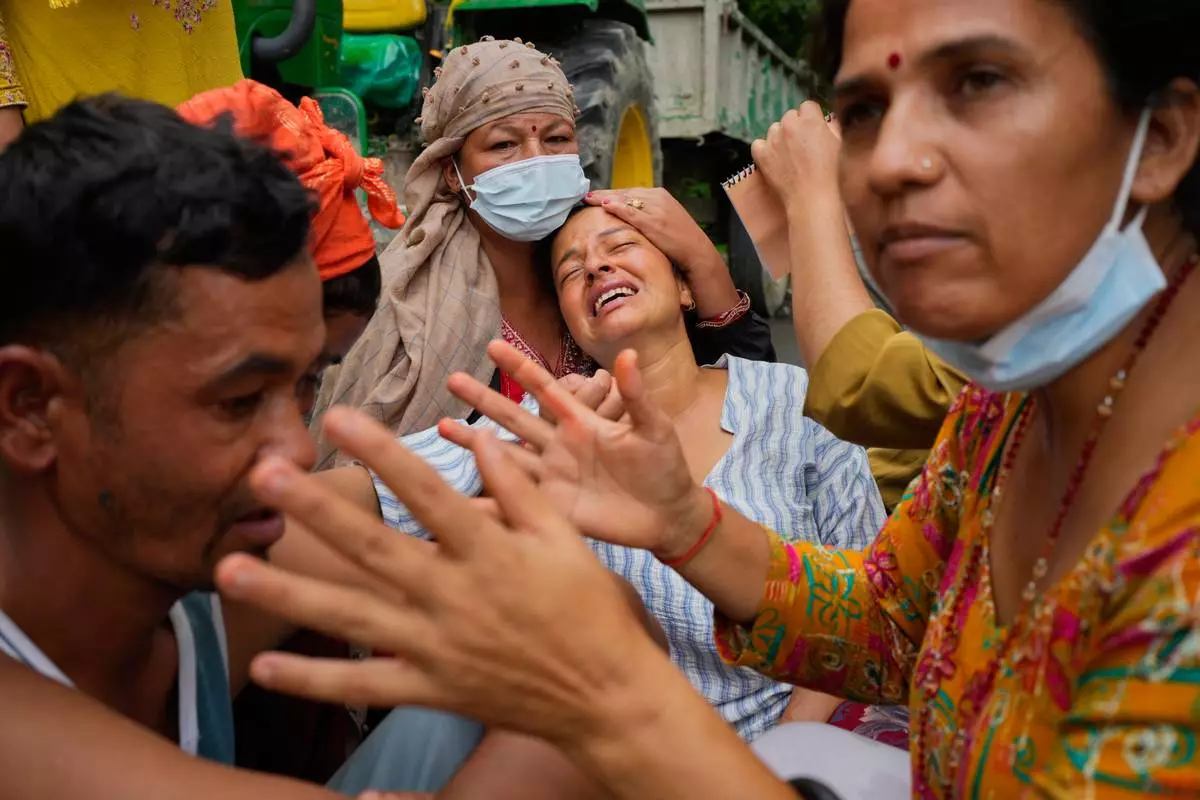
Relatives console Muna Khadka, center, who lost her son Aayush Khada, in flash floods, during mass burials in Chitwan, Nepal, Monday, Aug. 31, 2026. (AP Photo/Dar Yasin)
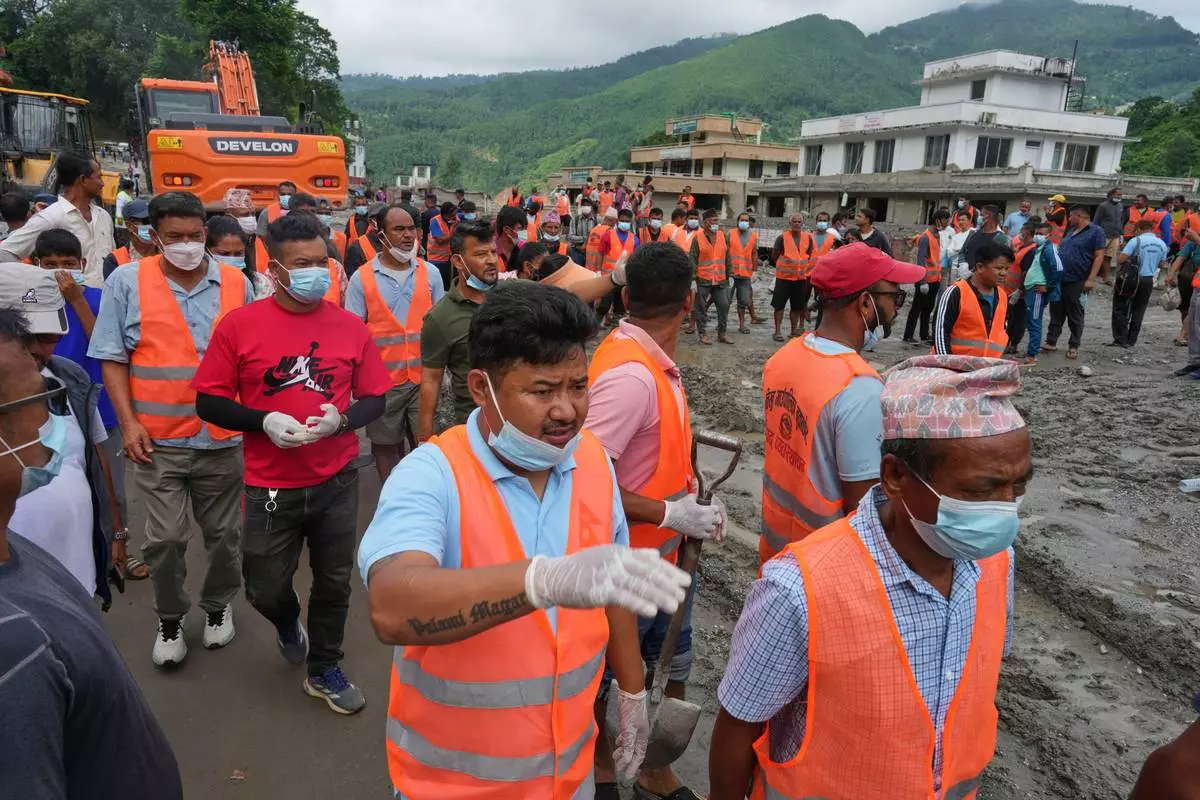
Rescuers arrive at a village affected by flash flooding in Nepal's Nuwakot district, Monday, Aug. 31, 2026. (AP Photo/Rajesh Kumar Singh)
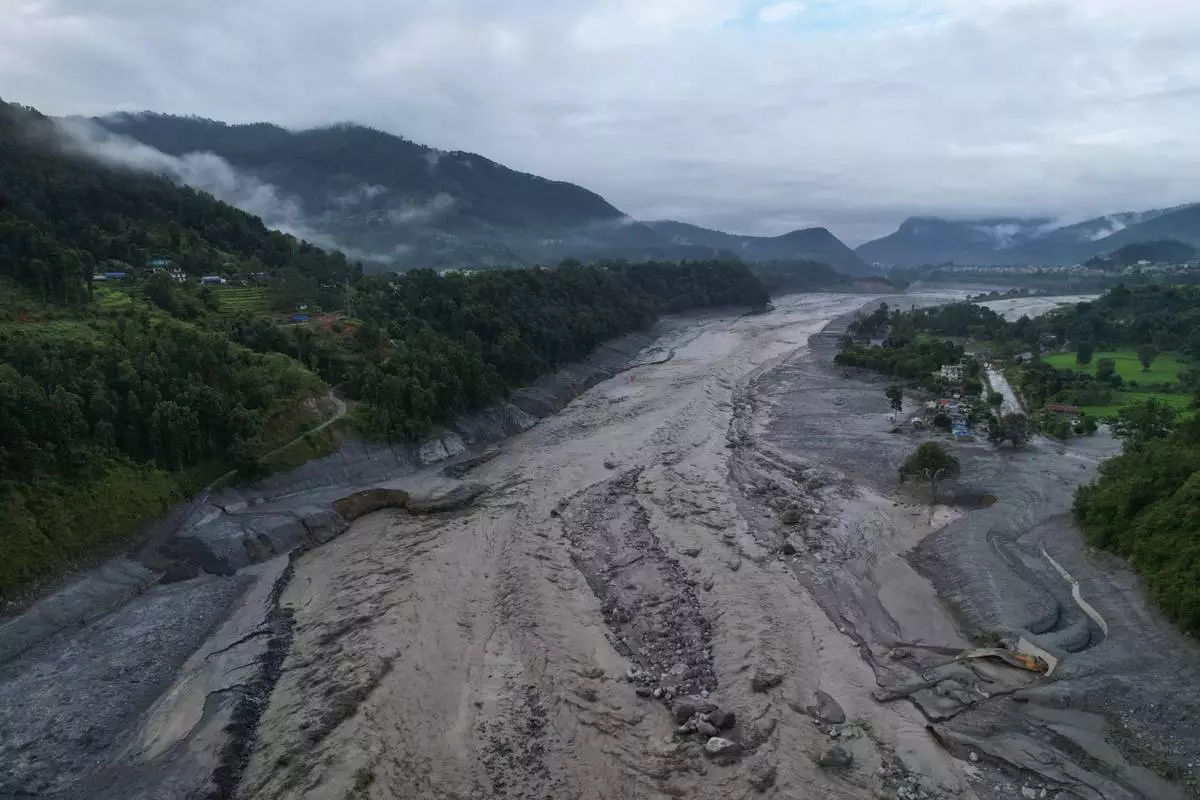
A drone view shows a major section of Pasang Lhamu highway washed away along swollen Trishuli river by recent flash floods cutting off Rasuwa district from Nuwakot area, Nepal, Monday, Aug. 31, 2026. (AP Photo/Rajesh Kumar Singh)
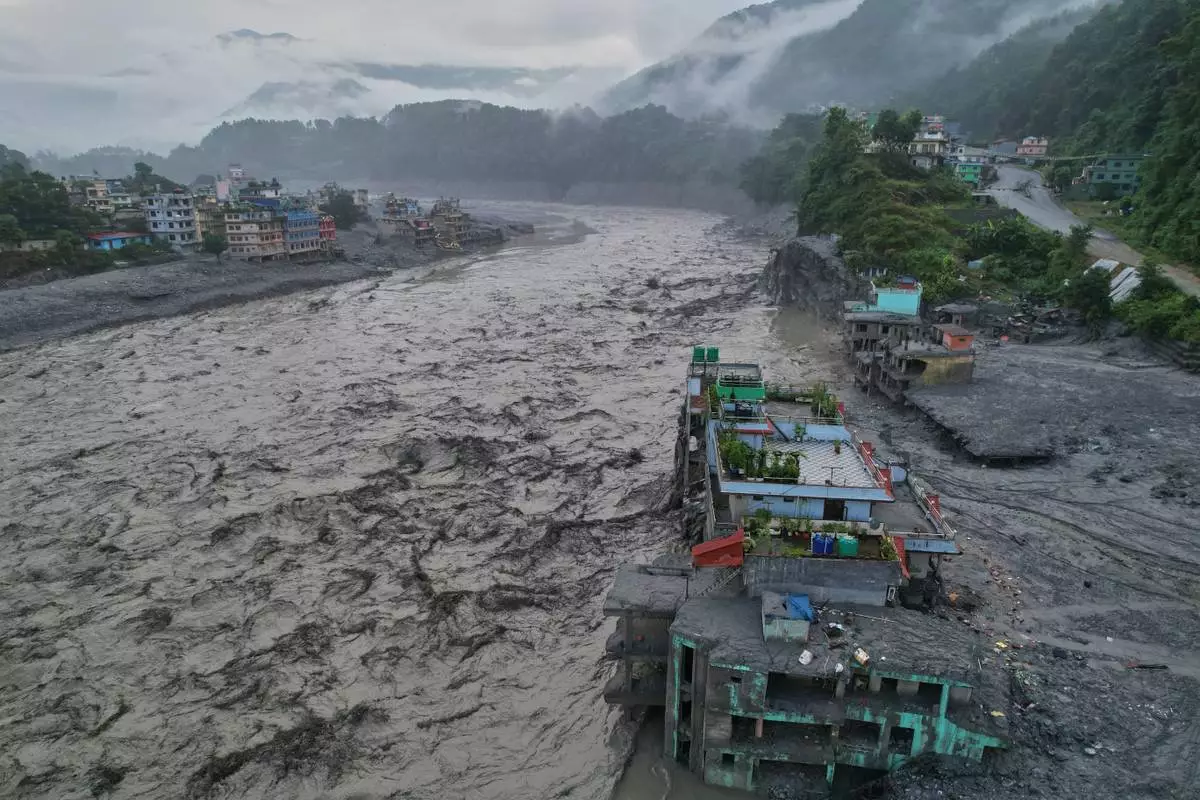
A drone view of the aftermath of flash flooding along the Trishuli river amidst fresh water surge warning in the Trishuli Bazaar area of Nuwakot district, Nepal, Sunday, Aug. 30, 2026. (AP Photo/Rajesh Kumar Singh)
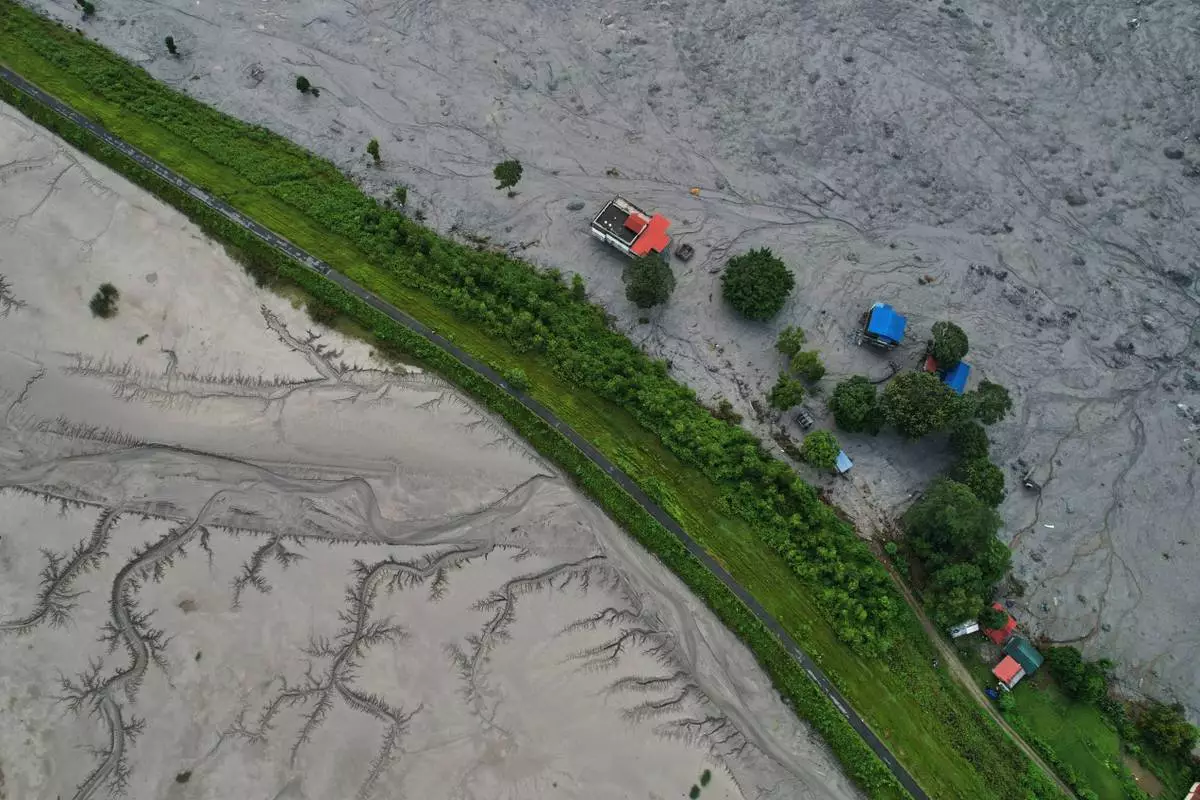
A drone view shows a major section of Pasang Lhamu highway washed away along swollen Trishuli river by recent flash floods cutting off Rasuwa district from Nuwakot area, Nepal, Monday, Aug. 31, 2026. (AP Photo/Rajesh Kumar Singh)