Interactive B2B Hub Empowers Business Across Asia to Evaluate, Test, and Co-Create Future-Ready Commercial Display Solutions
News Summary
- LG Electronics has unveiled its upgraded Commercial Display Showroom – the LG Business Innovation Center (LG BIC) - to support the growing demand for advanced commercial display solutions.
- Designed as an immersive customer experience and validation hub, the LG BIC allows business owners, system integrators, consultants, and resellers to evaluate, test, and co-create tailored solutions in real-world environments before making investment decisions.
- The facility showcases LG's comprehensive display technology ecosystem tailored for sectors including Retail & QSR Stores, Hospitality, Education, Corporate Offices, Transportation, and Virtual Production.
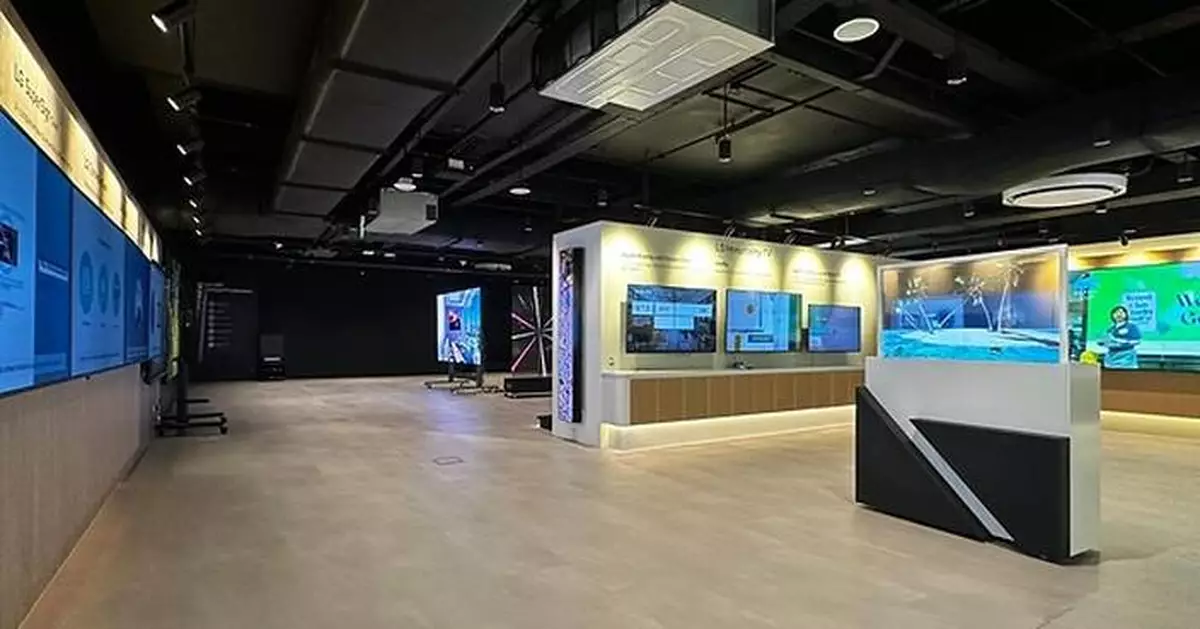
SINGAPORE, Aug. 31, 2026 /PRNewswire/ -- LG Electronics (LG) Singapore has officially launched its upgraded Business Innovation Centre (LG BIC) in Singapore, making a significant milestone for the company's commercial display and Information Display business in the region. The launch was attended by trade partners, distributors, consultants, who experienced firsthand a reimaged space that brought LG's commercial solutions out of brochures and into one powerful, hands-on environment.
The new showroom was designed as an integrated B2B showcase to make specification, integration, and deployment decisions clearer and more intuitive for industry professionals. Guests at the opening were taken through live demonstrations, software integration scenarios, and interactive walkthroughs spanning LG's full commercial display portfolio, all under one roof.
The showroom put on display the full breadth of LG's commercial display portfolio, spanning Ultra Slim Micro LED technology, Transparent OLED displays, All-in-One LED displays, and the Interactive CreateBoard designed for corporate and educational environments. The specialized LED Zone will feature both indoor and outdoor LED solutions, allowing customers an immersive experience and visualization of how products can be applied across industries and business environments. Rounding out the showcase were LG's specialized industry solutions—including high-reliability displays for command and control centers—as well as cloud-based software management platforms, giving visitors a complete picture of LG's end-to-end B2B capabilities.
The inclusion of the all-new LG E-paper Display (32RS1Q-B) was particularly noteworthy, reflecting the surging demand for energy-efficient, sustainable digital signage across Singapore and the broader region. Featuring a 31.5-inch electronic ink screen, ultra-low power consumption, a built-in 72 Wh battery, wireless power charging, and an ultra-slim 8.6 mm profile, the E-paper display demonstrated an ideal digital replacement for traditional paper posters in retail, corporate, and public spaces.
Beyond its role as a showroom, the facility functions as a customer engagement and innovation hub supporting clients and partners in Singapore. The center is responsible for providing hands-on training, system testing, and solution co-creation for locally-based customers, distributors, system integrators, and engineers, focusing on the installation, network management, software integration, and servicing of LG commercial display products.
The Singapore opening formed part of LG's sustained global investment in B2B innovation infrastructure. Similar LG Business Innovation Centers operate worldwide supporting LG's strategy to build local technical expertise, foster ecosystem collaboration, and deliver consistent commercial service across markets.
Industry professionals, trade partners and consultants interested in experiencing the LG Business Innovation Center firsthand are welcome to book an appointment for a personalised tour. Visit www.lg.com/sg/business/inquiry-to-buy/ to schedule your visit.
About LG Electronics Media Entertainment Solution Company
The LG Media Entertainment Solution Company (MS) is a recognized innovator in televisions, audio, displays and smart TV platforms. The MS Company enhances the media entertainment experience with its OLED TVs, renowned for perfect black and perfect color, and premium LCD QNED TVs, all powered by the personalized webOS smart TV platform. The MS Company also offers Information Technology solutions (gaming monitors, business monitors, laptops, projectors, cloud devices and medical displays) as well as Signage solutions (Micro LED signage, digital signage, hospitality displays and signage software solutions) that are designed to maximize customers' work efficiency and deliver strong value. For more news on LG, visit www.LGnewsroom.com.
About LG Electronics Singapore Pte Ltd
LG Electronics Singapore Pte Ltd (LG Electronics Singapore) is a fully owned subsidiary of LG Electronics Inc., the pioneer and market leader of the Korean electronics industry. LG Electronics Singapore operates four business units locally – Media Entertainment Solution, Home Appliance Solution, Air Solutions and Business Solution. In recognition of its vision to enrich people's life with smart technologies and innovative design, LG Electronics Singapore has been recognized with prominent local and international accolades, such as the CNET Asia Editor's and Readers' Choice Awards, HWM+HardwareZone.com Tech Awards and Red Dot Design. For more information, please visit www.lg.com/sg.
Media Contacts:
| Burson Singapore E-mail: bursonforlg@bursonglobal.com
Cher Sok Kheng LG Electronics Singapore E-mail: sokkheng.cher@lge.com | Shannon Kang LG Electronics Singapore E-mail: shannon.kang@lge.com |
Burson Singapore
E-mail: bursonforlg@bursonglobal.com
Cher Sok Kheng
LG Electronics Singapore
E-mail: sokkheng.cher@lge.com
Shannon Kang
LG Electronics Singapore
E-mail: shannon.kang@lge.com
** This press release is distributed by PR Newswire through automated distribution system, for which the client assumes full responsibility. **
LG Electronics Launched New Business Innovation Center In Singapore To Accelerate Regional Digital Transformation