Skip to Content Facebook Feature Image

New US missile appears to have left wide path of death and destruction in Iranian city, report says

News

New US missile appears to have left wide path of death and destruction in Iranian city, report says
News

News

New US missile appears to have left wide path of death and destruction in Iranian city, report says

2026-09-01 13:07 Last Updated At:13:10

It has been touted by the manufacturer as the ballistic missile of the future: lethal, long-range and pinpoint. Lockheed Martin’s Precision Strike Missile has the U.S. military investing billions to update its arsenal.

But a close look at what is believed to be its first use in combat — on the first day of the Iran war — highlights the potential peril of deploying this weapon near population centers because it appears to spray pellets over a wide area, according to a review by the conflict monitor Airwars and interviews with weapons experts and former defense officials.

More Images
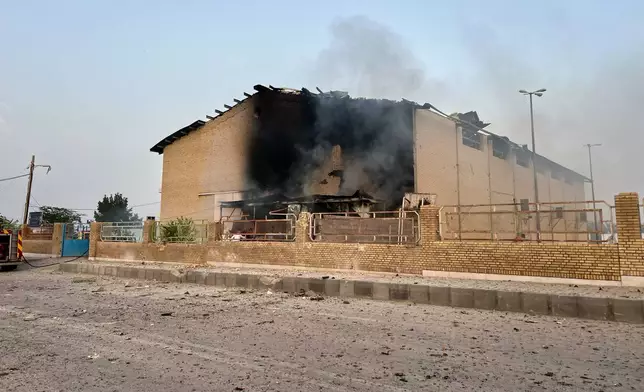
Smoke rises from a building damaged in a strike in Lamerd, southern Iran, Saturday, Feb. 28, 2026. (Alireza Ameri/Tasnim News Agency via AP)
Smoke rises from a building damaged in a strike in Lamerd, southern Iran, Saturday, Feb. 28, 2026. (Alireza Ameri/Tasnim News Agency via AP)

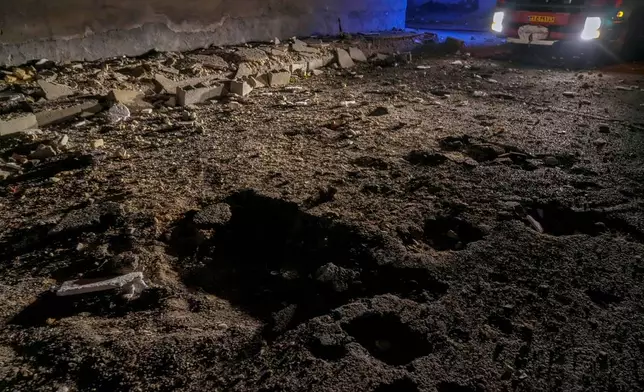
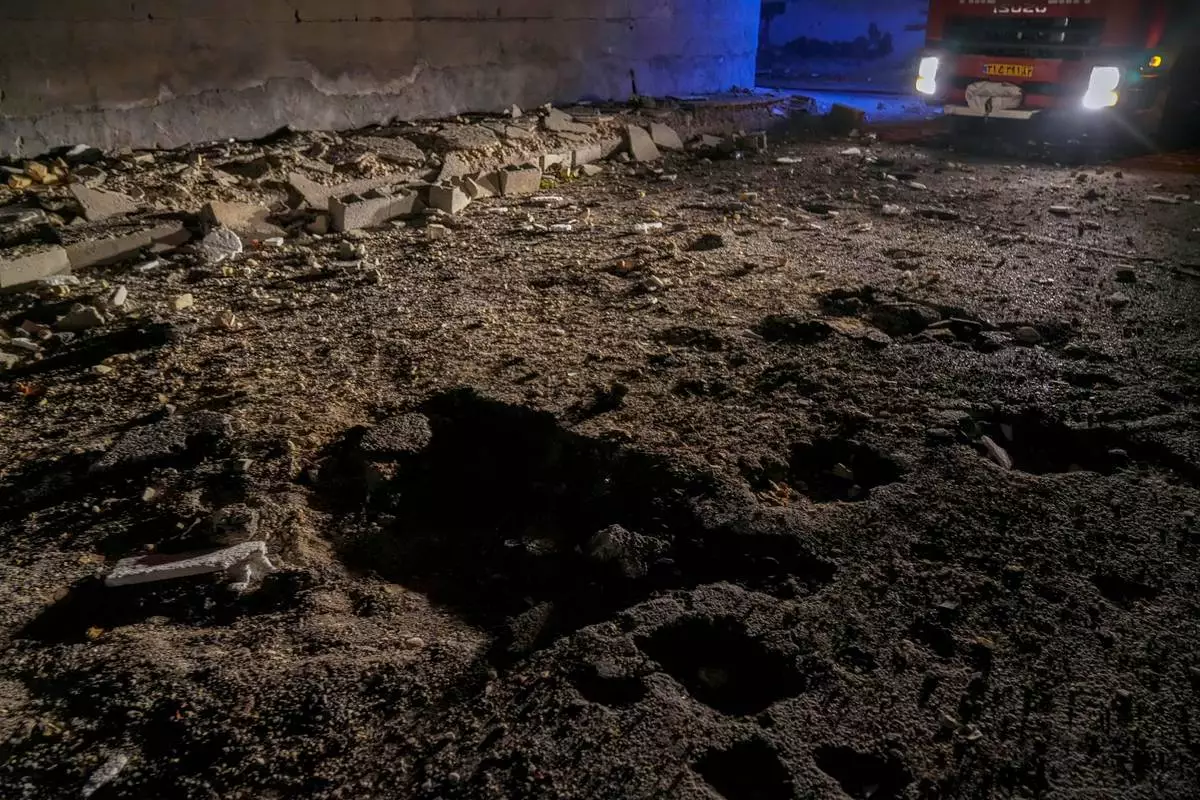
A fire truck's lights reveal a road damaged by a strike in Lamerd, southern Iran, Saturday, Feb. 28, 2026.(Alireza Ameri/Tasnim News Agency via AP)
A fire truck's lights reveal a road damaged by a strike in Lamerd, southern Iran, Saturday, Feb. 28, 2026.(Alireza Ameri/Tasnim News Agency via AP)

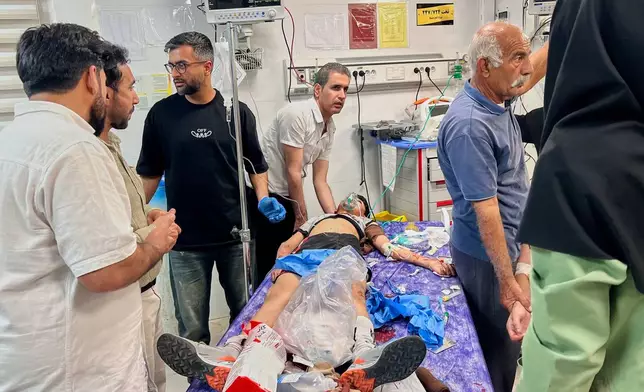
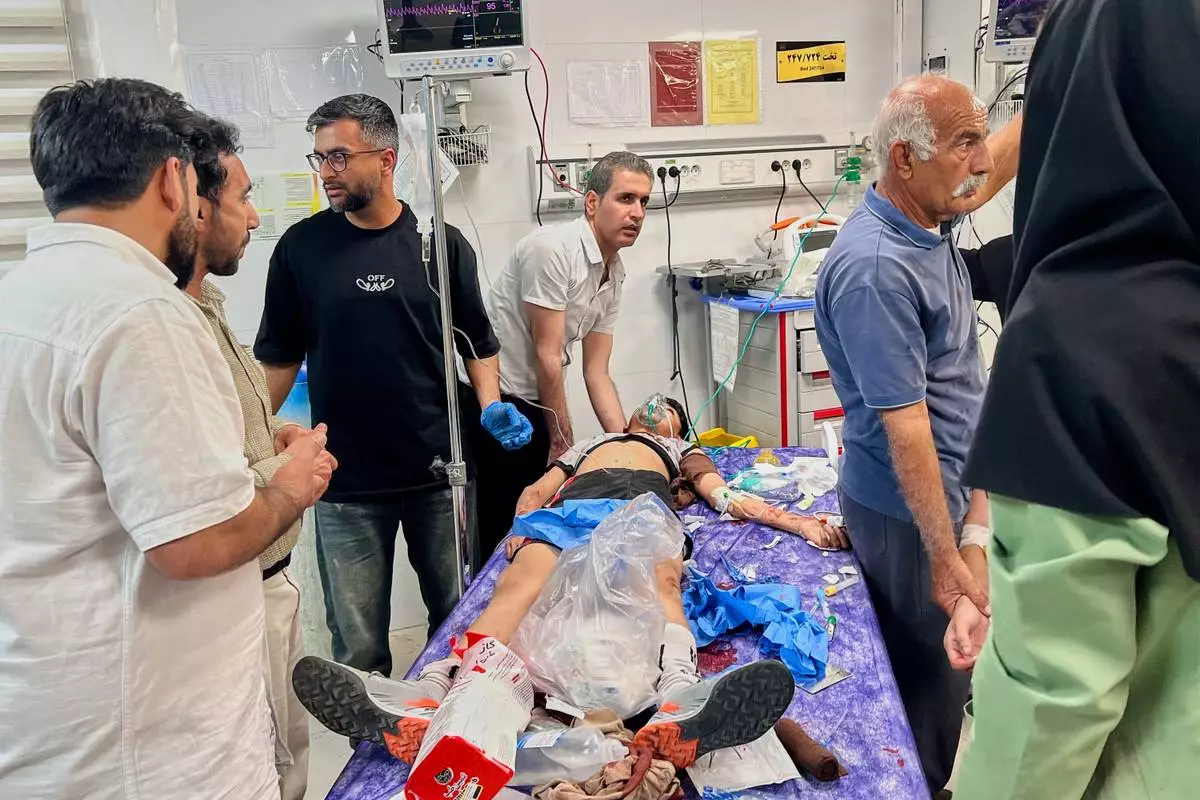
A boy injured in a strike receives treatment at a hospital in Lamerd, southern Iran, Saturday, Feb. 28, 2026. (Alireza Ameri/Tasnim News Agency via AP)
A boy injured in a strike receives treatment at a hospital in Lamerd, southern Iran, Saturday, Feb. 28, 2026. (Alireza Ameri/Tasnim News Agency via AP)

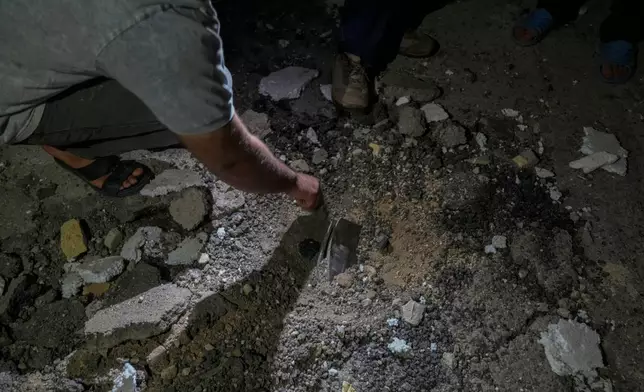
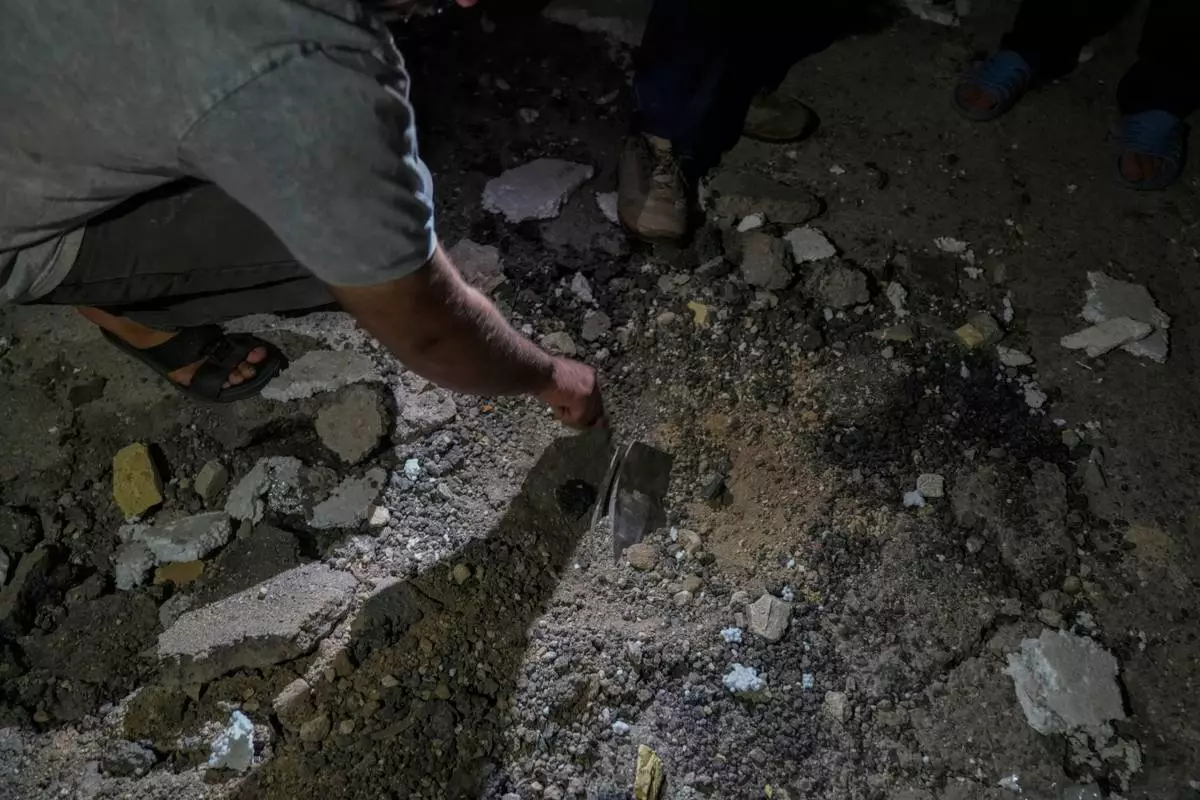
A man examines the impact site of a projectile following a strike in Lamerd, southern Iran, Saturday, Feb. 28, 2026. (Alireza Ameri/Tasnim News Agency via AP)
A man examines the impact site of a projectile following a strike in Lamerd, southern Iran, Saturday, Feb. 28, 2026. (Alireza Ameri/Tasnim News Agency via AP)

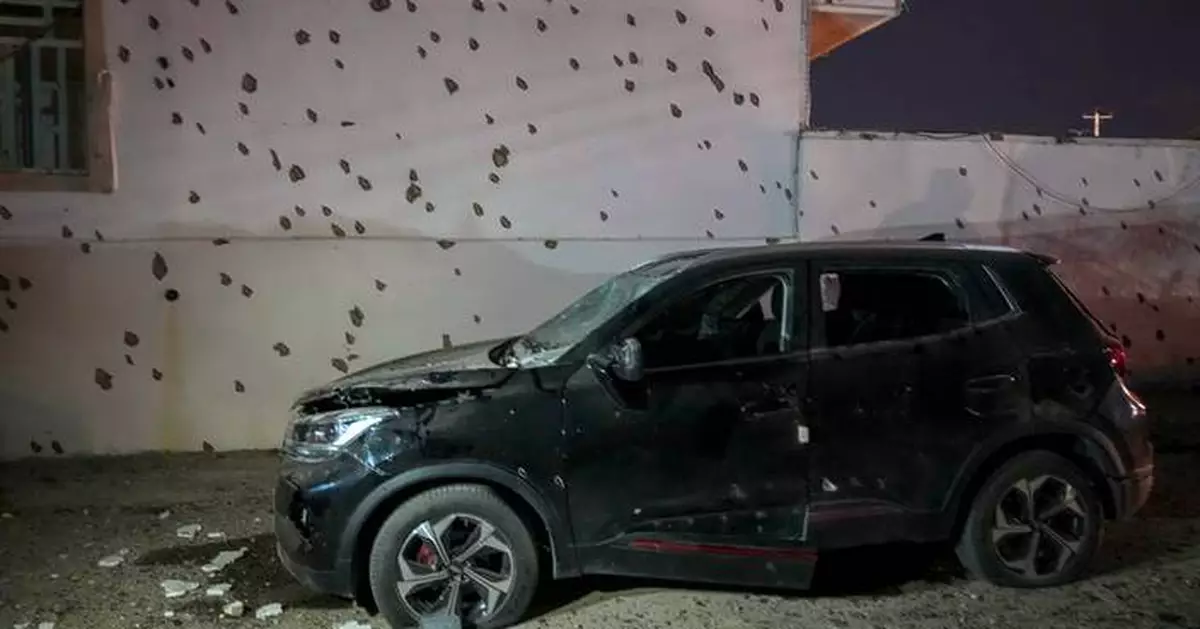
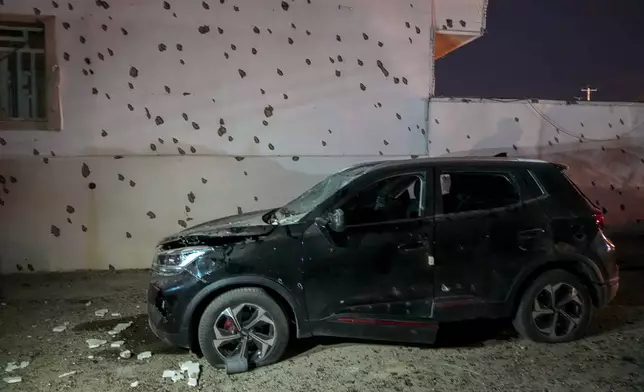
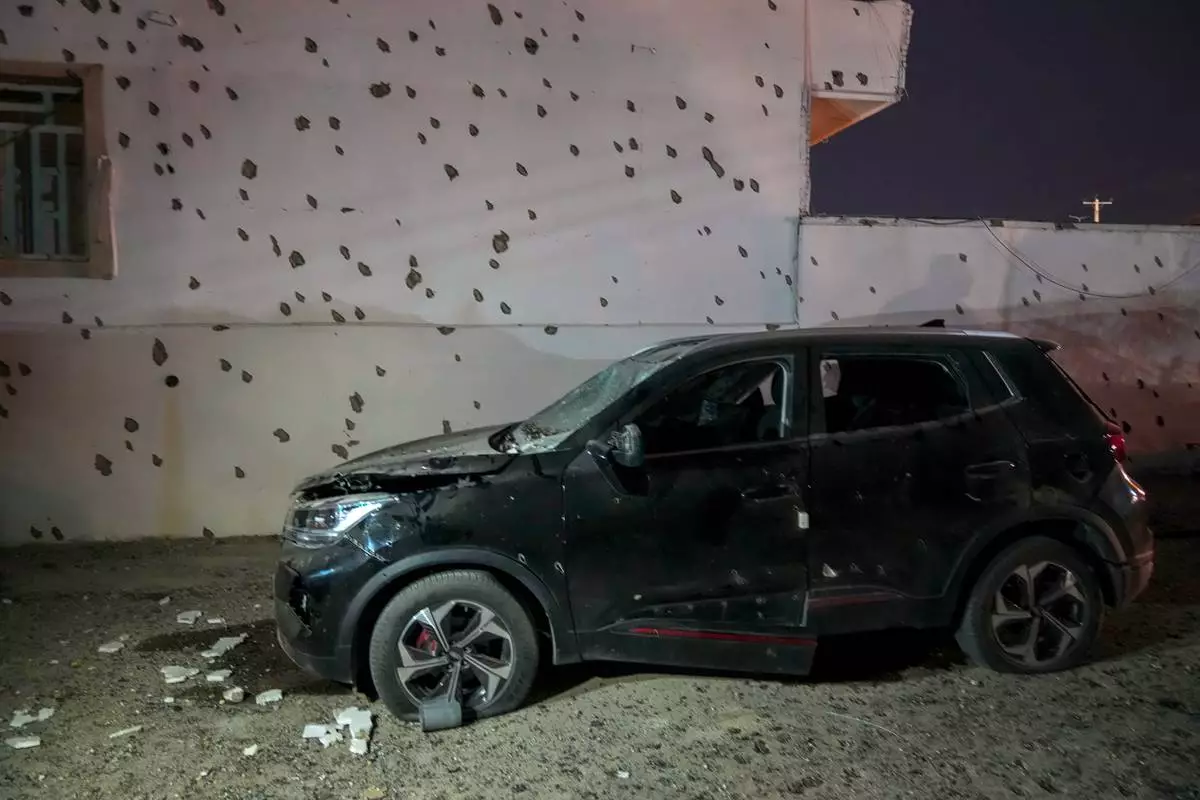
A damaged car sits beside a wall bearing numerous impact marks near the site of a strike in Lamerd, southern Iran, Saturday, Feb. 28, 2026. (Alireza Ameri/Tasnim News Agency via AP)

A damaged car sits beside a wall bearing numerous impact marks near the site of a strike in Lamerd, southern Iran, Saturday, Feb. 28, 2026. (Alireza Ameri/Tasnim News Agency via AP)

Three missiles that struck the southern city of Lamerd on Feb. 28 killed civilians as far as 50 meters (164 feet) from where they detonated, and caused damage more than three times farther away, Airwars found. The missiles detonated above a sports complex and two residential neighborhoods, Airwars found. The blasts killed at least 21 civilians, including seven children, according to Iranian officials.

Airwars is the first to map the damage radius of the strikes in Lamerd and estimate the lethal range of the weapon used.

The PrSM is designed to explode midair and propel tens of thousands of dense metal pellets at high speed in all directions. Photos, videos and satellite images of the Lamerd strikes’ aftermath analyzed by Airwars and verified by The Associated Press show buildings, streets and vehicles were heavily pockmarked in a blast pattern that experts say is consistent with the PrSM's capabilities.

The U.S. military has confirmed firing PrSMs into Iran, but has denied attacking Lamerd.

It is unclear who or what was the intended target in Lamerd. An Islamic Revolutionary Guard Corps compound is located nearby, but satellite images showed no damage there.

Six weapons experts, including two who are former military officials, told AP they believe PrSMs struck Lamerd — and they said it was unlikely that Israeli or Iranian weapons were used. All said militaries should avoid firing the PrSM at targets near civilian areas.

“You would be hard-pressed to find a reason to use the PrSM in a densely populated area,” said Michael Meier, a former U.S. Army adviser on the laws of war.

Airwars, a London-based nonprofit, was founded more than a decade ago to track reports of civilian deaths from U.S. airstrikes in Syria and Iraq, and it has also monitored conflicts in Gaza, Ukraine and elsewhere. It relies on publicly available material, such as photos, videos, satellite images, social media and news reports, and uses geolocation software and other tools to help it analyze this evidence.

Airwars used these methods to investigate the strikes on Lamerd. It mapped the approximate locations of the missiles' detonations, where civilians were reported killed and where damage was visible and consistent with blast patterns. It then measured the distances between the positions to estimate the blast radius.

AP verified Airwars' blast radius estimate by measuring the distance between where civilians were killed, based on Iranian media reports, and where the missiles detonated midair, based on security camera and other videos. AP also examined satellite images, photos and videos of damage from the attack sites.

Lockheed Martin, which did not respond to a request for comment, has not said how wide the missile's impact is. It has released an animated video modeling a PrSM blast.

In a post to X on March 1, the day after Lamerd was struck, U.S. Central Command included what munitions experts say was an image of the PrSM being fired during the Iran operation. Three days later, it touted that PrSMs — in a “historic first” — had been used in Iran, though not where.

Several weeks later, as reports about the strikes in Lamerd garnered media attention, a spokesperson for Central Command said in a statement that U.S. forces did not launch PrSMs or any weapons into Lamerd on Feb. 28, and that they do not target civilians. The spokesperson said footage of one of the strikes suggested it was an Iranian Hoveyzeh cruise missile.

Weapons experts said a missile seen in security camera video from Lamerd does not match that Iranian model, which has a rounded engine.

The Israeli military told AP it did not strike anywhere in Iran as far south as Lamerd on the first day of the war, and experts said Israel’s military is not known to have missiles that detonate midair.

When asked about Airwars’ and AP’s findings, U.S. Central Command reiterated its denial of responsibility, saying that was based on an earlier review of what happened there. Its commander, Adm. Brad Cooper, also told Congress in May that they were only investigating one case of U.S. fire killing civilians — a strike on an Iranian school in Minab.

The new missiles are meant to replace the Army Tactical Missile System used for decades, according to the U.S. military.

While the ATACMS can travel approximately 300 kilometers (186 miles), the PrSM can hit targets over 499 kilometers (310 miles) away, Lockheed Martin says.

The PrSM differs from its predecessor in another key way. Where ATACMS shatter into steel fragments or small bomblets over their target area, an exploding PrSM fires tens of thousands of pellets made of tungsten in all directions, Airwars and weapons experts say.

Because of tungsten's high density and melting point, the pellets retain their shape after detonation. That makes them extremely lethal, capable of piercing soft armor, according to defense journals.

Airwars found footage of a school in Lamerd that was damaged by the missile detonated over the Shahid Naimi Sports Hall about 170 meters (557 feet) away.

That blast killed seven civilians, mostly children, Iranian state media reported. Airwars says it used open-source material to confirm the deaths. Among them were three teenage girls playing volleyball and a woman smoking a hookah in front of her house.

A separate blast over the Tal-e Khandagh neighborhood killed 2-year-old Avina Barzegar, who was playing in her yard. Airwars estimates the pellet that struck Barzegar traveled 50 meters from the blast site. It reached that conclusion by geolocating her house, based on a video showing its front gate, and measuring the distance from the house to the site.

Neither Airwars nor AP could find any reports indicating that military or security personnel were killed in the strikes, or that military infrastructure was hit.

Since the Lamerd strikes, the Pentagon signed a contract worth over $4 billion with Lockheed Martin to quadruple PrSM production. The U.K. said in June it had set aside 130 million pounds ($177 million) to procure the weapon. Australia bought the missiles in 2025 and in April invested billions of dollars into the PrSM program.

Weapons experts say the PrSM provides valuable new capabilities, but it should be used carefully.

“Its proper use should be reserved for things like large concentrations of enemy personnel with hard and soft armor,” said Wes Bryant, a former Pentagon adviser on precision warfare and civilian harm mitigation.

Trevor Ball, a former explosives expert for the U.S. Army, also urged caution.

“It will kill people outside their homes who aren't protected by walls,” he said.

Associated Press writers Konstantin Toropin and Collin Binkley in Washington contributed.
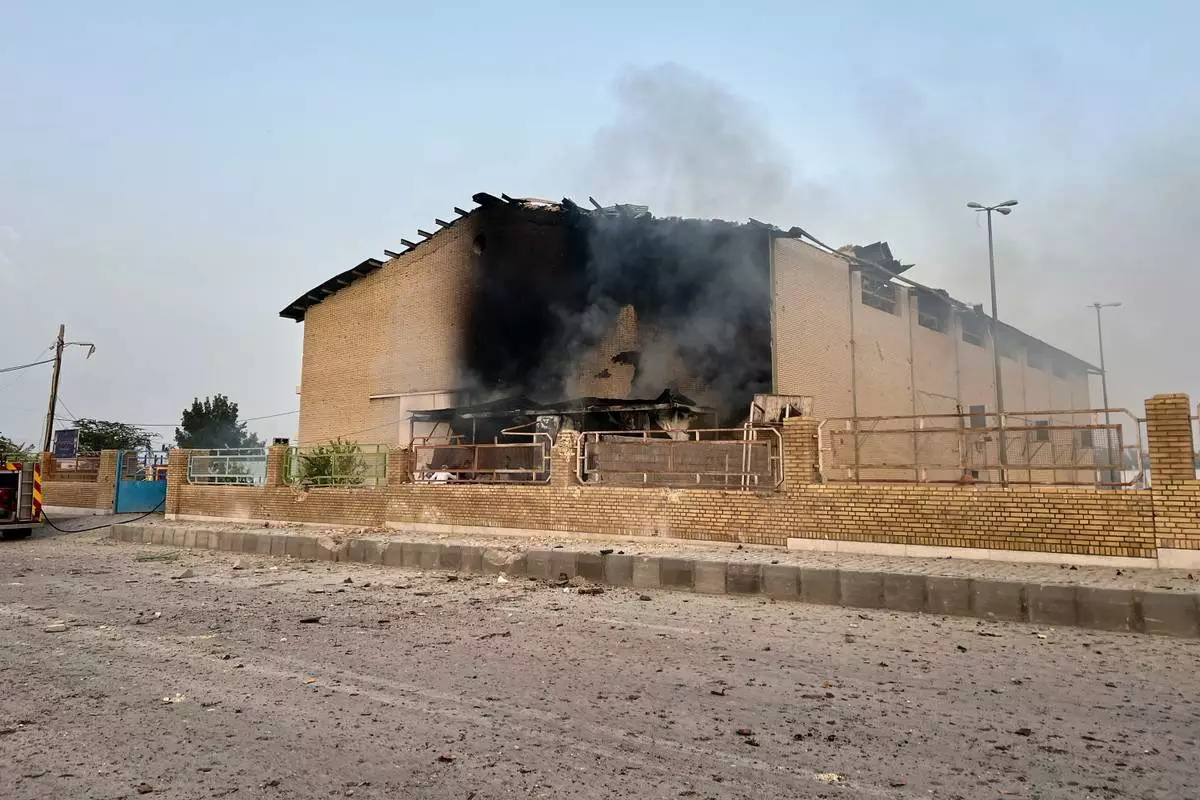
Smoke rises from a building damaged in a strike in Lamerd, southern Iran, Saturday, Feb. 28, 2026. (Alireza Ameri/Tasnim News Agency via AP)
Smoke rises from a building damaged in a strike in Lamerd, southern Iran, Saturday, Feb. 28, 2026. (Alireza Ameri/Tasnim News Agency via AP)

A fire truck's lights reveal a road damaged by a strike in Lamerd, southern Iran, Saturday, Feb. 28, 2026.(Alireza Ameri/Tasnim News Agency via AP)
A fire truck's lights reveal a road damaged by a strike in Lamerd, southern Iran, Saturday, Feb. 28, 2026.(Alireza Ameri/Tasnim News Agency via AP)

A boy injured in a strike receives treatment at a hospital in Lamerd, southern Iran, Saturday, Feb. 28, 2026. (Alireza Ameri/Tasnim News Agency via AP)
A boy injured in a strike receives treatment at a hospital in Lamerd, southern Iran, Saturday, Feb. 28, 2026. (Alireza Ameri/Tasnim News Agency via AP)

A man examines the impact site of a projectile following a strike in Lamerd, southern Iran, Saturday, Feb. 28, 2026. (Alireza Ameri/Tasnim News Agency via AP)
A man examines the impact site of a projectile following a strike in Lamerd, southern Iran, Saturday, Feb. 28, 2026. (Alireza Ameri/Tasnim News Agency via AP)


A damaged car sits beside a wall bearing numerous impact marks near the site of a strike in Lamerd, southern Iran, Saturday, Feb. 28, 2026. (Alireza Ameri/Tasnim News Agency via AP)

A damaged car sits beside a wall bearing numerous impact marks near the site of a strike in Lamerd, southern Iran, Saturday, Feb. 28, 2026. (Alireza Ameri/Tasnim News Agency via AP)
NEW YORK (AP) — Carlos Alcaraz was nervous. He was excited. Best of all, he was pain-free.

Alcaraz beat Roman Safiullin 6-4, 6-4, 6-4 on Monday, showing no problems with the right wrist injury that had sidelined the 23-year-old Spaniard since April.

“I don’t know how it looked from outside, but from inside, my feeling was that I was hitting normal,” Alcaraz said. “I was playing pretty normal, playing my style, and yeah, the arm, the wrist, everything felt great.”

In that case, don't rule out a run at a repeat.

Following fellow two-time U.S. Open champion Aryna Sabalenka onto Arthur Ashe Stadium, the No. 2-seeded Alcaraz appeared more comfortable as the match went on and delivered the all-around game that has made him a fan favorite in New York. He held his hand to his ear to encourage louder cheers and pumped his fist after a pretty volley winner in the final game of the match.

Forced to miss the French Open and Wimbledon, Alcaraz decided he was good enough to come back at the U.S. Open, stepping right back into Grand Slam tennis without a warmup event.

“I had more nerves than usual, but just happy, because, for me, my goal here is to compete, to enjoy, and let’s see how my body’s going to react after the matches, after the competition again,” Alcaraz said.

“I don’t know how far I’m going to go in the tournament. I didn’t know if I was going to lose this one, if I’m going to make the second round, final. I don’t know how far I’m going to go. But what I just really want to do is enjoy every time that I’m going to walk into the court feeling the energy from the people, feel the competition.”

No man has won consecutive U.S. Open titles since Roger Federer took five in a row from 2004-08. If Alcaraz stays healthy, the seven-time Grand Slam champion may quickly become a huge favorite with top-ranked Jannik Sinner sidelined by a knee injury and No. 4 Novak Djokovic losing in the U.S. Open’s first round for the first time on Sunday.

With the tournament thrown into shock by that result — Djokovic had been 19-0 in the first round at Flushing Meadows, where he won four of his men’s record 24 Grand Slam titles — Sabalenka brought back some normalcy.

Sabalenka beat Camila Osorio 6-4, 6-4 to begin her bid to be the first player to win three straight U.S. Open championships since Serena Williams from 2012-14.

She has been to the last three U.S. Open finals, rebounding from a loss to Coco Gauff in 2023 by winning in 2024 and then topping Amanda Anisimova last year to repeat.

“I feel like this is one of my favorite stadiums,” Sabalenka told the crowd afterward. “I really experienced the best emotions here in this stadium.”

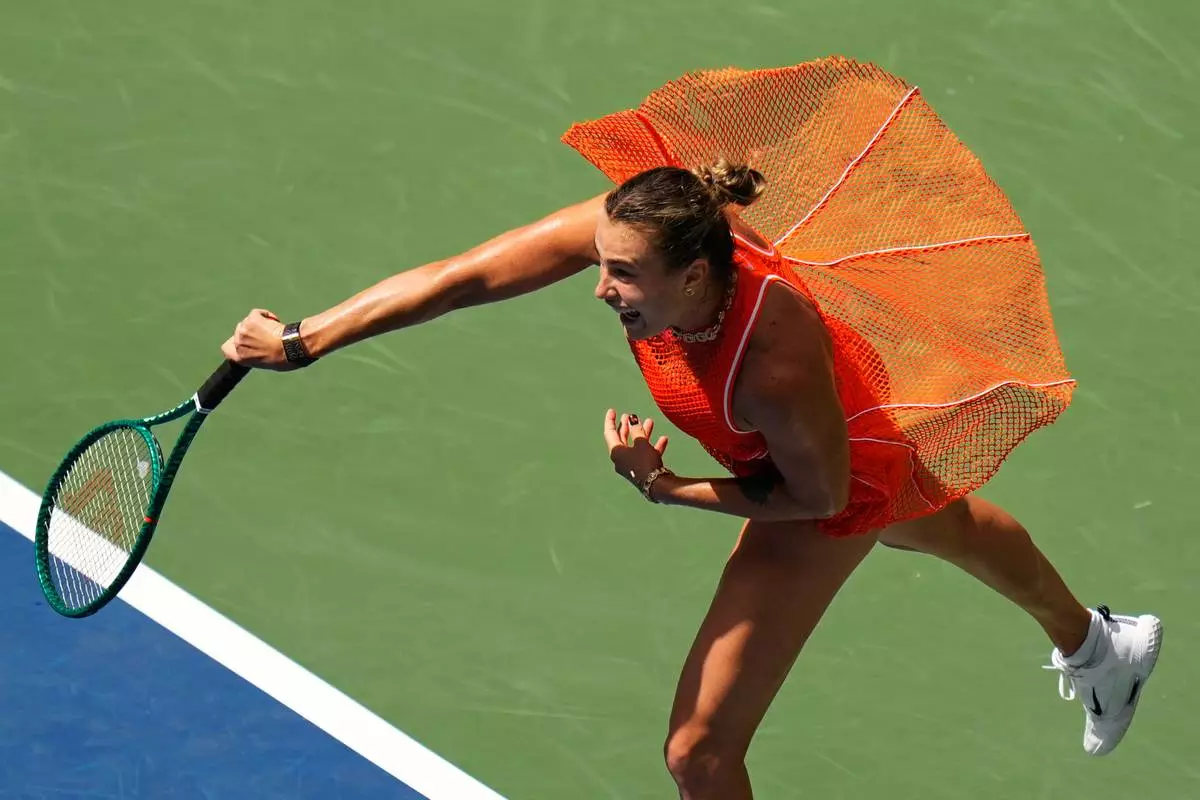
Sabalenka changed up her look from last time she played on Ashe. Her orange Nike outfit was covered by orange mesh, rather than the black mesh of last week in her mixed doubles match with Djokovic that drew some criticism on social media. Sabalenka dismissed the comments, saying all that mattered was she loved it, and turns out the reason for the change was simple.

“To be honest, I didn’t know that I have a day dress,” she said. “I thought I have a black dress with orange underneath. I figured (out) when I went to Nike that I actually have day session and night session, which is just like black and orange for the day.”

She must have certainly been happier with the level of tennis she delivered Monday, after a series of poor events coming into the U.S. Open. She was knocked out in the fourth round in both Toronto and Cincinnati, after being ousted at the same point at Wimbledon.

That has left Sabalenka needing help to retain the No. 1 ranking, even if she wins again in New York. No. 2 Elena Rybakina will pass her if she reaches the semifinals, and won’t even need to win any matches if Sabalenka fails to win the title.

Past U.S. Open champions who advanced included No. 8 Iga Swiatek and 2017 winner Sloane Stephens, before two-time champ Naomi Osaka won in two tiebreakers in a look inspired by former NBA superstar Allen Iverson. Stan Wawrinka lost to Matteo Berrettini in the final Grand Slam match before the three-time major champion from Switzerland, who won the title in 2016, retires at 41.

“I’m going to miss it for sure. I’m going to miss it big time,” Wawrinka said.

Another top-10 seed followed Djokovic out when No. 10 Arthur Fils, coming off the title in Cincinnati, was ousted by Stefanos Tsitsipas 4-6, 7-6 (3), 6-1, 6-4. Tsitsipas, who is unseeded at the U.S. Open for the first time, was asked if he can regain the form that catapulted the Greek to the No. 3 ranking and two losses to Djokovic in Grand Slam finals.

“Why not?” Tsitsipas said.

No. 8 Ben Shelton recovered from a miserable start in which he was broken three times in a 28-minute first set and beat Tallon Griekspoor 1-6, 6-1, 7-6 (3), 6-2. No. 11 Frances Tiafoe rallied to edge fellow American Martin Damm in five sets.

Other winners included No. 6 Linda Noskova, the Wimbledon champion; No. 7 seed Karolina Muchova, who lost to her fellow Czech in the final at the All-England Club, and No. 10 Anisimova. Sara Bejlek, another Czech and the No. 28 seed who stunned Sabalenka in Cincinnati, fell in three sets to Cristina Bucsa.

No. 26 seed Emma Navarro outlasted Lois Boisson 7-6 (6), 6-7 (1), 6-3 in a first-round match that began Sunday but was not completed until Monday because of rain.

An ESPN camera captured the thrill of victory and the agony of defeat in one shot. As Navarro pumped her fist toward the crowd, Boisson could be seen behind her smashing her racket repeatedly to the court.

See AP’s full tennis coverage here

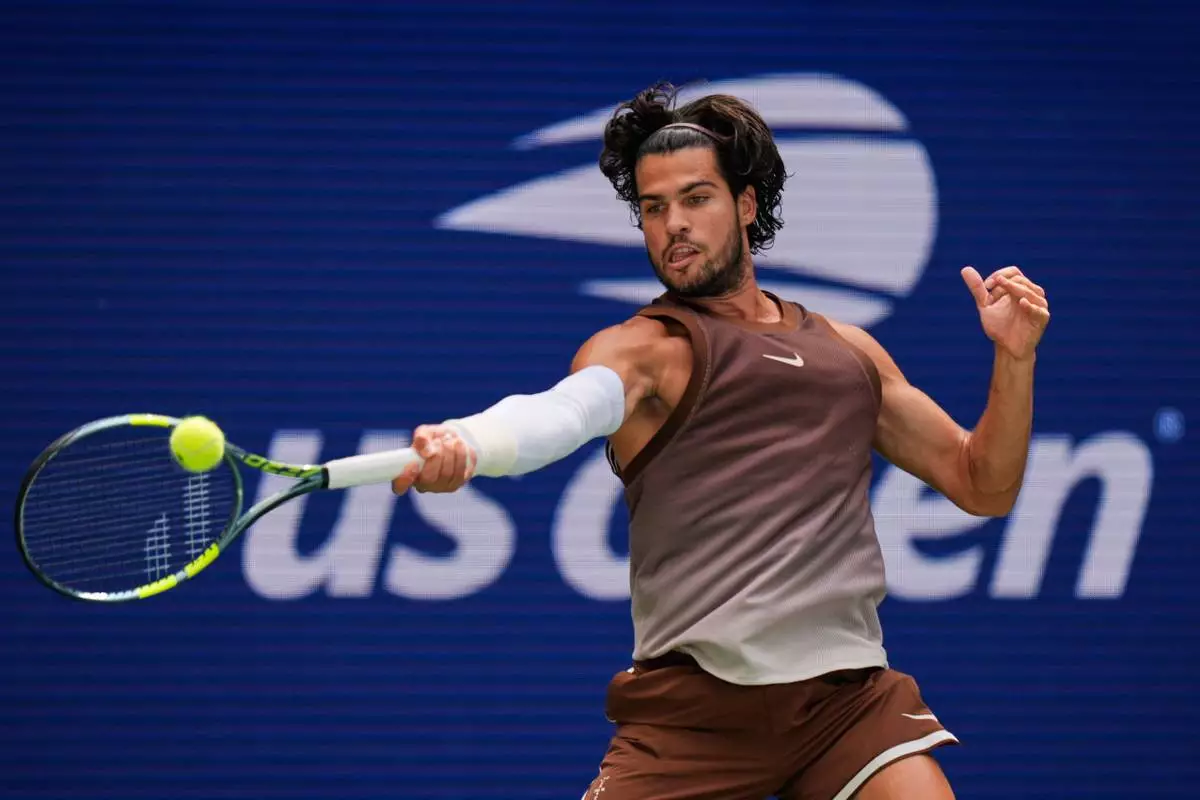
Carlos Alcaraz, of Spain, reacts during a match against Roman Safiullin, of Russia, during the first round of the U.S. Open tennis championships, Monday, Aug. 31, 2026, in New York. (AP Photo/Seth Wenig)

Carlos Alcaraz, of Spain, reacts during a match against Roman Safiullin, of Russia, during the first round of the U.S. Open tennis championships, Monday, Aug. 31, 2026, in New York. (AP Photo/Seth Wenig)

Stefanos Tsitsipas, of Greece, celebrates winning a match against Arthur Fils, of France, during the first round of the U.S. Open tennis championships, Monday, Aug. 31, 2026, in New York. (AP Photo/Kirsty Wigglesworth)

Stefanos Tsitsipas, of Greece, celebrates winning a match against Arthur Fils, of France, during the first round of the U.S. Open tennis championships, Monday, Aug. 31, 2026, in New York. (AP Photo/Kirsty Wigglesworth)

Carlos Alcaraz, of Spain, returns the ball to Roman Safiullin, of Russia, during the first round of the U.S. Open tennis championships, Monday, Aug. 31, 2026, in New York. (AP Photo/Seth Wenig)

Carlos Alcaraz, of Spain, returns the ball to Roman Safiullin, of Russia, during the first round of the U.S. Open tennis championships, Monday, Aug. 31, 2026, in New York. (AP Photo/Seth Wenig)

Aryna Sabalenka, of Belarus, follows through on a shot to Camila Osorio, of Colombia, during the first round of the U.S. Open tennis championships, Monday, Aug. 31, 2026, in New York. (AP Photo/Seth Wenig)

Aryna Sabalenka, of Belarus, follows through on a shot to Camila Osorio, of Colombia, during the first round of the U.S. Open tennis championships, Monday, Aug. 31, 2026, in New York. (AP Photo/Seth Wenig)

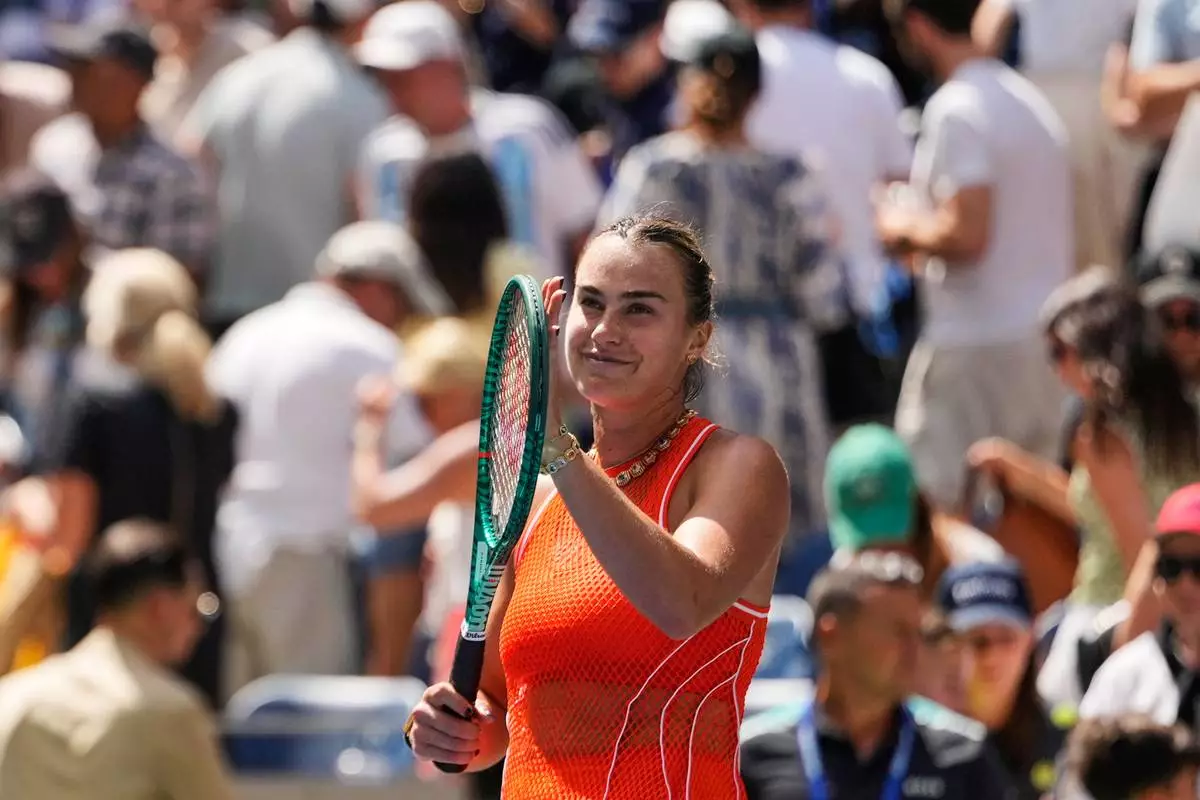
Aryna Sabalenka, of Belarus, celebrates after winning a match against Camila Osorio, of Colombia, during the first round of the U.S. Open tennis championships, Monday, Aug. 31, 2026, in New York. (AP Photo/Seth Wenig)

Aryna Sabalenka, of Belarus, celebrates after winning a match against Camila Osorio, of Colombia, during the first round of the U.S. Open tennis championships, Monday, Aug. 31, 2026, in New York. (AP Photo/Seth Wenig)

Recommended Articles