BOBO-DIOULASSO, Burkina Faso (AP) — The soil beneath Oumarou Compaoré's boots is sandy and stony. It’s hardly the lush setting usually needed to support growing pineapples.
But this farm in landlocked Burkina Faso is part of national efforts to reduce overall reliance on imports and adapt to an ever-harsher climate in the dry heat of Africa’s Sahel region. Pineapples have long been seen as exotic fruit grown by richer coastal neighbors, and more expensive than the mangoes that grow outside many Burkinabe homes.
Click to Gallery
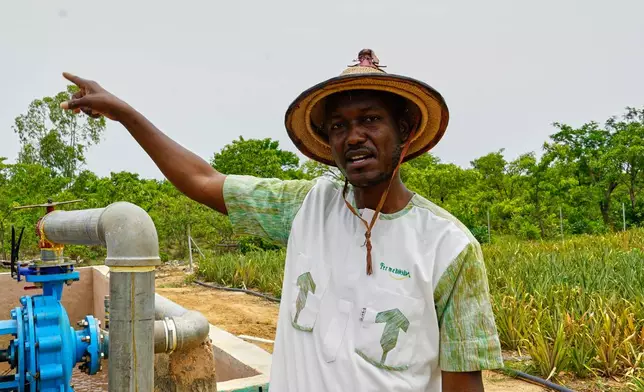
Farmer Oumarou Compaoré speaks to the Associated Press as he stands by one of the irrigation systems at Djoda Farm in Matourkou, near Bobo-Dioulasso, Burkina Faso, Thursday, May 7, 2026. (AP Photo/Elia Borras)
A worker holds pineapple crowns at Djoda Farm in Matourkou, near Bobo-Dioulasso, Burkina Faso, Thursday, May 7, 2026. (AP Photo/Elia Borras)
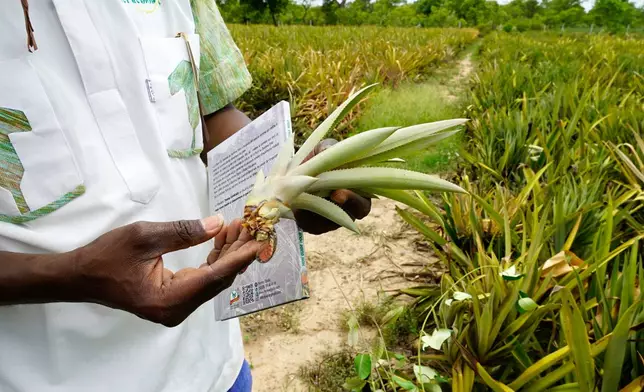
Farmer Oumarou Compaoré holds a pineapple seedling that will be used in the next planting season at Djoda Farm in Matourkou, near Bobo-Dioulasso, Burkina Faso, Thursday, May 7, 2026. (AP Photo/Elia Borras)
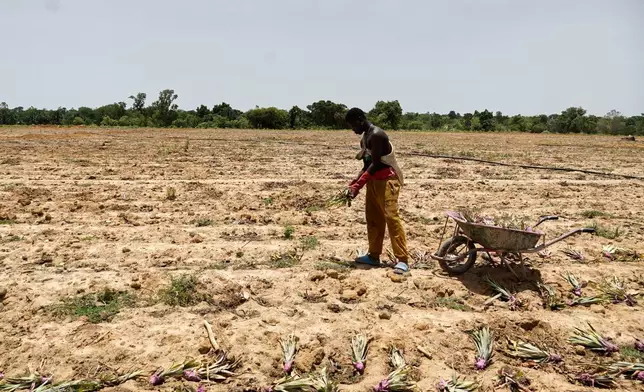
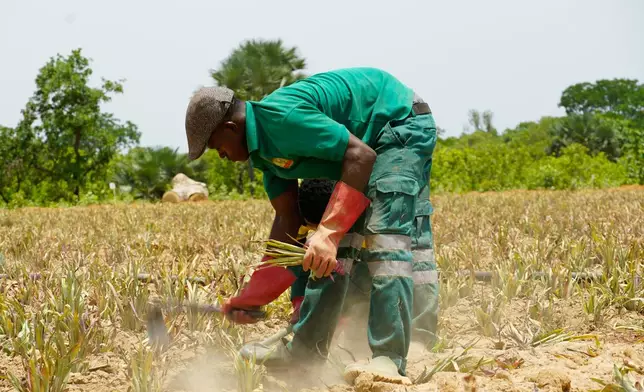
A worker plants pineapple seedlings at Djoda Farm in Matourkou, near Bobo-Dioulasso, Burkina Faso, Thursday, May 7, 2026. (AP Photo/Elia Borras)
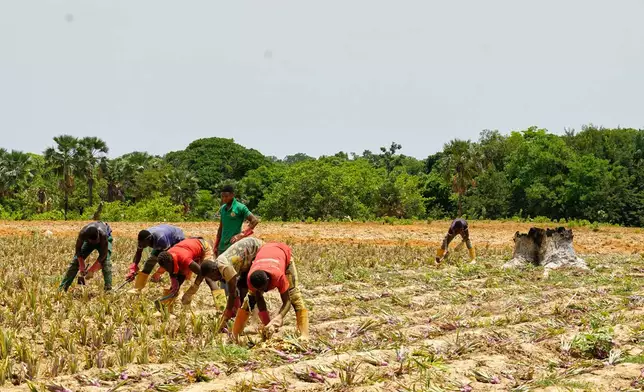
Workers plant pineapple seedlings at Djoda Farm in Matourkou, near Bobo-Dioulasso, Burkina Faso, Thursday, May 7, 2026. (AP Photo/Elia Borras)
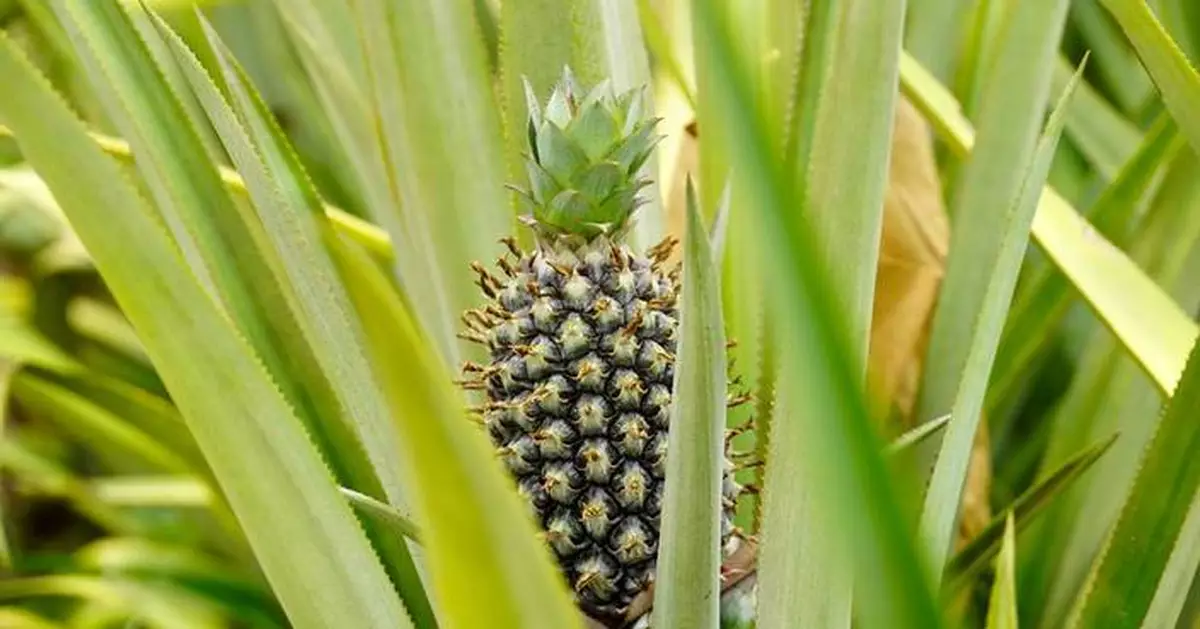
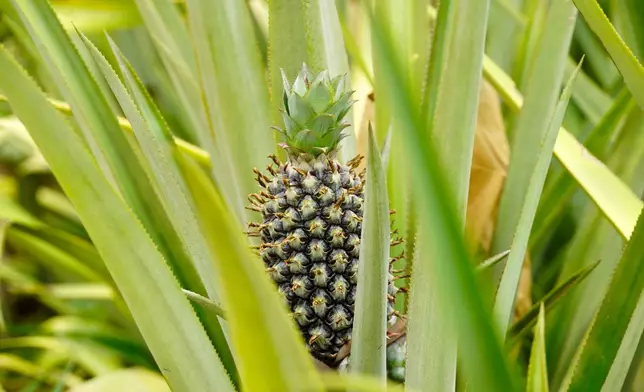
A pineapple grows on Djoda Farm in Matourkou, near Bobo-Dioulasso, Burkina Faso, Thursday, May 7, 2026. (AP Photo/Elia Borras)
“People told us that here we could only grow cotton, maize or sorghum,” Compaoré said at the farm he founded in 2018 outside the western city of Bobo-Dioulasso, where he drives around in a van with an inscription that reads, “Pioneer in pineapple production in the Sahel.”
His pineapple initiative, inspired in part by border closures during the COVID-19 pandemic, is one of the more unusual projects challenging the idea that people in Burkina Faso must rely on neighbors for much of what they eat.
“Because the fruit was in short supply, we were able to sell it easily,” said Compaoré, who also had been growing papayas with little profit. Now his pineapple field has grown to about 50 hectares (124 acres).
The country's military leaders have taken note. Their economic growth plan is tied heavily to agriculture. Pineapples are now part of the government's formal development plan as it seeks to boost food self-sufficiency for the country of 24 million people.
While there are no available government data on pineapple production, farmers say more of them are venturing into it.
As of November, pineapple fields had expanded to around 100 hectares (248 acres) in the administrative region that includes Compaoré's farm, the regional director of agriculture, Adanabou Eric Pascal, told local media at the time. Kola Jean, the agricultural engineer at Compaoré's farm who helps to train others on pineapple farming, estimated that over 100 farmers are now getting into production.
Under Capt. Ibrahim Traoré, who took power after a coup in 2022, Burkina Faso has presented food production as a sovereignty issue.
It suspended rice imports in April this year with a stated goal of facilitating local production. It inaugurated two factories for tomato paste, a local staple, in 2024.
And at a major supermarket in the capital, Ouagadougou, there is a section dedicated to locally grown food — like shea butter, corn and cassava flour and drinks like mango juice — labeled, “Let’s consume what we produce."
All are steps toward shaking off the dependence on imports that for decades has exposed millions of people to shifting transport costs and other price shocks.
Hunger remains widespread. A decadelong security crisis that has left jihadis in control of large swathes of territory has disrupted access to farmland and markets. Many people have been displaced. U.N. agencies have said some 2.7 million people face acute food insecurity during the annual lean season when stocks from the previous harvest run low and market prices peak.
Mdme Kaba Séré, a pineapple farmer in Houet Province, said she used to work in the nonprofit sector but switched to farming in 2023 following international aid cuts.
She recalled being told at a young age that pineapples cannot grow in the Sahel, the dry strip of land south of the Sahara. Then she was trained on pineapple cultivation by Compaoré.
“We saw what Oumarou was doing and thought: It is possible, why not?” said Séré, who has expanded her farm to about 60,000 seedlings.
"With pineapple, there is profit,” she said. “It has impacted my entire family because thanks to this I have been able to support them.”
Because pineapples had long been seen as rare in Burkina Faso, farmers say the business is lucrative because it's easy to find buyers even before the fruit hits the market.
But hurdles include investments in everything from fertilizer to irrigation and reliable transport.
Pineapples require a lengthy growing period of up to two years, plus reliable access to water. Compaoré said he irrigates part of his land from a well, but digging wells is an investment many farmers cannot afford.
The climate can be problematic, too. Farmers are finding ways to adapt, including by irrigating with cool water in the evening during intense heat, said Pascal Bazongo, a professor of soil science and natural resource management at Burkina Faso’s University of Fada N’Gourma and an expert involved with Compaoré's farm.
Compaoré is upbeat about future innovations and better yields. On recently acquired plots, about 30 workers moved through the field as music played from a loudspeaker. Their goal that day, he said, was to plant roughly 60,000 pineapple seedlings.
He expects the new fields to produce between 60 and 75 metric tons (66-83 tons) of pineapples, with a projected revenue of about 35 million CFA francs, or roughly $62,000.
“We could even make the country self-sufficient in this fruit,” he said.
——
For more on Africa and development: https://apnews.com/hub/africa-pulse
The Associated Press receives financial support for global health and development coverage in Africa from the Gates Foundation. The AP is solely responsible for all content. Find AP’s standards for working with philanthropies, a list of supporters and funded coverage areas at AP.org.
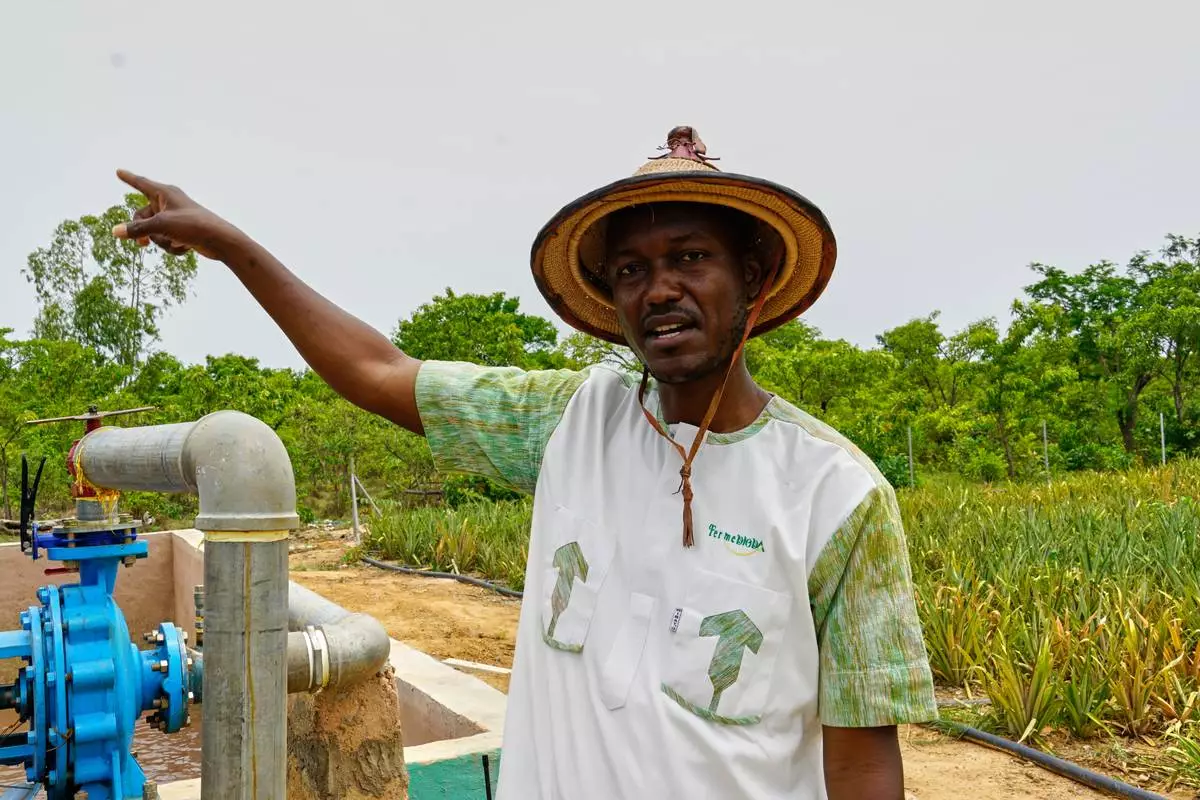
Farmer Oumarou Compaoré speaks to the Associated Press as he stands by one of the irrigation systems at Djoda Farm in Matourkou, near Bobo-Dioulasso, Burkina Faso, Thursday, May 7, 2026. (AP Photo/Elia Borras)
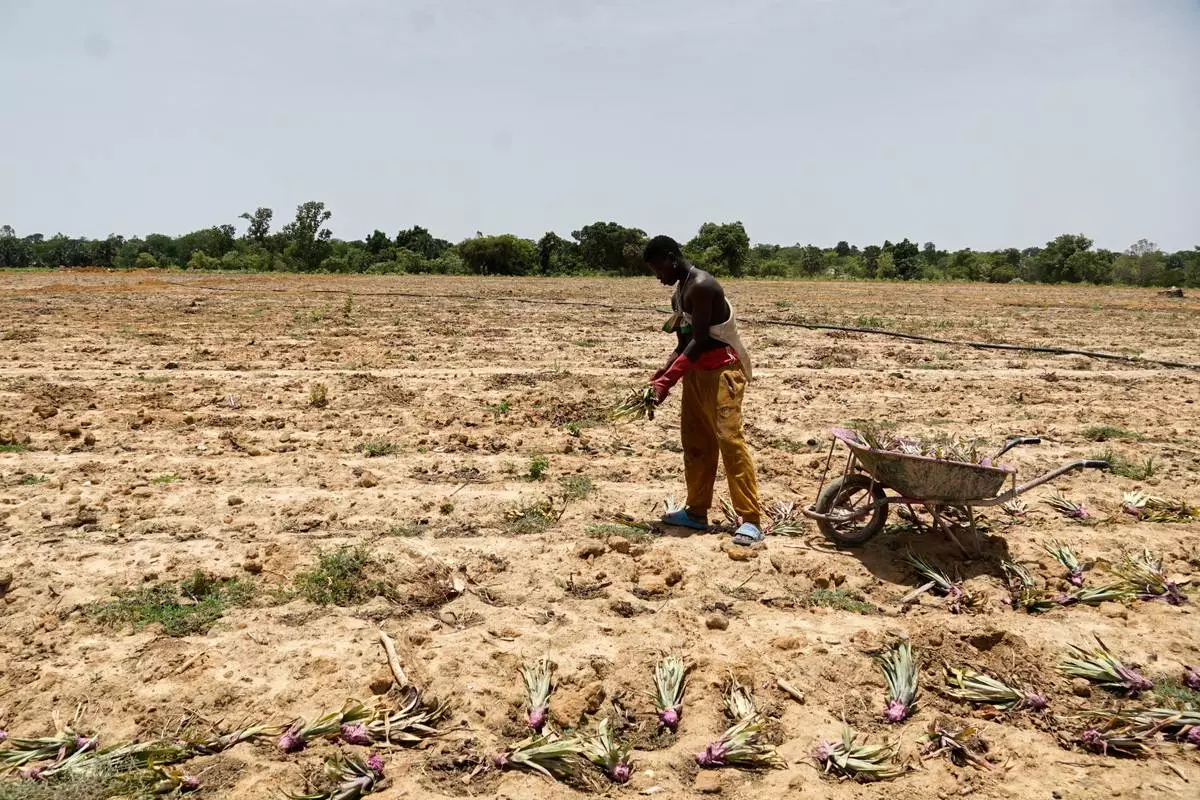
A worker holds pineapple crowns at Djoda Farm in Matourkou, near Bobo-Dioulasso, Burkina Faso, Thursday, May 7, 2026. (AP Photo/Elia Borras)
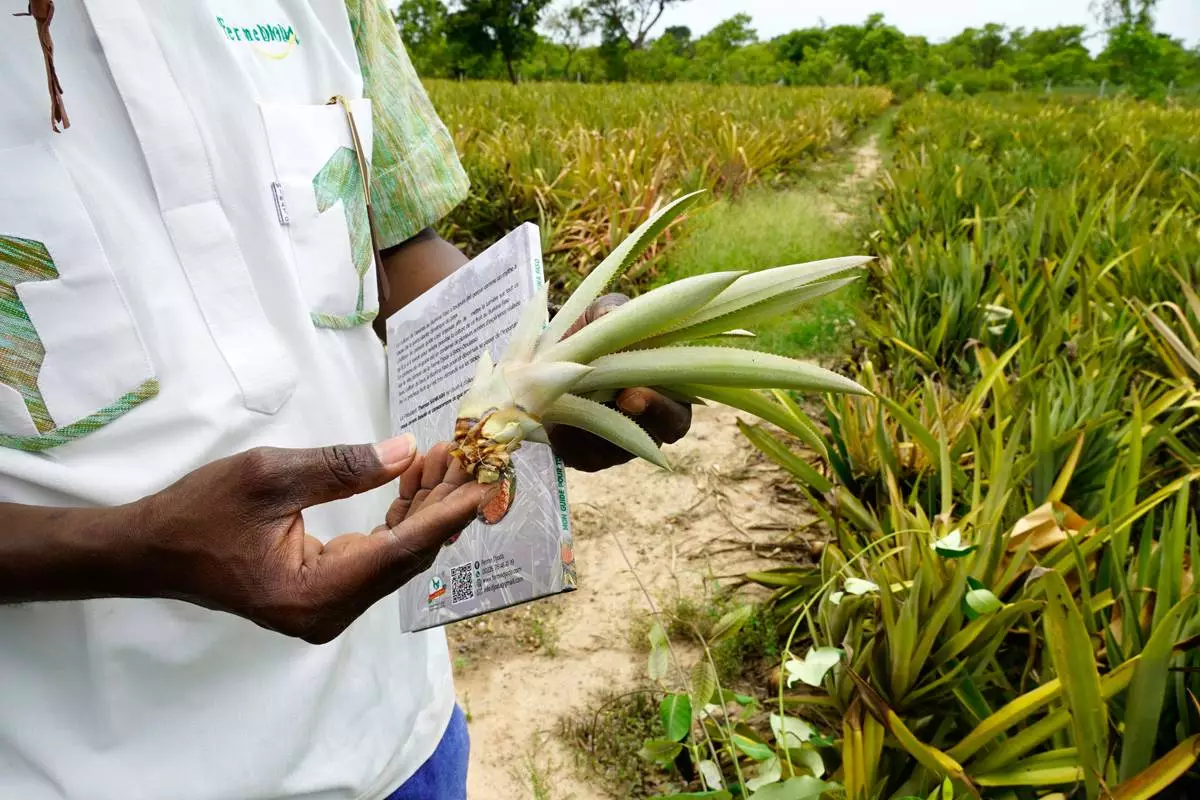
Farmer Oumarou Compaoré holds a pineapple seedling that will be used in the next planting season at Djoda Farm in Matourkou, near Bobo-Dioulasso, Burkina Faso, Thursday, May 7, 2026. (AP Photo/Elia Borras)
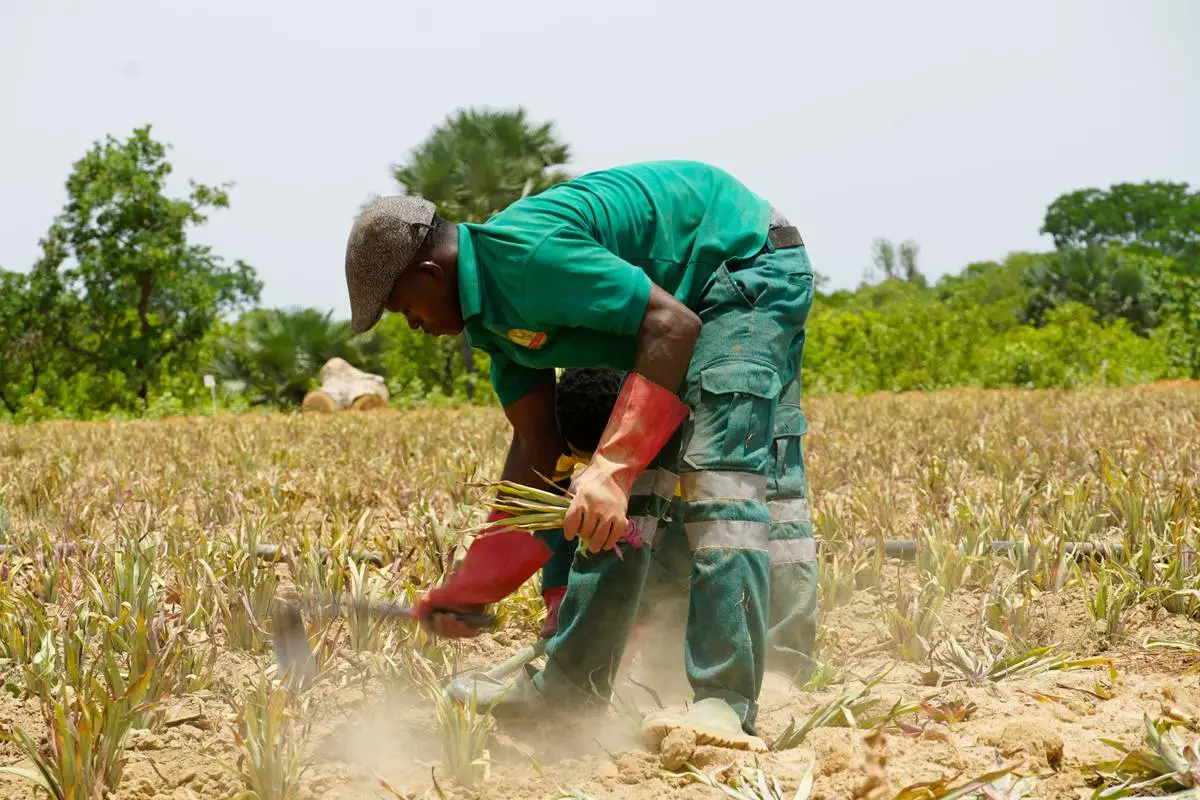
A worker plants pineapple seedlings at Djoda Farm in Matourkou, near Bobo-Dioulasso, Burkina Faso, Thursday, May 7, 2026. (AP Photo/Elia Borras)
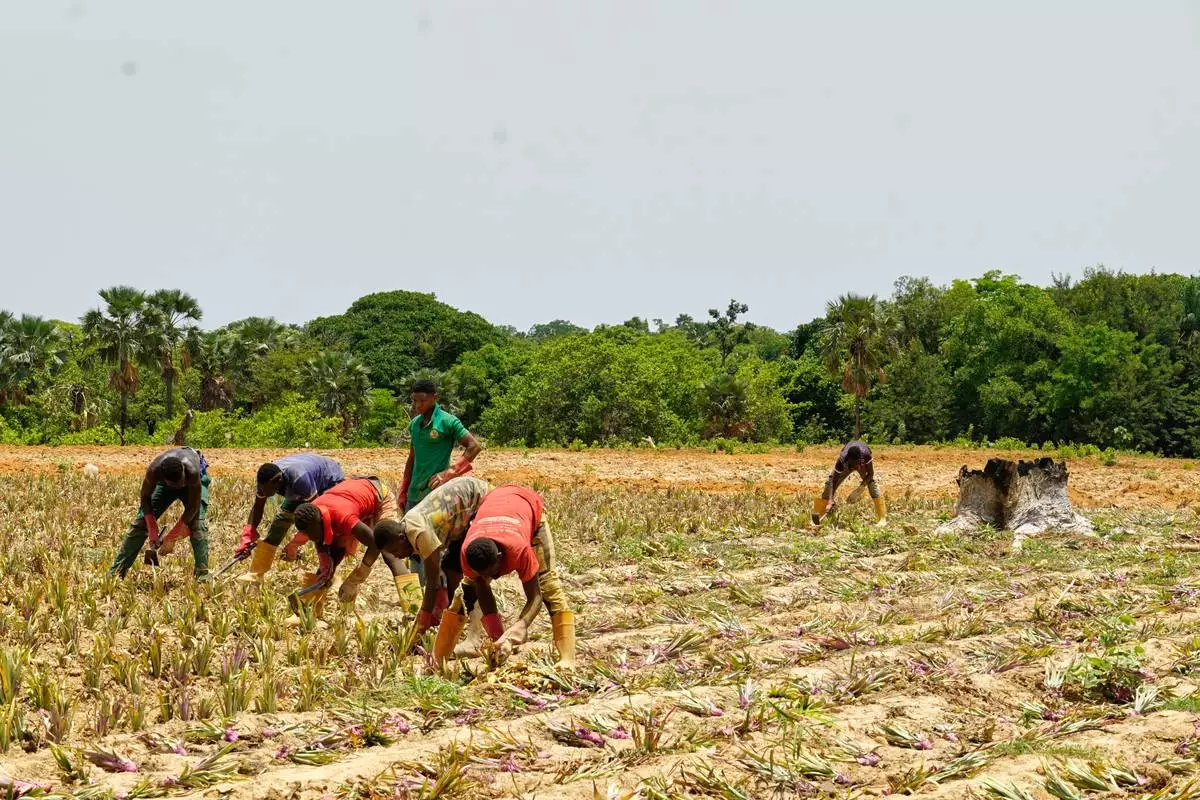
Workers plant pineapple seedlings at Djoda Farm in Matourkou, near Bobo-Dioulasso, Burkina Faso, Thursday, May 7, 2026. (AP Photo/Elia Borras)
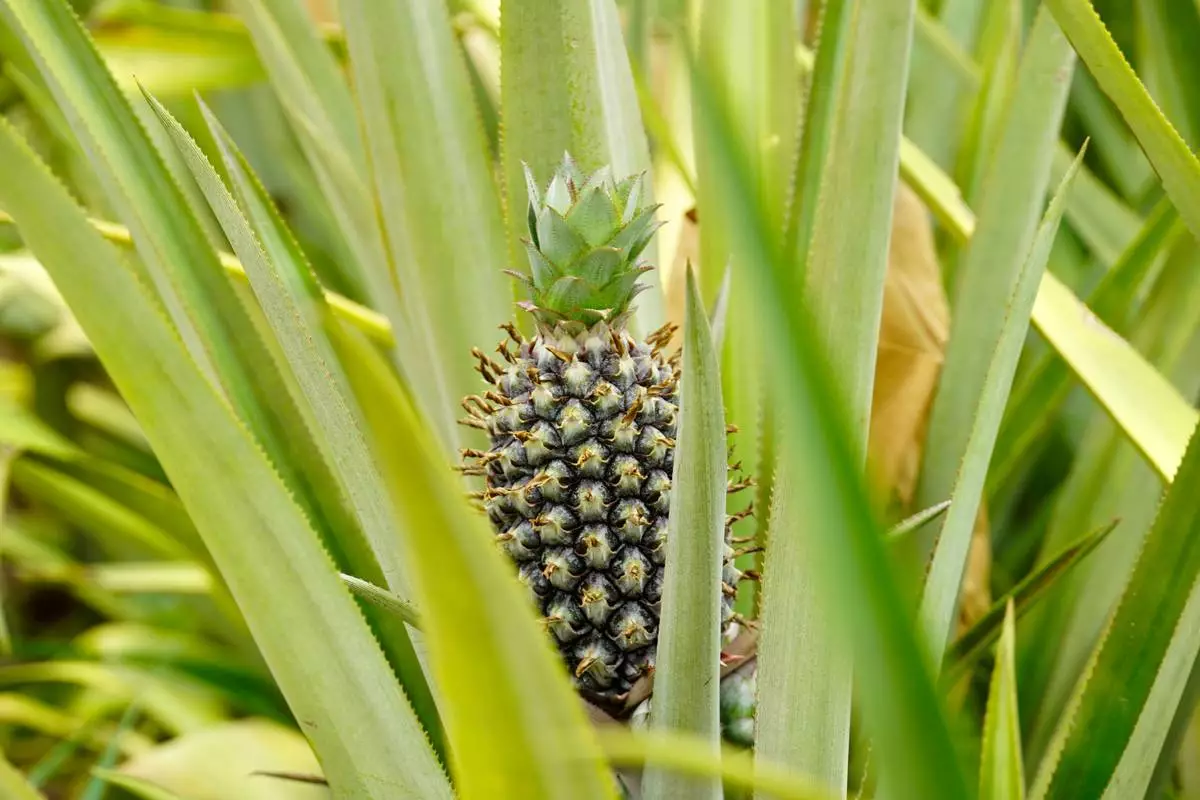
A pineapple grows on Djoda Farm in Matourkou, near Bobo-Dioulasso, Burkina Faso, Thursday, May 7, 2026. (AP Photo/Elia Borras)
It has been touted by the manufacturer as the ballistic missile of the future: lethal, long-range and pinpoint. Lockheed Martin’s Precision Strike Missile has the U.S. military investing billions to update its arsenal.
But a close look at what is believed to be its first use in combat — on the first day of the Iran war — highlights the potential peril of deploying this weapon near population centers because it appears to spray pellets over a wide area, according to a review by the conflict monitor Airwars and interviews with weapons experts and former defense officials.
Three missiles that struck the southern city of Lamerd on Feb. 28 killed civilians as far as 50 meters (164 feet) from where they detonated, and caused damage more than three times farther away, Airwars found. The missiles detonated above a sports complex and two residential neighborhoods, Airwars found. The blasts killed at least 21 civilians, including seven children, according to Iranian officials.
Airwars is the first to map the damage radius of the strikes in Lamerd and estimate the lethal range of the weapon used.
The PrSM is designed to explode midair and propel tens of thousands of dense metal pellets at high speed in all directions. Photos, videos and satellite images of the Lamerd strikes’ aftermath analyzed by Airwars and verified by The Associated Press show buildings, streets and vehicles were heavily pockmarked in a blast pattern that experts say is consistent with the PrSM's capabilities.
The U.S. military has confirmed firing PrSMs into Iran, but has denied attacking Lamerd.
It is unclear who or what was the intended target in Lamerd. An Islamic Revolutionary Guard Corps compound is located nearby, but satellite images showed no damage there.
Six weapons experts, including two who are former military officials, told AP they believe PrSMs struck Lamerd — and they said it was unlikely that Israeli or Iranian weapons were used. All said militaries should avoid firing the PrSM at targets near civilian areas.
“You would be hard-pressed to find a reason to use the PrSM in a densely populated area,” said Michael Meier, a former U.S. Army adviser on the laws of war.
Airwars, a London-based nonprofit, was founded more than a decade ago to track reports of civilian deaths from U.S. airstrikes in Syria and Iraq, and it has also monitored conflicts in Gaza, Ukraine and elsewhere. It relies on publicly available material, such as photos, videos, satellite images, social media and news reports, and uses geolocation software and other tools to help it analyze this evidence.
Airwars used these methods to investigate the strikes on Lamerd. It mapped the approximate locations of the missiles' detonations, where civilians were reported killed and where damage was visible and consistent with blast patterns. It then measured the distances between the positions to estimate the blast radius.
AP verified Airwars' blast radius estimate by measuring the distance between where civilians were killed, based on Iranian media reports, and where the missiles detonated midair, based on security camera and other videos. AP also examined satellite images, photos and videos of damage from the attack sites.
Lockheed Martin, which did not respond to a request for comment, has not said how wide the missile's impact is. It has released an animated video modeling a PrSM blast.
In a post to X on March 1, the day after Lamerd was struck, U.S. Central Command included what munitions experts say was an image of the PrSM being fired during the Iran operation. Three days later, it touted that PrSMs — in a “historic first” — had been used in Iran, though not where.
Several weeks later, as reports about the strikes in Lamerd garnered media attention, a spokesperson for Central Command said in a statement that U.S. forces did not launch PrSMs or any weapons into Lamerd on Feb. 28, and that they do not target civilians. The spokesperson said footage of one of the strikes suggested it was an Iranian Hoveyzeh cruise missile.
Weapons experts said a missile seen in security camera video from Lamerd does not match that Iranian model, which has a rounded engine.
The Israeli military told AP it did not strike anywhere in Iran as far south as Lamerd on the first day of the war, and experts said Israel’s military is not known to have missiles that detonate midair.
When asked about Airwars’ and AP’s findings, U.S. Central Command reiterated its denial of responsibility, saying that was based on an earlier review of what happened there. Its commander, Adm. Brad Cooper, also told Congress in May that they were only investigating one case of U.S. fire killing civilians — a strike on an Iranian school in Minab.
The new missiles are meant to replace the Army Tactical Missile System used for decades, according to the U.S. military.
While the ATACMS can travel approximately 300 kilometers (186 miles), the PrSM can hit targets over 499 kilometers (310 miles) away, Lockheed Martin says.
The PrSM differs from its predecessor in another key way. Where ATACMS shatter into steel fragments or small bomblets over their target area, an exploding PrSM fires tens of thousands of pellets made of tungsten in all directions, Airwars and weapons experts say.
Because of tungsten's high density and melting point, the pellets retain their shape after detonation. That makes them extremely lethal, capable of piercing soft armor, according to defense journals.
Airwars found footage of a school in Lamerd that was damaged by the missile detonated over the Shahid Naimi Sports Hall about 170 meters (557 feet) away.
That blast killed seven civilians, mostly children, Iranian state media reported. Airwars says it used open-source material to confirm the deaths. Among them were three teenage girls playing volleyball and a woman smoking a hookah in front of her house.
A separate blast over the Tal-e Khandagh neighborhood killed 2-year-old Avina Barzegar, who was playing in her yard. Airwars estimates the pellet that struck Barzegar traveled 50 meters from the blast site. It reached that conclusion by geolocating her house, based on a video showing its front gate, and measuring the distance from the house to the site.
Neither Airwars nor AP could find any reports indicating that military or security personnel were killed in the strikes, or that military infrastructure was hit.
Since the Lamerd strikes, the Pentagon signed a contract worth over $4 billion with Lockheed Martin to quadruple PrSM production. The U.K. said in June it had set aside 130 million pounds ($177 million) to procure the weapon. Australia bought the missiles in 2025 and in April invested billions of dollars into the PrSM program.
Weapons experts say the PrSM provides valuable new capabilities, but it should be used carefully.
“Its proper use should be reserved for things like large concentrations of enemy personnel with hard and soft armor,” said Wes Bryant, a former Pentagon adviser on precision warfare and civilian harm mitigation.
Trevor Ball, a former explosives expert for the U.S. Army, also urged caution.
“It will kill people outside their homes who aren't protected by walls,” he said.
Associated Press writers Konstantin Toropin and Collin Binkley in Washington contributed.
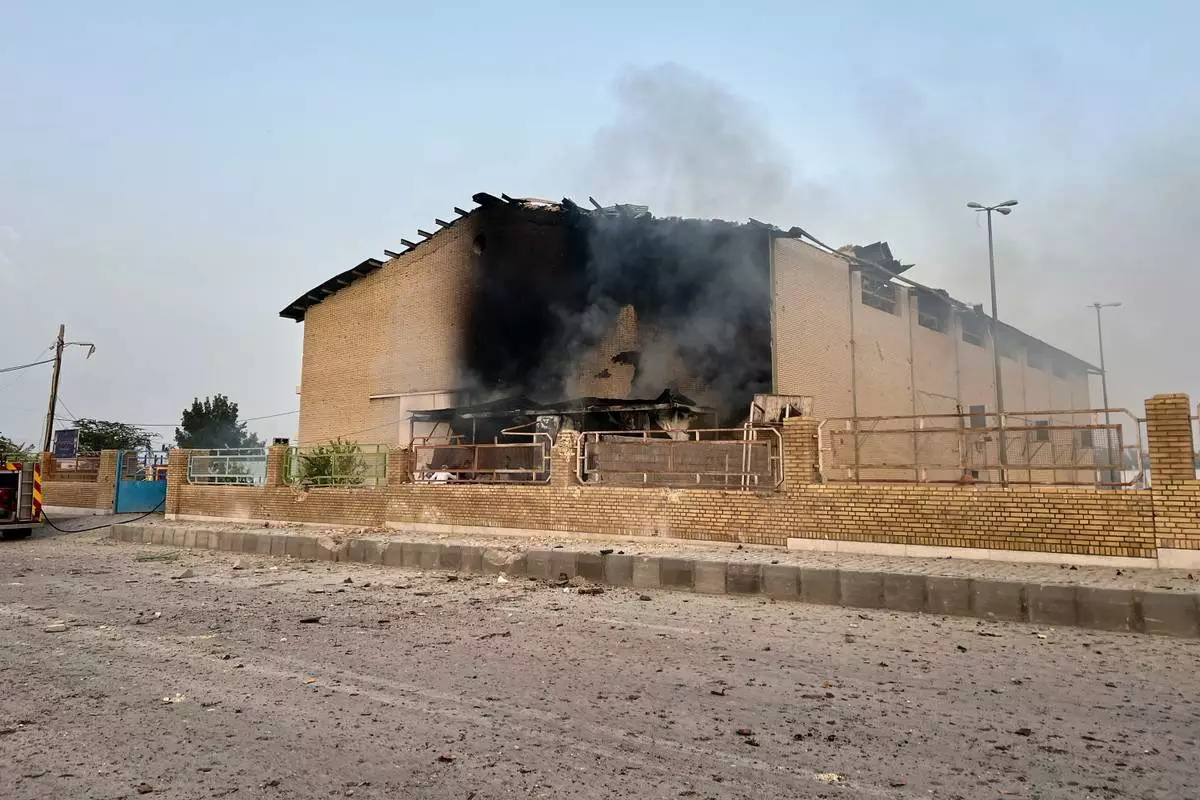
Smoke rises from a building damaged in a strike in Lamerd, southern Iran, Saturday, Feb. 28, 2026. (Alireza Ameri/Tasnim News Agency via AP)
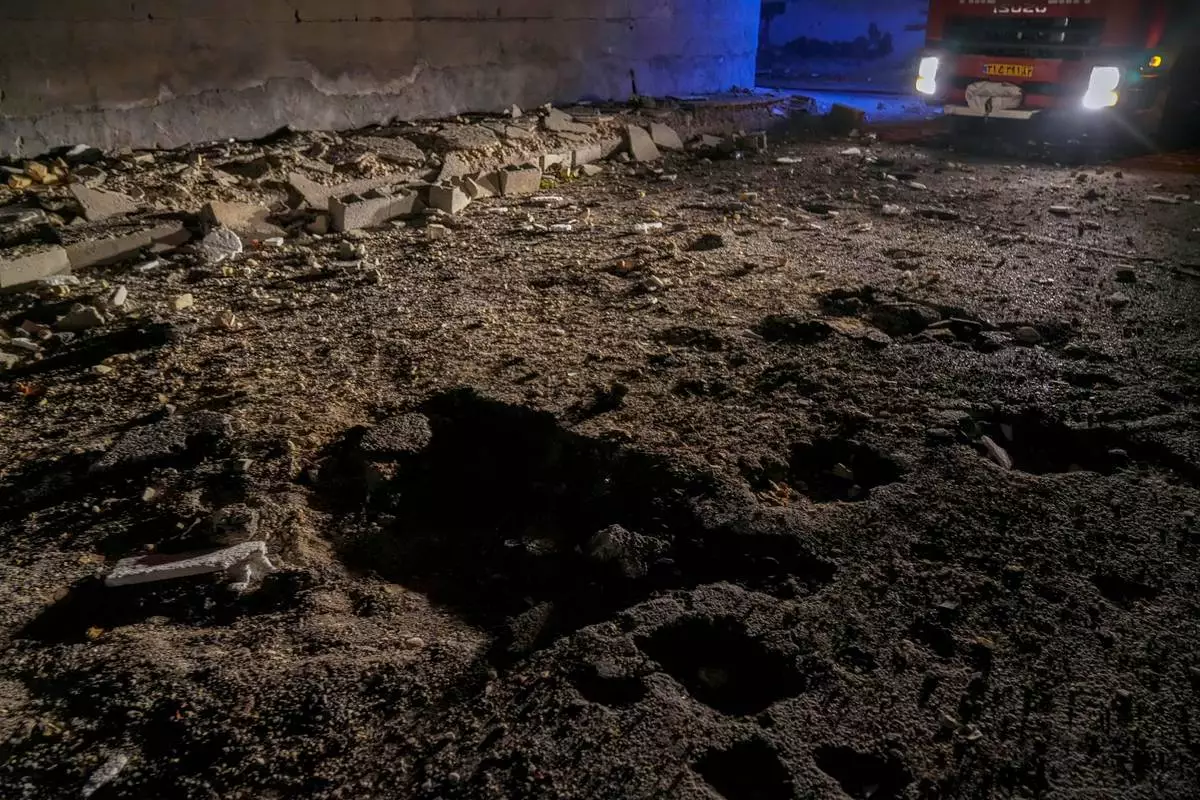
A fire truck's lights reveal a road damaged by a strike in Lamerd, southern Iran, Saturday, Feb. 28, 2026.(Alireza Ameri/Tasnim News Agency via AP)
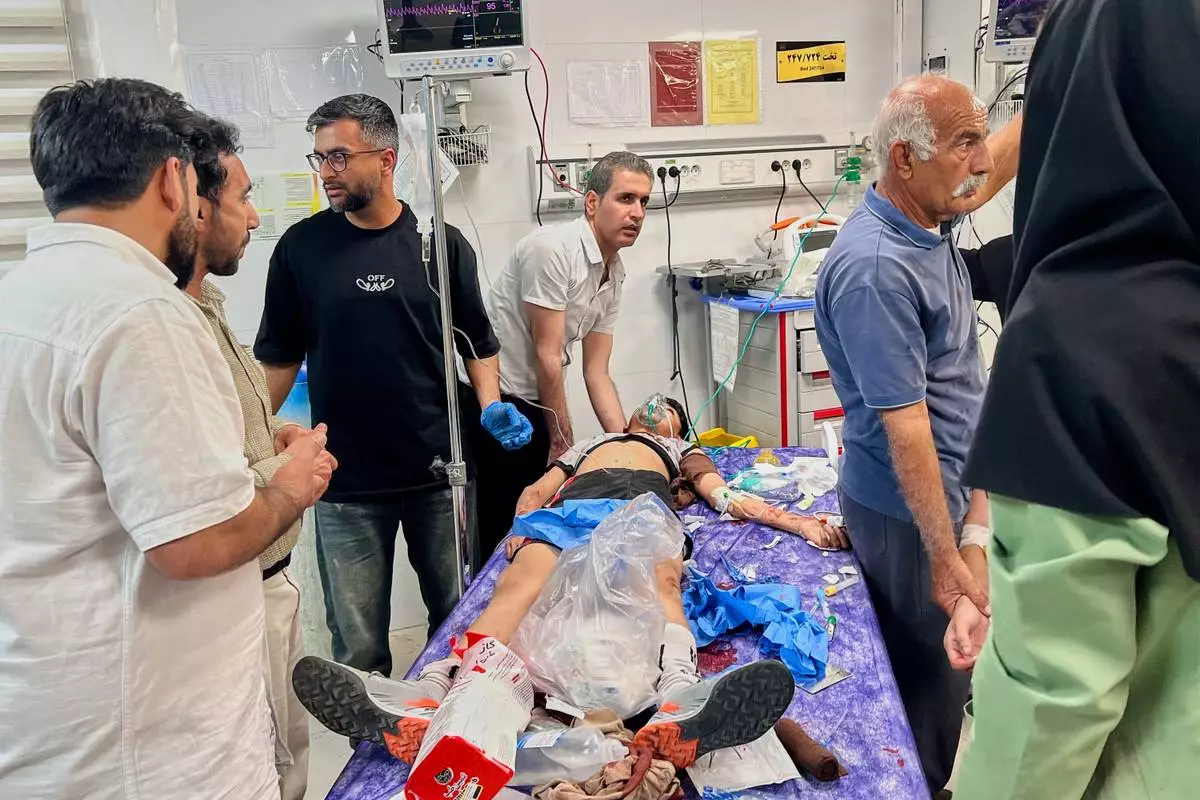
A boy injured in a strike receives treatment at a hospital in Lamerd, southern Iran, Saturday, Feb. 28, 2026. (Alireza Ameri/Tasnim News Agency via AP)
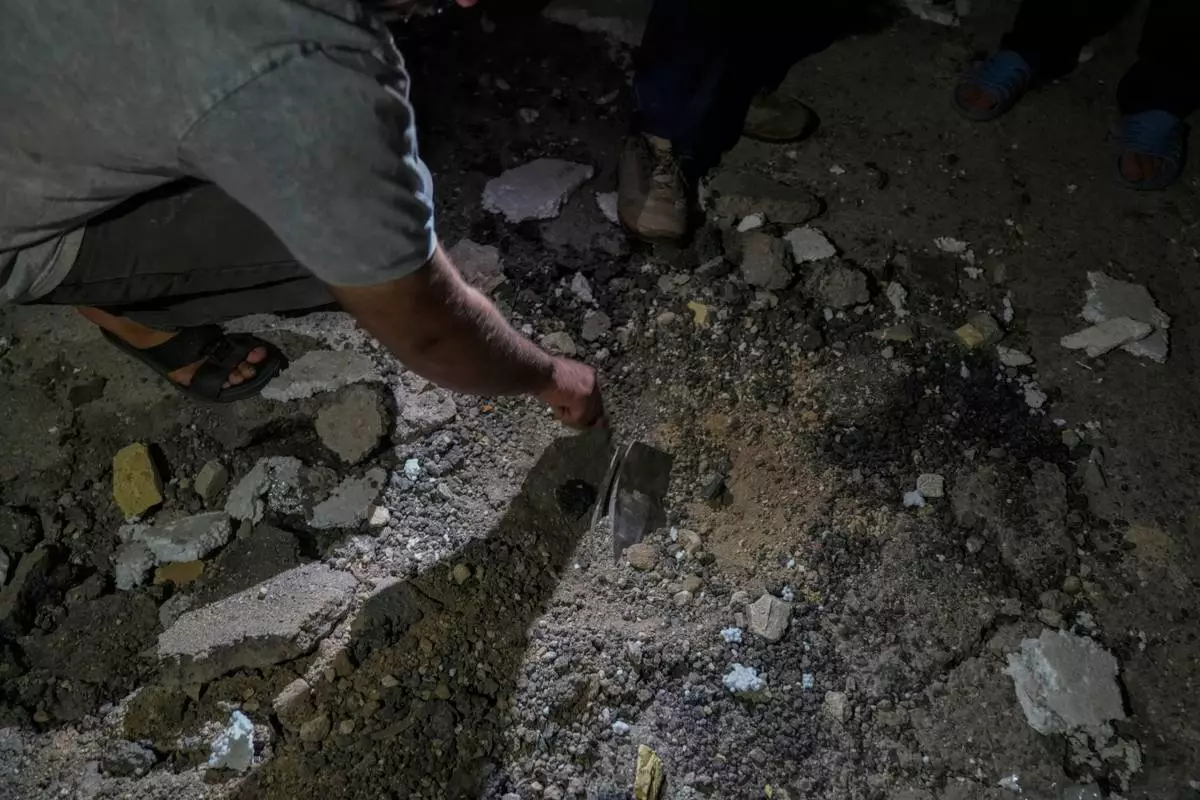
A man examines the impact site of a projectile following a strike in Lamerd, southern Iran, Saturday, Feb. 28, 2026. (Alireza Ameri/Tasnim News Agency via AP)
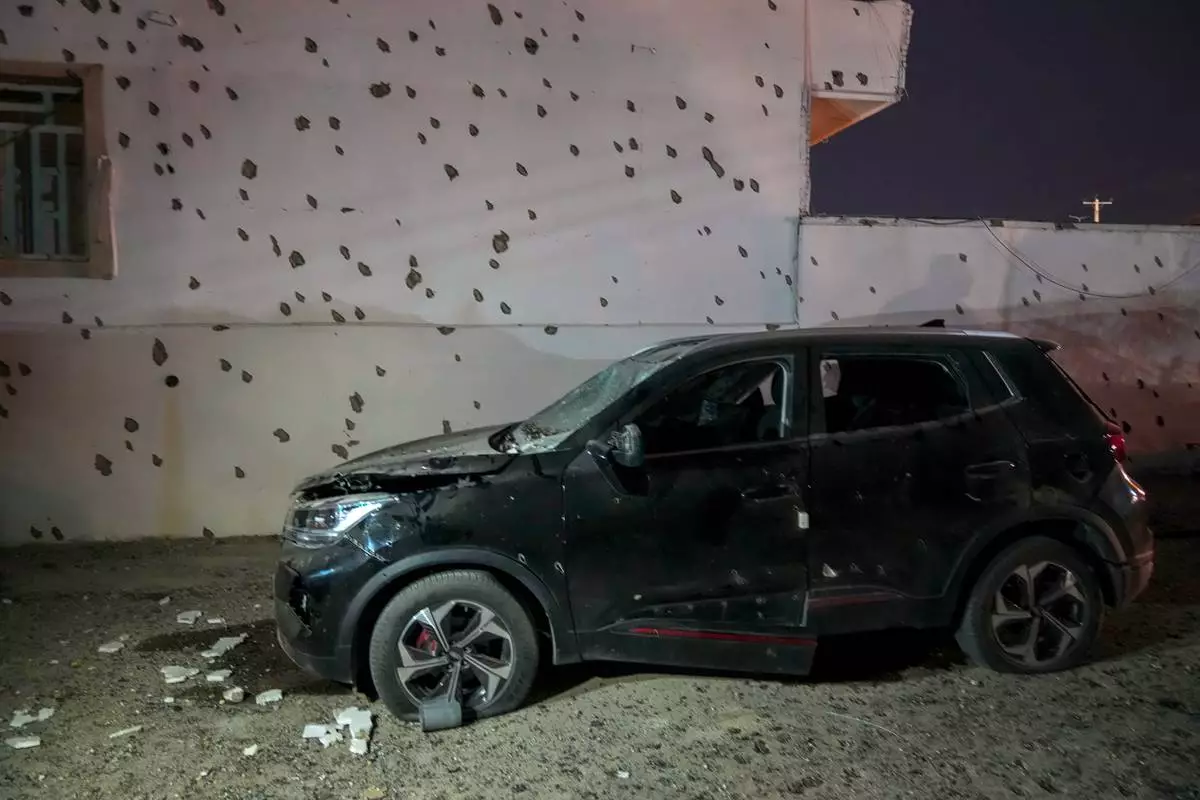
A damaged car sits beside a wall bearing numerous impact marks near the site of a strike in Lamerd, southern Iran, Saturday, Feb. 28, 2026. (Alireza Ameri/Tasnim News Agency via AP)