EL SEGUNDO, Calif.--(BUSINESS WIRE)--Aug 31, 2026--
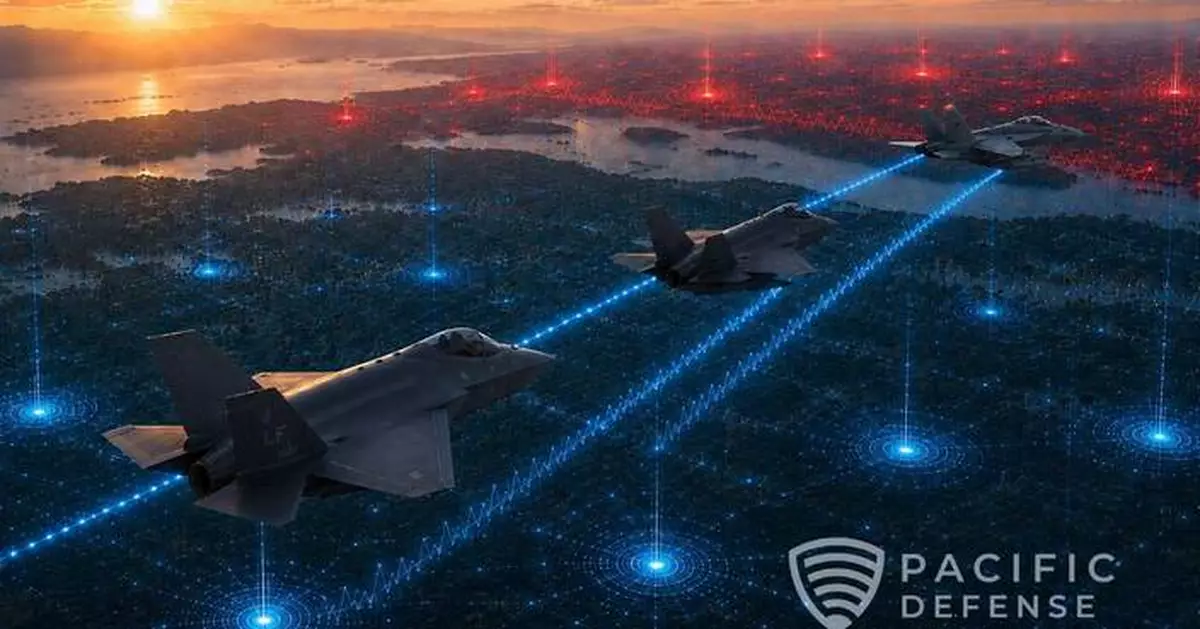
Pacific Defense, together with its affiliate Perceptronics Solutions, announced the award of a new SBIR Phase III contract by the Air Force Life Cycle Management Center (AFLCMC) for continued advancement of SOSA-aligned Electronic Warfare (EW) mission systems.
This press release features multimedia. View the full release here: https://www.businesswire.com/news/home/20260831240834/en/
This contract represents an important step in maturing and operationalizing advanced artificial intelligence (AI) and machine learning (ML) algorithms for warfighters operating in contested and congested electromagnetic spectrum environments. Integrating this AI/ML capability with Pacific Defense’s Sensor Open Systems Architecture (SOSA) aligned EW product line enables rapid, adaptive responses to emerging threats — moving decision timelines from human speed to machine speed.
The contract builds upon earlier SOSA AI/ML EW demonstration programs and will further mature advanced emitter-tracking algorithms, integrate electronic attack techniques, and validate operational performance through airborne demonstration on representative USAF platforms — all within a fully Open Mission Systems (OMS) compliant SOSA architecture.
“This program accelerates how advanced AI can be brought directly into the hands of operational units,” said Elan Freedy, General Manager of Perceptronics Solutions. “By combining modern AI techniques with open-architecture EW systems, we’re helping operators maintain decision superiority in environments where milliseconds matter.”
“The Air Force is advancing open architecture systems to detect and identify electromagnetic emissions from the air, enabling real-time understanding of the electromagnetic spectrum (EMS) in contested environments,” said Frank Pietryka, VP of EW, SIGINT and Autonomy at Pacific Defense. “Modern AI/ML algorithms overcome the limitations of legacy systems to counter modern threats.”
The awarded contract includes a 12-month period of performance, with primary work performed at Pacific Defense and Perceptronics facilities in Nashua, NH, El Segundo, CA, and Fairfax, VA.
About Perceptronics
Perceptronics Solutions develops AI and machine learning technologies that help people make better decisions under uncertainty and stress. Our scientists, engineers, and human-computer interaction experts combine advanced algorithms with user-centered design to solve the hardest problems facing the U.S. Department of Defense, security agencies, local governments, and enterprises. See more information at percsolutions.com and LinkedIn.
About Pacific Defense
Pacific Defense is a leading provider of innovative solutions in C5ISR, Electronic Warfare (EW), Signals Intelligence (SIGINT) and Communications for mission-critical environments. Focused on leveraging Modular Open Systems Approach (MOSA) standards, Pacific Defense delivers cutting-edge technology that enables faster adaptation to emerging threats and evolving mission requirements. With a commitment to excellence and innovation, Pacific Defense plays a key role in shaping the future of defense technologies. For more information, visit pacificdefense.com or follow the company on LinkedIn.
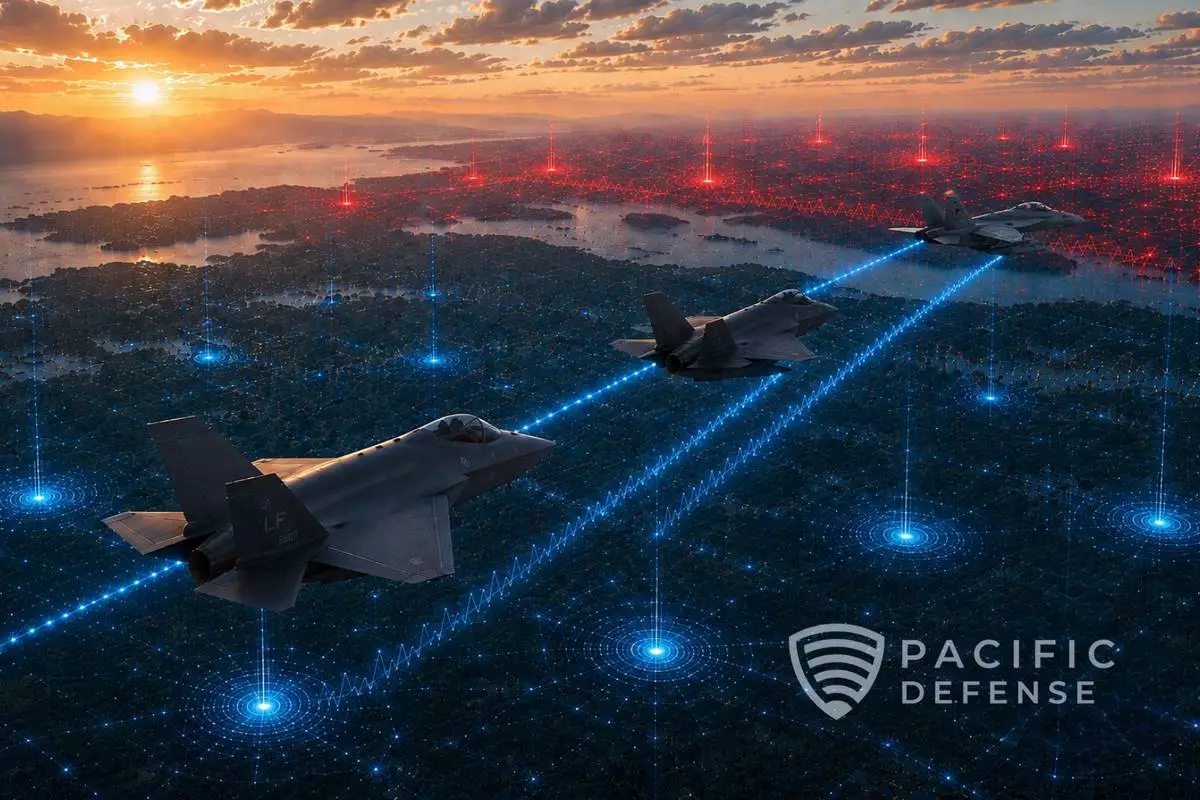
U.S. Air Force Awards Contract to Perceptronics and Pacific Defense for AI/ML-Enabled Airborne RF Situational Awareness
FLAGSTAFF, Ariz. (AP) — More rain and thunderstorms were possible Monday at the Grand Canyon following a major flash flood that left one person dead and about 15 others missing or unaccounted for, with scores of visitors evacuated and the only water pipeline for tourists and residents destroyed.
Emergency water restrictions that began Monday prevented tourists from staying overnight at lodges and hotels within the park. Year-round residents were asked to conserve water.
A flood watch was in effect. Visiting the Grand Canyon — a crown jewel of the national park system — can be particularly dangerous in the summer because of the risk of flash flooding that accompanies the monsoon, or rainy season. Clear days can give way quickly to thunderstorms and downpours.
“With deep monsoonal moisture in place and already saturated soils in some locations, an elevated risk of flash flooding will be in place through Monday,” the National Weather Service said early Monday.
The body of a 46-year-old man was recovered Sunday evening near Crystal Rapids along the Colorado River, the National Park Service said without providing additional details.
The flooding Saturday in Bright Angel Creek, which flows into the river, led to more than 60 people being airlifted from the depths of the canyon. The park service asked anyone with details about hikers or campers still unaccounted for to get in touch. The Arizona Department of Public Safety helped with additional evacuations Sunday.
“These measures are crucial for ensuring the safety and sustainability of water resources,” the park said in a statement.
Parth Desai was hiking through a narrow passage in Bright Angel Canyon with fellow physicians and a park ranger when heavy rain started falling Saturday.
“We saw the creek flood, waterfalls coming up out of nowhere, boulders, mud, landslides happening everywhere,” he said.
Later, as they made their way toward Phantom Ranch, a colleague shouted “Up, Up, Up, Up!” as a 4-foot (1-meter) debris wall headed toward them and they ran up into a patch of cacti, he said. They were rescued by helicopter late Saturday after making it to the Phantom Ranch area, he said.
Torrents of water wiped out footbridges over the creek and altered the landscape, widening the creek bed and extending an existing river rapid or creating a new one. The flood was a major blow to an enduring effort to modernize the pipeline that serves 6 million visitors a year and roughly 1,600 residents of Grand Canyon Village.
“Heaven help us if the whole thing down there at the bottom has to be reconstructed,” said Jack Schmidt, director of the Center for Colorado River Studies at Utah State University. “Where are they going to get the money?”
Halting overnight stays at the park because of a lack of water is rare, although the pipeline frequently has failed over the years. While the Grand Canyon has large storage tanks for potable water on the South Rim, they won’t be refilled while the pipeline is out of service.
A $208 million rehabilitation of the pipeline and upgrades to the associated water delivery system started in 2023, with the park service calling it a crucial investment to ensure the park can meet the needs of residents and visitors. The project was expected to be completed next year.
Stengle reported from Dallas. Jeffrey Collins in Columbia, South Carolina, Holly Ramer in Concord, New Hampshire, and Christopher Weber in Los Angeles also contributed.
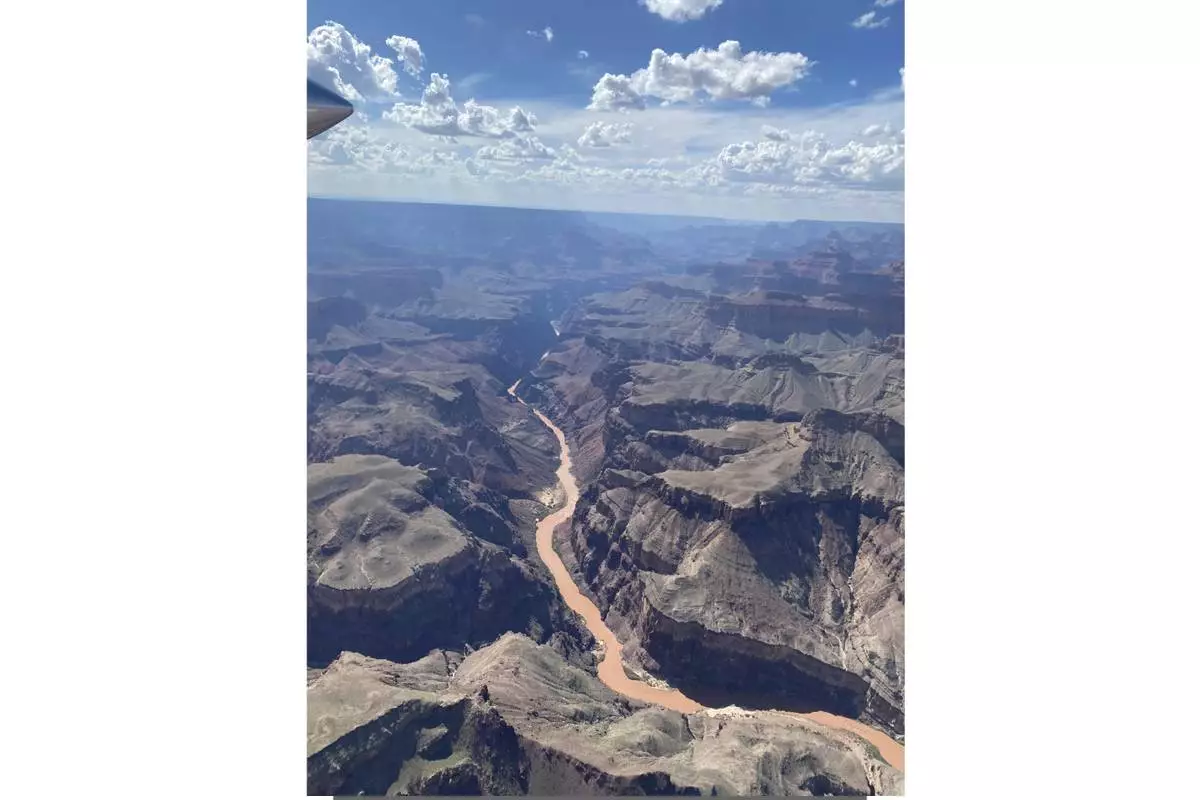
This photo shows Grand Canyon National Park in northern Arizona on Sunday, Aug. 30, 2026, after it was hit by heavy flooding a day earlier. (Craig Sanderson via AP)
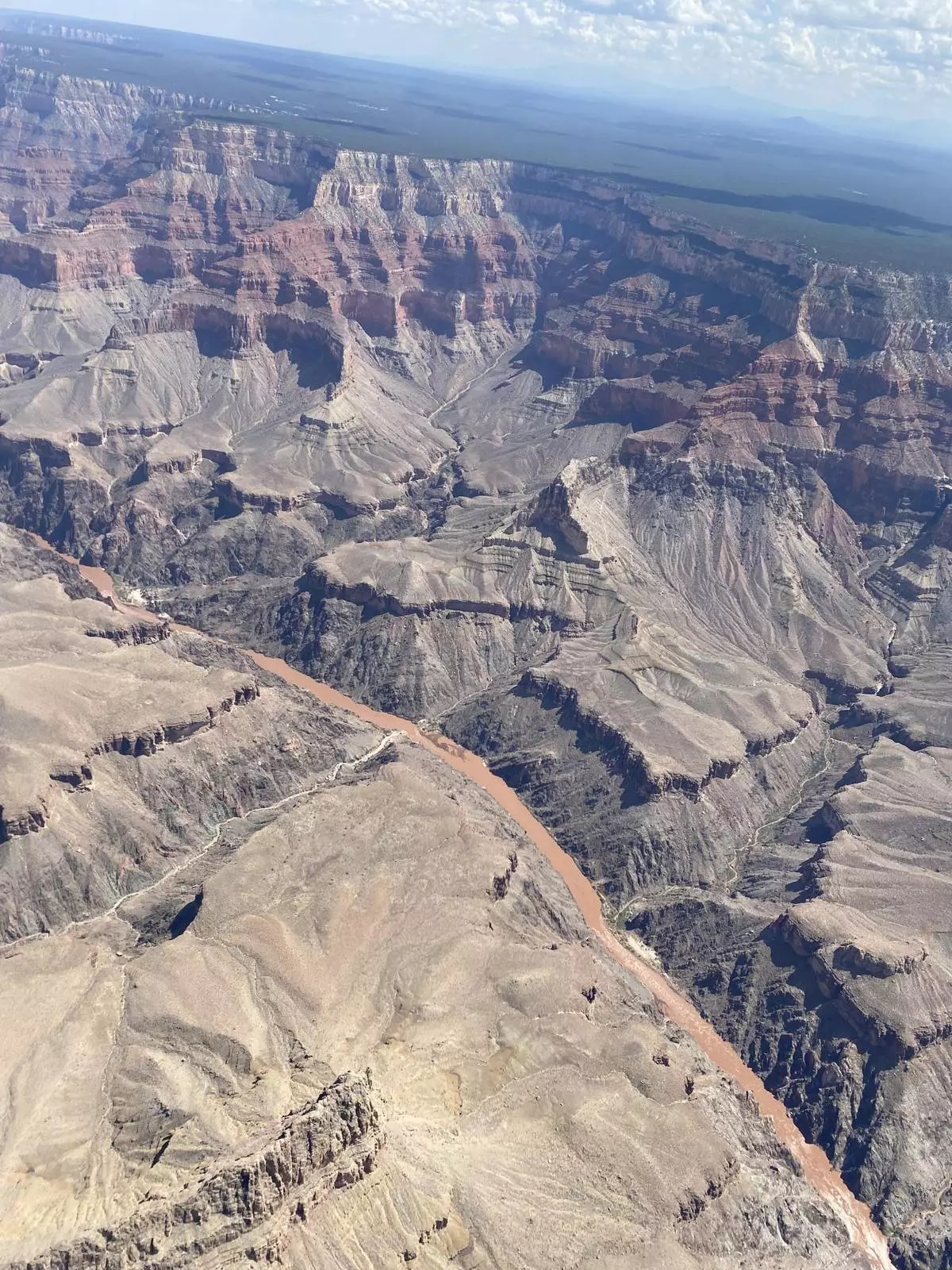
This photo shows Grand Canyon National Park in northern Arizona on Sunday, Aug. 30, 2026, after it was hit by heavy flooding a day earlier. (Craig Sanderson via AP)
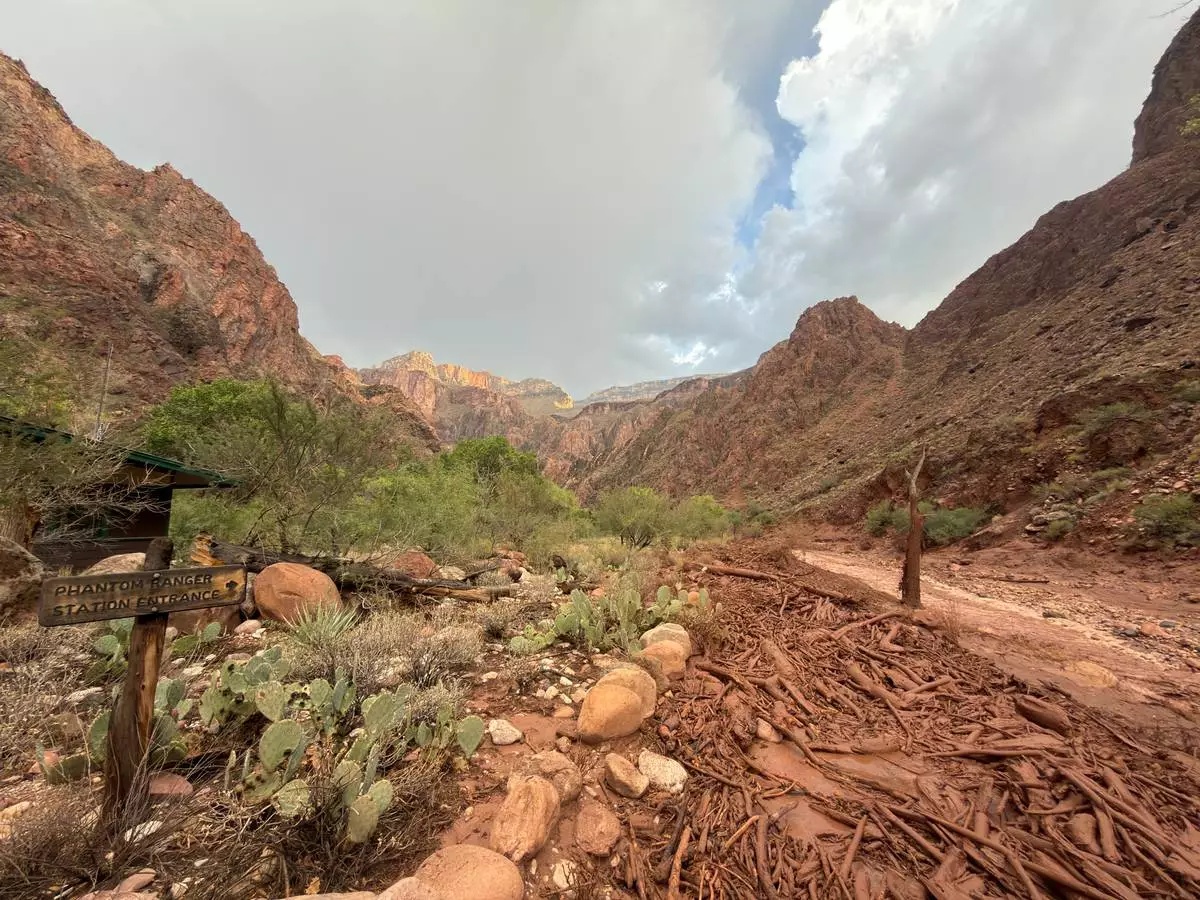
Bright Angel Creek near the Phantom Ranger Station in the Grand Canyon, Arizona, is seen after flash flooding from storms, Saturday, Aug. 29, 2026. (Parth Desai via AP)