Nothing about Colin Kaepernick, the football player, changed on that warm Southern California night a decade ago.
Not his speed. Not his arm strength. Not the improvisational skills that made him one of the NFL's most electrifying, if at times erratic, quarterbacks.
Click to Gallery
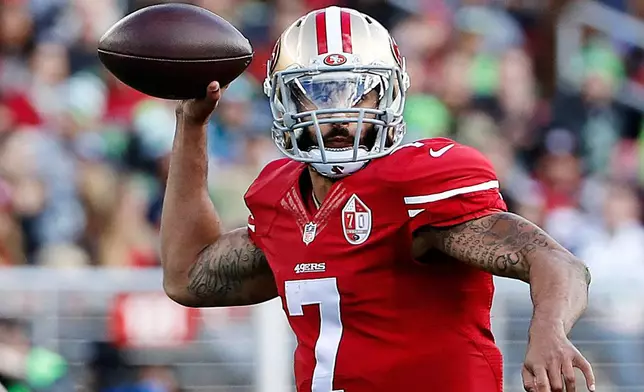
FILE - San Francisco 49ers quarterback Colin Kaepernick (7) throws a pass during the first half of an NFL football game against Seattle Seahawks in Santa Clara, Calif., Sunday, Jan. 1, 2017. (AP Photo/Tony Avelar, File9
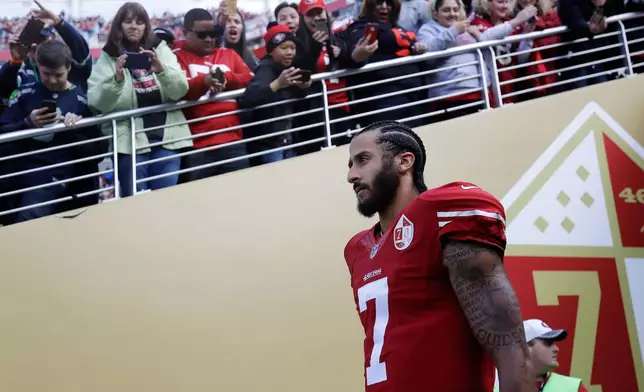
FILE - San Francisco 49ers quarterback Colin Kaepernick (7) walks out of a tunnel before an NFL football game against the Seattle Seahawks in Santa Clara, Calif., Sunday, Jan. 1, 2017. (AP Photo/Marcio Jose Sanchez, File)
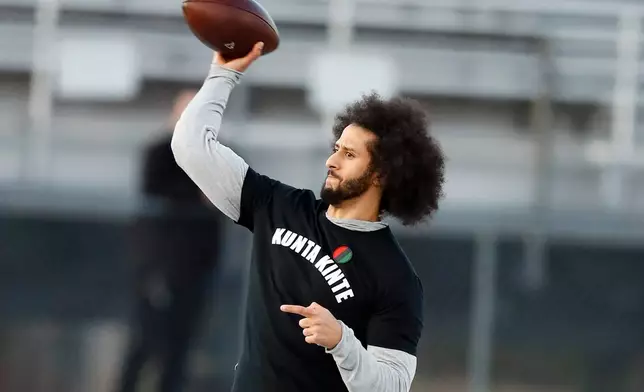
FILE - In this Nov. 16, 2019, file photo, free agent quarterback Colin Kaepernick participates in a workout for NFL football scouts and media in Riverdale, Ga. (AP Photo/Todd Kirkland, File)
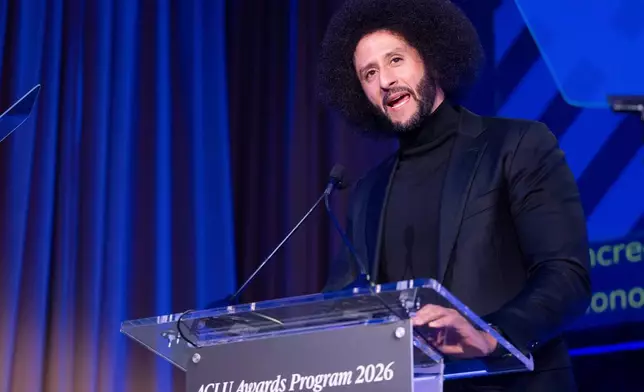
FILE - Colin Kaepernick speaks after receiving the ACLU Ralph Ellison Award for Defenders of Civil Rights and Civil Liberties in the Arts, Business, Science, and Sports at the ACLU's 2026 Biennial Leadership Conference, Friday, July 24, 2026, in Washington. (AP Photo/Kevin Wolf, File)
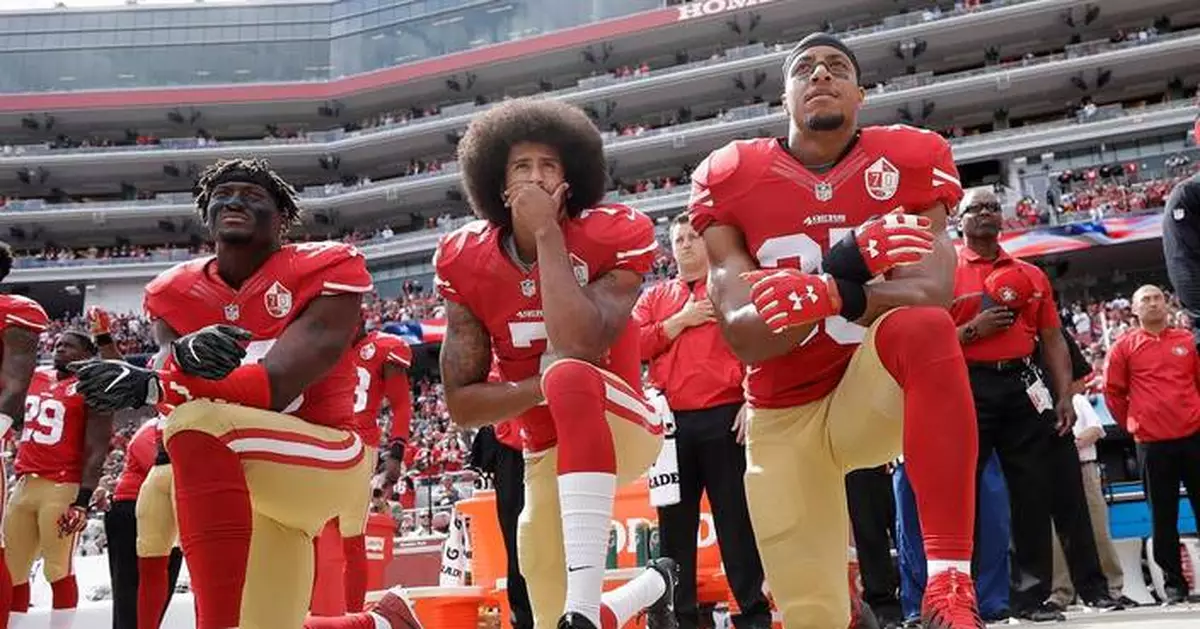
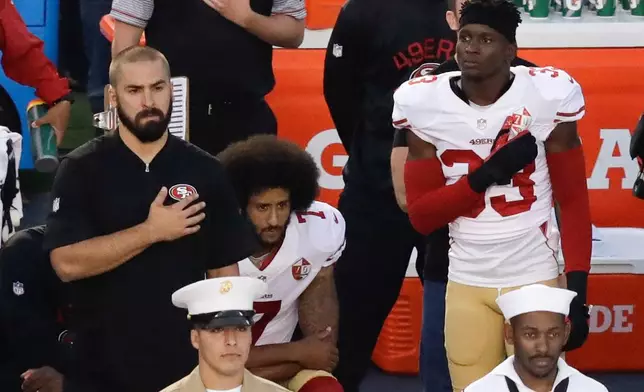
FILE - San Francisco 49ers quarterback Colin Kaepernick, middle, kneels during the national anthem before the team's NFL preseason football game against the San Diego Chargers, Thursday, Sept. 1, 2016, in San Diego. (AP Photo/Chris Carlson, File)
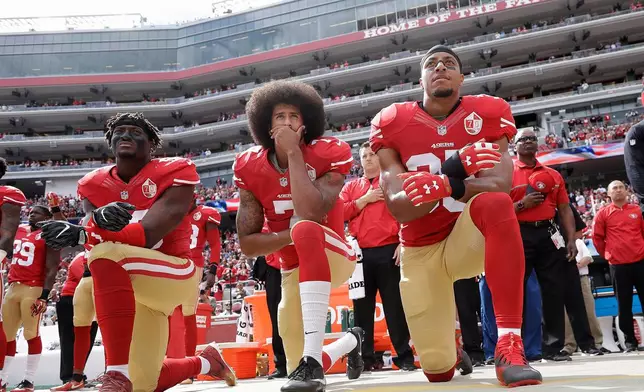
FILE - In this Oct. 2, 2016, file photo, from left, San Francisco 49ers outside linebacker Eli Harold, quarterback Colin Kaepernick and safety Eric Reid kneel during the national anthem before an NFL football game against the Dallas Cowboys in Santa Clara, Calif. (AP Photo/Marcio Jose Sanchez, File)
And to be honest, nothing changed about Colin Kaepernick, the 28-year-old man, that night either.
If anything, the moment the San Francisco 49ers star decided to take a knee during the national anthem before a preseason game on Sept. 1, 2016, to bring attention to a series of social issues he cares deeply about — from racial injustice to minority oppression to police brutality — only revealed to the world at large who Kaepernick always believed himself to be.
“It wasn’t a sudden act,” he wrote in a statement this spring announcing his memoir, ”The Perilous Fight," a title borrowed from a passage of the very song to which his name will forever be linked.
No, it wasn't.
That night wasn't even the first time the player who always seemed to have one eye on the field and the other on the world at large chose to do something other than stand during the anthem. In the two previous 49er exhibitions that August, he sat on the bench, largely unnoticed, as the anthem played.
Only after connecting with former NFL player and retired Green Beret Nate Boyer in a hotel lobby did Kaepernick move from the bench to a knee, something Boyer suggested would be more respectful to those in the military.
He didn't announce he was going to do it. He didn't share it on social media. He didn't promote it in any way. He just did it, quietly placing his right knee on the ground, his left arm across his left knee and staring silently ahead as Navy Petty Officer 1st Class Steven Powell sang “The Star-Spangled Banner.”
When Kaepernick huddled with noted sociologist and then-49ers advisor Harry Edwards in the aftermath, they both knew Kaepernick's decision carried considerable risk.
While Kaepernick, who is biracial, was hardly the first athlete of color to parlay the playing of the anthem into an attempt to draw attention to social inequity — from U.S. track athletes Tommie Smith and John Carlos at the 1968 Summer Olympics to college basketball player Ariyana Smith at Knox College, who in late 2014 stood under the basket with her hands up during the anthem, then laid on the court for over four minutes in protest over the shooting death of Black teenager Michael Brown in Missouri — Edwards understood the spotlight the NFL provides and Kaepernick's status within the game had the potential to make it a divisive cultural flashpoint.
“I said, ‘You know, this is going to become a major issue,’” Edwards told The Associated Press. “You are a Black male and seen as a greater threat because of the centrality of male activities and male sports. And so there’s no way that there’s not going to be a price to pay for this.”
The price ended up being Kaepernick's football career.
The conversation Kaepernick intended to start was instead hijacked. The method of Kaepernick's protest became the focus, with critics calling it offensive, particularly to those in the armed forces.
Then-Republican presidential nominee Donald Trump lashed out and later, as president, labeled any player who knelt a “son of a bitch”. Fans burned Kaepernick's jersey in anger. The boos that cascaded in his direction every Sunday were hardly limited to 49er road games, though the franchise trudging through a miserable 2-14 season didn't help.
While supporters pointed out that Kaepernick's right to kneel is one of the freedoms protected by the First Amendment of the Constitution, the very thing those in uniform are commanded to defend, it didn't seem to matter.
No matter how hard Kaepernick kept trying to steer the talk toward racial injustice, it swerved in seemingly every other direction instead.
Four months after kneeling for the first time, Kaepernick threw his 1,692nd and final pass in the NFL, a 9-yard touchdown pass to tight end Garrett Celek late in the fourth quarter against Seattle, a play that highlighted some of what made Kaepernick so tantalizing as a player. He dropped back, glanced to his left, then stepped up in the pocket and fired a dart over the middle to Celek in the end zone.
The score brought the 49ers to within three. San Francisco never got the ball again. The Seahawks ran out the clock, and Kaepernick's No. 7 jersey disappeared down the tunnel toward the locker room one last time.
The 49ers hit reboot during the offseason, firing head coach Chip Kelly and replacing him with Kyle Shanahan. Kaepernick met with Shanahan and new general manager John Lynch, then opted to void the remaining year on his contract and become a free agent.
The player whose rise in 2012 sparked San Francisco to an NFC title, who once led former NFL quarterback-turned-analyst Ron Jaworski to wonder aloud if Kaepernick could become one of the best ever at the position, never pulled on a uniform again.
Kaepernick and former teammate Eric Reid — who knelt alongside him in 2016 — filed a lawsuit against the NFL claiming owners colluded to blacklist them out of the game. A settlement was reached in 2019, and while Kaepernick kept one toe in the game — as late as 2022, he worked out for the Las Vegas Raiders — both he and the league seem to have moved on.
Nearing 10 years after the 72nd and final touchdown pass of his career, the circumstances remain hard for some to square. How is it that 32 teams saw a player in his prime, a player who guided a team to the Super Bowl, and who was only a couple of years removed from leading his team on a pair of deep playoff runs, and decided “nah, we're good"?
The NFL is, in just about every way, a meritocracy. Pedigree doesn't matter, only production. The league's history is filled with players granted countless second (and in some cases, third or fourth) chances despite various misdeeds, some of whom returned to the field after spending time in prison.
Over the last month, the Seattle Seahawks sprinted to land cornerback Terrion Arnold even as he faces eight felony charges stemming from an incident in Florida. Arnold, who has denied the allegations, agreed to a one-year deal on Saturday and was immediately placed on the commissioner's exempt list by the NFL while it conducts its own investigation.
Kaepernick, by contrast, remains unsigned to this day even as countless quarterbacks with lesser resumes have drifted in and out of the league.
His exile doesn't quite make sense to longtime Pittsburgh Steelers defensive lineman Cam Heyward. Heyward described Kaepernick as “hell of a talent” who created “headaches” for opponents on the field and who once passed for 302 yards, ran for 62 more, and accounted for a pair of touchdowns in the Super Bowl, a game Heyward is still waiting to play in as he enters his 16th season.
Heyward, a seven-time Pro Bowler and the league’s 2023 recipient of the Walter Payton Man of the Year award for his charity work and contributions to the community off the field, also remembers a player who stuck to his convictions in the face of withering pressure.
The way Heyward figures it, isn't that kind of the point? While stressing he didn't have all the specifics on why Kaepernick never played again, Heyward said the quiet part out loud when asked if he felt Kaepernick's stand was the driving force behind why he didn't play beyond 2016.
“I don't think any player deserves that,” Heyward told the AP. “I think we all strive to be football players, but then we also strive to give back. And you never would think it would lead to that. It feels like he paid the price with his career. I just don't think that's right.”
It's telling of how fraught Kaepernick's decision remains 10 years later that numerous people who either played or coached alongside Kaepernick in 2016 declined to speak to the AP about their experiences of that season and its fallout.
“I think that this reluctance to even talk about it now is indicative of to what degree did the NFL substantively address it,” said Frederick Gooding Jr., a professor of African-American studies at TCU and the author of a book examining the intersection of race, media and sports. “If anything, people should be more open to talk about this, warts and all.”
It hasn't happened on the scale Kaepernick envisioned, and Gooding added that he believes one reason Kaepernick never took another snap was the way he “forced people to get uncomfortable.”
It wasn't until 2020, in the wake of George Floyd's murder in Minnesota, that NFL Commissioner Roger Goodell acknowledged the league misstepped by not listening to players like Kaepernick who were fighting for social equality. By then, Kaepernick was already three-plus years removed from the sport.
“Now that the game has been decided, now that his career is effectively over, now from a power and control standpoint, the NFL still is able to acknowledge that maybe they should have listened better, but they’re not losing anything,” Gooding said. "Now the stakes are lower for them to admit in retrospect.”
While demonstrating during the anthem spread across the league in the immediate aftermath — with as many as 200 players taking a knee at times during the 2017 season — the temperature, at least inside NFL stadiums, has been turned down even as it remains ratcheted up in so many other areas of society.
Edwards, whose roots in promoting social justice date back to his time counseling Smith and Carlos to raise their gloved fists in a Black power salute while on the medal stand at the 1968 Olympics, once publicly lobbied for Kaepernick to return to the game.
Now, he sees the work Kaepernick and his wife, Nessa, have done through the years — from the “Know Your Rights” camps they host to promote “education, self-empowerment, mass-mobilization” for people of color to the independent autopsies their foundation pays for (most recently following the death of Black teenager Nolan Wells in Mississippi) — and believes the game would have just gotten in the way.
“Nothing he would ever accomplish in football, even if there was a team that would bring him on board, would match his importance as a sports political figure in the first two decades of the 20th century,” Edwards said. “And I think that that’s critically important that that example be out there. There will be others who will come along. The only thing that’s missing today is that broad-scale societal movement that athletes use as scaffolding to make their statements.”
Marcellis Perkins watched intently from the other side of the country as the rhetoric around Kaepernick heated up. A sophomore forward on the Holy Cross men's basketball team at the time, Perkins had long felt the pull of civic engagement while growing up in Hampton Roads, Virginia.
An advisor, sensing a need for allyship in a particularly fraught environment, suggested to Perkins and a handful of other athletes that they start meeting regularly in an effort to carve out a place for them to openly share their experiences.
During those early days the group, which became known as Men of Color Athletes (MOCA), would talk openly about Kaepernick's commitment to his cause at a time it wasn't unusual for them to hear criticism of the 49ers quarterback in their own locker rooms in Worcester, Massachusetts — a good 2,500 miles from San Francisco.
“I'm like well, if our coach says this or the captain of the team says this, how can we feel like we express ourselves or find the words to talk about what’s actually happening from our perspective without feeling like we'll be penalized?" Perkins said. “And so the best thing we could do is create a space for ourselves where we can talk and share these resources, share these thoughts and better equip ourselves.”
Perkins, who now holds a doctorate in philosophy and is the program director for an entrepreneurship program at TCU, likened Kaepernick's stand to ones made by predecessors Muhammad Ali and Jim Brown, only they were living through it, not reading about it in a book.
In Kaepernick, the men in MOCA saw “somebody reflecting and representing us and using their voice.” What began with a group of around 10 athletes quickly grew into 30 and laid the foundation for a women's group.
On a personal level, Perkins watched Kaepernick deftly navigate the transition from athlete to former athlete, a path Perkins had to walk himself when injuries forced him to spend his final years at Holy Cross watching from the sideline.
Perkins has been heavily involved in several projects since moving to the Fort Worth area, including serving on a non-profit board that addresses health inequities and for a time, running an after-school program at an all-boys school. While Perkins has always felt pulled in this direction, Kaepernick provided more than a gentle nudge.
It's one of the many ways ACLU President Deborah Archer told the AP that Kaepernick's journey “set an example” for others to follow.
“He showed what they can do, the power that they have to start conversation,” she said after the organization presented Kaepernick with an activism award at a ceremony in Washington, D.C., in July. "For so long athletes, actors were told: That’s your lane, stay in your lane. He showed that there is no lane. We are all a part of this democracy, that we all have a right to speak, we all have an obligation to speak.”
An obligation that Kaepernick is perhaps even more fervently committed to now at 38 than he was at 28. Yes, speaking out came at a high personal cost. And yes, there will always be a segment of the populace whose judgment of him will begin and end with the image of Kaepernick on one knee while someone sings about “the land of the free and the home of the brave."
No, he did not make it to the Hall of Fame as some once thought might be possible. Yet for those like Perkins who were inspired by watching someone take a stand at deep personal cost in hopes of creating what Edwards likes to call the quest for a “more perfect union,” it hardly matters.
“I would hope and I would think that when he looks back on his legacy, he'll say ‘I made the right decision because of all the lives that were impacted, all the lives that were changed,’ ... that is a different level of greatness," Perkins said. "The media might not celebrate it, but the people will. I think that’s all that matters.”
AP Sports Writers Alanis Thames, Kristie Rieken, Doug Ferguson, Mark Long, Terry Tang and Dan Gelston contributed to this report.
See AP’s full NFL coverage here
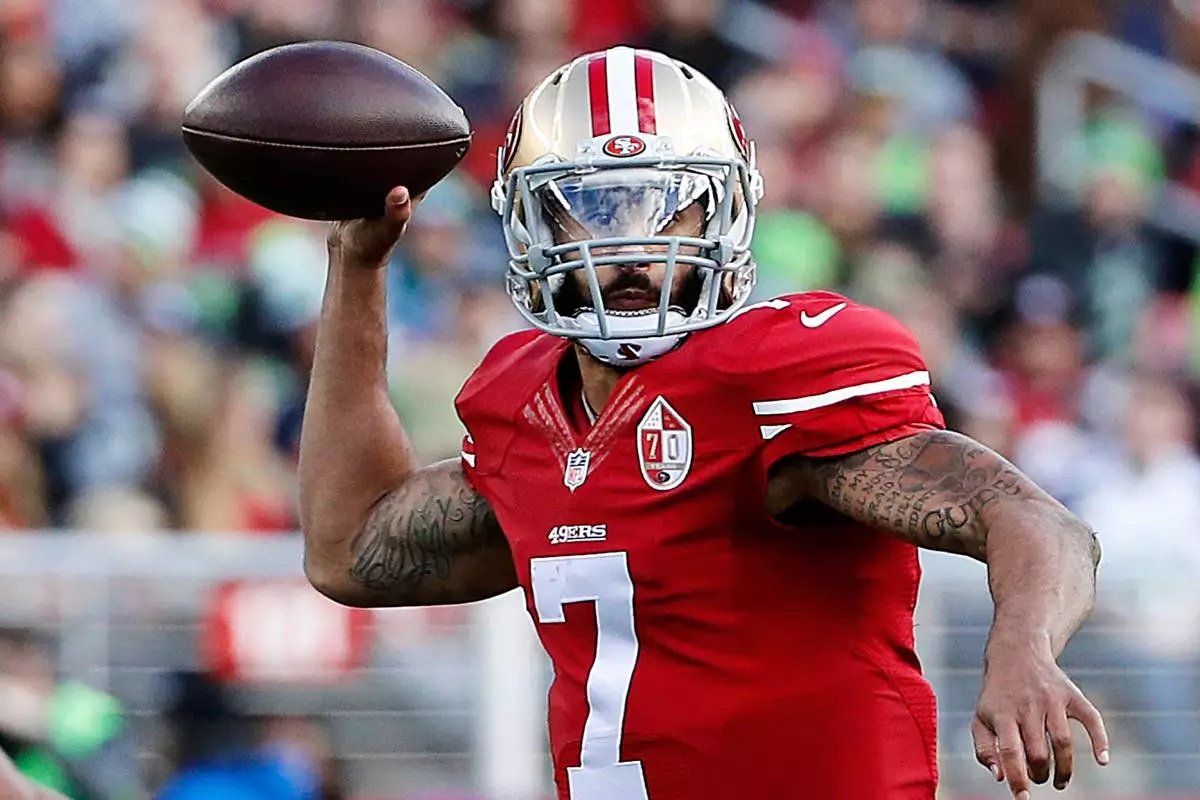
FILE - San Francisco 49ers quarterback Colin Kaepernick (7) throws a pass during the first half of an NFL football game against Seattle Seahawks in Santa Clara, Calif., Sunday, Jan. 1, 2017. (AP Photo/Tony Avelar, File9
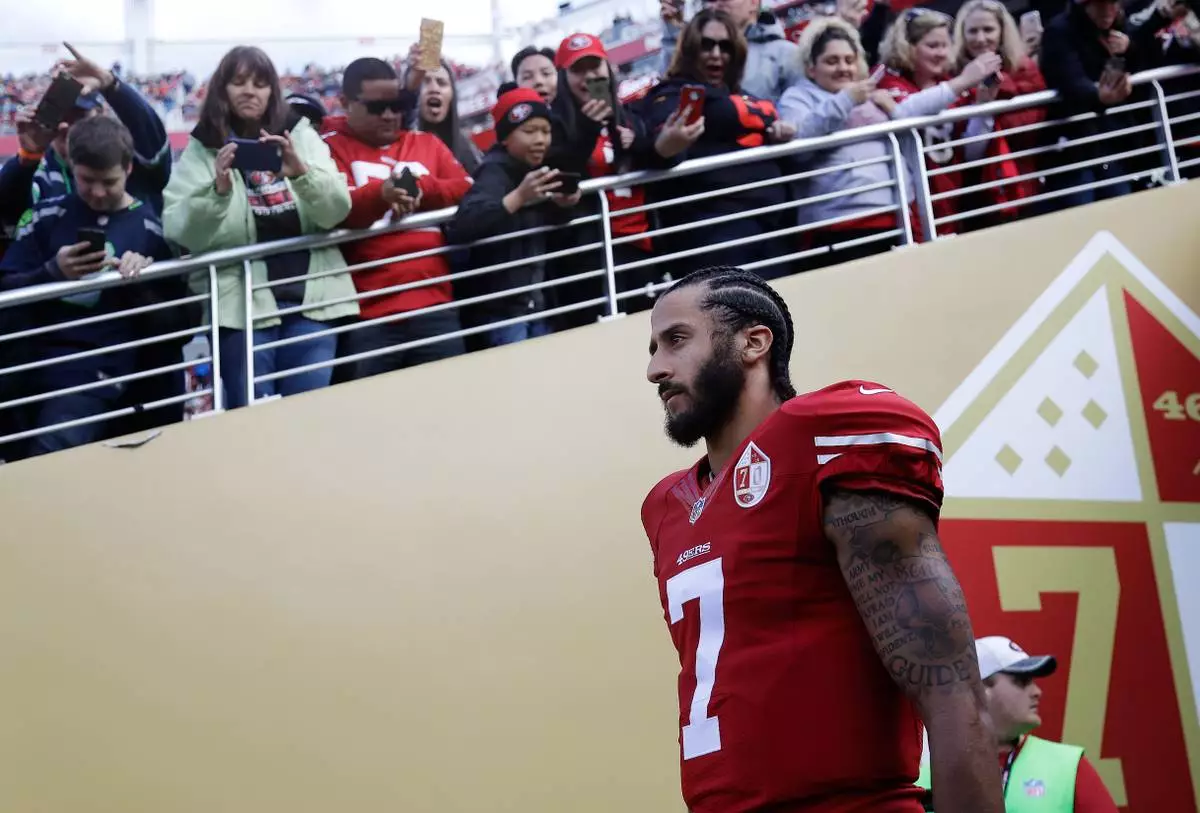
FILE - San Francisco 49ers quarterback Colin Kaepernick (7) walks out of a tunnel before an NFL football game against the Seattle Seahawks in Santa Clara, Calif., Sunday, Jan. 1, 2017. (AP Photo/Marcio Jose Sanchez, File)
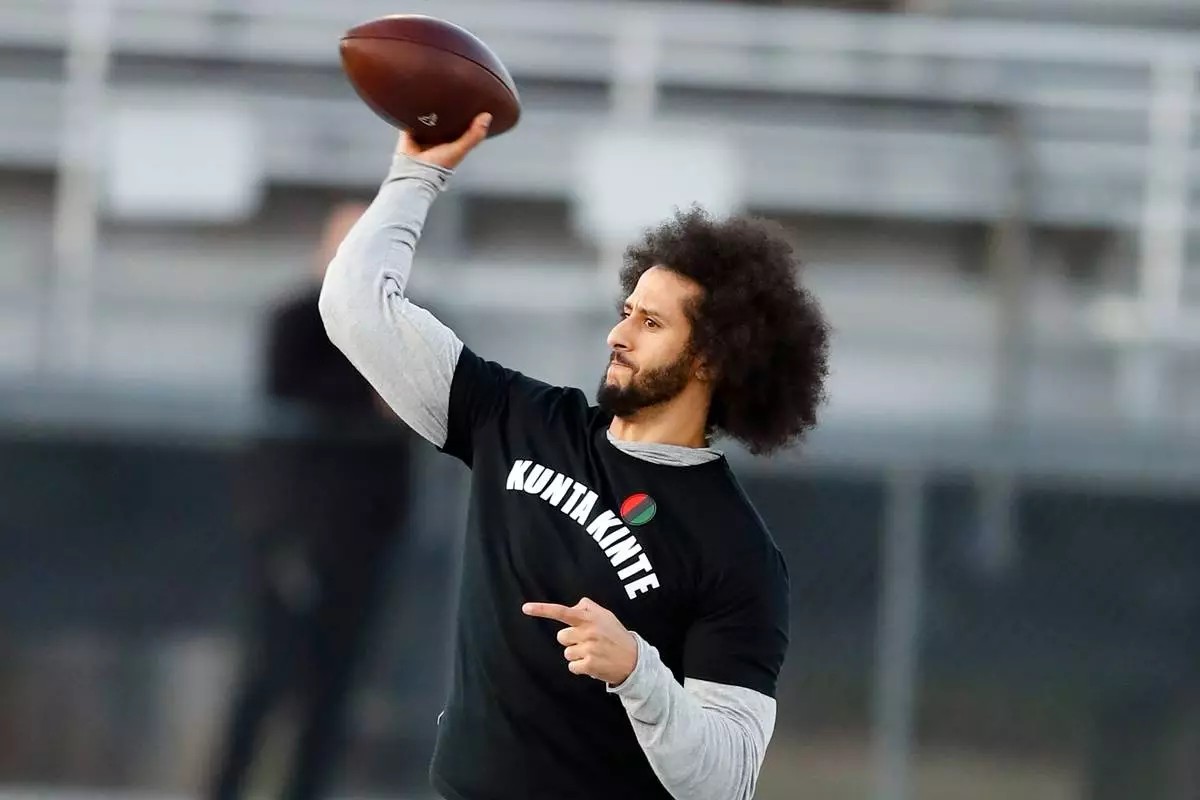
FILE - In this Nov. 16, 2019, file photo, free agent quarterback Colin Kaepernick participates in a workout for NFL football scouts and media in Riverdale, Ga. (AP Photo/Todd Kirkland, File)

FILE - Colin Kaepernick speaks after receiving the ACLU Ralph Ellison Award for Defenders of Civil Rights and Civil Liberties in the Arts, Business, Science, and Sports at the ACLU's 2026 Biennial Leadership Conference, Friday, July 24, 2026, in Washington. (AP Photo/Kevin Wolf, File)
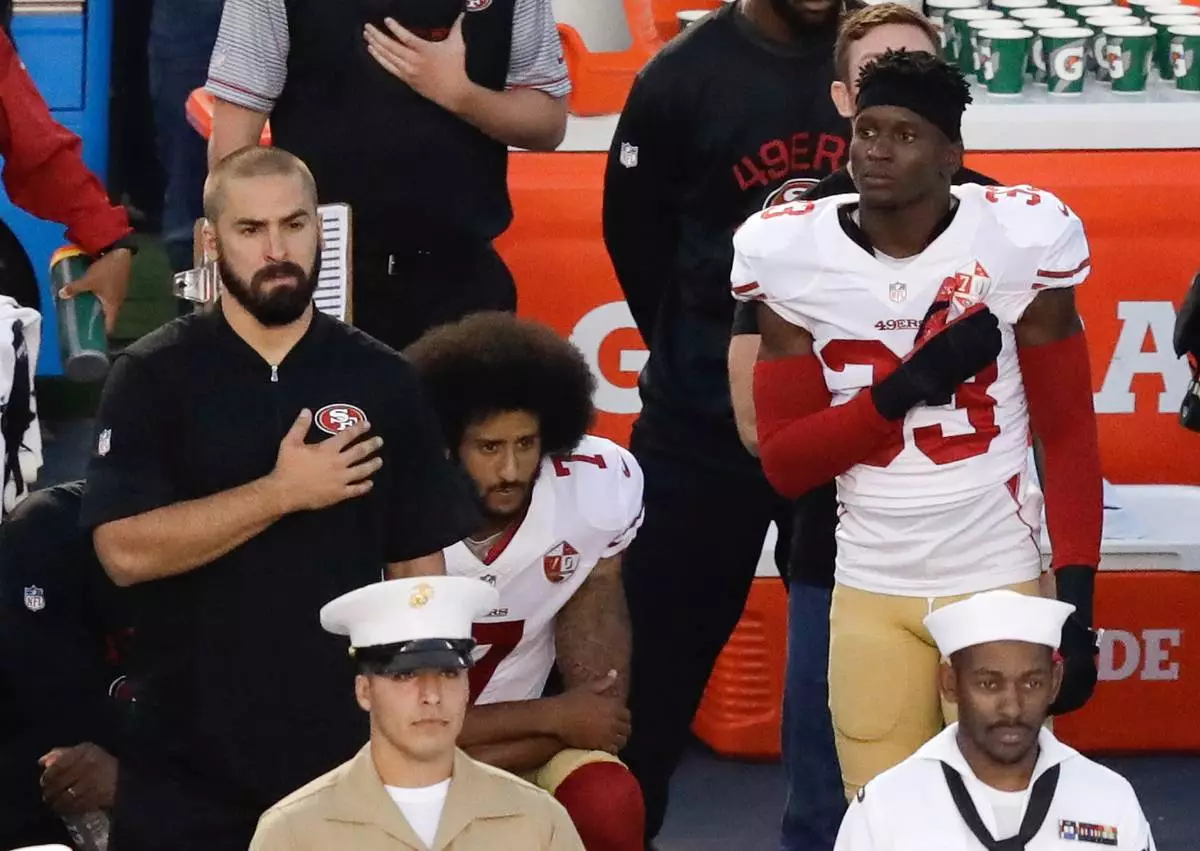
FILE - San Francisco 49ers quarterback Colin Kaepernick, middle, kneels during the national anthem before the team's NFL preseason football game against the San Diego Chargers, Thursday, Sept. 1, 2016, in San Diego. (AP Photo/Chris Carlson, File)
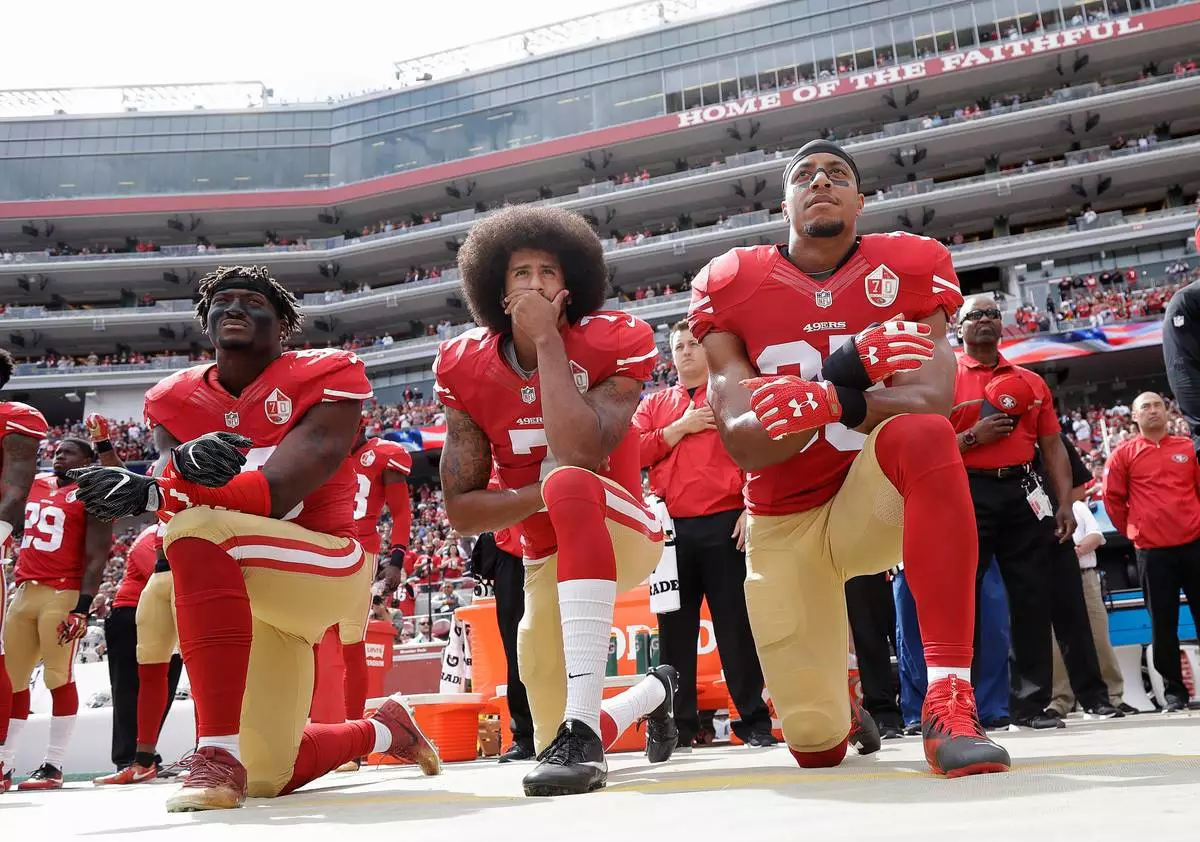
FILE - In this Oct. 2, 2016, file photo, from left, San Francisco 49ers outside linebacker Eli Harold, quarterback Colin Kaepernick and safety Eric Reid kneel during the national anthem before an NFL football game against the Dallas Cowboys in Santa Clara, Calif. (AP Photo/Marcio Jose Sanchez, File)
VANCOUVER, British Columbia--(BUSINESS WIRE)--Aug 31, 2026--
Capstone Copper Corp. (“Capstone” or the “Company”) (TSX:CS) (ASX:CSC) is pleased to announce that it has completed the acquisition of the copper assets at the San Pietro copper-gold-iron-cobalt project (“San Pietro” or the “Project”), strategically located between Capstone’s Mantoverde, Santo Domingo, and Sierra Norte properties in Chile’s Atacama Region (the “Transaction”). Unless otherwise stated, results are presented in United States dollars on a 100% basis.
This press release features multimedia. View the full release here: https://www.businesswire.com/news/home/20260831848151/en/
San Pietro adds approximately 16,000 hectares of highly prospective, underexplored ground to Capstone’s district-scale land position. The Project includes the Rincones and Colla deposits, which host an existing NI 43-101 compliant Inferred Mineral Resource of 492 million tonnes grading 0.23% copper and 0.05 g/t gold, including a higher-grade component (see Figure 3 ). The acquisition provides an immediate increase in mineral inventory and a platform for further resource growth.
Under the terms of the Transaction, Capstone paid total consideration of $25 million in Capstone shares (1) to New Golden Exploration Chile SpA (“NGE”), a joint venture indirectly owned by Golden Arrow Resources Corp. (“Golden Arrow”) (75.019%) and its joint venture partner, Sociedad de Servicios Andinos SPA (“SSA”) (24.981%). The acquisition represents a cost-effective expansion of Capstone’s position in the Atacama.
Transaction Highlights
Cashel Meagher, Capstone’s President and Chief Executive Officer, commented: “Capstone’s acquisition of San Pietro marks another step in the consolidation of the Mantoverde-Santo Domingo District. Located adjacent to Santo Domingo, and between Mantoverde and Sierra Norte, the Project is a natural fit within a region where we have existing and permitted infrastructure, deep knowledge of the local geology, and an experienced operating and project development team. Following our acquisition of Sierra Norte in 2024 and the exploration option agreement signed with ENAMI in 2025, this Transaction further expands our footprint in the top-tier region of the Atacama. We look forward to integrating San Pietro into our district exploration and development plans as we pursue opportunities to unlock transformational copper production growth.”
Figure 3: Rincones and Colla Inferred Mineral Resource Estimate
The Rincones and Colla initial resource estimate comprises 83 million tonnes of oxide Inferred Mineral Resource and 410 million tonnes of sulphide Inferred Mineral Resource.
The Mineral Resource was derived from the NI 43-101 technical report titled “Mineral Resource Estimate for the San Pietro Copper-Gold-Iron-Cobalt Project” completed by independent qualified persons (Dr. Bruce David, PhD, FAusIMM and Susan Lomas, P.Geo) with an effective date of January 24, 2025 prepared for Golden Arrow Resources Corporation. The report can be found on SEDAR+. To the best of Capstone’s knowledge, information and belief, there is no new material scientific or technical information that would make the disclosure of the Mineral Resource inaccurate or misleading. Mineral Resources that are not Mineral Reserves do not have demonstrated economic viability. Mineral Resources are reported within US$4.80/lb pitshell using a cut-off grade of 0.3%. The San Pietro deposit will require further evaluation including drilling to verify the mineral resource estimate.
Figure 4: Estimated Mineral Reserves & Resources for Mantoverde and Santo Domingo
Estimated Mineral Resources
Mineral Resources take into account mining activities to the effective date, where applicable and are reported insitu, using the 2014 CIM Definition Standards. Mineral Resources that are not Mineral Reserves do not have demonstrated economic viability. Mineral Resources are reported inclusive of the Mineral Reserves. All Mineral Resources are exclusive to dilution and mining recovery factors. All contained metals are reported at 100% except as stated. Rounding as required by reporting guidelines may result in apparent summation differences between tonnes, grade and contained metal content. Grade TCu% refers to total copper grade in percent sent to the mill for metallurgical recovery by flotation. Grade SCu% refers to soluble copper grade in percent sent to the leaching processes. Grade ICu% refers to insoluble copper grade in percent, based on TCu% minus SCu%. Contained ounces (oz) are troy ounces. COG is cut-off grade. NSR is net smelter return. M&I = Measured & Indicated. All amounts in US$ unless otherwise specified. Stockpiled material is treated as Mineral Resources, described below. See Technical Reports filed under Capstone Copper’s profile on SEDAR+ for further information.
Peter Amelunxen, P. Eng., Senior Vice President, Technical Services at Capstone Copper is the Qualified Person responsible for the Mineral Resource estimates for the Santo Domingo, Iris, Iris Norte and Estrellita deposits, effective March 31, 2024. Mineral Resources for the Santo Domingo, Iris and Iris Norte deposits are reported using a net smelter return (NSR) cut-off value of US$9.85/t. NSR is calculated using average long-term prices of US$4.10/lb Cu, US$1,600/oz Au, and Fe prices that depend on the expected grade of the Fe concentrate (US$94.75/dmt or $129.77/dmt or $140.26/dmt Fe concentrate). Mineral Resources are constrained by preliminary pit shells derived using a Lerchs–Grossmann algorithm and the following assumptions: pit slopes 36.3°- 47.9°; mining cost is calculated using a function that depends on where the material comes from (Santo Domingo or Iris Norte) and its destination (dumps, plant or stock); processing cost based on Fe concentrate routing code (including G&A costs); processing recovery based in the recovery equations for copper, gold, and iron as detailed above. For the Estrellita deposit, Mineral Resources are reported using an NSR cut-off value of US$9.63/t. NSR is calculated using average long-term prices of US$4.10/lb Cu and US$1,600/oz Au; only copper, and gold were considered in the NSR calculation (iron was excluded). Estrellita Mineral Resources are constrained by preliminary pit shells generated using a Lerchs–Grossmann algorithm and the following assumptions: pit slopes 43º; mining cost of US$1.55/t, processing cost of US$9.46/t (including G&A cost); processing recovery are calculated based in the recovery curves for copper and gold. The average Iron grades for the Project (Total Indicated, Total Measured plus Indicated, and Total Inferred Resources) cannot be calculated because Estrellita does not contain iron resources.
Peter Amelunxen, P. Eng., Senior Vice President, Technical Services at Capstone Copper is the Qualified Person responsible for the Mineral Resource estimates at the Mantoverde Mine effective December 31, 2025. Mineral Resources are reported on a 100% basis. The attributable percentage to Capstone Copper is 69.993%. COG varies per zone and recovery process:
Flotation recovery is based on a geometallurgical model, 90.44%TCu and 67.87% Au average for Sulphides and 72.77% TCu and 61.73% Au average for Mixed. Heap Leach recovery is based on operating data, expressed in algorithms per mineral model zone considering both SCu and CaCO₃ grades. The average heap leach recovery is 67.64% SCu, with an additional 50% metal recovered achieved through the bioleaching process. For dump leaching, the recovery averages 38.9% SCu, based on operational data. Dump recovery is 37.74%SCu (based on operating data). The Mineral Resource pit is based on $4.00/lb Cu and $1,700/oz Au based on long-term forecast pricing.
Estimated Mineral Reserves
Mineral Reserves take into account mining activities as stated, where applicable. Rounding as required by reporting guidelines may result in apparent summation differences between tonnes, grade and contained metal content. Grade TCu% refers to total copper grade in percent sent to the mill for metallurgical recovery by flotation. Grade SCu% refers to soluble copper grade in percent sent to the leaching processes. Grade ICu% refers to insoluble copper grade in percent, based on TCu% minus SCu%. All Mineral Reserve estimates take into account dilution and mining recovery factors. Contained ounces (oz) are troy ounces. COG is cut-off grade. NSR is net smelter return. All amounts in US$ unless otherwise specified. Stockpiled material is included in the Mineral Reserves, described below. See Technical Reports filed under Capstone Copper’s profile on SEDAR+ for further information.
Peter Amelunxen, P.Eng., Senior Vice President, Technical Services at Capstone Copper is the Qualified Person responsible for the Santo Domingo Project Mineral Reserve effective March 31, 2024. Mineral Reserves are reported as constrained within Measured and Indicated Resources and pit designs optimized using the following economic and technical parameters: metal prices of US$3.75/lb Cu, US$1,400/oz Au and Fe prices ranging from US$69/dmt to US$114.51/dmt based on the Fe grade in concentrate (net of Fe concentrate transport costs); average recovery to concentrate is 90.1% for Cu and 56.3% for Au, with magnetite concentrate recovery varying on a block-by-block basis; copper concentrate treatment charges of US$80/dmt, U$0.08/lb of copper refining charges, US$5.0/oz of gold refining charges, US$40/wmt and US$25.75/dmt for shipping copper and iron concentrates respectively; waste and ore mining cost of $1.55/t and process and G&A+SUSEX of US$9.77/t processed; average pit slope angles that range from 36.3° to 47.9°; a 2% royalty rate assumption and an assumption of 100% mining recovery. No formal production has occurred from the Santo Domingo property area.
Peter Amelunxen, P. Eng., Senior Vice President, Technical Services at Capstone Copper is the Qualified Person responsible for the Mineral Reserve at the Mantoverde Mine effective December 31, 2025. Mineral Reserves are reported on a 100% basis as constrained within Measured and Indicated Resources and pit designs included within the mine schedule. The attributable percentage to Capstone Copper is 69.993%. The block model is considered to be fully diluted and no dilution or mining losses are applied. The pit designs and mine plan were optimized using assumed metal prices of $3.50/lb Cu and $1,500/oz Au. Mineral Reserves for flotation are estimated above a 0.20% Total Copper (TCu) cut-off. Mineral Reserves for leach are estimated above a 0.10% Soluble Copper (SCu) cut-off for Dump leach, with a variable Heap cut-off between 0.16% and 0.21% SCu to reflect ore availability. Leach-grade material mined after 2037 was scheduled as waste. LOM feed to flotation averaged 87.7% total copper recovery and 65.3% gold recovery. Average heap leach recovery applied in Mine Planning was 71.5% of SCu and 50% of ICu, where ICu = TCu – SCu. Average dump leach recovery applied was 38.0% of SCu. Mineral Reserves considered the following average costs: mining cost of $1.87 per tonne moved; $10.11/t flotation processing+tails+G&A; $0.31/lb TC/RC+freight for flotation; $10.14/t heap+G&A; $1.78/t dump leach; $0.35/lb SX/EW costs; and $0.05/lb cathode selling cost. Heap leach Reserve figures include the costs and benefits of bioleaching; the contained metal reported in the table considers SCu only. This excludes insoluble copper, of which a portion is expected to be recovered from bioleaching in the heap leach process. Inter-ramp angles in rock vary from 52° to 59°. The LOM strip ratio is 2.7:1.
Figure 5: Historical Mineral Resource Estimate for Sierra Norte
The Historical Mineral Resource was derived from the report “Actualización del Modelo Geológico y de la Estimación de Recursos Minerales del Proyecto Diego de Almagro” completed by Amec Foster Wheeler with an effective date on April 29, 2016 prepared for Alxar S.A. The historical estimates are strictly historical in nature and are non compliant with NI 43-101 and should not be relied upon. A qualified person has not done sufficient work to classify the historical estimates as current “mineral resources”, as such term is defined in NI 43-101 and it is uncertain whether, following further evaluation or exploration work, the historical estimates will be able to report as mineral resources in accordance with NI 43-101. Capstone has not done sufficient work to classify the historical estimate as current mineral resources and is not treating the historical estimate as current mineral resources. Mineral Resources that are not Mineral Reserves do not have demonstrated economic viability. Mineral Resources reported using a cut-off grade of 0.2% with further economic extraction parameters outlined below. Mineral Resources reported by category; based on average spacing of drillholes and levels of confidence in the grade estimation. There are no more recent estimates or data available to Capstone. The Sierra Norte deposit will require further evaluation including drilling to verify the historical estimate as current mineral resources. Investors are cautioned not to place undue reliance on the historical estimates contained in this news release.
Economic Parameters for Mineral Resources:
About Capstone Copper Corp.
Capstone Copper Corp. is an Americas-focused copper mining company headquartered in Vancouver, Canada. Capstone’s operating portfolio of assets includes the Pinto Valley copper mine located in Arizona, USA, the Cozamin copper-silver mine located in Zacatecas, Mexico, the Mantos Blancos copper-silver mine located in the Antofagasta region, Chile, and the Mantoverde copper-gold mine, located in the Atacama region, Chile. Capstone’s growth pipeline includes the fully permitted Santo Domingo copper-iron-gold project, located approximately 35 kilometres northeast of Mantoverde in the Atacama region, Chile, as well as a portfolio of exploration properties in the Americas.
Capstone Copper’s strategy is to unlock transformational copper production growth while executing on cost and operational improvements through innovation, optimization and safe and responsible production throughout our portfolio of assets. We focus on profitability and disciplined capital allocation to surface stakeholder value. We are committed to creating a positive impact in the lives of our people and local communities, while delivering compelling returns to investors by responsibly producing copper to meet the world’s growing needs.
Further information is available at www.capstonecopper.com
CAUTIONARY NOTE REGARDING FORWARD-LOOKING STATEMENTS
This document may contain “forward-looking information” within the meaning of Canadian securities legislation and “forward-looking statements” within the meaning of the United States Private Securities Litigation Reform Act of 1995 (collectively, “forward-looking statements”). These forward-looking statements are made as of the date of this document and the Company does not intend, and does not assume any obligation, to update these forward-looking statements, except as required under applicable securities legislation.
Forward-looking statements in this news release include statements regarding Capstone’s plans to integrate San Pietro into its district exploration activities; the exploration potential of San Pietro; potential resource growth; potential use of existing or planned infrastructure; potential operational synergies; possible future processing of mineralized material in the district; and the timing, scope and result of further drilling, data verification, technical studies, permitting and investment decisions.
Forward-looking statements are based on assumptions that Capstone considers reasonable as of the date of this news release, including assumptions regarding the accuracy and completeness of information provided by the prior owner; the ability to obtain required permits and approvals; the availability of personnel, equipment, financing and infrastructure; commodity prices, exchange rates and input costs; and the results of future exploration, drilling, metallurgical testing and technical studies.
Forward-looking statements involve known and unknown risks, uncertainties and other factors that may cause actual results to differ materially, including risks relating to the accuracy or verification of historical information; exploration and geological uncertainty; the inability to convert the historical estimate into a current mineral resource or any mineral resource into a mineral reserve; changes in commodity prices, exchange rates and costs; permitting, environmental, social, title and regulatory risks; access to infrastructure; integration of acquired assets; and the other risks described in Capstone’s continuous disclosure filings available on SEDAR+. There can be no assurance that forward-looking statements will prove accurate. Readers should not place undue reliance on forward-looking statements. Except as required by applicable securities law, Capstone disclaims any intention or obligation to update or revise forward-looking statements.
COMPLIANCE WITH NI 43-101
Unless otherwise indicated, Capstone Copper has prepared the technical information in this document (“Technical Information”) based on information contained in the technical reports, Annual Information Form and news releases (collectively the “Disclosure Documents”) available under Capstone Copper’s company profile on SEDAR+ at www.sedarplus.ca. Each Disclosure Document was prepared by or under the supervision of a qualified person (a “Qualified Person”) as defined in National Instrument 43-101 – Standards of Disclosure for Mineral Projects of the Canadian Securities Administrators (“NI 43-101”). Readers are encouraged to review the full text of the Disclosure Documents which qualifies the Technical Information. Readers are advised that Mineral Resources that are not Mineral Reserves do not have demonstrated economic viability. The Disclosure Documents are each intended to be read as a whole, and sections should not be read or relied upon out of context. The Technical Information is subject to the assumptions and qualifications contained in the Disclosure Documents.
Disclosure Documents include the National Instrument 43-101 technical reports titled “Santo Domingo Project, NI 43-101 Technical Report and Feasibility Study Update, Atacama Region, Chile” effective July 31, 2024 and "Mantoverde Mine NI 43-101 Technical Report and Feasibility Study / Atacama Region, Chile", effective July 1, 2024.
The disclosure of Scientific and Technical Information in this document was reviewed and approved by Peter Amelunxen, P.Eng., Senior Vice President, Technical Services (technical information related to project updates at Santo Domingo, Mineral Resources and Mineral Reserves at Mantoverde and Mineral Resources at San Pietro), a Qualified Person under NI 43-101.
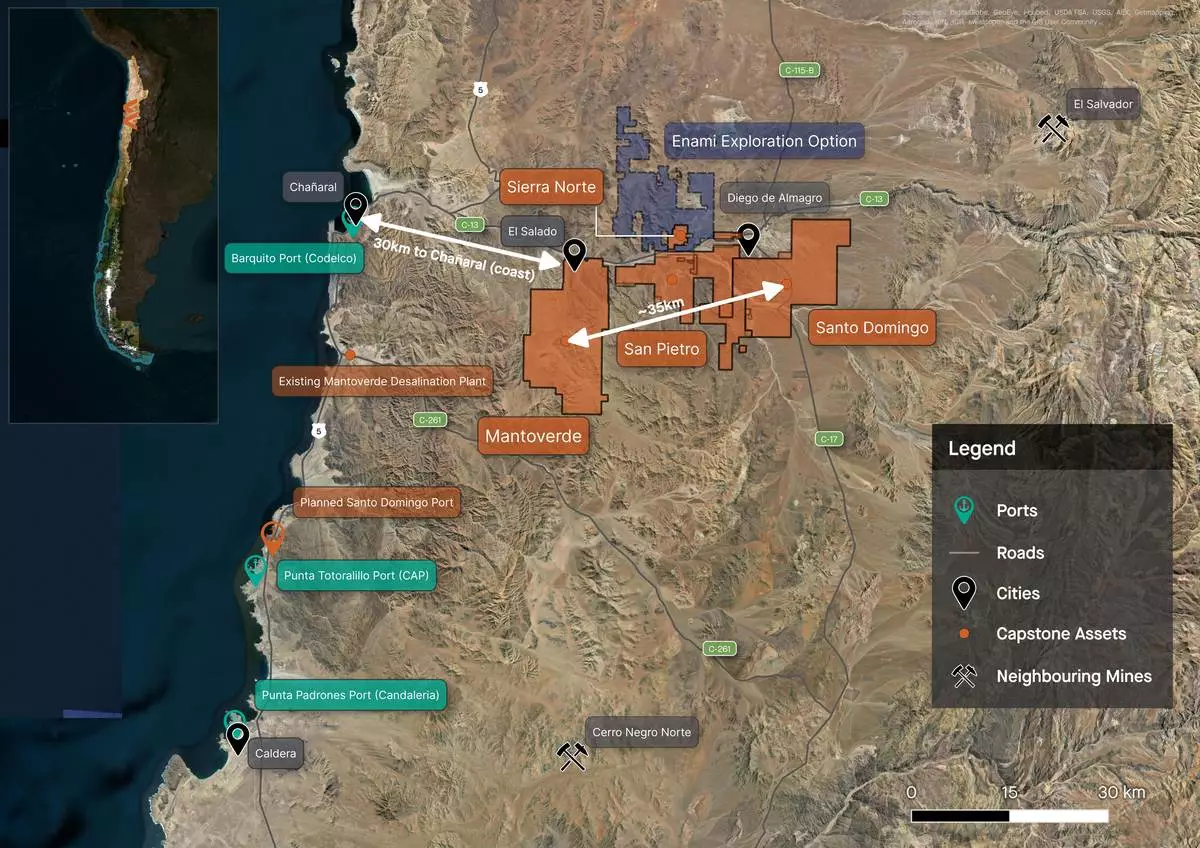
Figure 2: Map of Mantoverde-Santo Domingo District
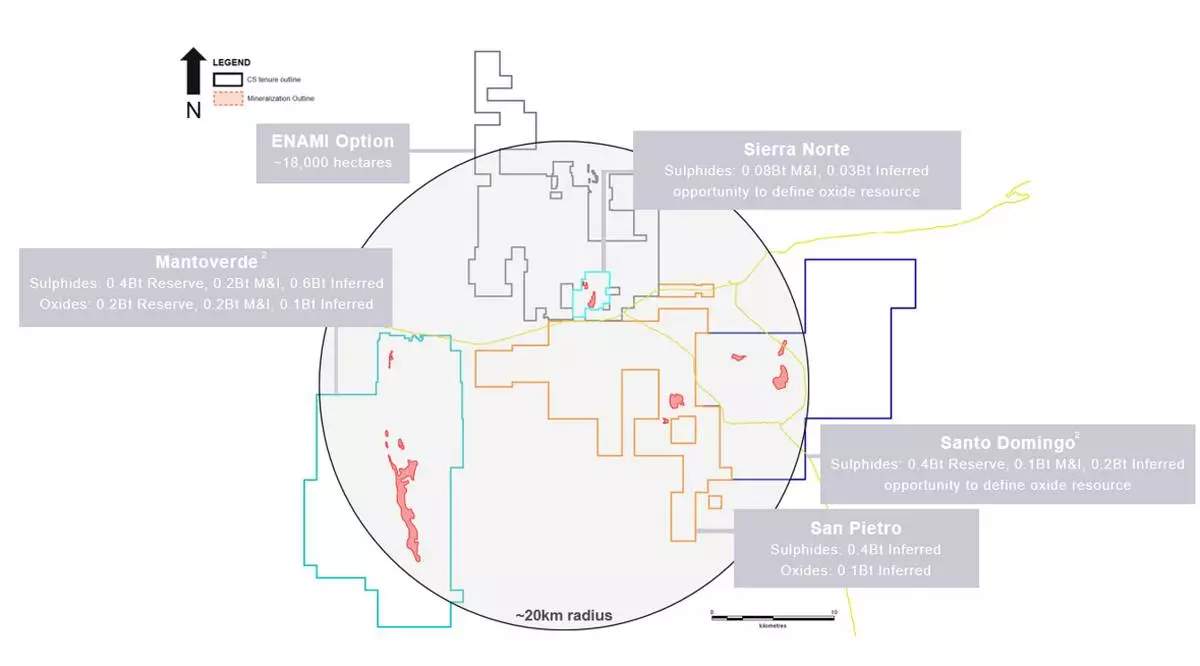
Figure 1: Within a ~20km radius in the Mantoverde-Santo Domingo District, Capstone’s mineral concessions contain ~1.6 billion tonnes(2) of Measured & Indicated Mineral Resources inclusive of Mineral Reserves, in addition to ~1.4 billion tonnes(2) of Inferred Mineral Resources, surrounded by key infrastructure and located at low elevation