JOHANNESBURG (AP) — A pregame stunt involving two passenger jets flying dramatically low over a sports stadium in South Africa drew huge cheers from the estimated crowd of around 56,000 people, but also sparked a major debate over safety risks.
The flyby by two Embraer jets operated by local airline Airlink happened on Saturday before a rugby game between South Africa and New Zealand in Cape Town.
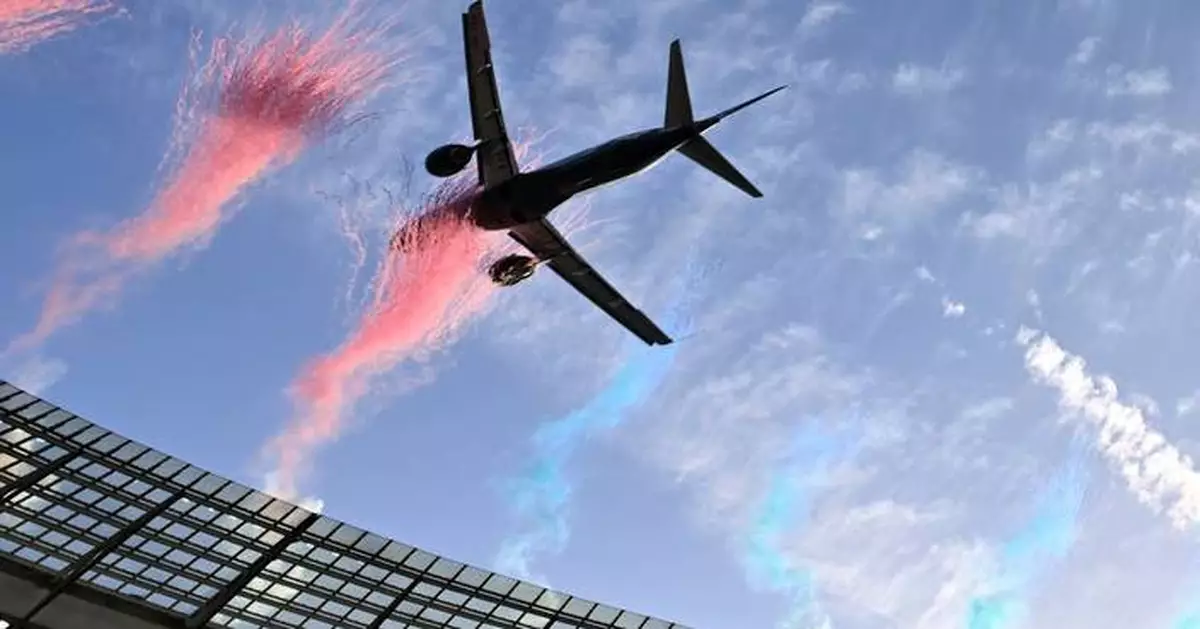
Flight tracking service Flightradar24 estimated that the lead jet passed just 41 to 46 feet (12 to 14 meters) above the roof of Cape Town Stadium, with the crowd and the top-ranked rugby teams in the world below.
The second jet, which was right behind, flew through a cloud of pink dust that shot up from the stadium roof as part of the pregame show.
Airlink, a sponsor of the South African rugby team, said that the flyby was conducted according to safety regulations.
The airline said that it was carefully planned and rehearsed, with the aircraft traveling at around 150 knots (278 kph or 172 mph), when they went over the stadium. Each jet had three senior captains onboard, Airlink said, operating in the roles of a commander, a co-pilot and a safety officer.
The jets weren't carrying any passengers.
“Airlink notes the concerns expressed in various social media and online forums regarding yesterday’s formation flyby over Cape Town’s DHL Stadium,” Airlink said on Sunday. “The flight demanded careful planning and rehearsal, as it required navigating at low altitude, at around 150 knots. The South African Civil Aviation Authority and Air Traffic Navigation Services provided valuable guidance, approval and support to ensure a safe flyby.”
South African rugby has a tradition of stadium flybys at big games, starting when a Boeing 747 flew over another stadium in Johannesburg before the 1995 Rugby World Cup final between the same teams, which are fierce rivals.
But this weekend's flyby was especially low and dramatic, generating global interest after it was shown as part of the pregame broadcast, and sparking a flurry of videos shot by witnesses.
Some aviation experts questioned whether the margin for error was too small.
“Basically, that lead aircraft … was kind of like dodging over the roof and climbing over the one side and dipping below and then climbing over the other side. That was a little bit uncomfortable,” Chris Martinus, president of Aircraft Owners and Pilots Association South Africa, told The Associated Press on Monday.
He said if “something adverse happens, you just don’t have options at that kind of altitude.”
Keith Tonkin, an Australian aviation consultant and former military and commercial pilot, said Monday that the Embraer passenger jets — which are small to medium jets designed for regional flights — weren't designed or intended for that kind of low-level operation and warned against the precedent.
“The bigger picture is that a benchmark has been established and others may expect to do something similar, and that’s not going to end well,” Tonkin said. He added that turbulence or a bird strike at such a low altitude could leave the pilots with too little room to maneuver without hitting the stadium.
Airlink said that the flight data recorded by both aircraft confirmed that their flights were performed within civil aviation safety limits for speed and altitude.
AP Africa news: https://apnews.com/hub/africa
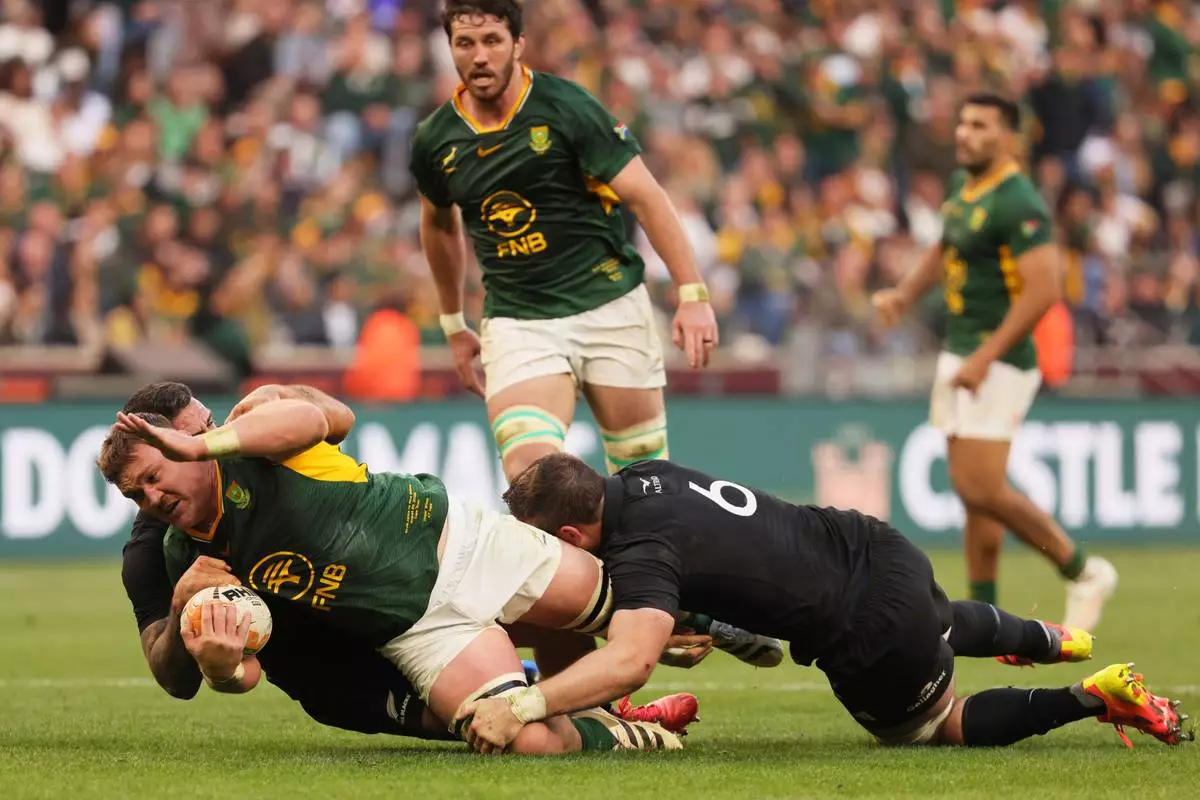
South Africa's Jasper Wiese, left, is being tackled down by New Zealand's Codie Taylor, back, and his teammate Simon Parker during a second Test rugby match between South Africa and New Zealand, in Cape Town, South Africa, Saturday, Aug. 29, 2026. (AP Photo/Halden Krog)
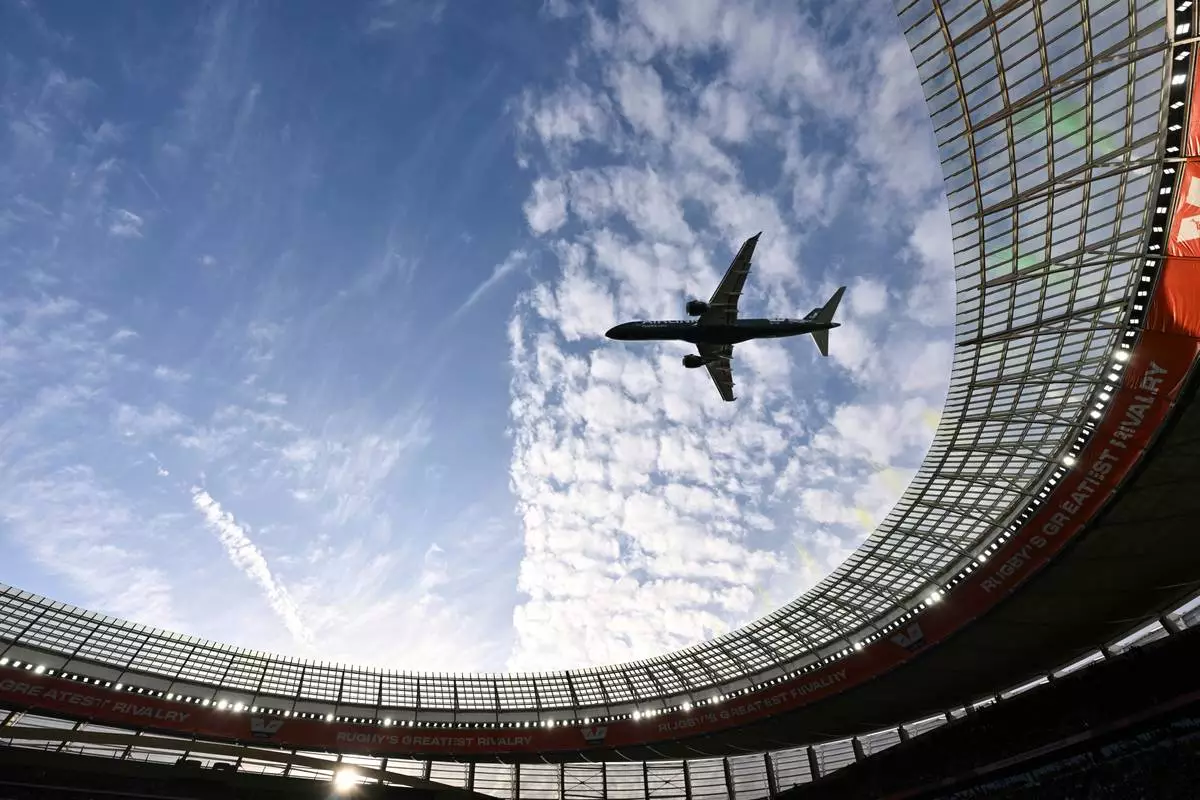
A jetliner flies over the stadium ahead of a second test rugby match between South Africa and New Zealand, in Cape Town, South Africa, Saturday, Aug. 29, 2026. (AP Photo)
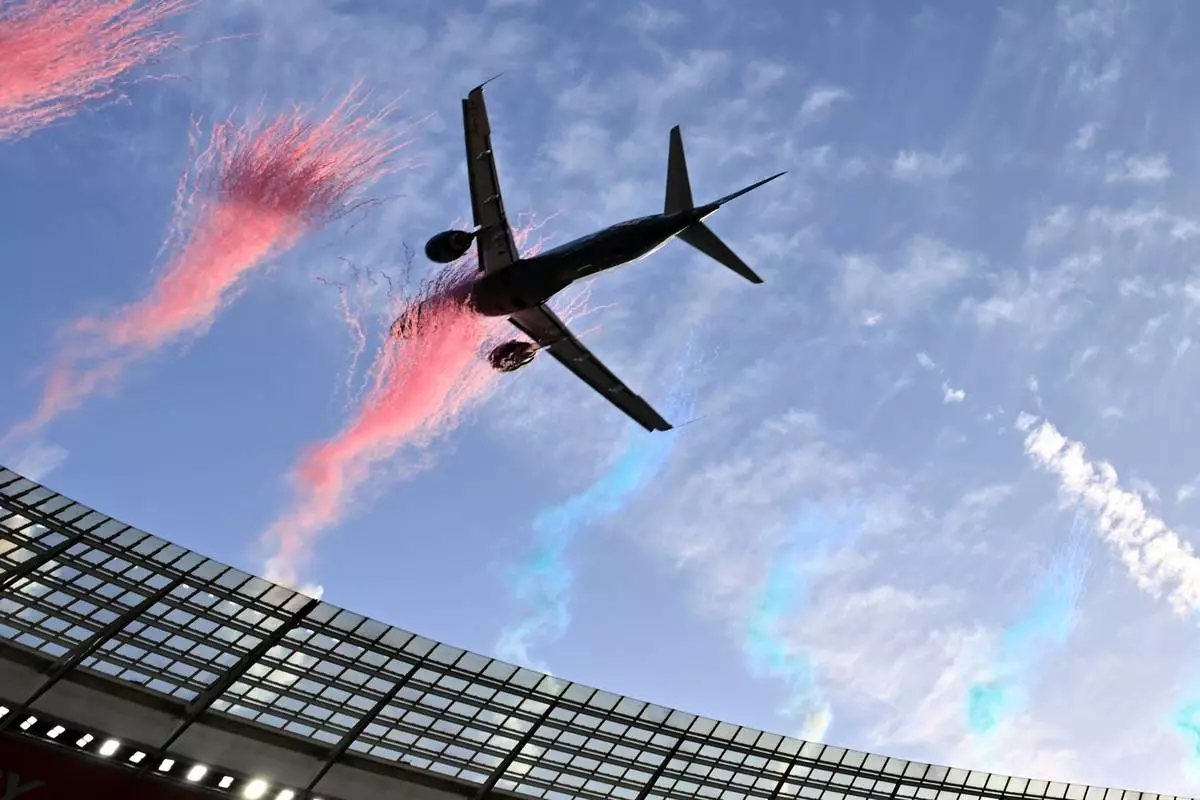
A jetliner flies over the stadium ahead of a second Test rugby match between South Africa and New Zealand, in Cape Town, South Africa, Saturday, Aug. 29, 2026. (AP Photo)
Venezuelans are expressing outrage and the oil industry is waiting for details on President Donald Trump’s announcement that Venezuela ’s acting president has agreed to give an unnamed U.S. company control of vast amounts of the South American country’s untapped oil reserves, at cost. Trump called it “THE BIGGEST OIL DEAL IN WORLD HISTORY!” but critics say U.S. consumers won’t benefit for many years.
Global crude prices are rising again after renewed warfare between the United States and Iran, the first significant military action in a month. The global energy supply shock has for the first time kept average prices Americans pay at the pump above $4 throughout August, according to the AAA.
U.S. Treasury Secretary Scott Bessent told The Associated Press ahead of the Group of 20 finance ministers meeting he’s hosting in Asheville, N.C., on Monday and Tuesday that the Trump administration is prepared to exact “financial violence if we have to” as it pressures allies to join in “economic D-Day” sanctions on Iran.
Here's the Latest:
The vice president’s speech Monday is an opportunity for him to assuage concerns among conservative Jewish activists about his views toward Israel and his association with controversial figures like Tucker Carlson. It’s closed to the news media and comes at an extraordinarily sensitive time for Jewish Americans and the U.S. relationship with Israel.
Concerns about antisemitism have surged across the political spectrum ahead of the midterm elections. Republicans are eager to portray Democrats as hostile toward Jews and Israel, but they’re also dealing with their own internal schisms, with younger Republicans more likely to say the U.S. is too supportive of Israel.
Vance suggested last month that some Israeli officials have sought to manipulate U.S. public opinion in order to prolong the war with Iran. “If I was in the cabinet of the Israeli government, I might not be attacking the only powerful ally that I have anywhere left in the entire world,” Vance said in June.
▶ Read more
The online prediction market platform Kalshi said Monday that it has permanently banned former U.S. Rep. George Santos after concluding the former Republican congressman likely engaged in insider trading when he bet against his attendance at the State of the Union address.
The convicted ex-congressman had repeatedly discussed his intention to attend the State of the Union, which came just four months after he was granted clemency by President Donald Trump in a fraud case that led to his expulsion from the U.S. House. On the eve of Trump’s speech, Kalshi put the odds of Santos attending at close to 75%.
Then, minutes into the speech, Santos posted on X that he had been waylaid at the airport. Immediately, several social media users accused him of running another scheme.
Individual reporters from The New York Times, The Wall Street Journal and Bloomberg News were not granted credentials to the Group of 20 meeting, for reasons the Treasury has not explained. Bessent told the AP in an interview Sunday that “it has nothing to do with point of view.”
The Times said denying American journalists access to a U.S. event is “a blatant attempt to evade public scrutiny.”
“With the war in Iran, sanctions, the bond markets, and inflation on the agenda for the G20 finance ministers, the stakes of this gathering are significant for the global economy and the American people,” the Times’ statement said. “Excluding specific reporters and entire news organizations is a disservice to the public and an assault on press freedoms that we strongly condemn.”
Bloomberg News reported Sunday evening that denying the agency access to the meeting “undermines media freedom and public accountability.” The Wall Street Journal declined to comment.
▶ Read more
The leaders of China, Russia and India gathered with other heads of state in Kyrgyzstan on Monday for the summit of the Shanghai Cooperation Organization, a group billed as a counterweight to U.S. global influence.
Russian President Vladimir Putin met separately with Chinese President Xi Jinping and Indian Prime Minister Narendra Modi on the sidelines of the summit, Russian state media reported. Talks between Putin and Iranian President Masoud Pezeshkian are expected Tuesday, when the official SCO sessions begin.
Russia, now 4½ years into its full-scale invasion of Ukraine, and Iran, six months into a war with the United States and Israel, see the summit as an important platform to strengthen their relations with non-Western partners.
The president posted on social media that U.S. communities that don’t have data centers will “end up being backwards and poor.”
“If we kill the Golden Goose, you will only have yourselves to blame,” Trump told the public. “China could not be happier with this anti Data Center movement.”
There has been a backlash across the country to the construction of data centers needed to further develop artificial intelligence. The public has expressed concerns about their use of electricity and water, and their secretive development by tech companies. Many Americans are also worried that AI could increase economic disparities and cause widespread job losses.
Data center advocates stress that the local taxes these facilities pay can help fund public schools, reducing the financial burden on homeowners.
As Scott Bessent hosts meetings of the Group of 20 finance ministers in Asheville, North Carolina, on Monday and Tuesday, he aims to focus on relatively uncontroversial issues, from economic growth to addressing mounting debt, along with pressuring allies to join in “economic D-Day” sanctions on Iran.
Bessent told The Associated Press on Sunday that the Trump administration is prepared to exact “financial violence if we have to.”
The U.S. has disrupted the international order by imposing aggressive tariffs on Canada and other major allies and launching a costly, unpopular war. Now hostilities between the U.S. and Iran have renewed, dampening hopes for a resolution.
Daniel Fried, a former assistant secretary of state for European affairs in the George W. Bush administration, said the U.S. may “find it difficult to rally its usual friends and allies” under the circumstances.
▶ Read more
Trump allies called it a win. Sen. Bernie Moreno, R-Ohio, said it was a historic deal that helps both countries.
“If it were up to DC Democrats, Maduro would still be in power, Venezuelan oil would be going to China at half price, and the people of Venezuela would be getting robbed by a corrupt regime,” Moreno wrote on social media.
Democrats condemned it, saying Maduro’s capture was always about Trump getting Venezuela’s oil. Sen. Tim Kaine, D-Va., branded it “corruption at epic scale.”
“Will prices come down for Americans? Who knows but likely not as much as Trump has forced them up thru his idiotic Iran War,” Kaine said on social media.
Sen. Chris Van Hollen, D-Md., said Trump “put our service members at risk to get Venezuelan oil for his billionaire buddies.”
Amos Hochstein, who was a senior energy adviser under President Joe Biden, said the deal is uncharted legal and diplomatic territory that carries tremendous risk for any companies thinking about getting involved. Democrats could challenge the deal if they regain power in Washington, as could future administrations in Venezuela.
“There will be a lot of challenges to what was just announced,” Hochstein said. “I can only say, if it were me, I’d be nervous. And if I’m back in my old job in the next administration, then they should be nervous.”
Many important details remain unclear, including the identity of the private operator that apparently now has rights to the untapped oil fields for 100 years, becoming the world’s second-largest corporate holder of proven reserves after Saudi Aramco, according to a U.S. official who was not authorized to discuss the matter publicly and spoke on the condition of anonymity.
Persuading big American oil companies to return to the region could prove a challenge given the political uncertainty and damaged infrastructure. Chevron, the only U.S. oil company actively producing in Venezuela, declined to comment.
By Collin Binkley and Juan Pablo Arraez
“Venezuelans will not respect this illegitimate deal and no major US oil company will take it seriously because they know it will not last,” Ricardo Hausmann, now a Harvard University professor, said on social media. He said Delcy Rodríguez, the acting president, “has no legitimacy or constitutional power to commit Venezuela to any such deal.”
“One thing must be absolutely clear: Venezuela retains ownership and sovereignty over its resources,” Rodríguez said in her national address. She said the goal is to reach other agreements with transnational private companies such as Chevron, Repsol and Shell.
She added: “We want to be an energy powerhouse, a major oil producer, a significant gas exporter, and a major national petrochemical developer.”
It goes against what they’ve been told for decades: Venezuelan resources are for Venezuela, and no leader would cede control of those resources to the U.S. government.
At a market in eastern Caracas, Douglas Borjas said he’s upset that Venezuelan leader Delcy Rodriguez apparently agreed to 55% U.S. control of oil fields that could produce 65 billion barrels.
“I think they’re doing it to cling to power,” Borjas said. “The Venezuelan people deserve better. Venezuela has resources that can be exploited, but for the benefit of the people, not for the benefit of the corrupt elite.”
The bond market is one of the few forces in the world strong enough to get politicians to snap to attention. It also helps dictate how much ordinary people have to pay on their mortgages and car loans, as well as how much they earn from their savings accounts and 401(k) plans.
Rising bond yields raise the specter of higher borrowing costs putting the brakes on consumer spending, the lifeblood of the economy, and raise concerns that investors might sour on financing vast government borrowing.
Traders are reacting to the speech Friday by Federal Reserve Chairman Kevin Warsh about lowering inflation despite possible short-term pain for the economy.
In the bond market, the yield on the two-year Treasury, which closely tracks expectations about Fed moves, jumped to 4.35% from 4.22% just before Warsh’s speech at an economic symposium. That sets up a potential clash with U.S. President Donald Trump, who has consistently lobbied for lower rates.
Brent crude, the international standard, jumped 3.4% to $91.10 per barrel on Monday. U.S. benchmark crude oil was trading 3.6% higher at $86.40 per barrel.
That has created its own form of economic pressures globally, including in the U.S.
The national average for gasoline in August has been above $4 per gallon every day in August for the first time ever, according to the AAA. It has been the most expensive August at the pump on record, outpacing even the enormous supply chain crunch during the COVID-19 pandemic in August 2022.
U.S. markets are sliding after American forces struck Iranian rocket launchers in the Strait of Hormuz, the first military action in a month.
The futures for the S&P 500 and the Dow Jones Industrial Average both declined 0.2% on Monday. Nasdaq futures slipped 0.1%.
Meanwhile oil prices surged more than 3% after the U.S. strike on Sunday broke a lull in fighting in a war that has lasted more than six months. The Trump administration has announced a new economic campaign against Iran, but there is a significant risk of escalation in fighting.
“The Middle East had finally gone quiet enough for oil traders to start sanding some of the war premium out of crude,” wrote Stephen Innes of SPI Asset Management. “Then Sunday arrived, with a reminder that quiet in the Strait of Hormuz is not the same as peace.”
The United Arab Emirates’ air force intercepted an Iranian drone over its territorial waters Monday, the Defense Ministry said, an attack that comes after the United States and Iran exchanged fire on the weekend, the first significant military action in a month.
During the lull in fighting, the U.S. has been ratcheting up economic pressure on Iran with the hope of forcing concessions out of Tehran, including reopening the vital Strait of Hormuz to shipping.
After the U.S. and Israel attacked Iran on Feb. 28, Iran established a chokehold on the strait, through which a fifth of the world’s traded oil passed in peacetime, slowing ship traffic to a trickle.
As the fighting resumed, the price of Brent crude oil, the international standard, climbed above $90, up about 25% from the start of the war, presenting a growing problem for Trump ahead of the midterm elections.
▶ Read more
Trump has frequently suggested he wants to seek a third term, posting about mounting another campaign, donning 2028 caps and discussing ways to make it happen — even as he’s acknowledged the Constitution prohibits it.
But lately, Trump has begun showing signs that even he doesn’t really believe another run will happen.
During recent speeches, the Republican president has begun describing life after the White House when his term ends in January 2029, predicting he’ll be at home and agonizing as his successor claims credit for his accomplishments.
“Your next president is going to say, ‘What a great job I did,’” Trump told an event on Long Island, New York, this month. “He’ll be sitting around, watching television. A real stiff. Unless you vote Republican, of course.”
A sitting president talking about becoming a former one is always politically fraught. But with midterm elections now just nine weeks away, Trump is approaching the point of his presidency where there will be more and more reminders that his power will soon wane.
▶ Read more
A former White House teleprompter operator accused of using inside knowledge to make bets on the prediction market Kalshi has been ordered to turn over more than $100,000 in profits and pay a $65,000 fine as part of a settlement with federal authorities.
The settlement with the Commodity Futures Trading Commission, announced Friday, also dealt Gabriel Perez a three-year trading ban. Perez was placed on unpaid leave from his job at the White House after reports emerged that he used his position to make bets on what President Donald Trump would say in speeches.
The White House did not immediately comment on the settlement. A White House official said in July that Perez was no longer in his position but did not say if he had been fired or resigned.
The commission found that Perez made $107,500 on prediction markets by betting on words and phrases that would appear in Trump’s speeches between December 2025 and February 2026.
▶ Read more
Ontario Premier Doug Ford answered Trump’s “Lake America” decree Saturday with a billboard-sized message on the Canadian shoreline — “Lake Ontario. Now and Always” — as Canadian leaders met the move with ridicule rather than outrage.
The display followed Trump’s executive order directing U.S. federal agencies to call Lake Ontario “Lake America.” After months of tariffs, threats to make Canada the 51st U.S. state and personal attacks on its leaders, the reaction in Canada has mixed defiance with mockery.
Ford said Trump was trying to rename the lake because Ontario and Canada were “standing up for ourselves” and argued the name would outlast the president.
“Long after President Trump is gone, it will still be called Lake Ontario,” Ford said in a video posted on social media.
▶ Read more
Besides a social media post from Trump, the White House has said little about what he is calling “THE BIGGEST OIL DEAL IN WORLD HISTORY” in Venezuela.
Trump said the agreement announced Friday night would give the United States a stake in Venezuela’s vast oil reserves, a step toward his goal of extracting energy from the country after American forces captured then-President Nicolás Maduro in a middle-of-the-night raid in January and brought him to New York to face federal drug trafficking charges.
Venezuela’s acting president, Delcy Rodríguez, described the deal as a step toward economic recovery that will modernize the country’s oil industry.
Earlier on Saturday, she said the oil reserves would “cease to be an inert, cold statistic and will instead become concrete solutions. Housing is one of them.”
But the answers to many questions, including how soon the reserves could be drilled and who will pay to make it happen, were not immediately clear. No text of any agreement has been released.
▶ Read more
President Donald Trump said Friday that his administration has entered a sweeping agreement with Venezuela that, if realized, could give the U.S. access to vast amounts of the South American country’s untapped oil reserves, at cost.
Trump, in a social media post announcing the agreement, said it was negotiated by Secretary of State Marco Rubio, Defense Secretary Pete Hegseth and Venezuela’s acting President Delcy Rodríguez.
Rodríguez’s government in a statement said the deal involves the development of 17 fields with a proven potential of 65 billion barrels. It said the agreement could draw $100 billion in investment into Venezuela’s oil industry and yield over $209 billion in taxes for Caracas.
Rodríguez in a posting on Telegram predicted the deal “will have a significant impact on our nation’s revival.”
The agreement allows for the United States to partner with an unnamed private operator in Venezuela to create a new private company to take hold of the reserves, according to a U.S. official familiar with the contours of the deal.
▶ Read more
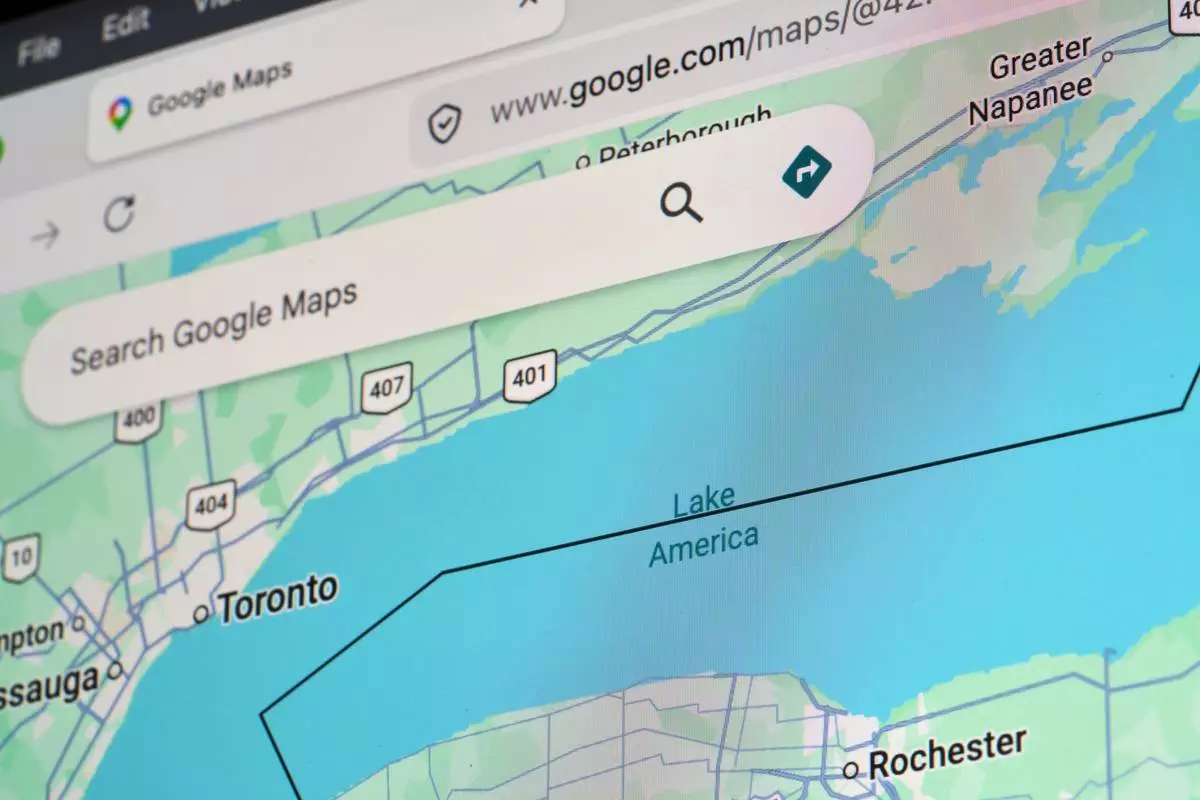
In the photo of a computer screen, a Google map showing Lake Ontario renamed as Lake America is seen Sunday, Aug. 30, 2026, in St. Louis. (AP Photo/Jeff Roberson)
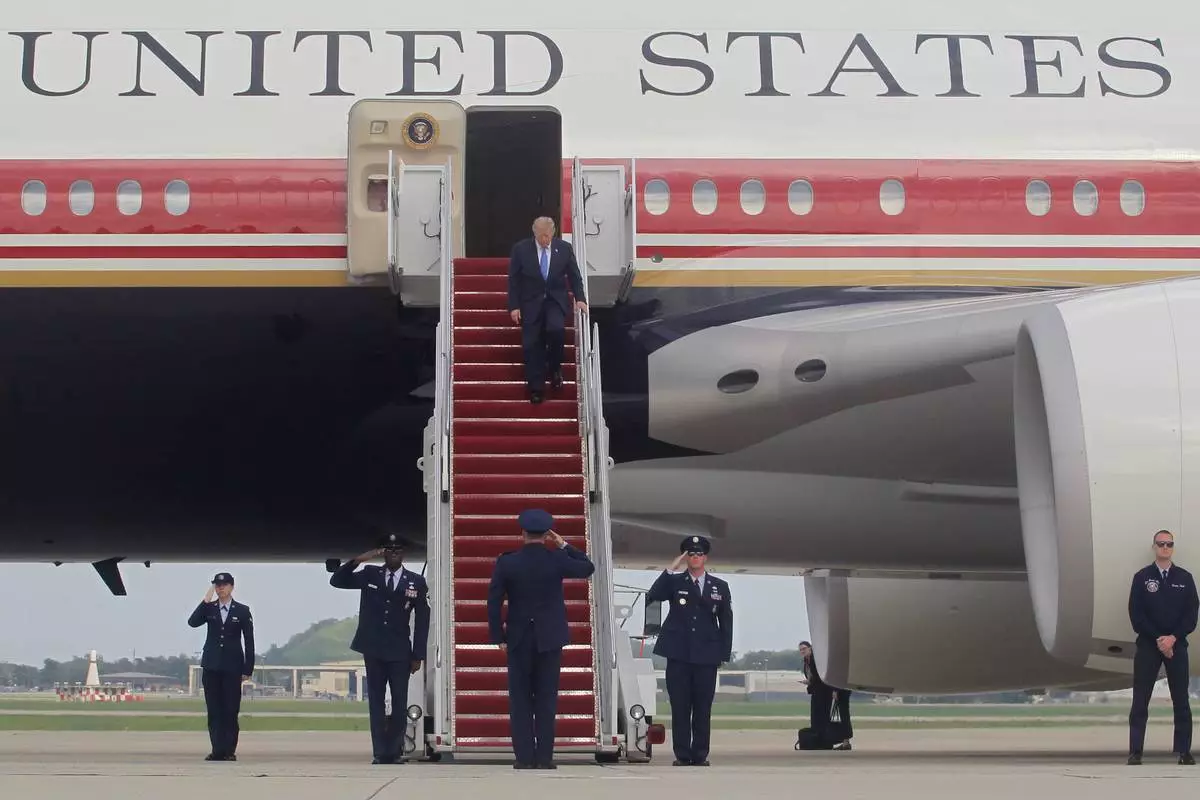
President Donald Trump walks down the stairs of Air Force One upon his arrival at Joint Base Andrews, Md, Friday, Aug. 28, 2026. (AP Photo/Luis M. Alvarez)
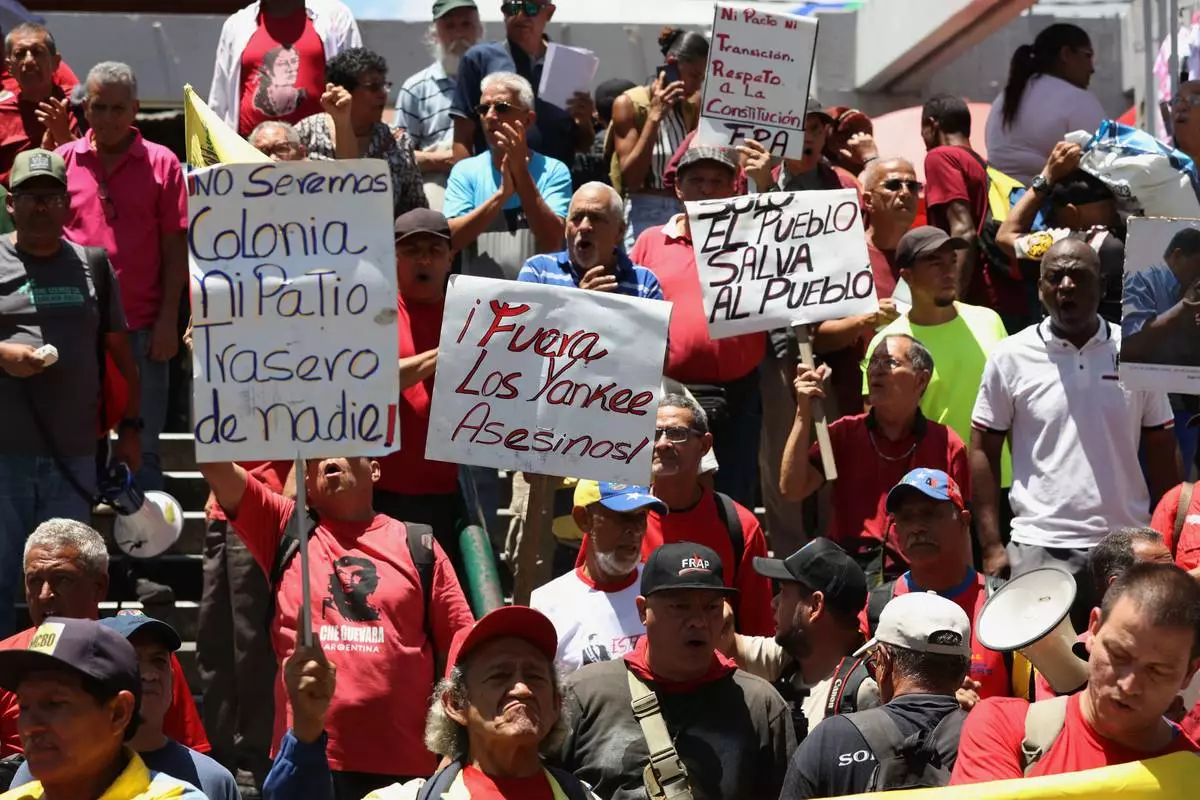
Venezuelans protest against President Donald Trump's deal giving the United States a stake in Venezuela’s oil reserves in Caracas, Saturday, Aug 29, 2026. (AP Photo/Pedro Mattey)
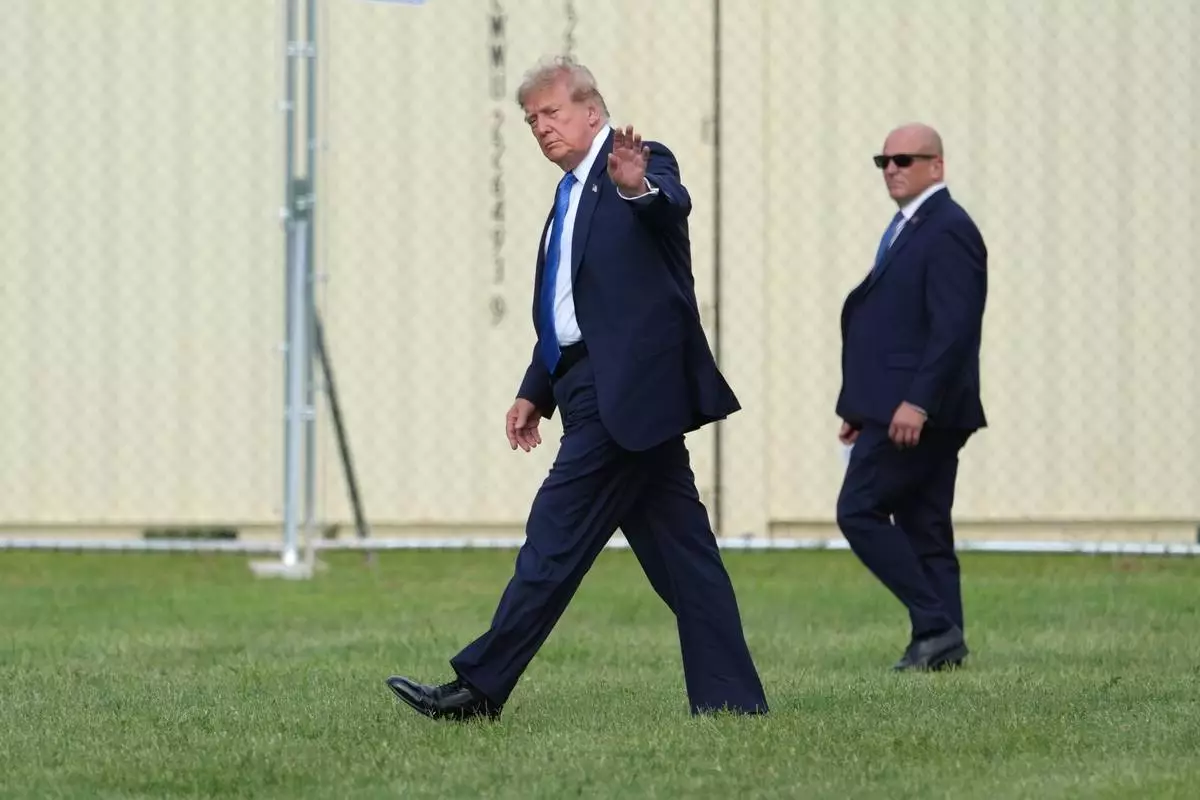
President Donald Trump walks to board his presidential limousine after arriving on Marine One from the Ellipse near the White House, Friday, Aug. 28, 2026, in Washington, on return from Houston. (AP Photo/Jacquelyn Martin)