ISTANBUL (AP) — Survivors of a ferry disaster off the coast of northern Cyprus that killed eight people described on Monday the moments of terror as they scrambled to escape the sinking vessel.
The passengers spoke as rescue teams searched for 18 people missing since the ship carrying 267 passengers and crew capsized after leaving Kyrenia, a port in breakaway northern Cyprus, for Tasucu in Turkey on Sunday afternoon.
Serkan Kunduraci, who escaped the sinking ferry by hauling himself through a broken window, said he saw children and others drowning in the sea some 7.5 kilometers (4 nautical miles) off the Cypriot coast.
“I saw some who didn’t know how to swim die in the sea,” he told the DHA news agency. “There were those who, in a panic, didn’t grab life jackets. Some jumped (into the sea) immediately out of fear. There was an old man, we couldn’t get him. We tried to pull him up, but we couldn’t. He drowned too.
“We saw and witnessed a family’s children, boys and girls, very young children, drowning.”
Survivors told how the ferry began listing and taking on water after they heard a number of loud noises from below decks.
“The crew came, took a look and told us there wasn’t a major problem, just a loose gasket causing a leak,” Kunduraci said.
When the order to evacuate came, he added, people were already panicking. He said the ship began tilting as the captain apparently made an effort to return to Kyrenia, known as Girne in Turkish.
“There was so much screaming and so many people were trapped behind — they had been left in the rear,” Kunduraci said. “They couldn’t get out. There were bodies and people piled on top of them. Those trapped underneath were the unlucky ones, they stayed down there.”
Deniz Ozpolat also recalled the sense of panic onboard the ferry, which was owned by Filo Denizcilik.
“We headed toward the exit. A crush of people had already formed. We couldn’t find the life jackets. They shut the doors on us and we couldn’t get out,” he told DHA.
“They opened them later. We jumped into the water. The ship began to sink after listing to the side. We broke the windows and rescued people. There was a family out in the open water, there were children.”
Rescuer Muhammed Ozcelik, who runs a water sports company, said his boat was one of the first on the scene and began hauling people from the sea.
“We tried to do more than we could. People were saying, ‘Take me too, take me too,’ but the capacity was full. We even took far more than (our capacity) … People were fighting for their lives.”
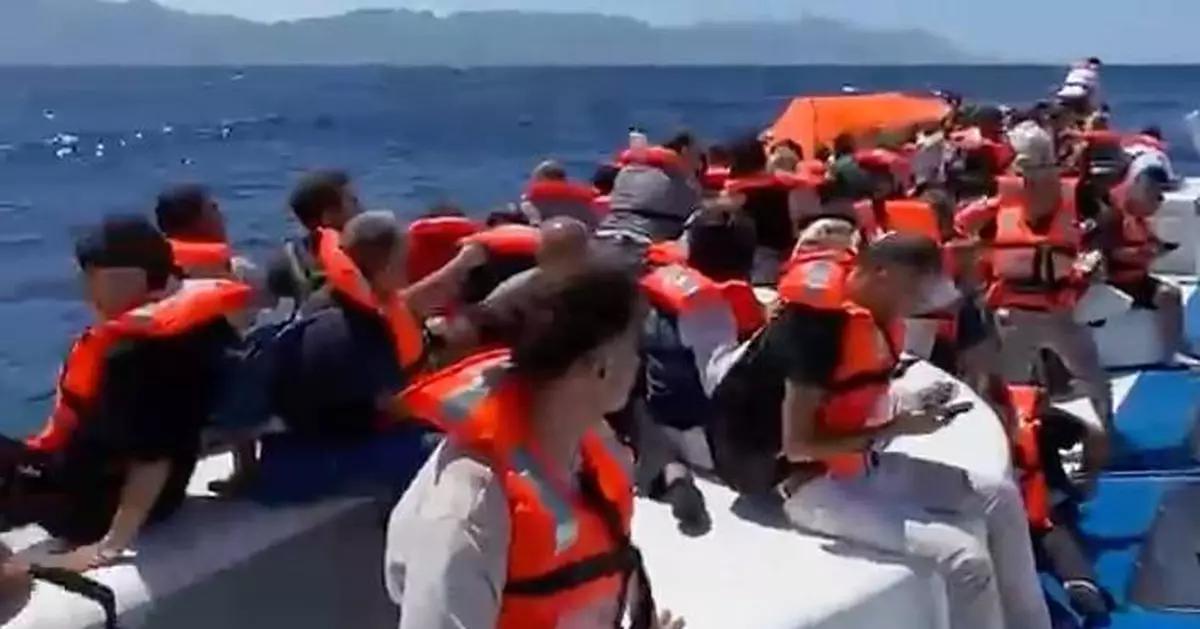
Images in the Turkish media showed passengers in orange life vests standing on the upturned ferry as they waited for rescue. Many were later shown disembarking small pleasure boats at a port.
Unal Ustel, the prime minister of northern Cyprus, said late Sunday that an investigation was launched and the ferry’s eight crew were taken into custody.
“Every aspect of this incident will be investigated,” he said. “Even the slightest negligence will be uncovered. Whoever is found to be at fault or responsible will not be spared.”
The Turkish coast guard and military were assisting rescue teams from north Cyprus, Ustel added, describing the incident as the worst maritime disaster in Cypriot history.
Cyprus was split along ethnic lines in 1974, and Turkish Cypriots declared independence in 1983. Only Turkey recognizes the north, where it maintains more than 35,000 troops.
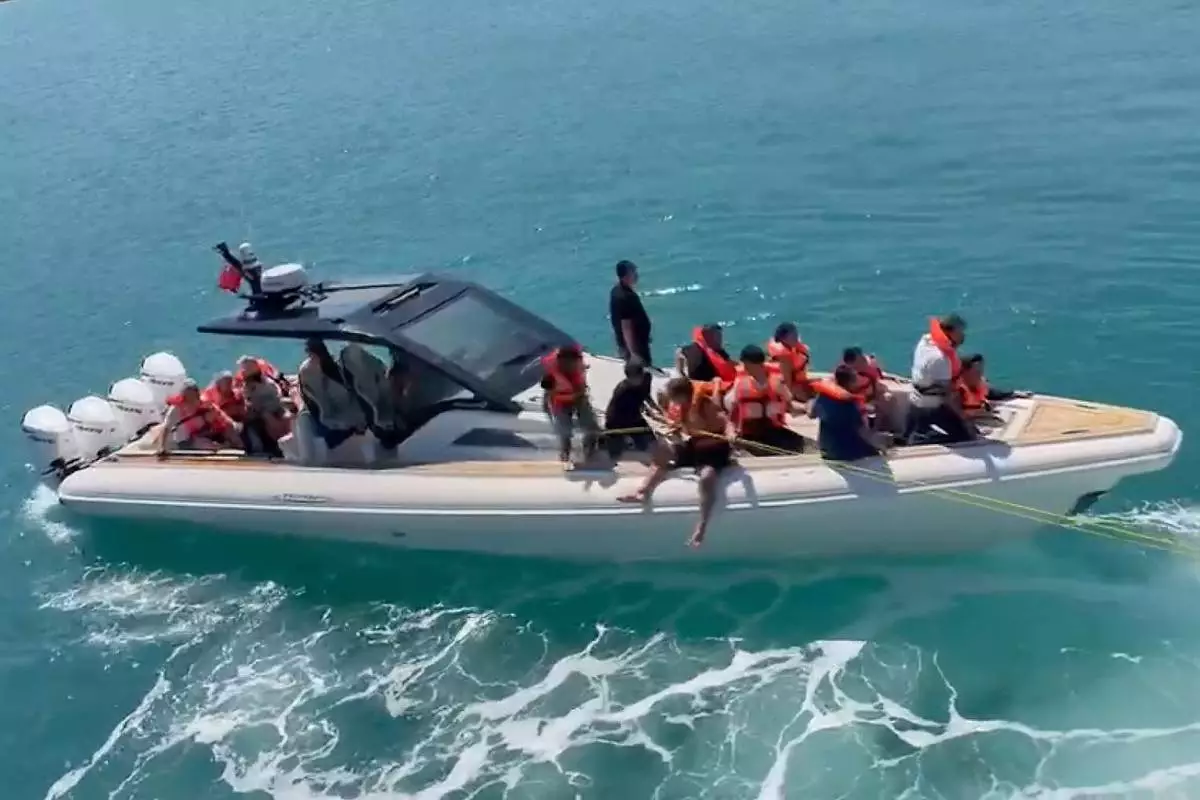
In this frame grab from video, rescued passengers wearing life jackets are evacuated by boat after a passenger vessel capsized off the coast of Girne, in the Turkish-occupied northern part of Cyprus, Sunday, Aug. 30, 2026. (DHA via AP)
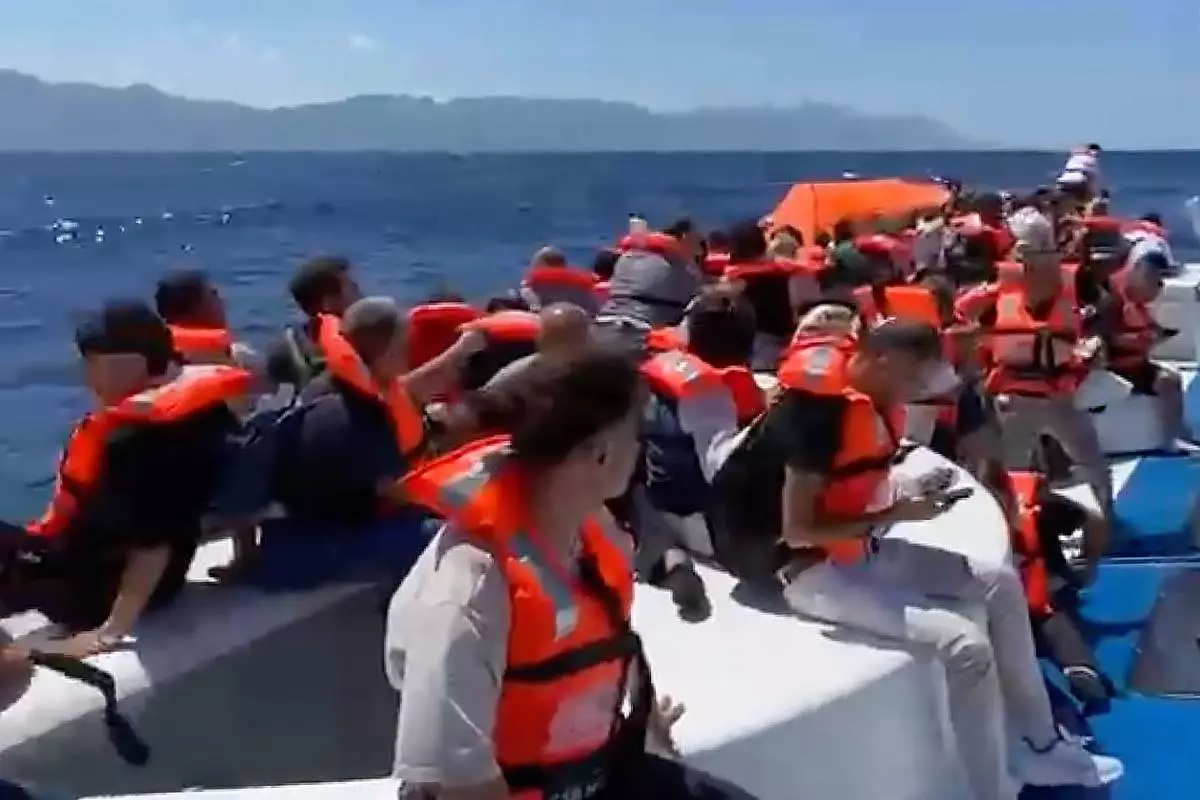
In this frame grab from a video, passengers wearing life jackets wait atop a capsized passenger vessel to be rescued off the coast of Girne, in the Turkish-occupied northern part of Cyprus, Sunday, Aug. 30, 2026. (DHA via AP)
DUBAI, United Arab Emirates (AP) — The United Arab Emirates’ air force intercepted an Iranian drone over its territorial waters Monday, the Defense Ministry said, an attack that comes after the United States and Iran exchanged fire on the weekend, the first significant military action in a month.
During the lull in fighting, the U.S. has been ratcheting up economic pressure on Iran with the hope of forcing concessions out of Tehran, including reopening the vital Strait of Hormuz to shipping.
After the U.S. and Israel attacked Iran on Feb. 28, Iran established a chokehold on the strait, though which a fifth of the world's traded oil passed in peacetime, slowing ship traffic to a trickle. As the fighting resumed, the price of Brent crude oil, the international standard, climbed above $90, up about 25% from the start of the war, presenting a growing problem for U.S. President Donald Trump ahead of the midterm elections.
In a short statement, the Defense Ministry said it “dealt with” an Iranian drone that was detected over its waters approaching from Iran. There were no reports of damage.
The UAE Defense Ministry later issued a second statement denying a claim by the Iranian army that the Al Minhad Air Base in Dubai had been targeted, saying it was false.
The incident came after U.S. forces on Sunday struck Iranian rocket launchers on an Iranian island, breaking a lull in fighting in the war that has lasted more than six months.
Iran responded by launching missiles at U.S. sites in Jordan, which were intercepted.
Early Monday, Iran's Foreign Ministry said that Iran would “not hesitate to exercise the inherent right of legitimate defense and will respond decisively to any military aggression.”
Before heading to attend the Shanghai Cooperation Organization's summit in Kyrgyzstan with Foreign Minister Abbas Araghchi, Iranian President Masoud Pezeshkian, who has favored a negotiated end to the conflict, stressed that Iran was not seeking war.
“But,” he said, “we will respond decisively to aggressors.”
The summit brings together a group billed as a counterweight to U.S. global influence, and includes Chinese President Xi Jinping, Russian President Vladimir Putin and Indian Prime Minister Narendra Modi. Pezeshkian was scheduled to meet with Putin on the sidelines on Tuesday.
Meantime, U.S. Treasury Secretary Scott Bessent was set to host meetings of the Group of 20 finance ministers in North Carolina on Monday and Tuesday, which come as Washington pressures other countries to help the U.S. economically isolate Iran.
The shifting strategy centers on threats to punish any country or entity that continues to conduct business with Tehran.
Trump stressed last week that he is “not in a hurry” to get Iran back to the negotiating table, and he continues making the case that the Islamic Republic’s leadership is on the ropes.
Appointments to Iran’s senior security leadership in the past month, however, have signaled Tehran’s defiance after weathering decades of sanctions as well as a lack of tolerance for dissent at home.
On Sunday, U.S. Central Command said it had struck Iranian launchers after observing forces with Iran’s Revolutionary Guard Corps preparing to launch rockets with sea mines into the Strait of Hormuz. The U.S. military said last week it had completed clearing sea mines from the waterway’s international shipping routes.
Semiofficial news outlets in Iran reported sounds of explosions near Larak island on the strait and the Revolutionary Guard said there had been casualties.
U.S. military officials disputed Iran’s claim that the latest American strikes were an act of aggression, calling them a “limited, precise action” against what they said were minelaying forces.
Iranian state television later showed what it said were ballistic missiles being fired at American bases in Jordan, and Jordan’s military said it intercepted eight that had entered its airspace.
A return to open conflict would be dangerous for the region, where Iran has targeted U.S. military bases and infrastructure in Gulf countries since the war began on Feb. 28.
The last time the U.S. military confirmed targeting Iran was on July 29, when it announced a “heavy wave of strikes” on dozens of Revolutionary Guard targets including coastal surveillance and defense sites.
Trump said on Aug. 1 he would order the military to hold off on new strikes at the urging of Gulf allies Qatar, Saudi Arabia and the United Arab Emirates.
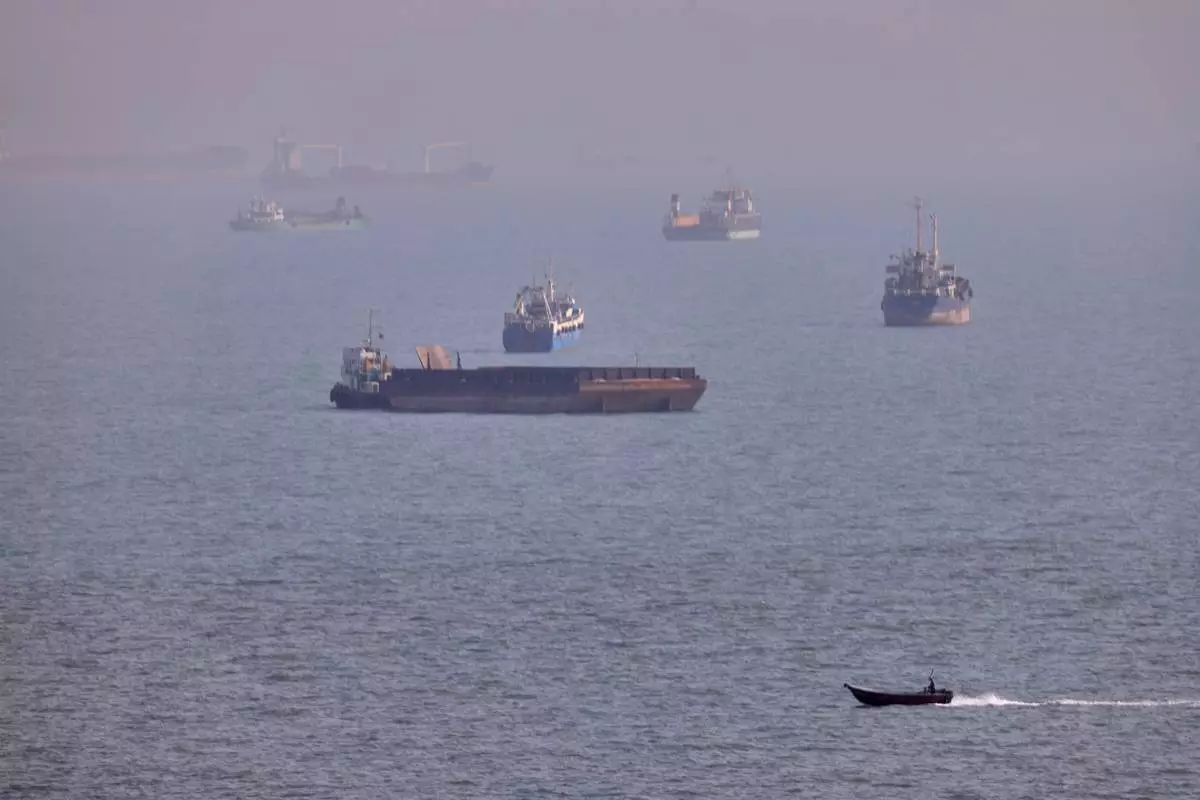
FILE - A small boat sails past cargo ships and other commercial vessels anchored in the Strait of Hormuz off Bandar Abbas, Iran, Wednesday, Aug. 5, 2026. (Amirhosein Khorgooi/ISNA via AP, File)