WASHINGTON (AP) — The White House on Monday said it’s partnering with North American Blue Energy Partners as part of President Donald Trump ’s push to tap into Venezuela’s oil industry, setting up a deal that will give the Pentagon a stake over roughly a fifth of the country’s vast oil reserves.
The Trump administration released more details about the agreement on Monday night, days after Trump announced what he described as the biggest oil deal in history. The sweeping deal has been met with skepticism from analysts who say it will take years to revive Venezuela's production, but Trump and his aides are pitching it as a chance to develop a new oil giant in the Western Hemisphere.
As part of the deal, the U.S. is creating a private company as part of a joint venture with NABEP — a detail the White House withheld for days. NABEP, owned by Venezuelan businessman Alejandro Betancourt, is already the second largest operator in Venezuela behind Chevron.
Venezuela’s acting President Delcy Rodríguez is giving the company 100-year rights over 17 oil fields with proven reserves of 65 billion barrels. Many of those fields were previously owned by Russian or Chinese firms, the White House said.
The deal will give the Pentagon a 35% ownership stake in the company, and the State Department will get a guarantee to purchase 20% of the output at cost, the White House disclosed Monday. Betancourt's company has agreed to put up $100 billion in new oil infrastructure.
In a statement Monday, Betancourt said Venezuela is “blessed with an abundance of natural resources, hardworking people and untapped potential,” adding that the deal will “unleash that potential to the great benefit of both Venezuelans and Americans.”
The company said Betancourt had been involved in the Venezuelan oil industry for more than 15 years and said the company has more than 5,000 employees and more than 10,000 contractors.
Trump has been pushing to boost oil production in Venezuela since the January military mission that captured then-President Nicolás Maduro on federal narcoterrorism and drug trafficking charges.
The White House claimed the deal would be “at zero cost” to the U.S., and said the government would have veto power on board members — the majority of whom would be U.S. citizens.
“NABEP will have reputable U.S. auditors, lawyers, and advisers and the U.S. government’s agreement with NABEP is governed by U.S. law and is subject to the jurisdiction of U.S. courts,” the White House said in a fact sheet about the deal.
Former U.S. government energy advisers have cautioned that the deal comes with political risk, since future administrations in Venezuela or the United States could challenge the deal. Even if the agreement holds, analysts say it could take years to turn around Venezuela's dilapidated energy sector.
Even Trump, who says the plan will reduce gas prices, acknowledged Monday that Americans won't see change right away. Asked about it at the White House, Trump said “it could be a little bit” for prices to fall, though he played down analyst predictions that it could take years.
“If it was two years, you know, that’s a short period of time,” he said.
Rodríguez has spoken in favor of the deal, describing it as a chance to modernize the Venezuela's oil industry and accelerate its revival. Facing criticism that the deal cedes Venezuelan resources to the U.S., Rodríguez insisted her country's sovereignty remains secure.
Lawmakers on Capitol Hill said they were looking for more information about the agreement.
Rep. Rick Crawford, the Republican chairman of the House Intelligence Committee, said he wanted to hear details from the Trump administration “hopefully sooner rather than later.”
Sen. Jack Reed, the top Democrat on the Senate Armed Services Committee, said a deal that uses the military to boost a private oil venture should be rejected and said he wanted a full accounting of the legal authority for the agreement.
“President Trump’s effort to turn the U.S. military into an investor in Venezuelan oil is a blatant abuse of power and taxpayer dollars,” Reed said in a statement.
Trump plans to meet Tuesday with a group of large and small oil refiners to discuss ways to increase America’s capacity to refine oil into gasoline.
The meeting occurs as the Iran war has driven prices at the pump to a national average of $4.08, a 28% increase over the past year, according to AAA.
The White House has said that increasing the number of refineries and expanding the capacity at existing facilities would eventually reduce prices for consumers. The administration also sees the need for more refineries to process oil from Venezuela.
Also attending the meeting will be Interior Secretary Doug Burgum, Energy Secretary Chris Wright and Jarrod Agen, the director of the White House National Energy Dominance Council.
AP Congressional Correspondent Lisa Mascaro contributed to this report.
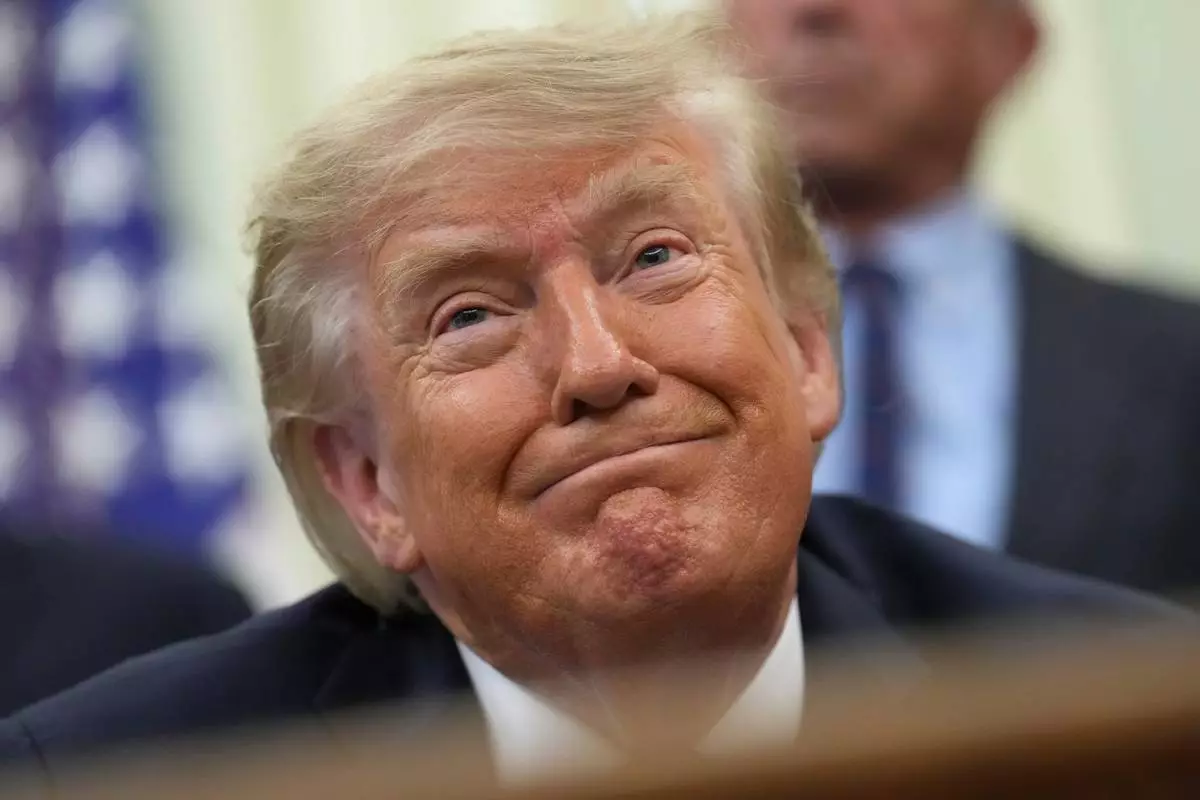
President Donald Trump smiles during an event about drug prices, in the Oval Office of the White House, Monday, Aug. 31, 2026, in Washington. (AP Photo/Jacquelyn Martin)
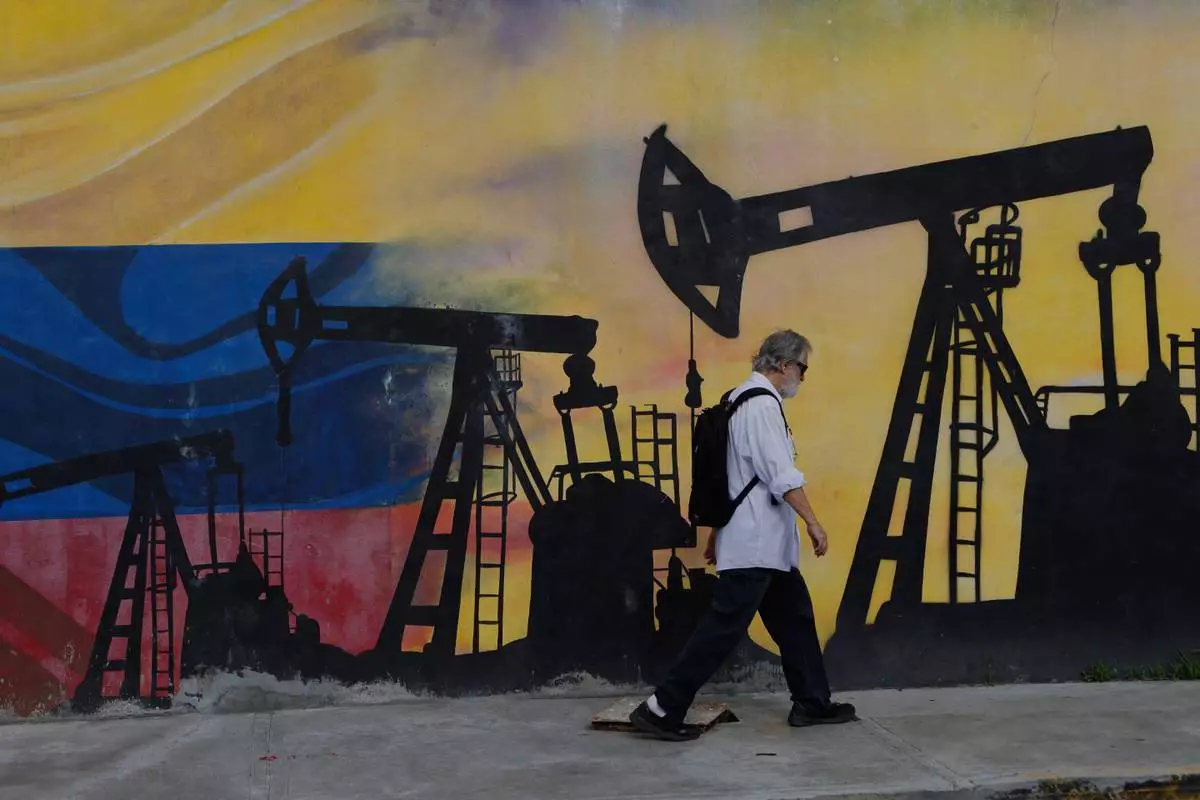
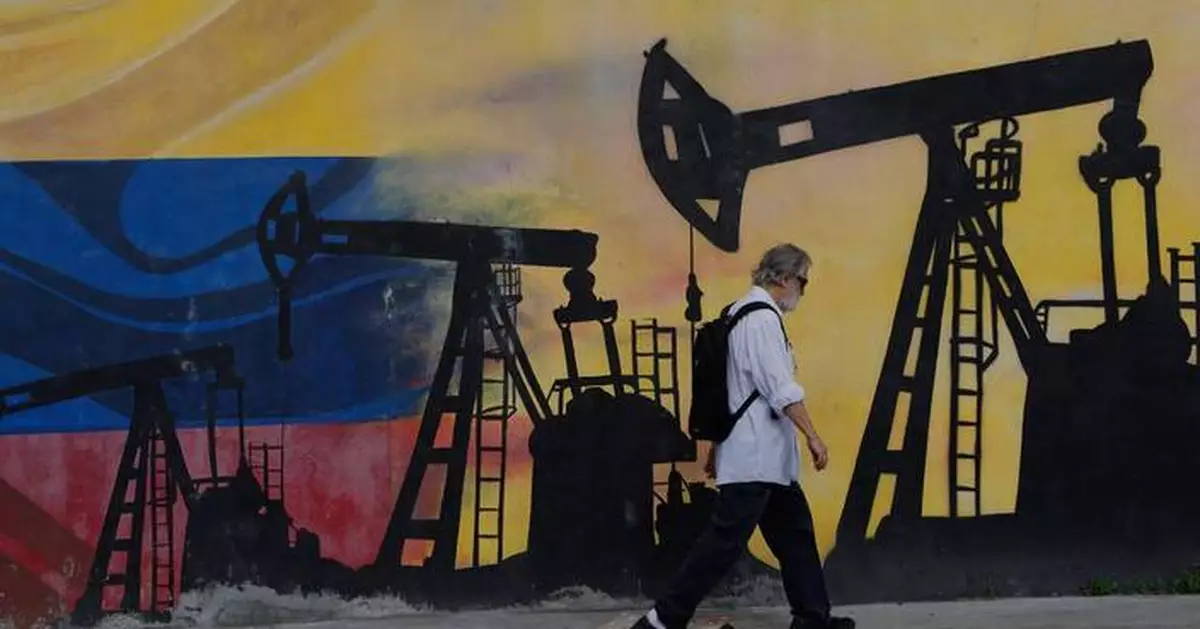
A pedestrian walks past a mural featuring oil wells in Caracas, Venezuela, Saturday, Aug 29, 2026, a day after President Donald Trump announced a deal giving the United States a stake in Venezuela’s oil reserves. (AP Photo/Pedro Mattey)
GRAND CANYON NATIONAL PARK, Ariz. (AP) — The bodies of a Texas chiropractor and at least one other person have been found after a major weekend flash flood swept through the Grand Canyon, and forecasters warned more flooding was possible as heavy rain shrouded the canyon walls.
Saturday’s flash flood severely damaged the only water pipeline into the canyon. Officials barred tourists from staying at lodges and hotels inside Grand Canyon National Park and issued emergency water restrictions for year-round residents. Waves of rain hit the Bright Angel Creek area of the tourist destination that hosts 4.4 million visitors a year.
Nearly 80 people were rescued during the flooding. Officials are seeking information on one person who remains unaccounted for.
Incident Cmdr. Dave Black said officials used night vision and other equipment to find people who needed to be evacuated over the weekend.
The flood happened deep in the canyon near where the Colorado River flows, around popular lodges and camping areas where people hiking from one rim of the Grand Canyon to the other stop for the night.
Scores of visitors had to be evacuated from the area by helicopter. They talked of a massive deluge and rangers warning of rockslides, and saw huge pools of logs and debris rolling down the river as they stood nearby awaiting rescue.
Hiker Daniel Evans said it rained several times before the worst 30-minute downpour Saturday afternoon. He had been planning to rest through the hot day and spend the night near the hard-hit Bright Angel campground area.
Earlier, rangers told him it looked to be safe. Then, as the rain poured, they told him it was time to go. He thought of Nepal and the massive floods and landslides that poured down mountain valleys last week.
“The entire time it was raining — the entire time I’m going through all this and packing — I’m just keeping my eyes upstream, just praying that a wall of water isn’t coming toward us,” Evans said.
The family of John Giusti, 53, said the Texas chiropractor set out Thursday on a trip he dreamed of with two buddies — Texas martial arts studio owner Brent Rosenkranz, 42, and Wyoming pilot Timothy Smith, 53. They planned to spend two nights at the bottom of the canyon fishing and hiking.
They spoke to their families Thursday and found their campsite Friday. They have not been heard from since, the three families said in a joint statement released Monday.
All three men had ties to Granbury, Texas. Their families said they planned “several days of hiking, camping, fishing and exploring together.”
Park officials said they recovered the body of a 46-year-old man Sunday evening near Crystal Rapids along the Colorado River and were trying to recover a second body. Their email provided no other details.
Shannon Cahill said her brother and his daughter are missing somewhere in the Grand Canyon region.
Michael Wilhoit, 53, Mystic Wilhoit, 30, and her boyfriend left Saturday for a three-night camping trip. She hasn’t heard from any of them since. Phone calls go straight to their voicemail, and they have not posted on social media.
“That’s not like Mystic. If she’s doing something, she’s posting. She posts constantly,” Cahill said. Cahill wasn’t sure where they were going to camp.
Late Monday morning, more rain fell as the state Department of Emergency and Military Affairs was coordinating with the park service and county emergency management officials in search and recovery efforts.
Visiting the Grand Canyon can be particularly dangerous in the summer because of the risk of flash flooding that accompanies the monsoon, or rainy season. Clear days can quickly give way to thunderstorms and downpours. Forecasters warned more flooding could happen Monday or just about any time storms pop up.
Rain also fell on part of the Dragon Bravo fire scar, a burn area left by a lightning-caused wildfire in July 2025. It burned for days before exploding into a fast-moving conflagration that forced evacuations and consumed the historic Grand Canyon Lodge, some cabins and other structures.
Without vegetation, a barren burn scar allows runoff to flow more quickly.
The steep, rocky nature of the canyon itself funnels water rapidly. What might be a normal summer downpour somewhere else can become a charging wall of water in the canyon.
This year's heavy monsoon rains are especially intense because there is a higher amount of water vapor in the atmosphere, mostly because of a strong El Nino, said A. Park Williams, a hydroclimatologist at the University of California, Los Angeles.
The natural warming of parts of the Pacific Ocean can warp weather globally. That extra water vapor in the southwest U.S. gets wrung out in the storm in the form of rainfall, he said.
The link to human-caused climate change and the heavy Arizona rain is pretty strong, said climate scientist Daniel Swain of the California Institute for Water Resources.
A few months ago, Swain and colleagues published a study in the journal Weather and Climate Extremes finding that during the summer, short-term intense downpours in the West — akin to the one that hit the Grand Canyon — have become 10% stronger since 2000.
The flood was a major blow to an enduring effort to modernize the water pipeline that serves visitors and the roughly 1,600 residents of Grand Canyon Village.
A $208 million rehabilitation of the pipeline and upgrades to the associated water delivery system started in 2023, with the park service calling it a crucial investment to ensure the park can meet the needs of residents and visitors. The project was expected to be completed next year.
While the Grand Canyon has large storage tanks for potable water on the South Rim, they won’t be refilled while the pipeline is out of service.
Stengle reported from Dallas. Seth Borenstein in Kensington, Maryland; Julie Walker in New York City, Jeffrey Collins in Columbia, South Carolina; Kathy McCormack in Concord, New Hampshire; and Christopher Weber in Los Angeles contributed.
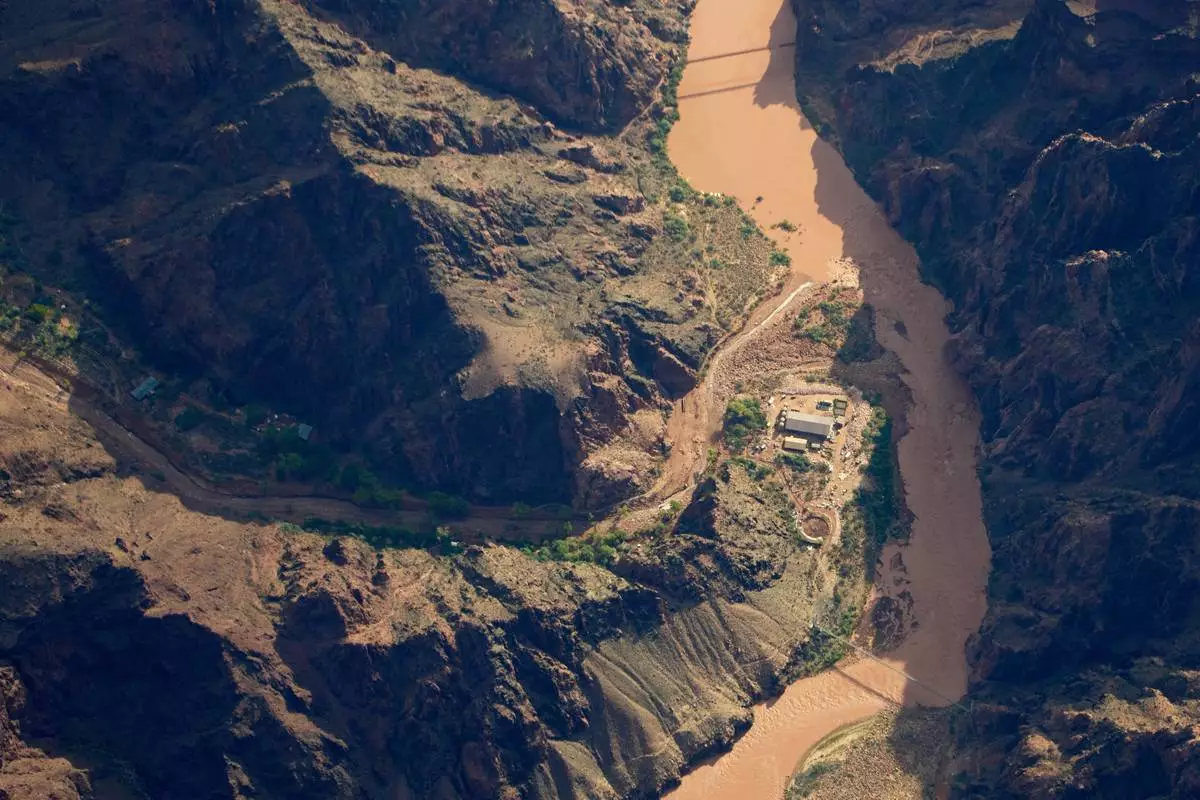
Bright Angel Canyon, damaged by flash floods, runs into the Colorado River in the Grand Canyon, Monday, Aug. 31, 2026, at Grand Canyon National Park, Ariz. (AP Photo/John Locher)
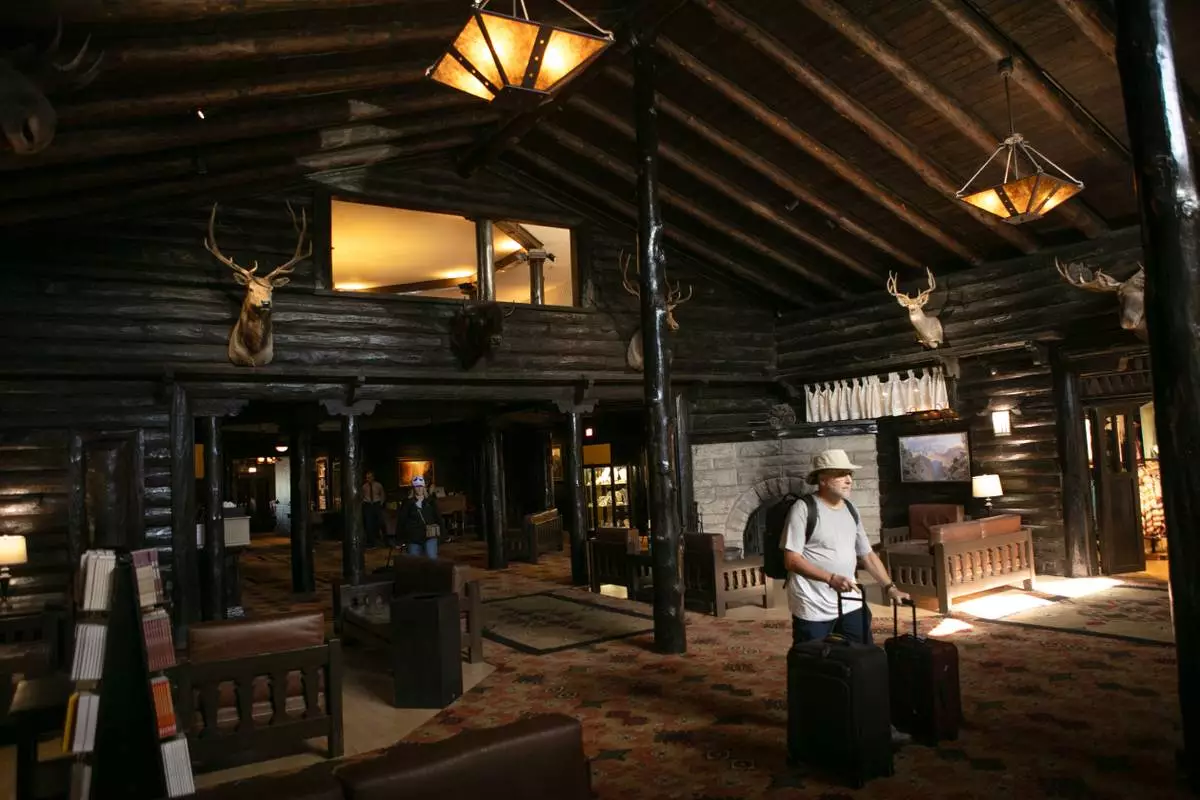
Tourists check out of the El Tovar Hotel as lodging along the rim of the canyon was shut down due to flooding, Monday, Aug. 31, 2026 at Grand Canyon National Park, Ariz. (AP Photo/Josh Biggs)
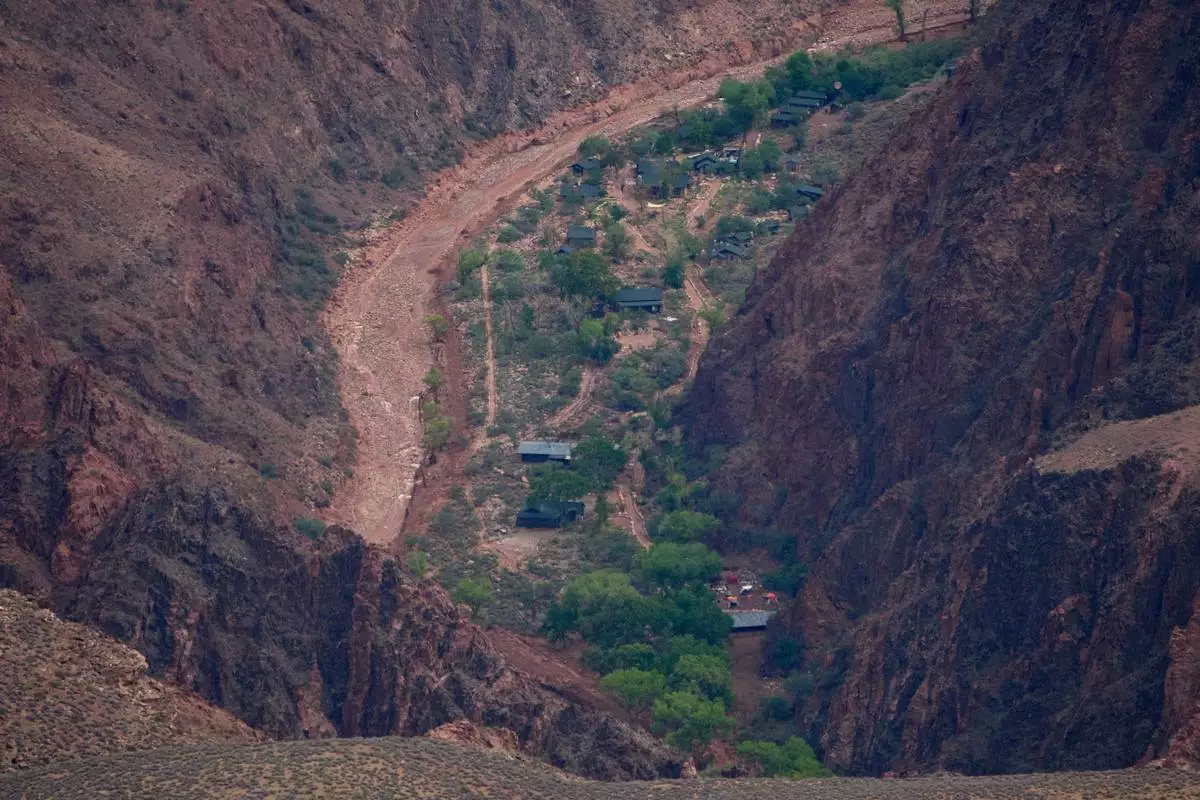
Buildings are seen in a flood damaged Bright Angel Canyon the Grand Canyon, Monday, Aug. 31, 2026, in Grand Canyon National Park, Ariz. (AP Photo/John Locher)
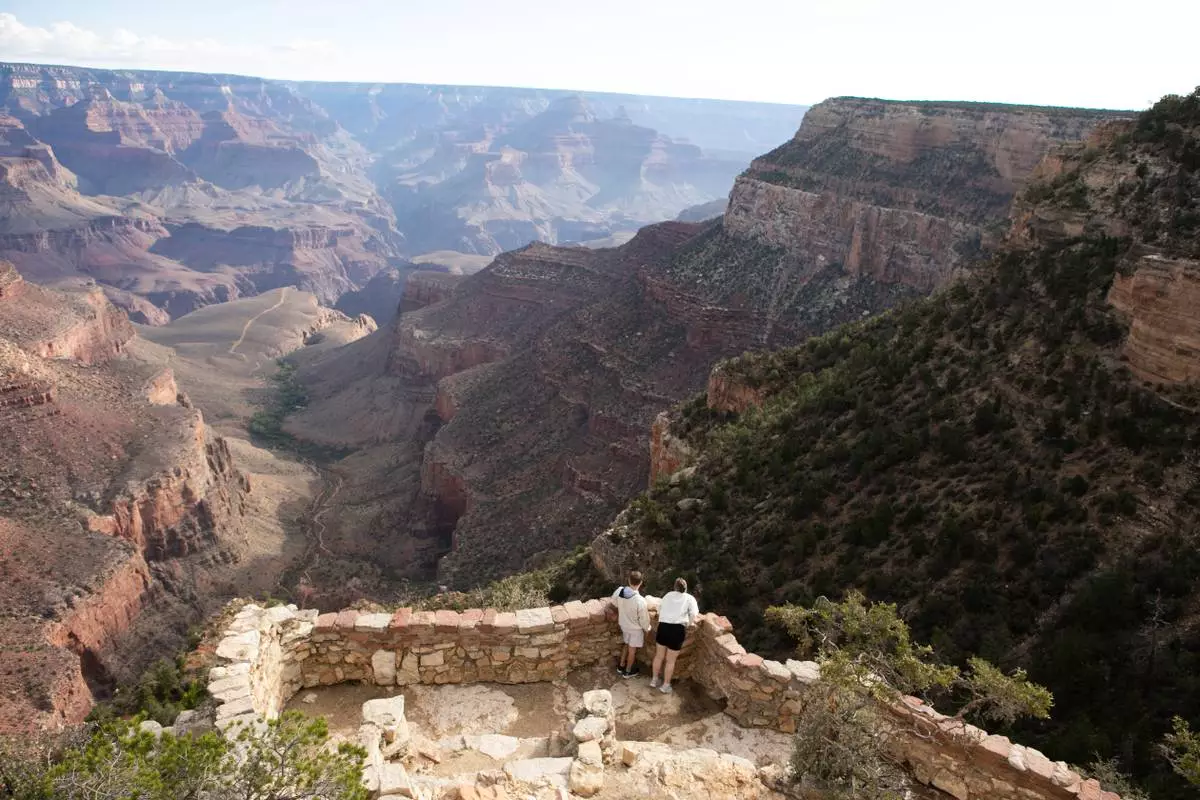
Tourists look down into the Grand Canyon off of the south rim, Monday, Aug. 31, 2026 at Grand Canyon National Park, Ariz. (AP Photo/Josh Biggs)
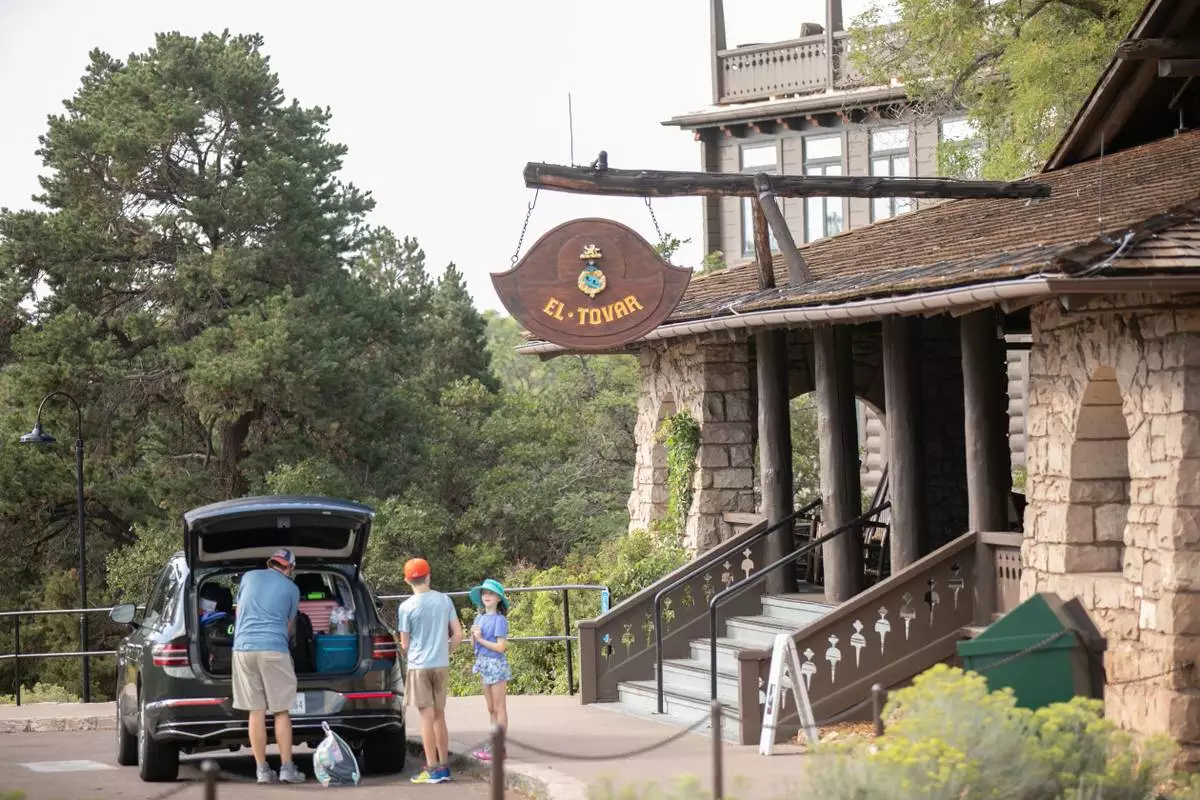
Tourists check out of the El Tovar Hotel as lodging along the rim of the canyon was shut down due to flooding, Monday, Aug. 31, 2026 at Grand Canyon National Park, Ariz. (AP Photo/Josh Biggs)
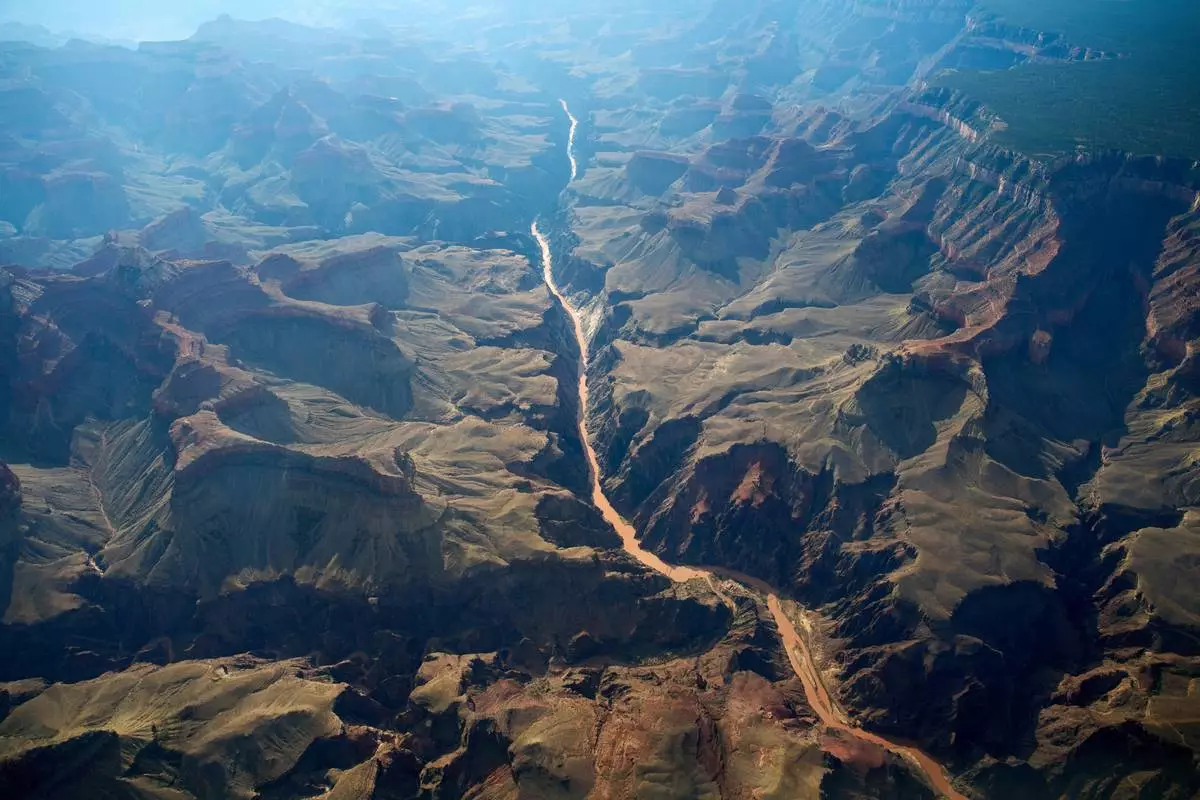
Bright Angel Canyon, bottom left, the scene of flash floods, merges into the Colorado River in the Grand Canyon, Monday, Aug. 31, 2026, at Grand Canyon National Park, Ariz. (AP Photo/John Locher)
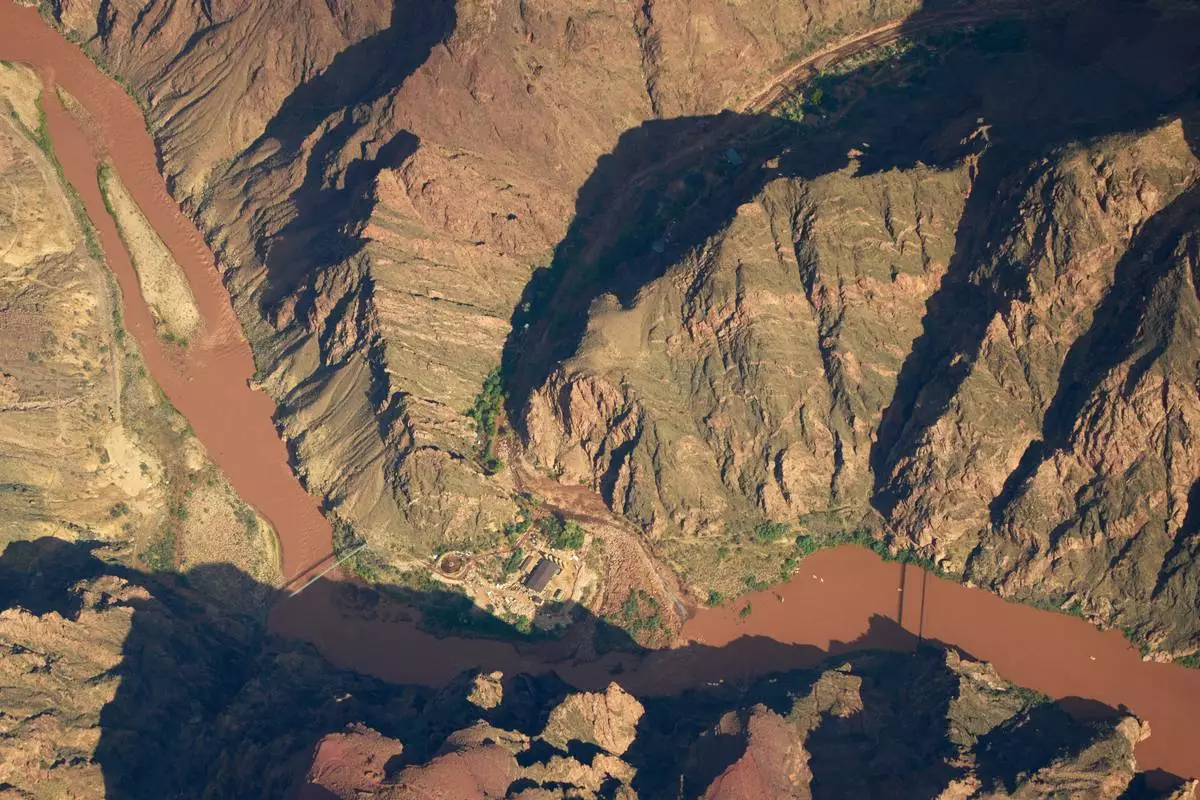
Bright Angel Canyon, the scene of flash floods, runs into the Colorado River in the Grand Canyon, Monday, Aug. 31, 2026, at Grand Canyon National Park, Ariz. (AP Photo/John Locher)
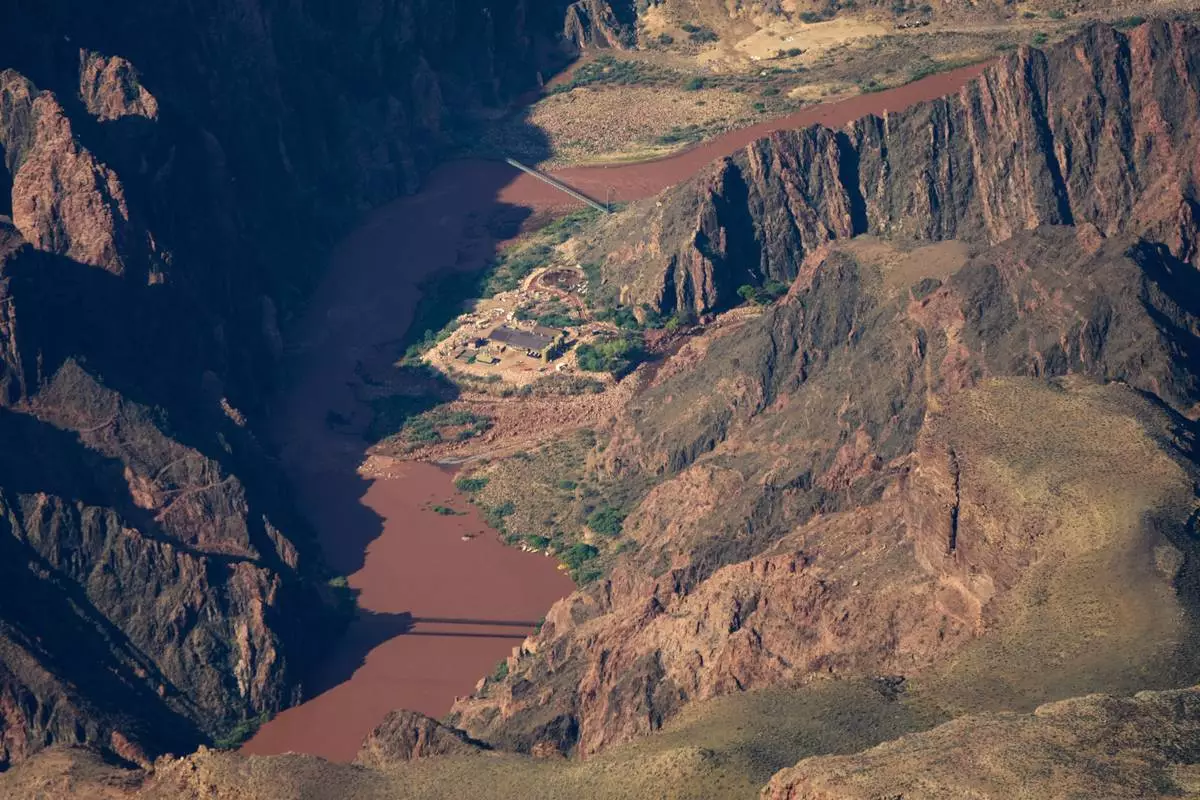
Bright Angel Canyon, the scene of flash floods, center right, merges with the Colorado River in the Grand Canyon, Monday, Aug. 31, 2026, at Grand Canyon National Park, Ariz. (AP Photo/John Locher)
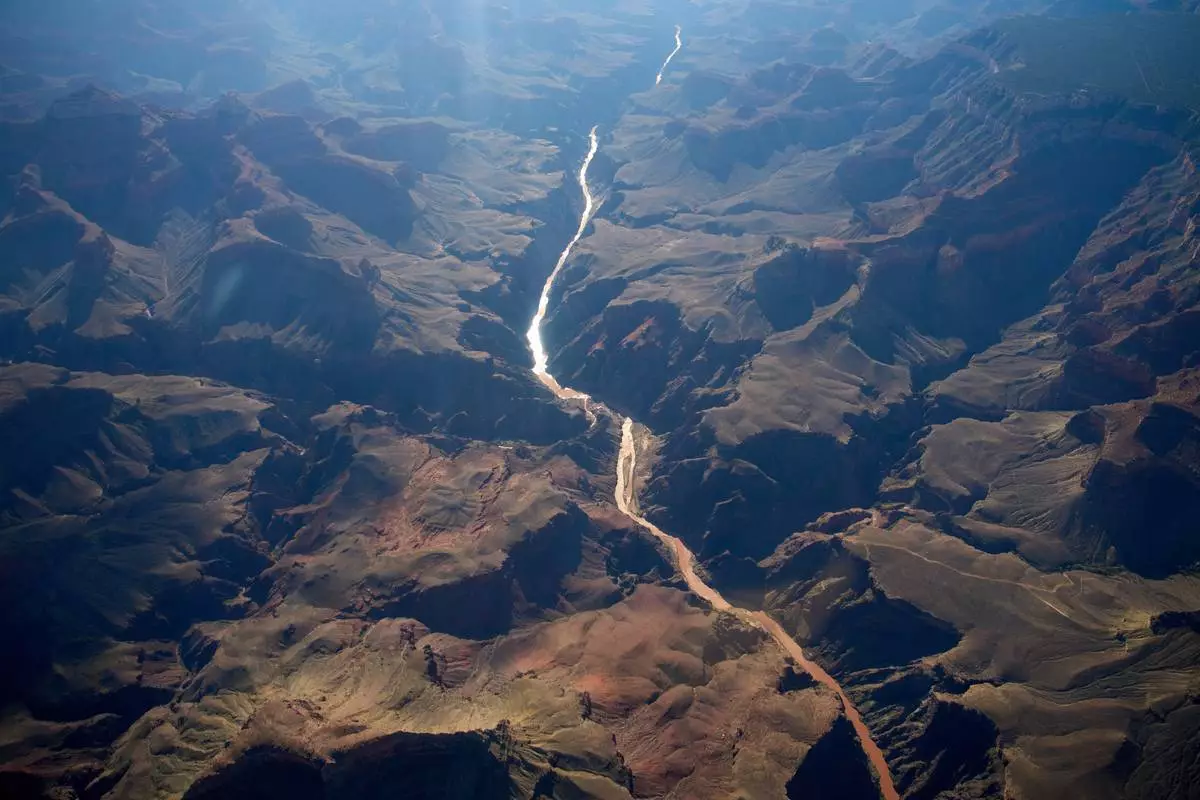
Bright Angel Canyon, middle left, the scene of flash floods, meets with the Colorado River in the Grand Canyon, Monday, Aug. 31, 2026, at Grand Canyon National Park, Ariz. (AP Photo/John Locher)
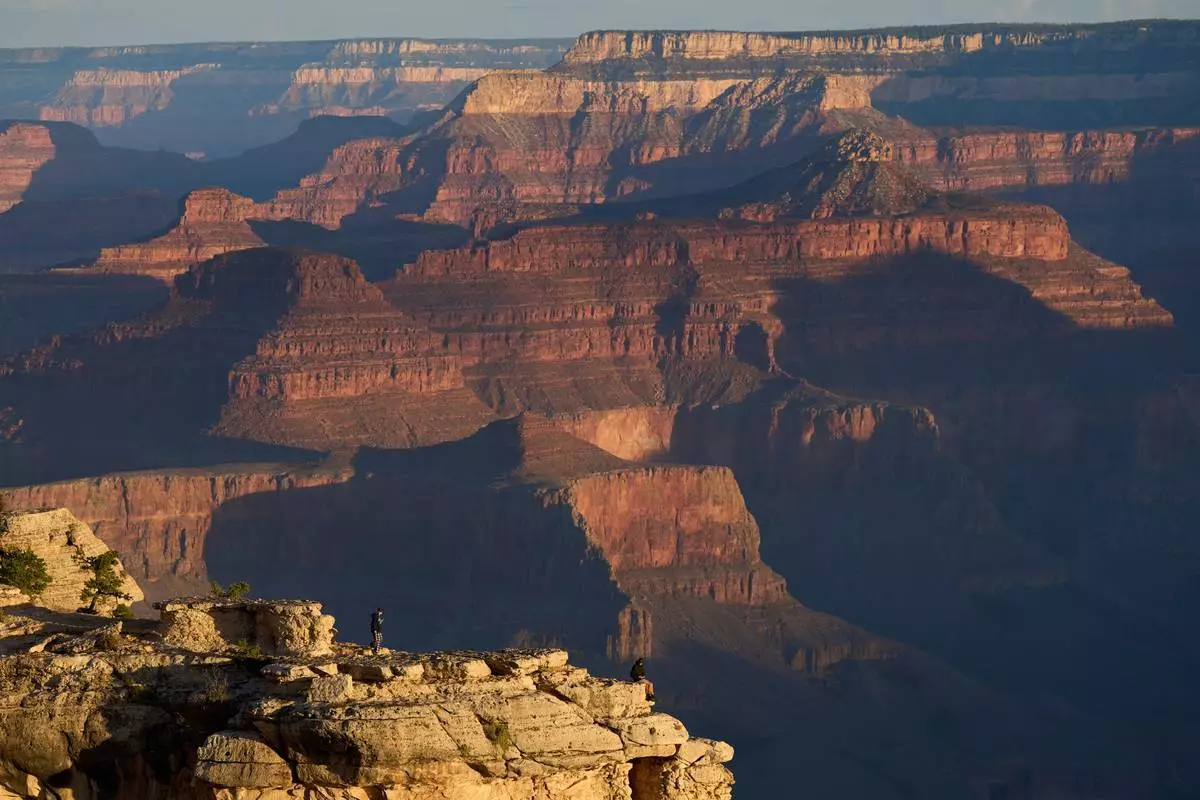
People stand at the rim of the Grand Canyon, Monday, Aug. 31, 2026, in Grand Canyon National Park, Ariz. (AP Photo/John Locher)
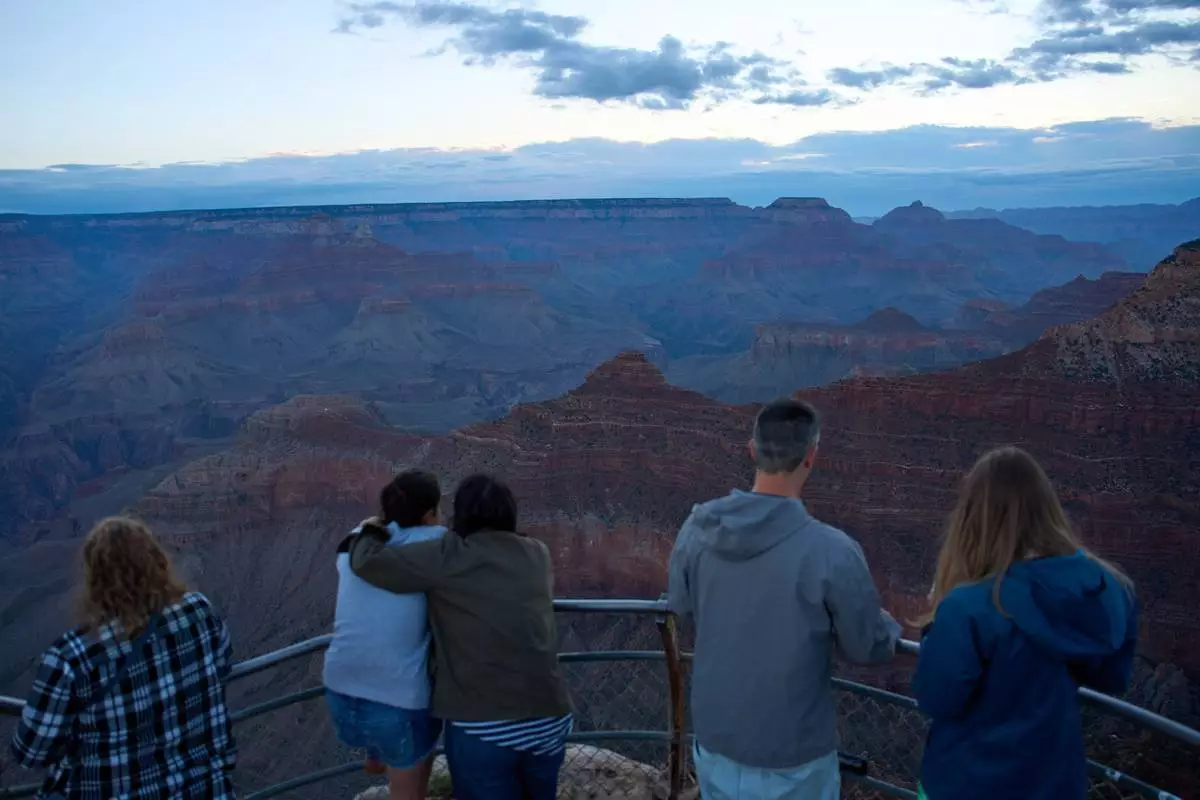
People stand at the rim of the Grand Canyon, Monday, Aug. 31, 2026, in Grand Canyon National Park, Ariz. (AP Photo/John Locher)
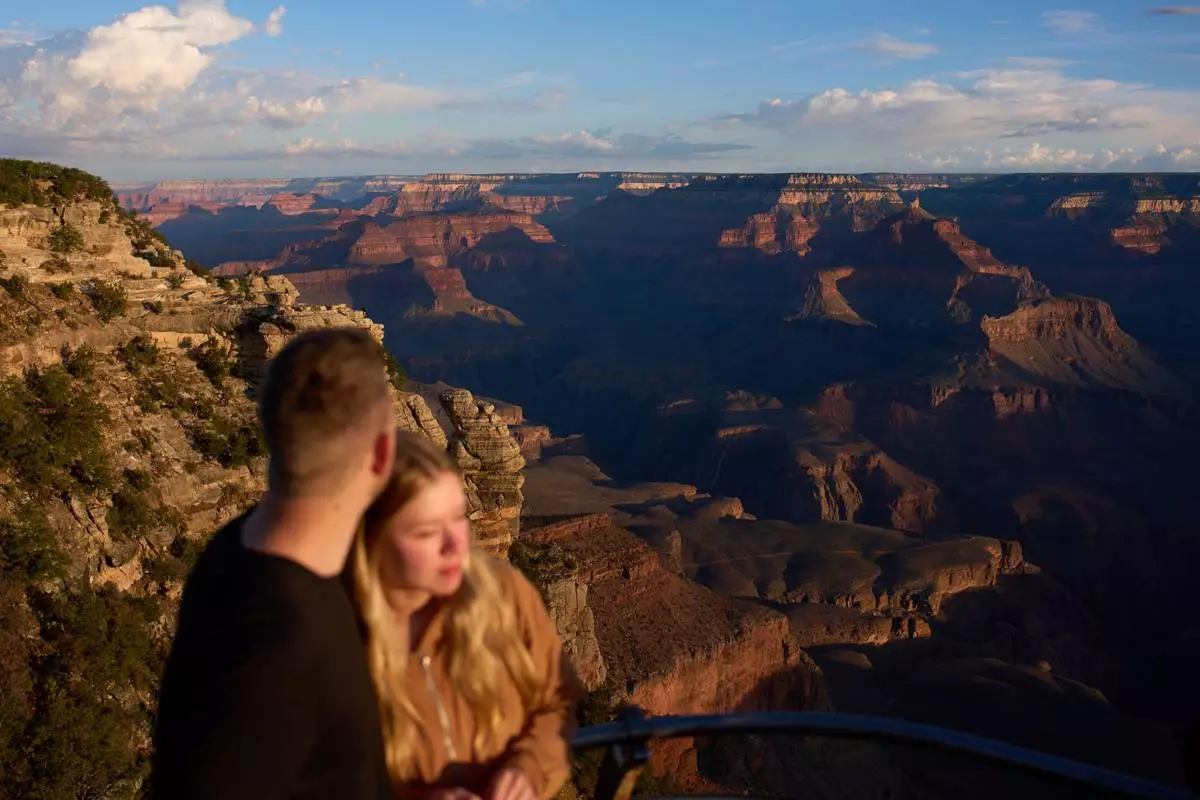
People stand at the rim of the Grand Canyon, Monday, Aug. 31, 2026, in Grand Canyon National Park, Ariz. (AP Photo/John Locher)
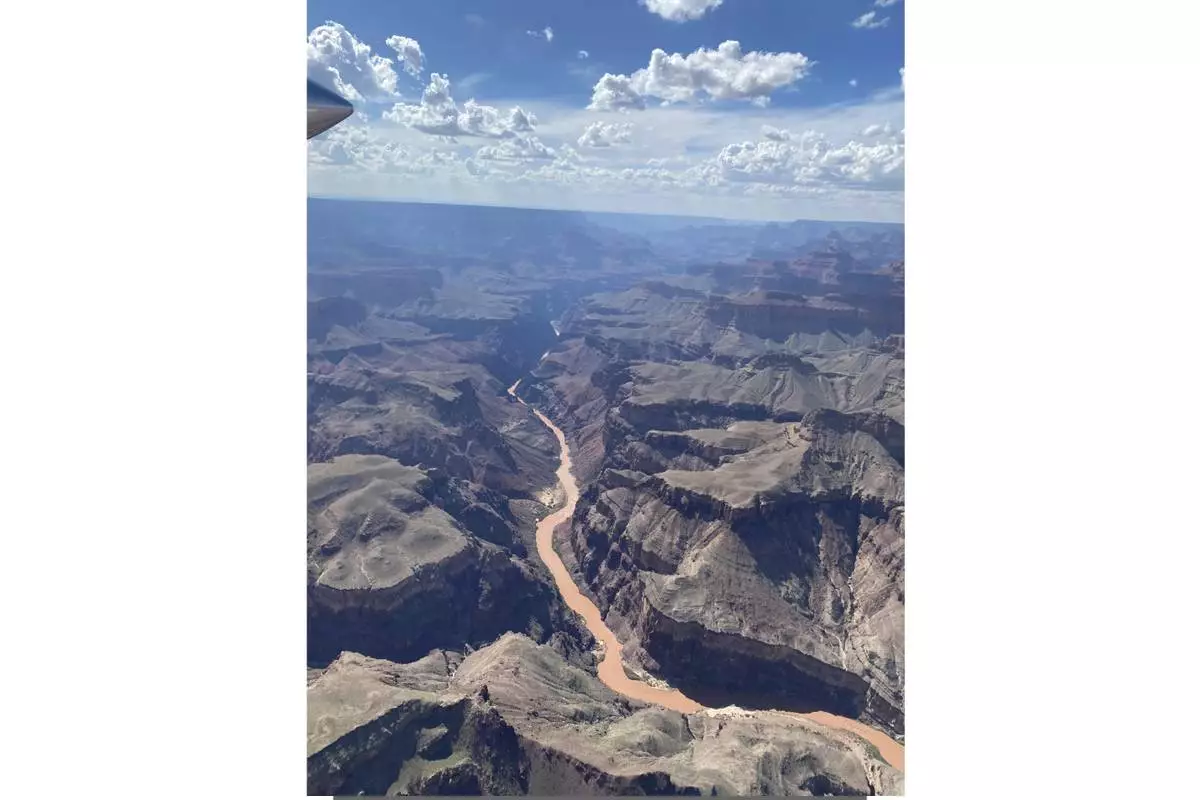
This photo shows Grand Canyon National Park in northern Arizona on Sunday, Aug. 30, 2026, after it was hit by heavy flooding a day earlier. (Craig Sanderson via AP)
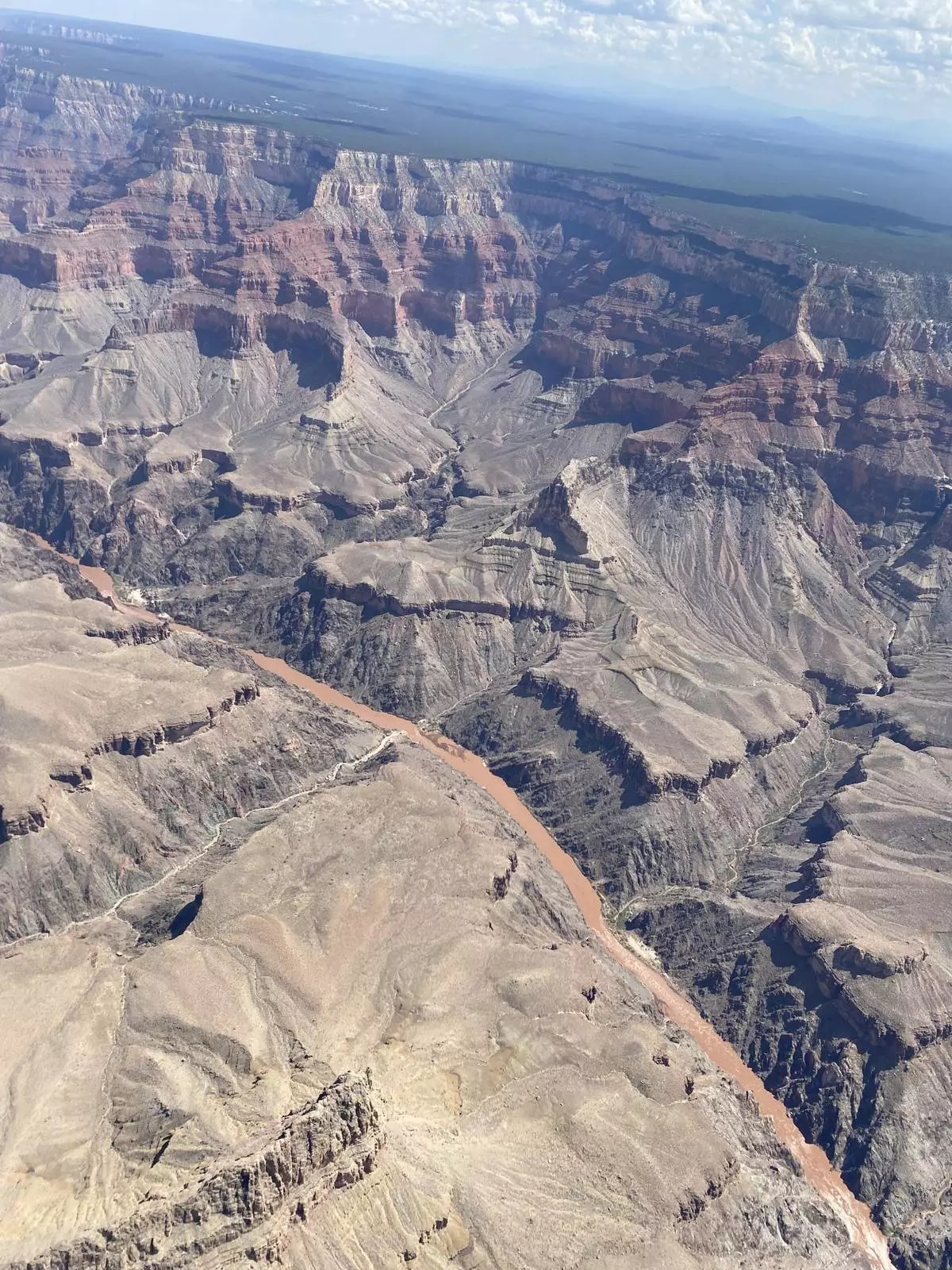
This photo shows Grand Canyon National Park in northern Arizona on Sunday, Aug. 30, 2026, after it was hit by heavy flooding a day earlier. (Craig Sanderson via AP)
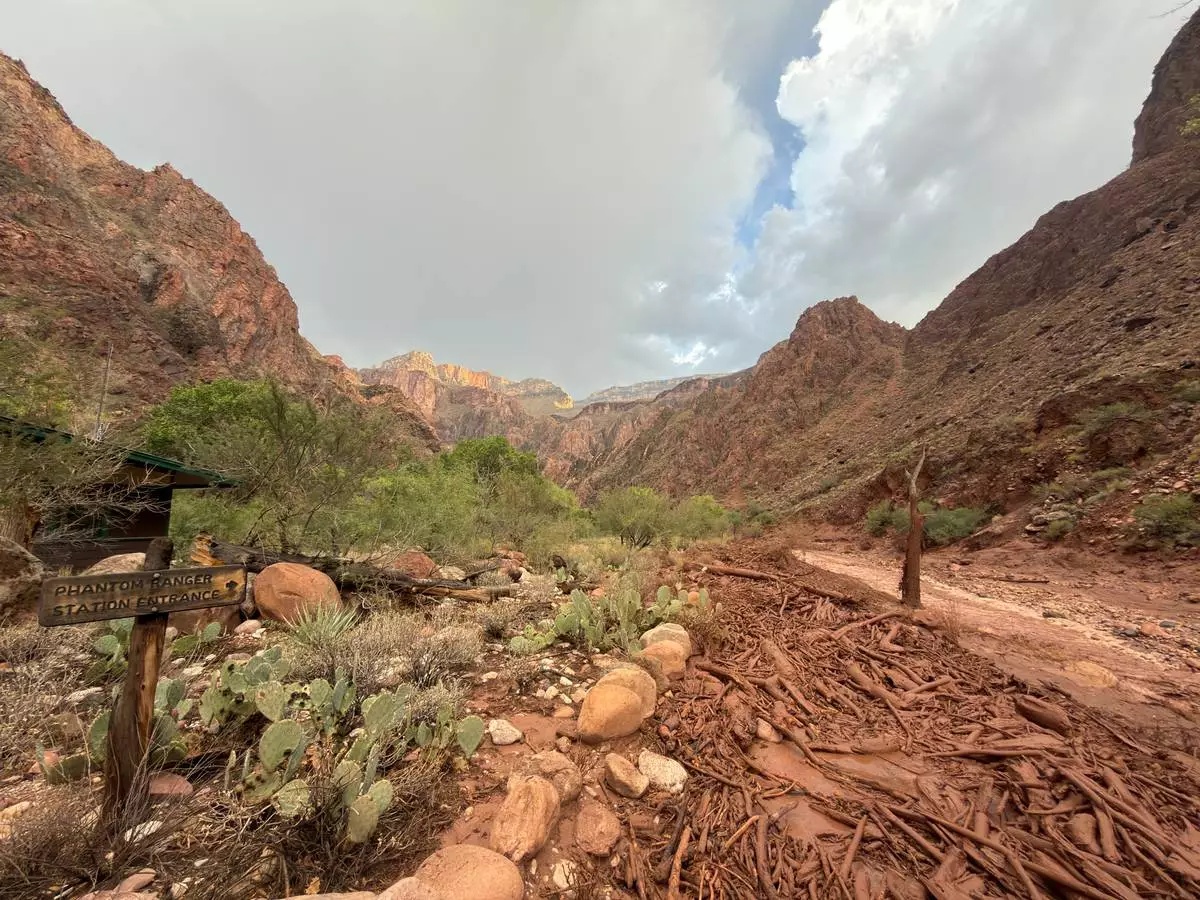
Bright Angel Creek near the Phantom Ranger Station in the Grand Canyon, Arizona, is seen after flash flooding from storms, Saturday, Aug. 29, 2026. (Parth Desai via AP)