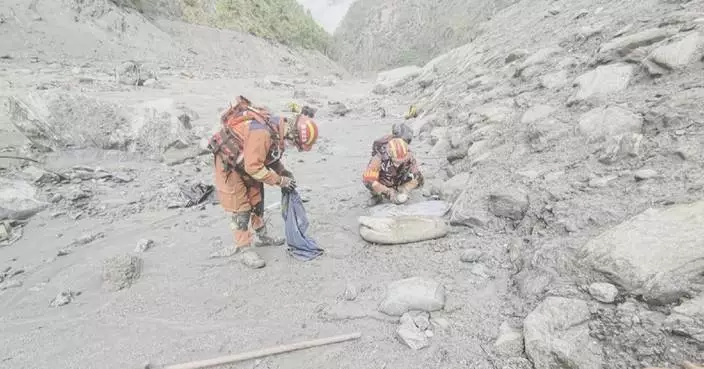
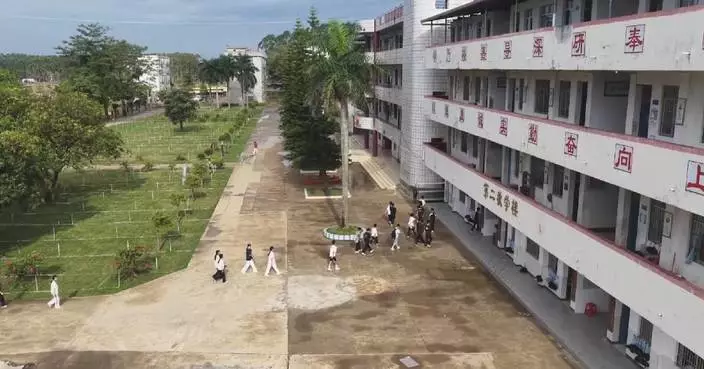
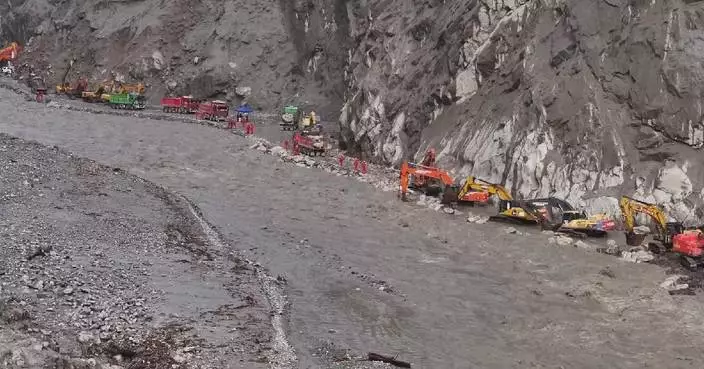
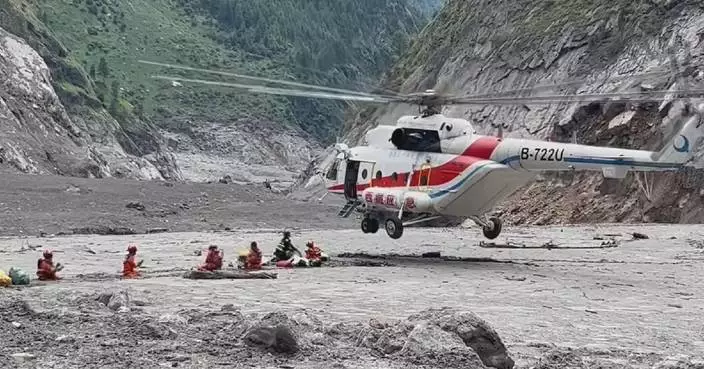
The rugged and mountainous terrain in the region of last week’s devastating mudslides on the China-Nepal border is posing the biggest challenge for rescue workers six days after the disaster, the Nepali Foreign Ministry said on Monday.
The death toll from the devastating mudslide in Nepal has risen to 951, Nepal's National Disaster Risk Reduction and Management Authority and the police said on Monday afternoon.
"As you know, this is the Himalayas and the narrow gorge is there. So the area is very difficult. That's why we have to be very careful and cautious before even starting any rescue operation, relief operation. So, as you know, the gorge is really deep and steep, so that's the difficulty, the geographical difficulties there," Lok Bahadur Poudel Chhetri, spokesman for Nepal's Ministry of Foreign Affairs, said at a press conference on Monday.
He said Nepal is cooperating closely with different rescue forces and rescuers are working round the clock, He also acknowledged the assistance Nepal was getting from the Chinese government.
"We are grateful to the Chinese government for providing all the assistance. The team for rescue operation is already in the site, and many important items for rescue support are already in Kathmandu, and more is coming," he said.
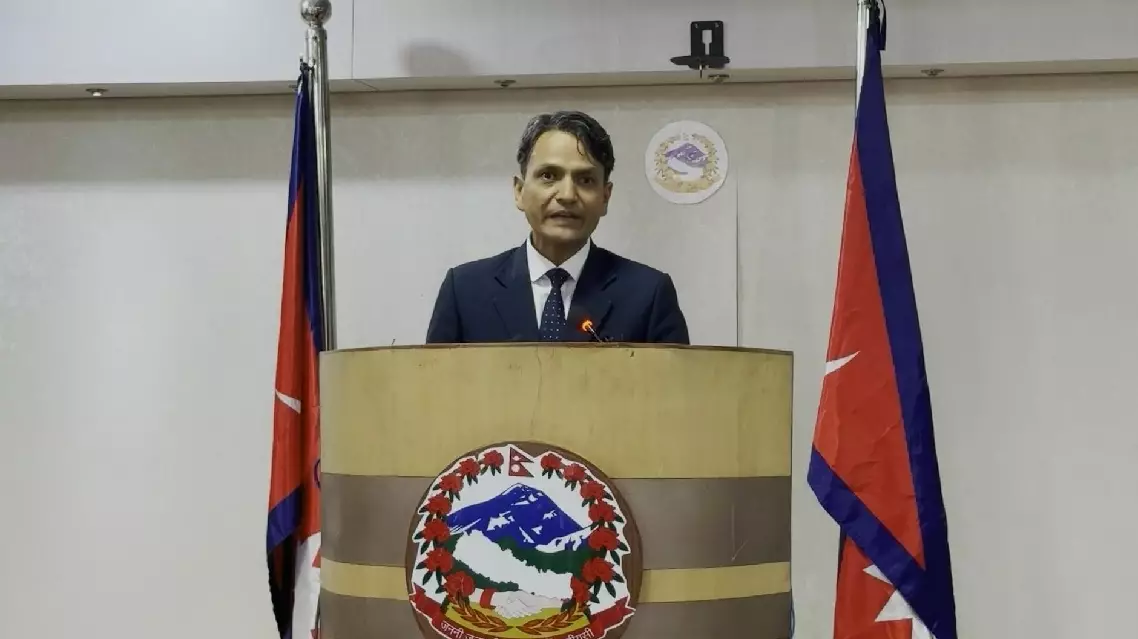
Terrain poses biggest challenges for rescue: Nepali Foreign Ministry
The Shanghai Cooperation Organization (SCO) is a "unique organization" focused on connectivity, pragmatism and independence, according to the former prime minister of Kyrgyzstan Djoomart Otorbaev.
This year's SCO summit, which marks the 25th anniversary of the organization's founding, is taking place in the Kyrgyz capital Bishkek from Monday to Tuesday.
Themed "25 Years of the SCO: Together Towards Sustainable Peace, Development, and Prosperity", the summit has brought together leaders from more than 20 countries.
Speaking in an interview with China Global Television Network (CGTN) on Sunday, Otorbaev said that SCO member states can look beyond differences in political systems and economic models and pursue win-win outcomes through dialogue, connectivity and pragmatism.
"It's a unique organization. Connectivity in SCO means that we are connected not only by railway, but in making dialogue with each other. Trade, investments, transport, energy, connectivity, moving very quickly. Without doubt, it’s China to Central Asian countries, we're doing very well. So, connectivity,” he said.
He also stressed that greater independence and self-reliance can help drive development and prosperity across the region.
"Number two is pragmatism. If you look to those 10 full members of the SCO, they are exploring different political systems, different economic models. But instead of arguing who is better, we are telling, let's get win-win, let's be pragmatic. If we will be pragmatic together, we will be delivering to our nations, to our people, better results. Then we have to look to the future - independence. We are not against anybody, but we say we will be stronger if we are independent from other models of economic and political development. In that respect, this is the key that we rely on our own strength. Only our own nations, our own people, will make us stronger and more prosperous." he said.
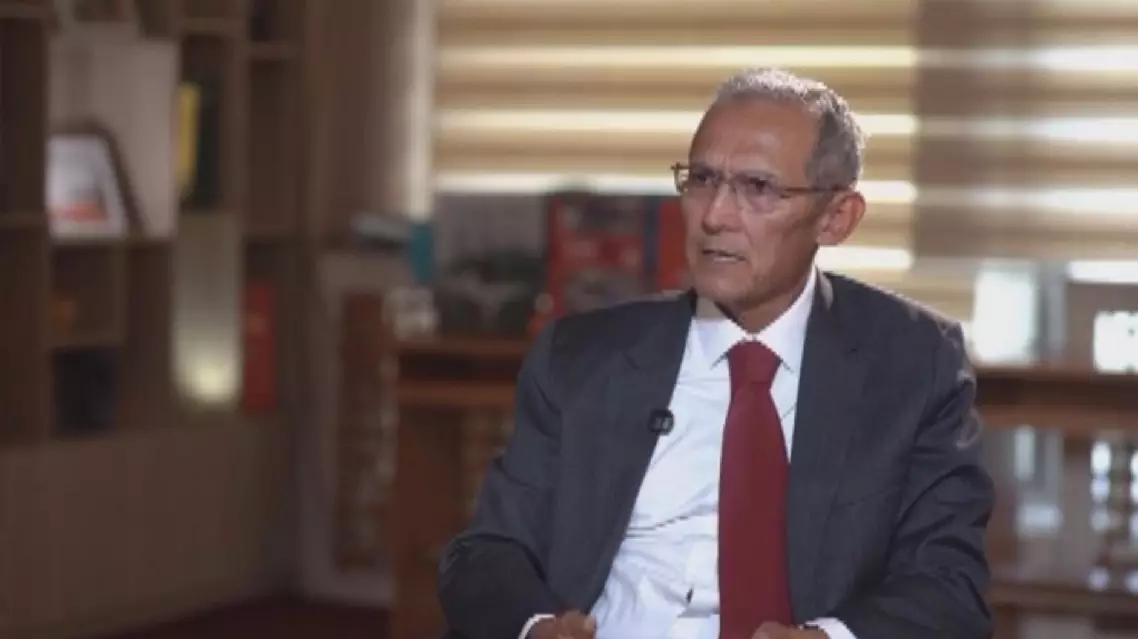
Connectivity, pragmatism, independence define SCO: Former Kyrgyz PM