Skip to Content Facebook Feature Image

Helical Fusion Named a Final Candidate for Japan’s METI Fusion Power Demonstration Program

Business

Helical Fusion Named a Final Candidate for Japan’s METI Fusion Power Demonstration Program
Business

Business

Helical Fusion Named a Final Candidate for Japan’s METI Fusion Power Demonstration Program

2026-09-01 10:02 Last Updated At:10:10

TOKYO--(BUSINESS WIRE)--Aug 31, 2026--

Helical Fusion Co., Ltd., a fusion energy company developing a Helical Stellarator toward commercially viable fusion power, has been named a final candidate for Japan’s Ministry of Economy, Trade and Industry (METI) program supporting the demonstration of fusion power generation.

This press release features multimedia. View the full release here: https://www.businesswire.com/news/home/20260831991676/en/

The program is designed to accelerate fusion power demonstration in the 2030s under Japan’s national energy and fusion strategies. It supports private-sector technology development across multiple fusion approaches, including tokamak, stellarator and laser fusion, with approximately JPY 60 billion in total government support anticipated over the three years through 2028.
The amount to be awarded to Helical Fusion will be announced following the formal grant decision.

For Helical Fusion, the selection represents an important step in advancing the Helix Program, its development roadmap toward fusion power generation in the 2030s.

Japan Accelerates Fusion from Research toward Industrial Deployment

Japan has strengthened its commitment to fusion energy as both a next-generation energy source and a strategic industry.

Under Japan’s national fusion strategy, the government aims to achieve fusion power demonstration in the 2030s while encouraging the development of multiple technological approaches. The METI program supports private-sector developers pursuing this goal through a milestone-based framework, under which progress is evaluated against defined technical and commercialization objectives.

The program calls for projects not only to demonstrate the technical feasibility of fusion power generation, but also to establish fundamental knowledge required for future commercial power plants. Safety, appropriate safety measures and engagement with host communities are also incorporated into the framework.

Against this backdrop, Helical Fusion is advancing a development strategy centered on the requirements that ultimately determine whether fusion can function as a power plant: steady-state operation, net electricity generation and maintainability.

Why Helical Fusion Is Pursuing the Stellarator

Helical Fusion is developing a Helical Stellarator, building on approximately 70 years of Helical Stellarator research and engineering in Japan.

Unlike pulsed approaches, the Helical Stellarator is designed for inherently steady-state operation. Helical Fusion believes this architecture offers a credible path toward simultaneously achieving the three requirements essential for commercially viable fusion power:

* Steady-state operation — stable operation capable of supporting continuous electricity generation
* Net electricity — generating sufficient electricity to deliver net power outside the plant
* Maintainability — enabling maintenance necessary to achieve high plant availability

The company was founded in 2021 as a spin-out leveraging research originating from Japan’s National Institute for Fusion Science (NIFS), one of the world’s leading research institutions in stellarator fusion.

NIFS has accumulated extensive experimental knowledge through the Large Helical Device (LHD), including plasma operation lasting 3,268 seconds, plasma temperatures exceeding 100 million degrees Celsius, and advanced plasma control technologies.

Helical Fusion is translating this scientific foundation into engineering and hardware through the Helix Program.

The Helix Program: From Integrated Demonstration to Fusion Power

The Helix Program is Helical Fusion’s roadmap toward commercially viable fusion power in the 2030s.

The company is first developing and demonstrating two critical technology systems: high-temperature superconducting (HTS) magnets and an integrated blanket/divertor system.

These technologies will be brought together in Helix HARUKA, the Integrated Demonstration Device, followed by Helix KANATA, the company’s first power-generating fusion plant.

Manufacturing and construction for the HTS magnet demonstration using Helix HARUKA are already underway in Helical Fusion’s dedicated workspace on the NIFS campus in Toki, Gifu Prefecture.

More than 30 companies across Japan are already contributing to the development of key components for Helix HARUKA. They include manufacturers with world-class precision machining and engineering capabilities, companies with deep expertise in integrating and refining complex technologies, and some of Japan’s leading heavy electrical equipment manufacturers with decades of experience in large-scale energy infrastructure.

By bringing together these industrial capabilities with Japan’s accumulated expertise in stellarator research, Helical Fusion is building an engineering and manufacturing foundation for commercially viable fusion power.

Comment from Takaya Taguchi, Co-Founder & CEO of Helical Fusion

“As global competition to bring fusion energy into real-world use accelerates, we believe Japan has reached a critical moment: one where we must make the fullest use of the outstanding knowledge and technological capabilities built by generations before us, while at the same time evaluating the best path forward from first principles.

When we focus on what it truly takes to make fusion energy a reality, we are convinced that developing the Helical Stellarator has an essential role to play.
We strongly support the purpose of this program and its commitment to advancing the deployment of fusion energy ahead of the world. As one team, we will dedicate ourselves fully to delivering on that ambition.”

About Helical Fusion

Helical Fusion Co., Ltd. is developing a Helical Stellarator to realize commercially viable fusion power. Founded in 2021 as a spin-out leveraging research originating from the National Institute for Fusion Science (NIFS), the company is building on decades of Japanese stellarator research while integrating technologies from industry, academia and public research institutions.

Through the Helix Program, Helical Fusion is developing the technologies required for steady-state operation, net electricity generation and maintainability, with the goal of advancing fusion power generation in the 2030s.

The company is currently manufacturing and constructing key systems for Helix HARUKA, its Integrated Demonstration Device, in collaboration with more than 30 industrial partners across Japan.
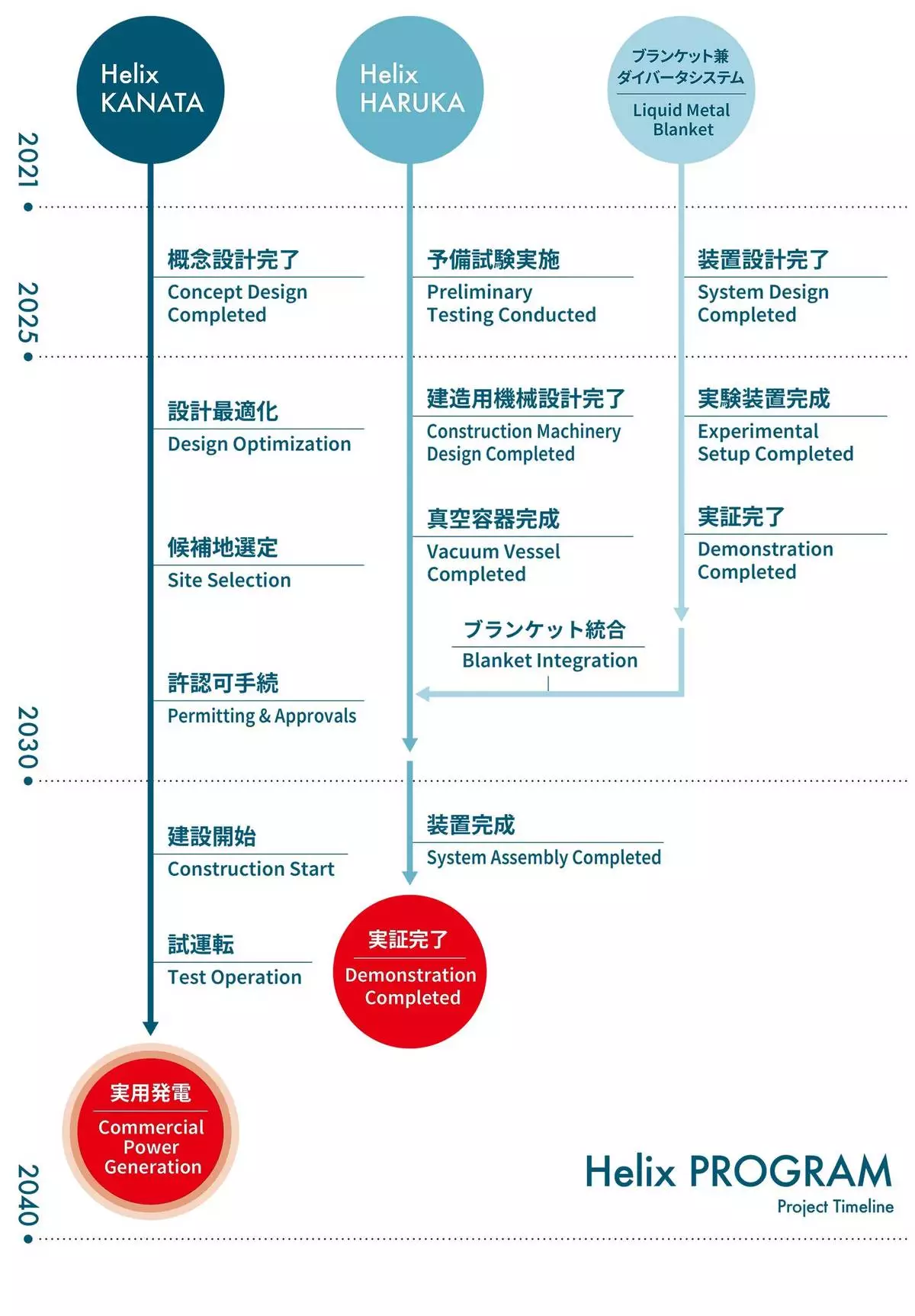
Helix PROGRAM Project Timeline
Helix PROGRAM Project Timeline

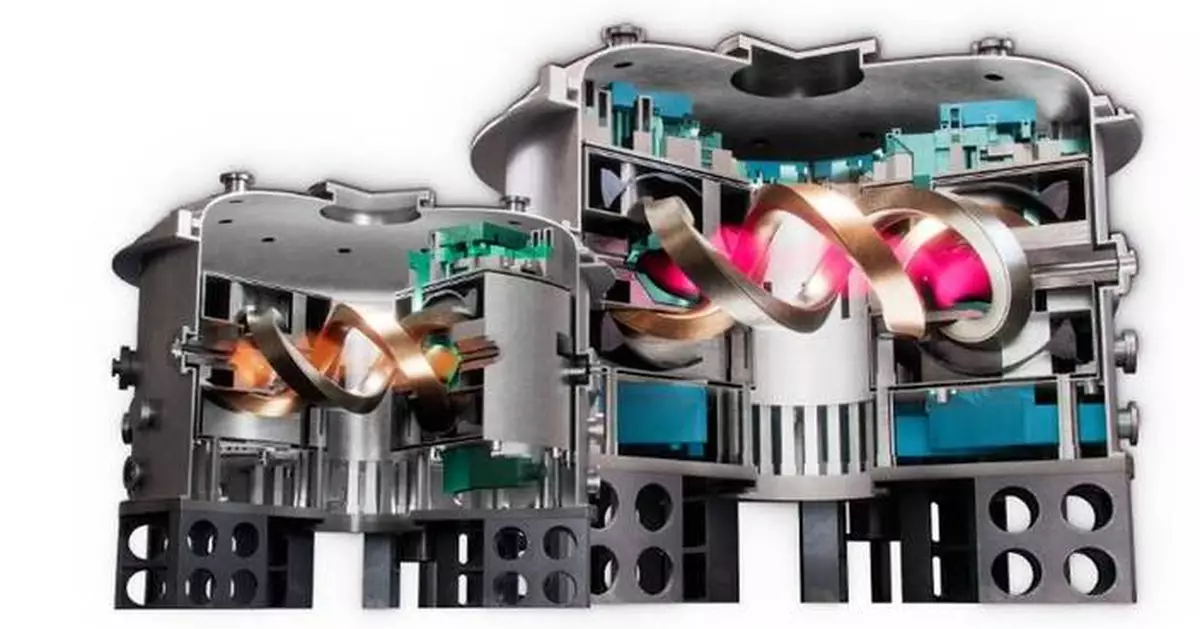
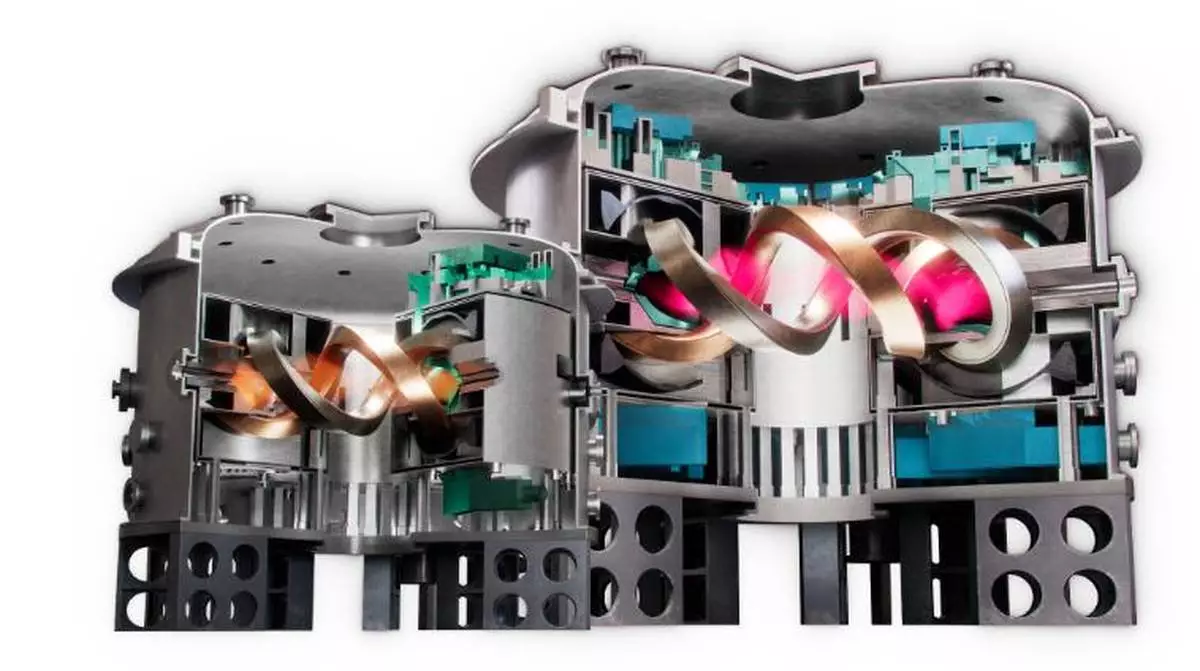
Image of Helix HARUKA, Helical Fusion’s Integrated Demo Device(left), and Helix KANATA, Helical Fusion’s Fusion Pilot Plant(right)


Image of Helix HARUKA, Helical Fusion’s Integrated Demo Device(left), and Helix KANATA, Helical Fusion’s Fusion Pilot Plant(right)

WASHINGTON (AP) — The White House on Monday said it’s partnering with North American Blue Energy Partners as part of President Donald Trump ’s push to tap into Venezuela’s oil industry, setting up a deal that will give the Pentagon a stake over roughly a fifth of the country’s vast oil reserves.

The Trump administration released more details on Monday night, days after Trump announced what he described as the biggest oil deal in history. The sweeping agreement has been met with skepticism from analysts who say it will take years to revive Venezuela's production, but Trump and his aides are pitching it as a chance to develop a new oil giant in the Western Hemisphere.

As part of the deal, the U.S. is creating a private company as a joint venture with NABEP — a detail the White House had withheld for days. NABEP, owned by Venezuelan businessman Alejandro Betancourt, is already the second largest operator in Venezuela, behind Chevron.

Venezuela’s acting President Delcy Rodríguez is giving the company 100-year rights over 17 oil fields with proven reserves of 65 billion barrels. Many of those fields were previously owned by Russian or Chinese firms, the White House said.

In a statement Monday, Betancourt said Venezuela is “blessed with an abundance of natural resources, hardworking people and untapped potential,” adding that the deal will “unleash that potential to the great benefit of both Venezuelans and Americans.”

The company said Betancourt had been involved in the Venezuelan oil industry for more than 15 years and said the company has more than 5,000 employees and more than 10,000 contractors.

The deal will give the Pentagon's Office of Strategic Capital a 35% ownership stake in the company, the White House disclosed Monday. The U.S. will also be guaranteed a right to purchase 20% of the output at cost, orchestrated through the State Department.

The agreement was signed by Defense Secretary Pete Hegseth and Secretary of State Marco Rubio.

Betancourt’s company has agreed to put up $100 billion in new oil infrastructure investments.

Trump has been pushing to boost oil production in Venezuela since the January military mission that captured then-President Nicolás Maduro on federal narcoterrorism and drug trafficking charges.

The White House claimed the deal would be “at zero cost” to the U.S., and said the government would have veto power on board members — the majority of whom would be U.S. citizens.

“NABEP will have reputable U.S. auditors, lawyers, and advisers and the U.S. government’s agreement with NABEP is governed by U.S. law and is subject to the jurisdiction of U.S. courts,” the White House said in a fact sheet about the deal.

Former U.S. government energy advisers have cautioned that the deal comes with political risk, since future administrations in Venezuela or the United States could challenge the deal. Even if the agreement holds, analysts say it could take years to turn around Venezuela's dilapidated energy sector.

Trump, who says the plan will reduce gas prices, acknowledged Monday that Americans won't see change right away. Asked about a timeline at the White House, Trump said “it could be a little bit” for prices to fall, and he played down analyst predictions that it could take years.

“If it was two years, you know, that’s a short period of time,” he said.

Trump said the deal will provide a source to help refill America's strategic oil reserves, which have been drawn down as the Iran war chokes global oil shipments. He added that Venezuela's heavy oil will also go toward producing asphalt and other goods.

“It was this unbelievable value that was sitting dormant,” Trump said of Venezuelan oil. “But we’re going to be taking all of that.”

Rodríguez has also spoken in favor of the deal, describing it as a chance to modernize the Venezuela's oil industry and accelerate its revival. Facing criticism that the deal cedes Venezuelan resources to the U.S., Rodríguez insisted her country's sovereignty remains secure.

Lawmakers on Capitol Hill said Monday that they were looking for more information about the agreement.

Rep. Rick Crawford, the Republican chairman of the House Intelligence Committee, said he wanted to hear details from the Trump administration “hopefully sooner rather than later.”

Sen. Jack Reed, the top Democrat on the Senate Armed Services Committee, said a deal that uses the military to boost a private oil venture should be rejected and said he wanted a full accounting of the legal authority for the agreement.

“President Trump’s effort to turn the U.S. military into an investor in Venezuelan oil is a blatant abuse of power and taxpayer dollars,” Reed said in a statement.

The new details were released a day before Trump plans to meet with a group of large and small oil refiners to discuss ways to increase America’s capacity to refine oil into gasoline.

The meeting occurs as the Iran war has driven prices at the pump to a national average of $4.08, a 28% increase over the past year, according to AAA.

The White House has said that increasing the number of refineries and expanding the capacity at existing facilities would eventually reduce prices for consumers. The administration also sees the need for more refineries to process oil from Venezuela.

Also attending the meeting will be Interior Secretary Doug Burgum, Energy Secretary Chris Wright and Jarrod Agen, the director of the White House National Energy Dominance Council.

AP Congressional Correspondent Lisa Mascaro contributed to this report.

President Donald Trump smiles during an event about drug prices, in the Oval Office of the White House, Monday, Aug. 31, 2026, in Washington. (AP Photo/Jacquelyn Martin)

President Donald Trump smiles during an event about drug prices, in the Oval Office of the White House, Monday, Aug. 31, 2026, in Washington. (AP Photo/Jacquelyn Martin)

A pedestrian walks past a mural featuring oil wells in Caracas, Venezuela, Saturday, Aug 29, 2026, a day after President Donald Trump announced a deal giving the United States a stake in Venezuela’s oil reserves. (AP Photo/Pedro Mattey)

A pedestrian walks past a mural featuring oil wells in Caracas, Venezuela, Saturday, Aug 29, 2026, a day after President Donald Trump announced a deal giving the United States a stake in Venezuela’s oil reserves. (AP Photo/Pedro Mattey)

Recommended Articles