The Shanghai Cooperation Organization (SCO) offers a pluralistic platform which gives space for countries to pursue diverse development paths according to their own strategies and goals, according to a researcher and regional expert.
Kuat Akizhanov, deputy director at the Central Asia Regional Economic Cooperation Institute, a think tank based in Urumqi of northwest China's Xinjiang Uygur Autonomous Region, was speaking in an interview with the China Global Television Network (CGTN) on Tuesday as the two-day 2026 SCO Summit concludes in Bishkek, Kyrgyzstan on the same day.
This year significantly marks the 25th anniversary of the SCO's founding, and Akizhanov stressed the organization is established on a principle of cooperation rather than a set ideology, allowing a wide range of countries, especially those in the Global South, to pursue development according to their own needs.
I believe that the fundamental reason is that the Shanghai Cooperation Organization is not based on some kind of ideological uniformity, or a single economic model. It is based on the principle of cooperation among countries with different political systems, different economic structures and levels of economic development. So, this diversity is actually one of its strengths, because the countries of the Shanghai Cooperation Organization increasingly represent the countries of the Global South, and the broader, I would say, non-Western world," he said.
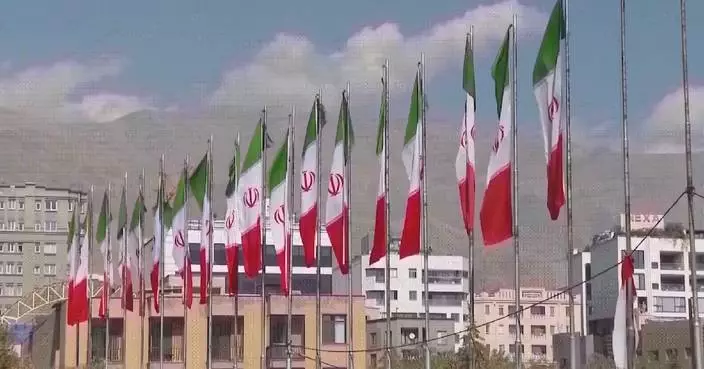
Established in Shanghai in 2001 by China, Russia, Kazakhstan, Kyrgyzstan, Tajikistan and Uzbekistan, the SCO has since evolved into a much broader platform, which has seen India and Pakistan join in 2017, Iran in 2023 and Belarus one year later, bringing its full membership to 10 countries, while also growing to include two observer states and 15 dialogue partners.
Akizhanov said that the appeal of SCO stems from how it is does not look to impose upon its members, instead giving them room to develop according to their own systems and strategic approaches.
"Many developing countries are looking for a greater policy space, a more kind of pluralistic vision of development, to pursue their own range of civilizational strategies, such as like in countries of Central Asia, who pursue to develop the infrastructure, technological upgrading and social development, rather than simply following standardized neo-liberal prescriptions," he said.
"The Shanghai Cooperation Organization provides a platform, where countries can cooperate without requiring them to abandon their own development strategies or models or accept a single ideological template. So, practically speaking and economically, this is particularly important because the region contains enormous complementary resources -- natural resources, energy, minerals, agricultural products, and larger consumer markets," Akizhanov added.
After beginning primarily as a Central Asian security mechanism, the SCO now spans Eurasia, covering security, trade, transport, energy, agriculture, science, education, health and culture. It is neither a military alliance nor an economic bloc, but a platform for cooperation among states with mutually diverse interests and foreign policies.
This expansion reflects the magnetic appeal of the "Shanghai Spirit," which rejects exclusive alliances to practice "harmony without uniformity." It provides an institutional space where diverse nations cooperate on an equal footing while fully preserving their strategic autonomy and distinctive development paths.

SCO offers pluralistic platform for countries to purse diverse development paths: researcher