NEW DELHI (AP) — Rescue crews in Nepal are racing against time to find hundreds of missing workers who are feared trapped inside hydropower tunnels damaged by flooding that has killed more than 1,000 people across Nepal and China.
At least 900 workers are missing from hydropower projects, with about 500 believed to be inside tunnels, according to officials and industry representatives.
Access to the tunnels has been hampered by flooding, debris and damaged infrastructure, making it difficult for rescue teams to reach workers.
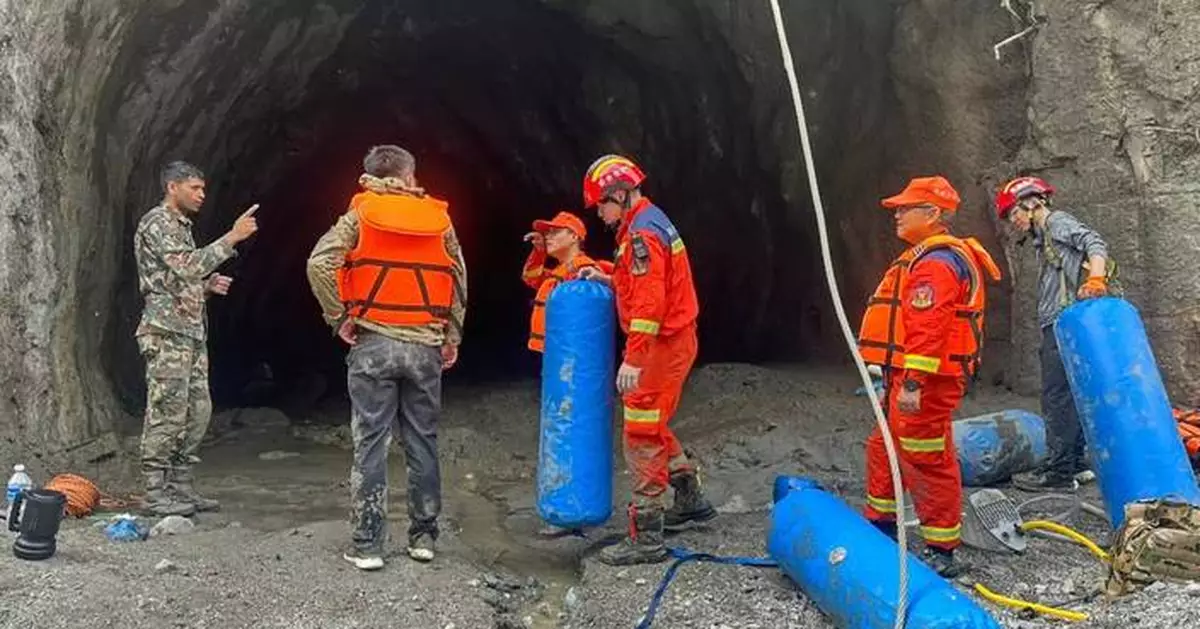
Brig. Gen. Raja Ram Basnet, a Nepal Army spokesperson, said teams assisted by foreign experts were working at several hydropower projects. Army footage showed rescuers entering dark, debris-filled tunnels, wading through mud and climbing over rocks as they searched for the missing.
Mohan Kumar Dangi, president of the Independent Power Producers Association of Nepal, said floods damaged at least 12 hydropower projects in Rasuwa and Nuwakot districts, with a combined capacity of 670 MW. Four were under construction, seven operational and one in testing phase, he said.
Hydropower projects undergo risk assessments and other studies before construction, but called the Aug. 26 flooding “something unimaginable,” Dangi said.
The biggest challenge for rescuers is reaching them.
Many of Nepal’s hydropower projects are in remote, mountainous areas where steep terrain and narrow roads can make access difficult. Flooding has worsened conditions, damaging roads and limiting routes to some sites.
Rescuers also are facing tunnels that are blocked or damaged.
The floods swept mud, huge rocks and debris into underground passages, collapsing sections and trapping workers. Even where tunnel entrances are accessible, crews must clear large amounts of debris before reaching deeper sections.
Finding the missing workers also has proved difficult.
Filmmaker and drone pilot Manish Maharjan, who has been volunteering with the Nepalese army, said some tunnels were “filled with mud like toothpaste in a tube.” At one hydropower project, he used a drone to search to the end of a tunnel but found no sign of life.
Some workers called for help during early hours after floods, while others who escaped said colleagues remained underground. It was not clear whether rescuers had since made contact with those workers or whether they were still alive.
Experts say the first 72 hours after a disaster can be critical. People trapped underground may survive without food for some time, but limited drinking water and breathable air can quickly become life-threatening.
Anil Pokhrel, a disaster risk reduction expert and former head of Nepal’s disaster authority, said the flooding exposed weaknesses in Nepal’s rescue capacity. He said rescuers lost valuable time locating the tunnel’s exact entry point and coordinates and lacked heavy equipment and adequately trained personnel.
“Harsh and remote locations with inclement weather worsened the situation. Also, we didn’t have adequately trained human resources to undertake such operations,” he said.
Nepal has more than a century of experience building tunnels but remains poorly prepared for complex tunnel rescues, Pokhrel said.
“We are focused on tunnel design and construction but are not adequately prepared for rescue operations,” he said.
——
Kafle reported from Kathmandu, Nepal.
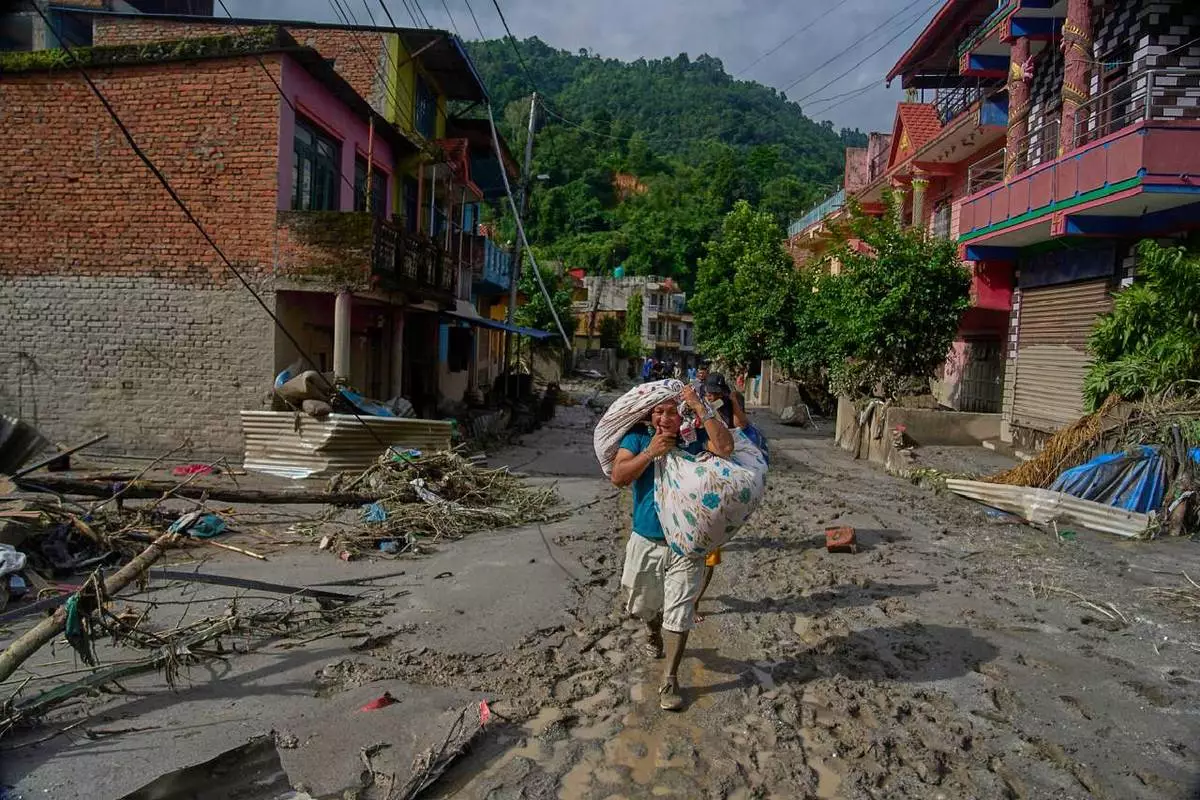
Residents carry their belongings as they walk to safer areas in the aftermath of flash floods in Devighat, in Nepal's Nuwakot district, Thursday, Aug. 27, 2026. (AP Photo/Niranjan Shrestha)
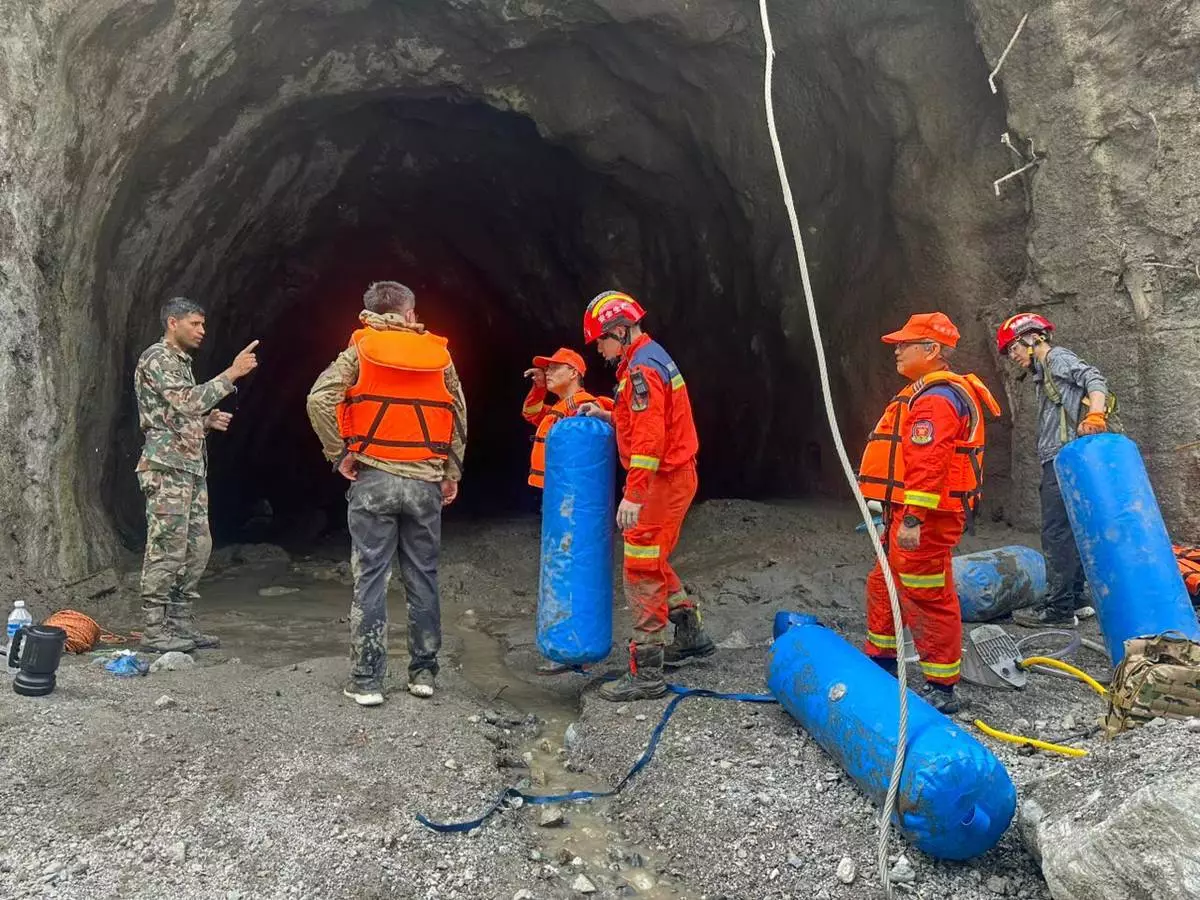
This photo provided by the Nepal Army, shows Nepal army soldiers undertake rescue operation at the site of a hydropower project in Upper Trishuli, Nepal, Monday, Aug. 31, 2026. (Nepal Army via AP)
MADRID (AP) — In crowded subway cars and sun-drenched plazas, an old-fashioned accessory in Spain has been everywhere thanks to the blistering summer heat.
Small enough to fit into a purse, the traditional Spanish folding hand fan, or abanico, snaps open into a semicircle. With little more than a flick of the wrist, it creates a surprisingly strong breeze.
As successive heat waves in Western Europe pushed temperatures this summer to punishing levels, the accessory has become essential, embraced by the young and old from Spain and elsewhere. Women — and a growing number of men — unfurl them on public transport, at concerts and at music festivals. In July, rainbow-colored abanicos were everywhere during Madrid’s raucous Pride celebrations.
On a recent August day, 20-year-old Ana Feliu blocked the sun with a paper abanico she was gifted during a Valencian festival. She carries it everywhere in the summer, she said.
“This one is my favorite because it's the biggest, but I have many more,” she told The Associated Press near Madrid’s Puerta del Sol square. Later in the week, temperatures in the Spanish capital were expected to reach 39 degrees Celsius (102 Fahrenheit).
Also fanning himself was David González, whose abanico featured pinks, purples and reds.
“At first, I felt a little self-conscious, because it’s something that’s mainly associated with women, but I have to admit it serves a purpose — and it brightens my day,” said González, 53.
Historians believe the folding fan reached Europe through Portuguese maritime trade with Asia in the 15th and 16th centuries.
As early as the mid-17th century, the Spanish painter Diego Velázquez made his enigmatic "The Lady with a Fan," in which a woman, possibly French, poses with what appears to be a delicate wooden abanico.
As they grew fashionable in European courts, Spain developed a taste and industry of its own. Madrid became an important center of production, and by the 18th century, Valencia had emerged as the Spanish fan-making capital.
“During the 18th century, the printing industry really took off. And printing meant that the leaves of fans could be produced quite cheaply,” said Mary Kitson, curatorial consultant to The Fan Museum in London.
So embedded was the abanico in Spanish aristocratic society by the 1800s that women used them to discreetly express flirtation, interest or disapproval through what was called “the language of the fan.”
From Spain, the hand fan traveled to Latin America. In the 19th century, flamenco dancers began using the abanico as an expressive prop, as Cuban song and dance styles such as the guajira influenced the dance form. Over time, the fan’s association with flamenco helped turn it into a quintessential Spanish symbol.
“The fan is a perfect element because, on the one hand, it evokes the heat and humidity of Cuba — that heavy, oppressive feeling,” said Carmen Torres, a 44-year-old flamenco dancer in southern Spain. “And at the same time, it gives us a way to bring out the seductive, coquettish quality.”
For more than a century and a half, Javier Llerandi’s family has sold abanicos out of Casa de Diego, a wood-paneled shop in Madrid.
“We live from the heat,” Llerandi told the AP.
The fans at Casa de Diego are made in Spain and range from simple two-tone wooden ones to elaborate, hand-painted items crafted from mother-of-pearl with intricate floral patterns. They start at around 30 euros ($35), while others range from 200 to 500 euros (up to $580), with some high-end pieces reaching 6,000 euros (nearly $7,000). The price depends on the materials used, but even more so on the craftsmanship involved, he said.
As Madrid has grown into a tourist hot spot, foreign visitors are also snatching up his fans, which Llerandi notes are more reliable than their portable, electric counterparts.
“Battery-run items eventually run out of power, and always at the worst possible moment,” Llerandi said, adding with a smile: “Without a doubt, heat waves are good for this business.”
And for the less discerning customer, plastic fans with printed designs are sold for a few euros at souvenir kiosks, including one a couple hundred meters from Llerandi's store. There, too, a salesperson reported strong sales this summer.
Outside a towering bullfighting ring in Madrid, Juani Duran sells wooden hand fans with traditional floral designs for five euros apiece at a stall. Bullfights take place in open-air stadiums, and spectators traditionally dress up to attend them, making the elegant fans a fitting accessory.
“You’ll usually find a hand fan in any woman’s pocket — and in some men’s, too,” Duran said before a late-August bullfight.
“They're not the best quality,” she said, pointing at her stock, "but they'll get you through the summer."
Associated Press photographer Laura León in Seville, Spain, contributed to this report.

A man uses a fan to cool off during the La Liga soccer match between Real Madrid and Malaga at the Bernabeu stadium in Madrid, Spain, on Aug. 30, 2026. (AP Photo/Manu Fernandez)
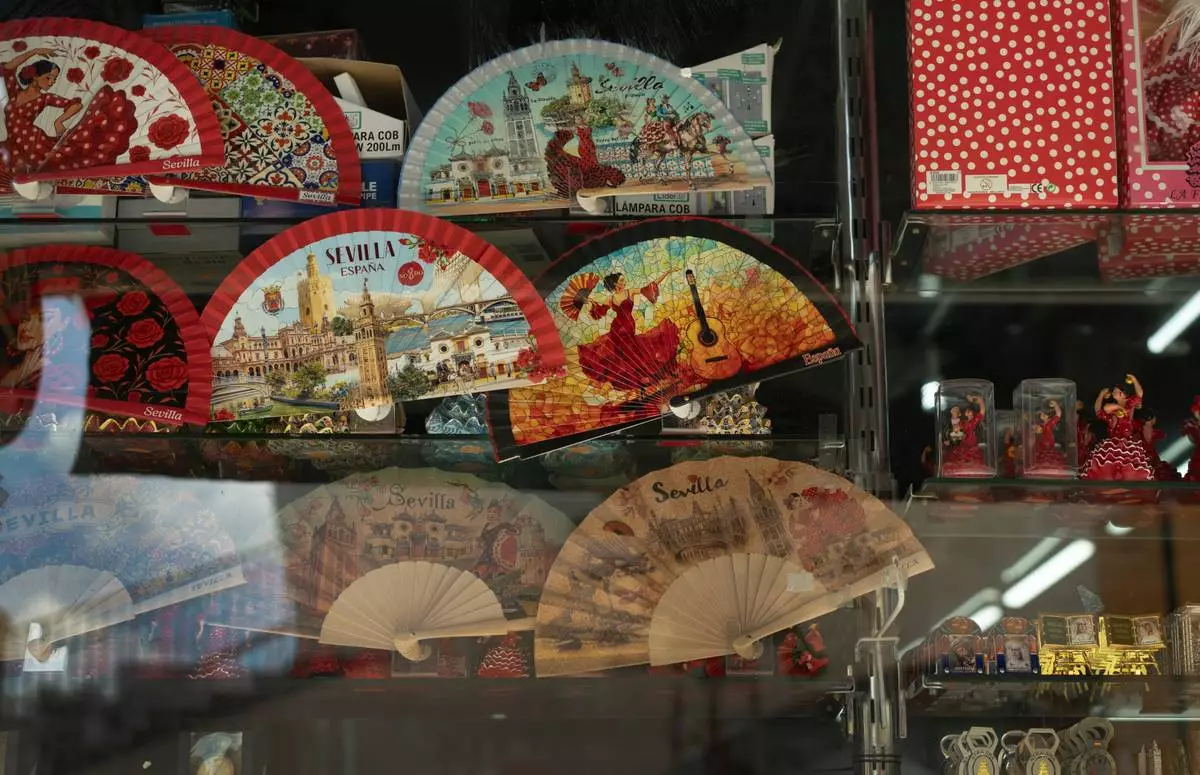
Mass-produced fans featuring tourist images of Seville are displayed in a shop window in Seville, Spain, on Aug. 25, 2026. (AP Photo/Laura Leon)
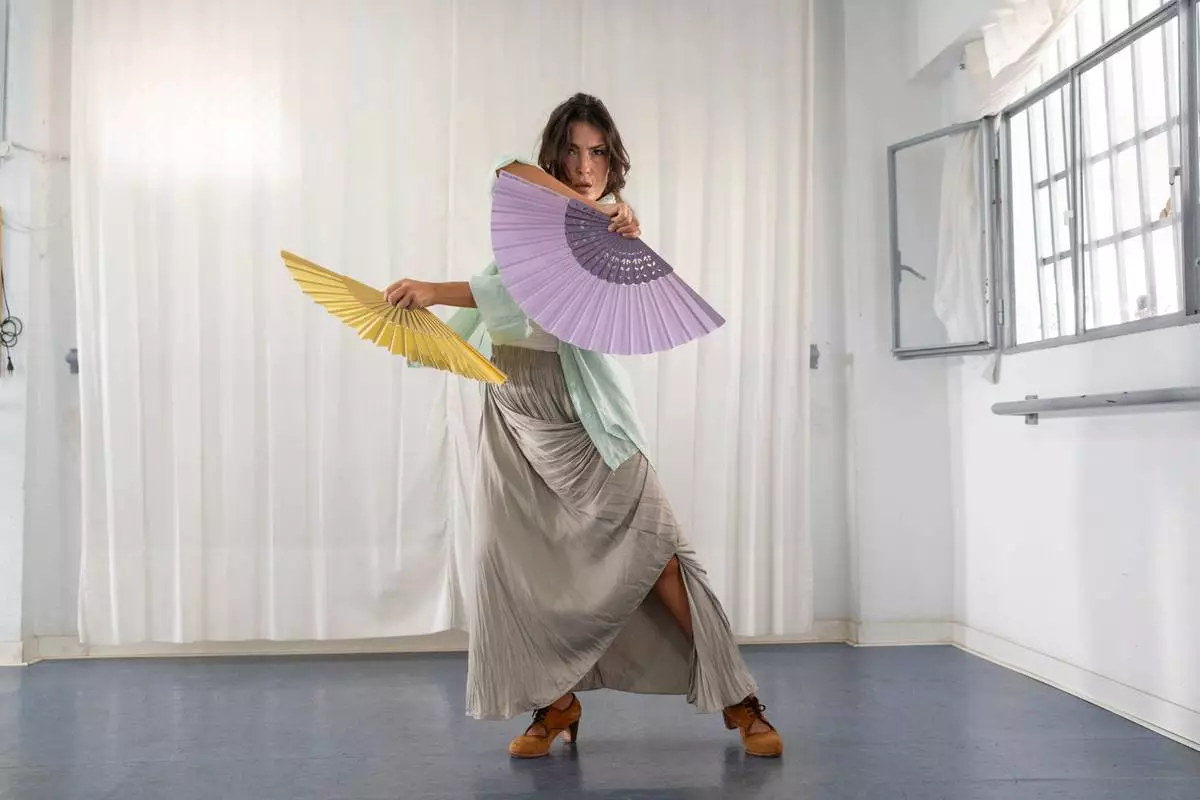
Carmen Torres, a professional flamenco dancer, rehearses a guajira, a flamenco style that traditionally incorporates the use of a fan, in Seville, Spain, on Aug. 27, 2026. (AP Photo/Laura Leon)
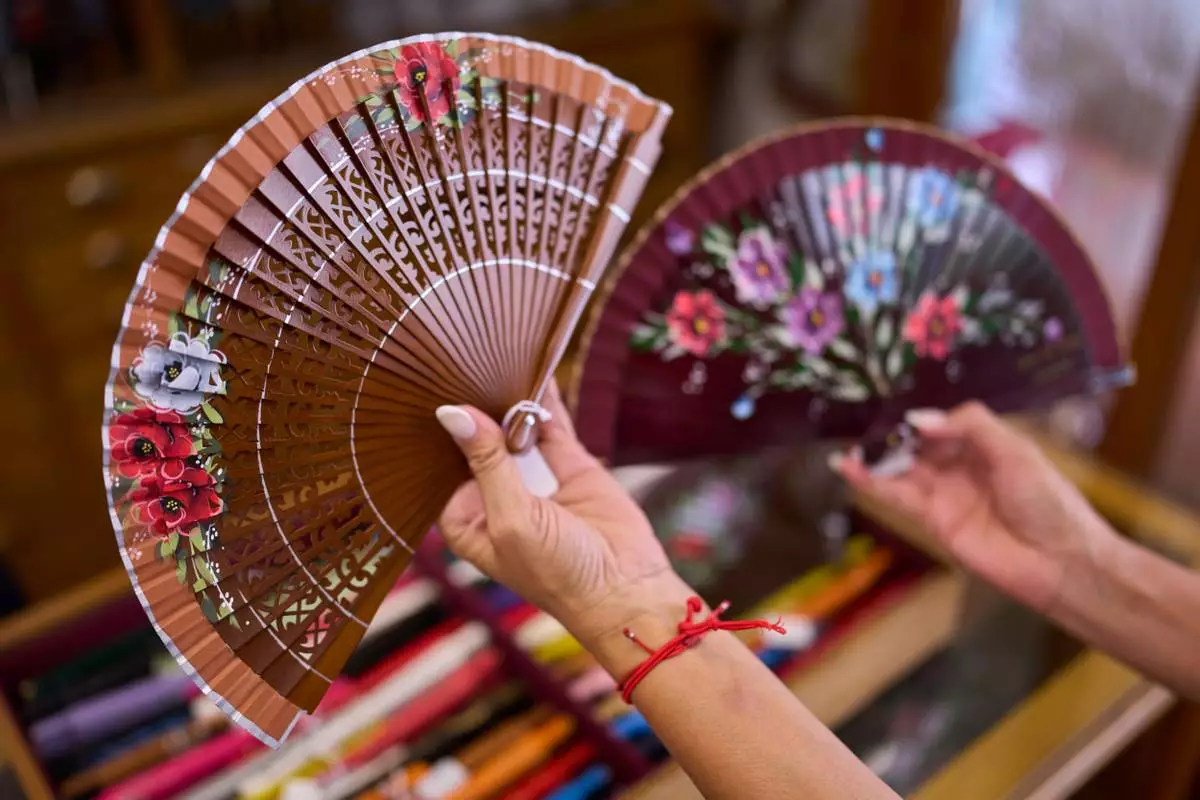
Fans are displayed at Casa Diego, a fan shop in Madrid, Spain, on Aug. 18, 2026. (AP Photo/Manu Fernandez)
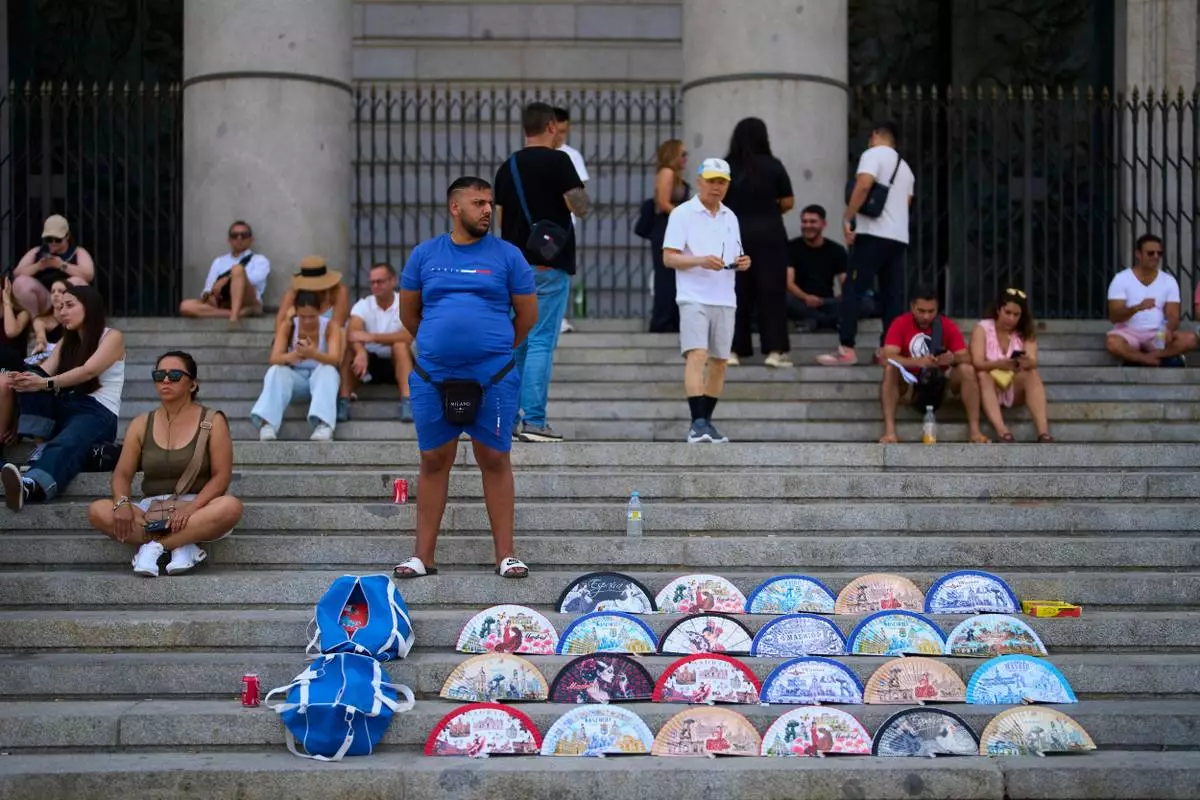
A street vendor sells fans near the Royal Palace in Madrid, Spain, on Aug. 20, 2026. (AP Photo/Manu Fernandez)
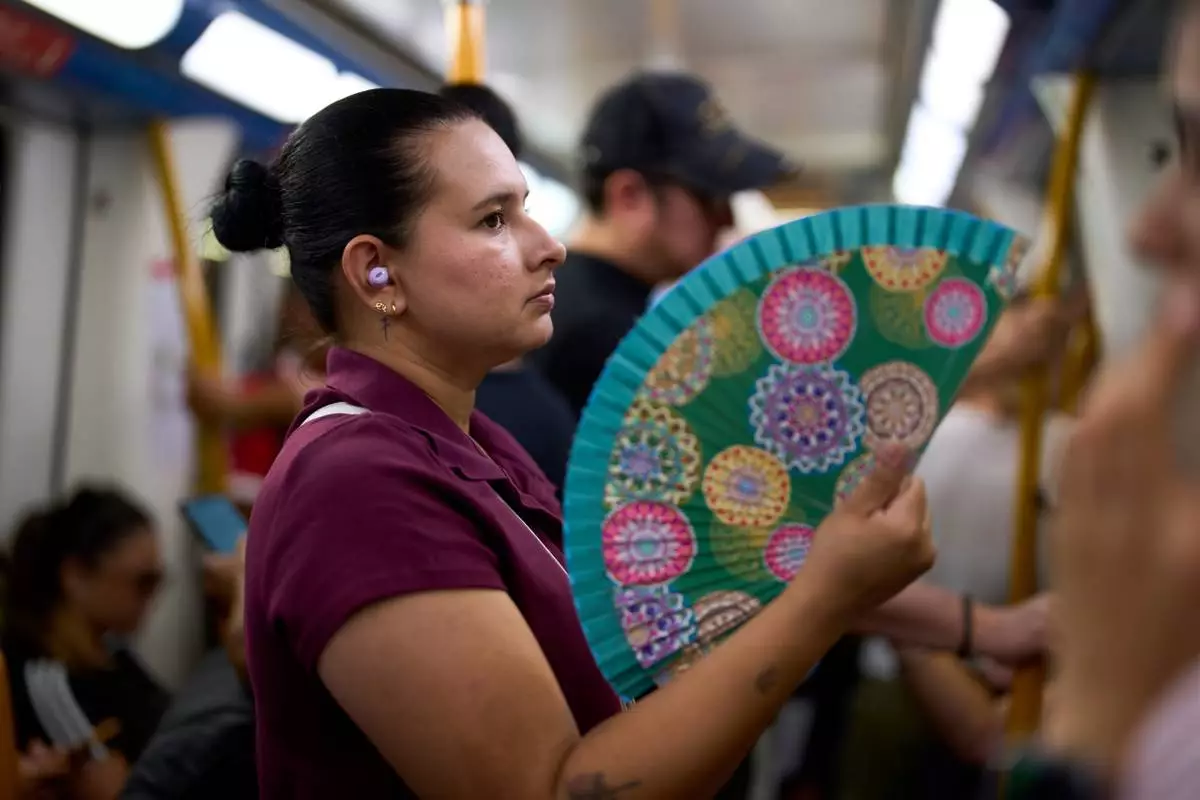
A woman uses a fan to cool herself on the subway in Madrid, Spain, on Aug. 18, 2026. (AP Photo/Manu Fernandez)