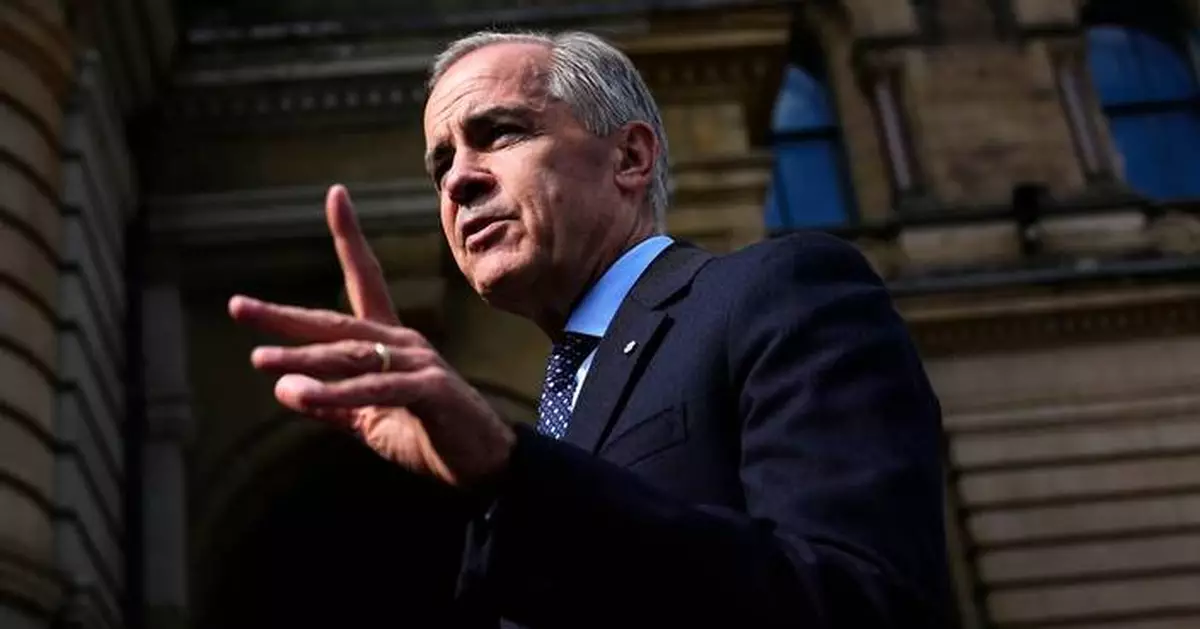
TORONTO (AP) — Canadian Prime Minister Mark Carney told the Trump administration Tuesday to “stop doing memes, stop throwing shade and stop trying to be tough,” as he pushed back against a fresh wave of attacks from Washington.
Carney said U.S.-Canada trade talks could resume if Washington became serious about negotiations, but he also accused the United States of pursuing terms that he said could leave Canadian industries “gradually wound down in Canada and wiped out.”
Click to Gallery
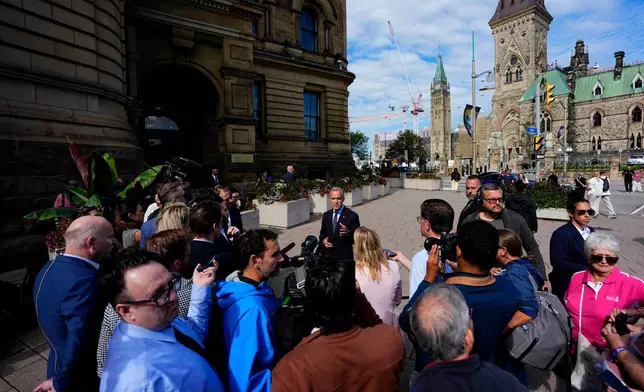
Prime Minister Mark Carney speaks to journalists as he arrives at the Office of the Prime Minister and Privy Council in Ottawa, Canada, Tuesday, Sept. 1, 2026. (Justin Tang/The Canadian Press via AP)
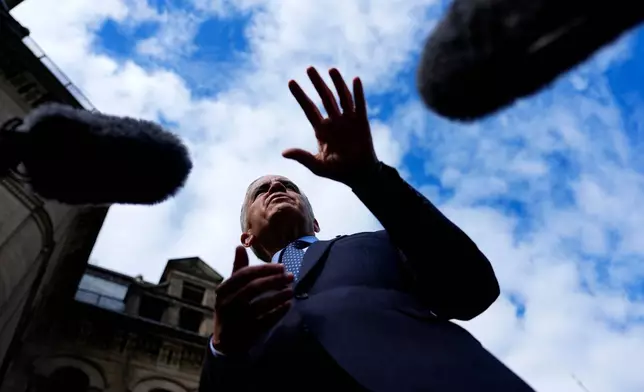
Prime Minister Mark Carney speaks to journalists as he arrives at the Office of the Prime Minister and Privy Council in Ottawa, Canada, Tuesday, Sept. 1, 2026. (Justin Tang/The Canadian Press via AP)
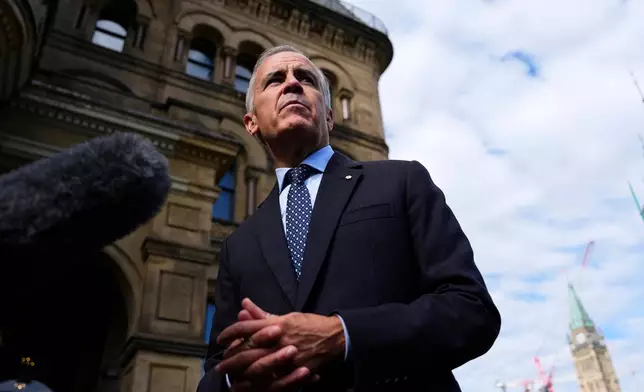
Canadian Prime Minister Mark Carney speaks with members of the media as he arrives at the Office of the Prime Minister and Privy Council in Ottawa, on Tuesday, Sept. 1, 2026. (Justin Tang/The Canadian Press via AP)
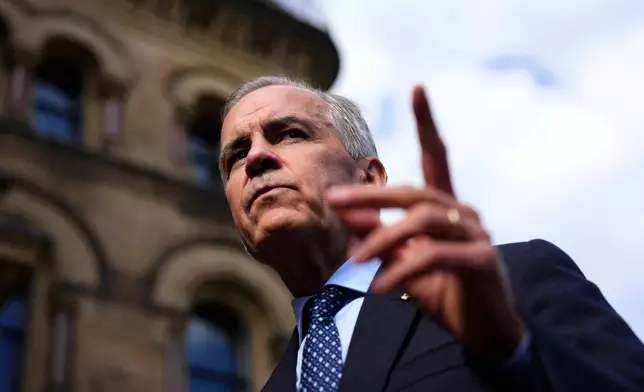
Canadian Prime Minister Mark Carney speaks with members of the media as he arrives at the Office of the Prime Minister and Privy Council in Ottawa, on Tuesday, Sept. 1, 2026. (Justin Tang/The Canadian Press via AP)
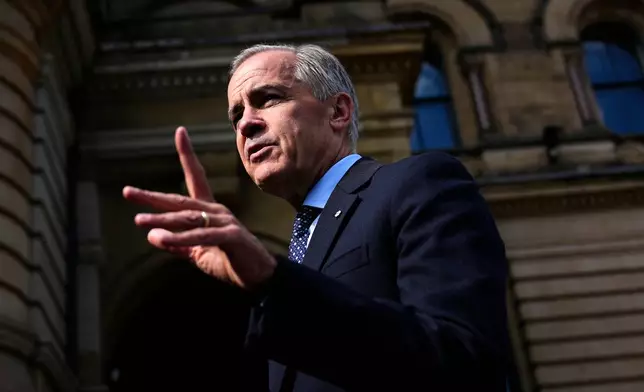
Canadian Prime Minister Mark Carney speaks with members of the media as he arrives at the Office of the Prime Minister and Privy Council in Ottawa, on Tuesday, Sept. 1, 2026. (Justin Tang/The Canadian Press via AP)
“When the Americans stop doing memes, stop throwing shade and stop trying to be tough, and start being serious about having those discussions, we can have those discussions,” Carney said. “It’s not constructive, but that’s their democracy.”
His comments came during a fresh barrage from Washington since trade talks collapsed Aug. 21. Trump has moved to rename Lake Ontario “Lake America” and taunted Canada on social media, while U.S. Treasury Secretary Scott Bessent said Canada could not go “tit for tat” with an economy 13 times larger.
U.S. Secretary of War Pete Hegseth also mocked the Canadian military online, posting an image Monday of two female cadets at a British Columbia training center with the words “this is real” and a Canadian flag. Carney called the post “beneath their office.” The Pentagon stood by it Tuesday, saying, “The X post speaks for itself.”
Carney said the U.S. approach in the talks would have left Canadian industries effectively as subsidiaries of American companies or imposed terms under which they would be “gradually wound down in Canada and wiped out.”
“We’re not going to — of course, we’re not going to accept those terms,” Carney said.
The prime minister said Washington sought an “uncompetitive” deal for key industries, including autos, while pushing changes affecting French-language and cultural protections. He said any of those issues was enough to block an agreement.
Carney said Washington also sought limits on Canada’s future trade deals. “Canada is a sovereign state. We will strike free trade deals with the countries we wish to strike free trade deals,” he said.
He said there had been “mutually beneficial” elements of a deal before the talks broke down.
Carney was also buoyed by Monday's Liberal sweep of three special elections, including a decisive win in Chicoutimi-Le Fjord, Quebec, where the Conservatives fell to third place.
The victories brought the Liberals to 173 seats in the 343-seat House of Commons and reinforced Carney’s position as he confronts Trump over trade and Canadian sovereignty.
Nelson Wiseman, a professor emeritus of political science at the University of Toronto, said Trump’s annexation threats carry particular weight in Quebec. “Quebecers have the most to lose in an apocalyptic scenario where the U.S. absorbs Canada, and the status of the French language disappears,” he said.
U.S.-Canada trade talks collapsed after the two sides failed to reach a deal, and Trump imposed 50% tariffs on roughly $20 billion in Canadian goods. Canada’s retaliatory tariffs on nearly $20 billion in U.S. goods are scheduled to take effect Sept. 8, with duties ranging from 15% to 50%.
Trump has repeatedly talked about making Canada the 51st U.S. state.
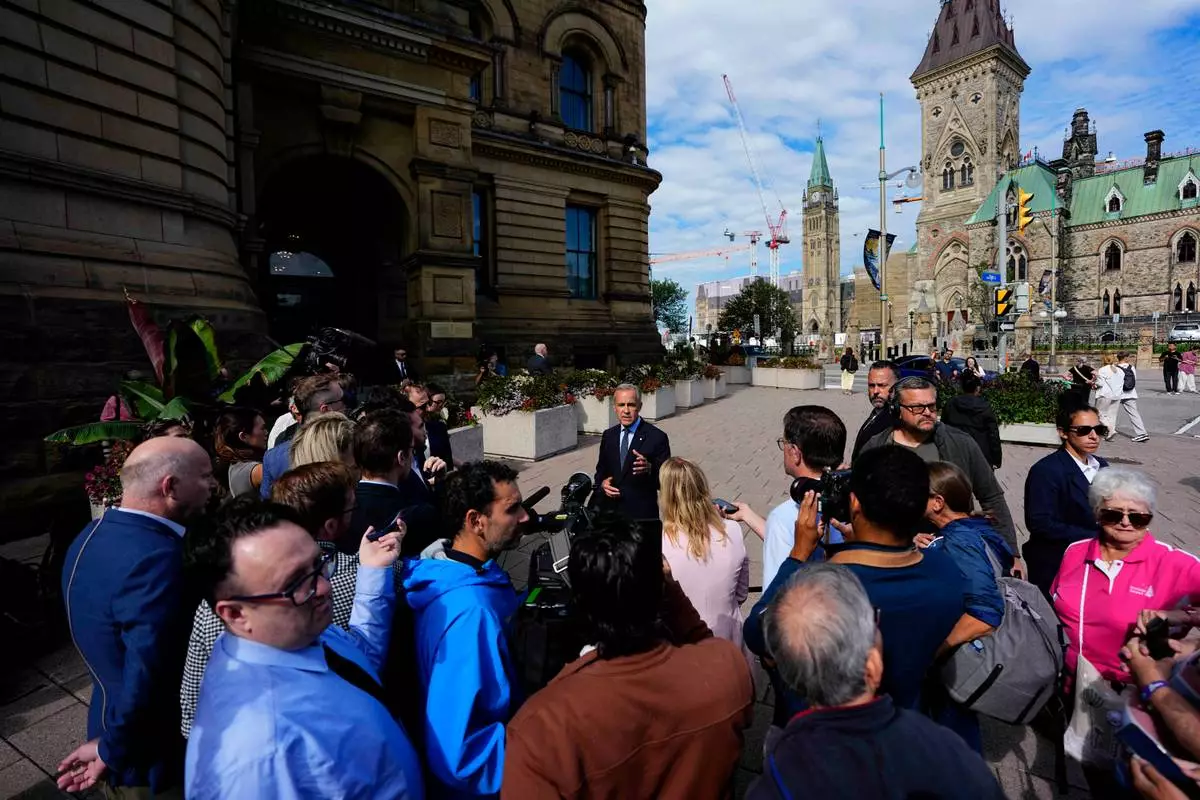
Prime Minister Mark Carney speaks to journalists as he arrives at the Office of the Prime Minister and Privy Council in Ottawa, Canada, Tuesday, Sept. 1, 2026. (Justin Tang/The Canadian Press via AP)
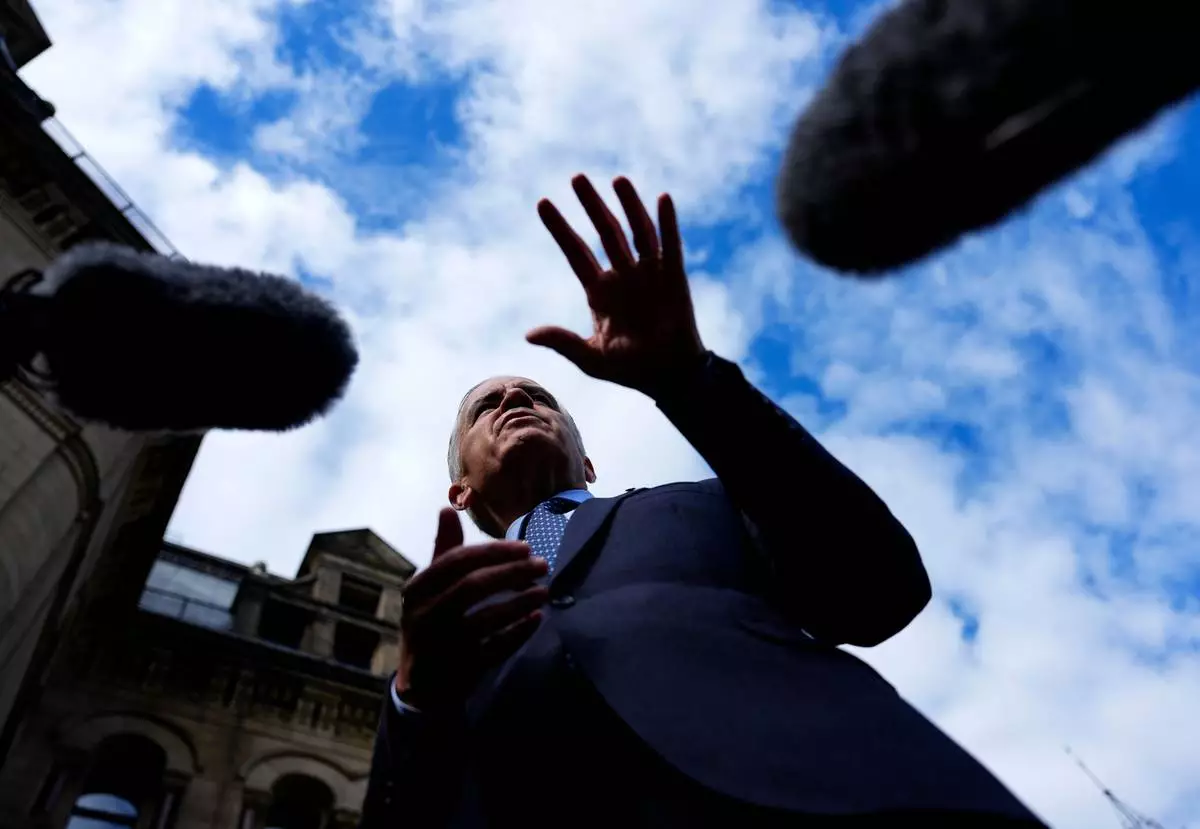
Prime Minister Mark Carney speaks to journalists as he arrives at the Office of the Prime Minister and Privy Council in Ottawa, Canada, Tuesday, Sept. 1, 2026. (Justin Tang/The Canadian Press via AP)
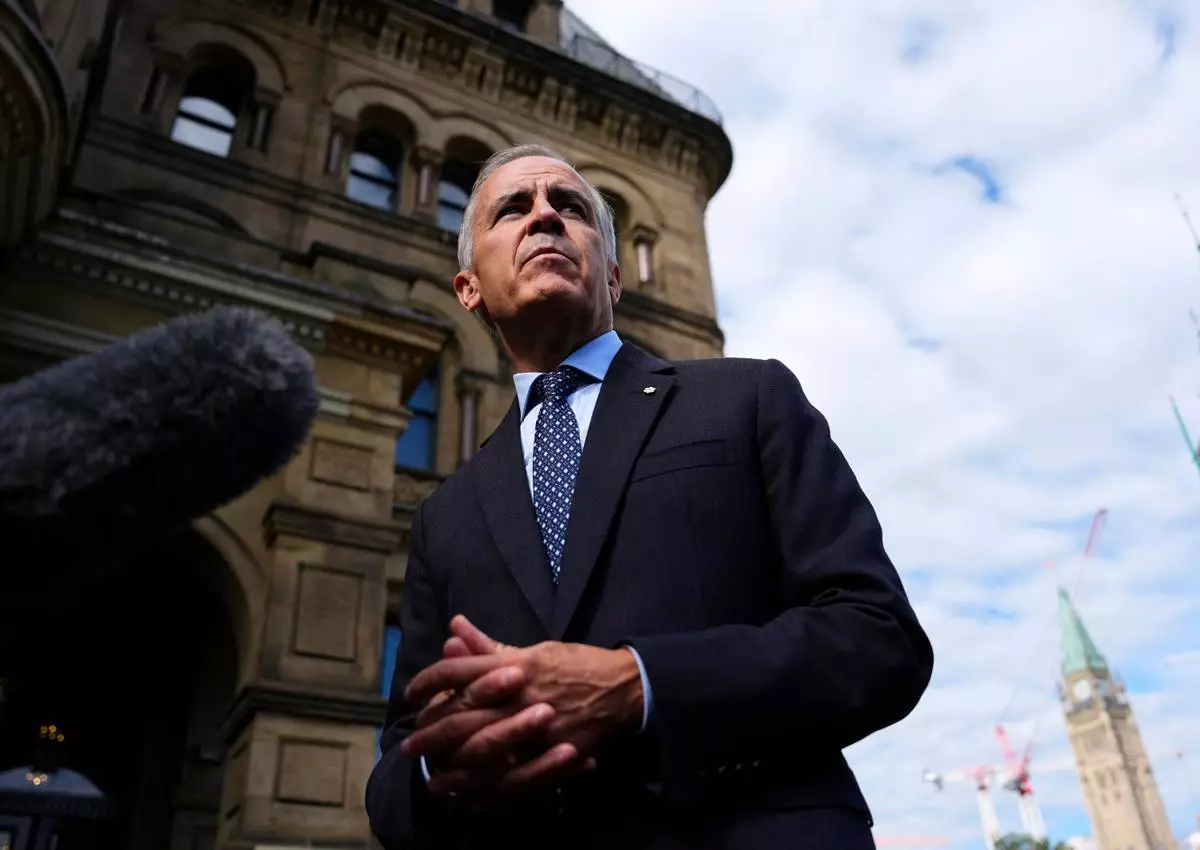
Canadian Prime Minister Mark Carney speaks with members of the media as he arrives at the Office of the Prime Minister and Privy Council in Ottawa, on Tuesday, Sept. 1, 2026. (Justin Tang/The Canadian Press via AP)
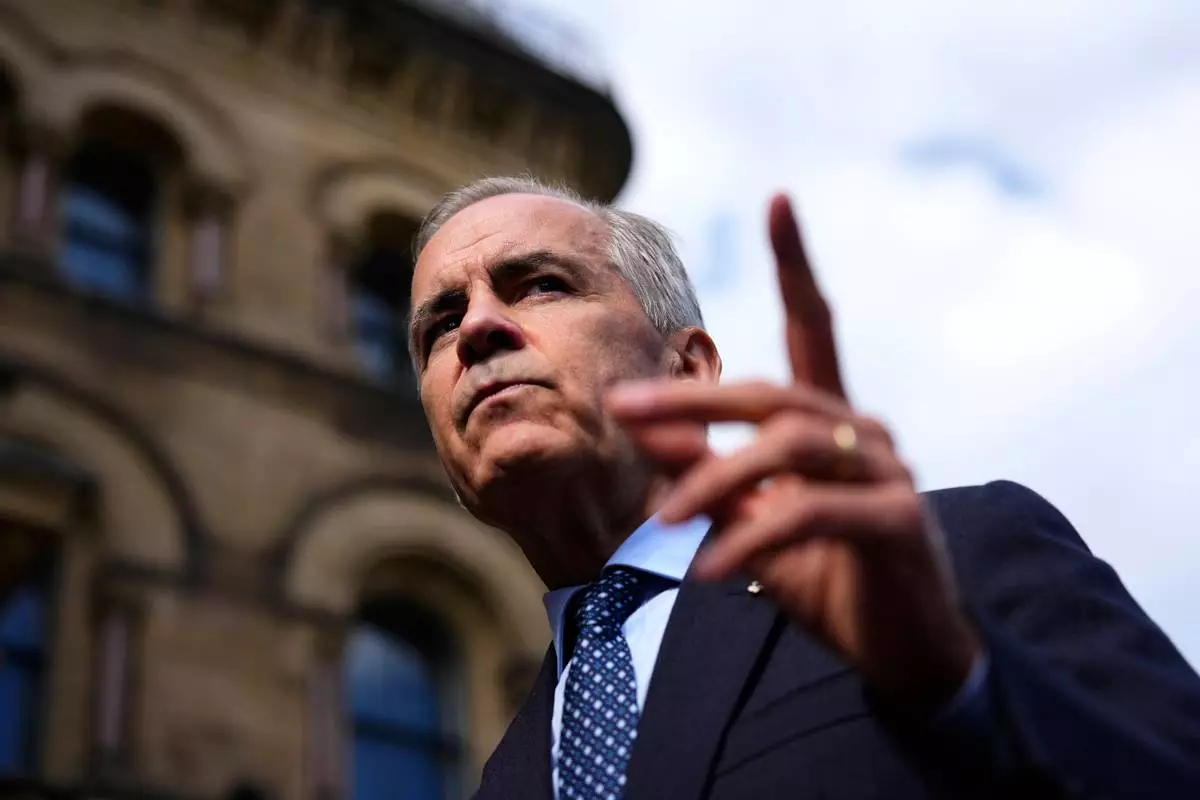
Canadian Prime Minister Mark Carney speaks with members of the media as he arrives at the Office of the Prime Minister and Privy Council in Ottawa, on Tuesday, Sept. 1, 2026. (Justin Tang/The Canadian Press via AP)
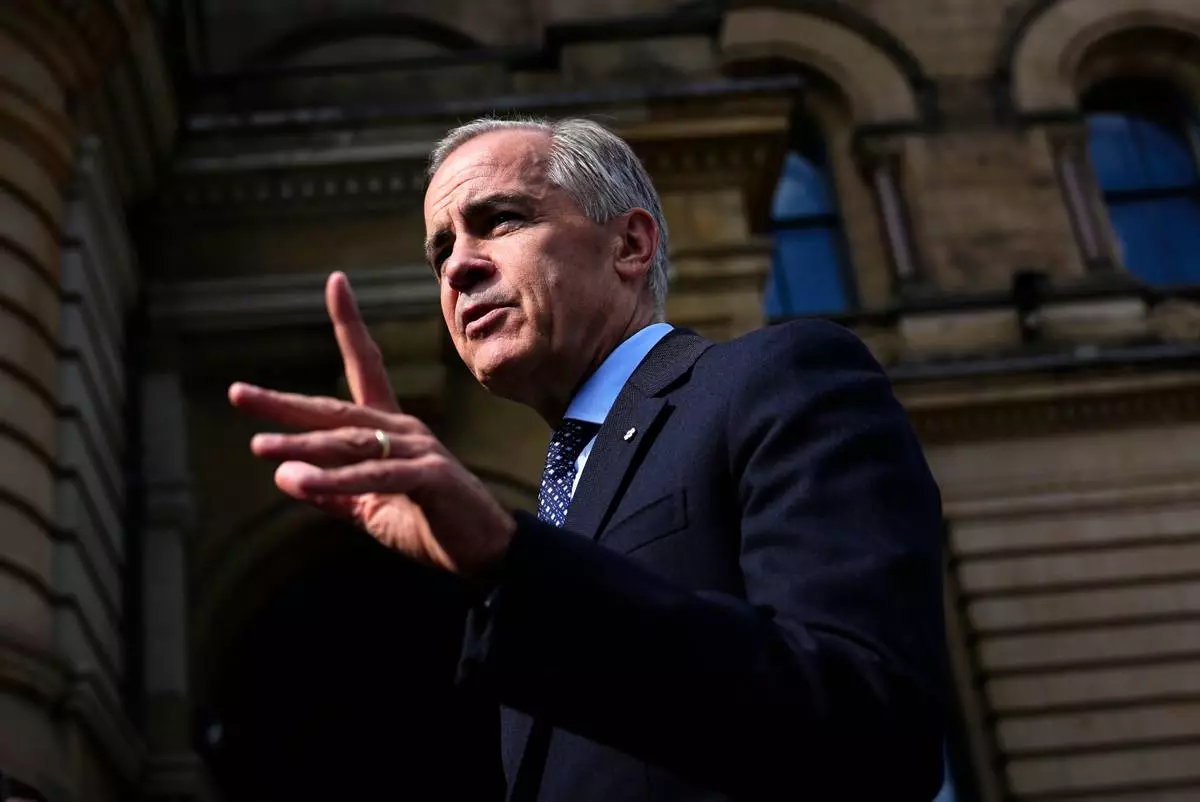
Canadian Prime Minister Mark Carney speaks with members of the media as he arrives at the Office of the Prime Minister and Privy Council in Ottawa, on Tuesday, Sept. 1, 2026. (Justin Tang/The Canadian Press via AP)