Skip to Content Facebook Feature Image

Pinglu Canal to cut southwest China-ASEAN shipping distance by 560 km: official

China

China

China

Pinglu Canal to cut southwest China-ASEAN shipping distance by 560 km: official

2026-09-02 03:37 Last Updated At:11:27

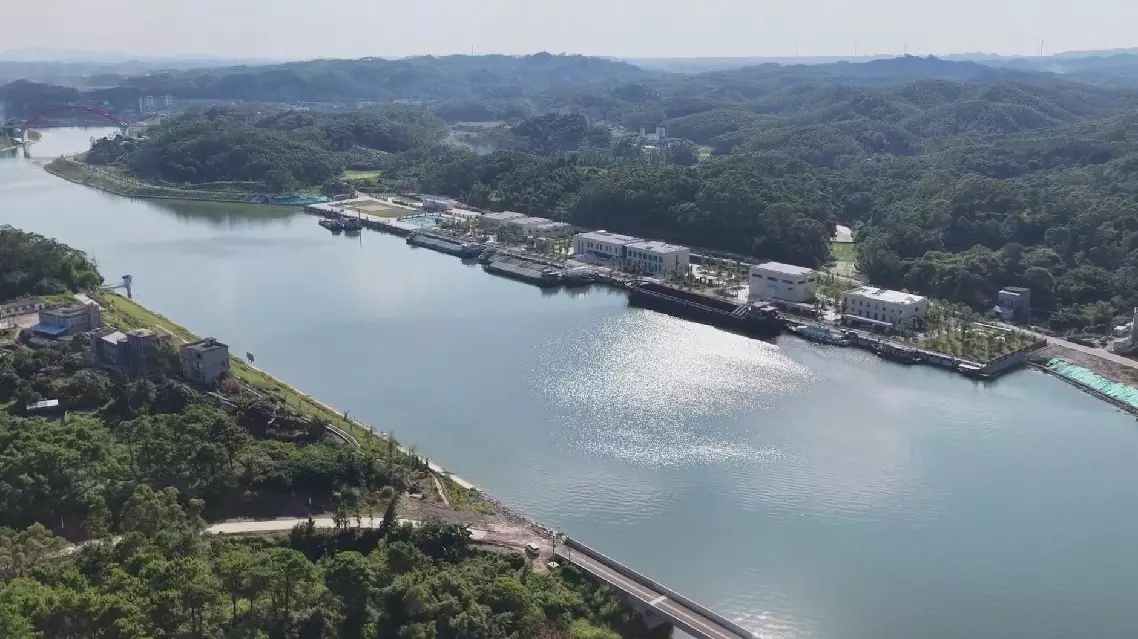
The Pinglu Canal, China's first artificial waterway connecting inland rivers to the sea, is expected to slash the transport distance between the country's southwestern regions and Association of Southeast Asian Nations (ASEAN) member states by 560 kilometers, a Chinese official said Tuesday.

The 134.2-km canal is a key project in China's New International Land-Sea Trade Corridor, a freight network aimed at improving links between the country's western regions and overseas markets. The project is expected to give cargo from southwest China a shorter route to Beibu Gulf ports, as it is designed to connect the Xijiang River system with the Beibu Gulf through the Qinjiang River.

"Once the Pinglu Canal is open to navigation, the transport distance between China's southwestern hinterland and ASEAN countries will be shortened by 560 kilometers, and logistics costs will be reduced by 18 to 30 percent," said Lu Xinning, vice governor of the Guangxi Zhuang Autonomous Region.

"In terms of navigation grade, the Pinglu Canal is the highest-standard river-sea connecting waterway in China and even the world, and it will reshape the economic and geographic landscape between China and ASEAN. Once open to navigation, it will add a new two-way corridor for goods between the two major markets. Factors such as capital, technology, talent, and labor between southwest China and ASEAN countries will also be further pooled, giving rise to new cross-border investment and industrial cooperation projects," she said.
Pinglu Canal to cut southwest China-ASEAN shipping distance by 560 km: official


Pinglu Canal to cut southwest China-ASEAN shipping distance by 560 km: official
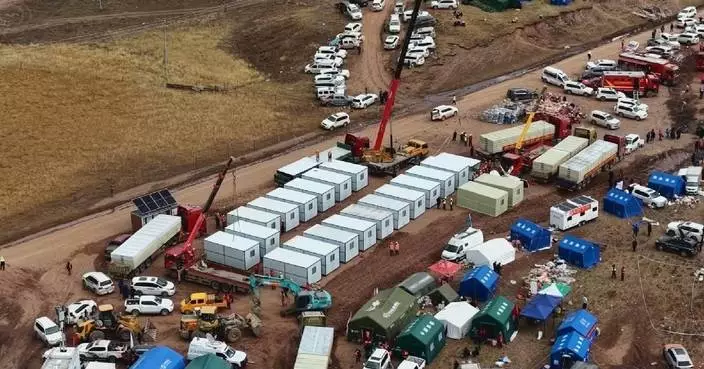
Chinese tunnel experts dispatched to assist rescue operations in mudslide-hit Nepal have found that severe infrastructure damage and complex geographical conditions are creating formidable obstacles to on-site search and rescue work.

China's Ministry of Emergency Management on Saturday dispatched a team of nine tunnel experts to Nepal to support rescue efforts at a hydropower plant tunnel, at the request of the Nepali government.

The experts took a helicopter from Gyirong, a county in southwest China's Xizang Autonomous Region, arrived in the disaster-hit area of Nepal at 4:58 p.m. Beijing Time, and immediately joined the rescue operation on site.

According to the experts' on-site assessment, the mudslide has impacted a vast swathe of land, inflicting heavy damage on both riverside residential buildings and local engineering facilities, and presenting a string of hurdles for frontline rescue operations.

Aerial footage captured during the helicopter flight shows extensive devastation to the natural landscape and local livelihood infrastructure. Numerous homes along the river have been buried under thick mud and silt, and overland transportation has completely been cut off.

Multiple runoffs from mountain slopes continue to feed into the main river channel, forming small waterfalls in some sections, while the valley's water remains muddy and fast-flowing.

The situation is particularly severe at the hydropower project area, where almost no temporary structures remain intact.

The project's core facilities, construction work zones and living quarters have all sustained heavy damage, and the extremely complex terrain at the site will greatly complicate both immediate emergency response and follow-up rescue missions.

The death toll from the massive mudslide had risen to 1,127 as of 5:00 local time Wednesday, according to the latest figures released by the Nepal Police.

Infrastructure damage poses major challenge for rescue in Nepal: experts

Infrastructure damage poses major challenge for rescue in Nepal: experts

Recommended Articles