China's imports surpassed 10 trillion yuan (about 1.49 billion U.S. dollars) in the first half of this year -- a record for that period of year, with growth outpacing exports for five consecutive months, as the nation's manufacturing upgrade fuels record demand for high-end components and equipment from around the world.
For a long time, China has been supplying the world with vast quantities of high-quality goods thanks to its comprehensive industrial system, earning it the well-deserved title of "the world's factory."
This year, however, as the manufacturing sector accelerates its upgrade, China's massive procurement market has surged with vitality, sustaining strong import momentum.
Transitioning from a one-way product exporter into a two-way hub for global high-quality resources, China is now sharing development opportunities with the world in its dual roles as both a super seller and a super buyer.
China has relied on its comprehensive, mature industrial system to continuously supply the global market with a full range of high-quality, cost-effective goods.
At the same time, the world's largest manufacturing system has generated massive industrial procurement demand, emerging as a new core driver of China's import growth.
At a textile enterprise in Huaibin County, Xinyang City of central China's Henan Province, key equipment imported from Germany and France has driven the intelligent transformation and upgrading of the entire production line, with imported high-end machinery and domestic equipment complementing each other in seamless synergy.
The import demand driven by industrial upgrading is particularly pronounced in coastal regions with concentrated industrial clusters.
"Shenzhen's rapid import growth this year is primarily driven by the accelerated development of new industries and production capacities such as artificial intelligence (AI), which has increased demand for high-end components, raw materials, and equipment. Meanwhile, Shenzhen's export products are also upgrading toward high-tech and high-value-added sectors, requiring more high-quality global production factors. Imports and exports mutually reinforce each other, and the procurement demand from the manufacturing sector has also opened up new market opportunities for upstream enterprises," said Zhang Wenya, deputy director of the Foreign Trade Department of the Shenzhen Municipal Bureau of Commerce.
In the first seven months of this year, China's imports of mechanical and electrical products surged by 29.7 percent year on year, accounting for more than 40 percent of total import value and becoming the main driver of import growth. "The continued expansion of imports of equipment, components, and raw materials better serves the transformation and upgrading of China's manufacturing sector. Driven by China's massive market demand and industrial upgrading, an increasing number of high-quality global factors are entering China and integrating into its industrial chains, bringing orders and growth opportunities to enterprises worldwide. China is not only the world's factory but is also rapidly becoming the world's market where enterprises can share opportunities," said Liu Chun, president of the China Chamber of Commerce for Import and Export of Machinery and Electronic Products.
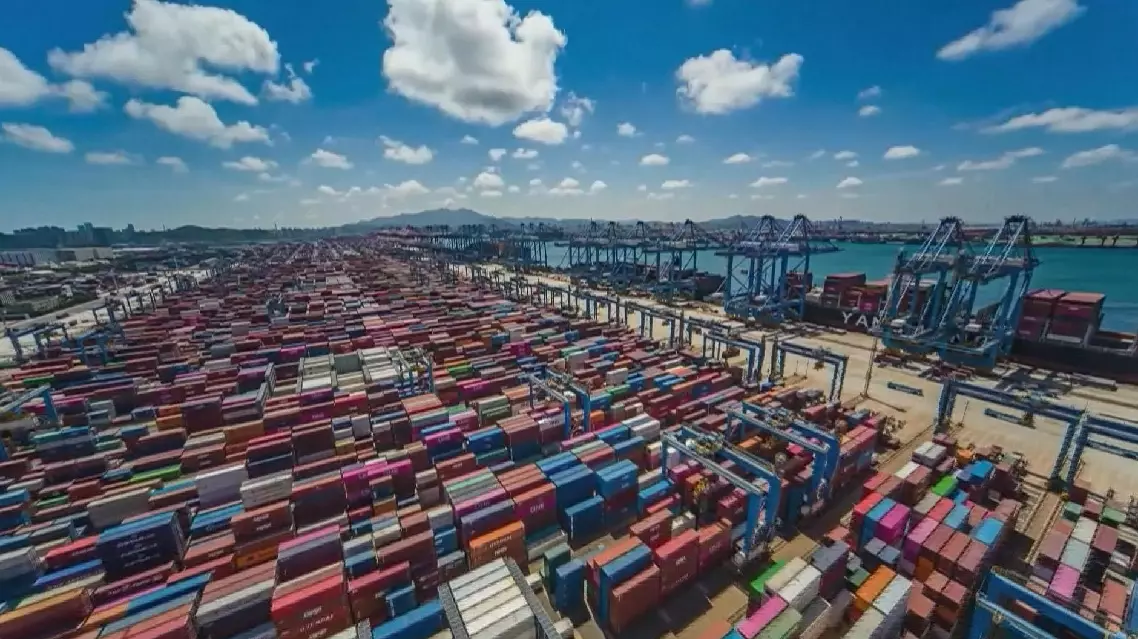
China evolves from "world's factory" to "world's market" as imports surge