Leaders of the Shanghai Cooperation Organization (SCO) member states adopted the Bishkek Declaration on Tuesday, pledging to deepen cooperation on security, trade, technology and sustainable development.
The declaration was adopted at the 26th Meeting of the Council of Heads of State of the SCO, which brought together leaders including Chinese President Xi Jinping, Russian President Vladimir Putin and Indian Prime Minister Narendra Modi.
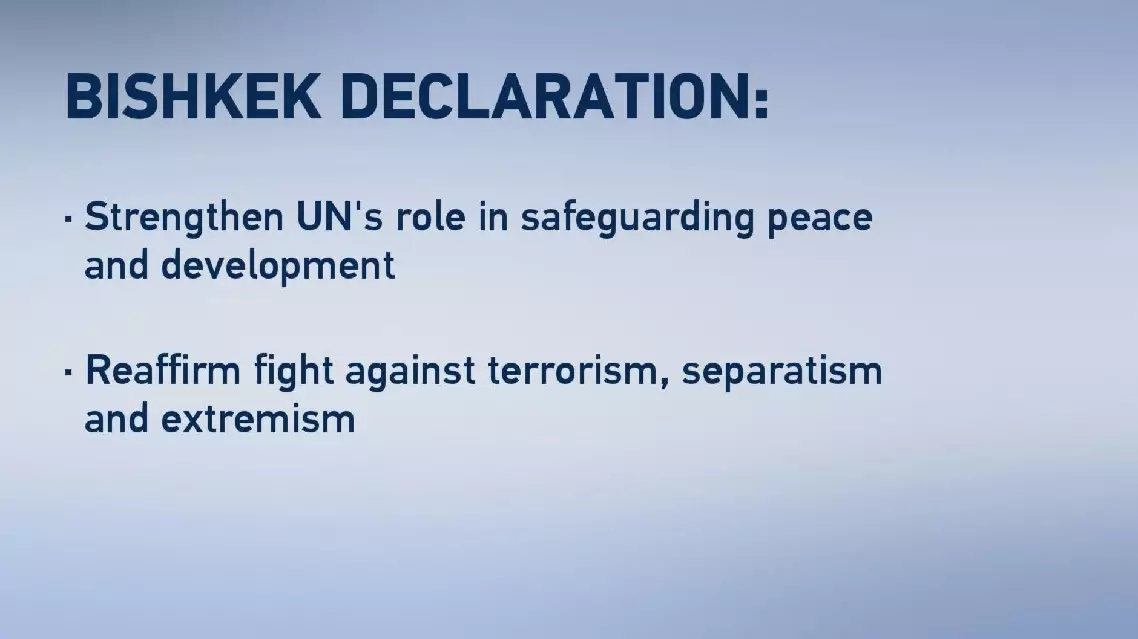
The declaration reaffirmed the 10 member states' commitment to international law and the United Nations Charter, calling for strengthening the UN's role in maintaining international peace and security and advancing sustainable development. The leaders backed a more representative and just multipolar world order and called for reforms to global governance that would ensure equal participation and decision-making for all states.
Member states reaffirmed their pledge to combat terrorism, separatism and extremism, stressing that sovereign states and their authorities must play a central role in countering these threats. They condemned terrorism in all forms and rejected double standards in counter-terrorism efforts. The leaders also called for intensified efforts to combat drug trafficking, cybercrime and the misuse of artificial intelligence.
On economic cooperation, the leaders noted the SCO region's growing importance to the global economy and sustainable development, and agreed to strengthen open multilateral trade. They opposed unilateral sanctions and protectionist measures, and reaffirmed support for China's Belt and Road Initiative. Member states also pledged to deepen cooperation in finance and welcomed progress on the establishment of an SCO development bank.
On environmental issues, member states voiced support for closer cooperation to address climate change, welcomed green technologies and innovative solutions, and backed projects to restore and protect biodiversity and natural ecosystems.
Pakistan will take over the SCO chairmanship from Kyrgyzstan and host the next meeting of the Council of Heads of State in 2027. The SCO comprises Belarus, China, India, Iran, Kazakhstan, Kyrgyzstan, Pakistan, Russia, Tajikistan and Uzbekistan.
SCO leaders adopt Bishkek Declaration, chart course for next decade
Chinese President Xi Jinping's key speech at the 2026 Shanghai Cooperation Organization (SCO) Summit in Bishkek, Kyrgyzstan has resonated with international observers, who say his vision of global governance can help steer international relations on the right track at a time fraught with geopolitical challenges and economic uncertainties.
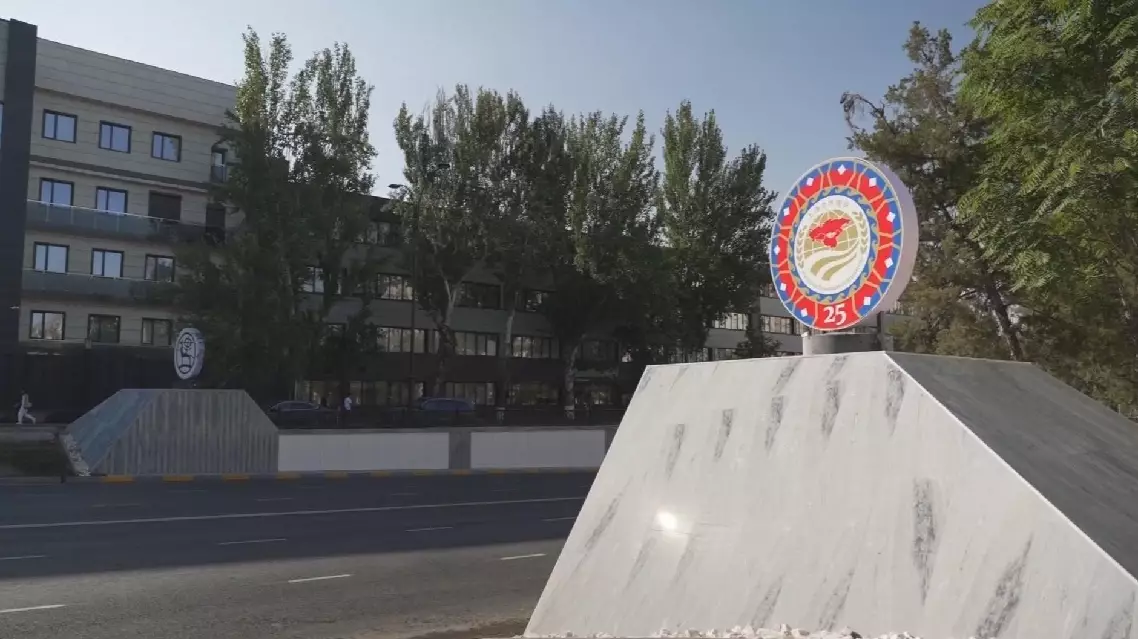
The two-day summit wrapped up in the Kyrgyz capital on Tuesday after bringing together leaders from more than 20 countries and other international organizations, and came as this year significantly marked the milestone 25th anniversary of the SCO's founding.
Since its establishment in 2001, the organization has grown from its original core membership comprising China, Russia and four Central Asian countries, to now include 10 member states, two observer countries, and 15 dialogue partners.
During the 26th Meeting of the Council of Heads of State of the Shanghai Cooperation Organization (SCO) and the "SCO Plus" meeting on Tuesday, President Xi put forward a four-point proposal, calling on the SCO to stay committed to putting development and people first, taking security as a key goal, and promoting dialogue and consultation.
International analysts and political figures gave their assessment of China's pivotal role within the bloc.
"China plays a pivotal role in the SCO and its significance keeps growing amid ongoing geopolitical tensions and global economic instability," said Amangeldy Tazhenov, Deputy Chairman of the Board of the Foreign Policy Research Institute under the Ministry of Foreign Affairs of the Republic of Kazakhstan.
Meanwhile, others highlighted the importance of the Global Governance Initiative, which was first put forward by President Xi at the SCO Summit in north China's Tianjin last year and which seeks to build a more just and equitable multilateral world order.
"The Global Governance Initiative proposed by the Chinese President is of great significance. International relations are currently mired in a deep crisis and this initiative represents a potent attempt to resolve it. First, the initiative aims to further unite the vast number of developing countries and promote the establishment of a new world order based on fairness and justice that accommodates the interests of all parties. Therefore, the global governance initiative proposed by the Chinese President is timely, holds broad prospects, and can provide strong support for steering international relations toward positive development," said Sergei Rachkov, Chairman of the Standing Commission on International Affairs of the House of Representatives of Belarus.
International observers also stated that by actively advocating multilateral cooperation, China has promoted dialogue and consensus-building among nations, thereby injecting more positive energy into a currently turbulent world.
"President Xi Jinping's initiatives of the Global Development Initiative, the Global Security Initiative and also the Global Governance Initiative, strongly relate to the mandate and the values of the Shanghai security cooperation organization [the SCO]," said Sizo Nkala, a research fellow of Center for Africa-China Studies under University of Johannesburg.
Given the expanding influence of the SCO, many observers worldwide say they were keeping a keen eye on proceedings in Bishkek, which also saw United Nations Secretary-General Antonio Guterres in attendance.
"We look forward to positive outcomes from the SCO summit and continued progress in advancing China's Global Governance Initiative. Upholding openness and inclusiveness, the initiative emphasizes the practice of genuine multilateralism, and safeguards the authority and status of the United Nations," said Janusz Piechocinski, former deputy prime minister of Poland.
Xi's vision of global governance can steer int'l relations in right direction: experts