International scholars and analysts have underscored the growing global significance of the Shanghai Cooperation Organization (SCO), which just concluded its annual summit in Kyrgyzstan's Bishkek, highlighting the central role China plays within the bloc to deepen cooperation on development, security, technology and people-to-people exchanges.
The two-day summit wrapped up in the Kyrgyz capital on Tuesday after bringing together leaders from more than 20 countries and other international organizations, and came as this year significantly marked the milestone 25th anniversary of the SCO's founding.
At the meeting, Chinese President Xi Jinping called on the SCO to put development and people first, strengthen common security, deepen people-to-people ties, and promote dialogue and consultation to advance more equitable global governance.
During last year's SCO Summit in north China's Tianjin, Xi first proposed the Global Governance Initiative, which seeks to build a more just and equitable multilateral world order, and global observers say this initiative can become a key guideline for the SCO and beyond.
"One of the advantages of SCO is its steady progress. It's about comprehensive, sustainable economic and social progress of member states. I think it is also very important that President Xi Jinping mentioned the global importance of SCO. It is something that resonates with the four strategic initiatives that President Xi Jinping announced some time ago," said Andrey Kortunov, a Russian foreign policy expert with the Moscow-based Valdai Discussion Club, an international affairs forum.
Since its establishment in 2001, the SCO has grown from its original core membership comprising China, Russia and four Central Asian countries, to now include 10 member states, two observers countries, and 15 dialogue partners. In Bishkek, the main heads-of-state summit was followed by an "SCO Plus" meeting focused on strengthening the role of the United Nations and building a multipolar world.
One Pakistani analyst noted the expanded membership of the SCO group now accounts for around half of the world's population and also stressed China's action-oriented role in pushing forward deliverable outcomes.
"When you look at the summit happening, you see that nearly half of the world is sitting in Bishkek. Representation is there. China is a practical oriented country, it's fostering forward, it is not a talk shop. It is also focusing on how it is important that whatever commitment is made should be translated [into action]," said Farhat Asif, founder and president of the Islamabad-based Institute of Peace and Diplomatic Studies, a think-and-do tank focused on diplomacy, peace and security.
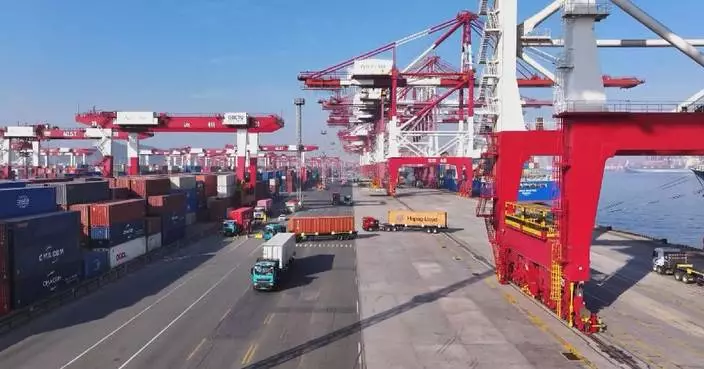
In a key speech in at the Bishkek summit, Xi said China will jointly implement 100 technological cooperation projects with SCO countries over the next three years. It will also develop an international cooperation center on AI applications, a China-SCO port economy cooperation center in Tianjin, and a China-SCO basic education cooperation center, he added.
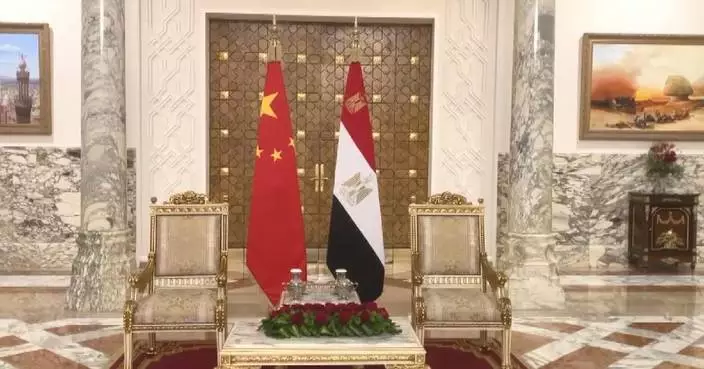
These outcomes drew attention in Egypt, where President Xi has now traveled to pay a state visit following the conclusion of the SCO Summit in Kyrgyzstan.
"China has adopted a new approach based on cooperation in science and technology. It goes beyond technology transfer to promote and consolidate cooperation through a number of projects. This represents a major qualitative leap, or an ambitious program, for the SCO in the coming period. The proposal that was put forward by the Chinese president has made governance an important pillar for cooperation and for safeguarding the interests of the people," said Egyptian journalist Mohamed Amin, editor-in-chief of October Magazine, a Cairo-based weekly political magazine.
Int'l experts highlight expanding global role of SCO after Bishkek summit