Russian President Vladimir Putin on Tuesday said Japan was fully responsible for deteriorating bilateral ties after Japan protested his August visit to the Far Eastern Kuril Island of Iturup.
Russia and Japan are involved in a territorial row over Iturup, which Japan calls Etorofu, and other three islands off Japan's northern prefecture of Hokkaido. The four islands that are under Russia's control are called the Northern Territories in Japan and the Southern Kurils in Russia.
Speaking at a news conference in Bishkek to sum up his visit to Kyrgyzstan, Putin said he was not surprised by Japan's reaction to his visit to Iturup.
He said Russia had handled relations with Japan carefully and had taken no steps to worsen them.
Putin visited Iturup in August. Japan called the visit unacceptable and lodged a protest with Russia.
Japan claims the islands as its inherent territory, while Russia says they are part of Russian territory. The dispute has prevented the two countries from signing a peace treaty formally ending World War II (WWII).
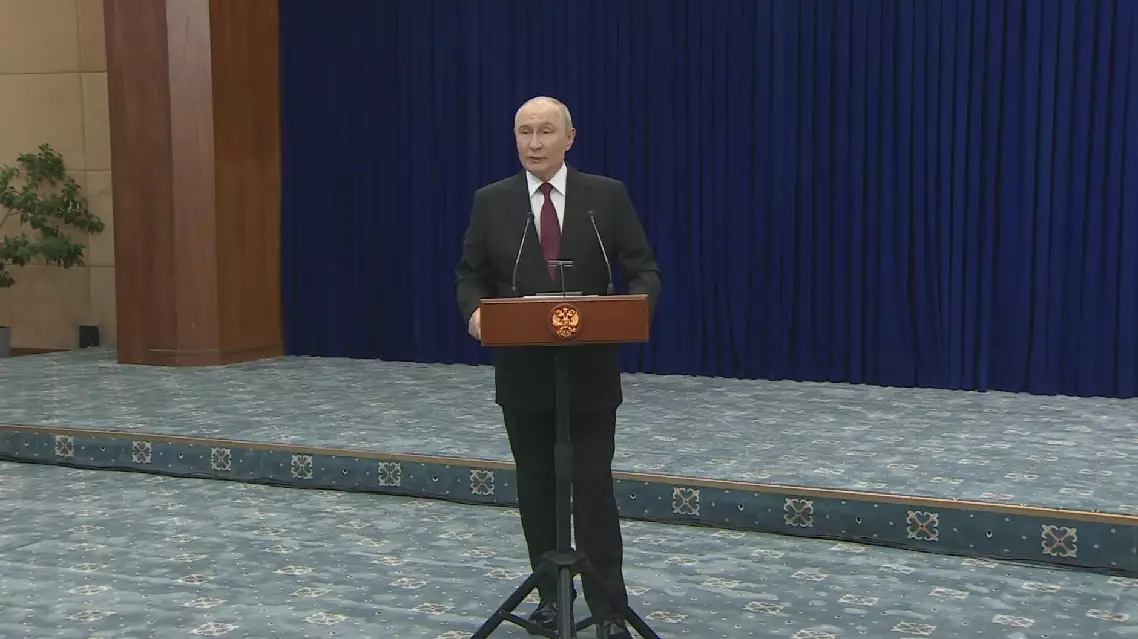
Putin says Japan responsible for decline in bilateral ties
A joint Egyptian-Chinese archaeological mission has uncovered cultural relics and archaeological remains at the Temple of Sekhmet site in Mit Rahina, Giza Province, west of Cairo, according to Shanghai Museum at a press conference on Tuesday.
The discoveries provide new evidence of how the area surrounding the temple was used and inhabited across successive periods of ancient Egyptian history.
The mission is jointly conducted by Egypt's Supreme Council of Antiquities and the Shanghai Museum in east China, and is co-led by Reham Zaki of Supreme Council of Antiquities and Chen Jie, deputy director of the Shanghai Museum.
The mission found a residential complex near the temple, along with stone blocks and fragments of statues. Archaeologists also uncovered a limestone structure believed to have been used for wine production.
Other finds include stone blocks, statue fragments and pottery. Some of the stone artifacts date to the New Kingdom period (1550 BC-1069 BC).
Egyptian Minister of Tourism and Antiquities Sherif Fathy praised the fruitful archaeological cooperation between Egypt and China, describing the two countries as home to two ancient civilizations with rich cultural heritages.
The latest discoveries demonstrate the close and growing cooperation between the two countries in archaeology, following a number of joint archaeological projects in recent years, according to Fathy.
Chen said that the two sides had already begun in-depth cooperation as early as during the exhibition "On Top of the Pyramid: the Civilization of Ancient Egypt," jointly held by the Shanghai Museum and Egypt's Supreme Council of Antiquities.
Chen said the joint archaeological mission will continue to conduct surface surveys and archaeological excavations of the Temple of Sekhmet and its surrounding areas over the coming quarters, with the aim of further determining and reconstructing the architectural layout, construction process, history of use, landscape changes and evolution of civilization of the temple and even the Memphis area.
The Shanghai Museum will work with Egypt's Supreme Council of Antiquities to establish a long-term cooperation system covering archaeological excavation, research, conservation, exhibition and utilization, and further promote academic exchanges and mutual learning between the two countries in the field of archaeology, said Chen.
The Sekhmet Temple, discovered by chance in 1959, formed part of the Great Temple of Ptah, the main religious complex of ancient Memphis.
The ancient city of Memphis, founded around 3100 BC, served as the capital of Egypt during the Old Kingdom period and remained an important religious and cultural center for centuries.
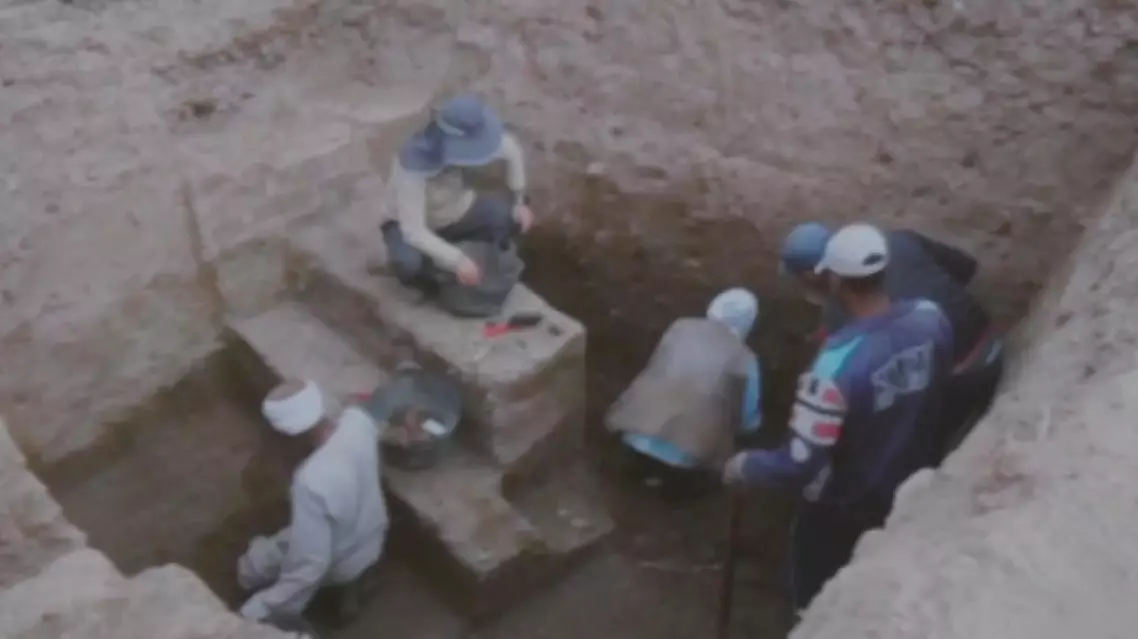
Egyptian-Chinese archaeological team announces new discoveries at ancient Memphis site