China has continued to deepen cooperation with Kyrgyzstan in meteorological satellite application, joint scientific research, and emergency disaster prevention support.
Kyrgyzstan and northwest China's Xinjiang Uyghur Autonomous Region are both located in the Tianshan mountain system and share similar climate conditions. Driven by climate change, regional extreme weather events have increased, making joint meteorological disaster prevention, mitigation and relief a key priority. With the help of the China Meteorological Administration's Fengyun-2 satellite receiving and application system, Kyrgyzstan has received a steady and reliable supply of meteorological observation data.
In May this year, the city of Manas in Kyrgyzstan was hit by a mudslide triggered by torrential rainfall, and the local authorities declared a state of emergency. The Chinese side deployed Fengyun-3 and Fengyun-4 satellites in time to carry out high-frequency dynamic monitoring, capturing the evolution trend of the disaster and providing data support for Kyrgyzstan's disaster relief and emergency response.
"Since the beginning of this year, the Chinese side has activated the relevant emergency support mechanism twice to help Kyrgyzstan respond to flood disasters. Meanwhile, we have continued to optimize the 'Mazu' intelligent meteorological early warning solution, opened and shared independent innovation achievements including Fengyun satellites and meteorological AI models, to provide support for meteorological disaster prevention and mitigation as well as climate situation analysis in Central Asia," said Zheng Zhaojun, chief expert of the International User Service Center under the National Satellite Meteorological Center.
Relying on the Urumqi Institute of Desert Meteorology of the China Meteorological Administration, China has established a stable cooperation platform with Kyrgyzstan and other Central Asian countries. Through multiple rounds of sample analysis, research teams have systematically reconstructed the patterns of temperature, precipitation and glacier mass changes across Central Asia over the past 200 to 500 years.
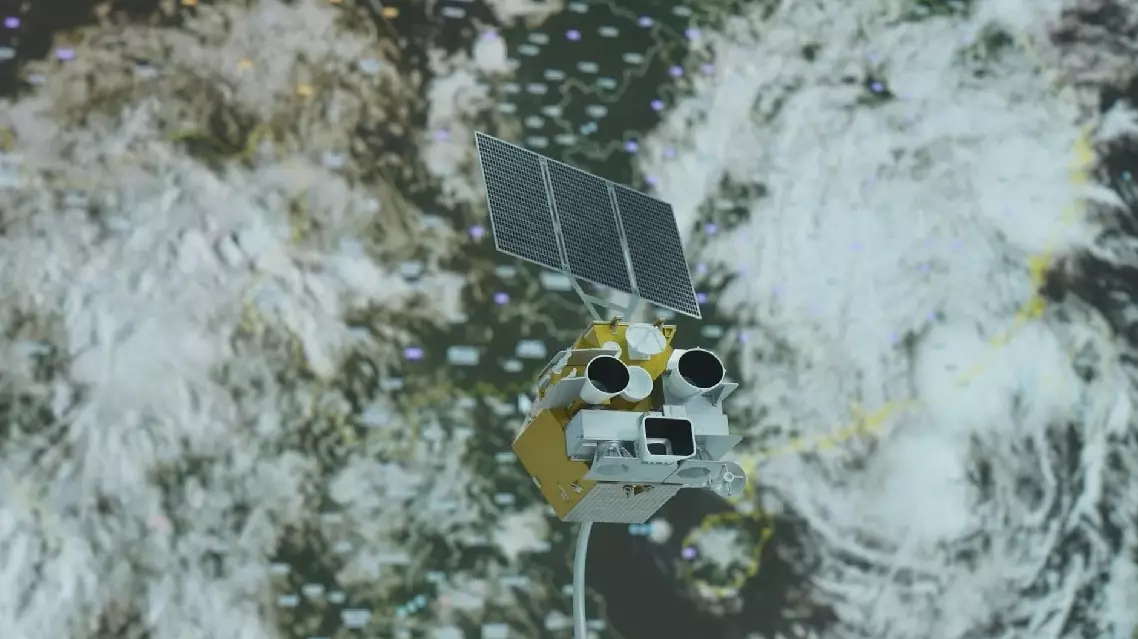
Chinese weather satellites help deepen China-Kyrgyzstan cooperation

A joint Egyptian-Chinese archaeological mission has uncovered cultural relics and archaeological remains at the Temple of Sekhmet site in Mit Rahina, Giza Province, west of Cairo, according to Shanghai Museum at a press conference on Tuesday.
The discoveries provide new evidence of how the area surrounding the temple was used and inhabited across successive periods of ancient Egyptian history.
The mission is jointly conducted by Egypt's Supreme Council of Antiquities and the Shanghai Museum in east China, and is co-led by Reham Zaki of Supreme Council of Antiquities and Chen Jie, deputy director of the Shanghai Museum.
The mission found a residential complex near the temple, along with stone blocks and fragments of statues. Archaeologists also uncovered a limestone structure believed to have been used for wine production.
Other finds include stone blocks, statue fragments and pottery. Some of the stone artifacts date to the New Kingdom period (1550 BC-1069 BC).
Egyptian Minister of Tourism and Antiquities Sherif Fathy praised the fruitful archaeological cooperation between Egypt and China, describing the two countries as home to two ancient civilizations with rich cultural heritages.
The latest discoveries demonstrate the close and growing cooperation between the two countries in archaeology, following a number of joint archaeological projects in recent years, according to Fathy.
Chen said that the two sides had already begun in-depth cooperation as early as during the exhibition "On Top of the Pyramid: the Civilization of Ancient Egypt," jointly held by the Shanghai Museum and Egypt's Supreme Council of Antiquities.
Chen said the joint archaeological mission will continue to conduct surface surveys and archaeological excavations of the Temple of Sekhmet and its surrounding areas over the coming quarters, with the aim of further determining and reconstructing the architectural layout, construction process, history of use, landscape changes and evolution of civilization of the temple and even the Memphis area.
The Shanghai Museum will work with Egypt's Supreme Council of Antiquities to establish a long-term cooperation system covering archaeological excavation, research, conservation, exhibition and utilization, and further promote academic exchanges and mutual learning between the two countries in the field of archaeology, said Chen.
The Sekhmet Temple, discovered by chance in 1959, formed part of the Great Temple of Ptah, the main religious complex of ancient Memphis.
The ancient city of Memphis, founded around 3100 BC, served as the capital of Egypt during the Old Kingdom period and remained an important religious and cultural center for centuries.
Egyptian-Chinese archaeological team announces new discoveries at ancient Memphis site