WASHINGTON (AP) — Dan Driscoll has announced that his last full day as U.S. Army secretary is Wednesday, but his social media post offered no explanation for why he is stepping down after 18 months as the service's civilian leader.
Driscoll is a friend of Vice President JD Vance and has good relationships with both Republicans and Democrats in Congress. But tensions with Defense Secretary Pete Hegseth have been widely reported, and some of Driscoll's allies in the Army were ousted this year by President Donald Trump's Pentagon chief.
Driscoll spoke with Trump on the current state of the Army before he submitted his resignation this week, The Associated Press has reported.
Any concerns were absent from Driscoll's post on X late Tuesday night, which was his first public statement since the White House confirmed his departure Monday. Driscoll said it has been “the honor of a lifetime” to serve as Army secretary under Trump and Hegseth.
Driscoll praised the soldiers, their families and the Army's civilian workforce for helping “modernize and accelerate how the Army mans, trains, and equips the most lethal fighting force on the face of the earth.”
“We could not have made the progress we did without the support of Secretary Hegseth,” he added.
His exit comes as the U.S. military has returned to launching airstrikes against Iran after a lull in hostilities during the more than six-month-old war, leaving the nation's largest fighting force without top civilian or uniformed leaders who have been confirmed by the Senate. It was not immediately clear who would fill Driscoll's role at least temporarily.
Hegseth in April ousted the Army's top uniformed leader, Gen. Randy George, an ally of Driscoll. Gen. Christopher LaNeve took over as the Army’s acting chief of staff and recently pulled the plug on a drone modernization program that Driscoll had championed.
A bipartisan group of U.S. lawmakers sent a letter this week to Driscoll and LaNeve to express “deep concerns" about eliminating the specialized drone unit and to request a briefing from the Army to explain its decision.
As Army secretary, Driscoll was a major force behind efforts to cut the red tape so military contractors could quickly develop more drones and counter-drone capabilities as modern warfare evolves.
Driscoll also was tapped last year for the unusual assignment of key negotiator to try to end the war between Russia and Ukraine.
White House spokeswoman Anna Kelly noted Driscoll's role in those negotiations in Monday's statement on his resignation, adding that Driscoll provided “outstanding leadership during historic military operations, restoring an emphasis on readiness and lethality.”
Both Republicans and Democrats have lamented Driscoll's resignation, while some used it as an opportunity to criticize Hegseth's leadership.
Sen. Thom Tillis, a North Carolina Republican who is retiring and sometimes has clashed with Trump, urged the president in a social media post Wednesday to “find a new leader at the Pentagon who will retain and empower our military talent rather than diminish it.”
Besides George, Hegseth has fired more than a dozen top generals and admirals without explanation since he took office last year.
“Secretary Hegseth is cultivating a culture where dissent is punished and competence is secondary to personal allegiance,” Rhode Island Sen. Jack Reed, the top Democrat on the Senate Armed Services Committee, said Monday.
Before Hegseth was confirmed last year, Tillis had held out support until only moments before casting a crucial vote in favor.
“If we had a @SecWar who maintained the same priorities and forward-thinking, he would be fighting to retain talented leaders like Dan and the many flag officers he has forced into retirement,” Tillis said on X. “Instead, he is creating a leadership void at the top of our military ranks.”
Republican Sen. Mike Rounds of South Dakota predicted Tuesday that the Pentagon will face serious questions from senators when they return to Washington in two weeks.
“I’m hearing the same language everybody else is — that he was frustrated with some of his top generals being released,” Rounds said of Driscoll. “That’s not the first time I’ve heard that, and I think that points to questions that we’re going to be asking when we get back, in terms of where is the leadership?”
Asked if he is still confident in Hegseth, Rounds said, “It’s a matter of whether or not the president is.”
The Pentagon did not immediately respond to an email seeking comment on the criticism of Hegseth over Driscoll’s resignation.
Some Republicans defended Hegseth's leadership.
“I think Secretary Hegseth has every authority to go out there and say, ‘We’re going to have the right people cover in interim or in permanency, making sure they’re the most well equipped, they’re the most motivated, they’re the most driven to go out there, train and be ready for their job,’” said Florida Republican Rep. Brian Mast, who is chairman of the House Foreign Affairs Committee.
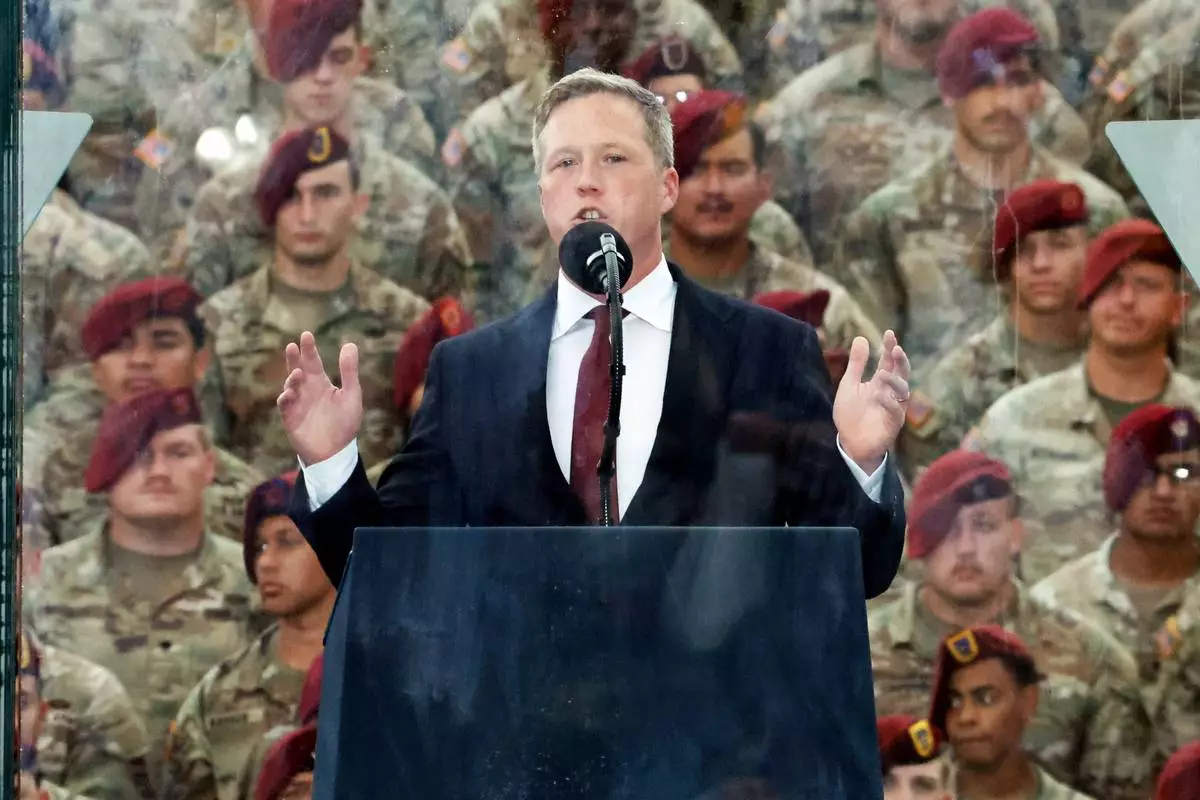
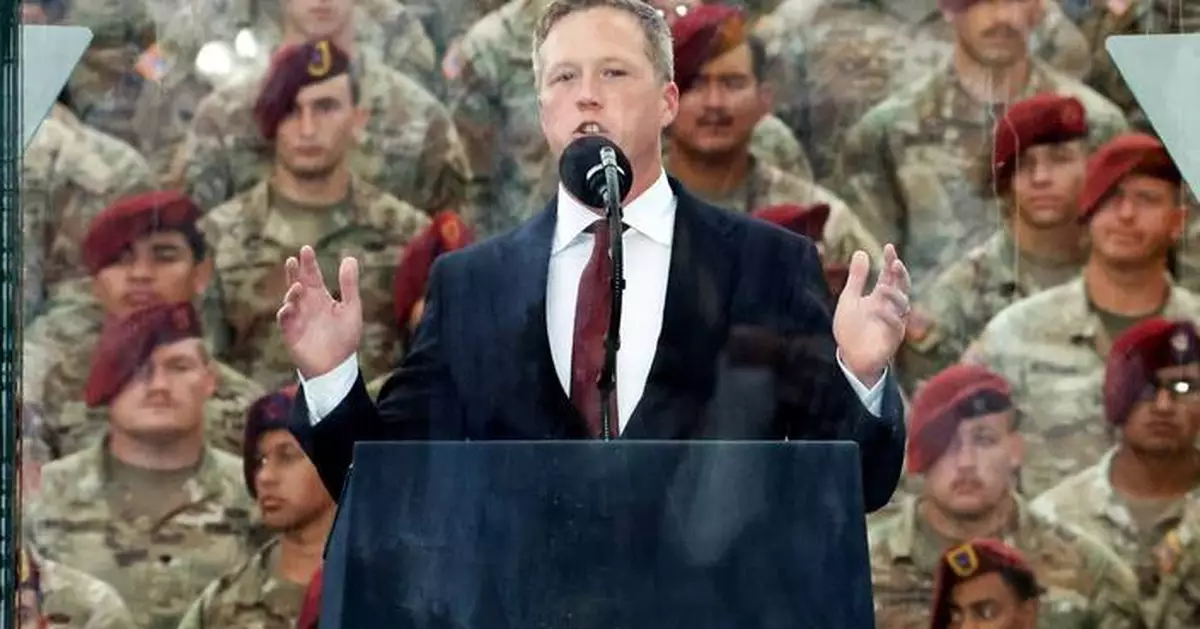
FILE - U.S. Army Secretary Dan Driscoll speaks at the America 250 celebration at Fort Bragg in Fayetteville, N.C., June 10, 2025. (AP Photo/Karl DeBlaker, File)
CEUTA, Spain (AP) — The city of Ceuta, a tiny speck of Spanish territory perched on the northern African coast, normally celebrates its Sept. 2 annual official holiday largely ignored by the mainland.
But not this year, after Ceuta became the epicenter of Spain's worst border crisis in living memory.
In lieu of festivities, tens of thousands of people took to the streets Wednesday across Spain to protest the ongoing humanitarian crisis in Ceuta, demanding solutions and blaming Prime Minister Pedro Sánchez for his government's handling of it.
Waving Spanish flags, they shouted “A united Ceuta will never be defeated," and “Invaders — go home!” referring to the thousands of migrants still in the city.
In late July, about 72,000 people swam, scrambled or charged into the small Spanish territory neighboring Morocco, with at least 90 dying in the effort to reach Europe.
Most of the migrants quickly returned or were ushered back over the border, but around 5,000, including 1,200 minors, remain in Ceuta weeks later, according to the national government. Difficult questions likewise linger over what caused the mass crossing that the government says was fueled by an online campaign on social media.
The sudden influx of tens of thousands of migrants into Ceuta, which has a population of about 84,000, put a huge strain on resources and angered many residents. Local authorities said that Spain's central government ignored warning signs before the border was breached.
“What happened to us was not a migratory crisis,” Ceuta's regional leader, Juan Jesús Vivas, said during an institutional act on Wednesday to mark the holiday. “What happened was the violation of Spain's territorial integrity.”
Vivas is a member of Spain's leading conservative Popular Party, which, with Spain's far-right Vox party, has latched onto the Ceuta crisis and made it the focus of a political fight to oust the left-wing national government in Madrid.
The official organizer of Wednesday's protests in Madrid and more than 200 other cities and towns was the nonpartisan Spanish Federation of Municipalities and Provinces. But the protests were promoted by the PP and Vox, which is strongly against irregular migration.
Spain’s minister of territorial policy, Ángel Víctor Torres, told Spanish National Radio that the protests were politically motivated.
“This is not to show support for the city of Ceuta or its residents; it is to attack the government of Spain,” Torres said.
The government has denied claims it has left Ceuta behind. This week, it earmarked 309 million euros ($357 million) to aid the city's social services, with special attention to housing migrants, its economy and security.
Many in Spain have asked if Morocco's government could have done more to prevent the frontier breakthrough.
Sánchez, however, has repeatedly defended the Moroccan authorities, saying they were swift to help in the return of most of the migrants. On Monday, the Spanish leader alleged — without presenting any evidence — that other countries had amplified disinformation related to the crisis.
“There is no information from any of our intelligence services that points to the participation of Moroccan authorities,” Sánchez told Cadena Ser radio on Monday.
Sánchez, who faces an election next year, said that a misinterpretation of a Supreme Court ruling and disinformation spread on social media encouraged people to rush the border.
The prime minister has also accused social media accounts linked to Russia and Israel and right-wing groups of exploiting and amplifying the Ceuta crisis after it happened on July 30 and 31. Israel and Russia have refuted that claim.
“Without facts, without materials backed up by numbers, dates, names, there is simply nothing to talk about,” Russia's Foreign Ministry spokesperson Maria Zakharova told reporters.
Sánchez’s government didn't provide examples of Russian or Israeli disinformation campaigns, instead citing internal reports from its Foreign Affairs Ministry and the European Commission's diplomatic service.
Many migrants, including unaccompanied minors, remain sleeping in the streets and camped on a beach despite authorities’ efforts to shelter, register and deport those who are eligible back to Morocco.
“We’re suffering and we want to get to Europe or find a solution right now. Here, we’re all sleeping on the beach and having a really hard time,” Moroccan Nebil Tazi told The Associated Press. “We’ve been waiting for a month, waiting for a solution here, but there isn’t one.”
Vivas, Ceuta's leading official, said that the focus should be on getting the autonomous city back to “normality,” as he vowed to continue to pursue the “truth” behind the crisis.
He urged Spain's central government to reinforce and strengthen the border with Morocco instead of depending on cooperation with its neighbor.
“If we don't do this, there will always be someone tempted to use migration as a tool for political ends,” Vivas said.
In a recorded video message published Wednesday, Sánchez said his government was putting all resources so Ceuta's residents could return to tranquility.
The Ceuta holiday commemorates Sept. 2, 1415, when the first Portuguese governor disembarked a few weeks after Portuguese soldiers claimed the terrain. It then passed into Spanish hands in 1580.
The city normally celebrates the day with an official ceremony, musical performances and cultural programs.
Suman Naishadham contributed from Madrid. Joseph Wilson reported and Renata Brito contributed to this report from Barcelona.
This version has been corrected to clarify that Spanish Prime Minister Pedro Sánchez alleged that other countries amplified disinformation related to the crisis, not that they spread disinformation that caused the crisis.
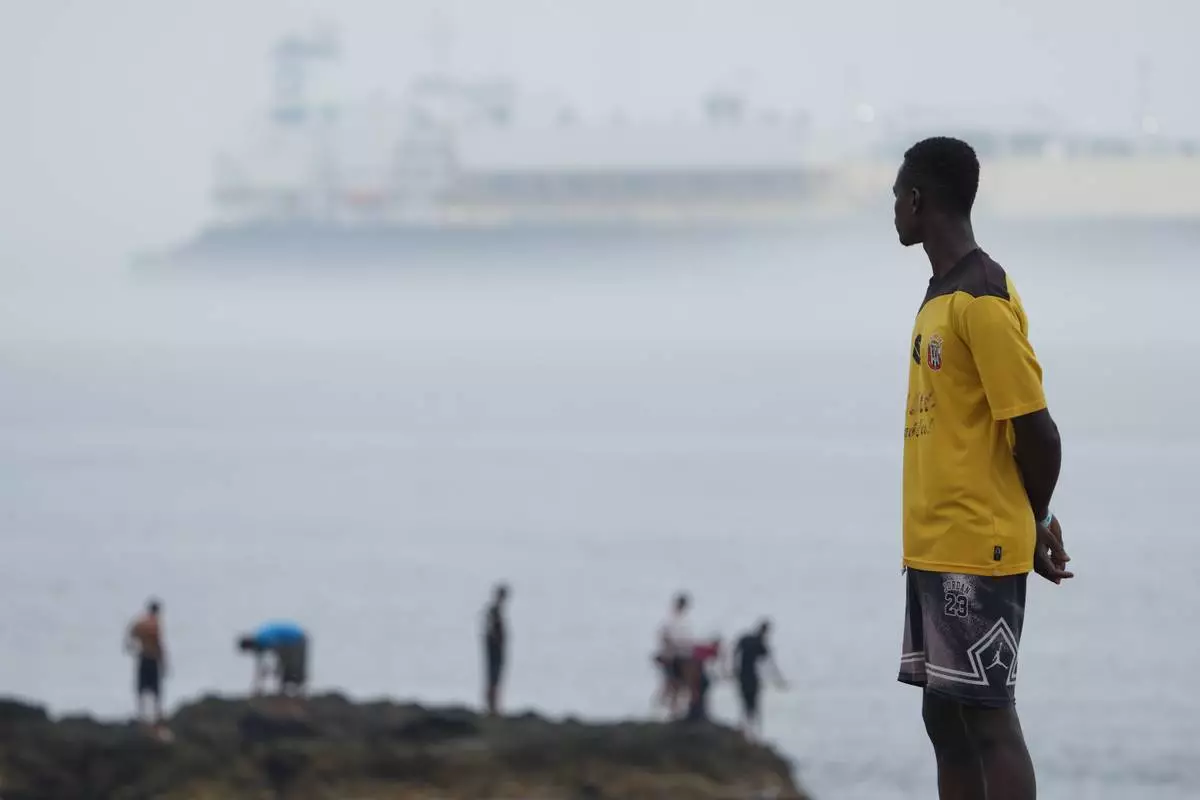
Migrants stand at El Trampolín beach in the Spanish exclave of Ceuta, Wednesday, Sept. 2, 2026. (AP Photo/Francis González)
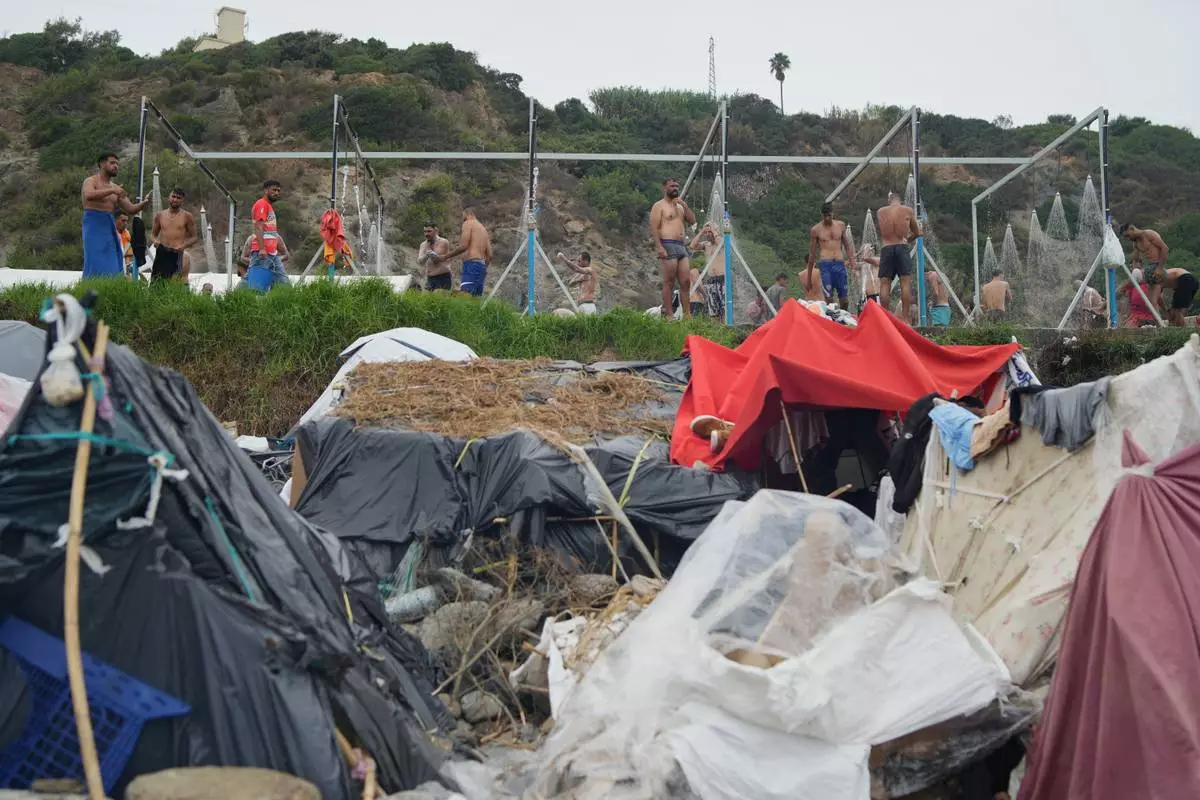
Migrants take a shower near their tents at El Trampolín beach in the Spanish exclave of Ceuta, Wednesday, Sept. 2, 2026. (AP Photo/Francis González)
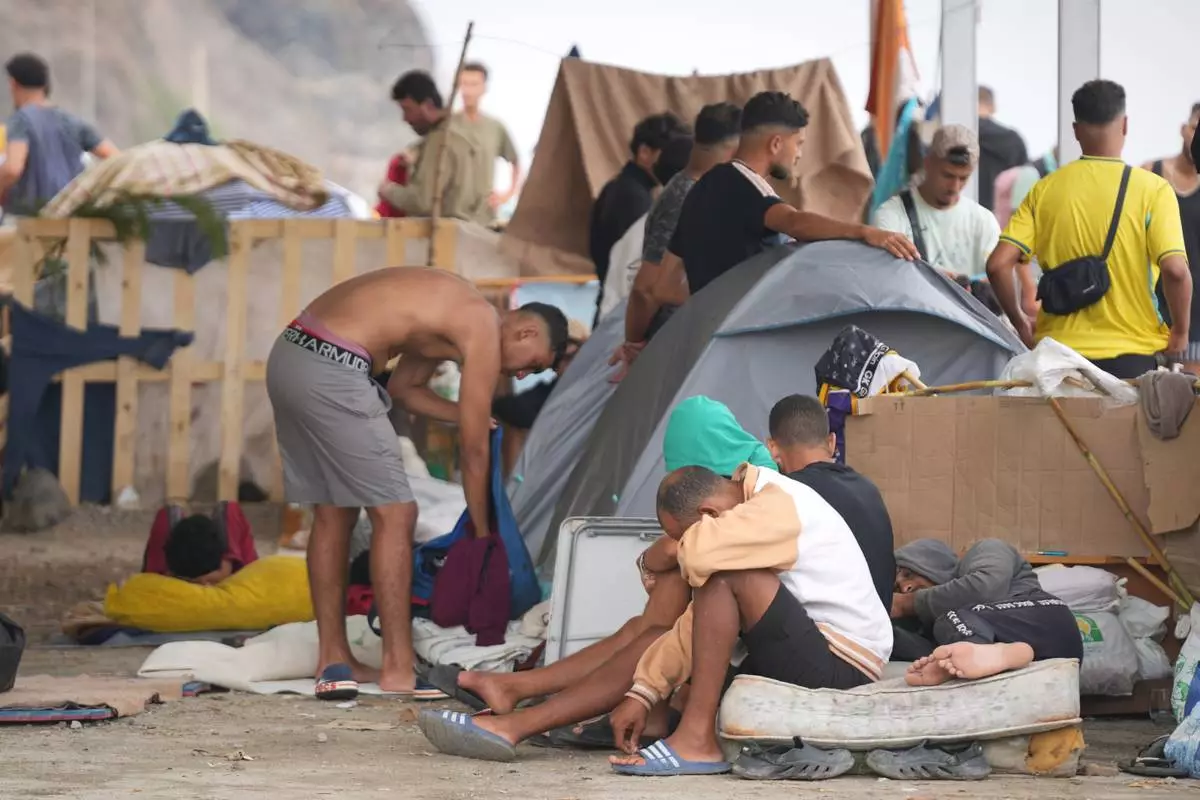
Migrants stand near their tents at El Trampolín beach in the Spanish exclave of Ceuta, Wednesday, Sept. 2, 2026. (AP Photo/Francis González)
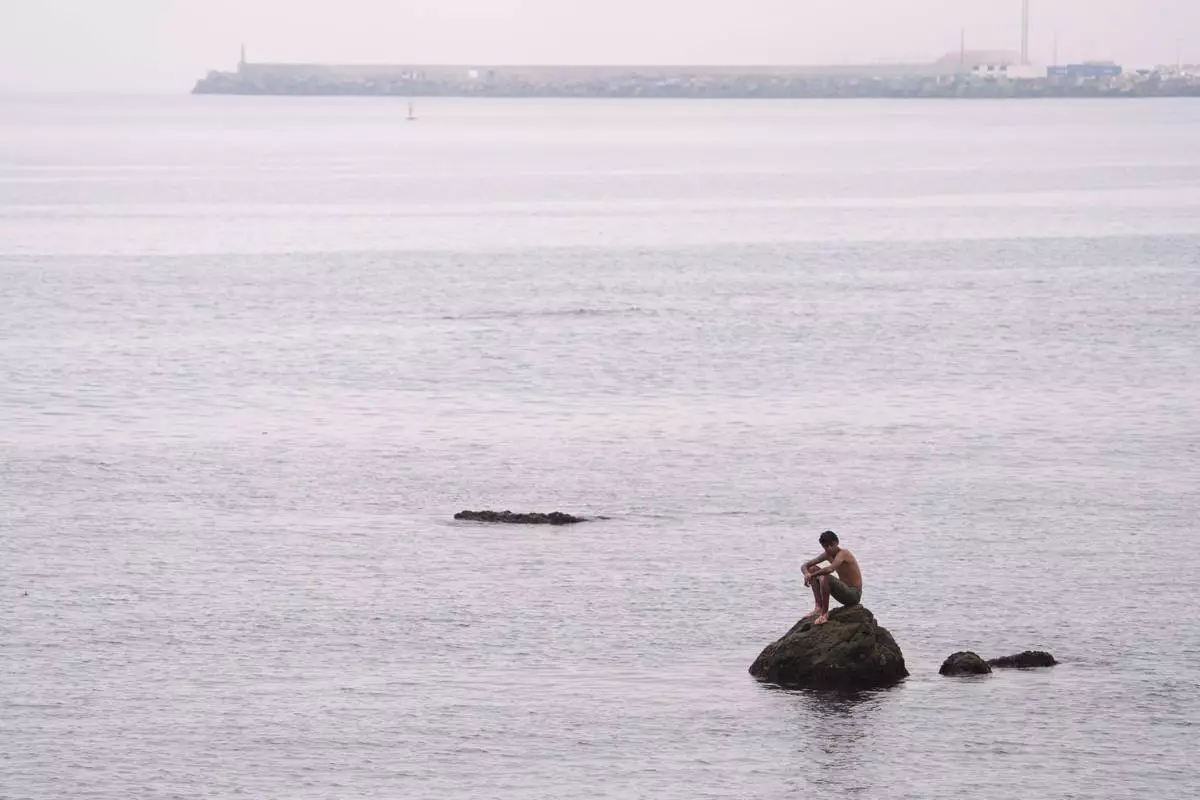
A migrant sits on a rock at El Trampolín beach in the Spanish exclave of Ceuta, Wednesday, Sept. 2, 2026. (AP Photo/Francis González)
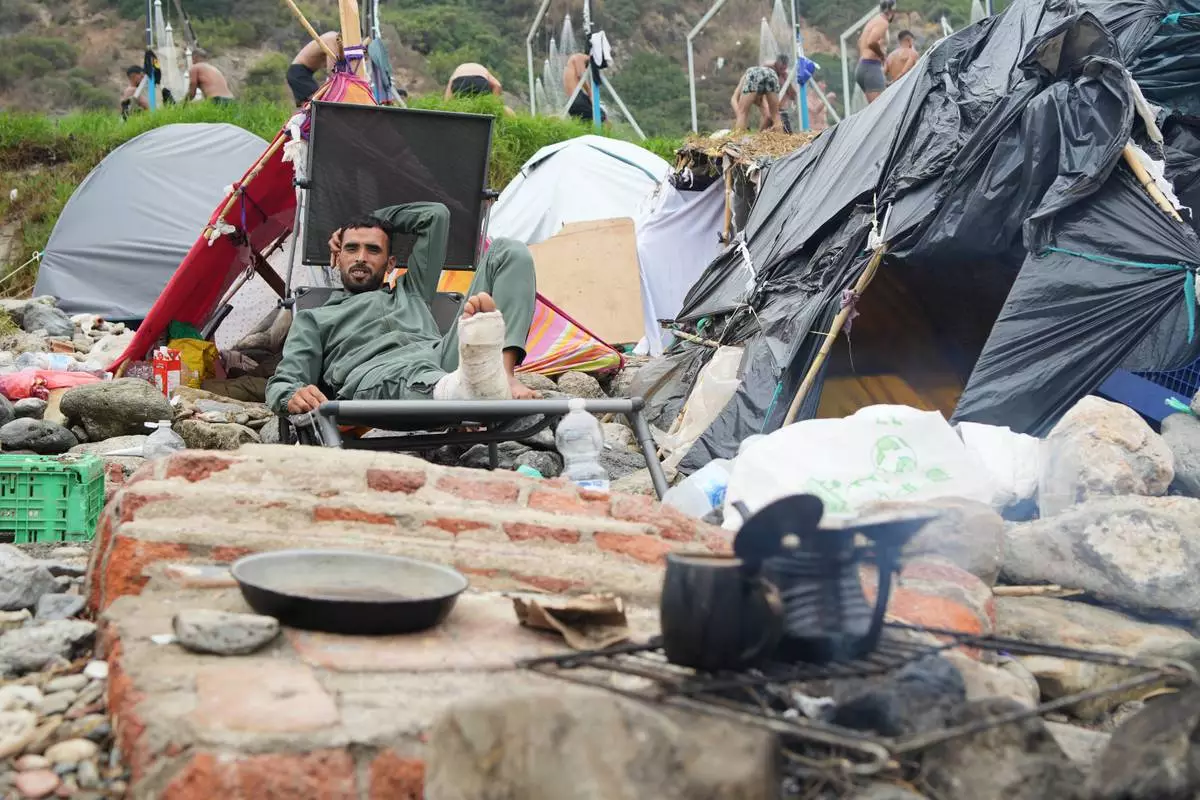
A migrant sits next to his tent at El Trampolín beach in the Spanish exclave of Ceuta, Wednesday, Sept. 2, 2026. (AP Photo/Francis González)