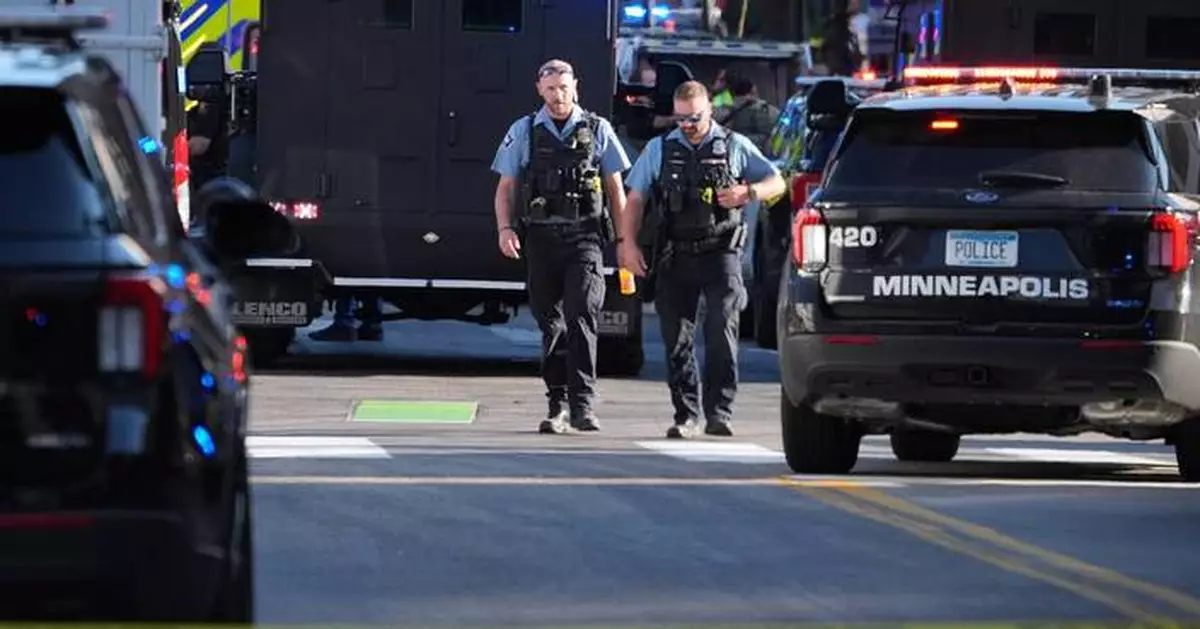
MINNEAPOLIS (AP) — Two people were killed and the suspect is dead after a shooting in a downtown Minneapolis apartment building Wednesday afternoon, according to police.
Three Minneapolis police officers were also injured, including two of them from gunshot wounds, police Sgt. Garrett Parten said at a press conference on Wednesday evening. All three officers are in stable condition, according to Hennepin County Medical Center.
A 911 call about shots fired at the building came in just after 4:30 p.m. and officers entered the building three minutes later to find victims inside the high-rise, Parten said.
They heard more gunshots and followed them to a higher floor, where they found “a haze that significantly limited their visibility,” he said.
“This is a tremendously tragic event and our thoughts and prayers are with the families, the loved ones of those who lost their lives, those who were injured and with the injured officers and their families,” Parten said.
One of the victims was fatally shot at the scene, and one died after arriving at the hospital, he said.
Parten said it was not immediately clear how the shooter died.
Hennepin County Medical Center said it received seven patients but didn’t share additional information about the conditions of those wounded.
Julius Bailey was sitting outside of his apartment building when he heard gun shots and saw a man he recognized as a resident of the building holding a pistol. Bailey said he heard a woman screaming and immediately started running away. He said he counted eight shots.
Bailey said that he recognized the man holding the gun because he was someone who was known for showing off his weapon. Bailey said he has tried to avoid the man since moving into the building in June.
“I could tell he was trouble,” he said.
Chris Miller, who also lives in the apartment building, said he heard a rapid succession of gunshots and quickly ran outside for safety. He said he believed he knew who carried out the shooting and that he encountered someone in the hallway with a handgun earlier this week and reported that person to management.
Video posted to social media showed police aiming rifles upward at an apartment tower near the Minneapolis Convention Center. Officials warned residents to avoid the densely populated Loring Park neighborhood nearby.
Minnesota Gov. Tim Walz said in a post on social media that state officials are on the ground helping local law enforcement respond to the shooting.
“Grateful to law enforcement actively working to ensure the safety of our neighbors in Downtown Minneapolis this afternoon,” Walz said. “Minnesota is praying for our first responders.”
The FBI is responding to the shooting and “will offer any and all resources necessary to assist local authorities,” Director Kash Patel said in a post on the social platform X.
Associated Press journalists Hallie Golden in Seattle, Safiyah Riddle in Los Angeles and Josh Kelety in Phoenix contributed to this report.
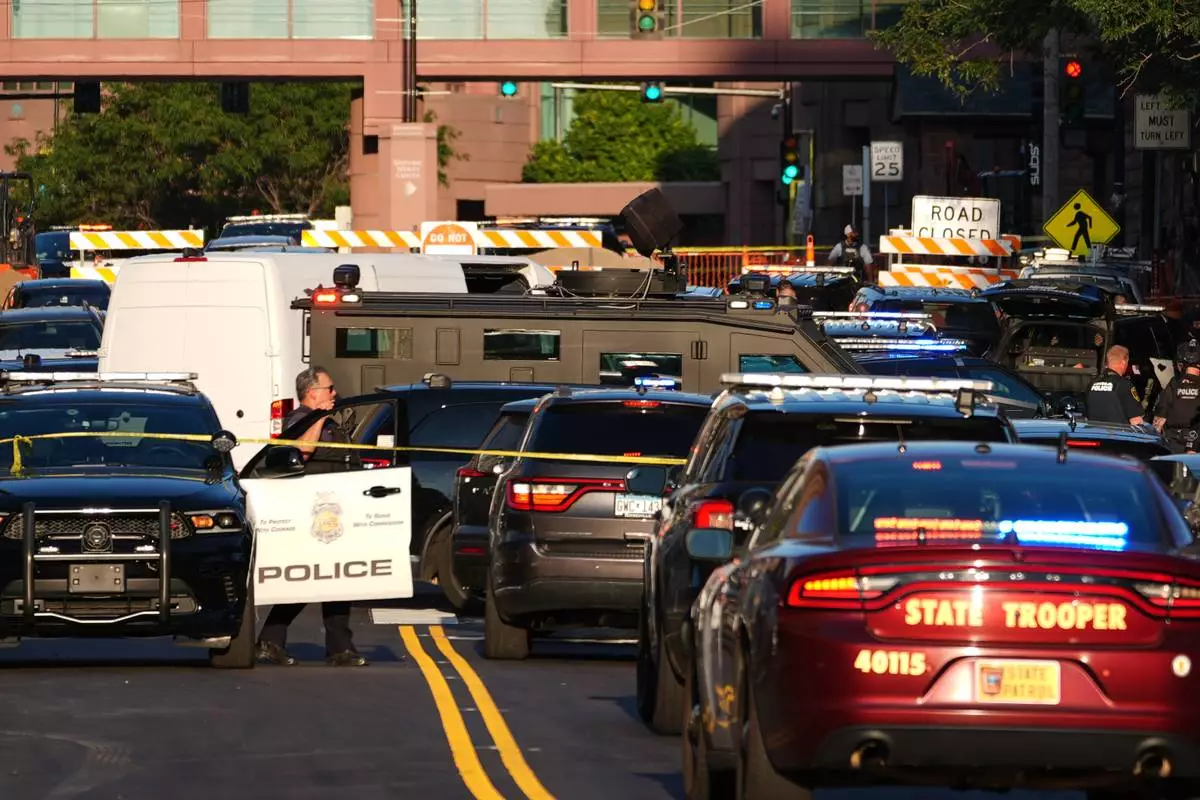
Law enforcement respond to a shooting Wednesday, Sept. 2, 2026, in downtown Minneapolis. (AP Photo/Ellen Schmidt)
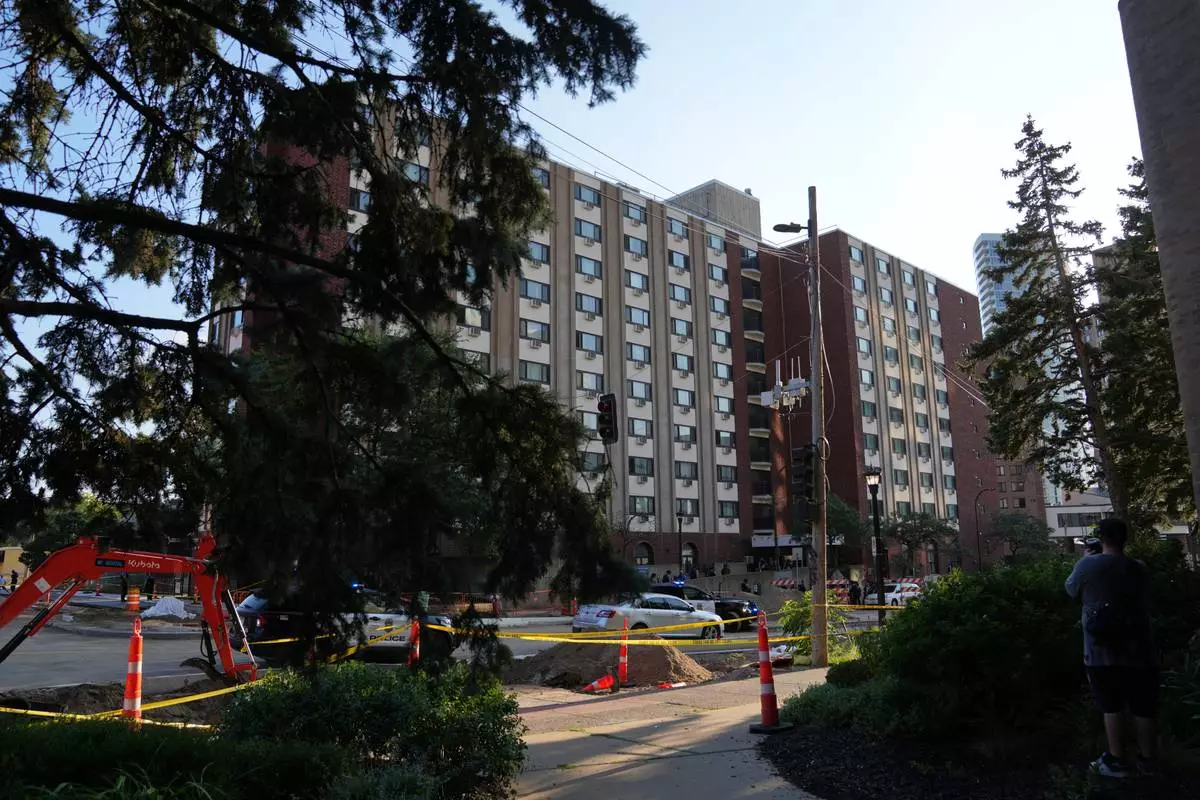
Law enforcement respond to a shooting Wednesday, Sept. 2, 2026, in downtown Minneapolis. (AP Photo/Ellen Schmidt)
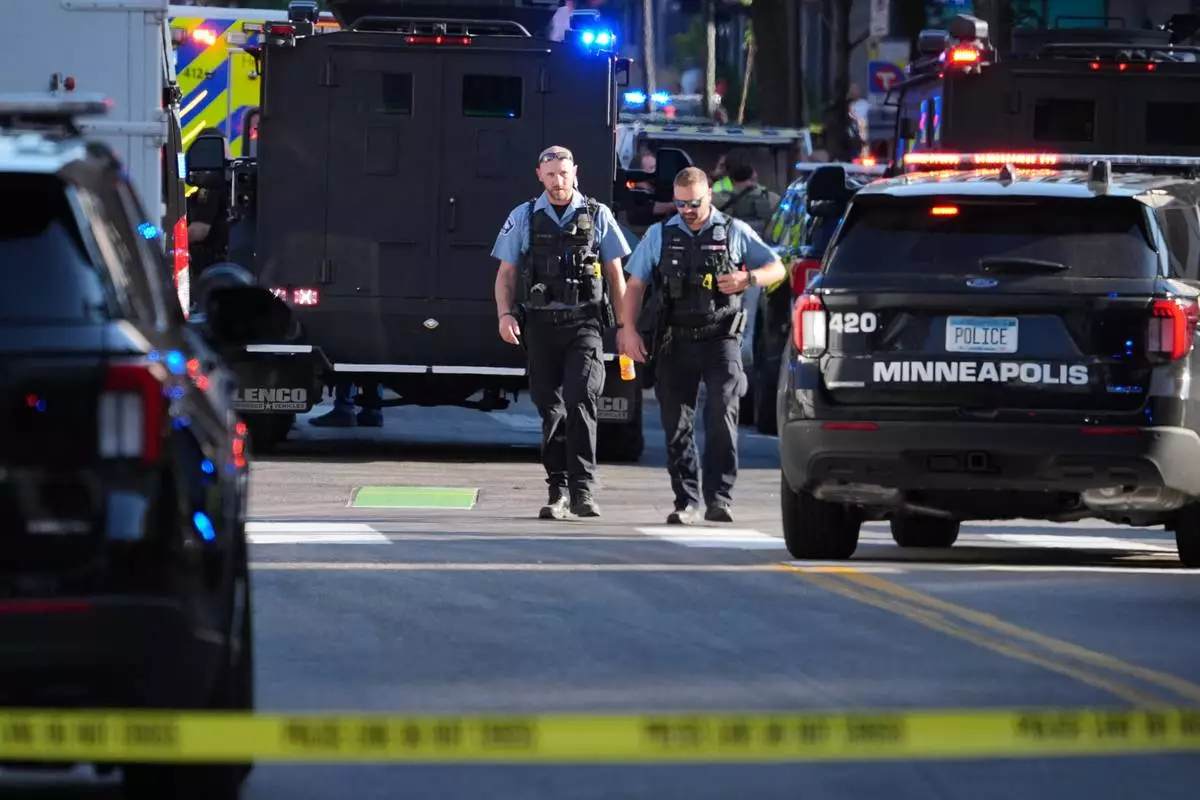
Police respond to a shooting Wednesday, Sept. 2, 2026, in downtown Minneapolis. (AP Photo/Ellen Schmidt)
Oil giant Chevron confirmed that it will expand operations in Venezuela after President Donald Trump announced an ambitious deal to develop the nation’s oil reserves and give the Pentagon a stake in the profits.
Chevron, the only U.S. oil company with a major presence in Venezuela, said Wednesday that it has been assigned additional acreage in the Orinoco Belt, where it has active operations. The company plans to invest more than $7 billion over the next five years, with the goal of more than doubling its current production to about 600,000 barrels a day.
“Chevron’s history in Venezuela spans more than a century, and our expanded position reflects our confidence in the country’s deep resource potential,” CEO Mike Wirth said in a prepared statement.
Venezuela holds the world's largest proven reserves, totaling more than 303 billion barrels of crude oil, according to OPEC's 2025 Annual Statistical Bulletin. Saudi Arabia is a distant second with 267 billion barrels.
Yet because Venezuela's energy infrastructure is severely degraded and the nation is operating under international sanctions, its daily production is just over 1 million barrels, compared with the 10 million to 11 million barrels that Saudi Arabia produces each day. The U.S. produces almost 14 million barrels per day.
Chevron, the second-largest U.S. oil company, has had a presence in Venezuela since 1923.
U.S. Energy Secretary Chris Wright on Wednesday attended a ceremony in Venezuela's capital in which Chevron, Italian oil company Eni and other energy companies signed agreements with the South American country's government.
“President Trump’s mission in Venezuela is straightforward. The mission is to bring peace, freedom, opportunity and prosperity to the people of Venezuela,” Wright said in Caracas. “I believe the deals that are signed today – tens of billions of dollars of investment, ultimately many thousands of jobs – are critical in starting this ball rolling of peace, opportunity and prosperity for everyone in Venezuela.”
The White House confirmed Monday that it is partnering with North American Blue Energy Partners, NABEP, as part of Trump ’s push to tap into Venezuela’s oil industry.
Yet the agreement has been met with skepticism from energy experts who say it will take years to revive Venezuela’s oil industry, which is in disarray after years of neglect.
There are also questions about whether Venezuela’s acting president, Delcy Rodríguez, has the authority to give NABEP 100-year rights over 17 oil fields with reserves of 65 billion barrels — and whether future Venezuelan or American administrations would overturn the agreement.
Venezuela's constitution states that arrangements like the one that the United States has entered must be approved by the National Assembly, which has not happened, wrote Ian Vásquez, vice president for international studies at the Cato Institute.
“The deal lacks legitimacy since it was agreed to with a dictatorship that has clung to power for decades through violence and by committing what was probably the largest electoral fraud in Latin American history in 2024,” Vásquez wrote. “The agreement was also reached under overwhelming pressure, military and otherwise, from the United States. As such, any future Venezuelan democracy will question the deal, thus undermining confidence in the current arrangement.”
The ruling party-controlled National Assembly expressed support for the agreement during its Tuesday session, but lawmakers held no debate or voted to approve it.
Wright on Wednesday pushed back on criticism, telling reporters that the deal is “a massive win” for both countries.
"Because what it’s going to do is take resources that are underground, not helping anyone, and invest capital and money and technology and bring them to the surface to better the lives of Venezuelans, better supply energy to Americans,” Wright said during a joint press conference with Rodríguez.
Trump has eyed Venezuela’s oil since the January capture of then-President Nicolás Maduro and has pressed to get U.S. businesses back into the country. “We have Exxon going in, we have Chevron going in. We have our big oil companies going in,” he said that same month.
He suggested again on Monday that other U.S. oil majors were preparing for a return, though other than Chevron, there is no evidence of that.
Exxon Mobil CEO Darren Woods said in January that Venezuela was “ uninvestable.” An Exxon spokesman said this week that “nothing has changed.”
The history of U.S. oil majors in Venezuela explains the hesitation.
Venezuela nationalized its oil industry in 1976 and created the state-owned company Petróleos de Venezuela S.A. A second nationalization occurred in 2007, when President Hugo Chávez pushed foreign oil companies into state-controlled joint ventures and seized the assets of companies that refused. Chevron agreed to a joint venture. Others, including Exxon and ConocoPhillips, refused, and Venezuela took their assets.
Trump has said that the agreement with Venezuela would “substantially lower” gasoline prices in the U.S. However, analyst have repeatedly warned that Venezuela’s dilapidated oil infrastructure will require years of restoration work and tens of billions of dollars to resuscitate.
“It could take 2 to 4 years to get new greenfield facilities online in the Orinoco region,” Amy Jaffe, director of the Global Energy, Climate, and Sustainability Lab at New York University, said in an email. "Other places where there is no pipeline and other kinds of support infrastructure could take longer.”
Meanwhile, the national average price for a gallon of regular gasoline jumped overnight to $4.12, according to the motor club AAA. That is 93 cents more than it cost at this point last year.
Garcia Cano reported from Caracas. Associated Press writers Aamer Madhani and Collin Binkley in Washington contributed to this report.

A woman covering a child from the rain walks along the shore of Lake Maracaibo in the oil-producing region of Cabimas, Venezuela, Tuesday, Sept. 1, 2026. (AP Photo/Ariana Cubillos)
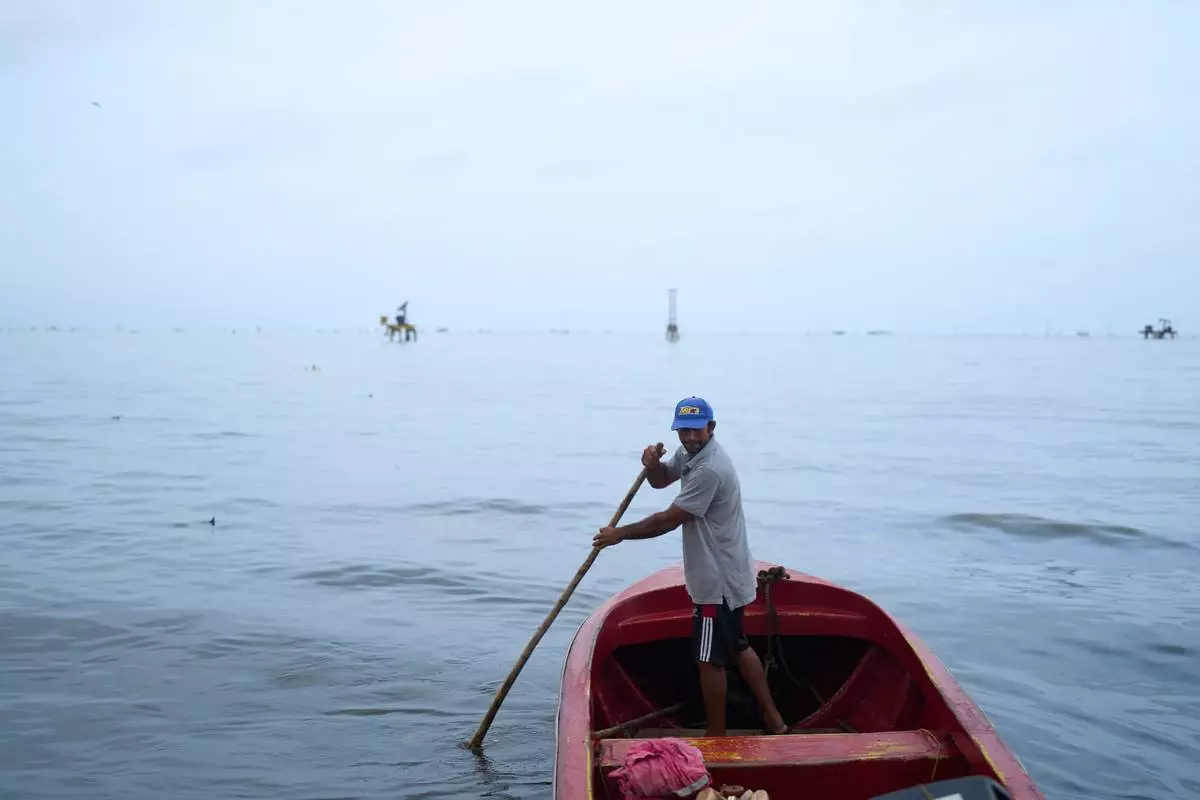
A fisherman steers his boat on Lake Maracaibo in the oil-producing region of Cabimas, Venezuela, Tuesday, Sept. 1, 2026. (AP Photo/Ariana Cubillos)
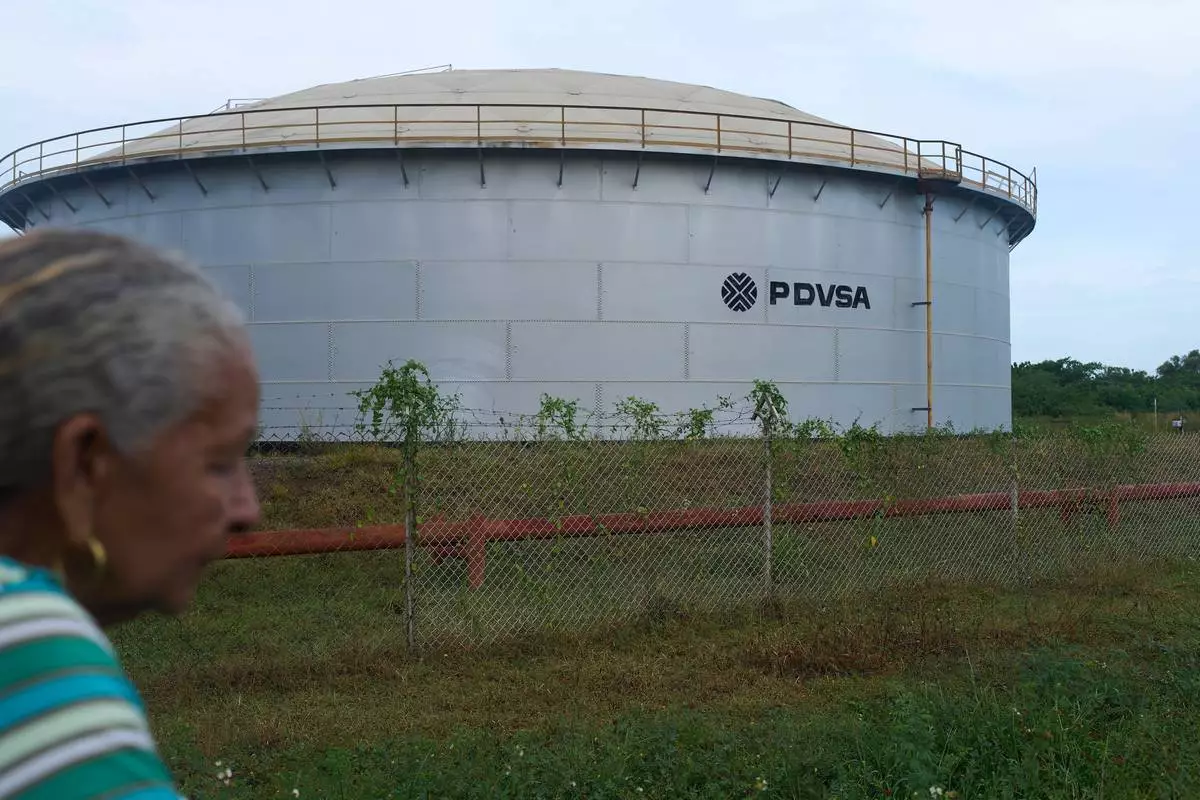
A woman walks near of a oil storage tank of Venezuela's state-run oil company, PDVSA in Cabimas, Venezuela, Tuesday, Sep. 1, 2026. (AP Photo/Ariana Cubillos)